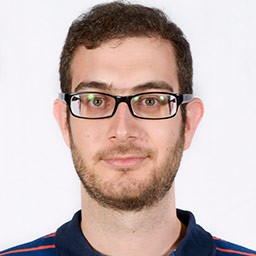
Leonidas Kosmidis is a Senior Researcher at the Barcelona Supercomputing Center (BSC), affiliated with the Department of Computer Architecture at the Polytechnic University of Catalonia · BarcelonaTech (UPC) and the Barcelona School of Computer Science (FIB) . He completed his PhD at BSC and holds a 2011 Master's in Computer Architecture, Networks, and Systems (CANS) from FIB. His research focuses on probabilistic timing analysis in real-time critical systems , enabling hardware and software solutions for industry applications. His work was recognized with an Honourable Mention for the EuroSys Roger Needham PhD Award (2018) , which highlighted its innovative impact on transforming theoretical concepts into practical methodologies. Kosmidis contributed to significant projects, including the FP7 PROARTIS and PROXIMA, as well as ESA-funded initiatives like Proartis4Space and EFL. His hardware proposals were adopted by the Cobham Gaonler LEON3 processor , marking a pinnacle in his research. He leads low-level software activities for embedded processors and accelerators within the CAOS group at BSC .
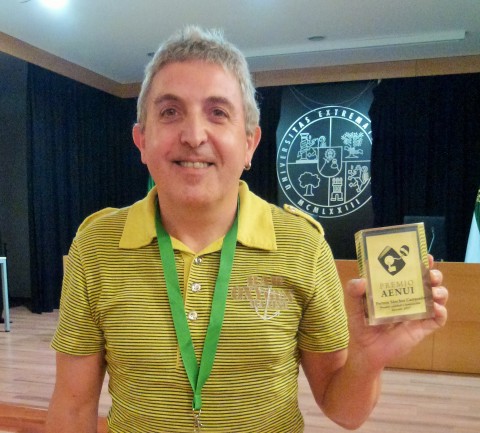
Fermín Sánchez Carracedo is a Professor at the College of Informatics of Barcelona (FIB) within the Department of Computer Architecture at Polytechnic University of Catalonia (UPC). He was recognized in 2017 with the Premio AENUI a la Calidad e Innovación Docente, a prestigious award by the Association of University Teachers of Informatics (AENUI) for contributions to teaching quality and innovation in computer science education. Academic Affiliation: Department of Computer Architecture, FIB-UPC Key Achievement: Recipient of AENUI's 2017 Quality and Teaching Innovation Award His professional focus aligns with computer architecture and digital systems, though specific research details are not elaborated in the provided texts. The award underscores his dedication to pedagogical excellence and innovation in university-level computer science instruction. The Premio AENUI a la Calidad e Innovación Docente (AENUI Award for Quality and Teaching Innovation) highlights his impact on educational practices. Since 2011, this award has celebrated outstanding contributions to teaching methodologies in informatics at the university level.
Anna Brugulat Panés is a Severo Ochoa Postdoctoral Fellow at the Barcelona Institute for Global Health (ISGlobal), conducting research across the Migrant Health group and Science with Society Hub. Her work addresses climate-health challenges among migrant agricultural workers in Spain and develops institutional frameworks for participatory research. Her academic credentials include: PhD in Population and Global Health from University of Cambridge MSc in Global Public Health Nutrition from University of Westminster Associate studies in MA Anthropology of Food at SOAS University of London Dual BSc degrees in Chemistry and Biochemistry from University of Barcelona Brugulat Panés' research integrates food systems analysis, non-communicable disease prevention, and climate resilience with strong methodological emphasis on complex systems thinking and community-based participatory approaches. Her work examines informal food practices, social wellbeing determinants, and equity-centered transitions in health systems, particularly across Small Island Developing States and Caribbean regions. She employs mixed-methods designs with deep anthropological grounding in food-health relationships. Her recent publications reveal consistent focus on sustainable food/transport systems through equity lenses, using systematic reviews and intergenerational qualitative methods to address climate vulnerabilities in island and migrant communities. This body of work bridges public health, anthropology, and policy advocacy with strong emphasis on co-creation with affected populations. Scientific recognition includes: Severo Ochoa Postdoctoral Fellowship Professional experience spans the World Health Organization's non-communicable disease prevention programs and collaborations with civil society organizations including Healthy Caribbean Coalition and The Food Foundation. Current research is funded through her fellowship award supporting participatory climate-health initiatives. She actively contributes to ISGlobal's Migrant Health group developing equitable occupational health solutions with agricultural migrants, and the Science with Society Hub where she advances institutional theory of change for embedding participatory science in research organizations through community co-creation processes.
Santiago Marco Colás is a Full Professor in the Department of Electronics and Biomedical Engineering at the University of Barcelona and leads the Signal and Information Processing for Sensing Systems group at IBEC. His research focuses on advanced computational methods for chemical sensor arrays, gas chromatography-ion mobility spectrometry (GC-IMS), mass spectrometry, and NMR data analysis in metabolomics, biomedical diagnostics, and environmental monitoring. Developed open-source tools like GCIMS R-package for untargeted IMS data analysis Innovated drone-based chemical sensing systems for indoor/outdoor odor mapping Created IoT-enabled respiratory impedance devices with mobile app control Explored machine olfaction algorithms for biomarker discovery in colorectal cancer and COPD Investigated dielectric excitation methods for metal oxide semiconductor sensors His recent work addresses real-time odor quantification in wastewater plants, predictive modeling for postoperative complications, and low-cost IoT respiratory monitoring. Publications span sensor signal processing, calibration transfer techniques, and collaborative STEM education initiatives.
Marta Gómez Fernández is a Part-Time Lecturer in the Department of Electronic Technology at the School of Industrial Engineering, University of Vigo, Campus Vigo. She is affiliated with the EEE (Electronic Equipment Engineering) research group. Her work focuses on electronic technology applications within industrial engineering contexts.
María Dolores Valdés Peña is a Professor at the Department of Electronic Technology, School of Telecommunications Engineering, University of Vigo (Spain). Her career spans over 25 years in academia and industry, with a focus on reconfigurable systems and FPGA applications. Education: PhD in Telecommunications Engineering (Cum Laude, University of Vigo, 1997), BS in Telecommunications Engineering (Universidad Central de las Villas, Cuba, 1990). Research Interests include FPGA-based data acquisition systems, digital signal processing, wireless sensor networks, neural networks, and FPSoCs for industrial applications. Her work bridges reconfigurable hardware with emerging technologies like IoT and AI. Recent Publications highlight trends in FPGA applications for industrial control, sensor calibration, IoT, and nanoscale reliability. She has contributed to advancements in Model Predictive Control, FPSoCs, and optical fiber sensor technologies. Scientific Awards: Extraordinary Doctoral Award (1997), 3 Six-Year Research Fellowships. Grants & Collaborations: Participated in 17 competitive public-funded projects, 5 research contracts (2 IP), and collaborated with INESC-IDE (Portugal), PUCRS (Brazil), and U.S. institutions. She held leadership roles in IEEE conferences and serves as Associate Editor for the IEEE Open Journal of the Industrial Electronics Society.
Dr. Jose A. Boluda is an Associate Professor in the Department of Computer Engineering at the University of Valencia's School of Engineering. He holds a B.S. in Physics (Electricity, Electronics and Computer Science, 1992) and a Ph.D. (2000) from the same institution. With 6 teaching quinquenios and 4 research sexenios, his academic career spans over two decades. His research focuses on: Computer vision hardware design Smart vision sensors and neuromorphic computing Reconfigurable architectures (FPGA) High-speed motion analysis and change-driven processing Biomimetic visual sensing strategies He has authored over 50 international publications and participated in 15 research projects. His publications predominantly explore: Event-based vision sensors Hardware-accelerated image processing Neuromorphic engineering applications Real-time systems for robotics and 3D scanning Low-power circuit design for computer vision Awards include: Fernando Sapiña Award 2023 for Valencian teaching materials Fernando Sapiña Award 2021 for English teaching materials Fernando Sapiña Award 2021 for Valencian teaching materials He has directed 2 doctoral theses and supervised multiple master's projects. Research includes international collaborations at the University of Virginia, University of Macedonia, and Universitat Jaume I. His lab focuses on developing novel vision sensors and processing architectures.
Pascual Campoy Cervera is a Full Professor at the Universidad Politécnica de Madrid (UPM) and holds visiting professor positions at Delft University of Technology, Tongji University, and Queensland University of Technology. His work focuses on Control Systems , Machine Learning , and Computer Vision for Unmanned Aerial Vehicles (UAVs) . As Principal Investigator of the Computer Vision and Aerial Robotics group at UPM's Center for Automation and Robotics (CAR), he has led over 40 R&D projects with European, national, and industrial funding. Current affiliations: UPM, TU Delft, CAR-UPM Research themes: UAV autonomy, swarm robotics, embedded vision systems His research integrates cutting-edge technologies in image processing, control theory, and artificial intelligence to enhance UAV capabilities in unstructured environments. Recent projects include: Autonomous firefighting systems High-speed drone racing frameworks Swarm-based solar farm inspection Thrust vectoring for heavy UAVs Notable scientific awards include multiple international prizes at UAV competitions (IMAV12–17). His team has developed the Aerostack and Aerostack2 frameworks for aerial robotics, which address execution control, mission planning, and sensor fusion challenges.
Dr. José Luis Morales Benavente serves as an Adjunct Professor in the Department of Economic Analysis at the University of Alicante's School of Economics. With three engineering degrees from the same institution, he has maintained continuous affiliation since completing his studies in 1998-1999. His academic career spans over 25 years with consistent teaching contributions. Education: Computer Engineering, EPSA - University of Alicante (1999) Technical Engineering in Business Information Systems, EPSA - University of Alicante (1999) Technical Engineering in Computer Systems, EPSA - University of Alicante (1998) His research trajectory evolved from industrial computer vision applications (2000-2003) toward educational software documentation (2008-2010). Early work focused on textile quality control systems using image processing algorithms and DSP implementations for defect detection, with publications in journals like Revista Española de Electrónica and Técnica Textil Internacional. Later contributions centered on open-source office software documentation. Current activities emphasize mathematics instruction for economics students across multiple degree programs. Teaching remains his primary focus with documented instruction in mathematics courses for economics and business programs through 2025. His research projects included publicly funded work on textile manufacturing automation (1999-2001) and technology transfer initiatives (2001-2004), though no recent research output appears in official records. Research Management: Coordinator: 'Transferencia y valoración tecnología' (University of Alicante, 2003-2004) Collaborator: 'Sistema automático de corte...' (Ministerio de Educacion, 1999-2001) Collaborator: Private sector project with GESTION TRIBUTARIA TERRITORIAL SAU (2001-2002) His career demonstrates a transition from technical research toward teaching specialization within the economics faculty, maintaining institutional continuity at the University of Alicante for over two decades.
Neil Julien Ross is an Associate Professor in the Department of Mathematics at Dalhousie University. His research primarily focuses on quantum computing and quantum programming languages, with extensive contributions to quantum circuit design, optimization, and formal verification methods. He maintains an active research profile with numerous publications in top-tier quantum computing conferences and journals. His research interests span: Quantum circuit synthesis and optimization techniques Formal methods for quantum programming languages (e.g., Proto-Quipper) Algebraic structures in quantum computation Quantum gate universality and resource theory Category theory applications in quantum information Ross's recent publications demonstrate a consistent focus on advancing quantum circuit design methodologies, particularly through symbolic synthesis techniques and formal verification approaches. His work frequently bridges theoretical computer science, algebraic structures, and practical quantum implementation challenges.
William J. Bowman is an Assistant Professor in the Department of Computer Science at the University of British Columbia. He focuses on secure and verified compilation, dependently typed programming, and meta-programming systems. His work bridges high-level language design with low-level code generation to maintain correctness and security invariants throughout compilation. Education: PhD in Computer Science from Northeastern University Research spans type-preserving compilation, including: Typed closure conversion for dependently typed languages Allocation-aware type universes Hybrid embedding techniques Secure interoperability via multi-language semantics Recent publications examine: Heap allocation modeling through type universes Flat closure representations WebAssembly extensions with indexed types Control-effect semantics
Thomas P. Jensen is a Researcher at INRIA Rennes , France, specializing in program analysis , software security , and abstract interpretation . With a Cand. scient. in Computing and Mathematics from the University of Copenhagen (1990) and a PhD from Imperial College, University of London (1992), he has led research teams at INRIA, including the Celtique project-team (2010-2022) and currently the Epicure project-team (since 2022). He holds a Habilitation à diriger des recherches from Université Rennes 1 (1999). Research Focus Program analysis with type-based and big-step semantics approaches Certification of static analysis tools for embedded systems Software fault isolation and language-based security Information flow control through hybrid static-dynamic analysis His work spans Java security (including Java Card and mobile telephony) and formal verification of compilers and sandboxes. Notable projects include JavaSec , AJACS , and the CominLabs cybersecurity network. He received a Best Paper Award at GPCE 2018. Publications & Editorial Recent publications focus on algebraic data types , automata-based verification , and control-flow analysis with applications in cybersecurity . He has contributed to the Strategic research and innovation roadmap for SPARTA (2022) as editor. His work appears in top venues like POPL , PLDI , ICFP , and ESOP . Leadership Director of Laboratoire d'Excellence CominLabs (since 2022) Co-chair of VMCAI 2026 and member of PriSC 2024 Program Committee
Jesús de la Casa Cardenas is a Collaborating Professor in the Department of Electronic and Automatic Engineering at the University of Jaén, Spain. His work focuses on electronics engineering and automation systems within the university's academic framework. Primary Affiliation: University of Jaén Department: Electronic and Automatic Engineering Research interests span core areas of electronics and automatic engineering, including: Embedded systems development Industrial automation technologies Control system design Signal processing methodologies Contact information includes: Email: casacar@ujaen.es Phones: (+34) 953 648672 (EPS Linares), (+34) 953 212448 (EPS Jaén) Physical address: EPS Linares, South Belt s/n, 23700 Linares (Jaén), Spain
Almudena Nevado Llopis serves as a Professor at Jaume I University's Faculty of Communication and Social Sciences, teaching core courses in the Translation and Intercultural Communication degree program including Translation B-A (English-Spanish) I, Interpretation Techniques B-A (English-Spanish), Intercultural Mediation, and Public Service Interpreting. She extends her expertise to the Nursing degree through Health Communication and Education courses and contributes to the Master's in Health Sciences Research with Qualitative Research Designs instruction, demonstrating significant interdisciplinary engagement across communication, health, and social sciences domains. Her academic foundation includes a Licentiate in Translation and Interpretation and a PhD in Translation, Society and Communication, both completed at Jaume I University where she earned the prestigious Extraordinary Doctorate Award for her dissertation. These credentials establish her deep institutional roots and scholarly recognition within Spain's academic framework. Dr. Nevado Llopis's research program centers on intercultural communication and mediation with specialized focus on public service interpreting, particularly in healthcare settings. Her scholarly work systematically examines language brokering dynamics, ethical challenges in gender-based violence contexts, interpreter training methodologies, and the transformative impact of digitalization and pandemics on remote interpreting services. She investigates how cultural and linguistic barriers affect healthcare access for immigrant populations in Spain, advocating for professionalized interpreting services and intercultural competence development through rigorous empirical analysis and policy-relevant recommendations. Analysis of her recent publications (2022-2024) reveals three dominant trajectories: (1) healthcare interpreting systems across Spain, Italy and Romania through comparative studies of provider and user perspectives; (2) innovative training approaches for medical interpreters emphasizing ethical decision-making and crisis management; and (3) the pandemic-driven acceleration of remote interpreting services and its implications for quality assurance. Her work increasingly addresses mental healthcare accessibility through multilingual resources and intercultural competence building in educational institutions. Her scientific recognition includes the Extraordinary Doctorate Award. Significant research contributions include coordination of the ReACTME project (2019-2022) which developed medical interpreting training resources and databases, and participation in multiple Erasmus+ initiatives advancing intercultural education and healthcare communication across European borders. Dr. Nevado Llopis has successfully led international research collaborations including the ReACTME consortium and Erasmus+ projects, securing funding for cross-border studies on medical interpreting. Her research stays at King's College London's Clinical Communication Unit (2016) and Babeș-Bolyai University (2018) demonstrate active global engagement. Current work focuses on mapping mental healthcare resources through the MentalHealth4All project and analyzing leadership in international education contexts, with strong emphasis on practical implementation and policy impact. Embedded within Jaume I University's Translation and Intercultural Communication program, her research operates through dynamic project-based collaborations rather than a dedicated laboratory. She maintains strategic partnerships with European institutions including King's College London and Babeș-Bolyai University, contributing to transnational networks focused on healthcare interpreting standards, intercultural communication training, and multilingual resource development for vulnerable populations.
Julián Sánchez-Hermosilla López is a Professor in the Department of Engineering at the University of Almería, Spain, specializing in agricultural robotics and precision agriculture technologies. His research focuses on developing autonomous systems for greenhouse operations, particularly in pesticide application, crop monitoring, and structural analysis of agricultural facilities. His research interests span agricultural robotics, precision agriculture, electrostatic spraying technology, UAV photogrammetry, and mechatronic systems for agricultural applications. Professor Sánchez-Hermosilla leads research in the 'Tecnología de la producción agraria en zonas semiáridas' group, focusing on technological solutions for Mediterranean agricultural challenges. His recent publication activity (2020-2024) demonstrates strong productivity in high-impact journals, with multiple Q1 publications in Computers and Electronics in Agriculture, Smart Agricultural Technology, and Science of the Total Environment. His work shows consistent focus on practical agricultural robotics solutions for greenhouse environments. Scopus h-index: 19 Web of Science h-index: 17 Scopus i10-index: 25 Web of Science i10-index: 22 Professor Sánchez-Hermosilla has served as Principal Investigator on numerous research projects funded by Spanish agencies, with total funding exceeding €500,000 in the past decade alone. His current research includes autonomous greenhouse monitoring vehicles and optimization of natural/artificial pollination in olive crops. He directs the research activities of multiple PhD students and has supervised numerous theses in agricultural engineering, with a particular focus on UAV applications, electrostatic spraying systems, and greenhouse structural analysis.