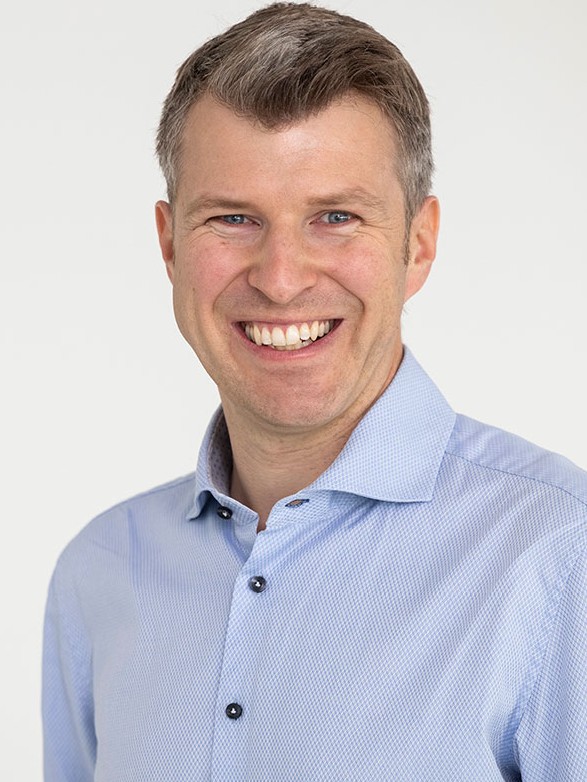
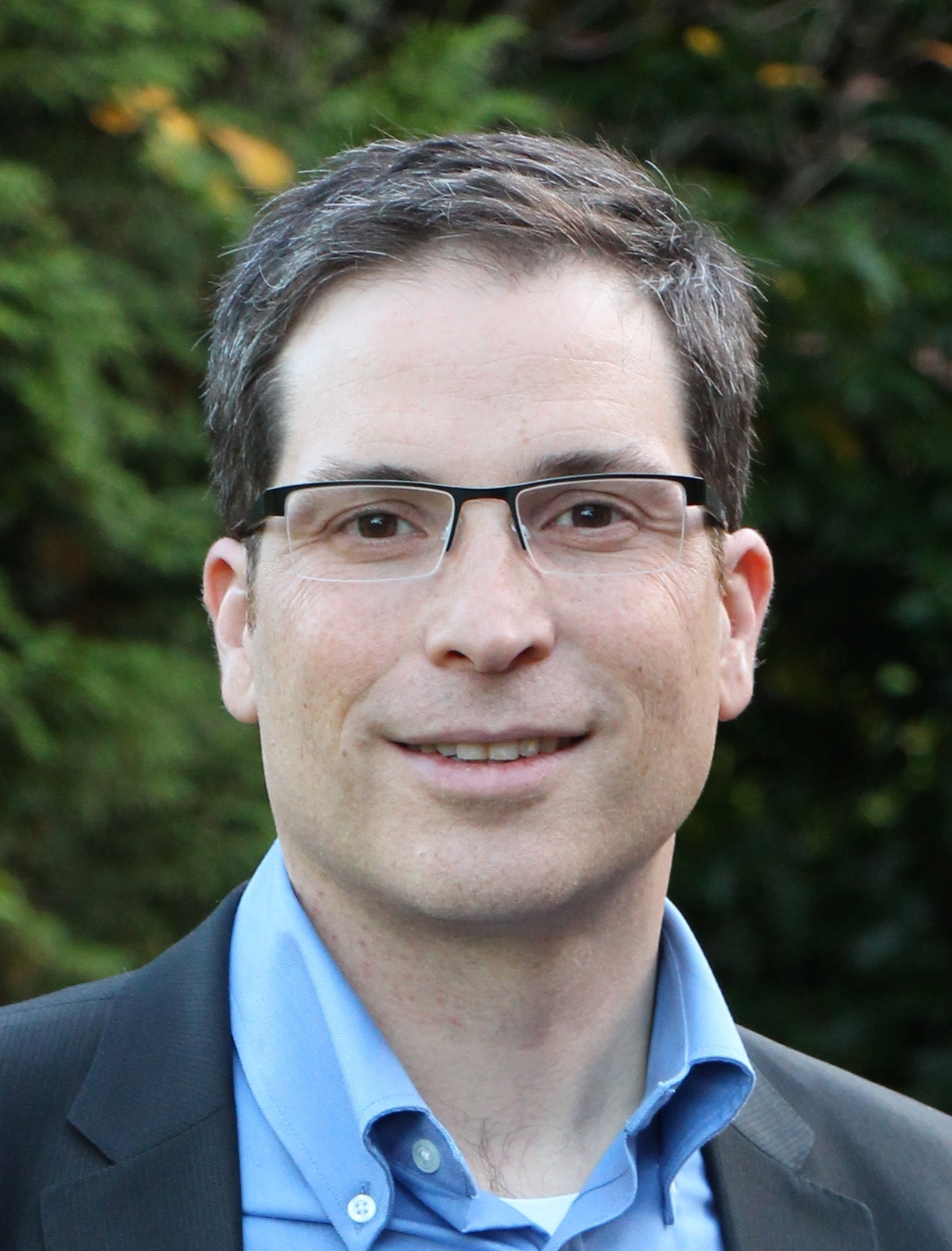
Silvan Wegmann is a Lecturer at the Lucerne School of Computer Science and Information Technology, part of the Lucerne School of Applied Sciences and Arts. He holds a degree in Computer Science from ETH Zürich with a minor in Chip-Design. His professional experience spans over two decades in software engineering roles, including positions at bbv, Ubidyne, and BridgeCo, focusing on embedded systems and IoT. His technical competencies include C/C++ programming, Agile methodologies (e.g., Scrum, Test-Driven Development), and Linux systems. He actively engages in industry conferences, delivering talks on embedded software and engineering practices. Education: 1998–2004: Computer Science Degree (ETH Zürich), Minor in Chip-Design 1991–1998: Matura Typus C (Gymnasium Kantonsschule Rämibühl, Zurich) Wegmann’s research interests emphasize practical software development methodologies, embedded systems, and IoT applications. He has contributed to industry projects across various domains, including semiconductor design and secure software architectures. His professional engagements include speaking at the Embedded Computing Conference and Embedded Software Engineering Kongress.
Alexandru Calotoiu is a Researcher in the Department of Computer Science at ETH Zürich, affiliated with the Professorship for Scalable Parallel Computing. His work focuses on performance modeling, high-performance computing (HPC), serverless systems, and cloud computing. He leads research in empirical performance modeling for complex applications, optimization of parallel algorithms, and scalable cloud architectures. Key research areas include noise-resilient performance models, serverless computing frameworks, and compositional parallel programming. He has contributed to benchmarking tools like SeBS and developed techniques for loop scheduling, static analysis, and resource disaggregation in HPC environments. His publications from 2023–2025 emphasize serverless systems (e.g., FaaSKeeper, Cppless), performance embeddings for optimization, and specialized supercomputing for climate science. These studies address scalability, reproducibility, and cross-platform performance portability in data-centric workloads. No scientific awards are explicitly listed, but his work has been presented at leading conferences such as ISCA and IEEE/ACM events. He collaborates on projects like rFaaS (RDMA-enabled serverless platforms) and Process-as-a-Service frameworks. His research bridges theoretical models with practical implementations in distributed systems and cloud infrastructure.
Roles & Affiliations: PD Dr. Alexander Ilic is a Lecturer at the Department of Computer Science and Executive Director of the ETH AI Center at ETH Zürich. He co-founded the ETH AI Center and previously led Magic Leap Switzerland, focusing on R&D in Computer Vision and Advanced Photonics. He holds a PhD from ETH Zurich and a habilitation from the University of St. Gallen. Education: PhD in Computer Science, ETH Zurich Habilitation in Entrepreneurship, University of St. Gallen MSc in Computer Science, TU Munich Research Interests: Alexander’s work spans Artificial Intelligence, Entrepreneurship, and Technology Investing. He pioneered AI-driven start-ups like Dacuda (acquired by Magic Leap) and developed cutting-edge sensors and imaging systems. His research emphasizes real-time systems, computer vision applications, and wearable technology. Notable Achievements: Co-founder of Dacuda and Magic Leap Switzerland 两次获得“Entrepreneur of the Year”(2011年和2012年) Swiss Economic Award Over 50+ patents in imaging, AR, and sensor technology Courses Taught: Data Science Lab Technology Investing Patenting Digital Innovations Technology and Entrepreneurship Labs & Leadership: Leads the ETH AI Center, driving AI innovation and interdisciplinary projects. His teams focus on applied AI in real-time systems and cross-reality devices.
Dr. Corinna Lorenz is a researcher at the Institute of Neuroinformatics, ETH Zürich, Switzerland, where she investigates neural mechanisms underlying behavior through computational and experimental approaches. Her work bridges neuroscience, machine learning, and animal behavior studies, primarily utilizing songbird models and advanced neurotechnologies. Her research focuses on computational neuroscience and neuroethology, with emphasis on vocal circuit dynamics in zebra finches. She develops innovative machine learning tools for neural data analysis, including vocal unit extraction from embedding spaces and chronic Neuropixels recordings. Additional interests span sensory processing (serotonin modulation in visual cortex) and body representation studies (rubber hand illusion), reflecting interdisciplinary expertise in neural coding and behavior. Analysis of her 12 recent publications (2012-2025) reveals three dominant themes: (1) Songbird vocal circuit dynamics during sleep/wake states and behavioral contexts, (2) Machine learning applications for unsupervised vocal analysis, and (3) Cross-species investigations of neural modulation in sensory systems. Her work consistently integrates custom hardware/software solutions with ethological paradigms. Dr. Lorenz maintains active research operations at ETH Zürich's Institute of Neuroinformatics (Y55 G 72), utilizing chronic recording methodologies and interactive data analysis frameworks. Her team develops open-source tools for vocal unit extraction and neural population analysis, contributing to reproducible neuroethology research.
Glück Florent is an Associate Professor at the Geneva School of Landscape, Engineering and Architecture (HES-SO), affiliated with the Technical and IT school's Computer Science and Communication Systems department. He specializes in embedded systems, system virtualization, and interdisciplinary projects at the intersection of engineering and healthcare. Affiliations: HES-SO Geneve, hepia inIT, and collaborations with medical and industrial partners. Education: Not explicitly listed, but implied through roles and projects involving systems engineering and computer science. Research Interests: His work spans embedded systems design, real-time data processing, and applied machine learning. Key focuses include secure hardware-software co-design (e.g., FPGA-based security), medical device development (e.g., neonatal monitoring systems), and IoT infrastructure for smart buildings and recycling. Project Trends: Florent leads projects combining engineering with societal impact, such as automated recycling systems (LusTra), secure medical diagnostics (BrainCheckX), and educational virtualization platforms (Nexus VDI). Recent work emphasizes AI-driven solutions for healthcare (e.g., cochlear implant support) and decentralized energy management. Grants and Funding: Multiple projects funded by HES-SO Rectorat, CTI, and industry partners, totaling over CHF 400,000 since 2014. Labs/Teams: Active in distributed embedded systems research, leading teams on projects like DPESI (distributed storage) and HERVA (random number validation platforms).
Abraham Bernstein is a Full Professor of Informatics at the University of Zurich (UZH), where he serves as Head of the Dynamic and Distributed Information Systems Group and Director of the UZH Digital Society Initiative. He leads a university-wide initiative with over 180 faculty members investigating the interplay between society and digitalization. His work bridges social science foundations (organizational psychology/sociology/economics) and technical disciplines (computer science, artificial intelligence), creating a unique interdisciplinary approach to digital transformation challenges. Education: Diploma in Computer Science from ETH Zurich Ph.D. in Management with concentration in Information Technologies from MIT's Sloan School of Management Professor Bernstein's research spans the Semantic Web, data mining/machine learning, recommender systems, crowd computing, and collective intelligence. His work uniquely integrates social science perspectives with technical computer science approaches, examining how social and technical elements interact in digital systems. Recent work focuses on explainable AI, ethical decision-making with AI systems, and the societal implications of digital transformation, reflecting his commitment to addressing both technical challenges and their broader societal context. His publication record shows a strong trajectory in multimodal information retrieval, knowledge representation, and human-AI collaboration, with increasing focus on ethical considerations and societal impact of AI technologies. The research demonstrates consistent innovation in bridging technical AI capabilities with human-centered design principles, particularly in areas like explainable recommender systems and democratic applications of AI. Scientific Recognition: Nominated Digital Shaper by Bilanz magazine (2017) Professor Bernstein has supervised over 30 PhD students whose work spans semantic technologies, data mining, recommender systems, and human-AI interaction. His research group has secured significant funding for projects related to digital society, knowledge representation, and AI ethics. As Director of the Digital Society Initiative, he coordinates cross-disciplinary research across UZH's faculties, bringing together scholars from humanities, social sciences, law, economics, and STEM fields to address complex digital transformation challenges. He leads the Dynamic and Distributed Information Systems Group at UZH, which maintains strong international collaborations and contributes significantly to both theoretical advances and practical applications in information systems. The group's work has influenced standards in semantic web technologies and continues to shape discourse on responsible AI development and deployment in society.
Prof. Dr. Marcel Honegger is a Lecturer in Robotics and Mechatronics at the Institute of Mechatronic Systems within the School of Engineering at Zurich University of Applied Sciences (ZHAW). He co-leads the Institute and focuses on the development of robot systems, drive controls, and control/regulation software for robotics and mechatronics. Ph.D., ETH Zurich (1996-1999) Dipl. Mech. Eng., ETH Zurich (1990-1996) His research spans robotics, mechatronics, and control systems, with recent work on predictive maintenance using autoencoder-based anomaly detection for delta robots and RGBD segmentation for agricultural automation. Earlier projects involved adaptive controllers for parallel manipulators and Java frameworks for robot control systems. Honegger has led projects such as the full automatic sprinkler robot (FASR) and the Advanced Rail Track Information System . He previously worked as a Senior R&D Engineer at CSEM Alpnach (2001-2009) and Project Manager at maxon motor ag (2009-2014). His publications reflect expertise in industrial automation, sensor integration, and mechanical design. He is involved in teaching and R&D collaborations, with an ORCID ID: 0009-0004-8178-136X.