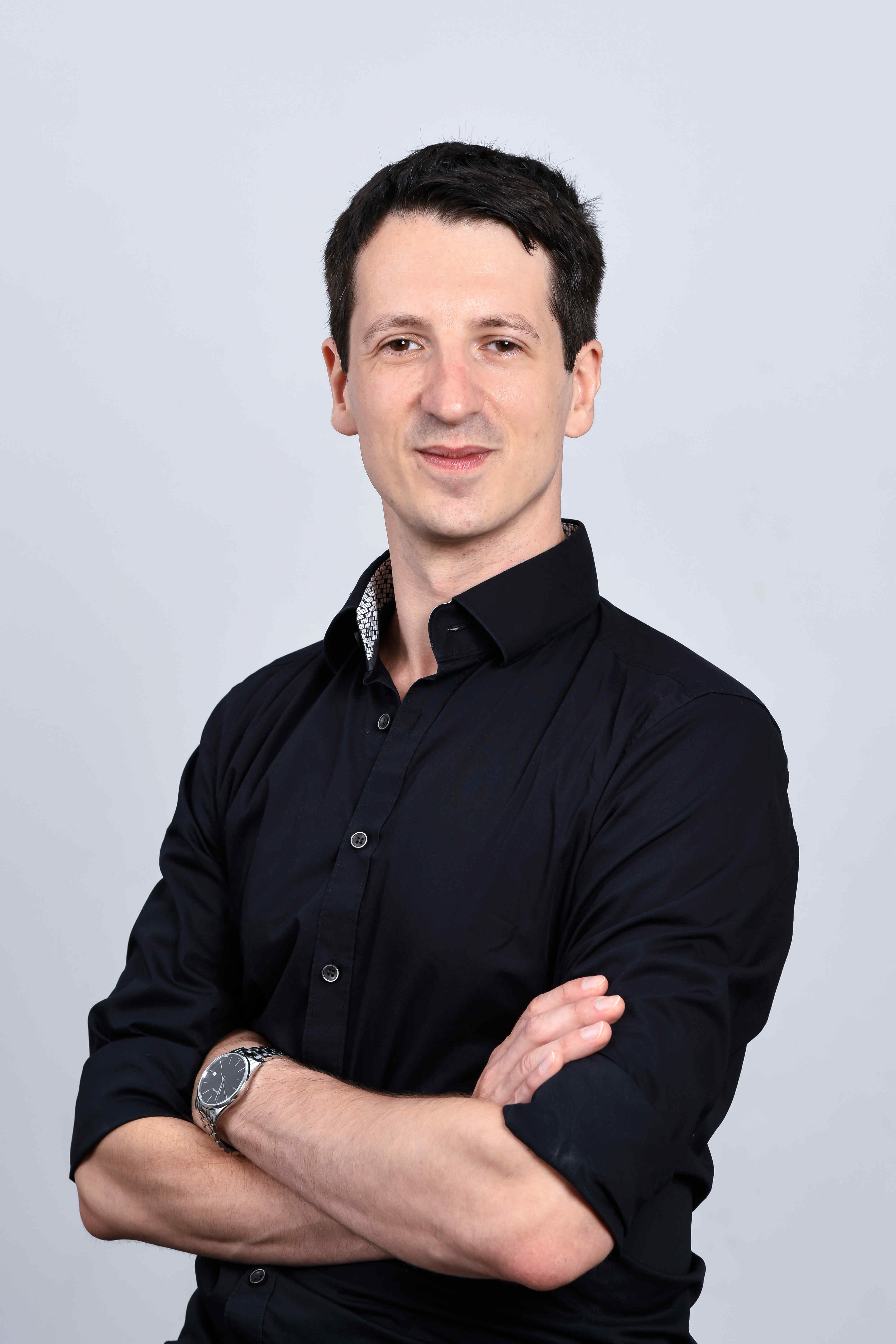
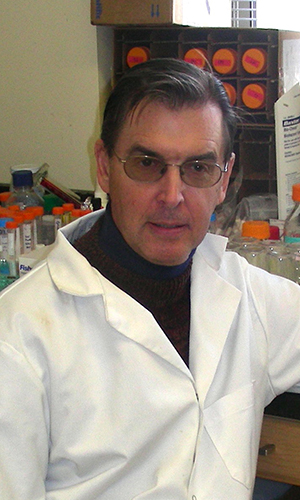
Etienne Messerli is an Associate Professor at the School of Engineering and Management of the Canton of Vaud, affiliated with the Reconfigurable & Embedded Digital Systems (ReDS) Institute. His work focuses on digital system design, FPGA-based solutions, and embedded systems. He currently leads or co-leads multiple research projects involving high-speed communication systems, quantum random number generation, and open-source instrumentation platforms. Key projects include the development of a high-performance FPGA IP core (JESD204B) for data converters, a self-testing quantum random number generator (QRNG), and the EASY-PHI open-hardware instrumentation platform. His research emphasizes practical implementations and collaboration with industry partners. He actively participates in conferences such as EDERC and NASA/ESA AHS, contributing to advancements in embedded system education and adaptive hardware systems. His work bridges theoretical quantum cryptography concepts with real-world hardware implementations, addressing security and performance challenges in modern communication systems.
David Mallasen Quintana is a Scientist and Lecturer at the Swiss Federal Institute of Technology Lausanne (EPFL), affiliated with both the School of Engineering (STI) and the Integrated Systems Laboratory (ESL) within the Institute of Electrical and Microengineering. He also holds teaching responsibilities in the School of Computer and Communication Sciences (IC) at EPFL. Dr. Quintana completed his Ph.D. in Computer Engineering at Universidad Complutense de Madrid in 2024. His research focuses on: Computer architecture and arithmetic systems RISC-V ecosystem development and customization Energy-efficient hardware design and domain-specific accelerators Posit arithmetic implementations and optimizations Embedded systems and low-power computing solutions His recent publications demonstrate consistent focus on RISC-V extensions, posit arithmetic implementations, and hardware/software co-design approaches for efficient computing. The work spans from fundamental arithmetic units to application-specific accelerators, with evolving emphasis on scientific computing applications and energy-constrained environments. Dr. Quintana actively contributes to open-source hardware projects including PERCIVAL, x-HEEP, and various arithmetic unit implementations. His research group develops energy-efficient platforms and tools for hardware deployment within the RISC-V ecosystem.
Alexandre Sébastien Julien Levisse is a Lecturer at the Institute of Electrical Engineering within EPFL's School of Engineering, with additional roles as System Specialist in PAT/SEL departments and Scientist in IEM. His work centers on energy-efficient hardware architectures for edge computing and AI applications. Research focuses on: Computer Architecture & VLSI Design Low-Power Electronics for edge devices Emerging Memory Technologies (RRAM, OxRAM) Neuromorphic & Approximate Computing In-Memory/ Near-Memory Computing Edge AI Hardware Acceleration His 2022-2025 publications reveal strong emphasis on specialized edge AI hardware, including near-DRAM architectures (SideDRAM), RISC-V microcontrollers for healthcare (HEEPOcrates), and overflow-free memory systems. Key innovations involve hardware-software co-design for energy efficiency, variable precision computation, and novel memory hierarchies targeting wearable sensors and edge inference. Levisse teaches Fundamentals of VLSI Design and Lab in Advanced VLSI Design at EPFL. He actively contributes to digital education as a member of EPFL's Centre for Digital Education (CCE), developing curricula for next-generation hardware engineers.
Mathias Humbert is an Associate Professor at the University of Lausanne, with affiliations at the Department of Information Systems in the Faculty of Business and Economics. Previously, he held roles as a Scientific Project Manager at the Cyber-Defence Campus, Senior Data Scientist at the Swiss Data Science Center (SDSC) at ETHZ and EPFL, and Postdoctoral Researcher at CISPA in Saarbrücken. He earned his Ph.D. in 2015 from EPFL (Switzerland) after completing B.Sc./M.Sc. studies at EPFL and UC Berkeley. His research focuses on privacy, cybersecurity, and machine learning, particularly examining privacy risks in MLaaS, online social networks, wearable devices, and spectrum monitoring, while developing novel privacy-preserving frameworks for biomedical data and social graphs. Key research areas: Privacy in data sharing, interdependent privacy, genomic privacy, location privacy, and graph-based machine learning Notable contributions: GraphEraser for graph unlearning, KGP Meter for genomic privacy awareness, and SVT² for differential privacy in methylation data His recent publications explore machine unlearning vulnerabilities, privacy risks in DNA methylation data, and usability challenges in web security mechanisms, with a focus on empirical studies and cryptographic solutions. He received a Distinguished Paper Award at NDSS 2019 for his work on MBeacon and has contributed extensively to privacy research across ACM CCS, IEEE EuroS&P, and USENIX Security venues.
Clément Pit-Claudel is a Tenure-Track Assistant Professor at École Polytechnique Fédérale de Lausanne (EPFL), leading the SYSTEMF Laboratory in the School of Computer and Communication Sciences. His work bridges programming languages, formal verification, and systems engineering to build high-assurance software and hardware components. PhD in Computer Science from MIT (2016), thesis on proof-producing compilers MSc in Computer Science from MIT BSc in Computer Science from École Polytechnique (France) Research Interests focus on correct-by-construction program synthesis , domain-specific compilers , and formal verification . He develops tools like Alectryon for interactive Coq proof visualization and Rupicola for verified compiler construction. His work spans hardware description languages (e.g., Kôika ), software verification (e.g., Fiat ), and regex engine formalization (e.g., Elk and Warblre ). Recent publications include foundational work on JavaScript regex mechanisms (ICFP 2024), relational compilation (PLDI 2022), and hardware simulation (ASPLOS 2021). His lab SYSTEMF emphasizes full assurance without compromise through machine-checked proofs and hardware-software co-design. Awards include the MIT Frederick C. Hennie III Teaching Award (2016) and MIT William A. Martin Thesis Award (2016). He has served as program committee member for conferences like PLDI, POPL, and Coq Workshop. Teaching includes Software Construction (400+ students at EPFL) and Interactive Theorem Proving graduate course. He has advised doctoral students in formal methods and compiler design.
Maria Giuseppina Chiara Nestola is a Researcher at the Faculty of Informatics, Università della Svizzera italiana (USI), and partially affiliated with the Department of Earth Sciences at ETH Zurich. Her work focuses on developing advanced numerical methods for fluid-structure interaction (FSI), immersed boundary techniques, and fracture network modeling in biomedical and geophysical contexts. She contributes to projects like FASTER (geothermal reservoir simulations) and HPC-PREDICT (cardiovascular prognosis), and leads software development for tools like AV-FLOW (FSI library), Parrot (fracture network modeling), and Utopia (linear algebra). Her research integrates high-performance computing with applications in geophysics (e.g., seismic hazard assessment, geothermal systems) and biomechanics (e.g., aortic valve dynamics, turbulent blood flow). Key collaborations include the Center for Computational Medicine in Cardiology and the Swiss Competence Center for Energy Research (SCCER-SoE). She holds roles as FOMICS administrator and project co-PI/co-investigator in PASC initiatives. Her technical expertise spans parallel algorithms, embedded finite-element methods, and multi-physics simulations. Current efforts emphasize real-time geothermal reservoir modeling using Multilevel Monte Carlo methods and benchmarking fracture flow simulations.
Heinz Riener is a Researcher at the Integrated Systems Laboratory (LSI) within the School of Computer and Communication Sciences (IC) at EPFL, Lausanne, Switzerland. He holds a Ph.D. (Dr.-Ing.) in Computer Science from the University of Bremen, Germany. Previously, he worked at the German Aerospace Center (DLR) and the University of Bremen's Reliable Embedded Systems group. His research focuses on logic synthesis , formal methods , and computer-aided verification of hardware and software systems. Key areas include quantum computing (e.g., AQFP circuits), nanotechnology (e.g., RFET-based circuits), and emerging technologies like adiabatic quantum-flux parametron systems. Developed open-source tools like mockturtle and easy for logic synthesis and ESOP forms. Principal Investigator on projects like the Open Logic Synthesis Libraries initiative. Active in program committees for conferences like DAC, DATE, and FDL. Collaborates with institutions such as TU Graz, TU Hamburg, and UC Berkeley. His work emphasizes reproducibility and open-source collaboration in logic synthesis, contributing to benchmarks and libraries widely used in academia and industry.
Aliaksei Andrushevich is a Senior Research Associate at the Institute of Electrical Engineering IET iHomeLab within the Lucerne School of Engineering and Architecture (HSLU T&A). He holds a PhD in Information Technologies (2021–2024) and has extensive experience in IoT, smart homes, and embedded systems. He has served as a guest lecturer at the Hogeschool van Amsterdam (2015–2018) and contributed to academic memberships including IEEE and AAATE. Education highlights include an MSc in Embedded Systems from the University of Lugano (2005–2007) and a Dipl.-Math from Belarusian State University (2001–2006). His research focuses on IoT security, ambient assisted living (AAL), energy-efficient systems, and smart city technologies. Notable projects include AgeWell Companion, WorkLifeCabin, and FEEB&D (Future Energy Efficient Buildings). His recent publications emphasize edge computing for public building monitoring, conversational AI in elderly care, and semantic IoT frameworks. Awards include the Young Researcher Award (2014) and SenZations Prize (2013). He actively collaborates on projects like RecoveryFun (mental health monitoring) and Ella4Life (AAL solutions), leveraging interdisciplinary approaches to improve quality of life through technology.
Martin Vogel is a part-time Lecturer at the Lucerne School of Computer Science and Information Technology (HSLU) since 2003. He holds a Master's degree in Electrical Engineering from ETH Zürich (1995). His academic role focuses on teaching subjects like Microcontroller Programming, Algorithms, and Computer Science fundamentals. Alongside his academic duties, he operates as a self-employed professional photographer, offering services for journalism, marketing, and portraits, including work for HSLU. Education: Master of Electrical Engineering, ETH Zürich (1995) Research & Professional Expertise: Vogel specializes in embedded systems, software/hardware development, and project management. His technical competencies include C/C++ programming, microprocessor technology, and Python scripting. His photography work complements his technical skills, with a focus on event, portrait, and architectural photography. Projects: He contributes to research initiatives such as the 'ITC - Big Data HSLU Cloud' and 'Autonomous Low-Cost Emissions Monitoring of Wood-Burning Stoves.' Teaching & Advising: No formal advisees are listed, but he instructs courses like 'PREN Project Module Product Development' and supervises bachelor theses. No grants are explicitly mentioned. Labs/Teams: Engaged in the HSLU's ITC projects, focusing on cloud computing and environmental monitoring systems.
Dr. Johannes Köhler is a Lecturer at the Department of Mechanical and Process Engineering at ETH Zürich, Switzerland. His research focuses on advanced control systems, particularly model predictive control (MPC), robust control of nonlinear systems, and data-driven control strategies. He holds a Master's degree in Engineering Cybernetics from the University of Stuttgart (2017) and a Ph.D. in Mechanical Engineering (2021), for which he received the 2021 European Systems & Control PhD Award. His work emphasizes safety, optimization, and adaptability in control systems, with applications ranging from autonomous navigation to energy-efficient building systems. Key academic achievements include the 2022 ETH Zurich Career Seed Award for his work on data-driven predictive control, and the 2020 Best Publication Award at the University of Stuttgart for applying MPC to combat the COVID-19 outbreak. He has authored over 60 peer-reviewed articles, with recent contributions in stochastic MPC, robust nonlinear control, and safety-aware exploration strategies. Education: Ph.D. in Mechanical Engineering, University of Stuttgart (2021) Master of Engineering Cybernetics, University of Stuttgart (2017) His research group at ETH Zürich develops algorithms for real-time control of complex systems, with a focus on embedded MPC for robotics and energy systems. Current projects include safe autonomous navigation, adaptive control under uncertainty, and data-driven methods for nonlinear systems.
Luca Di Grazia is a Researcher (Postdoctoral) in the STAR group at the University of Lugano (USI), Switzerland, supervised by Prof. Mauro Pezzè. He holds a PhD (summa cum laude) in Software Engineering from the University of Stuttgart, advised by Prof. Michael Pradel. Previously, he completed his Bachelor's and Master's degrees in Computer Engineering at the Polytechnic of Turin, Italy, with a minor in Embedded Systems. His research focuses on Generative AI, Program Repair, Software Evolution, and Code Search techniques. Education: Bachelor's and Master's in Computer Engineering, Polytechnic of Turin (Italy), with a thesis on "Protein classification using geometrical features for 3D face analysis". PhD in Computer Science (summa cum laude) from University of Stuttgart (Germany), thesis: "Supporting Software Evolution via Search and Prediction". Postdoctoral Researcher at USI, Switzerland. Research Interests: Generative AI for software testing and bug fixing (e.g., winning an Uber competition with a GenAI tool). Program Repair techniques, such as PyTy for Python type errors. Code Search and Change Retrieval (e.g., DiffSearch engine). Software Evolution and Type Annotation studies in Python. Achievements: ACM SIGSOFT Distinguished Paper Award at ESEC/FSE 2022 for work on Python type annotations. Second prize at ACM Student Research Competition at ICSE 2022. Won GenAI Uber competition (2023) with a project to boost developer productivity, beating 103 teams. Summa cum laude PhD (2024). Recipient of national scholarships during his studies at Polytechnic of Turin. Advising: Supervised seven students on projects including automated error repair and testing frameworks. Labs/Teams: STAR group at USI, collaborating with JetBrains and Uber.
Dr. Dimitar Petrov is an Associate Professor in Computer Science at Ca’ Foscari University of Venice, specializing in static analysis and cybersecurity. He is affiliated with ETH Zürich's Institute of Pharmaceutical Sciences (IPW) as staff under Tit.-Prof. Jörg Scheuermann. His research focuses on applying abstract interpretation-based methods to detect security vulnerabilities in systems ranging from blockchain smart contracts to IoT devices. Education details are not explicitly provided in the text, but his extensive publication history indicates advanced expertise in formal methods. His research interests include software verification, privacy enforcement, and the application of static analysis tools like LiSA across diverse domains such as robotics, microservices, and mobile applications. Key research trends in his articles emphasize blockchain security (smart contract vulnerabilities, consensus protocols), IoT/IoMT security (device interactions, privacy policies), and the integration of machine learning with program analysis. His work bridges academic research with industry challenges, addressing compliance with regulations like GDPR and the EU Data Act. Prior to his current roles, he has contributed to open-source frameworks like LiSA and collaborated on projects involving automated policy extraction, cross-language analysis, and vulnerability detection in automotive systems. His research group at Ca’ Foscari actively engages in both theoretical advancements and practical tool development. Labs/Teams: Part of the Software and System Verification group at Ca’ Foscari, and collaborates with ETH Zürich's Institute of Pharmaceutical Sciences on interdisciplinary projects combining formal methods with healthcare technology.
Vannel Fabien is a Full Professor at the Haute école du paysage, d'ingénierie et d'architecture de Genève (HEPIA), part of the HES-SO University of Applied Sciences and Arts. He is affiliated with the Technical and IT School and the Department of Computer Science and Communication Systems. His research focuses on embedded systems, IoT, FPGA-based architectures, neuromorphic computing, and quantum communication technologies. Education: PhD in Bio-inspired Computing (2007), École Polytechnique Fédérale de Lausanne (EPFL), supervised by Daniel Mange Research Interests: Development of self-organizing neuromorphic hardware architectures (SOMA project) High-performance FPGA-based platforms for IoT security and random number generation Cellular computing inspired by biological systems 3D Network-on-Chip (NoC) architectures and dynamic resource allocation Quantum key distribution (QKD) systems for secure communication His work combines hardware design with bio-inspired algorithms, aiming to create adaptive, energy-efficient computing systems. Recent projects include SCALPsim (a 3D NoC modeling tool) and FPGA-based validation platforms for TRNGs. Grants & Projects: Principal investigator for SOMA (2018-2021, SNSF-funded CHF 461,238) Co-applicant for iNUIT-2014 ArchSensor (2014-2015, HES-SO-funded CHF 220,000) Contributor to heterogeneous computing platforms (AcceleRation, 2013-2014) Labs & Teams: Lead researcher in the SOMA team at HES-SO, collaborating with institutions like Université de Nice and INRIA.
Jacques Pasquier is a Professor in the Department of Informatics at the University of Fribourg, Switzerland, and Head of the Software Engineering Group. His academic affiliation falls under the Interfaculty Informatics unit, emphasizing interdisciplinary research and education in computer science. His research and teaching focus on software engineering, cybersecurity, IoT systems, and agile methodologies. Research interests include IoT security, blockchain applications in decentralized networks, and privacy-preserving technologies. He has contributed to frameworks for secure IoT middleware, lightweight communication protocols, and trusted execution environments. His work bridges theoretical advancements with practical implementations, such as the ImputeGAP library for time series imputation and the Universal Explorer for Web of Things interoperability. Publications span topics like secure IoT infrastructure, blockchain-enabled LPWAN systems, and agile development metrics. His articles often address challenges in privacy, scalability, and resilience within distributed systems. While no specific awards are mentioned, his prolific publication record highlights sustained contributions to computer science and engineering. Led the Software Engineering Group, focusing on advancing methodologies for modern software systems. Collaborates on projects involving industry and academic partners to address real-world challenges in IoT and cybersecurity.
David Atienza Alonso is a Full Professor in the Department of Electrical and Electronics Engineering at the School of Engineering, École Polytechnique Fédérale de Lausanne (EPFL), Switzerland. He leads the Embedded Systems Laboratory (ESL) and serves as Associate Vice President for Centers and Platforms, overseeing major research infrastructure. His work spans embedded systems, IoT, edge AI, and sustainable computing. His research interests focus on system-level design for high-performance and low-power computing systems. Key areas include thermal-aware design of multi-processor systems-on-chip (MPSoC), energy-efficient embedded machine learning, wireless body sensor networks, and electronic design automation (EDA). His lab develops novel methodologies for hardware-software co-design, memory optimization, and edge computing architectures. The analysis of his recent publications reveals a strong trajectory in intelligent, energy-efficient computing systems. His work integrates machine learning with traditional EDA techniques for data center optimization, applies ultra-low power heterogeneous architectures to healthcare wearables, and advances thermal modeling for 3D ICs. Themes of sustainability, real-time processing, and edge intelligence are consistent across his research. Dr. Atienza has received numerous accolades, including: ERC Consolidator Grant (2016) DAC Under-40 Innovators Award (2018) IEEE TCCPS Mid-Career Award (2018) ACM SIGDA Outstanding New Faculty Award (2012) ICCAD 10-Year Most Influential Paper Award (2020) Best paper awards at top-tier conferences He has advised over 40 PhD students, many of whom have gone on to successful academic and industry careers. His research has been supported by major grants, including the ERC grant, and he has co-authored over 450 publications and 14 licensed patents. He plays a significant leadership role in the academic community, having served as Editor-in-Chief of IEEE Transactions on CAD, President of IEEE CEDA (2018–2019), and currently as Chair of the European Design Automation Association (EDAA). He is a Fellow of both IEEE and ACM. His laboratory, the Embedded Systems Laboratory (ESL), is a leading center for research in embedded and cyber-physical systems, fostering interdisciplinary collaboration and innovation in sustainable computing technologies.