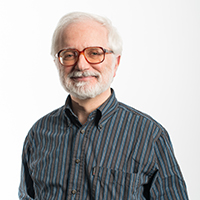
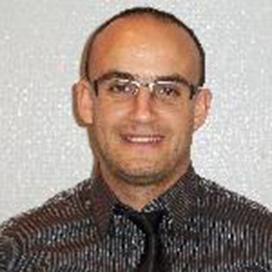
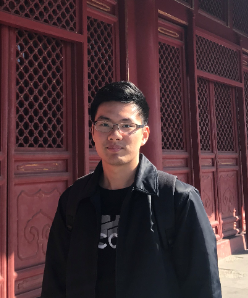
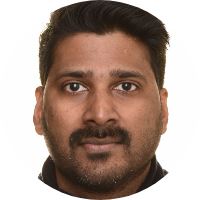
Lorenzo Strigini is a Professor of Systems Engineering at City St George's, University of London , where he has been affiliated since 1995 and served as Director of the Centre for Software Reliability from 2012–2024. His research focuses on dependability assessment , fault tolerance , and defense in depth for safety, security, and reliability in computer-based and socio-technical systems. He has also explored high-speed networking during his earlier career at the Italian National Research Council (IEI-CNR) and as a visiting scientist at UCLA and Bell Communications Research.
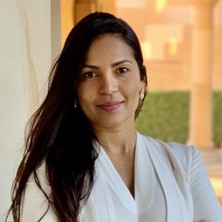
Dr. Nathalia Costa is a Senior Research Fellow at the University of Queensland's cLinical TRials cApability (ULTRA), located within the Centre for Clinical Research in Herston, and affiliated with the Centre for Innovation in Pain and Health Research (CIPHeR). She holds appointments in the School of Health and Rehabilitation Sciences within the Faculty of Health, Medicine and Behavioural Sciences. Her research focuses on theoretically grounded qualitative and mixed methods approaches to understanding low back pain, pain management, and healthcare systems. Costa is particularly known for her groundbreaking work on low back pain flares, which established the first rigorous definition of pain flares through stakeholder engagement with over 70 experts and consumers. Her methodological expertise spans systematic reviews, qualitative methodologies (interviews, ethnography, Delphi studies), embedding qualitative research in clinical trials, and systems-thinking frameworks. Costa's recent publications demonstrate a growing focus on culturally responsive care, healthcare access for migrant populations, and the intersection of legal services with mental health. Her work bridges micro-level patient experiences with macro-level healthcare systems, aiming to make pain care more nuanced, equitable, and evidence-based. She has published over 55 papers spanning musculoskeletal conditions, pain research, health policy, and qualitative methodologies. Her scientific achievements include the 2021 ISSLS Prize for Lumbar Spine Research, recognition from the International Society for the Study of the Lumbar Spine. Her research has influenced international pain frameworks, including adoption by the International Association for the Study of Pain (IASP) in their online Fact Sheet (July 2023). Costa actively supervises multiple PhD students, serves as Associate Editor for Qualitative Health Research and the Journal of Humanities in Rehabilitation, and has taught across disciplines including research methods, musculoskeletal physiotherapy, and health policy. She has secured over AUD$7.5M in research funding, currently leading the FORENSIC trial investigating lumbar fusion surgery effectiveness for persistent severe low back pain.
Fabian Monrose is a Professor at the Georgia Institute of Technology, holding the Julian T. Hightower Chair in Cybersecurity. His career spans leadership roles at the University of North Carolina at Chapel Hill (UNC), Johns Hopkins University, and Bell Labs. He earned his Ph.D. in Computer Science from New York University's Courant Institute in 1999. Dr. Monrose specializes in cybersecurity, with research focusing on malware analysis, network security, and hardware threats. His work has earned Best Paper Awards at IEEE and USENIX conferences, along with the AT&T Best Applied Security Paper Award . He has published over 100 papers and led collaborative efforts at institutions like RENCI. Dr. Monrose's recent publications include studies on TLS certificate risks, hardware trojans, and AI-aided malware evasion. Best Paper Award at IEEE Symposium on Security & Privacy Best Paper Award at USENIX Security Symposium Outstanding Research in Privacy Enhancing Technologies Award AT&T Best Applied Security Paper Award Best Student Paper Award (2013) His research trends emphasize practical security solutions , including defensive registration strategies, automated bug analysis, and IoT threat mitigation. Dr. Monrose has also contributed to cybersecurity education through gamified platforms and secure autograding systems.
Dr. Fendy Santoso is a Visiting Fellow at UNSW Canberra's School of Engineering and Information Technology, where he conducts cutting-edge research at the intersection of cyber-physical systems, cybersecurity, and artificial intelligence. His work focuses on developing robust security mechanisms for autonomous systems, particularly UAVs and robotics operating in adversarial environments. His educational background includes a PhD in Electrical Engineering from UNSW Sydney and a Master of Engineering (Electrical and Computer Systems) from Monash University. Dr. Santoso's research interests span cyber-physical systems security, adversarial machine learning, trustworthy autonomy, and AI-driven cybersecurity for autonomous platforms. His work specifically targets penetration-resistant architectures and secure decision-making frameworks for UAVs and robotic systems operating in dynamic, threat-prone environments. His approach integrates advanced fuzzy logic systems with deep learning techniques to create resilient control mechanisms that can withstand cyberattacks and operational uncertainties. Analysis of his recent publications reveals a consistent focus on applying type-2 fuzzy systems, deep learning, and negative imaginary control theory to solve critical challenges in autonomous systems security and control. His work demonstrates strong interdisciplinary connections between cybersecurity, control theory, and artificial intelligence, with particular emphasis on real-world implementation and experimental validation. Distinguished Early Career Travel Fellowship 2019, University of Wollongong ARC Linkage Project: Robust Defenses Against Adversarial Machine Learning for UAV Systems (2023) CSIRO Next Generation Grant for AgriTwins: Bridging Cyber-Secure Emerging Technologies and Data-Centric Twin Tech for Resilient Agriculture of the Future (2024) Dr. Santoso has secured over AUD 3 million in competitive research funding from prestigious sources including the Australian Research Council, U.S. Army Ground Vehicle Systems Centre, and Defence Science and Technology Group. He leads multi-disciplinary research teams and maintains strategic partnerships with defense and government agencies to translate theoretical advances into practical cybersecurity frameworks. His laboratory work centers around the Autonomous System Laboratory at UNSW Canberra, where he conducts experimental validation of security protocols for military ground robots and UAVs under realistic cyberattack scenarios.
Dr. Carole Dalin is Associate Professor in Sustainable Food Systems at University College London's Bartlett School of Environment, Energy & Resources, where she leads the Sustainable Food Systems research team at the Institute for Sustainable Resources. She also holds a dual appointment as CNRS Researcher at École normale supérieure in Paris, leading the European Research Council Starting Grant FLORA project on 'Sustainable and healthy food solutions: system dynamics and trade-offs'. Her academic journey began with a Diplôme d'Ingénieur from Ecole Centrale Paris in 2011, followed by a Ph.D. in Environmental Engineering & Water Resources from Princeton University in 2014 under the supervision of Ignacio Rodriguez-Iturbe. Her research bridges environmental engineering and policy, with a primary focus on the environmental sustainability of global food production and trade. Dr. Dalin's work specifically addresses water resources management within food systems, the water-food-energy nexus, and biodiversity conservation impacts. She has developed integrated environmental sustainability indicators for global food production and has made significant contributions to understanding virtual water trade and groundwater depletion embedded in international food commerce, with particular attention to vulnerable regions like Southern Africa. Dr. Dalin's scholarly output demonstrates a consistent trajectory toward understanding the complex interconnections between food systems, environmental sustainability, and human health. Her work has increasingly integrated biodiversity considerations with water sustainability metrics, and she has become a key contributor to the Lancet Countdown reports that examine health implications of climate change. Recent publications highlight her expanding focus on developing practical solutions for sustainable food systems that balance environmental protection with food security needs. NERC Independent Research Fellowship (2016-2021) ERC Starting Grant FLORA (2022-2027) Multiple contributions to The Lancet Countdown on health and climate change reports Dr. Dalin actively mentors a diverse research team comprising both current and former Ph.D. students and postdoctoral researchers who investigate various dimensions of sustainable food systems. Her research has secured funding from prestigious organizations including NERC, the European Research Council, and the Wellcome Trust. She maintains strong collaborative relationships across institutions, particularly with UCL's Centre for Biodiversity and Environment Research and French research institutions through her CNRS position at École normale supérieure. She facilitates the Water and Food Resource Nexus research theme at UCL's Institute for Sustainable Resources, which integrates multiple projects addressing different aspects of food system sustainability, including the FOODIES project on environmental indicators, ADVENT on energy and nature valuation, and research on climate change impacts on food security.
Dr Andrew Elliott is a Senior Lecturer in the School of Statistics at the University of Glasgow. His research bridges Statistics , Computational Statistics , and Machine Learning & AI , with applications in Social & Urban Studies and Imaging, Image Processing & Image Analysis . Education: Not explicitly detailed in the text. Dr Elliott's work focuses on modeling in space and time , synthetic data generation , and network analysis . His recent publications explore fairness constraints in AI , agent swarms , and temporal network modeling , reflecting interdisciplinary applications in urban analytics and environmental science. His publications from 2014–2024 span network science , machine learning , image analysis , and geospatial studies . Key trends include privacy auditing , counterfactual explanations , and deep learning for network time series . Dr Elliott supervises doctoral students and has advised Zhengduo Zhao and Weiyue Zheng . He actively contributes to research groups in Statistics & Data Analytics and Machine Learning . Notable collaborations include work with Mihai Cucuringu and Gesine Reinert .
Dr. Sirojan Tharmakulasingam serves as a Lecturer and Research and Development Coordinator at the Signals, Information & Machine Intelligence lab within the Faculty of Engineering at the University of New South Wales (UNSW) Sydney. His work bridges theoretical machine learning with practical applications in edge computing and high-performance systems. His research spans multiple cutting-edge domains including machine learning, artificial intelligence, data science, edge computing, and high-performance computing. Dr. Tharmakulasingam specializes in developing next-generation inference models by integrating machine learning, signal processing, mathematical modeling, and computing across diverse data types including images, video, audio, and quantum molecular data. His work has significant implications for scientific computing, telecommunications, and healthcare applications. Analysis of his publication trends reveals a strong focus on practical AI implementations, with increasing emphasis on edge computing solutions, quantum applications, and energy-efficient models. His recent work demonstrates progression from foundational machine learning techniques toward specialized applications in scientific computing and real-time systems. Dr. Tharmakulasingam holds a Doctor of Philosophy from UNSW Sydney and a Bachelor of Science of Engineering from the University of Moratuwa in Sri Lanka. His academic journey reflects a strong foundation in both theoretical and applied engineering principles. As Research and Development Coordinator for the Signals, Information & Machine Intelligence lab, he oversees critical research infrastructure and collaborations. His work location in Room 447 of the EE&T Building (G17) places him at the heart of UNSW's engineering research ecosystem, with access to the Mark Wainwright Analytical Centre's extensive facilities.
Subramanian Iyer is a Distinguished Professor at the University of California, Los Angeles (UCLA), holding the Charles P. Reames Endowed Chair in Electrical Engineering with joint appointments in Electrical and Computer Engineering and Materials Science and Engineering. His laboratory focuses on cutting-edge semiconductor research. Primary research domains include: System Scaling Technology : Innovations in semiconductor miniaturization 3D Integration & Advanced Packaging : Techniques for vertical chip stacking and heterogeneous integration Memory Subsystems : Development of embedded DRAM and novel memory architectures Neuromorphic Computing : Hardware implementations of brain-inspired computing Publication analysis reveals three dominant themes across 35+ years of research: Semiconductor materials innovation (SiGe alloys, silicides, MBE growth) Memory technology evolution (embedded DRAM, eFUSE, low-latency designs) System integration advancements (3D packaging, TSV, heterogeneous integration) Significant honors include: IEEE Fellow (1995) and Daniel Noble Award (2012) National Academy of Inventors Fellow (2017) IBM Fellow (2010) with 30+ invention plateaus IMAPS Educator Award (2021) and Daniel C. Hughes Memorial Award (2020) He leads UCLA's NanoLab facility and has been featured in The New York Times and Wall Street Journal for pioneering chiplet technology. Current work focuses on megachip architectures and open-access semiconductor prototyping.
Gian Pietro Picco is a Full Professor at the Department of Information Engineering and Computer Science (DISI) at the University of Trento, Italy. His research focuses on wireless networks, particularly ultra-wideband (UWB) technology, wireless sensor networks, and cyber-physical systems. He teaches courses including Distributed Systems, Low-power wireless networking for the Internet of Things, and Programming 2. Professor Picco's research interests span several interconnected domains in pervasive computing and networking: Ultra-wideband (UWB) technology for precise localization and communication Wireless sensor networks and Internet of Things (IoT) systems Cyber-physical systems and networked control Energy-efficient networking protocols Distributed systems and middleware Software engineering approaches for networked embedded systems His recent publications demonstrate a strong focus on ultra-wideband technology applications, particularly in localization, ranging, and concurrent transmissions. His work bridges theoretical foundations with practical implementations, often addressing real-world challenges in human-robot interaction, contact tracing, and infrastructure monitoring. A notable trend is the increasing application of UWB technology for precise positioning in complex environments, with significant contributions to understanding and mitigating human occlusion effects on ranging accuracy. Professor Picco has received numerous prestigious awards for his research contributions: Best Paper Award at IPSN'23 for "Network On or Off? Instant Global Binary Decisions over UWB with Flick" Best Paper Award at IPIN 2019 for "TALLA: Large-scale TDoA Localization with Ultra-wideband Radios" Best Paper Award at EWSN 2018 for "Concurrent Ranging in Ultra-wideband Radios" Best Paper Award at IPSN 2015 for "Geo-referenced Proximity Detection of Wildlife" Best Paper Award at IPSN 2011 for "Wireless Sensor Networks for Adaptive Lighting in Road Tunnels" Best Paper Award at IPSN 2009 for "Monitoring Heritage Buildings with Wireless Sensor Networks" Mark Weiser Best Paper Award at PerCom 2012 Professor Picco actively advises numerous PhD and Master's students, with several of his advisees becoming prominent researchers in wireless networking. His laboratory has secured significant funding for research projects in wireless sensor networks, IoT systems, and cyber-physical systems. His work has practical applications in heritage building monitoring, wildlife tracking, road tunnel lighting systems, and pandemic contact tracing. His research group maintains the Cloves large-scale ultra-wideband testbed and has developed several middleware systems for wireless sensor networks, including Lime and TeenyLIME. The group collaborates extensively with international research institutions and has made significant contributions to standardization efforts in IoT networking protocols.
Toufik AZIB is a Full Professor and scientific coordinator of the ECMS (Energy and Conception of Mechatronic Systems) research theme at ESTACA Engineering School in France. He leads a team of 6 teacher-researchers and 13 PhD students, focusing on optimal design of power electronics and energy management for hybrid power systems. His work bridges academic research and industrial applications in sustainable mobility, with strong collaborations across Europe and Algeria. Dr. AZIB received his Electrotechnical Engineering Diploma from the University of Setif, Algeria in 2006, followed by an M.Sc. in Electrical Engineering from ENSEM-INPL, France in 2007. He earned his Ph.D. in electrical engineering from the University of Paris South XI in 2010 and completed his HDR (Habilitation à Diriger des Recherches) from the University of Paris Saclay in 2021. His academic journey reflects a strong foundation in both theoretical and applied electrical engineering. His research focuses on the modeling, control, and optimal design of embedded energy systems under multi-physical constraints (electrical, thermal, electromagnetic compatibility, volume, reliability). He specializes in energy management strategies for hybrid systems combining fuel cells, batteries, and ultracapacitors, with applications in electric vehicles and the 'more electric aircraft.' His work integrates numerical and experimental approaches to develop methodologies for pre-dimensioning and real-time energy management, addressing challenges in sustainable transportation. Analysis of Dr. AZIB's recent publications reveals a strong trend toward multidisciplinary design optimization for automotive applications, particularly electronic throttle systems. His research increasingly incorporates knowledge management techniques and addresses reliability considerations in hybrid power source design. There's a clear progression from fundamental energy management strategies to sophisticated eco-driving solutions for electric vehicles, reflecting the evolving demands of sustainable mobility. Best Paper Award for 'Structure and Control Strategy for a Parallel Hybrid Fuel Cell/Supercapacitors Power Source' at IEEE VPPC'09 Dr. AZIB has supervised numerous PhD and Master's students across multiple institutions in France, Algeria, and Colombia. He leads significant research projects including MIMe (Module d'Intégration et de simulation Mécatronique), ECOS Nord (Eco-driving strategies for electric motorcycle), and AmCoAIR (improving air quality in vehicle cabins), securing funding from national and international sources. His work demonstrates strong industry collaboration with partners like Valeo, PSA, and Renault. As experimental platforms coordinator since 2012, Dr. AZIB oversees 10 specialized experimental facilities at ESTACA's S2ET-Paris Saclay research pole, including those for autonomous electric vehicles, drones, electric machines, and power modulators. His team regularly develops proof-of-concept demonstrators to validate research findings, such as the Formula Student electric vehicle and the 'Electric Appeal' streamliner project, demonstrating practical applications of their theoretical work.
Petr Kuznetsov is a Professor at Telecom Paris (Institut Polytechnique de Paris), affiliated with the Department of Computer Science and Networks (INFRES). He leads the Autonomous Critical Embedded Systems (ACES) research team at the Information Processing and Communication Laboratory (LTCI). His work bridges theoretical foundations and practical applications in distributed systems. Research Focus: Kuznetsov specializes in distributed algorithms, synchronization protocols, failure detection mechanisms, and the application of algebraic topology to distributed computing. His recent work explores Byzantine fault tolerance, blockchain consensus, and concurrency in networking infrastructures. Recent Publication Trends (2015-2025): His articles predominantly focus on scalability and resilience in distributed systems, with emerging themes in blockchain technologies, Byzantine fault tolerance, and concurrency optimization. Theoretical contributions include computability theorems and complexity bounds, while applied work targets payment systems and distributed ledgers. Awards & Honors: Best Paper Award at DISC 2019 for Scalable Byzantine Reliable Broadcast Best Student Paper Award at PODC 2018 for An Asynchronous Computability Theorem for Fair Adversaries Projects & Advising: He directs the TrustShare Innovation Chair (large-scale data synchronization) and DISCMAT (mathematical foundations of distributed computing). Actively seeks PhD candidates for projects on distributed algorithms and concurrency. Laboratory & Teams: Heads the ACES team at LTCI, focusing on critical embedded systems and fault-tolerant distributed architectures. Collaborates internationally through workshops like SPTDC.
Heyuan Shi is an Associate Professor at the School of Electronic Information, Central South University since 2023. He earned his B.S. (2015) and Ph.D. (2020) from Central South University and Tsinghua University respectively. His research focuses on software quality assurance with emphasis on kernel fuzz testing , open source software security , and AI application security . Presided over 10+ projects including NSFC General Program (No.62472448) and National Key R&D Sub-Project Published 30+ CCF-A/B papers across software security, machine learning, and quantum testing Supervised 15+ graduate students in software quality assurance areas His recent 2024-2025 publications demonstrate expertise in: LLM-enhanced patch classification Quantum neural network verification Hypergraph adversarial attacks RTOS fuzzing techniques Scientific recognition includes: 2024 Beijing Science & Technology Progress Award (First Prize) Hunan Province Xiaohe Sci-Tech Talent (2023) China Association for Science & Technology Young Talent (2025-2027) Active in academic service as PC member for FM2024 and reviewer for IEEE Transactions journals. Leads industry collaborations with Alibaba and Beijing Institute of Aerospace Metrology.
Prof. Dr. Haris Gačanin is a faculty member at RWTH Aachen University, affiliated with the Institute for Distributed Signal Processing under the College of Electrical Engineering. His research focuses on integrating machine learning with wireless communication systems, particularly in industrial IoT, edge computing, and network optimization. Current academic rank: Professor Contact: harisg@dsp.rwth-aachen.de Research Interests: Wireless systems, machine learning, signal processing, and network optimization. Key contributions include: Adaptive resource allocation in IIoT and vehicular networks AI-driven channel estimation and feedback mechanisms Security-oriented emitter identification via metric learning Federated/transfer learning for edge environments Hardware-efficient deep learning models for mmWave and THz communications Methodological Focus: Combines reinforcement learning, attention mechanisms, and robust neural architectures with practical implementations on FPGA and vehicular systems.
Dr. Arish Sateesan serves as Professor and Chair of the Institute for Networked Systems at RWTH Aachen University's Faculty of Electrical Engineering and Information Technology, located at Kackertstrasse 9 in Aachen, Germany. His research group operates from House C (Room C046) with direct contact via asa@inets.rwth-aachen.de. His primary research domains center on hardware-accelerated network security solutions, specializing in FPGA implementations for high-speed networking. Key focus areas include: Real-time network monitoring and intrusion detection systems Hardware-optimized cryptographic and non-cryptographic algorithms Machine learning integration for wireless beamforming and LiDAR processing Ultra-high-speed flow measurement architectures His work bridges theoretical computer science with practical hardware constraints, emphasizing throughput optimization for security-critical applications. Analysis of his 15 most recent publications (2021-2025) reveals a pronounced shift toward hardware-software co-design for next-generation networks. The research trajectory shows increasing integration of quantized neural networks with traditional security primitives, particularly for mm-Wave and 5G/6G applications. A consistent theme across all publications is the prioritization of hardware friendliness through algorithmic simplification and architectural innovation. As Institute Chair, he leads a research ecosystem focused on developing deployable security solutions for modern network infrastructures, with current projects targeting autonomous vehicle communication systems and infrastructure protection against distributed denial-of-service attacks.
Sally Pusede is an Associate Professor in the Department of Environmental Sciences at the University of Virginia's College of Arts & Sciences, where she directs atmospheric chemistry research and co-leads the Repair Lab. Her work bridges atmospheric science and environmental justice through measurements from ground, aircraft, and satellite platforms in urban and agricultural environments. Dr. Pusede earned her Ph.D. from the University of California Berkeley in 2014. Her educational background established the foundation for her interdisciplinary approach combining chemical measurements with community engagement. As an atmospheric chemist, Pusede investigates reactive nitrogen cycles, greenhouse gas emissions (particularly nitrous oxide), and neighborhood-level air pollution disparities. Her research employs spatial and temporal variability analysis to derive mechanistic insights into urban atmospheric processes, with emphasis on how pollution adversely affects human health and ecosystems. She is co-director of UVA's Repair Lab, which develops community-based solutions to environmental justice issues like coal dust pollution in Hampton Roads and industrial swine facility impacts in North Carolina. Analysis of her 15 most recent publications (2022-2025) reveals three dominant research thrusts: 1) Quantifying air pollution inequality using satellite remote sensing (especially nitrogen dioxide and ammonia), 2) Investigating reactive nitrogen chemistry in urban-agricultural interfaces, and 3) Developing community-driven repair frameworks for environmental justice. Her work consistently demonstrates how neighborhood-level pollution disparities contribute to health outcomes and ozone formation, particularly in communities of color. Dr. Pusede's scientific contributions have been recognized with prestigious awards including: Presidential Early Career Award for Scientists and Engineers (PECASE), Biden Administration, 2024 Future Horizons in Climate Science Turco Lectureship, American Geophysical Union, 2022 National Science Foundation (NSF) CAREER Award, 2021 NASA New Investigator Program Award, 2021 Environmental Sciences Organization Faculty Teaching Award, University of Virginia, 2016 She mentors graduate students through the Pusede Lab while securing major grants from NSF, NASA, and the White House Office of Science and Technology Policy. Her teaching portfolio includes EVSC 4380 (Air Pollution and Environmental Justice), EVSC 4490/7490 (Air Pollution), EVSC 5350 (Atmospheric Chemistry), and EVSC 3300 (Atmosphere and Weather). The Repair Lab operates as an interdisciplinary environmental justice hub where Pusede collaborates with community practitioners, embedding researchers in Virginia communities through its practitioner-in-residence program. This lab focuses on coal dust pollution in Hampton Roads and industrial swine facility impacts in Eastern North Carolina, using satellite data to document environmental injustices while co-developing solutions with affected residents.