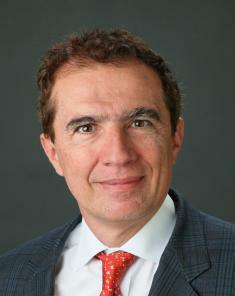
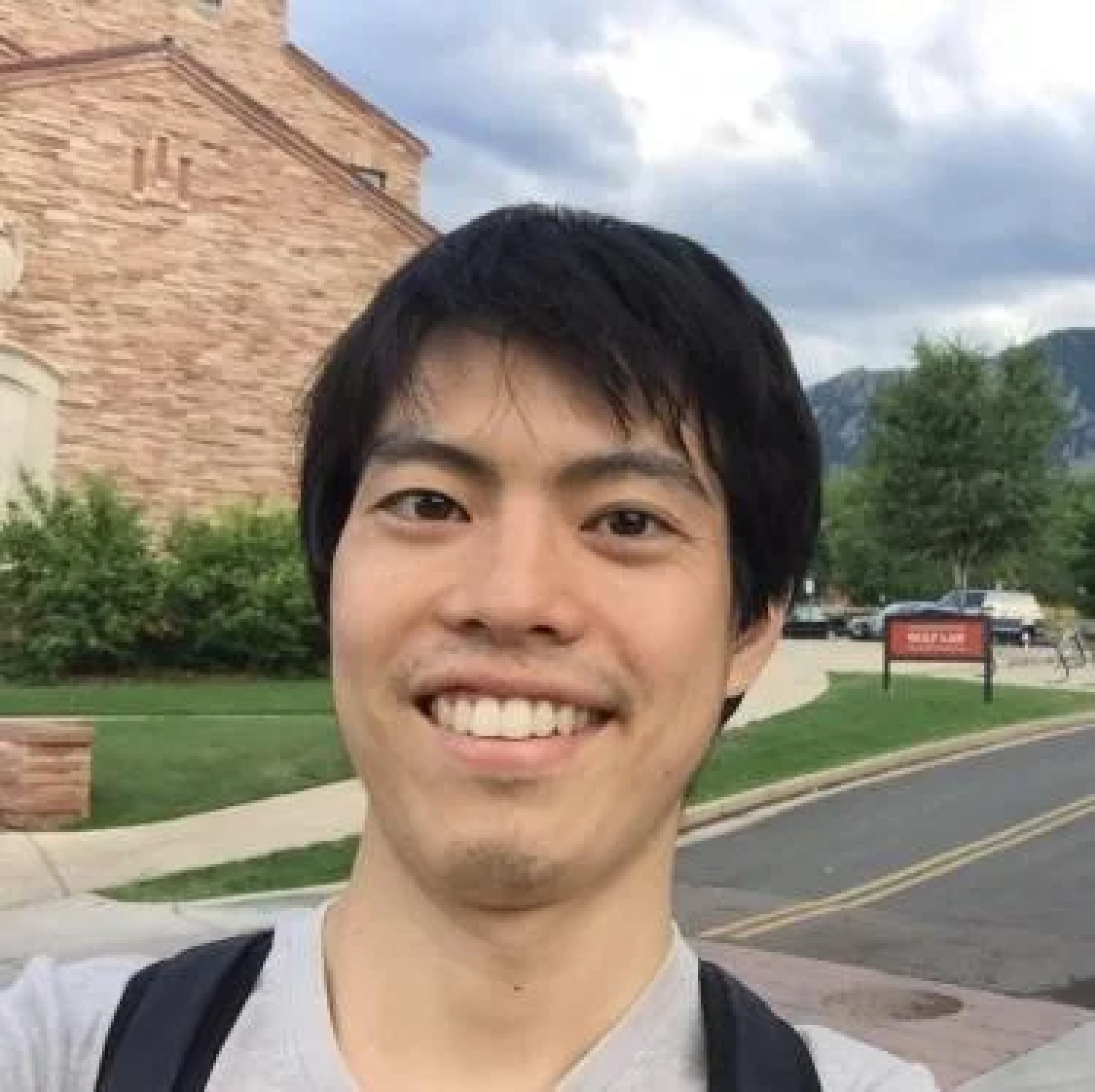
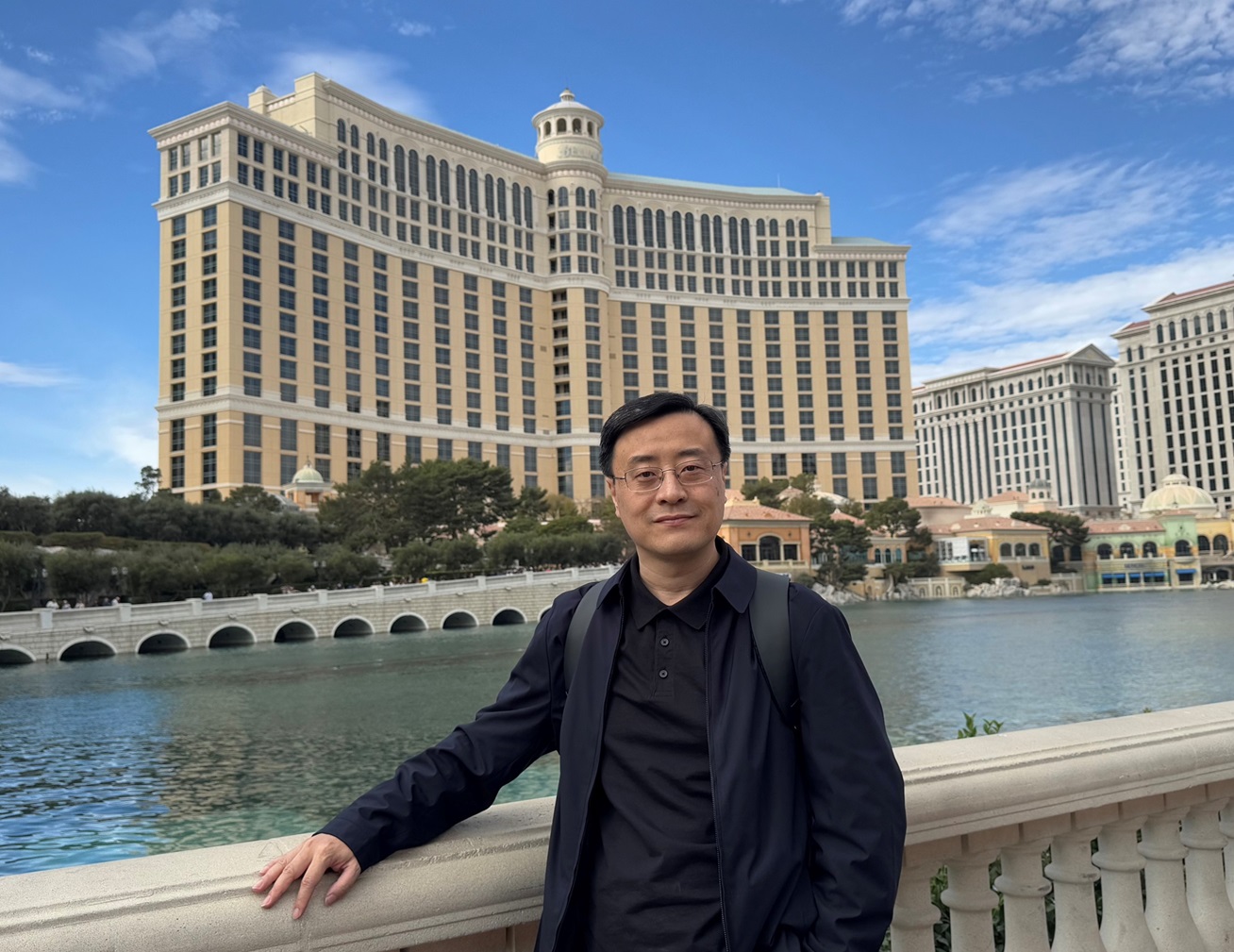
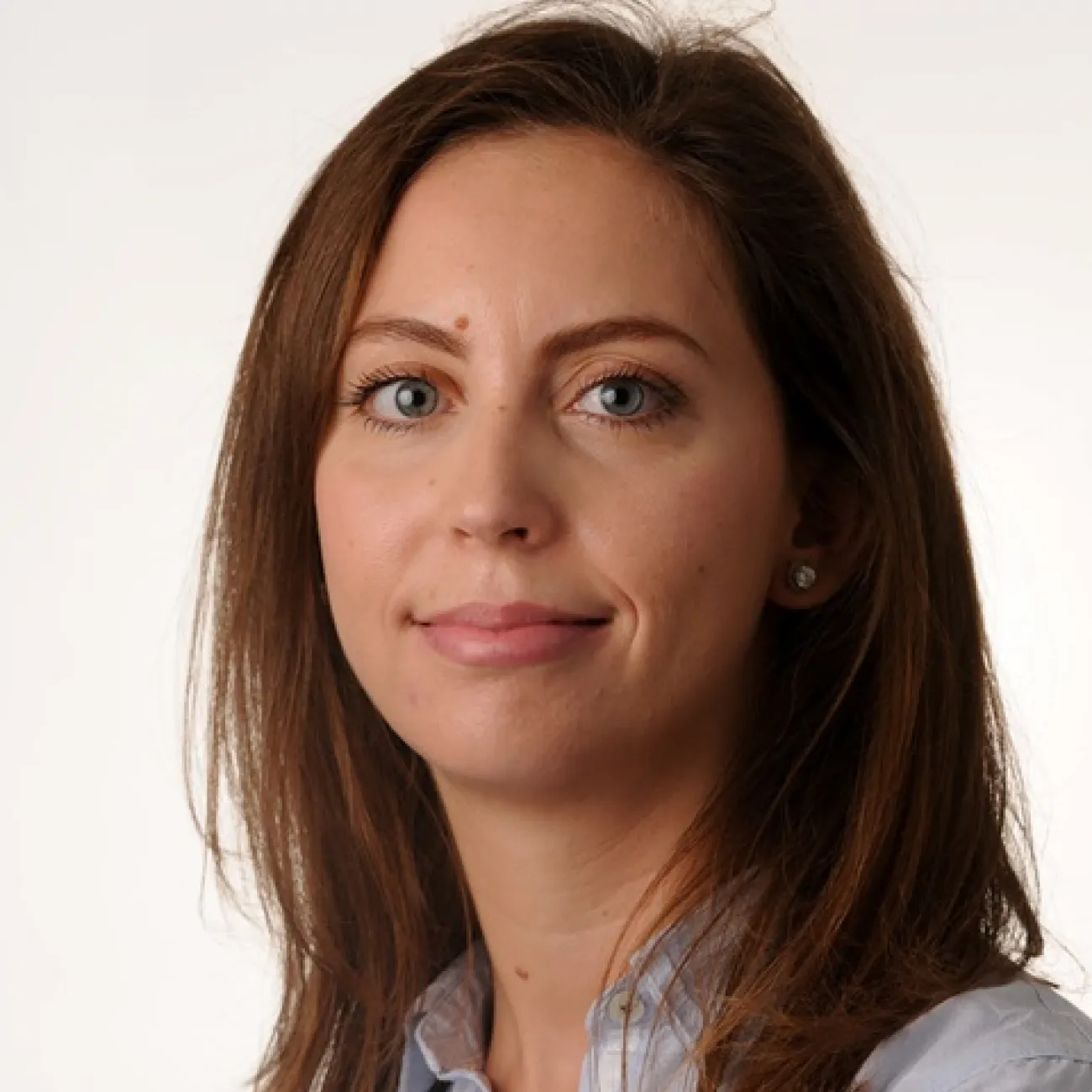
Giovanni De Micheli is a Professor of Electrical Engineering and Computer Science at EPF Lausanne, Switzerland. He also serves as Director of the Integrated Systems Centre and the Institute of Electrical Engineering at EPFL, and chairs the Scientific Committee of CSEM in Neuchatel. Previously, he held academic roles at Stanford University for 18 years, including Full Professor, Associate Professor, and Assistant Professor in the Department of Electrical Engineering. His research spans synthesis of digital circuits, hardware/software co-design, low-power design, and Networks on Chip (NoC) technology. 2003: IEEE Emanuel Piore Award 2000: Golden Jubilee Medal of the IEEE CAS Society 2000: ACM Fellow 1994: IEEE Fellow 1990: IEEE/CS Distinguished Service Award 1988: NSF Presidential Young Investigator Award His seminal contributions include pioneering C-based synthesis and Boolean matching algorithms for digital circuits, foundational work in dynamic power management using stochastic control, and the development of Network-on-Chip (NoC) technology. His publications, such as "Networks on Chips: A New SoC Paradigm" and "Dynamic Power Management for Portable Systems" , have shaped modern SoC design practices. With over 400 technical articles, 9 books, and an H-index of 56, his work remains highly influential.
Ryo Suzuki is an Assistant Professor at the ATLAS Institute within the University of Colorado Boulder's Computer Science department. His research focuses on innovative intersections of Human-Computer Interaction (HCI), Augmented Reality (AR), and robotics. He explores systems that blend AI, haptics, and shape-changing interfaces to create enriched user experiences. Key areas of investigation include embedding interactivity into static educational materials (e.g., textbooks), developing AI-driven AR tools for procedural instruction, and creating shape-changing robotics for tactile feedback. His work often emphasizes practical applications in education, remote collaboration, and creative industries. Recent projects include MapStory (LLM-driven map animation), RealityEffects (3D volumetric video augmentation), and HoloDevice (holographic cross-device collaboration).
Fabrício Benevenuto is an Associate Professor in the Computer Science Department at Federal University of Minas Gerais (UFMG), where he conducts interdisciplinary research at the intersection of social media analysis, data science, and computational journalism. His work spans complex networks, machine learning, and natural language processing with strong societal impact. His research focuses on social media dynamics, particularly in Brazilian contexts, with major contributions to hate speech detection, fake news analysis, and political discourse monitoring. He leads large-scale projects against misinformation, including development of systems like WhatsApp Monitor, Media Bias Monitor, and Purple Feed. His work combines technical innovation with real-world applications for election transparency and public discourse integrity. Benevenuto's recent publications demonstrate strong trends in multilingual NLP for social media analysis, with emphasis on Brazilian Portuguese contexts. His team produces both theoretical contributions and practical systems addressing hate speech, misinformation, and media bias. Notable methodological approaches include combining network analysis with linguistic features, developing culturally-aware detection systems, and creating large annotated datasets for understudied languages. CAPES award for best Brazilian computer science thesis (2010) Humboldt Foundation scholarship recipient (2017-2018) Member of TikTok Safety Advisory Council WWW'20 Best Paper Nominee & CNIL-INRIA Privacy Protection Prize winner Multiple best paper awards at CEAS, WBC, and ICWSM conferences Test-of-Time Award at ICWSM'20 Benevenuto actively mentors PhD and MSc students, with numerous advisees securing academic positions at Brazilian universities and research roles at institutions like Max Planck Institute. His projects often receive funding supporting interdisciplinary collaborations across computer science and social sciences. Current work includes large-scale analysis of Telegram political groups, real-time election monitoring systems, and developing culturally-aware NLP tools for Portuguese. He leads research teams working on social media analysis systems with societal impact, particularly focused on Brazilian digital ecosystems. Projects involve cross-institutional collaborations with researchers from MPI-SWS, Max Planck Institute, and various Brazilian universities, emphasizing practical applications for public discourse integrity.
Lu Su is an Associate Professor at the School of Electrical and Computer Engineering , Purdue University , with prior appointments at SUNY Buffalo . His research spans Internet of Things , cyber-physical systems , mmWave sensing , and crowd-sourced data validation , focusing on quality-of-information aware distributed sensing and security in autonomous systems . Ph.D. in Computer Science (2013) and M.S. in Statistics (2012) from University of Illinois at Urbana-Champaign M.E. and B.E. from Harbin Institute of Technology Research Interests: IoT , cyber-physical systems , crowd sensing , security and privacy , and machine learning for sensor networks. His work addresses quality-aware information integration , adversarial attacks in autonomous vehicles , and privacy-preserving crowd-sourced systems . Recent publications focus on mmWave-based sensing (e.g., 3D pose reconstruction), federated learning (driver monitoring), and data poisoning attacks in crowd-sourced systems. His research also extends to traffic optimization and human activity recognition using wireless networks. Professional Roles: Workshop Chair (INFOCOM 2023, 2022) TPC Vice Chair (INFOCOM 2021) Program Committee Member for top conferences Editorial Board, ACM Transactions on Sensor Networks Teaching: Courses on Embedded Systems , Internet of Things , and Network Concepts at both undergraduate and graduate levels.
Erisa Karafili is an Associate Professor in Cybersecurity at the University of Southampton. She leads Teaching Methods Innovation at the GCHQ/EPSRC Academic Centre of Excellence for Cyber Security Education (ACE-CSE) and is a Champion in Security by Design at ACE-CSR. A Fellow of the Higher Education Academy, she joined the University in 2020 after roles including a Marie Curie Fellowship at Imperial College London, where she investigated cyber-attack attribution techniques. Her research focuses on formal methods applied to security, IoT threat models, and secure data sharing frameworks. Education: PhD in non-classical logics applied to multi-agent systems security from the University of Verona. Previous positions include PostDoc at Technical University of Denmark and Researcher at Imperial College London. Research Interests: Cyber-attack attribution, IoT security, formal methods in cybersecurity, data privacy, and argumentation-based reasoning for security. Awards: Higher Education Academy Fellowship. Current PhD Students: Betul Gokkaya, Mohammed Homaid Alquliti, Peter Geoffrey Williams, Steve Johnson. Active Projects: Heterogeneous Material Integrated MEMS/NEMS-Photonics Platform for Secure Communication (collaborative with Jize Yan and others).
Aurèle Maheo is a Research Fellow at the Computer Science Department of Telecom SudParis, affiliated with the Parallel and Distributed Systems (PDS) group. His research focuses on distributed systems, parallel computing, and hardware acceleration, with applications in machine learning and high-performance computing. He has contributed to projects such as SpeedyLoader for optimizing machine learning pipelines and FPGA memory bandwidth improvements. His work bridges theoretical distributed systems principles with practical implementation challenges in large-scale environments. Affiliations: PDS Group, Computer Science Department, Telecom SudParis Research interests include distributed consensus algorithms, system scalability, and hardware-software co-design for accelerating computational workflows. Recent work highlights include presentations on machine learning pipelining techniques and FPGA-based memory optimization strategies.
David Hästbacka is an Associate Professor (tenure track) at the Department of Computing Sciences, Faculty of Information Technology and Communication Sciences at Tampere University. His research focuses on software engineering, industrial automation, and energy systems, emphasizing system architecture, interoperability frameworks, and dependable IoT solutions. He leads a research group exploring edge and cloud computing, semantic integration, and smart energy systems. Education & Professional Background : While specific educational details are not provided, his academic career includes roles such as Postdoctoral Researcher in the SEMIS project (2017-2020) and extensive involvement in EU-funded initiatives like COCOP (EU H2020) and Horizon Europe projects. Research Projects : Active in high-impact projects like Hedge-IoT (Horizon Europe, 2024-2027), TwinfFlow (Business Finland), and TRINEFLEX (Horizon Europe), with a focus on industrial automation, distributed systems, and energy grids. Past projects include FEMMa (Business Finland), DisMa (Academy of Finland), and Arrowhead (ECSEL). Teaching & Supervision : Specializes in Web/Cloud architectures, IoT systems, and dependable automation technologies. Supervises students in topics like edge computing frameworks and MLOps pipelines. Technical Contributions : Develops frameworks for industrial interoperability (e.g., OPC UA PubSub integration), edge-cloud toolchains, and MLOps methodologies. His work addresses challenges in microservices, Kubernetes distributions, and semantic data integration. Labs & Teams : Leads a research group advancing automation technologies through interdisciplinary collaboration, with partnerships in industry and academia to bridge theory and practice in smart systems.
Rongxing Lu is an Adjunct Professor at the Faculty of Computer Science, University of New Brunswick (UNB), Canada, since August 2016. Previously, he held positions at Nanyang Technological University (NTU), Singapore (2012–2016) and the University of Waterloo, Canada (PhD in 2012). His research focuses on applied cryptography, privacy enhancing technologies, and IoT-big data security. He has over 7,500 citations and received prestigious awards like the Governor General’s Gold Medal (2012) and the IEEE ComSoc Asia Pacific Outstanding Young Researcher Award (2013). He is an IEEE senior member and serves on editorial boards of journals like IEEE Network. **Education**: PhD in Electrical & Computer Engineering, University of Waterloo (2012), awarded Governor General’s Gold Medal Postdoctoral Fellow at University of Waterloo (2012–2013) **Research Interests**: Developing cryptographic protocols for IoT and big data systems Privacy-preserving techniques for distributed systems Secure communication in 5G/6G networks and vehicular systems **Awards and Recognition**: Recipient of multiple best paper awards in IEEE conferences 2016–2017 Excellence in Teaching Award at UNB **Editorial and Leadership Roles**: Symposium co-chair at IEEE Globecom’16 Secretary of IEEE ComSoc CIS-TC Organized special issues on fog computing security (Elsevier) and big data security (IEEE IoT Journal) **Key Contributions**: Pioneered privacy-aware data reporting schemes for vehicular networks Designed lightweight IoT authentication protocols Advanced secure machine learning frameworks with privacy guarantees
Joseph Alejandro Gallego Mejia is an Assistant Teaching Professor in the Department of Computer Science at Drexel University's College of Computing and Informatics. He holds a PhD with meritorious distinction in Systems and Computing Engineering from the National University of Colombia, along with a Master’s and dual Bachelor’s degrees in Systems and Computing Engineering and Industrial Engineering. PhD in Systems and Computing Engineering, National University of Colombia (Meritorious Distinction) Master of Systems and Computing Engineering, National University of Colombia Bachelor of Engineering in Systems and Computing Engineering, National University of Colombia Bachelor of Engineering in Industrial Engineering, National University of Colombia His research focuses on artificial intelligence, machine learning, computer vision, quantum machine learning, natural language processing, and cybersecurity. He explores robustness estimation, anomaly detection, incremental learning, and scalable software architectures for AI systems. His work bridges theoretical foundations and practical applications in health, remote sensing, and edge computing. The recent publications reflect a strong trend in interdisciplinary AI research, combining machine learning with quantum computing, cybersecurity, and natural language understanding. His work spans domains such as satellite imagery analysis, medical diagnostics, IoT security, and conversational AI, demonstrating a commitment to scalable and robust intelligent systems. Keywords across publications include Computer Science, Machine Learning, Quantum Computing, and Cybersecurity, with subfields ranging from adversarial robustness to hybrid quantum-classical models. Scientific distinctions include: PhD with meritorious distinction, National University of Colombia Postdoctoral fellow, Frontier Development Lab (Trillium), supported by NASA and ESA He has served as a reviewer for top-tier journals and conferences including Neurocomputing, IEEE Access, Radioscience, NeurIPS, and NLDL. Though no formal grants are listed, his postdoc was funded by NASA and ESA, indicating significant external support. He teaches courses in programming, data science, machine learning, deep learning, NLP, and software engineering. He founded the tech company Sammu and mentors students through instruction and research supervision. He is actively involved in research and teaching, contributing to innovative programs in AI and computing education. His lab and team affiliations are not explicitly stated, but his work suggests collaboration with AI, quantum computing, and cybersecurity research groups.
Vito Latora is a Professor of Applied Mathematics and Chair of Complex Systems at the School of Mathematical Sciences, Queen Mary University of London, and also holds the position of Professor of Theoretical Physics at the University of Catania. He leads the Complex Systems and Networks Group, driving cutting-edge research at the intersection of physics, mathematics, and interdisciplinary sciences. His research focuses on complex systems, particularly the structure and dynamics of networks, including multiplex, temporal, and higher-order networks such as simplicial complexes and hypergraphs. He explores applications in social, biological, financial, and cognitive systems, with recent work on creativity, innovation, and success through network analysis. The 15 most recent publications reveal a strong trend in advancing network theory beyond pairwise interactions, with a focus on higher-order structures, memory effects, synchronization, and epidemic spreading. His work combines rigorous mathematical modeling with real-world applications, often published in high-impact journals like Nature Communications , Physical Review Letters , and Science Advances . Dual communities in spatial and biological networks Modeling epidemics with limited detection resources Synchronization via higher-order and directed interactions AI-driven financial risk management Evolutionary games on hypergraphs Interdisciplinary success and funding dynamics Vito Latora has mentored several researchers who appear as co-authors, including Iacopini, Williams, Di Bona, and Lacasa. While specific grants are not listed, his collaborative projects with neuroscientists and anthropologists, along with frequent publications, suggest active funding. He is involved in major scientific events such as NetSci 2023, indicating leadership in the network science community. He leads the Complex Systems and Networks Group at Queen Mary, fostering a collaborative environment for studying complex systems through theoretical, computational, and data-driven approaches.
Peter Karsmakers serves as Associate Professor at KU Leuven's Department of Computer Science within the Faculty of Engineering Technology, based at the Geel Campus. He coordinates the Declarative Languages and Artificial Intelligence (DTAI) research group and holds leadership roles including coordinator of Research and Education for Computer Science across Geel and Diepenbeek Campuses. Karsmakers earned his PhD in Engineering Science in May 2010, focusing on kernel-based learning algorithms for sparse modeling and efficient predictions from large datasets. His doctoral work established foundations for his current research trajectory in resource-constrained machine learning systems. His research integrates machine learning with signal processing for real-time sensor data interpretation, specializing in anomaly detection from acoustic, radar, and accelerometer signals on embedded devices. Current projects address industrial condition monitoring, elderly care systems, and livestock facility monitoring through three main tracks: acoustic monitoring (e.g., SINS, WATCHDOG), radar-based systems (e.g., FARADAY, NextPerception), and smart electronics for power converters. Recent publications demonstrate strong trends in constraint-guided deep learning architectures for industrial applications, cross-environment robustness in sensor systems, and domain-knowledge integration to reduce data requirements. His work consistently bridges theoretical machine learning with practical implementations in resource-constrained environments. No scientific awards or fellowships were mentioned in the provided materials. Karsmakers supervises over 10 master's theses annually and coordinates a research team of 10 PhD students and a post-doc within DTAI-ADVISE. He has secured approximately 2.3 million euros in funding through VLAIO, EU-ECSEL, and bilateral industry contracts, including 10 active projects such as AutoEdgeML (2024-2028) and Fault Tolerant Neural Networks for Space Applications (2024-2027). He leads the DTAI-ADVISE research group focused on developing software that attaches semantics to sensor data on resource-constrained devices. The team operates across multiple campuses with specialized labs for acoustic monitoring (Geel), radar-based systems (in collaboration with ESAT-TELEMIC), and smart electronics (with Electrical Engineering department), maintaining strong industry partnerships with companies in healthcare, manufacturing, and agriculture sectors.
Fu-Kuo Chang is a Professor in the Department of Aeronautics and Astronautics at Stanford University, with a secondary affiliation in the Bio-X program. His research focuses on multifunctional materials, intelligent structures, and structural health monitoring (SHM), emphasizing applications in aerospace, robotics, and medical devices. He has pioneered work on embedded sensors, self-diagnostic systems, and energy storage composites. Academic Appointments: Professor (Stanford), Editor-in-Chief of International Journal of Structural Health Monitoring (since 2012), and Chair of the International Workshop on Structural Health Monitoring (since 1997). Honors: Multiple lifetime achievement awards in SHM, AIAA and ASME Fellowships, and the NSF Presidential Young Investigator Award (1988). Research interests include bio-inspired sensory materials, autonomous systems (e.g., 'fly-by-feel' vehicles), and multidisciplinary integration of structural mechanics, electrical engineering, and materials science. His recent work addresses challenges in smart skins for robotics, thermoplastic composites, and predictive modeling of material degradation. Publications span structural health monitoring, advanced composites, and robotics, reflecting expertise in both theoretical and applied domains. His lab, the Structures and Composites (SACL) laboratory, drives innovation in smart materials and system integration. Advising: Supervises doctoral and master’s students in aeronautics and materials science. Grants/Contributions: Active in industry and government collaborations, including roles on the US Army Research Laboratories Advisory Board and leadership in SHM industry initiatives.
Kourosh Rahnamai is a Professor in the Department of Electrical & Computer Engineering at Western New England University's College of Engineering. His research focuses on advancing methodologies in factory automation and embedded control systems. Factory automation Embedded control systems Electrical system modeling Digital signal processing Linear and nonlinear Kalman filters design and implementation
Karthik Dantu is an Associate Professor in the Department of Computer Science and Engineering at the University at Buffalo, State University of New York, within the School of Engineering and Applied Sciences. His research focuses on mobile sensor networks, robot networks, networked embedded systems, mobile computing, wireless networks, and embedded operating systems. He leads the Distributed Robotics and Networked Embedded Sensing (DRONES) Lab and has received significant funding including an NSF CAREER Award. Dr. Dantu's educational background includes: PhD in Computer Science from University of Southern California (2009) BE in Computer Science from Sri Jayachamarajendra College of Engineering (1999) His research interests center on algorithmic and systems challenges in Edge Computing Systems, with particular focus on enabling seamless vision sensing in cloud-edge environments. Dantu's work bridges mobile systems and robotics, developing novel approaches for UAV software, visual SLAM, and distributed sensing. His research addresses critical challenges in resource-constrained environments, security, and real-time performance for mobile and robotic systems, with emphasis on practical implementations that solve real-world problems in autonomous systems. Dr. Dantu's publication record shows a strong trajectory in mobile systems and robotics research, with increasing focus on edge computing applications for visual sensing. His recent work demonstrates expertise in adapting visual SLAM to edge environments, securing mobile systems through technologies like Rushmore, and developing novel approaches for UAV software reliability and depth sensing. The research spans theoretical algorithms and practical system implementations, with particular strength in bringing academic research to practical applications in robotics and mobile computing. Dr. Dantu has received several scientific honors: NSF CAREER Award on Enabling Seamless Vision Sensing in Cloud-Edge Systems Outstanding service award from the Office of International Services NSF Travel Grant for SenSys 2005 Conference Travel Grant for SIGCOMM 2002 As an advisor, Dr. Dantu has mentored numerous PhD students to completion, with graduates now working at companies like Samsung Research and Zoox Inc., or continuing academic careers as Assistant Professors. His research is supported by substantial grants including a DARPA OFFSET Sprint 4 award ($470k), an NSF CAREER award ($550k), and multiple NSF collaborative grants totaling over $1.5 million. He serves on numerous conference committees including Mobicom, MobiSys, and ICRA, demonstrating leadership in the mobile systems and robotics research communities. Dr. Dantu leads the Distributed Robotics and Networked Embedded Sensing (DRONES) Lab at UB, which focuses on developing algorithms and systems for mobile sensor networks, robot networks, and embedded sensing applications. The lab's work spans theoretical foundations to practical implementations, with particular expertise in UAV systems, visual SLAM, and edge computing for robotics, maintaining strong collaborations with industry partners and other academic institutions to advance the state of the art in mobile and robotic systems.
Dr. Isabel Straw is an Assistant Professor in Healthcare Artificial Intelligence & Cybersecurity at the Faculty of Population Health Sciences, University College London. She leads the CRASH Team (Cybersecurity Resiliency & AI Safety in Healthcare) and collaborates with the Centre for Healthcare Cybersecurity at the University of California San Diego. As an Emergency Doctor at Homerton Hospital NHS Trust, her research bridges clinical practice, AI development, and cybersecurity. PhD in Artificial Intelligence Contributed to UNESCO's Recommendation on the Ethics of AI Developed CIPHER: tool for modeling patient harms from cyberattacks Co-led international workshops on healthcare cybersecurity Featured in 15+ international media outlets Her research examines technology-facilitated abuse, algorithmic bias in healthcare, and risks from interconnected medical technologies. She has delivered over 70 invited talks, including DEF CON and May Contain Hackers events. Recent publications include: 2025: Cybersecurity in family medicine clinics 2024: Sex-based disparities in cardiac ML algorithms 2023: Biotechnological syndromes and digital pathologies 2022: Ethical model calibration in medical AI 2020: AI biases in mental health She leads UCL postgraduate modules on Healthcare AI and Cybersecurity, and mentors MSc students on topics including AI fairness in oncology and cardiology. Her work has informed WHO policy, UK parliamentary frameworks, and UN AI governance reports.