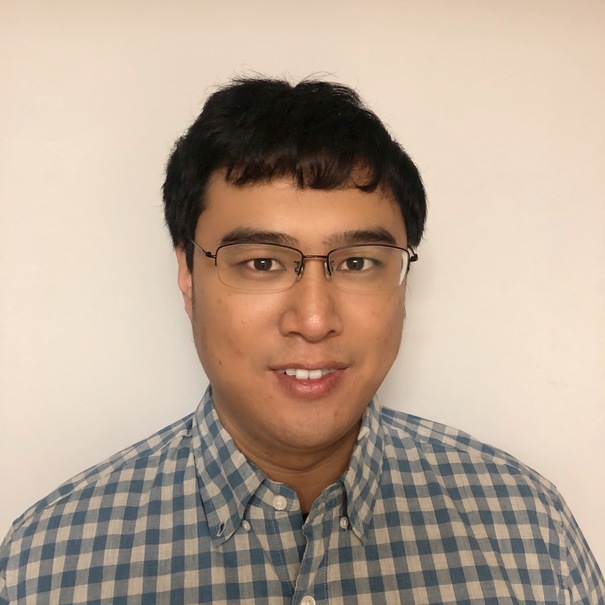
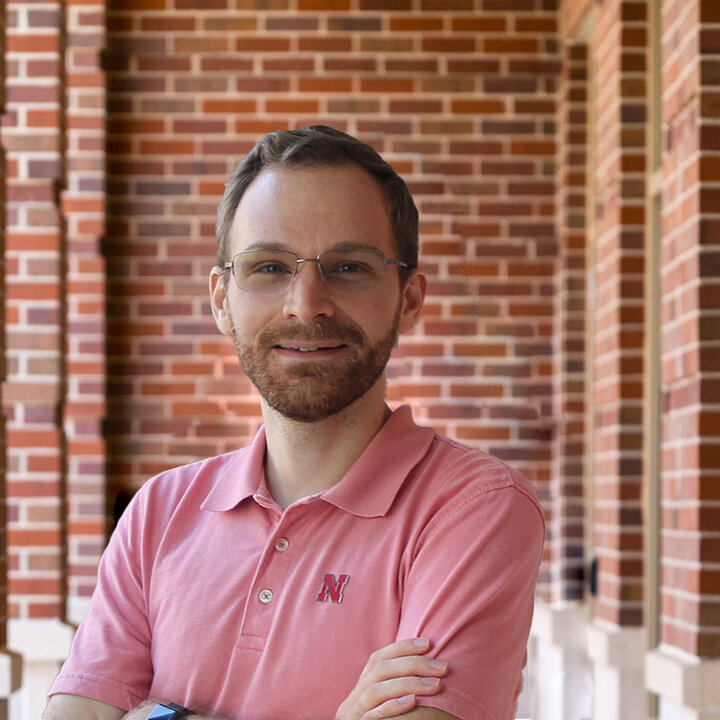
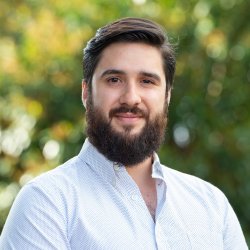
Meng Xu is an Assistant Professor in the Cheriton School of Computer Science at the University of Waterloo, Canada. He is affiliated with the Cryptography, Security, and Privacy (CrySP) group and the Cybersecurity and Privacy Institute (CPI). His research focuses on system and software security, emphasizing secure-by-design languages (e.g., Rust, Move), automated program analysis, and runtime defense techniques. Education : Ph.D., Computer Science (2020), Georgia Institute of Technology B.Eng. and B.Business (First Class Honors), Nanyang Technological University (2014) Research Interests : Secure-by-design languages Automated security analysis (fuzzing, symbolic execution) Runtime defense mechanisms (moving target defense, secure hardware) Key Awards : EAPLS Best Paper Award (2022) USENIX Security Distinguished Paper Award (2018) Grants & Funding : BlackBerry Research Grant (CAD $200,000) Amazon Research Award (USD $60,000) NSERC Discovery Grant (CAD $170,000) Labs & Collaborations : CrySP (Cryptography, Security, and Privacy Group) Cybersecurity and Privacy Institute (CPI)
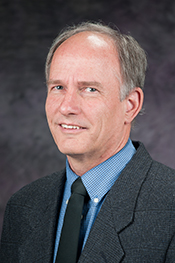
Mitchell L. Neilsen is a Professor in the Department of Computer Science at Kansas State University's College of Engineering, where he also serves as the graduate program director. He holds the Warren and Gisela Kennedy - Carl and Mary Ice Keystone Research Scholar position and maintains an active research program with multiple ongoing projects. His educational background includes a Ph.D. in Computer Science (1992), M.S. in Computer Science (1989), and M.S. in Mathematics (1987), all from Kansas State University, plus a B.S. in Mathematics Education from the University of Nebraska-Kearney (1982). After beginning his career as an assistant professor at Oklahoma State University, he returned to K-State in 1996. Research Interests: Cyber-Physical Systems: Design, Analysis, Verification of systems integrating computing, networking, and physical processes Distributed Systems: Algorithms, design, and analysis of distributed computing systems Scientific Computing: Computational Fluid Dynamics, Finite Element Analysis, High Performance Computing, and Simulation Application Areas: Agriculture technology, Dam safety analysis, Mobile applications, Natural resources management, and Real-time Embedded Systems His research program shows clear evolution toward agricultural technology applications, particularly high-throughput phenotyping, while maintaining strong foundations in cyber-physical systems and scientific computing. Recent publications indicate increasing integration of machine learning and computer vision techniques into traditional research areas. Research Funding: National Science Foundation U.S. Department of Agriculture Sandia National Laboratories Department of Homeland Security Private industry partners Dr. Neilsen has mentored numerous graduate students through their M.S. and Ph.D. programs, with recent advisees focusing on applications in agricultural technology, dam safety, and embedded systems. His advising approach emphasizes practical applications of theoretical computer science concepts. Current Teaching (Fall 2024): CIS 450 - Computer Architecture and Operations CIS 625 - Concurrent Software Systems CIS 720 - Advanced Operating Systems
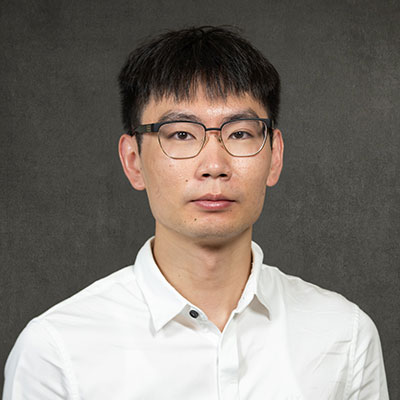
Dr. Chao Fan is an Assistant Professor in Civil Engineering and Environmental Engineering and Earth Sciences at Clemson University, affiliated with the Glenn Department of Civil Engineering. His research focuses on climate change adaptation, socio-environmental systems dynamics, and urban resilience, leveraging AI and data science. He holds a Ph.D. from Texas A&M University (2020), an M.S. from UC Davis (2017), and a B.S. from China University of Mining and Technology (2016). Dr. Fan's work integrates interdisciplinary approaches to address challenges in disaster management, smart cities, and environmental justice. Key interests include social sensing for infrastructure disruptions, equity in urban mobility networks, and leveraging digital twins for resilience planning. His recent publications explore topics like wildfire impacts, PM2.5 exposure inequity, and carbon market mechanisms for infrastructure adaptation. Professional memberships include ASCE, ACM SIGKDD, AGU, and AAAS. His lab (fanchaolab.com) develops innovative solutions for climate adaptation and equitable urban systems, emphasizing fairness in AI-driven models and network analysis.
Dr. Jody Clarke-Midura is a Professor and Associate Dean of Graduate Studies in the Emma Eccles Jones College of Education and Human Services at Utah State University. She holds an Ed.D. from Harvard Graduate School of Education, an M.Ed. in Technology in Education, and a B.A. in English and Women’s Studies from the University of Massachusetts. Her research focuses on designing playful, technology-enhanced learning environments to foster STEM engagement and computational thinking in K-12 and early childhood education. Key areas include game-based learning, computational thinking integration, and technology-enhanced assessments. She collaborates on interdisciplinary teams and leads externally funded projects. Clarke-Midura co-directs the Playful Explorations Lab (PEL), which designs STEM learning experiences for elementary classrooms. Her work emphasizes hands-on, student-driven exploration and connects theory to classroom practice. She mentors graduate and undergraduate students, supporting their research development. Her publications address topics like formative assessments, computational thinking assessment frameworks, and the role of coding toys in early math learning. She has contributed to curriculum models integrating computer science and mathematics, and explored cultural relevance in co-design processes. Professional activities include leading graduate studies administration, advising on educational technology initiatives, and advancing inclusive pedagogical practices.
Marco Donato is an Assistant Professor in both the Department of Electrical and Computer Engineering and the Department of Computer Science at Tufts University. He leads the TECS Lab (Testchip, Embedded Computing Systems) focused on hardware design for emerging applications. Prior to joining Tufts, he was a postdoctoral fellow at Harvard University's John A. Paulson School of Engineering and Applied Sciences. Dr. Donato received his academic training from prestigious institutions: Ph.D. in Electrical Sciences and Computer Engineering from Brown University (2016) M.Sc. in Electrical Engineering from Università di Roma La Sapienza, Rome, Italy (2010) B.Sc. in Electrical Engineering from Università di Roma La Sapienza, Rome, Italy (2008) Dr. Donato's research primarily focuses on designing reliable and energy-efficient hardware systems leveraging emerging technologies. His work centers on co-design methodologies for building specialized architectures for machine learning applications that utilize dense, fault-prone embedded non-volatile memories. He investigates noise modeling and reliability aspects of next-generation memory technologies, with particular emphasis on how these can be effectively integrated into system-on-chip (SoC) designs for edge computing and IoT applications. His research bridges the gap between circuit-level design and system-level architecture to create holistic solutions for hardware acceleration of machine learning workloads. Analysis of Dr. Donato's publication record reveals a strong focus on hardware acceleration for machine learning, particularly through innovative memory system designs. His work spans multiple domains including non-volatile memory technologies, energy-efficient circuit design, and flexible SoC architectures. A notable trend is his exploration of how emerging memory technologies can be leveraged to create more efficient implementations of deep neural networks, with particular attention to the trade-offs between reliability, density, and energy consumption. His research often involves full-stack approaches that consider everything from device physics to system architecture. Dr. Donato is actively involved in mentoring and has indicated he is "looking for Ph.D. students." His work has been supported by significant research grants that have enabled the fabrication of multiple test chips, as evidenced by his extensive publication record in top-tier venues including IEEE Journal of Solid-State Circuits, ISSCC, and MICRO. He leads the TECS Lab at Tufts University, which focuses on testchip development, embedded computing systems, and hardware acceleration. The lab appears to maintain connections with researchers at Harvard University and other institutions, reflecting Dr. Donato's collaborative approach to research. The lab's work emphasizes practical, real-world implementations of novel hardware concepts through actual silicon fabrication, which is relatively rare in academic settings.
Dr. Latifur Khan is a Professor in the Department of Computer Science at the University of Texas at Dallas' Erik Jonsson School of Engineering and Computer Science. He directs the Database and Data Mining Laboratory and conducts research in data mining, cybersecurity, and semantic web technologies. Research domains include: Large language models for threat detection Fairness in machine learning Vulnerability analysis in software systems Graph-based information retrieval Recent publications focus on AI security applications in transportation systems, political conflict analysis using NLP, and federated learning for IoT security. His work consistently bridges theoretical algorithms with practical cybersecurity implementations. Research grants include funding from NSF, NASA, Raytheon, Nokia, and SUN Microsystems. Teaching includes courses in Plant Breeding (PBG 450/550) and Breeding Clonal Crops (PBG 551).
Asta Zelenkauskaite is a Professor of Communication and Graduate Faculty Member in the Department of Communication at Drexel University. She is affiliated with the Center for Science, Technology, and Society. Her research focuses on social media dynamics, misinformation, and digital communication practices, employing mixed-methods approaches to analyze emergent online behaviors. She holds a PhD in Mass Communication from Indiana University (2012). Education: PhD in Mass Communication, Indiana University, 2012 Research Interests: Social media research and user-generated content analysis Emergent online practices and ideological influence Disinformation, inauthentic behaviors, and post-truth challenges Macro- and micro-level studies of digital media landscapes Recent Work Trends: Dr. Zelenkauskaite’s recent publications emphasize AI’s role in content analysis, disinformation mitigation strategies, and cross-cultural climate change narratives. Her work bridges social science, information science, and linguistics to address societal challenges like vaccine hesitancy and digital misinformation. Awards/Grants: No specific awards listed, but her research has been supported by interdisciplinary grants focusing on AI ethics and digital media governance. Labs/Teams: Active in Drexel’s Center for Science, Technology, and Society, collaborating on projects addressing technology’s societal impacts. Her work often involves international partnerships, particularly in Eastern European contexts like Lithuania.
Denghui Zhang is an Assistant Professor in the School of Business at Stevens Institute of Technology. His research focuses on data science, large language models (LLMs), and business analytics, with particular emphasis on applications in financial systems, knowledge graphs, and spatio-temporal prediction. He is a member of the Stevens Institute for Artificial Intelligence and has held academic roles including reviewer positions for prestigious journals like Nature Communications and conferences such as AAAI and SIGKDD. Dr. Zhang holds a PhD in Information Systems from Rutgers University (2023) and an MS in Computer Science from the University of Chinese Academy of Sciences (2018). His educational background bridges computer science and business analytics, enabling his cross-disciplinary research. His research explores cutting-edge topics like federated learning optimization for LLMs, theory-of-mind reasoning mechanisms, and ethical AI governance. Notable contributions include turbulence forecasting models, traffic prediction frameworks, and venture capital investment strategies leveraging reinforcement learning. Dr. Zhang has received prestigious recognitions including the ICIS 2023 Best Student Paper Award and AAAI-23 Student Scholar distinction. His work frequently addresses practical challenges in AI ethics, financial decision-making systems, and scalable machine learning architectures. He actively contributes to academic communities through program committee roles for top conferences and has pioneered novel methodologies in multi-agent financial systems and graph neural network design.
Ferdous Sohel is a Professor of Information Technology at Murdoch University and inaugural lead of the Agricultural Technologies program. His research spans AI, computer vision, and digital agriculture, with applications in medical imaging and environmental monitoring. He received the Mollie Holman Doctoral Medal and Vice Chancellor's Early Career Research Award. Research Impact: Developed innovative AI models for aquaculture oxygen prediction, 3D object tracking, quantum neural networks, and prohibited item detection. His work advances precision agriculture through hyperspectral classification frameworks and irrigation decision systems. Professional Service: Associate Editor for IEEE Transactions on Multimedia and senior IEEE member. Current projects include adversarial robustness for LiDAR systems and lightweight dormitory security networks.
Seth Polsley is an Assistant Professor in the Jeffrey S. Raikes School of Computer Science and Management at the University of Nebraska-Lincoln. His academic home resides in the School of Computing, where he bridges intelligent systems design with human-computer interaction to enhance educational and universal computing experiences. BS in Computer Engineering (2014) - University of Kansas MS (2017) & PhD (2023) in Computer Engineering - Texas A&M University His research explores: Intelligent tutoring systems Brain-computer interfaces Accessible educational technologies Machine learning for child development assessment Sketch recognition in STEM learning Recent publications demonstrate expertise in tactile learning interfaces, sketch-based developmental assessment, and equitable AI systems. Key disciplines span Human-Computer Interaction, Machine Learning, and Educational Technology. Scientific recognition includes: James Blackiston Memorial Graduate Fellowship Sigma Xi Research Award With professional experience at Lexmark International and MIT Lincoln Lab, Polsley combines practical engineering with educational innovation. His work on sketch-based tools and wearable systems addresses both technical and societal challenges in computing.
Dr Scott A. Hale is an Associate Professor and Senior Research Fellow at the Oxford Internet Institute (OII), University of Oxford, and a Fellow of the Alan Turing Institute. His work bridges computer science and social sciences, focusing on equitable information access, multilingual online dynamics, and misinformation mitigation. He holds degrees in Computer Science, Mathematics, and Spanish from Eckerd College, followed by a DPhil (PhD) in Social Data Science from the OII. Hale’s research has been supported by grants from UK Research and Innovation, the US National Science Foundation, and organizations like the Omidyar Network and the Alan Turing Institute. Key Roles: Programme on AI, Government & Policy; Director of Research at Meedan; Co-Director of the Social Data Science MSc Research Focus: Misinformation, multilingual systems, social media impact, and AI ethics Education: Eckerd College (BS), OII (MSc, DPhil). His DPhil explored social media design’s role in cross-language information sharing. Recent projects include the Digital Good Network and AI alignment studies. Articles highlight trends in multilingual misinformation detection, LLM cultural biases, and hate speech dynamics. Hale’s work bridges technical innovation with social science rigor to address global digital challenges. Awards: Alan Turing Institute Fellowship, recognition in Oxford’s Teaching Excellence Awards. Grants: Over 20 funding sources including DSO National Laboratories and Meta.
Dr. Gabor Karsai is a Distinguished Professor of Computer Science and Professor of Electrical and Computer Engineering at Vanderbilt University's School of Engineering. He also serves as Senior Research Scientist at the Institute for Software-Integrated Systems (ISIS), where he contributes to the Executive Council. With over 30 years in software engineering, his research focuses on embedded systems, model-driven development, resilient software platforms, and AI-driven autonomous systems assurance. He holds a PhD from Vanderbilt and degrees from the Technical University of Budapest. Education: Ph.D. in Electrical and Computer Engineering, Vanderbilt University Dr.Tech. in Computer Engineering, Technical University of Budapest M.S. and B.S. in Electrical Engineering, Technical University of Budapest Affiliations: Co-Associate Chair for Computer Engineering External Member of the Hungarian Academy of Sciences His research interests span model-integrated computing , autonomous systems assurance , and radiation-hardened systems . Recent work emphasizes AI integration into engineered systems and radiation effects mitigation for space applications. He has led major projects on distributed control for smart grids and resilient CPS architectures. Over 200 peer-reviewed publications and four patents reflect his contributions to software engineering and systems integration. Awards & Recognition: External Membership in Hungarian Academy of Sciences Leadership roles in ISIS and Vanderbilt's academic governance Advisees & Grants: While no student list is provided, his projects involve collaborative teams across academia and industry. Major sponsors include NSF, NASA, and DARPA. Current work includes the ALC (Assurance-based Learning-enabled CPS) and MIDAS (Model-based Intent-Driven Adaptive Software) initiatives. Labs & Platforms: Co-developer of the RIAPS distributed CPS platform and the SEAM assurance modeling framework. His labs focus on cyber-physical system design, radiation effects analysis, and autonomous system reliability.
Oscar Mendez Maldonado is a Lecturer in Robotics and Artificial Intelligence at the University of Surrey's School of Computer Science and Electronic Engineering, affiliated with the Robotics Department and CVSSP Centre. He holds a PhD (2018) and BEng (2013) from the University of Surrey. His research focuses on Machine Learning, Computer Vision, and Robotics, with emphasis on autonomous systems, localisation, and SLAM applications. Key projects include the Autonomous Valet Parking (AVP) system for indoor navigation and the SMILE project for sign language assessment using AI. He has supervised students like James Ross (Autonomous Vehicles), Xihan Bian (Reinforcement Learning), and Nimet Kaygusuz (Visual Odometry). Notable achievements include the Sullivan Thesis Prize (2018) and impactful publications in IEEE conferences (e.g., ICRA, CVPR, IROS). Research spans topics like 3D hand pose estimation via diffusion models, graph-based visual odometry fusion, and Raman spectroscopy for localisation. He contributes to open-source tools (e.g., RaSpectLoc GitHub) and collaborates with industry partners like Parkopedia. His work bridges theoretical advances with real-world applications in autonomous systems and healthcare.
Ryan Henry is an Assistant Professor in the Department of Computer Science at the University of Calgary. His research focuses on applied cryptography, emphasizing the development of secure systems that prioritize user privacy. His work spans designing privacy-enhancing technologies, implementing cryptographic protocols, and analyzing number-theoretic attacks on cryptographic assumptions. He also explores theoretical aspects of cryptographic efficiency and practical deployment challenges. While specific educational background details are not provided in the text, his research contributions highlight expertise in cryptography, secure systems, and privacy-preserving technologies. His work has addressed topics such as Private Information Retrieval (PIR), secure messaging, and blockchain privacy. Key research interests include: Secure Multiparty Computation Privacy-Preserving Data Access Efficient Cryptographic Protocols Zero-Knowledge Proofs IoT Security Cryptocurrency and CBDC Design His recent publications emphasize advancements in distributed systems security, privacy in recommendation systems, and cryptographic efficiency. Notable contributions include the Grotto and Duoram frameworks for secure computation, and proposals for Canadian CBDC frameworks. Despite extensive research output, no scientific awards or grants are explicitly mentioned in the provided text. Collaborations and lab affiliations are not detailed, though his work suggests involvement in interdisciplinary projects on privacy and security technologies.
Dr. Svetlana Yanushkevich is a Professor in the Department of Electrical and Software Engineering at the Schulich School of Engineering, University of Calgary. She is also a Full Member of the Hotchkiss Brain Institute and the Mathison Centre for Mental Health Research and Education. Her research focuses on biometric technologies, decision support systems, biomedical applications, and computational intelligence. She leads the Biometric Technologies Laboratory, developing strategies for risk assessment in biometric systems and healthcare monitoring through machine reasoning and signal processing. Education : BSc/MSc in Electrical Engineering (1989), State University of Informatics and Radioelectronics, Minsk PhD in Electrical Engineering (1992), same institution Dr. Habilitated in Technical Sciences (1999), Warsaw University of Technology Research Interests : Dr. Yanushkevich’s work spans biometric system design (e.g., gait analysis, facial attributes), decision support via probabilistic models (Bayesian networks, causal inference), biomedical applications (stroke rehabilitation, wearable sensors), and computational intelligence for data science. She emphasizes fairness, bias mitigation, and trustworthiness in AI systems, particularly in healthcare and accessibility contexts. Recent Research Trends : Her recent publications address causal modeling for accessibility barriers, UAV operator cognitive workload, and medical device optimization in radiation therapy. She explores AI ethics, stress contagion in human-robot teams, and cross-spectral biometric systems. Awards & Recognition : 2024 FEIC Fellow (Engineering Institute of Canada) 2019 Research Excellence Award (Schulich School of Engineering) 2001 Senior IEEE Membership Advising & Grants : She coordinates courses like ENCM 509 (Biometric Systems Design) and ENEL 610 (Biometric Technologies). Her research is supported by grants focusing on healthcare AI, accessibility technologies, and computational epidemiology. Labs & Collaborations : Her Biometric Technologies Lab collaborates with institutions like Hokkaido University and the IEEE Computational Intelligence Society. Projects include wearable health monitoring, decision support platforms, and AI-driven epidemiological modeling.