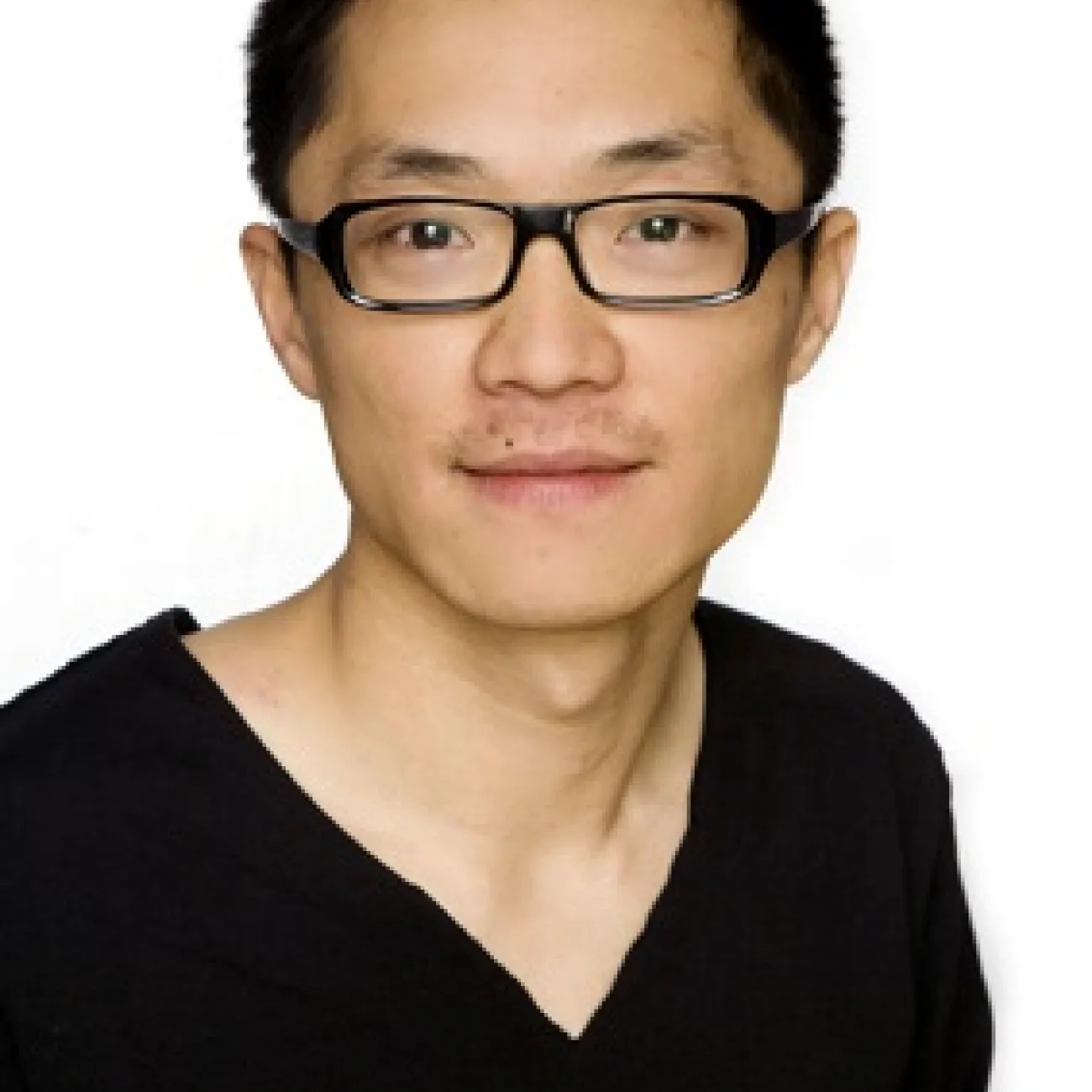
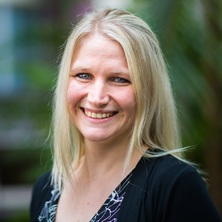
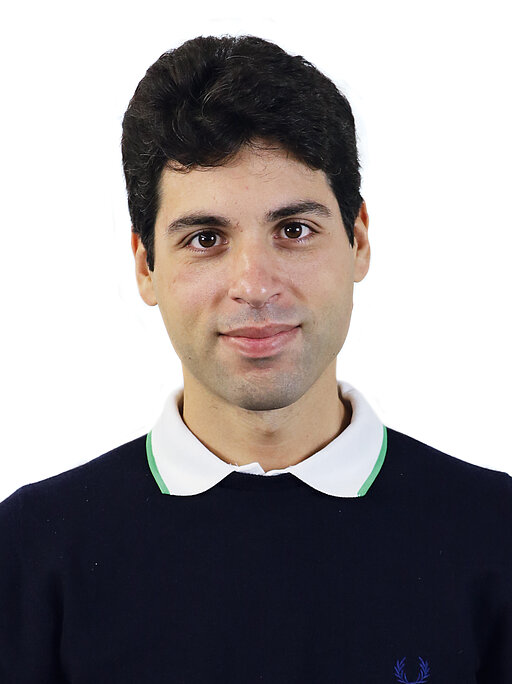
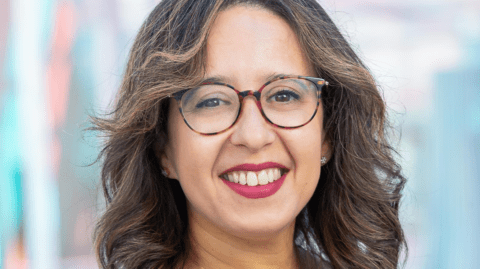
Alejandro Vargas De Leon serves as a Research Fellow at the University of Warwick, holding an active academic position within the institution's research ecosystem. His university affiliation is directly confirmed through his official Warwick email address and campus office location. Based on the available information, no specific research domains, academic supervision activities, or scholarly publications are explicitly documented. The absence of departmental or school-level details prevents further categorization of his academic focus areas. Similarly, no teaching responsibilities, awards, or grant-related information are indicated in the provided materials. Contact details confirm his operational status at the university, with office B2.28 serving as his designated workspace and his professional email providing primary communication access. The current nature of his appointment as Research Fellow indicates active engagement in academic research without indication of part-time status, retirement, or former employment status.
Katja Schwarz serves as Associate Professor in the Department of Intellectual Development at the University of Education Ludwigsburg's School of Education. She holds the civil service rank of Academic Councillor in pedagogy and didactics, focusing on intellectual development. Her office is located at Reuteallee 46, 71634 Ludwigsburg (Room 8,018), with contact via +49 7141 140-2105 or katja.schwarz@ph-ludwigsburg.de. She maintains active appointments by email arrangement and participates in institutional governance as a Member of the Faculty Council. Her research centers on Autism History , Disability Studies , and Inclusive Pedagogy , with specific expertise in supportive communication, post-school support systems, and social-legal classification frameworks (ICF, SGB IX/BTHG). Current investigations examine autism representation in film, psychiatric museum curation, and international acceptance models. Her methodological approach integrates historical analysis with participatory research involving autistic individuals. Recent publications reveal strong thematic concentration on autism historiography and representation, with increasing focus on museum-based educational approaches and cross-cultural perspectives. Her 2020-2025 output demonstrates systematic exploration of autism classification systems, film portrayals, and practical support service implementation across Baden-Württemberg. Member of autismus Deutschland eV Federal Association for the Promotion of People with Autism Member of the scientific advisory board of the Psychiatry Museum Emmendingen Collaboration with Prof. Santoshi Halder on international autism research She supervises extensive student research, particularly through university seminars involving museum excursions and autism film analysis. Her projects frequently translate academic work into practical resources for autism therapy centers, with multiple unpublished implementation concepts for family relief services and preventative care systems across Baden-Württemberg.
Professor Li-Chun Zhang is a faculty member in Social Statistics at the University of Southampton. His research focuses on graph sampling, analysis of integrated data, statistical uses of administrative sources, population size estimation, and machine learning. Research Interests Graph sampling Analysis of integrated data Statistical uses of administrative sources Population size estimation Machine learning Recent Research Trends Recent publications highlight his work on improving road safety data in Oman, census methodologies, graph spatial sampling, categorical linkage-data analysis, and robust capture-recapture techniques using administrative data. His research emphasizes statistical innovation in multisource data integration and machine learning applications. Supervision Jillian Delaney (PhD Social Stats & Demo PT) Luciano Perfetti Villa (PhD Social Stats & Demo) Dadi Liu (PhD Social Stats & Demo) Contact Email: L.Zhang@soton.ac.uk
Tegan Cruwys is a Professor at the School of Psychology, University of Queensland, and an Australian Research Council DECRA Fellow and Clinical Psychologist at the Australian National University. Her research focuses on how social relationships influence mental and physical health, bridging social, clinical, and health psychology. Education: Bachelor of Science and PhD from the Australian National University. Research Interests: Social identity, mental health, health psychology, and the role of group membership in wellbeing. Scientific Awards: Australian Research Council DECRA Fellowship. Recent Work: Her 2025 publications explore social identity interventions for mental health, sociocultural factors in social anxiety, and public health campaigns. She investigates social identity's role in vaccine adherence, loneliness reduction, and intergenerational mental health dynamics. Supervision: Though not currently available for direct supervision, she has advised PhD candidates on topics like social identity in depression recovery and resilience post-trauma. Her grants include ARC Discovery Projects and Queensland Department of Communities funding. Email: t.cruwys@uq.edu.au
Filipp Schmidt is a Post-Doctoral Research Fellow at the Department of General Psychology within the Department 06 Psychology and Sports Science of Justus-Liebig-Universität Gießen. His research focuses on visual perception and cognition, particularly how humans integrate perceptive features into unified environmental representations through computer graphics, psychophysics, and modeling. PhD from Technische Universität Kaiserslautern (2014) Diploma in Psychology from Justus-Liebig-Universität Gießen (2009) Research interests span material recognition, shape transformations, and perceptual organization of naturalistic materials. Current projects combine behavioral experiments, machine learning, and fMRI to decode material categorization hierarchies and visual-semantic interactions. Recent publications analyze wood material perception (2023), gloss prediction (2024), animacy inference from shape (2017), and one-shot generalization via drawing tasks (2022). Collaborates with Prof. Roland W. Fleming on DFG-funded project C1. Email: Filipp.Schmidt@psychol.uni-giessen.de Advises PhD students Henning Tiedemann and Emily A-Izzeddin. Uses big data approaches to train machine learning models for material properties.
Francesco Cattafi is a post-doctoral researcher in differential geometry at the Chair of Mathematics X (Geometry) of Julius-Maximilians-Universität Würzburg, funded by the DFG Walter Benjamin Programme. He conducts research on Lie groupoids/algebroids, Cartan geometries and the geometry of PDEs, and is currently on the academic job market for positions starting Fall 2025. Education PhD in Mathematics (2015–2020) – Universiteit Utrecht, The Netherlands MSc in Mathematics (2013–2015) – Università degli Studi di Torino, Italy BSc in Mathematics (2010–2013) – Università degli Studi di Torino, Italy Research Interests Cattafi's work lies at the intersection of differential geometry, Lie theory and the geometric theory of PDEs. His primary focus is on Lie groupoids and algebroids , investigating their role in describing symmetries and equivalences of geometric structures. He studies Cartan geometries and G-structures to understand integrability via multiplicative forms and Pfaffian systems. A recurring theme is translating analytic questions about PDEs into geometric problems involving Lie pseudogroups and Morita equivalences. Publications Overview Since 2016 Cattafi has authored or co-authored seven peer-reviewed papers spanning foundational aspects of transitive differential geometry and applications to Poisson and symplectic geometry. Early work with Palese and Winterroth explored variational calculus and Noether currents, while his PhD-era collaborations with Crainic and Salazar linked PDE analysis to Pfaffian fibrations. Recent preprints treat PB-groupoids versus VB-groupoids and novel groupoid-theoretic approaches to symmetry and equivalence problems. Grants & Fellowships DFG Walter Benjamin Fellowship (2021–present) – Julius-Maximilians-Universität Würzburg Junior Research Fellowship (2021) – Erwin Schrödinger Institute, Vienna Post-doctoral grant (2021) – Wolfgang Pauli Institute, Vienna Post-doctoral grant (2020) – KU Leuven, Belgium Contact & Online Presence Room 00.003, Building 31 (Physics East), Emil-Fischer-Straße 31, 97074 Würzburg, Germany Email: francesco.cattafi@uni-wuerzburg.de ORCID: 0000-0001-9785-0770
Andrea De Cesarei is a Full Professor at the Department of Psychology 'Renzo Canestrari' at the University of Bologna. His research focuses on cognitive processes, emotional perception, and the intersection of artificial intelligence with human behavior. He holds office hours on Fridays 9-11 AM at the Department of Psychology in Bologna, with virtual availability via Teams. His work spans disciplines including cognitive neuroscience, environmental psychology, and AI ethics. Key research interests include: cognitive control mechanisms during scene categorization, emotional responses to natural stimuli, and behavioral drivers behind sustainable choices. He also explores how humans and AI systems process visual information differently, with recent projects involving AI trustworthiness and autonomous planning systems. Recent publications highlight his contributions to understanding neural correlates of emotion (via ERP and EEG studies), the role of spatial frequencies in perception, and motivational factors in pro-environmental behavior. His lab develops tools like the VISTO device for precise exposure time measurement in experiments. Teaching responsibilities include courses on perception and experimental psychology, with active involvement in student disability research methodologies. He maintains an ORCID profile and is accessible via email for scheduling consultations.
Michael Braito is a researcher at the Institute of Sustainable Economic Development within the Department for Economics and Social Sciences at the University of Natural Resources and Life Sciences, Vienna (BOKU). His work bridges environmental sociology, social psychology, and sustainable development, focusing on human-nature relationships and environmental behavior. Email: michael.braito@boku.ac.at ORCID: 0000-0002-9763-0804 Research Interests span environmental sociology, social psychology of sustainability, and socio-ecological systems. He investigates how social norms and human-nature relationships influence mobility behavior and environmental policy adoption. Recent Publications focus on transport-wellbeing linkages, Q-methodology applications in mobility research, and behavioral analysis of agri-environmental schemes. His 2024 work includes multiple presentations on the TRA:WELL project's findings. Scientific Awards include the Science2business Award 2019 and ÖGA Best Presentation Award 2019. He serves as a reviewer for journals like Energy Research & Social Science and Landscape and Urban Planning. Community Services involve organizing TRA:WELL workshops at schools in Vienna, Korneuburg, and Hohenems, emphasizing youth participation in transport research.
AOUNI Zineb is a permanent, full-time Associate Professor of Entrepreneurship at ICN Business School (France) where she has spent over twenty years supporting and teaching entrepreneurship. She obtained her PhD in Entrepreneurship Education from HEC Liège (Belgium) in 2011 and completed a post-doctoral fellowship at the European Center for Research in Microfinance (CERMi) , Université Libre de Bruxelles. Education: 2011 – Doctorate in Entrepreneurship Education, HEC Liège, Belgium 2002 – DES in Management, HEC Liège, Belgium 1997 – Master’s Degree in Economics & Management, Mohamed V University, Morocco Research interests revolve around entrepreneurship education, innovation processes, hybrid-venture identity, crowdfunding investor cognition, gender and family-business issues . Her work often bridges cognitive perspectives with practical entrepreneurial challenges, investigating how investors perceive and reward hybrid social ventures on crowdfunding platforms. Across her 30+ publications (2003-2024) three dominant strands emerge: (i) crowdfunding & hybrid social-venture financing, (ii) entrepreneurship pedagogy and competency development, and (iii) regional development and gender in family enterprises. These outputs illustrate a sustained focus on contextual and cognitive factors shaping entrepreneurial finance and learning. Academic leadership: She has served as programme director for master, EMBA and executive education tracks and actively launched several entrepreneurship initiatives, underlining her strategic role in curriculum design and outreach. No students, grants, scientific awards, laboratories or email details are disclosed in the supplied material.
Dr. Damien Spry is an Adjunct Research Fellow at the University of South Australia (UniSA), affiliated with UniSA Justice & Society and previously with the School of Creative Industries. His research spans digital diplomacy, social media analytics, public engagement, and youth interactions with mobile media. He has conducted extensive empirical studies on Facebook diplomacy by foreign ministries, particularly in the Asia-Pacific region. Institution: University of South Australia School: School of Creative Industries Role: Adjunct Research Fellow Email: Damien.Spry@unisa.edu.au His research focuses on the intersection of digital media and international relations, emphasizing audience engagement, institutional practices, and algorithmic influences. He employs mixed-methods approaches, combining quantitative metrics with qualitative content analysis to evaluate diplomatic communication on platforms like Facebook. Analysis of his recent publications reveals a strong trend toward data-driven, user-focused models of digital diplomacy. His work frequently examines how ministries of foreign affairs engage publics, the relevance of content, and emotional resonance in digital outreach. He also explores cultural representations, such as Australia in South Korean media, and broader themes of soft power in East and Southeast Asia. Notable scientific contributions include methodological innovations using tools like Netvizz and Leximancer, and conceptual frameworks for categorizing diplomatic discourse on social media. His research has been published in Media International Australia , Hague Journal of Diplomacy , and by publishers such as SAGE, Routledge, and Brill. Dr. Spry has advised on digital engagement strategies for government agencies like DFAT and the Department of Defence. His work has been supported by grants such as the ARC Australian Postgraduate Industry Award. He has contributed to policy-oriented reports, notably for the Australian Strategic Policy Institute. He has been involved in research teams exploring digital workers, youth media use, and online safety. His earlier work included studies on mobile youth cultures in Japan and Australia, and digital inclusion for chronically ill youth through platforms like Livewire. His future research trajectory appears focused on diversifying digital diplomacy models across the Asia-Pacific and refining audience-centric approaches in public diplomacy.
Prof. Dr. Mathias Schulze is a full professor at the University of Kaiserslautern-Landau (RPTU) in the Department of Mathematics , leading the Algebra, Geometry and Computer Algebra (AGAG) group. His research spans a wide range of topics in algebraic geometry, singularity theory, and commutative algebra, with a particular focus on singularities of curves and hypersurfaces, hyperplane arrangements, D-modules, and category theory. Research Interests: Singularities of curves and hypersurfaces Hyperplane arrangements, configurations, and matroids Differential forms, derivations, and free divisors D-modules and hypergeometric systems Category theory Gröbner basis theory Recent Publications: His work has consistently contributed to foundational areas of algebraic geometry and singularity theory. Notable recent articles include studies on triangulated categories, matrix factorizations, and the structure of derived categories. His research often intersects with combinatorics and commutative algebra, as seen in his work on configuration polynomials and matroid theory. Teaching: Prof. Schulze teaches a broad spectrum of courses, from introductory algebra to advanced topics in algebraic geometry and singularity theory. His upcoming courses for SS 2025 include "Algebraic Structures," "Plane Algebraic Curves," and "Depth and Cohen-Macaulay Rings." Contact: Email: mschulze@rptu.de Office: Gottlieb-Daimler-Straße, Building 48, Room 434, 67663 Kaiserslautern Phone: +49 631 205 5489
Dr. Ulrike Fickler-Stang is a Scientific Associate at the Institute for Rehabilitation Sciences within the Faculty of Humanities, Social Sciences and Education at Humboldt University of Berlin. Her work focuses on pedagogy for psychosocial disabilities, juvenile delinquency, and educational challenges in closed institutions. Role: Researcher and Study Advisor for Rehabilitation Pedagogy Email: ulrike.fickler-stang@hu-berlin.de Her research spans qualitative educational research , adult literacy , career transitions for disadvantaged youth, and psychoanalytic-educational concepts for delinquency. She contributes to quality evaluation in child/youth welfare and historical aspects of behavioral disorder education. Recent publications address pedagogical approaches in juvenile correctional facilities, professionalization challenges, and multidisciplinary collaboration. Articles emphasize institutional constraints, educational responsibilities, and innovative practices in closed systems. She offers office hours for academic advising and collaborates with Berlin's juvenile detention system. Her work integrates qualitative research methods and psychoanalytic theory to improve educational outcomes for marginalized populations.
Daniela Marella is a Professor at the Department of Social and Economic Sciences, Sapienza University of Rome. She teaches Statistics and holds office hours on Tuesdays from 10:00 AM to 12:00 PM. Her email address is daniela.marella@uniroma1.it . Teaching: Statistics (Sociology, Economics, Development Studies) Research: Statistical matching, Bayesian networks, survey sampling, uncertainty quantification Publications: 15+ articles on non-probability sampling, measurement error, and interrater agreement Her research focuses on statistical matching methodologies, Bayesian network applications in survey data, and handling selection bias in non-probability samples. She explores measurement error modeling, empirical likelihood approaches, and resampling techniques for complex survey designs. Recent publications emphasize uncertainty analysis in statistical matching, graphical models for data integration, and Bayesian structural learning. Key areas include non-ignorable sampling, ordinal categorical data agreement, and pseudo-population resampling frameworks.
Igor Dolinka is a full professor at the Department of Algebra and Theoretical Computer Science, Faculty of Sciences, University of Novi Sad. He is also a corresponding member of the Serbian Academy of Sciences and Arts (SASA). His research focuses on semigroup theory, inverse monoids, semiring theory, and computational algebra, contributing extensively to equational bases, idempotent-generated semigroups, and algebraic structures in diagram categories. His recent publications highlight advancements in the finite basis problem, word problems for free idempotent-generated semigroups, and structural analyses of sandwich semigroups. His work bridges theoretical algebra with computational methods, emphasizing universal algebra and equational logic. Dolinka has received prestigious recognition, including corresponding membership in SASA. His email address is dockie@dmi.uns.ac.rs, and he maintains a personal website at http://people.dmi.uns.ac.rs/~dockie/ .
Manoussakis Antonis is an Associate Professor at the Technical University of Crete (TUC), affiliated with the School of Chemical and Environmental Engineering. His research focuses on advanced topics in Functional Analysis, including Banach Space Theory, Operator Theory, and Asymptotic Structures. He explores complex mathematical frameworks such as James Tree spaces, HI spaces, and Tsirelson spaces, with a particular emphasis on operator ideals, space classifications, and structural properties. His work delves into the geometry and properties of Banach spaces, examining concepts like unconditionally saturated spaces, quasi-minimality, and hereditary proximity to ℓ₁ spaces. Recent studies include investigations into asymptotic structures, mixed Tsirelson spaces, and the interplay between operators and space topologies. Antonis has published extensively on these topics, contributing to the theoretical foundations of functional analysis and operator theory. Antonis’s research trends reflect a deep engagement with abstract mathematical constructs, emphasizing rigorous proofs and novel methodologies. His articles often address unresolved questions in Banach space geometry and operator behavior within specialized spaces. Despite his prolific output, no awards or grants are explicitly listed in the provided data. He is stationed in Office 145Β-82, located on the 2nd floor of the Science/ECE Building (Λ) at TUC. His email is available for academic correspondence at amanousakis@tuc.gr .