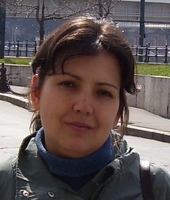
Diana Savin serves as an Associate Professor in the Department of Mathematics and Computer Science within the Faculty of Mathematics and Computer Science at Transilvania University of Brașov , Romania. Her office is located at Iuliu Maniu street no. 50, Building P, Brașov (500091), with contact email diana.savin@unitbv.ro and phone/fax +40 268 414 016. Her research spans several areas of pure mathematics, with a core focus on Algebraic Number Theory (including algebraic number fields, ramification theory, Diophantine equations, and elliptic curves) and Associative Algebras (quaternion algebras, symbol algebras, and central simple algebras). Additional interests include Combinatorics (special numbers and generating functions), Computational Number Theory , Elementary Number Theory , and Lattices . Analysis of her publications (2011-2021) reveals consistent contributions to algebraic structures in number theory, particularly quaternion and symbol algebras over finite and quadratic fields. Her work appears in high-impact journals including Journal of Algebra and Its Applications , Advances in Applied Clifford Algebras , and Expositiones Mathematicae , demonstrating methodological rigor in solving complex number-theoretic problems.
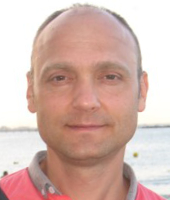
Florin ISAIA is an Associate Professor at the Department of Mathematics and Computer Science within the Faculty of Mathematics and Computer Science at the Technical University of Braşov. His research focuses on nonlinear analysis, elliptic partial differential equations, integral equations, and Sobolev spaces. He holds an office in Building P, Room PP11, and can be reached via email at florin.isaia@unitbv.ro . His academic work emphasizes theoretical contributions to functional analysis, particularly in the context of superposition operators between Sobolev spaces. Key research topics include the p-Laplacian equations, Faà di Bruno formulas in supercritical and subcritical cases, and generalized Pohožaev identities. He has also explored applications in thermoelasticity and nonlinear dynamical systems, such as the study of cylindrical tubes under torsion and hybrid oscillator models. Florin ISAIA's publications span reputable journals like Nonlinear Analysis , Houston Journal of Mathematics , and Advanced Nonlinear Studies . His work often bridges abstract mathematical analysis with applied problems in structural mechanics and control systems. Leveraging advanced analytical methods, his research addresses critical questions in operator continuity, nonexistence results for certain PDEs, and the interplay between thermal and mechanical stresses in composite materials. He maintains an active profile in the academic community, contributing to the theoretical foundations of nonlinear dynamics and functional spaces.
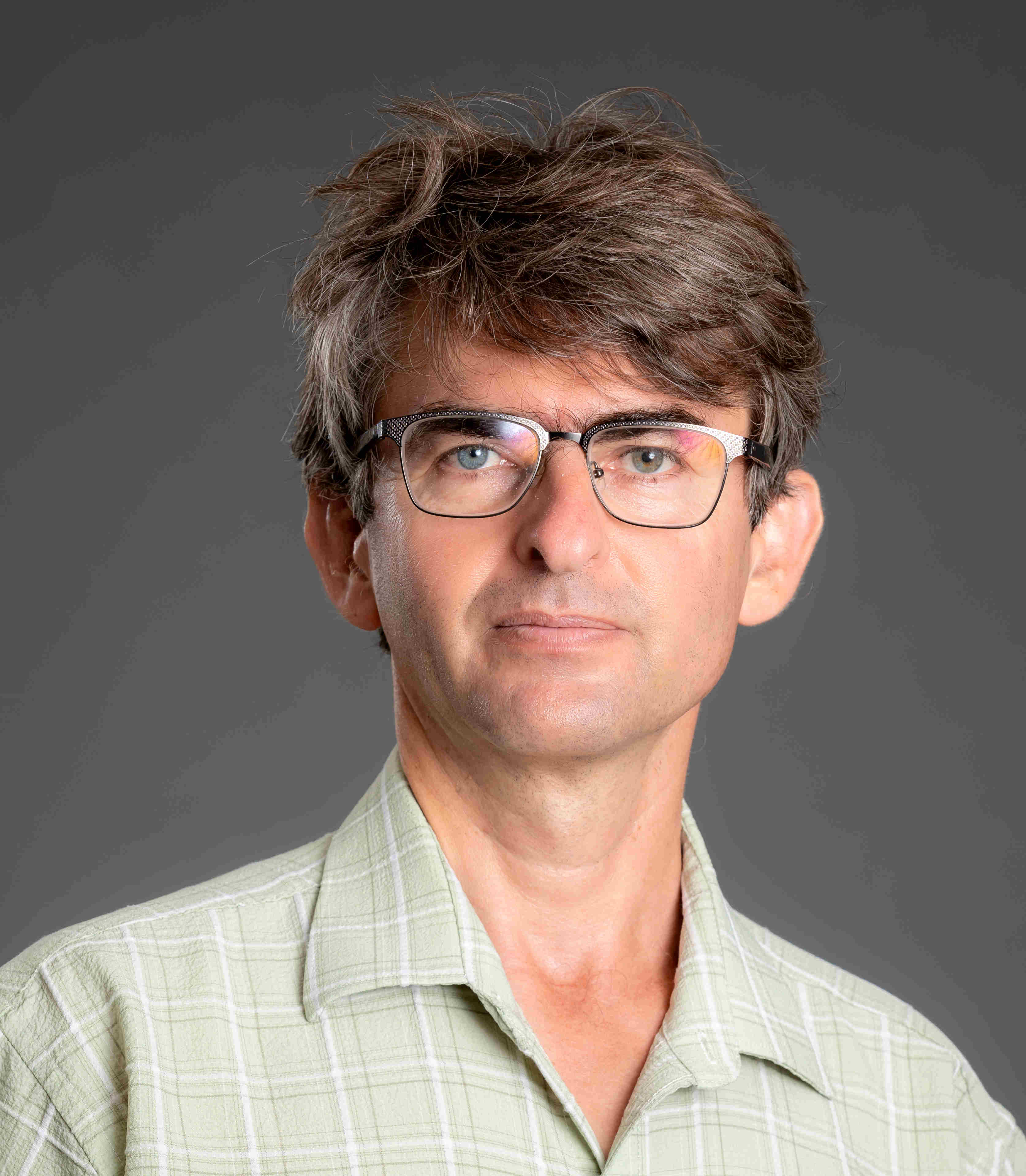
Prof. Mihai Pascu is a Professor in the Department of Mathematics and Computer Science at the University of Brașov, affiliated with the Faculty of Mathematics and Computer Science. His research focuses on Real and Complex Analysis, Probability Theory, and Stochastic Processes, with interdisciplinary connections to Differential Equations and Potential Theory. He has contributed extensively to operator theory (e.g., Bernstein-Stancu operators) and stochastic processes (e.g., Brownian motion couplings). His work often bridges theoretical mathematics with probabilistic methods, yielding insights into convexity, univalence criteria, and boundary value problems. Publicly accessible through his institutional email and office at Building P, Room P I 6 in Brașov. Research interests span convex analysis , stochastic modeling , and operator approximation theory . Recent publications (2017–2023) highlight advancements in Pólya urn models, error estimates for Bernstein-type operators, and geometric probability. Notably, his work addresses longstanding conjectures like the Hot Spots problem through innovative coupling techniques. The 2017–2023 papers reflect a sustained focus on bridging discrete and continuous stochastic systems, with applications in functional analysis and geometric function theory. Though no formal grants or advisory roles are listed, his prolific publication record (over 50 works since 2000) underscores active engagement in research. No lab affiliations or collaborative teams are explicitly mentioned in the provided texts.
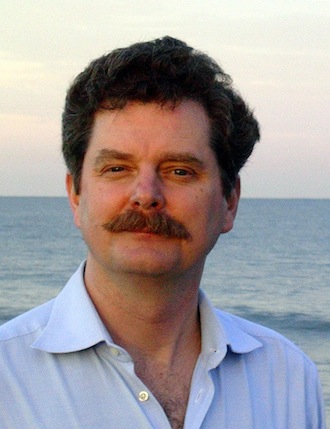
Marius Silaghi is a Professor in the Department of Electrical Engineering and Computer Science at the Florida Institute of Technology (FIT), within the College of Engineering and Science. He leads the Human Decision Systems Support Lab and is affiliated with the IEEE Computational Intelligence Bulletin as an Area Editor. His research focuses on intelligent decision-making systems, privacy-preserving distributed constraint reasoning, cryptographic protocols, robotics, and speech recognition. Silaghi holds a PhD from the Swiss Federal Institute of Technology (EPFL) in 2002. His work spans theoretical advancements in distributed algorithms and their practical applications in areas like secure multi-agent systems, automated planning, and decentralized decision support. Notable contributions include foundational research in Distributed Constraint Optimization Problems (DCOPs), privacy-aware computational frameworks, and robotic autonomy. He has received best paper awards at international conferences such as CIA 2008 and IAT 2007 for innovative approaches in constraint programming and multi-agent systems. Silaghi actively publishes in top venues like AAAI, AAMAS, and IEEE journals, contributing to both theoretical and applied aspects of AI and distributed systems. Research Interests: Silaghi’s work integrates artificial intelligence with distributed systems to address challenges in privacy, security, and coordination. Key areas include: Privacy-Preserving Technologies: Developing algorithms for secure multi-party computation and privacy-aware distributed systems. Robotics and Autonomy: Investigating decision-making frameworks for humanoid robots, including navigation, sensor integration, and human-robot interaction. Cryptography and Security: Designing cryptographic protocols (e.g., S-Box generation) and analyzing vulnerabilities in systems like SIDH ciphers. Constraint Reasoning: Advancing methods for distributed constraint satisfaction and optimization, with applications to auctions, scheduling, and resource allocation. His research emphasizes real-world deployment, from vehicular networks to decentralized decision platforms like DirectDemocracyP2P . Recent Article Trends: Silaghi’s recent work explores Bayesian networks for software testing, probabilistic models for robotics, and privacy-enhanced distributed algorithms. Articles highlight innovations in utility-based privacy frameworks, route optimization under fairness constraints, and trajectory interpolation for autonomous systems. These studies reflect a focus on balancing theoretical rigor with practical impact in AI and robotics. Grants and Labs: Leads the Human Decision Systems Support Lab, which develops tools for group decision-making and deliberation. His lab’s projects include platforms for decentralized petition drives and secure software update mechanisms. While specific grant details are not listed, his work is supported by FIT initiatives and collaborations with institutions like EPFL and the University of Bologna.
Eric A. Carlen is a Distinguished Professor of Mathematics at Rutgers University, specializing in mathematical physics. His faculty position is within the Department of Mathematics where he conducts research at the intersection of functional analysis, probability theory, and mathematical physics. He maintains an active research program with numerous recent publications spanning quantum information theory, statistical mechanics, and partial differential equations. Professor Carlen's research focuses on functional analysis, probability, and mathematical physics, with particular emphasis on problems in non-equilibrium statistical mechanics and variational problems. His work explores geometric inequalities and their applications to physical systems. Recent research directions include: Quantum Markov semigroups and their spectral properties Functional inequalities and their stability Kinetic theory and approach to equilibrium phenomena Quantum information theory and entropy methods Non-equilibrium steady states in boundary-driven systems Analysis of Professor Carlen's recent publications (2023-2025) reveals a strong focus on quantum information theory, particularly quantum Markov processes and entropy inequalities. His work bridges abstract mathematical analysis with applications in statistical mechanics, showing particular interest in hypocoercivity, spectral gaps, and stability of functional inequalities. A significant portion of his recent work connects mathematical analysis with physical applications, especially in non-equilibrium statistical mechanics. Professor Carlen teaches courses in mathematics, including an introduction to the mathematical theory of probability. His office is located in Hill Center 632 at Rutgers University, and he can be contacted at carlen@math.rutgers.edu.
Dennis Kriventsov is an Assistant Professor of Mathematics at Rutgers University, located on the Busch Campus in HLL-524. His office hours are MW 4:00pm-5:30pm in HLL 524. He is affiliated with the School of Arts and Sciences (SAS) and contributes to the Department of Mathematics's research and teaching activities. His research focuses on nonlinear analysis and partial differential equations (PDEs), with specialties in elliptic and parabolic equations, free boundary problems, calculus of variations, and shape optimization. These areas involve advanced theoretical investigations into the behavior of solutions to differential equations and their applications. No specific articles or awards are listed in the provided text, but his research interests suggest active engagement in cutting-edge PDE theory and related mathematical frameworks. Advising and grant details are not documented here. He is part of the Tenured and Tenure Track Faculty at Rutgers.
Adriana Buica is a Lecturer at the Babeş-Bolyai University , within the Faculty of Mathematics and Computer Science . She specializes in Dynamical Systems , Differential Equations , and Bifurcation Theory . She teaches courses such as Dynamical Systems (IE sem 2) and supervises labs/seminars. Her research focuses on topics like Ulam-Hyers stability, periodic solutions, and nonlinear oscillations. She has authored over 50 publications, including works on bifurcations, Melnikov functions, and inverse Jacobi multipliers. She is also the author of two books: Principii de coincidenţă şi aplicaţii (2001) and Periodic Solutions of Nonlinear Systems (2006). She actively contributes to academic communities via courses on MS Teams and is reachable at abuica@math.ubbcluj.ro .
George Turcas is a Lecturer in the Department of Mathematics at Babeș-Bolyai University in Cluj-Napoca. His primary research interests lie in Number Theory, focusing on Diophantine equations, elliptic curves, modularity, and Galois representations. He earned his PhD from the University of Warwick in 2019 under Samir Siksek, preceded by an MASt (Part III) at the University of Cambridge. Turcas has held postdoctoral positions at IMAR and the University of Warwick. His teaching includes courses on affine geometry, geometric complements, and specialized master’s programs for educators. He actively contributes to conferences and publishes on topics bridging number theory with algebraic geometry and cryptography. Research highlights include studies on isogenies of elliptic curves, mod p Galois representations, and Fermat’s equation over quadratic fields. His work often involves computational tools like Magma for verifying mathematical conjectures. Despite no explicitly listed awards, his prolific publication record reflects significant contributions to the field. He coordinates teaching activities across multiple departments and manages student communications via MSTeams. Turcas collaborates internationally, presenting at events in Croatia, Italy, Spain, and the UK.
Leonid V. Kovalev is a Professor and Associate Chair of the Department of Mathematics at Syracuse University, within the College of Arts and Sciences. His research focuses on geometric mapping theory, metric space analysis, complex analysis, and potential theory. He holds leadership roles in undergraduate mathematics education and has contributed to the field through numerous NSF-funded projects. Education details are not explicitly listed, but his academic trajectory is evident through his extensive research output and faculty position. His work bridges pure mathematics disciplines such as geometric analysis, functional analysis, and complex variables, with applications to variational problems and harmonic mappings. Recent research emphasizes topics like Lipschitz properties in metric spaces, trigonometric polynomials, and geometric variational problems. His articles explore theoretical foundations and computational aspects of these areas, often intersecting with Fourier analysis and operator theory. Grants: NSF-funded projects include 'Lipschitz Analysis in Normed and Metric Spaces' (2018–2022) and 'NEAM 2019: The 4th Northeastern Analysis Meeting' (2019–2020). Teaching: Courses include Functional Analysis, Numerical Methods, and Calculus for Business and Life Sciences. Service: Serves as Associate Chair for Undergraduate Studies and advises Mathematics majors/minors. Administers WeBWorK course platforms. Labs/Teams: Collaborates on projects involving geometric analysis and metric space theory through his research group and conference organizing activities.
Jeong-Hoon Song is an Associate Professor in the Department of Civil, Environmental and Architectural Engineering at the University of Colorado Boulder. His research focuses on computational multiscale and multiphysics analysis, particularly in failure mechanisms, material design, and real-time model reduction. He holds a PhD from Northwestern University (2008) and MS/BS degrees from Yonsei University (2003/2001). Prof. Song’s work bridges atomistic simulations with continuum mechanics to predict material behavior under coupled thermal and mechanical loads. His lab (CM2 Lab) develops advanced numerical methods like the extended finite element method (XFEM) and strong-form meshfree collocation approaches for fracture mechanics, multiphase solidification, and additive manufacturing processes. Professional Memberships: ASCE EMI, USACM, IACM Key Research Themes: Multiscale modeling, computational material synthesis, and real-time simulation techniques Recent publications highlight advancements in frictional contact modeling, nano-crystal solidification, and continuum point cloud methods. His research emphasizes interdisciplinary applications, including aerospace and civil infrastructure durability under extreme conditions.
Houman Owhadi is the IBM Professor of Applied and Computational Mathematics and Control and Dynamical Systems at the California Institute of Technology. His research explores interplays between numerical approximation, statistical inference, and learning from a game-theoretic perspective, with applications in numerical homogenization, operator-adapted wavelets, fast solvers, Gaussian process regression, and uncertainty quantification. His current research focuses on computational information games, kernel flows, and the development of universal scalable solvers. He has made fundamental contributions to uncertainty quantification through adversarial approaches and the development of optimal statistical estimators. Professor Owhadi has received numerous awards including the Vannevar Bush Faculty Fellowship (2024), Germund Dahlquist Prize (2019), and SIAM Fellowship (2022). His research has been supported by AFOSR, DARPA, DOE, NASA, NSF, and ONR.
Nella Rotundo is an Associate Professor (Ricercatrice di tipo B) in Mathematical Analysis (MAT/07) at the University of Florence, Department of Mathematics. Her research focuses on mathematical modeling of semiconductors, partial differential equations, and numerical methods. She has held postdoctoral positions at the Weierstrass Institute (Berlin), McGill University (Montreal), and the University of Calabria. She is a Principal Investigator in the MATH+ Incubator project IN-B3 addressing doping variations in silicon crystals. Her academic background includes a PhD in Mathematics applied to Engineering (University of Catania), and a Master's in Mathematics (University of Calabria). She has contributed to over 9 peer-reviewed publications since 2010, with recent work emphasizing numerical methods for semiconductor simulation and inverse problems in materials science. Rotundo has presented research at conferences including the Young Applied Mathematicians Conference (Rome 2024) and AMaSiS (Berlin). Her technical contributions span finite element methods, optimal control theory, and computational approaches to semiconductor characterization.
Nasreddine Megrez is an Associate Professor of Mathematics and Actuarial Sciences at the Dubai Campus of Heriot Watt University. He holds a MSc and PhD in Applied Mathematics from Toulouse University, France, and a Professional Master in Finance/Economics from the University of Quebec in Outaouais, Canada. His teaching roles include coordinating Year 4 programs and previously directing the MSc IT for Business program. His research focuses on Partial Differential Equations, PDEs in network analysis, Actuarial Sciences, and Mathematical Finance, with notable work on credit card fraud detection algorithms and Bayesian network methodologies. Key research contributions include applying PDE methods to network analysis and developing statistical models for dependence in financial data. He has taught extensively across North American systems at institutions like the University of Alberta and Alfaisal University (MIT-affiliated programs). Administrative experience includes Chair of Mathematics at Alfaisal University and Director roles at Heriot Watt. His work aligns with UN Sustainable Development Goals related to financial inclusion and crime prevention through innovations in fraud detection systems. No scientific awards are explicitly mentioned. He is currently accepting PhD students for 2024, focusing on statistical data science and actuarial applications. His research network spans collaborations in mathematical finance, computational biology, and cybersecurity, reflecting his interdisciplinary approach to solving complex analytical problems.
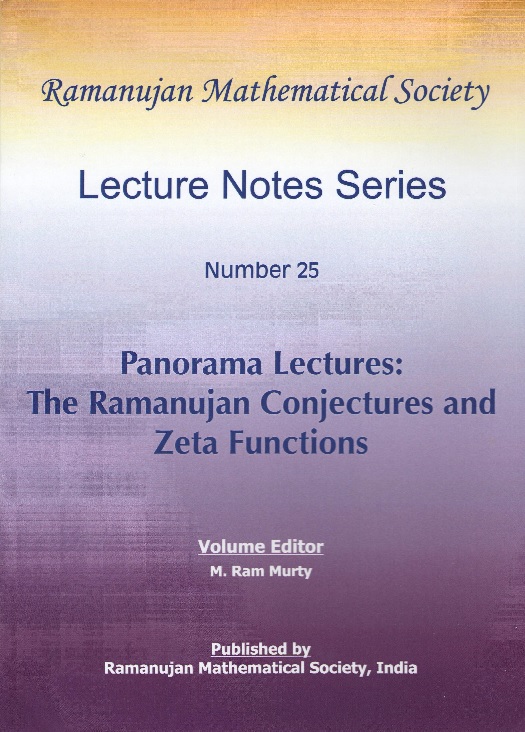
Ram P Murty is a distinguished Professor of Mathematics and Statistics at Queen's University, holding the title of A. V. Douglas Distinguished University Professor and Queen's Research Chair. He is affiliated with the Faculty of Arts and Science and cross-appointed in the Department of Philosophy. His research focuses on number theory, zeta functions, and sieve methods, with contributions to graph theory and Indian philosophy. He has supervised numerous students and postdoctoral fellows, including notable names like Abhishek Bharadwaj and Seoyoung Kim. Murty earned his Ph.D. from MIT (1980) under Harold Stark and Dorian Goldfeld. He has been recognized with prestigious awards, including the Balaguer Prize (1996), Fellowships from the Royal Society of Canada and American Mathematical Society, and the CRM-Fields-PIMS Prize (2024). His interdisciplinary work spans mathematical philosophy, with publications on Indian thought and yoga. He teaches courses on the history of mathematics and Indian philosophy, reflecting his dual academic engagement. Murty's academic network includes adjunct roles at institutions like the Tata Institute of Fundamental Research and the Harish-Chandra Research Institute. His research integrates advanced number theory with applications in cryptography and graph theory, demonstrating a commitment to both theoretical and applied mathematics.
Emmanuil Georgoulis is a Professor of Mathematics at Heriot-Watt University, part of the School of Mathematical & Computer Sciences. He holds an external position as Professor at the National Technical University of Athens. His research focuses on numerical analysis, particularly computational methods for PDEs in solids, fluids, biology, and finance, including finite element methods, discontinuous Galerkin methods, and multiscale techniques. He also contributes to approximation theory, including multivariate approximation and high-dimensional methods. Georgoulis has supervised numerous PhD students and postdocs, with active roles in academic service, including editorial work for the SIAM Journal on Numerical Analysis and organizing the One World Numerical Analysis Seminar and European Finite Element Fair. His work emphasizes adaptivity, error analysis, and high-performance computational strategies. Key contributions include publications on stabilized finite element methods, a posteriori error estimation, and discontinuous Galerkin approaches. His research bridges theoretical analysis and practical applications in engineering and science, with a focus on advancing numerical methods for complex systems.