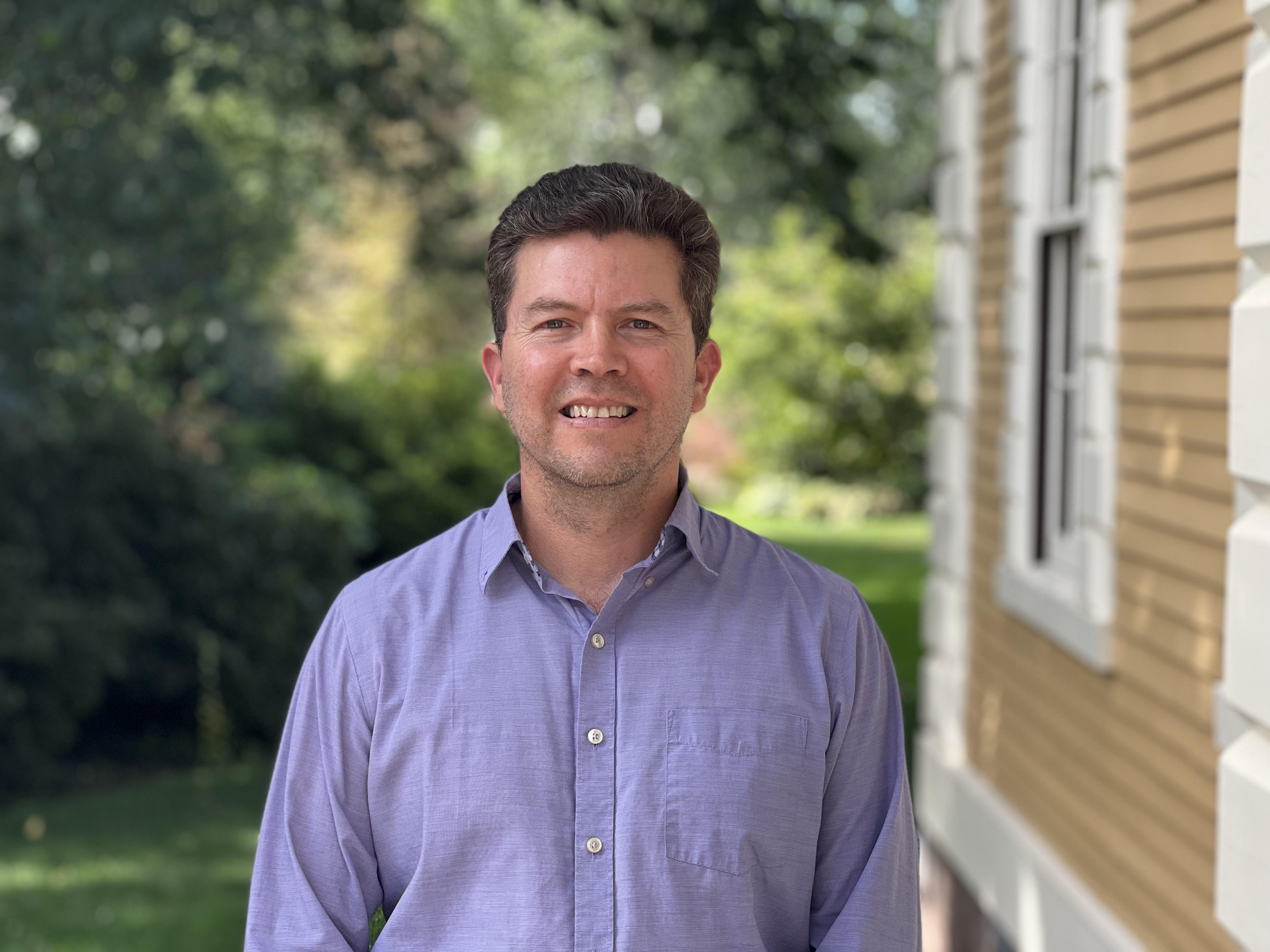
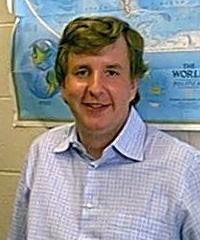
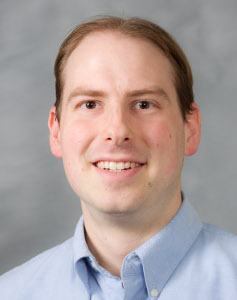
Johnny Guzmán is a Professor of Applied Mathematics at Brown University, specializing in numerical analysis of partial differential equations and scientific computing. He holds a Ph.D. in Applied Mathematics from Cornell University (2005) and a B.S. in Mathematics from California State University, Long Beach (1999). His research focuses on numerical methods for PDEs, including discontinuous Galerkin methods, mixed finite element methods, and fluid-structure interaction problems. Key contributions include work on hybridizable and mixed finite element methods, discontinuous Galerkin discretizations, and stability analysis of numerical schemes. He has been funded by multiple NSF grants, including a Postdoctoral Fellowship (2005–2008) and awards totaling over $1M in research support. Notable recognitions include the Comfort and Urry Family Fund Prize (2013). Guzmán collaborates with institutions globally and serves on editorial boards for journals like Journal of Numerical Mathematics and Calcolo . His teaching spans computational linear algebra, numerical methods for differential equations, and finite element analysis.
Jared Weinstein is a Professor in the Department of Mathematics and Statistics at Boston University, serving as the Departmental Ombud. He specializes in Number Theory and Algebraic Geometry, with a focus on p-adic geometry, shtukas, and moduli spaces. His research explores connections between arithmetic geometry and homotopy theory, including contributions to the Langlands program and local Shimura varieties. Education: AB from Harvard University (undergraduate), PhD from University of California, Berkeley. Postdoctoral work at UCLA and the Institute for Advanced Study before joining BU in 2011. Research interests include arithmetic geometry, p-adic Hodge theory, and the geometry of moduli spaces. His work often intersects with topics like perfectoid spaces, diamonds, and chromatic homotopy theory. Recent articles highlight advancements in modularity of elliptic curves over function fields and the Kottwitz conjecture for local shtuka spaces. No scientific awards are explicitly listed, but his extensive publications reflect significant contributions to his field. Advising and grants details are not provided here. His work is closely tied to the v-topology and related geometric frameworks in algebraic geometry.
Patrick Ingram is an Associate Professor at the Department of Mathematics and Statistics , Faculty of Science , York University . His research focuses on number theory and diophantine geometry , particularly the arithmetic of elliptic curves and surfaces , and dynamical systems over global fields . His scholarly work includes significant contributions to the study of canonical heights , post-critically finite maps , and primitive divisors in arithmetic dynamics . His research often bridges complex dynamics with number theory, exploring the interplay between Galois representations , Drinfeld modules , and polynomial iterations . Patrick has received the Top Cited Article 2007 - 2011 award from the Journal of Number Theory . He collaborates with leading mathematicians in arithmetic dynamics, including Joseph H. Silverman , and has published extensively in top-tier journals such as the Duke Mathematical Journal , Proceedings of the London Mathematical Society , and Transactions of the American Mathematical Society . His work spans both theoretical advancements and computational techniques in algebraic divisibility sequences and rigidity theorems .
Tim Browning is a Professor of Number Theory at the Institute of Science and Technology Austria (IST Austria). He leads the Browning Group, focusing on analytic number theory and its interfaces with algebraic geometry. His research addresses Diophantine equations, rational points on algebraic varieties, and the distribution of arithmetic objects. He organizes the Algebraic Geometry & Number Theory Seminar and the Women in Math Day. Previously, he held roles at the University of Bristol and University of Oxford. He has authored over 100 publications and received accolades including the Ferran Sunyer i Balaguer Prize and an ERC Starting Grant. His group includes PhD students and postdocs working on topics like rational points, sieve methods, and arithmetic statistics. Education: PhD in Mathematics, University of Oxford (2002) Postdoctoral Fellowships at University of Oxford and Université de Paris-Sud Research Interests: Analytic and arithmetic methods in number theory, Diophantine geometry, rational points on varieties, circle method, sieve theory, and arithmetic statistics. His work often combines geometric and analytic techniques, such as the circle method and algebraic geometry to solve problems like Manin's conjecture and the distribution of solutions to polynomial equations. Grants & Leadership: ERC Starting Grant (2012) Serves on editorial boards of journals like Compositio Mathematica and Commentarii Mathematici Helvetici Organizes international conferences and workshops Labs/Teams: Leads the Browning Group at IST Austria, which includes postdocs and PhD students working on number theory and algebraic geometry. Collaborates with researchers globally on topics like the arithmetic of Fano varieties and rational curves.
Professor Neil Strickland is a faculty member at the University of Sheffield's School of Mathematical and Physical Sciences, holding the rank of Professor. He earned his PhD from the University of Manchester in 1992 and held positions as a C.L.E. Moore Instructor at MIT and a Research Fellow at Trinity College Cambridge before joining Sheffield in 1998. He received the prestigious Whitehead Prize from the London Mathematical Society in 2005. His research focuses on stable homotopy theory, exploring connections between topology, algebraic geometry, and category theory. Key areas include formal group laws, chromatic homotopy theory, and equivariant cohomology. Prof. Strickland emphasizes translating topological problems into algebraic frameworks, leveraging category theory for structural insights. Grants: He has led EPSRC-funded projects, including 'Symmetric Powers of Spheres' and 'Equivariant Elliptic Cohomology and Class Field Theory,' and collaborated on grants like 'Higher Structures on Elliptic Cohomology.' Teaching: Prof. Strickland instructs courses such as MAS334 Combinatorics and MAS435 Algebraic Topology. His homepage provides further academic resources and materials. Awards: His recognition includes the Whitehead Prize, reflecting contributions to algebraic topology and homotopy theory.
Nathaniel Stapleton is an Associate Professor in the Department of Mathematics at the University of Kentucky, affiliated with the College of Arts & Sciences. His research focuses on algebraic topology, particularly homotopy theory, with an emphasis on chromatic homotopy theory, equivariant phenomena, and Morava E-theory. He holds a faculty position at the Patterson Office Tower campus in Lexington, KY. Stapleton's work bridges abstract algebraic structures with geometric and categorical methods, addressing topics such as Picard groups, power operations, and p-divisible groups. His recent publications explore connections between homotopy theory and algebraic geometry, including studies on supersymmetric field theories and the interplay between rational and equivariant cohomology. His research trends highlight advancements in transchromatic homotopy theory, asymptotic algebraic structures in stable homotopy, and equivariant sphere spectra analysis. Collaborative efforts include organizing conferences like the Transatlantic Transchromatic Homotopy Theory Conference. While no awards are explicitly listed, his extensive publication record reflects sustained contributions to algebraic topology. Stapleton's advising and grant activity are not detailed in the provided materials, though his academic profile suggests active involvement in graduate supervision given his research intensity. His work is centered at the Department of Mathematics, contributing to both pure theory and interdisciplinary applications in geometric topology.
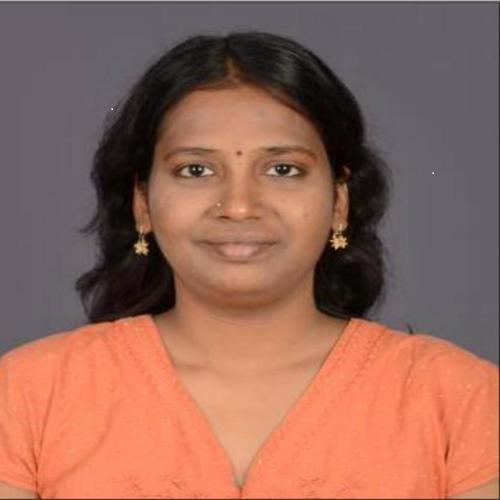
Srilakshmi Krishnamoorthy serves as an Associate Professor in the School of Mathematics at the Indian Institute of Science Education and Research (IISER) Thiruvananthapuram. She joined IISER TVM in 2017 as an Assistant Professor and was promoted to her current position. Her academic journey includes a PhD from the University of Sheffield, UK in Arithmetic Geometry, followed by a postdoctoral fellowship at IMSc Chennai and a visiting scientist position at the Max-Planck Institute for Mathematics in Bonn, Germany. PhD: University of Sheffield, UK (specialization in Arithmetic Geometry) Post Doctoral Fellowship: IMSc Chennai (2010-2013) Visiting Scientist: Max-Planck Institute for Mathematics, Bonn (2013-2014) Her research spans Arithmetic Geometry, Number Theory, Graph Theory, and Combinatorics, with particular focus on modular forms, elliptic curves, class field theory, and zero-sum problems. She has made significant contributions to understanding class numbers of quadratic fields, modular degrees of elliptic curves, and congruences in partition theory. Analysis of her 15 most recent publications reveals a strong concentration on class field theory problems, particularly concerning class numbers of quadratic fields and their divisibility properties. Her work frequently connects modular forms with number-theoretic questions, demonstrating expertise in both theoretical and computational aspects of modern number theory. Recent papers show increasing collaboration with junior researchers, indicating active mentoring of the next generation of mathematicians. DST-SERB Core Research Grant (2024-2027) DST-INSPIRE Faculty Award (2014-2019) Gold medal for first rank in M.Sc. Mathematical Sciences (2004) CSIR-JRF Award (2005) Multiple summer fellowships from Indian Academy of Sciences Professor Krishnamoorthy has supervised numerous students at various levels, including 4 postdoctoral researchers, 3 PhD students who have completed their degrees, and multiple masters and undergraduate research students. Her teaching portfolio includes advanced courses in Modular Forms, Algebraic Number Theory, and Number Theory and Cryptography. She has also secured multiple research grants including DST-SERB, DST-INSPIRE, and NBHM funding for conference organization and research activities. As an active member of the mathematical community, she serves as Coordinator for the Club of Mathematics at IISER TVM and has organized major events like the International Conference on Number Theory. Her research group maintains strong international connections, with regular visits from collaborators at institutions including Max-Planck Institute, TIFR Mumbai, and universities in France, Germany, and the UK. The group participates actively in the number theory seminar series and organizes workshops to foster collaboration within the Indian mathematical community.
Alison Crocker is the A.A. Knowlton Professor of Physics at Reed College, affiliated with the Physics Department and the Division of Mathematical and Natural Sciences. She specializes in astrophysics, focusing on star formation processes in nearby galaxies and the interplay between molecular gas and stellar environments. Dr. Crocker holds a DPhil in astrophysics from the University of Oxford as a Rhodes Scholar, with postdoctoral training at the University of Massachusetts and the University of Toledo. She joined Reed College in 2014 and teaches courses in astrophysics while leading a weekly astronomy discussion group. Education: Bachelor's in Physics and Mathematics, Dartmouth College DPhil in Astrophysics, University of Oxford (Rhodes Scholar) Research Interests: Neutral carbon line emission analysis using Herschel data, molecular gas dynamics, interstellar medium interactions, and galaxy evolution. Her research bridges observational astronomy with theoretical models, emphasizing the connection between galactic gas properties and stellar formation efficiency. She oversees the Reed College telescope, fostering student engagement in observational astronomy. Recent work explores UV emission mechanisms and molecular gas ratios in early-type galaxies, contributing to understanding galaxy evolution across cosmic time.
Carl Pomerance is a Professor in the Department of Mathematics at Dartmouth College. His research spans various areas of number theory, including analytic number theory, cryptography, and computational methods. He is renowned for his work on prime numbers, pseudoprimes, and the distribution of arithmetic functions. Pomerance has authored or co-authored numerous influential books, including Prime Numbers: A Computational Perspective , and has edited volumes on cryptology and computational number theory. His research interests include the study of arithmetic functions, such as Euler's totient function and Carmichael's function, as well as topics in algebraic number theory, combinatorics, and algorithms. Pomerance has delivered invited talks at major conferences and institutions worldwide, focusing on themes like additive number theory, multiplicative functions, and the interplay between number theory and cryptography. Key contributions include advancements in primality testing algorithms (e.g., the quadratic sieve), the study of Carmichael numbers, and investigations into pseudoprimes and their distribution. He has also explored topics such as covering congruences, elliptic curves, and the properties of algebraic numbers.
Omar Kihel is a Professor of Mathematics at Brock University, affiliated with the Department of Mathematics and Statistics within the Faculty of Mathematics and Statistics. His research focuses on Algebraic Number Theory, Elliptic Curves, Diophantine Equations, Permutation Polynomials over Finite Fields, Galois Theory, and Cryptography. He has been invited to speak at multiple international conferences, including the 25th Annual Meeting in Mathematics (AMM 2021) in Bangkok and the Mathematical Congress of the Americas 2021. He holds the title of Fellow of the Papua New Guinea Mathematical Society (since 2013) and received a teaching excellence award from Brock University in 2017. His research trends emphasize Diophantine equations, permutation polynomials, and applications of algebraic structures in cryptography. Recent publications explore topics such as integer solutions to equations, elliptic curve properties, and polynomial theory. His work frequently intersects with number theory, algebraic geometry, and combinatorics. Scientific Awards: Teaching award in the faculty of Mathematics and Statistics (2017) Fellow of the Papua New Guinea Mathematical Society (2013–present) His advising and grants are not explicitly detailed in the provided text. His research is primarily theoretical, contributing to foundational areas of mathematics with potential applications in cryptography and computational algebra.
Amita Malik is an Assistant Professor in the Department of Mathematics at the Pennsylvania State University, affiliated with the Eberly College of Science. Her office is located at 331 McAllister Building. She specializes in advanced mathematical research with a focus on number theory and related fields. Dr. Malik's work often intersects with algebraic geometry, analytic number theory, and combinatorics. Her research interests include the study of elliptic curves, partition theory, modular forms, zeta functions, and geometric structures such as Apollonian gaskets and Ford circles. She explores topics like extremal primes, equidistribution of zeros, and divisibility properties of special number sequences. Her contributions bridge pure mathematics with applications in complex analysis and dynamical systems. Dr. Malik's recent publications (2014–2025) reflect her deep engagement with these areas, addressing questions about Riemann ξ-function zeros, mock theta functions, and spatial statistics of fractal geometries. Her work often employs tools from harmonic analysis and algebraic geometry, demonstrating a commitment to interdisciplinary approaches. No scientific awards or grants are explicitly noted in the provided materials. She does not have listed advisees or students, though her research may involve collaborations with graduate students or postdoctoral researchers not detailed here.
Thomas Tucker is a Professor of Mathematics at the University of Rochester, serving as Director of Graduate Admissions in the Department of Mathematics within the School of Arts & Sciences. He holds a PhD from the University of California, Berkeley (1998). His research focuses on Number Theory, Arithmetic Dynamics, and Diophantine Geometry, with notable contributions to Galois theory in dynamical systems and the study of algebraic structures in arithmetic contexts. He has taught advanced courses such as MTH 548 and co-taught a foundational course on arithmetic dynamics at MSRI with Dragos Ghioca (2012), producing comprehensive notes and problem sets. His work bridges pure mathematics and applied dynamical systems, emphasizing interdisciplinary approaches to classical problems. Recent research trends include exploring iterated Galois groups, isotriviality in characteristic p, and dynamical analogues of conjectures like Manin-Mumford. He actively contributes to academic administration, advising graduate programs, and maintaining a robust publication record. His research has been supported through grants including the NSF FRG grant for Algebraic Dynamics (2009) and collaborative research initiatives on number theory. He collaborates widely, evidenced by talks at institutions like the Fields Institute. His academic service includes roles in curriculum development and student advising, reflecting a commitment to both research excellence and educational leadership.
Guillaume Hanrot is a Professor at ENS Lyon, affiliated with the LIP laboratory and the Arenaire research group (an INRIA project-team). He serves as Vice-President of INRIA's Evaluation Committee and Deputy Director of the Computer Science Department at ENS Lyon. His research focuses on algorithmic number theory, computer arithmetic (including correct rounding and polynomial approximation), and cryptology, particularly lattice algorithms. He contributed to the development of the MPFR library and the PARI system as free software. Previously, he was a part-time associate professor at École Polytechnique until 2005 and an INRIA researcher at INRIA Nancy Grand Est leading the Cacao project until 2009. His work includes seminal contributions to lattice reduction algorithms, Diophantine equations, and effective methods in number theory. Publications span topics like lattice-based cryptography, floating-point arithmetic, and algorithm optimization. He has edited conference proceedings for RNC'7 and ANTS'9. His academic trajectory includes a PhD from Bordeaux 1 (1997) and an habilitation (2005).
Jeremy Rouse is a Professor and Graduate Program Coordinator in the Department of Mathematics at Wake Forest University. He holds a Ph.D. in Mathematics from the University of Wisconsin-Madison (2007), an M.A. from the same institution (2005), and a B.S. from Harvey Mudd College (2003). His research focuses on modular and automorphic forms, L-functions, elliptic curves, and quadratic forms. Rouse has authored numerous papers on topics such as elliptic curve arithmetic, Galois representations, and Diophantine equations. He has been recognized with awards including the A.J. Sterge Faculty Fellowship, National Science Foundation grants, and the 2014 TLC Teaching Innovation Award. Rouse has advised over 50 graduate and undergraduate students, mentoring research in number theory and related fields. His work often intersects with computational methods, including collaborations on projects like the 2-adic images of Galois for elliptic curves over ℚ. He has organized conferences, served on editorial boards, and contributed to both academic and public outreach initiatives in mathematics.
Samir Siksek is a Professor of Mathematics at the University of Warwick's Mathematics Institute. His primary role includes teaching advanced courses such as MA268 Algebra III and TCC Modular Curves, and he actively contributes to the Number Theory Group at Warwick. Education details are not explicitly stated in the text, but his PhD thesis on 'Descents on curves of genus 1' (1995) is referenced. Research interests focus on Number Theory, particularly Galois representations, Diophantine equations (including Fermat-type equations), arithmetic geometry, and modular forms. His work spans explicit methods for solving Diophantine equations, modular curves, and applications of modular forms. Key contributions include resolving cases of Fermat's Last Theorem over various number fields and advancing techniques in Chabauty methods and the Mordell-Weil sieve. He organizes events like the 'Modular curves and their arithmetic' conference (December 2023) and has contributed to workshops at BIRS, CMI-HIMR, and Banff. His research has been published in top journals like Inventiones Mathematicae and Compositio Mathematica. Professional activities include advising postdocs and PhD students, leading the Warwick Number Theory Seminar, and collaborating on projects like the L-Functions and Modular Forms Database (LMFDB).