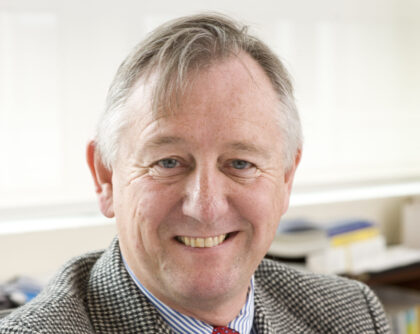
Richard G. Milner is a Professor of Physics at MIT since 1988. He leads research in nucleon/nuclear structure using lepton probes, with a focus on QCD and spin observables. His experimental work spans SLAC, MIT-Bates, DESY, and Jefferson Lab. He directed MIT’s Bates Linear Accelerator Center (1998–2006) and the Laboratory for Nuclear Science (2006–2015). Notable honors include the APS Tom W. Bonner Prize (2020), Humboldt Prize (2011), and APS Fellow status (2007). Educations: B.Sc./M.Sc. (UCC, 1978–1979), Ph.D. (Caltech, 1985). Research: Spin structure of protons, electronuclear experiments, proton visualization projects (e.g., Visualizing the Proton documentary). Labs/Teams: Hadronic Physics Group (HPG), affiliated with MIT’s Laboratory for Nuclear Science (LNS). Leadership: Advocacy for the Electron-Ion Collider (EIC), co-recipient of the Buechner Teaching Award (2018). His work bridges art and science, exemplified by collaborations with filmmakers and animators to depict subatomic phenomena. Current interests include QCD dynamics and gluon states in nuclei.
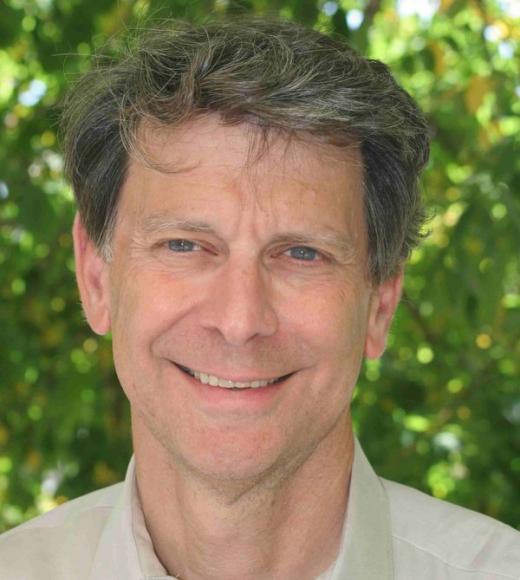
C. William McCurdy is a Professor of Chemistry at the University of California, Davis, and a member of the Theory Group. He specializes in developing ab initio computational methods to study ultrafast molecular dynamics driven by femtosecond/attosecond laser pulses. His research focuses on electron-molecule interactions, photoionization, and nonadiabatic processes in atoms and molecules. Affiliations: UC Davis; Adjunct Professor at UC Berkeley (1996). Past roles: Director of National Energy Research Supercomputer Center (1991-1995); Associate Laboratory Director at Lawrence Berkeley National Laboratory (1995-2003). Education: PhD in Chemistry from Caltech (1976), BS from Tulane University (1971). Notable awards include Fellow of the American Physical Society (1993) and the Camille & Henry Dreyfus Teacher-Scholar Award (1983-1988). Research interests include: theoretical modeling of ultrafast XUV/X-ray experiments, molecular frame angular distributions, and core-hole localization in polyatomic molecules. His work bridges computational methods with experimental techniques like momentum imaging and attosecond spectroscopy. Key articles (2022-2025) explore double photoionization, attosecond dynamics, and dissociative electron attachment mechanisms. His theoretical contributions often involve B-spline methods, exterior complex scaling, and overset grid implementations for solving atomic/molecular scattering problems.
Lin Si is a Researcher and Postdoctoral Scholar in the Physics Research Group under Prof. Giorgio Gratta at Stanford University's Department of Physics. Their work focuses on advanced experimental particle physics, particularly dark matter detection and neutrino studies using large-scale xenon-based detectors. Lin contributes to the PandaX collaboration, developing cutting-edge instrumentation to reduce background noise in detectors and analyze low-energy particle interactions. Key research areas include radon purification systems, low-background photomultiplier tubes, and signal simulation in xenon detectors. Their work supports the PandaX-xT observatory, a multi-tonne liquid xenon facility in China's Jinping Underground Laboratory, aimed at probing dark matter and neutrino properties. Lin's research also involves analyzing solar neutrino flux and exploring novel dark matter interaction mechanisms. Recent studies emphasize cosmic-ray boosted dark matter signals, supernova neutrino detection, and double beta decay investigations. Their technical contributions include cryogenic distillation systems and waveform simulation techniques critical for high-sensitivity measurements.
MICHENEAU Kevin is a Researcher-Lecturer at CESI LINEACT, affiliated with the Engineering and Numerical Tools Research team. His work spans both applied engineering and fundamental physics research. He holds a PhD in Particle Physics from the University of Nantes (2018) and a Master's in Subatomic Physics from the same institution (2014). His research focuses on energy performance optimization in smart buildings, intelligent building control systems, and data fusion techniques for occupancy modeling. Concurrently, he continues contributions to dark matter detection through advanced analysis of XENON experiment data. Education: PhD in Particle Physics, University of Nantes (2018) Master's in Subatomic Physics, University of Nantes (2014) Research Interests: Developing models for occupancy-aware energy systems Optimizing multi-objective control strategies for building HVAC systems Data-driven approaches for sensor fusion and anomaly detection Continued dark matter research via XENON collaboration experiments Recent Research Trends: Recent work demonstrates a strategic shift toward applied building systems research while maintaining expertise in particle physics. 2024's multi-objective MPC study represents his growing focus on practical energy efficiency solutions, while XENON1T/XENON100 analyses (2017-2019) highlight sustained contributions to dark matter detection methodologies. Grants & Advising: Supervising PhD candidate Adrien BOURGOIN (2023-2026) Laboratory Affiliations: Core member of CESI LINEACT's Engineering and Numerical Tools Research team, collaborating on smart building instrumentation and computational modeling projects.
Nathaly Santiesteban is an Assistant Professor of Physics & Astronomy at the University of New Hampshire (UNH), affiliated with the College of Engineering and Physical Sciences. Her research focuses on experimental nuclear and particle physics, particularly in areas such as photonuclear interactions, hyperon production, and searches for axion-like particles. She is actively involved with Jefferson Lab collaborations and has contributed to studies on nuclear structure, off-shell effects, and high-energy scattering experiments. Dr. Santiesteban teaches advanced courses including PHYS 615/616 (Mechanics/Mathematical Physics) and PHYS 720/820 (Nuclear Physics). Her work bridges theoretical predictions with experimental validation, leveraging cutting-edge facilities like the GlueX detector and the MARATHON experiment. Current research trends include probing subthreshold particle production, QCD dynamics in light nuclei, and precision measurements of nuclear responses. Her publications (2020–2025) reflect a strong focus on high-energy physics experiments, with notable contributions to understanding color transparency, few-body nuclear systems, and heavy-ion collisions. Despite no explicitly listed scientific awards, her prolific publication record and experimental leadership indicate significant contributions to her field. Dr. Santiesteban’s advising and grant activities are not detailed here, but her involvement in collaborative projects suggests active participation in research funding and student mentorship. Her lab affiliations include the UNH Physics Department’s Demeritt Hall facility, where she conducts experimental preparations and data analysis.
Dr. Michael Kohl is an Associate Professor of Physics at Hampton University (HU) and a staff scientist at the Thomas Jefferson National Accelerator Facility (Jefferson Lab). He holds a Doctorate (2001) and Diploma (1996) from the Technical University Darmstadt, Germany. His research focuses on experimental nuclear physics, particularly nucleon and few-body structure, and fundamental symmetries. He investigates nucleon structure via electron scattering experiments at facilities like MAMI, S-DALINAC, MIT-Bates, and Jefferson Lab, while exploring photon exchange contributions in scattering processes. He co-initiated the OLYMPUS experiment at DESY (Germany) to study multi-photon exchange effects and the TREK experiment at J-PARC (Japan) to search for time-reversal violation in kaon decays. His group develops Gas Electron Multiplier (GEM) detectors for high-rate tracking in harsh environments. Collaborations include BLAST, OLYMPUS, TREK, and EIC/eRHIC. He has supervised 12 PhD students and serves as an analysis coordinator for BLAST and international spokesperson for TREK. Education: Doctorate in Physics, Technical University Darmstadt, Germany (2001) Diploma in Physics, Technical University Darmstadt, Germany (1996) His research interests span experimental nuclear physics with emphases on nucleon structure, symmetry violations, and advanced detector technologies. He pioneers experiments addressing open questions in Standard Model extensions and QCD dynamics. His GEM-based detectors enable studies in high-intensity environments at leading accelerators worldwide. Key ongoing projects include OLYMPUS (DESY) and TREK (J-PARC), targeting precision measurements of fundamental interactions and novel symmetry violations. Dr. Kohl actively participates in international collaborations and contributes to next-generation facilities like the Electron-Ion Collider (EIC). Publications reflect contributions to nucleon form factor measurements, resonance searches, and detector advancements. He has held leadership roles in multiple experiments, demonstrating expertise in both technical innovation and global scientific coordination.