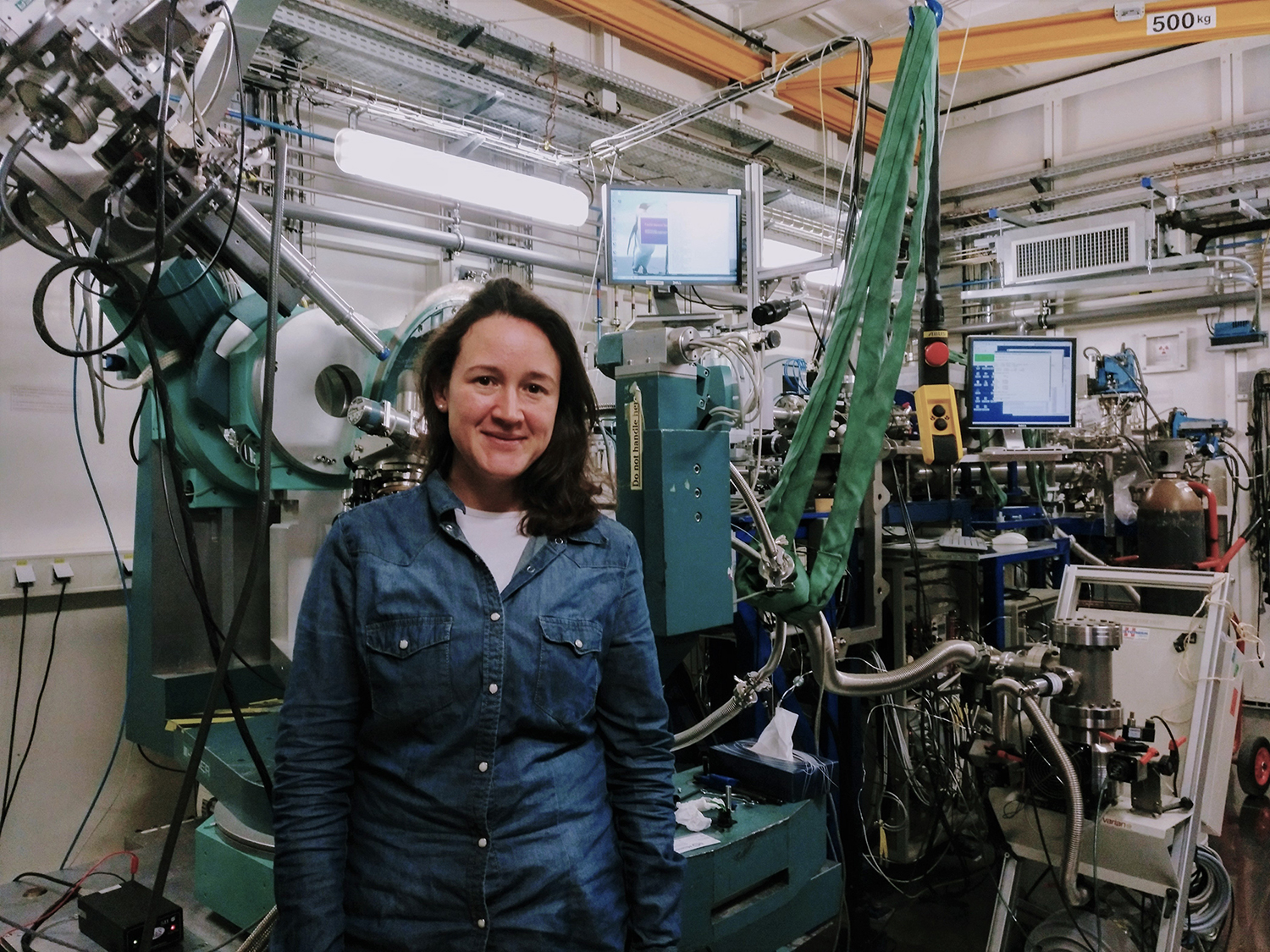
Magnus Nord is an Associate Professor in the Department of Physics, Faculty of Natural Sciences at Norwegian University of Science and Technology (NTNU). His research focuses on advanced electron microscopy techniques and computational tools for materials characterization. Research Interests : Scanning Transmission Electron Microscopy (4D-STEM), Open Source Scientific Software Development (Python), Big Data Processing, Magnetic/Electric Field Imaging, Structural Characterization using Higher Order Laue Zones. Publications span cutting-edge applications in functional materials, nanomagnets, and perovskite thin films, with emphasis on machine learning and precession-enhanced imaging. Key keywords include Materials Science , Electron Microscopy , and Computational Imaging . Software Development : Lead developer of Atomap and pyxem , contributing to HyperSpy and merlin_interface for electron microscopy data analysis. Current Research Funding : InCoMa (Research Council of Norway) IMPRESS (Horizon EU Program)
Bodil Holst is a Professor at the University of Bergen's Department of Physics and Technology , specializing in surface science and scientific instrumentation development . Her research spans 2D materials , helium atom scattering , and archaeometry applications. She leads projects like Nanometer-Resolution Matter-Wave Lithography (FET-Open), 2D Material Properties (NFR FRIPRO), and Wind Turbine Erosion Prevention (Equinor). Her Nanophysics Group has produced groundbreaking work on graphene's temperature-dependent rigidity and icephobic surfaces . First neutral helium microscope images (2008) Recorded bending rigidity of 2D materials (2018-2021) Developed solid-state conversion techniques for sapphire (2017-2021) Her teaching innovations in classical mechanics explore retrieval practice and digital learning structure , documented in Physics Education and Physical Review Physics Education Research .
Jaakko Akola is a Professor in the Department of Physics at the Norwegian University of Science and Technology (NTNU). His research focuses on computational materials science, particularly density functional theory (DFT) and atomistic simulations of materials, nanoparticles, molecules, and interfaces. He leads significant projects such as "SIDI" (inoculation in cast iron), "Infinity-RETIS" (chemical rare events), and "AllDesign" (rational alloy design), alongside coordinating EU-funded initiatives like "CritCat" for catalyst development. The Materials Theory group under Akola employs DFT, molecular mechanics, and Monte Carlo methods to explore atomic-scale structures and functions in technological applications. Key research areas include platinum-free catalysts for hydrogen energy, amorphous semiconductors for memory devices, noble metal nanoparticles in biological environments, and alloy design for cast iron and aluminum. Recent work integrates machine learning to advance theory-driven material design, reducing reliance on experimental trial-and-error. Akola's publications highlight advancements in hydrogen evolution catalysis, phase-change memory materials, and alloy precipitation. His projects often involve interdisciplinary collaborations with experimental teams. He teaches Quantum Physics 1 (FY2045) and Computational Physics (TFY4235) at NTNU, reflecting his commitment to education alongside research.
Andreas Rosnes is a Doctoral Research Fellow at the University of Oslo's Centre for Materials Science and Nanotechnology, affiliated with the Department of Physics within the Faculty of Mathematics and Natural Sciences. His research focuses on sustainable material development, particularly leveraging combinatorial material science and pulsed laser deposition (PLD) to study exsolution nanoparticles in perovskites for catalytic applications. He employs advanced techniques like transmission electron microscopy (TEM) and diffraction for material characterization. Teaching includes FYS1210 - Elementary Electronics with Project Work (2023-2025) and FYS4340/9340 - Transmission Electron Microscopy, Diffraction and Spectroscopy (Fall 2024). His work emphasizes time- and cost-effective methodologies for material optimization, with a special interest in defect analysis and structural characterization. Notably, he received the Best Material Science Presentation award at Scandem 2022. Research affiliations include the SOLARIS and Electrochemistry groups, focusing on solid-state physics and quantum technology applications. Current projects involve a combinatorial study of exsolution nanoparticles for energy conversion and storage technologies.
Hans-Petter Hersleth is a Senior Lecturer and group leader at the University of Oslo's Department of Biosciences, Section for Biochemistry and Molecular Biology. He leads the Structural Redox Enzymology (ROX) group, which focuses on understanding the structure and function of redox enzyme systems through protein crystallography, enzyme kinetics, binding studies, and spectroscopy. Dr. Hersleth earned his Cand. mag. in Mathematics, Physics and Chemistry from the University of Oslo (1995-1998), followed by a Cand. scient. in Physical Chemistry (Crystallography) (1998-2000), and completed his Dr. scient. (PhD) in Protein Crystallography (2000-2007) at the University of Oslo's Department of Chemistry. His research interests span structural biology, protein structure and function, enzymology, protein crystallography, and spectroscopy. The ROX group investigates redox enzymes that use various cofactors including heme, flavins, and thiol-based systems. Specific research areas include low molecular weight thiols in bacterial defense mechanisms, ribonucleotide reductase systems, and flavin-based oxidoreductases. The group employs a multidisciplinary approach combining X-ray and neutron crystallography with various spectroscopic techniques to understand these enzymes at molecular and electronic levels. His recent publications demonstrate expertise in structural characterization of redox enzymes, particularly focusing on bacterial systems like Bacillus cereus. The research shows strong trends in protein crystallography of flavin-dependent enzymes, thiol-based redox systems, and bacterial defense mechanisms against oxidative stress. "Den Gyldne Laserpeker" as best lecturer (2020) "Den Gyldne Laserpeker" as best lecturer (2015) Norsk Hydros pris for fremragende studieresultater i kjemi (1999) Dr. Hersleth has supervised numerous Master's and PhD students, including Ingvild Gudim, Inger K. Olsbu, Marta Hammerstad, and Marie Lofstad. His group receives funding for research on bacterial redox defense systems and metal homeostasis, with potential applications in antimicrobial target discovery. The ROX group is also part of the UiO Structural Biology Core Facilities, providing expertise in structural biology to the broader research community. The Structural Redox Enzymology group operates as a dynamic research team investigating fundamental biochemical processes with implications for understanding bacterial pathogenesis and developing new antimicrobial strategies. The group collaborates extensively both nationally and internationally, with members including Marta Hammerstad, Niels Højmark Andersen, Marthe Sofie Lindahl Karlsen, and Matias Aracena-Solem.
Ola Nilsen is a Professor of Inorganic Materials Chemistry at the University of Oslo, affiliated with the Department of Chemistry within the Faculty of Mathematics and Natural Sciences. His research focuses on atomic layer deposition (ALD) and molecular layer deposition (MLD), specializing in the synthesis and application of thin films for energy storage, biocompatible surfaces, and advanced materials. Key areas include solid-state batteries, functional oxides, and hybrid materials. He leads the NAFUMA thin film research group and has designed over 10 ALD reactors for diverse substrate applications. Beyond academia, he co-founded the Nano School outreach program, teaching nanotechnology to high school students. Research Interests: Atomic Layer Deposition (ALD) and Molecular Layer Deposition (MLD) Functional thin films for energy storage (e.g., Li-ion batteries) Bioactive surfaces and medical materials Crystal growth and thin film characterization Novel precursor development for ALD/MLD Articles Highlight Trends in: ALD-based battery materials (e.g., Si-based electrodes) Biocompatible hybrid films (e.g., Titaminates) Photoelectrocatalytic materials for water splitting Anion-ordered oxide chlorides Outreach and Education: Annual Nano School workshops for high schoolers Public lectures on nanotechnology and battery technology Key Collaborations: SOLARIS (solar photochemical H₂ projects), NAFUMA (nanostructures and functional materials), and international teams via UiO's open-access workshop infrastructure.
Jon Otto Fossum is a Professor in the Department of Physics at the Norwegian University of Science and Technology (NTNU), Faculty of Natural Sciences. His research focuses on soft and complex condensed matter physics, particularly experimental studies of clay minerals and nanomaterials. Position: Professor Institution: NTNU Department: Physics Research Interests: Fossum investigates the physical properties of clay-based nanomaterials, including CO2 capture, intercalation processes, and self-assembly of colloidal particles. His work spans fundamental physics of nanoscale systems to applied technologies like electromagnetic shielding and drug delivery systems. Publication Trends: His recent articles highlight experiments with synthetic clays, graphene suspensions, and machine learning applications. Topics include CO2 interactions in nanolayered materials, structural coloration, and electromagnetic interference shielding using nanocomposites. Teaching & Supervision: He has advised multiple doctoral dissertations and master's theses, including projects on Pickering emulsions, electric field-induced structuring, and clay-stabilized emulsions. Laboratory: Leads the Soft and Complex Matter Lab , focusing on nanomaterials and their environmental/technological applications.
Basab Chattopadhyay is an Associate Professor in the Department of Physics at the Norwegian University of Science and Technology (NTNU). He obtained his Ph.D. from the Indian Association for the Cultivation of Science (IACS), India in 2011 and completed postdoctoral research at ULB, Brussels (2012-2018) with an EU Marie-Curie Fellowship and "Chargé de Recherche" from the Belgian National Science Foundation, followed by a postdoc at NTNU (2018-2020). His research focuses on X-ray physics, particularly 4D imaging, biomineralisation, computational imaging, and materials physics. He leads the ICONIC project (2020-2026) which aims to use 3D Coherent X-ray Diffraction Imaging to understand biomineralisation pathways, and is involved in several other major projects including SaltyPore, MISSION-CCS, and EXCITE2. Current Projects: ICONIC (Project Leader), SaltyPore, MISSION-CCS, EXCITE2 Past Projects: EXCITE Dr. Chattopadhyay has received notable recognition including the Mandate of 'Chargè de Recherche' from the Belgian National Science Foundation (2015-2018) and the Marie-Curie International Incoming Fellowship from the European Commission (2012-2015). His recent publications demonstrate expertise in advanced X-ray imaging techniques applied to diverse fields including geophysics, materials science, and biomedical engineering. The research spans from fundamental biomineralisation processes to practical applications in carbon capture and storage. He currently supervises multiple PhD candidates and Master's students, focusing on advanced X-ray imaging techniques and their applications in materials science and geophysics. His work spans multiple disciplines from biomineralisation to carbon capture and storage technologies.
Kirsten Aarset is an Associate Professor at Oslo Metropolitan University, affiliated with the Faculty of Technology, Art and Design under the Department of Mechanical, Electrical and Chemical Engineering. Her research focuses on determining molecular structures and conformational compositions using gas-phase electron diffraction and theoretical calculations. Research Interests: Molecular structure determination, gas-phase electron diffraction, ab initio calculations, hydrogen bonding, conformational analysis, and computational chemistry Aarset's publication record spans from 2003 to 2013, with a consistent focus on molecular geometry analysis of organic compounds through experimental diffraction methods and computational simulations. Her work covers diverse molecules including benzamides, chloroacetates, germanes, and heterocyclic compounds. Notable collaborations include researchers like Elizabeth M. Page, David A. Rice, and Kolbjørn Hagen. She has presented findings at international symposiums such as the European Symposium on Gas Electron Diffraction and Austin Symposium on Molecular Structure.
Aleksander Amble Larsen is a Doctoral Research Fellow at the Centre for Materials Science and Nanotechnology, affiliated with the Department of Physics at the University of Oslo. He is part of the Faculty of Mathematics and Natural Sciences and contributes to the Structure Physics research group. His work focuses on advanced materials characterization techniques including Scanning Electron Microscopy (SEM), Transmission Electron Microscopy (TEM), and Magnetic Force Microscopy (MFM). He also investigates high-entropy alloys (HEAs), soft magnetic materials, and elastocaloric materials, emphasizing interdisciplinary approaches combining multiple analytical methods. Larsen holds an M.Sc. (2021) and B.Sc. (2019) in Materials Science for Energy and Nanotechnology from the University of Oslo. His research has been published in IEEE conference proceedings, including studies on magnetic domain structures and phase identification in additively manufactured alloys. He participates in the Coolem project exploring solid-state elastocaloric cooling technologies. His research interests span experimental techniques like X-ray diffraction (XRD) and electron backscatter diffraction (EBSD), with a focus on in situ experiments to understand material behavior under dynamic conditions.
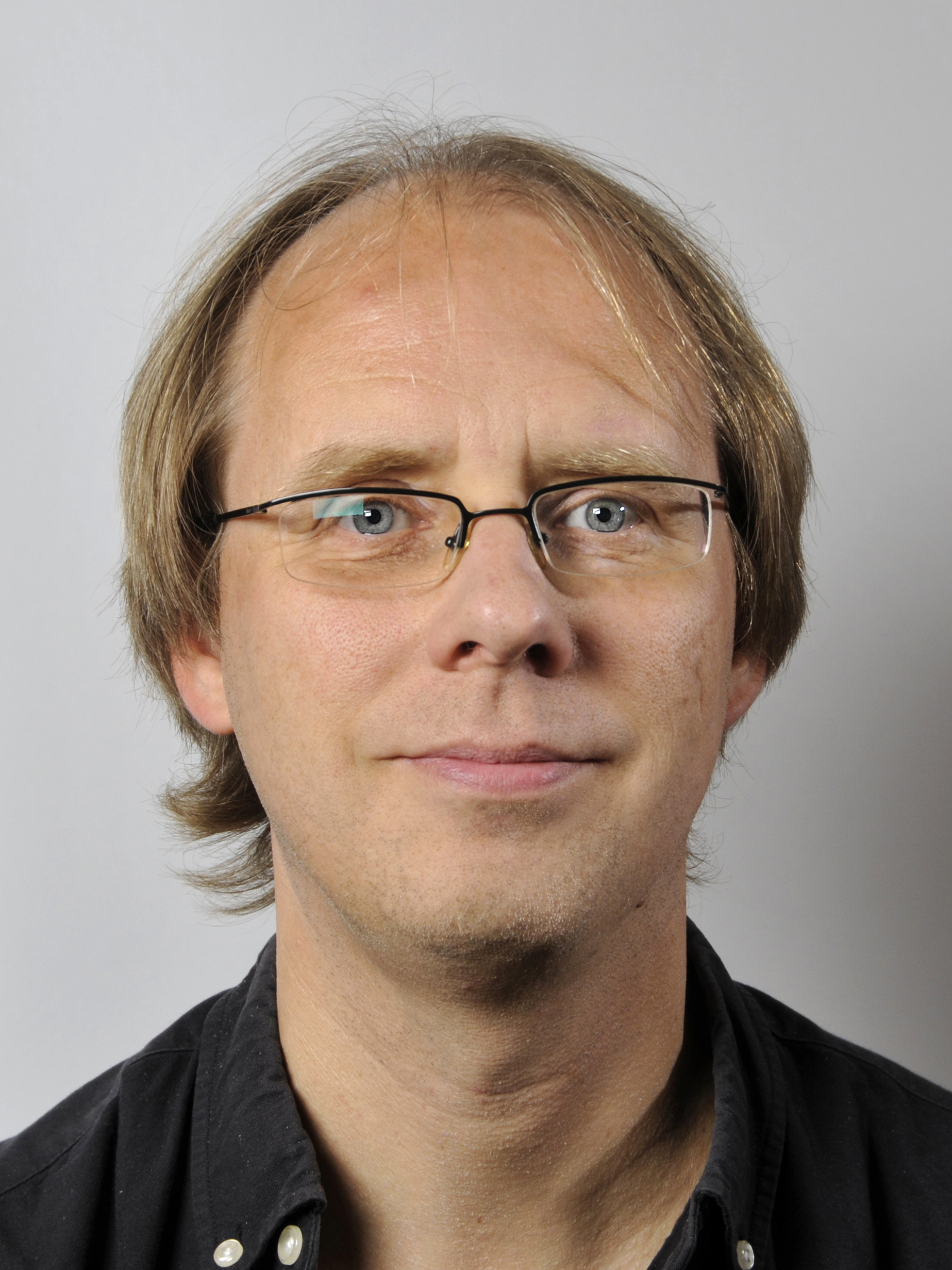
Matylda N. Guzik is a Senior Lecturer at the University of Oslo's Department of Technology Systems, specializing in materials science for sustainable energy. With a PhD in Crystallography from the University of Geneva (MSCA Fellowship, HYTRAIN Research Training Network), her career includes roles at the Department of Physics (UiO) and the Institute for Energy Technology in Kjeller, Norway.
Diana Lucia Quintero Castro is an Associate Professor in Materials Physics at the Department of Mathematics and Physics, Faculty of Science and Technology, University of Stavanger. She has been a faculty member since 2017 and is actively engaged in teaching and research in experimental condensed matter physics. Education: PhD in Physics, Technical University of Berlin (2011), research conducted at Helmholtz Zentrum Berlin Master in Physics, University of Antioquia, Colombia Physics Engineering, National University of Colombia Her research focuses on quantum magnets and functional materials , particularly exploring magnetic and lattice excitations in systems with geometrical frustration and orbital degrees of freedom. She specializes in neutron scattering methods, contributing to instrumentation such as triple-axis spectrometers and polarization analysis. Her current projects include PHUN (2022–2025) on phonon lifetimes and thermal conductivity, and UiScatt (2021–2023), aimed at building a user group for large-scale photon and neutron facilities at UiS. The recent publications show a strong trend in phonon dynamics in materials like SrTiO3, magnetic excitations in quantum magnets such as Sr3Cr2O8 and SrYb2O4, and instrumentation development . Her work bridges experimental neutron scattering with first-principles computations, highlighting interdisciplinary collaboration across institutions like SINTEF, HZB, and DTU. Scientific Awards: No awards explicitly mentioned in the text. She mentors students and early-career researchers, evident from her co-authorship with numerous junior scientists. She has secured competitive funding from the Norwegian Research Council (NRC) and internal UiS grants. Her work involves close collaboration with international labs and facilities, supporting both fundamental science and applications in energy materials. Labs and Teams: She is central to the UiScatt initiative, building a neutron/photon user group at the University of Stavanger. She collaborates with neutron facilities like BER II (HZB) and instruments such as FLEXX and CAMEA, contributing to spectrometer development and data analysis workflows.
Goran Jan Nilsen is an Associate Professor in Materials Physics at the Department of Mathematics and Physics, Faculty of Science and Technology, University of Stavanger (UIS). His research is focused on quantum magnetic materials and experimental condensed matter physics, particularly using neutron scattering techniques to probe spin dynamics and crystal field effects. His research interests lie at the intersection of quantum magnetism and materials physics. He investigates strongly correlated electron systems, including spin ice phases, low-dimensional quantum magnets, and honeycomb lattice materials exhibiting Kitaev-type interactions. His work often involves the synthesis and characterization of novel magnetic compounds such as β-VOSO4, RuP 3 SiO 11 , and NdCo 5 , with a strong emphasis on understanding emergent phenomena arising from magnetic frustration and spin-orbit coupling. The recent publications indicate a consistent focus on using neutron scattering methodologies—especially inelastic and polarized neutron techniques—to explore fundamental magnetic behavior in transition metal and rare-earth-based materials. Themes across these works include quantum spin liquids, one-dimensional magnetism, crystal field spectroscopy, and the role of extended superexchange in driving exotic magnetic interactions. Scientific Contributions: Investigation of Kitaev interactions in jeff = 1/2 systems Dynamics of antiferromagnetic spin ice in pyrochlore spinels Crystal field excitations in rare-earth intermetallics via neutron scattering Development of neutron polarization analysis methods Nilsen actively collaborates with international research teams and institutions, contributing to high-impact studies in top-tier physics journals. While specific details about student supervision and grant funding are not provided in the text, his publication record suggests involvement in major neutron scattering facilities and collaborative research projects. His work supports the advancement of quantum materials science and the development of new experimental techniques in condensed matter physics.
Randi Holmestad is a Professor at the Department of Physics, NTNU (since 1999). She holds a Dr. Ing. (PhD) in materials physics from NTH (1994) and a MSc in technical physics from NTH (1991). Her research focuses on materials physics, particularly transmission electron microscopy (TEM), electron diffraction, and microstructure-property relationships in aluminum alloys, solar cell materials, and functional oxides. She has supervised 19 PhD students, 70 MSc students, and co-supervised 8 PhD students. Holmestad has led major projects such as the TEM Gemini Centre and NORTEM, and is involved in SFI PhysMet and CASA. She has extensive international collaborations, including sabbaticals at the University of Illinois and Monash University. Her work includes over 240 cited documents, ~4,100 citations, and an h-index of 35 (as of 2021). Research Interests: Electron microscopy techniques (TEM, STEM), electron diffraction (CBED, SPED), microstructure characterization of inorganic materials, precipitation in aluminum alloys, and computational modeling of materials physics. Her recent studies explore deformation effects on Al alloys, atomic structures of precipitates, and intergranular corrosion mechanisms. Key Projects: NORTEM (Norwegian Transmission Electron Microscopy infrastructure), SFI PhysMet (Structural Physics and Materials), and CASA (Centre for Advanced Structural Analysis). Her work bridges fundamental materials science with industrial applications in aluminum and functional materials. Grants & Leadership: Extensive funding from the Norwegian Research Council and industry partnerships. She has led large-scale infrastructure projects and international collaborations, contributing to advancements in TEM and materials characterization.
Jamilur Rahman is a researcher affiliated with the Department of Physics at the University of Oslo, Norway, and part of the LENS Group within the Centre for Materials Science and Nanotechnology. His academic background spans physics and materials engineering, with a focus on thermoelectric materials and entropy-stabilized compounds. His research explores: Synthesis and characterization of thermoelectric materials Decoupling electronic and phononic properties through defect engineering Development of high-entropy alloys and catalysts Phase stability and transport properties in oxide and antimonide systems Recent publications highlight his work on high-entropy Heusler antimonides, multicomponent metal oxide catalysts, and intermetallic nanoparticles, reflecting a strong emphasis on sustainable energy applications. Scientific awards include: Academic excellence and merit scholarship at Changwon National University Best presentation award at the Korean ceramic society conference (2018) He has previously collaborated with institutions such as SINTEF Materials and Chemistry and Korea Institute of Ceramic Engineering & Technology.

/matyldag/matylda-guzik-copy.jpg)