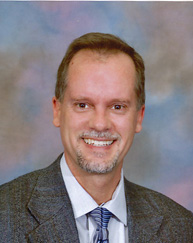
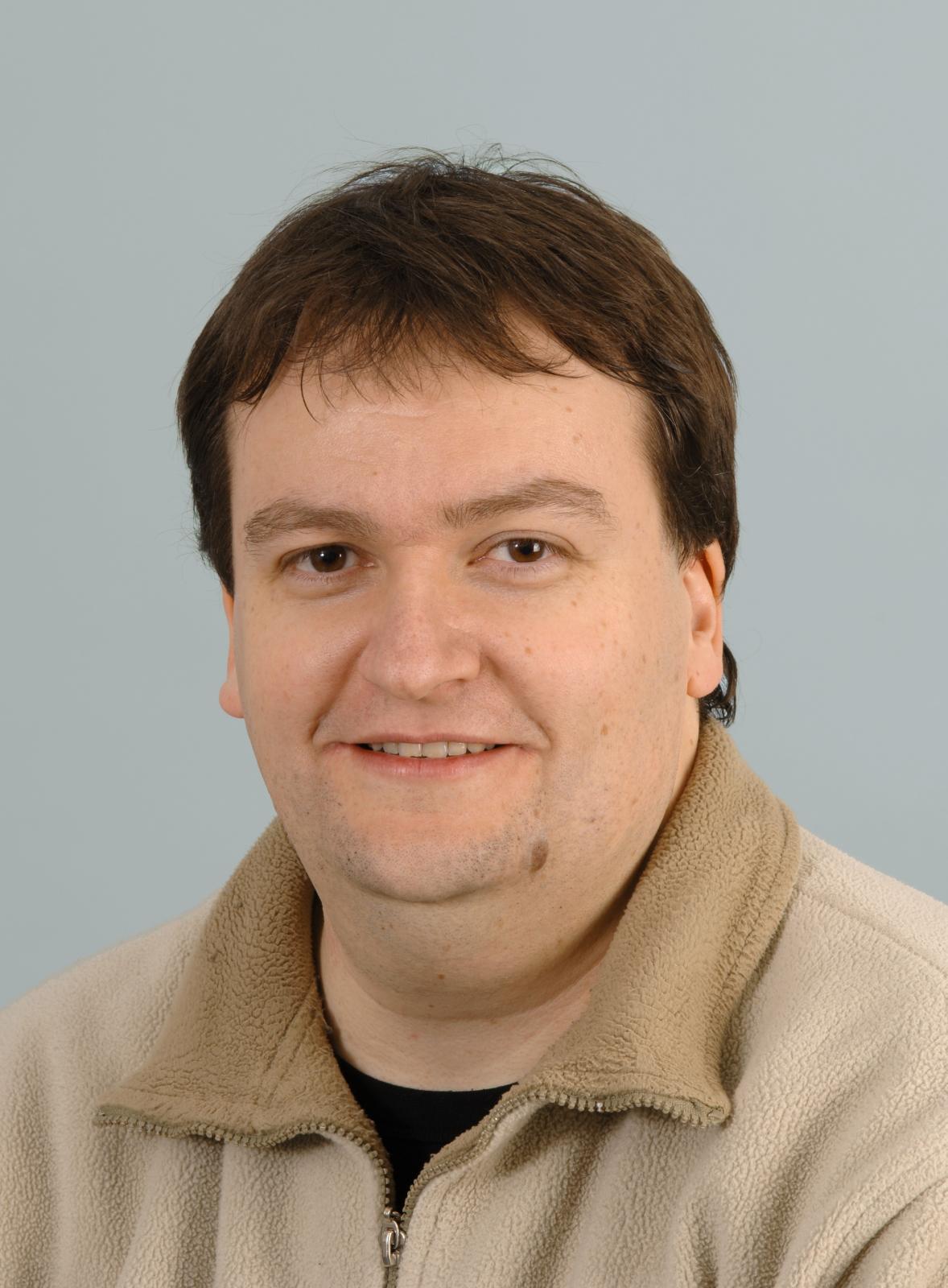
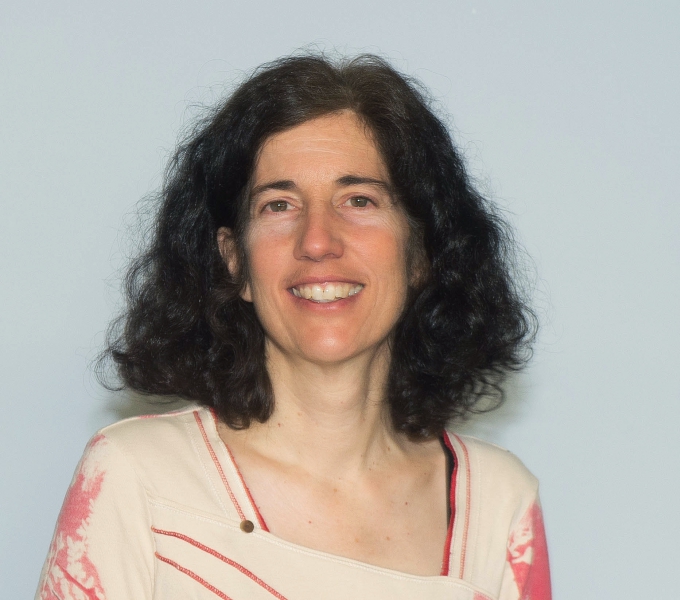
Steven L. Manly is a Professor of Physics at the University of Rochester within the College of Arts, Sciences and Engineering. He has been affiliated with the University of Rochester since 1998, following a decade at Yale University as both a postdoc and faculty member. Professor Manly received his BA in chemistry, mathematics, and physics from Pfeiffer College in 1982 and his PhD in experimental high-energy physics from Columbia University in 1989 under Charles Baltay. His research spans high energy, nuclear, and gravitational physics, with a current focus on neutrino physics across multiple major experiments. His primary research interests include neutrino interactions and oscillations, with significant contributions to the T2K experiment (for which he shared the 2016 Breakthrough Prize in Fundamental Physics), the MINERvA experiment at Fermilab, and the Deep Underground Neutrino Experiment (DUNE). His work aims to understand neutrino properties, measure oscillation parameters, and investigate potential connections to matter-antimatter asymmetry in the universe. The recent publications reflect a strong focus on neutrino cross-section measurements, detector calibration techniques, and data analysis methods for the T2K and DUNE experiments. His research group contributes significantly to advancing our understanding of neutrino properties and interactions through precision measurements. NY State Professor of the Year (2003) Mercer Brugler Distinguished Teaching Professor (2002-2005) American Association of Physics Teachers (AAPT) Award for Excellence in Undergraduate Teaching (2007) Breakthrough Prize in Fundamental Physics (2016, shared as member of T2K) Professor Manly has authored or co-authored numerous publications in leading physics journals, with recent work focusing on neutrino interaction measurements, detector development, and data analysis techniques. His research has involved collaborations with major international facilities including Fermilab, J-PARC in Japan, and Brookhaven National Laboratory. While specific grant information isn't detailed in the provided text, his participation in large-scale international collaborations suggests significant research funding support.
David Allcock is an Assistant Professor in the Department of Physics at the University of Oregon, part of the College of Arts and Sciences. His research focuses on ion trapping, quantum computing, and hybrid quantum systems, with an emphasis on manipulating atomic and molecular systems using electric and magnetic fields for quantum information applications. He leads the Ion Trapping Lab at UO, where he develops scalable quantum technologies and open-source control systems like ARTIQ and Sinara. His work bridges experimental physics with engineering, addressing challenges in qubit control, error mitigation, and large-scale quantum computer design. Education: MPhys from the University of Oxford (2007), D.Phil. in Physics from Oxford (2012). Prior to UO, he was a Lindemann Fellow at the National Institute of Standards and Technology (NIST) in Boulder, CO. His research includes innovations in trapped-ion qubit control, including laser-free entangling gates, scalable architectures, and applications in quantum sensing and dark matter detection. Key research themes include metastable qubit systems, photon scattering error mitigation, and the integration of superconducting detectors for state readout. He collaborates on open-source hardware-software stacks for quantum experiments and mentors students in quantum engineering through programs like the Quantum Technology Master’s Internship. Current projects explore hybrid quantum-classical interfaces and ultra-stable ion trap fabrication. His lab’s contributions span theoretical and experimental domains, with recent advances in geometric phase gates, microwave-driven control, and error-resilient qubit operations. The group also engages in interdisciplinary work linking quantum computing with precision measurement, such as SPUD (SPectroscopy for Ultralight Dark matter) and bosonic sensing tools.
Prof. Dr. André Rubbia is a Full Professor of Experimental Physics at ETH Zurich's Department of Physics, holding this position since December 2003 after serving as Associate Professor from 1998. His research spans neutrino physics, astro-particle physics, and dark matter detection through major international collaborations including CERN, Gran Sasso National Laboratory, and Fermilab. He currently serves as Co-Spokesperson for the billion-dollar DUNE neutrino project at Fermilab, managing over 900 scientists. His educational background includes: Diploma in Physics from the University of Geneva (1990), with thesis work on the L3 experiment at CERN's LEP accelerator Ph.D. in Physics from MIT (1993) under Nobel Laureate S.C.C. Ting, focusing on high-energy electron-positron collisions Rubbia's research centers on fundamental particle interactions, particularly neutrino oscillations and physics beyond the Standard Model. He pioneered liquid Argon Time Projection Chamber (LAr TPC) technology and dual-phase detection systems, enabling breakthroughs in neutrino mass measurements and dark matter searches. His work spans underground laboratories (Gran Sasso, Canfranc), the LHC's CMS detector, and neutrino beam experiments like T2K. Recent explorations include antimatter gravity tests, electron-positron bound states, and dark hidden sector searches. His 2025 publications reveal intense focus on neutrino oscillation parameter precision (T2K, Hyper-Kamiokande), FASER's LHC neutrino program, and DarkSide-20k dark matter detector development. Key themes include cross-section measurements, advanced detector technologies (SiPMs, emulsion tracking), and statistical methods for oscillation analysis, reflecting integration of theoretical modeling with cutting-edge instrumentation. Scientific recognition includes: Breakthrough Prize for Fundamental Physics (2016) awarded to the international team for discovering matter-anti-matter asymmetry in neutrino oscillations APS Viewpoint selection for editing the paper announcing first electron neutrino appearance at accelerators Rubbia has supervised over fifty PhD and Master's theses while securing substantial research funding as Principal Investigator for 20+ Swiss National Science Foundation projects and Coordinator of two EU FP7 Design Studies. His DUNE leadership involves complex international grant management across 30+ countries. He leads ETH Zurich's experimental particle physics group across multiple facilities: the ICARUS neutrino detector at Gran Sasso, CMS at CERN, DUNE at Fermilab, and DarkSide-20k for direct dark matter detection. His team developed the first underground ton-scale liquid argon detector and maintains collaborations with Japanese (Super-Kamiokande) and American (Fermilab) institutions.
Anne E. White is the School of Engineering Distinguished Professor of Engineering and associate vice president for research administration at the Massachusetts Institute of Technology (MIT). She serves in the Department of Nuclear Science and Engineering within MIT's School of Engineering and is a key researcher at the Plasma Science and Fusion Center (PSFC). White has held significant leadership roles including NSE department head from 2019 to 2023 and co-chair of the MIT Climate Nucleus from 2021 to 2024. She currently chairs the Fusion Energy Sciences Advisory Committee (FESAC), providing federal advisory input to the U.S. Department of Energy Office of Science. White received her PhD in physics from UCLA, where she conducted research at the Electric Tokamak. Her early career included research positions at the National Spherical Torus Experiment at Princeton Plasma Physics Laboratory and the DIII-D National Fusion Facility at General Atomics before joining MIT as a faculty member. Her educational background laid the foundation for her expertise in plasma physics and fusion energy research. Professor White's research focuses on magnetic fusion energy, specifically on understanding turbulent transport in magnetically confined fusion plasmas. Her work spans diagnostic development, novel experimentation, and validation of nonlinear gyrokinetic codes. She aims to demonstrate nuclear fusion as a practical part of the world's sustainable energy future. Her group develops and uses radiometers, reflectometers, and interferometers to measure fluctuations in plasma density, temperature, and flows in tokamaks. This research is critical for improving predictive capabilities of turbulent transport models, which is essential for developing viable fusion reactors. Analysis of Professor White's recent publications reveals a strong focus on plasma diagnostics and turbulence measurements across multiple tokamak facilities. Her work spans experimental measurements on ASDEX Upgrade, Alcator C-Mod, NSTX, and DIII-D tokamaks, with particular emphasis on electron temperature fluctuations, turbulence characterization, and transport model validation. A significant theme is the development and application of novel diagnostic techniques for simultaneous measurements of multiple plasma parameters. Her research increasingly incorporates computational approaches, including gyrokinetic simulations and machine learning methods, to interpret experimental data and advance predictive capabilities in fusion plasma physics. Professor White has received numerous prestigious awards throughout her career: Fellow, American Physical Society Division of Plasma Physics (2019) Cecil and Ida Green Career Development Professor, MIT (2014) American Physical Society Katherine E. Weimer Award (2014) Fusion Power Associates Excellence in Fusion Engineering Award (2014) Junior Bose Award for Excellence in Teaching, MIT (2014) PAI Outstanding Faculty Award from MIT student chapter of the American Nuclear Society (2013) Norman C. Rosenbluth Career Development Professor, MIT (2012-2014) Department of Energy Early Career Award (2011-2016) Marshall N. Rosenbluth Outstanding Doctoral Thesis Award (2009) As an educator and mentor, Professor White has advised numerous students through MIT's Department of Nuclear Science and Engineering. She has taught courses including Principles of Plasma Diagnostics, Seminar in Fusion & Plasma Physics, and Introduction to Plasma Physics. Her leadership extends to developing educational resources, notably leading a team in 2018 to create a free MITx MOOC focused on nuclear science and engineering for global high school learners. Professor White has secured significant research funding through Department of Energy awards, including the Early Career Award (2011-2016) and various fusion energy fellowships throughout her career. Her research group at MIT's Plasma Science and Fusion Center has contributed to multiple major fusion facilities and has been instrumental in advancing understanding of plasma turbulence and transport. Professor White leads the Fusion and Plasmas Lab at MIT, which focuses on diagnostic development and turbulence measurements in fusion plasmas. Her team has made significant contributions to research on four major tokamaks: Alcator C-Mod, ASDEX Upgrade, DIII-D, and National Spherical Torus Experiment Upgrade. At MIT's Plasma Science and Fusion Center, she previously served as assistant division head for magnetic fusion energy collaborations and ran the Gyrokinetic Simulation Working Group and the Alcator C-Mod Transport Group. Her lab maintains close collaboration between experimental work, theoretical modeling, and computational simulation to advance the understanding of plasma turbulence and transport phenomena critical for fusion energy development.
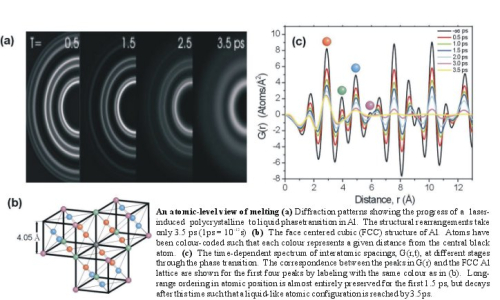
Nuh Gedik is the Donner Professor of Physics at MIT, leading the Gedik Research Group. His work focuses on quantum materials, employing advanced optical and electron spectroscopies. He joined MIT in 2008 as an Assistant Professor, earned his B.S. from Bogazici University (1998), and Ph.D. from UC Berkeley (2004) before postdoctoral work at Caltech. His awards include NSF CAREER, DOE Early Career, Sloan Fellowship, and APS Fellow recognition. Research interests include ultrafast dynamics in topological insulators, charge density waves, and light-induced phenomena. Key techniques include time-resolved ARPES, ultrafast electron diffraction, and terahertz spectroscopy. His group explores hidden orders in quantum materials and develops novel measurement tools. Recent work includes metastable magnetization control in FePS₃ and Floquet-Bloch states in graphene. Affiliated with the MIT Center for Quantum Engineering and Institute for Soldier Nanotechnologies.
Prof. Dan Jiao is the Synopsys Professor of Electrical and Computer Engineering at Purdue University's Elmore Family School. She leads the Rapid-Heterogeneous Integration (Rapid-HI) Design Institute and serves as Editor-in-Chief of the IEEE Journal on Multiscale and Multiphysics Computational Techniques. Her research focuses on computational electromagnetics, multiphysics modeling, and AI-driven design automation for advanced integrated circuits and quantum systems. She has held academic positions since 2005, progressing from Assistant to Full Professor, and has extensive industry experience at Intel Corporation (2001–2005). Education: PhD in Electrical Engineering, University of Illinois at Urbana-Champaign (2001) Senior Staff Engineer at Intel Corporation (2001–2005) Research Interests: Fast numerical methods for large-scale electromagnetic analysis AI/ML integration in design automation (EDA/MDA) Quantum circuits and spin qubit systems Heterogeneous integration and advanced packaging Multiphysics co-simulation for nano-scale devices Signal/power integrity in high-speed systems Key Projects: Leads the NSTC AIDRFIC program (first NSTC R&D Jump Start project), the DARPA NGMM Rapid-HI Design Institute, and the GENIE-RFIC generative design tool initiative. Also directs the Consortium for Electromagnetic Science and Technology. Awards & Honors: 2022 ACES Computational Electromagnetics Award IEEE Fellow (2016) Intel Outstanding Researcher Award (2019) MTT-S Distinguished Microwave Lecturer (2020–2023) 2013 Schelkunoff Prize Paper Award Advising & Grants: Advised over 30 PhD/master's students and led projects funded by NSF, DARPA, Intel, SRC, and industry partnerships. Key grants include NSF CAREER (2008), ONR Young Investigator (2006), and multiple industry-sponsored initiatives. Labs & Teams: Rapid-HI Design Institute (DARPA NGMM) Quantum device co-design group Multiphysics modeling team
Michael Knap is an Associate Professor of Collective Quantum Dynamics at the Technical University of Munich (TUM), within the Department of Physics at the TUM School of Natural Sciences. His research group focuses on condensed matter theory, quantum many-body systems, and quantum simulation. Knap holds office in room 5101.01.037 at James-Franck-Str. 1, 85748 Garching b. München, and can be reached at michael.knap@ph.tum.de or +49 (89) 289 - 53777. Prof. Knap's research delves into the rich physics of quantum many-body systems, particularly exploring non-equilibrium dynamics and transport phenomena in ultracold quantum gases, interacting light-matter systems, and correlated quantum materials. His work spans multiple subfields including topological phases of matter, quantum simulation with trapped ions, fracton physics, and quantum computation. He develops novel numerical approaches based on quantum information theory and utilizes artificial intelligence and machine learning to tackle challenging problems in condensed matter physics. His group's research connects fundamental theoretical questions with experimental implementations in quantum simulators. The analysis of Prof. Knap's recent publications (2023-2025) reveals a strong focus on topological quantum matter, quantum simulation, and emergent phenomena in constrained quantum systems. His work frequently bridges condensed matter theory with quantum information science, as evidenced by publications on fracton hydrodynamics, higher-form symmetries, and quantum error correction. There's a clear progression toward increasingly complex quantum systems and connections to experimental implementations on quantum processors. His research shows significant interdisciplinary reach, connecting condensed matter physics with quantum computing and quantum information theory. ERC Consolidator Grant (2025) ERC Starting Grant (2019) Supervisory Award, TUM Department of Physics (2018) Promotio sub auspiciis Praesidentis rei publicae, Austria (2013) Prof. Knap has established a robust research program supported by prestigious European Research Council grants. His group actively collaborates with both theoretical and experimental groups worldwide, particularly in the quantum simulation community. He has supervised numerous students through Master's Seminars on Collective Quantum Dynamics covering topics like quantum simulation with trapped ions and theoretical quantum computation. His research has received significant attention, with several publications featured as Editors' suggestions and Research Highlights in leading journals. The Collective Quantum Dynamics group maintains strong connections with experimental quantum simulation efforts, particularly in the areas of ultracold atoms and trapped ion systems. Knap's theoretical work often provides frameworks for interpreting experimental results in quantum simulators, creating a productive feedback loop between theory and experiment. His group participates in collaborative research networks focused on advancing quantum simulation capabilities and understanding fundamental aspects of quantum many-body physics.
Cathryn Mitchell is a Professor of Radio Science and Royal Society Industry Fellow at the University of Bath, specializing in ionospheric physics, position, navigation, and timing (PNT). She leads research in the Space & Telecoms Research Group (STAR), focusing on radio propagation, data assimilation, and space weather impacts on communication systems. Her work bridges theoretical, computational, and experimental approaches, with applications in satellite navigation, climate monitoring, and defense sectors. Her research interests include ionospheric tomography, HF communications, and the development of robust PNT systems. Mitchell collaborates extensively with industry partners like Spirent Communications on future navigation technologies and space weather resilience. She has held roles such as Academic Director of the Doctoral College and contributes to interdisciplinary projects like the DRIIVE initiative exploring ionospheric variability with EISCAT-3D radar. Recent work emphasizes ionospheric effects during geomagnetic storms (e.g., the 2024 Gannon Storm) and cooperative autonomous systems under communication constraints. Her projects are funded by the Royal Society, Natural Environment Research Council (NERC), and ESA, addressing challenges in space weather forecasting and PNT system reliability. Awards: Royal Society Industry Fellow (2022–present) Key Projects: Royal Society Industry Fellowship on Future PNT Technologies DRIVERS (DRIIVE): Ionospheric Variability Studies EISCAT-3D FINESSE: Ionospheric Structuring Analysis Mitchell’s lab, STAR, integrates academic and industrial partnerships to advance space weather applications and sustainable navigation systems, contributing to UN Sustainable Development Goals related to climate action and innovation.
Donna Naples is a Professor in the Department of Physics & Astronomy at the University of Pittsburgh, affiliated with the Dietrich School. Her research focuses on neutrino physics, particularly their fundamental properties and oscillations. She is involved in major experiments such as NOvA, MicroBooNE, and the upcoming DUNE project at Fermilab. Her work contributes to understanding neutrino masses, mixing matrices, and potential sterile neutrinos. Naples has been recognized as a Fellow of the American Physical Society (2018). Research Interests: Neutrino oscillations and cross-section measurements High-intensity neutrino beam experiments (NuMI) Detector development for neutrino physics Search for sterile neutrinos and beyond-Standard-Model interactions Key Contributions: Leadership in the MicroBooNE detector design Analysis of MINERvA neutrino interaction data Role in planning the DUNE experiment Awards: Fellow of the American Physical Society (2018) Advising & Collaboration: Advises graduate student Fan Gao Collaborates with international teams on neutrino experiments
Bradley J. Siwick is an Associate Professor in the Department of Chemistry at McGill University, holding the Canada Research Chair in Ultrafast Science (Tier II). He specializes in developing ultrafast electron-based techniques to study atomic and molecular dynamics in materials and chemical systems. His work bridges chemical physics, materials science, and condensed matter physics, focusing on structural dynamics, phase transitions, and nonequilibrium states. Education: B.A.Sc. (Engineering Physics, University of Toronto, 1997), M.Sc. (Physics, 1998), Ph.D. (Physics, 2004). Postdoctoral training at FOM-AMOLF Amsterdam (2004–2006). Awards: NSERC Doctoral Prize (2005). Research interests include ultrafast electron diffraction/scattering, electron-phonon coupling, and imaging transient structural changes. Techniques developed in his lab combine electron microscopy with ultrafast laser spectroscopy to observe atomic motions on femtosecond timescales. Key areas of study are phase transitions in materials (e.g., VO₂, cuprates), nanocomposites, and extreme states of matter using facilities like the Advanced Laser Light Source (ALLS). Recent articles highlight advances in momentum-resolved phonon dynamics, polaron formation, and ultrafast imaging of 2D materials. His lab, based in Otto Maass and Rutherford buildings, collaborates on frontier projects in nonequilibrium materials science. Advising: Leads the Siwick Research Group, focusing on graduate students in chemical physics and materials science. Grants: Supported by NSERC and Canada Research Chairs funding. Labs and facilities: Otto Maass 25 laboratory and ALLS (Varennes, Quebec) for high-power laser experiments.
Paul Erhart is a Professor in Condensed Matter and Materials Theory at the Department of Physics, Chalmers University. He received his PhD from Technische Universität Darmstadt in 2006, followed by postdoctoral and staff positions at Lawrence Livermore National Laboratory from 2007, before joining Chalmers in 2011. His research bridges computational physics, materials science, and machine learning to tackle fundamental problems in materials design and characterization. Dr. Erhart's research focuses on computational materials science with particular emphasis on condensed matter physics, nanomaterials, and quantum materials. His work spans from developing computational methods like machine-learned potentials (GPUMD, neuroevolution potentials) to studying fundamental phenomena in perovskites, 2D materials, thermal transport, and plasmonics. He has pioneered approaches connecting simulation with experimental techniques through correlation functions and has made significant contributions to understanding phase transitions, defect physics, and electronic structure in complex materials systems. Analysis of his recent publications reveals a strong trend toward integrating machine learning with traditional computational physics methods. His work increasingly focuses on developing and applying neuroevolution potentials to study thermal properties, phase transitions, and optical phenomena in materials. There's also a clear emphasis on connecting computational results with experimental observations, particularly in neutron scattering, Raman spectroscopy, and plasmonic sensing applications. His research spans fundamental materials physics to applied areas like hydrogen sensing and sustainable materials development. Dr. Erhart has contributed to numerous software packages essential to the computational materials science community, including WulffPack for Wulff constructions, Dynasor for extracting dynamical structure factors, calorine for neuroevolution potential models, and ICET for alloy cluster expansions. His collaborative work spans multiple institutions and disciplines, reflecting the interdisciplinary nature of modern materials research. His contributions to understanding perovskite materials, thermal transport phenomena, and plasmonic systems have established him as a leading researcher in computational materials science.
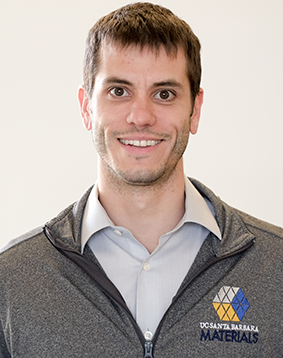
Christopher Bates is an Associate Professor in the Department of Chemistry & Biochemistry at the University of California, Santa Barbara (UCSB), with a joint appointment in the Division of Chemistry and Biochemistry (DCB). He leads the Bates Research Group, focusing on the design, synthesis, and application of soft materials. His lab develops advanced polymers and copolymers with tailored properties for applications in electronics, energy storage, and sustainable materials. Contact information includes cbates@ucsb.edu and an office in Engineering II Building. Research interests emphasize polymer architecture design, including block copolymers, bottlebrush networks, and degradable materials. Key areas include molecular cross-linking for photovoltaic stability, slide-ring gels for mechanical performance, and physics-informed machine learning for phase identification. The group also explores recyclable materials and sustainable synthesis methods. Recent work highlights advancements in α-lipoic acid-based materials, dynamic covalent networks, and electrochemical degradation strategies. The Bates Lab collaborates on projects such as tunable polyborosiloxane networks and self-healing elastomers. Advising includes Dr. Elizabeth Murphy (PhD 2025). No scientific awards are explicitly listed in the provided texts. The lab’s work is supported by grants such as the NSF CAREER award (2019) for block copolymer research. Labs and teams: The Bates Group operates within the UCSB Materials Department, leveraging interdisciplinary approaches to materials science challenges.
Mohd Fikree Hassan is a Lecturer at the School of Information Technology, Monash University Malaysia, joining in June 2023. He holds a Ph.D. and Master's from the University of Malaya, and a B.Eng. in Electronics Engineering from Multimedia University. With over 14 years of academic experience, he is actively engaged in research, teaching, and supervision. B.Eng. in Electronics Engineering (Telecommunications), Multimedia University, 2004 M.Eng. in Engineering (Telecommunications), University of Malaya, 2015 Ph.D. in Signal and Systems, University of Malaya, 2018 His research focuses on image and signal processing , particularly in image enhancement, restoration, computer vision, and human color vision . His work contributes to improving image visibility, removing color casts, and developing algorithms for noisy or degraded images. He applies mathematical and computational techniques to solve real-world imaging challenges. The recent publication trends (2021–2025) show a strong focus on image restoration using variational methods (e.g., total variation, ℓ0 regularization), color enhancement in HSI space, and video analysis for sports applications. His work bridges theoretical optimization and practical computer vision systems. He actively contributes to the academic community through peer review for journals such as Neurocomputing , Journal of Imaging , and International Journal of Computational Intelligence Systems , as well as for IEEE conferences. Mohd Fikree is currently accepting PhD students and serves as an external examiner for academic programs. His consistent research output and editorial service reflect a growing impact in the field of image processing and computer vision. While no formal lab or team is mentioned in the text, his collaborations with researchers like R. Paramesran, T. Adam, and G. Krishnasamy suggest active research partnerships in signal and image processing.
Prof. Jorge Piekarewicz is a Professor of Physics at Florida State University (FSU), affiliated with the College of Arts and Sciences. He earned his Ph.D. in theoretical nuclear physics from the University of Pennsylvania in 1985, followed by postdoctoral research at Caltech and Indiana University. Since 1990, he has been a faculty member at FSU. Education: Ph.D. in Theoretical Nuclear Physics, University of Pennsylvania (1985) Postdoctoral Fellowships: California Institute of Technology and Indiana University Research Interests: His work focuses on extreme-density nuclear matter in neutron stars, bridging terrestrial experiments and astrophysical observations. Key areas include: Neutron star structure and equation of state Weak interaction probes (e.g., parity-violating electron scattering) Multi-messenger astronomy insights from neutron star mergers Covariant energy density functionals and symmetry energy constraints Articles Trends: Recent work emphasizes refining the nuclear equation of state using PREX-CREX experiments, gravitational wave data (e.g., GW170817), and Bayesian methods. Key themes include neutron skin thickness, crust-core interactions, and symmetry energy sensitivity. Service & Outreach: Nuclear Science Advisory Committee (2012–2015) FRIB Theory Alliance Director (2017–2021) INT National Advisory Committee Chair (2018–2020) OLLI Lecturer on stellar evolution and neutron stars Collaborations: Active involvement with CERN, FRIB, JLab, and the Facility for Rare Isotope Beams (FRIB). Research leverages facilities like the Relativistic Heavy Ion Collider and the National Superconducting Cyclotron Laboratory.
Associate Professor Judy Hart is a materials scientist at the School of Materials Science & Engineering, UNSW Sydney , specializing in the development of semiconducting materials for renewable energy applications. Her work integrates computational (DFT) and experimental approaches to understand composition-property relationships in systems like solid solutions , heterostructures , and doped materials for photocatalysis and solar cells . She leads projects funded by ARC Discovery and Linkage grants , including work on photo-electro-catalysis systems and stabilizing ceramic materials . Education: PhD in Materials Engineering (Monash University, 2007), BEng (Materials) (Monash, 2002) Professional Experience: Senior Lecturer (UNSW, 2017–), Lecturer (UNSW, 2013–2017), University of Bristol (2007–2012) Research Interests Her research focuses on designing materials for renewable energy , particularly photoelectrochemical water splitting and organic oxidation reactions . Key areas include Density Functional Theory (DFT) , defect engineering , band gap tuning , and nanostructured materials . She investigates ferroelectric polarization effects , metal oxide heterostructures , and stability of battery components , with applications in hydrogen production , CO2 conversion , and advanced battery materials . Scientific Awards Ramsay Memorial Fellowship (University of Bristol, 2007–2009) Teaching Contributions She is co-author of the 1st Australian & New Zealand edition of "Materials Science and Engineering: An Introduction" , and teaches courses on computational materials science , corrosion-resistant surfaces , mechanical behavior of metals , and materials design .