Swiss Federal Institute of Technology in LausanneSwitzerland
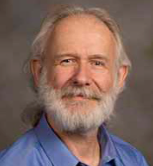
Farhad Rachidi-Haeri is a Titular Professor and Head of the Electromagnetic Compatibility (EMC) Group at EPFL. His expertise spans EMC research, lightning electromagnetics, time reversal techniques, and fault location in power systems. He has led the EMC Group since the 1980s, with funding from the Swiss National Science Foundation, European Union, and private sector collaborations. His work involves international partnerships with institutions like the University of Toronto and KTH. Education: PhD in Electrical Engineering from EPFL (1991), M.S. from EPFL (1986). Roles: President of Swiss National Committee of URSI (2012–2020), Editor-in-Chief of IEEE Transactions on EMC (2013–2015), and member of the Academy of Sciences of Bologna Institute (2019). Research Focus: Lightning interaction with infrastructure, electromagnetic field modeling, time reversal applications for fault detection, and high-frequency transient analysis. His work bridges theoretical physics and engineering, addressing challenges in power systems, lightning protection, and aerospace. Awards: IEEE EMC Technical Achievement Award (2005), Berger Award (2016), and Distinguished Honorary Professor at Tsinghua University (2024). Over 400 peer-reviewed papers and 500 conference contributions reflect his prolific research output. Labs/Teams: Leads the EMC Laboratory at EPFL, focusing on experimental and numerical studies of electromagnetic phenomena. Collaborates with global networks on projects like Laser Lightning Control and structural lightning protection for wind turbines.
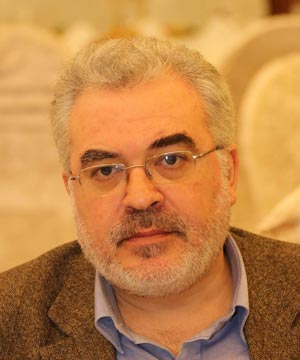
Stefano Grivet-Talocia is a Full Professor at the Department of Electronics and Telecommunications at the Polytechnic University of Turin, where he also serves as Director of the Doctoral School and President of the Doctoral School Council. He is a member of the Interdepartmental Center SmartData@PoliTO - Big Data and Data Science Laboratory, the University Committee for Research, Technology Transfer and Services to the Territory, and the Commission for the Promotion of Library, Archive and Museum Heritage. His academic career spans over two decades at Politecnico di Torino, where he has established himself as a leading researcher in electromagnetic modeling and signal integrity. Grivet-Talocia earned his Laurea degree (summa cum laude) in Electronic Engineering in 1994 and his Ph.D. in Electronic and Communication Engineering in 1998, both from the Polytechnic University of Turin. Between 1994 and 1996, he conducted research at NASA/Goddard Space Flight Center in Greenbelt, Maryland. His educational background laid the foundation for his expertise in electromagnetic modeling, wavelet analysis, and signal processing. His research focuses on behavioral modeling, electromagnetic compatibility, macromodeling, model order reduction, numerical modeling, passivity, power integrity, signal integrity, transmission lines, and wavelets . Grivet-Talocia is particularly renowned for his work on passive macromodeling of interconnect structures, development of the TOPLine technique for transmission line simulation, and pioneering contributions to passivity enforcement algorithms. He has co-authored the first book entirely dedicated to Macromodeling (2016) and developed innovative approaches to waveform relaxation and wavelet-based signal processing. His recent publications (2024-2025) demonstrate continued leadership in model order reduction, with significant contributions to data-driven modeling of linear and nonlinear systems, power integrity analysis, and electromagnetic compatibility. His work spans both theoretical advances in numerical methods and practical applications in circuit design, with strong industry relevance particularly for semiconductor and electronic design automation companies. IEEE Fellow (2018-present) Three Intel SRS Grants (2022-2024) Three IBM SUR Grant Awards (2007-2009) Best Associate Editor Award - IEEE Transactions on Components, Packaging and Manufacturing Technology (2020) Multiple Best Conference Paper Awards (2006-2020) URSI Young Scientist Awards (1999) Ranked among the "top 2% worldwide researchers" (Stanford) since 2019 Grivet-Talocia actively supervises doctoral students including Michele Cusano, Sara Paknezhad Panahi, Antonio Carlucci, and Kun Zhao. He has secured numerous research grants from competitive national calls (PRIN) and commercial contracts with industry partners including Intel, IBM, Nokia, Hitachi, Infineon, and Cadence. His technology transfer activities include co-founding the spin-off IdemWorks (2007-2016), which was acquired by CST in 2016. He also developed the autoCircuits web service for automated circuit problem generation, widely used in electrical engineering education. He leads the EMC Group (Electromagnetic Compatibility) at DET and has been instrumental in establishing the Compact Dynamical Modeling research area. His work has practical applications in high-speed electronics design, with algorithms embedded in commercial tools like IBM PowerSPICE. Grivet-Talocia maintains strong industry connections through his research projects and serves as Associate Editor for IEEE Transactions on Components, Packaging and Manufacturing Technology.
Virginia Polytechnic Institute and State UniversityUnited States
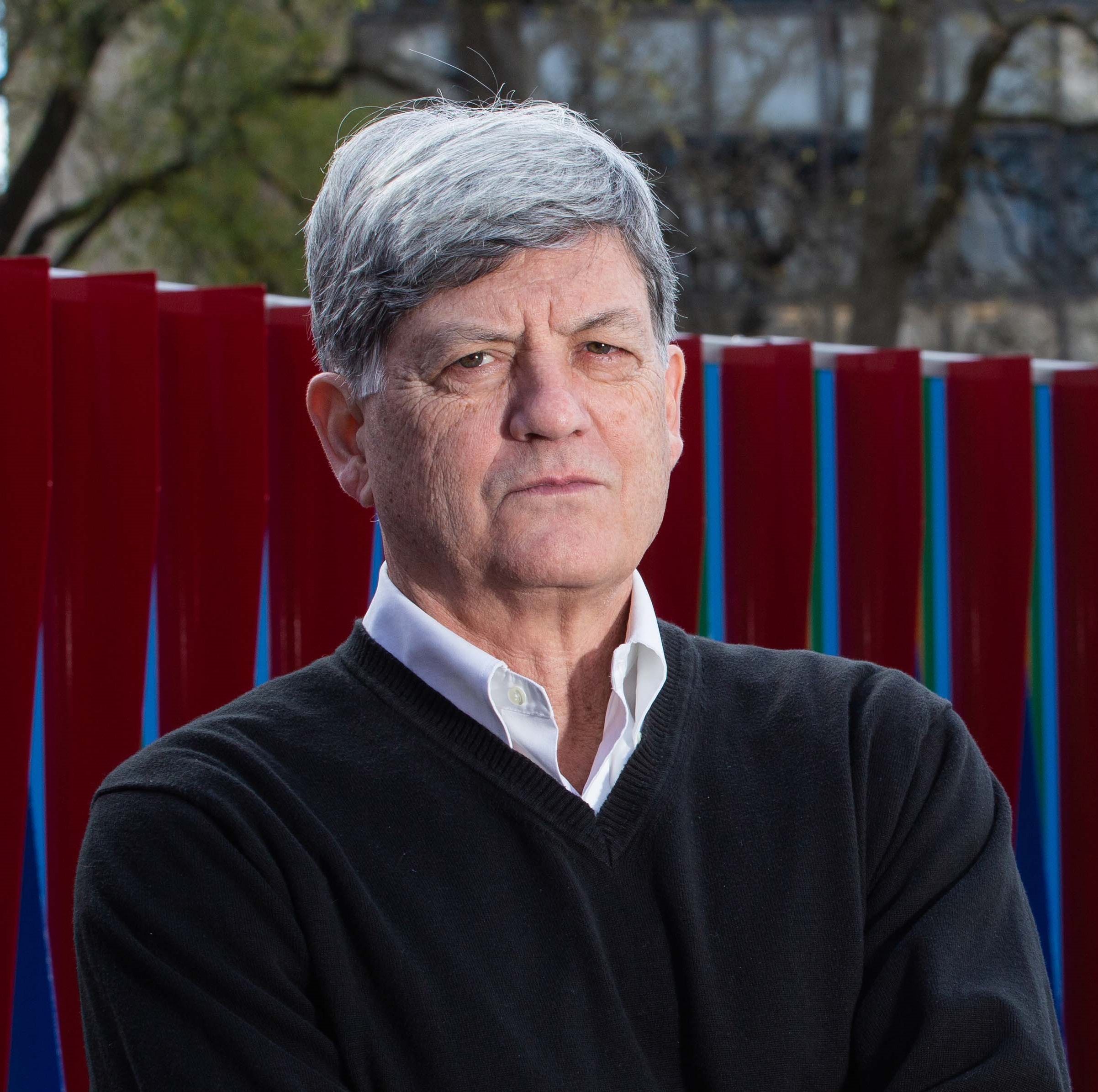
Dushan Boroyevich is a University Distinguished Professor at Virginia Tech's Bradley Department of Electrical and Computer Engineering and serves as Deputy Director of the Center for Power Electronics Systems (CPES). He holds adjunct roles at Tsinghua, Xi'an Jiaotong, Zhejiang, and National Cheng-Kung Universities. His research focuses on power electronics systems, including multi-phase power conversion, electronic power distribution, and modular multilevel converters. He pioneered the geometric modeling approach for high-frequency converters and has led over 200 students in generating 1000+ publications and 20 patents. Education: Dipl. Ing. (University of Belgrade, 1976), M.S. (University of Novi Sad, 1982), Ph.D. (Virginia Tech, 1986). Awards include IEEE Fellow, IEEE William E. Newell Award, and election to the U.S. National Academy of Engineering (2014). His CPES leadership has driven global advancements in power electronics integration and modularization. Research emphasizes high-power density, EMI mitigation, and next-gen SiC-based converters. Recent work includes medium-voltage PEBB designs, common-mode noise reduction, and grid-interface systems. He collaborates closely with industry through CPES's 80+ member consortium. Awards: IEEE Fellowships, Owen Distinguished Service Award, European Power Electronics Association Awards Labs/Teams: CPES, Virginia Tech Power Electronics Research Group Grants/Projects: NSF National Engineering Research Center funding, Industry Consortium projects
Dimitrios E. Anagnostou is Associate Professor in the Institute of Sensors, Signals & Systems within Heriot-Watt University’s School of Engineering & Physical Sciences, Edinburgh. He directs an anechoic-chamber & microwave characterisation facility, leads a thriving research group, and is currently recruiting PhD candidates. Education & Career: BSEE, Democritus University of Thrace, Greece (2000) MSEE, University of New Mexico, USA (2002) PhD, University of New Mexico, USA (2005) Post-doc, Georgia Tech (2005-2006) Assistant → tenured Associate Professor, South Dakota School of Mines & Technology (2007-2016) Associate Professor, Heriot-Watt University (2016-present) Research Focus: His work spans compact & reconfigurable antennas, 5G Massive-MIMO arrays, metasurfaces, metamaterials, functional materials (VO 2 ), RF-MEMS, microwave packaging, radar sensing for assisted-living, and AI/deep-learning applications in electromagnetics. He pursues “green” RF electronics printed on paper/organic substrates and hybrid integration of antennas on solar cells. Recent Publication Trends (2022-2025): Output is dominated by metasurface-enabled beam-steering antennas, VO 2 -based reconfigurable devices, radar absorbers/rasorbers, biomedical radar for vital-sign monitoring, and AI-assisted signal processing, with strong emphasis on experimental validation and open-access dissemination. Scientific Awards & Fellowships: IEEE John D. Kraus Antenna Award DARPA Young Faculty Award Marie Skłodowska-Curie Individual Fellowship (H2020) ASEE Campus Star Award Young Alumni Award, University of New Mexico Honored Faculty Award, SDSMT (×4) Distinguished Scientist Living Abroad, Hellenic Ministry of Defense Advising & Grants: He has mentored numerous PhD and MSc researchers; his students have won Best PhD Thesis and faculty-wide Engineering Prizes. He is supported by EU and UK research grants and continuously seeks motivated doctoral applicants. Facilities & Teams: He manages the Microwave Facility (anechoic chamber, mm-wave measurement systems) and collaborates with international academic/industry partners across Europe, North America and beyond.
Dr. Alexander Paulus serves as a Researcher at the Chair of High-Frequency Engineering within the Department of Electrical Engineering at the Technical University of Munich (TUM), School of Computation, Information and Technology. Working under Prof. Dr.-Ing. Thomas Eibert, he contributes to advanced electromagnetic research and measurement systems development at TUM's Arcisstr. 21 campus in Munich. Research Expertise His core specialization lies in near-field antenna measurement and transformation techniques, with significant contributions to phase retrieval algorithms, inverse source methods, and UAV-based electromagnetic field measurements. He addresses critical challenges including probe correction with unknown antennas, sparse sampling for directive antennas, and electromagnetic modeling of environmental effects like rain attenuation. His work bridges theoretical electromagnetics with practical antenna characterization solutions. Publication Trends From 2014-2025, Paulus has published 25+ papers focusing on near-field to far-field transformations, particularly in phaseless and multi-probe scenarios. Recent work (2023-2025) demonstrates innovation in spectral filtering, sparse reconstruction, and UAV-based systems for defect localization and wet antenna modeling. His research increasingly integrates computational techniques to solve complex inverse problems in antenna measurements. Scientific Recognition No formal awards documented in available information Academic Contributions Student Mentoring: No advisees listed in provided materials Research Funding: Grant details not specified in source text Research Environment Paulus operates within TUM's Chair of High-Frequency Engineering facilities, which include advanced near-field measurement ranges, UAV-based electromagnetic characterization systems, and laboratories for metamaterials research and electromagnetic compatibility testing. His work supports applications in 5G/6G communications, aviation navigation systems, and precision antenna diagnostics.
Daria Nemashkalo is a researcher affiliated with the Digital Society Institute and Radio Systems at the University of Twente. Her work focuses on electromagnetic interference (EMI) filter design, time-domain analysis, and multichannel systems, particularly in power electronics and three-phase applications. Key Research Areas: EMI filter performance, mode decomposition, common mode choke saturation, and time-domain measurement techniques. Contributions: Published extensively on EMI mitigation strategies and filter optimization, including work on multichannel testing and real-world implementation challenges. Collaborations: Active in electromagnetic compatibility symposia, notably with peers like Peter Koch and Frank Leferink.
Gianluca Setti is a Full Professor at the Department of Electronics and Telecommunications (DET) at Polytechnic University of Turin, where he has been serving since 2017. He previously held positions at the University of Ferrara from 1997 to 2017. His institutional roles include being the Contact Person for the Research Quality Evaluation process, Member of the Interdepartmental Center SmartData@PoliTO - Big Data and Data Science Laboratory, and Member of the University Quality Assurance Committee. He serves as Editor-in-Chief of the Proceedings of the IEEE, the first non-US editor to hold this position. Dr. Setti's research spans multiple interdisciplinary fields including machine learning, artificial intelligence, big data analytics, Internet of Things, biomedical signal processing, power electronics, and electromagnetic compatibility. His work bridges theoretical foundations with practical applications, particularly focusing on compressed sensing, neural networks, and circuit design for specialized applications. His research has significant implications for healthcare, sustainable infrastructure, and next-generation electronics. His publication record reveals a consistent trajectory from foundational work in chaotic systems and neural networks to contemporary applications in AI, IoT, and edge computing. The most recent publications demonstrate his focus on anomaly detection at the edge, neural oracles for biosignal processing, and power electronics innovations. His work shows strong integration between theoretical signal processing and practical circuit implementation. 1998 Caianiello prize (best Italian Ph.D. thesis on Neural Networks) IEEE Fellow (2006) IEEE Circuits and Systems Society Distinguished Lecturer (2004, 2015) 2004 IEEE CAS Society Darlington Award 2013 IEEE CAS Society Meritorious Service Award 2013 IEEE CAS Society Guillemin-Cauer Award 2019 IEEE Transactions on Biomedical Circuits and Systems best paper award Multiple best paper awards at major conferences including ECCTD2005, EMCZurich2005, ISCAS2011, PRIME2019, and EMCCOMPO2019 Dr. Setti has supervised numerous PhD students across various research domains including electromagnetic compatibility, signal and power integrity, communication networks, mechatronics and robotics. His research is supported by significant funding including national PRIN projects, EU-funded JTI-ECSEL initiatives, and commercial contracts. He leads the VLSILAB Group at DET, focusing on circuit architectures, embedded systems, and AI applications. His current projects include DECORI (anomaly detection), StorAIge (embedded storage for AI), PROGRESSUS (energy infrastructure), CONNECT (smart grid), and CONVERGENCE (wearable healthcare applications).
Stuart Long is an associate dean of undergraduate research and faculty member at the Honors College of the University of Houston, where he serves as the academic adviser for all honors students majoring in Electrical and Computer Engineering. He teaches courses on electromagnetic waves and conducts research in antenna design and applied electromagnetics. Education: Received his doctorate from Harvard University. Stuart Long's research focuses on biomedical applications of electromagnetics, particularly MRI safety testing for implantable medical devices. His work addresses RF-induced heating, electromagnetic compatibility, and safety protocols for devices such as orthopaedic implants and active implantable systems. Recent publications emphasize computational modeling, machine learning, and historical advancements in antenna design. His scholarly contributions include the 2024 Distinguished Achievement Award, the 2018 Chen-To Tai Distinguished Educator Award, and the 2014 John Kraus Antenna Award. These honors reflect his leadership in electromagnetic safety research and engineering education. Stuart Long has actively contributed to improving pedagogy in engineering education, particularly through collaborative learning and retention workshops for diverse student populations. His academic advising role supports the integration of rigorous technical training and interdisciplinary research opportunities for honors students.
Mahima Gupta is an Assistant Professor in the Department of Electrical & Computer Engineering at the University of Wisconsin-Madison. Her research focuses on power electronics, motor drives, and power converter systems with applications in renewable energy integration and grid infrastructure. Her educational background includes: PhD in Electrical Engineering, University of Wisconsin-Madison (2019) MS in Electrical Engineering, University of Wisconsin-Madison (2015) BE in Electrical Engineering, Birla Institute of Technology & Science, Pilani (2011) Dr. Gupta's research spans multiple areas of power electronics with particular emphasis on Power Electronics Conversion & Control , Modular Multi-level Power Converters , and Motor Drive Systems . Her work addresses critical challenges in the application of Wide Band-gap Semiconductor Devices and mitigating Electromagnetic Interference Issues in modern power electronic circuits. Her research has significant implications for renewable energy integration, electric transportation, and next-generation power grid infrastructure, with a strong focus on efficiency, reliability, and power density optimization. Her recent publications demonstrate a cohesive research trajectory focused on high-performance power conversion systems, with particular attention to modular architectures, fault tolerance mechanisms, and innovative topologies that minimize energy storage requirements while maintaining high performance. Her work spans from fundamental converter designs to application-specific implementations for motor drives, wireless power transfer, and grid integration, showing increasing sophistication and real-world relevance. Dr. Gupta has received several prestigious awards including: Gerald Holdridge Teaching Excellence Award from University of Wisconsin-Madison (2018) Austrian Marshall Plan Scholar for Visiting Scholar position at Technische Universit¨at Graz, Austria (2016) Edward R. Felber Power Fellow from University of Wisconsin-Madison (2016) As a dedicated educator, Dr. Gupta advises graduate students through courses including ECE 699 (Advanced Independent Study), ECE 790 (Master's Research), and ECE 890 (Pre-Dissertator's Research). Her teaching portfolio also includes specialized courses like ECE 512 (Power Electronics Laboratory), demonstrating her commitment to both theoretical and practical aspects of power electronics education. Her research program has attracted significant scholarly attention, as evidenced by her productive publication record in top-tier power electronics conferences and journals.
Jasmin Grosinger is an Associate Professor at Graz University of Technology's Institute of Microwave and Photonic Engineering, specializing in wireless systems and RF engineering. Her research advances sustainable wireless technologies through innovations in energy harvesting and communication systems. Primary research areas include: Radio Frequency Identification (RFID), antenna design for IoT applications, wireless power transfer efficiency, and development of batteryless sensor systems. Recent work emphasizes miniaturization challenges in metal environments and radiation-hardened space applications. Publication analysis reveals strong focus on: impedance measurement methodologies, NFC/WPT interoperability solutions, ultra-low power circuit design, and robust wireless systems. Research consistently addresses energy efficiency in passive electronics. Awards recognize contributions to microwave theory and practical implementations: Administrative Committee Member of IEEE MTT-S, Distinguished Microwave Lecturer award, and multiple best paper contest awards. Current projects investigate electromagnetic compatibility in challenging environments and next-generation wireless standards.
Virginia Polytechnic Institute and State UniversityUnited States
Dr. Christina DiMarino is an Assistant Professor in the Bradley Department of Electrical and Computer Engineering at Virginia Tech and a faculty member in the Center for Power Electronics Systems (CPES). She earned her Ph.D. (2018) and M.S. (2014) in Electrical Engineering from Virginia Tech, and her B.S. from James Madison University (2012). She is based at the Virginia Tech Research Center (VTRC) in Arlington, VA, where she established and manages two CPES laboratories. Her research focuses on power electronics packaging, high-density integration, medium-voltage power modules, and wide-bandgap semiconductors. She holds leadership roles in IEEE PELS, including Vice Chair of Technical Committee 2 and Member-at-Large of the Administrative Committee, and serves on the PCIM Europe Advisory Board. Notable awards include the 2024 IEEE PELS Richard M. Bass Outstanding Young Engineer Award and the 2022 Outstanding New Assistant Professor Award. Her work emphasizes interdisciplinary collaboration and industry partnerships through CPES, addressing challenges in high-power systems, thermal management, and electromagnetic compatibility. Education: Ph.D. & M.S. in Electrical Engineering (Virginia Tech), B.S. in Electrical Engineering (James Madison University) Key Roles: IEEE PELS Leadership, PCIM Europe Advisory Board Member, CPES Lab Director Research Themes: High-Voltage Packaging, SiC Modules, Power Electronics Integration
Tayfun Günel is a Professor in the Department of Electronics and Communication Engineering at Istanbul Technical University (ITU) , Faculty of Electrical and Electronics Engineering. He holds a PhD (1993), MSc (1988), and BSc (1986), all from ITU. His research spans microwave circuits, radar systems, antennas, and optimization using genetic algorithms and soft computing. His research interests include Microwave Circuits , Radar and Antennas , Optimization , and Genetic Algorithms . His work focuses on impedance matching, microstrip antennas, noise modeling, and metamaterial-based microwave components. He has taught courses such as Electromagnetic Fields, Radar Systems, and Satellite Communication Systems. The recent publications reflect a strong trend in microwave circuit design , antenna miniaturization , and the application of evolutionary algorithms (genetic algorithms, PSO) and machine learning (neural networks, SVR) in electromagnetic design and optimization. There is a consistent focus on practical microwave components like transmission lines, patches, and amplifiers, often using nanomaterials (e.g., carbon nanotubes) and metamaterials . His work bridges theoretical modeling with computational optimization for real-world RF and radar applications. Email: gunelmur@itu.edu.tr Professor Günel has supervised 2 completed PhD theses, 2 ongoing PhD theses, 23 completed master's theses, and 1 ongoing master's thesis, demonstrating a significant contribution to student mentoring. There are no specific grants or funding sources mentioned in the provided text. He is affiliated with research in microwave systems and antenna design , likely operating within the broader research ecosystem of the Electronics and Communication Engineering Department at ITU, which includes labs such as the Microwave Systems and Antennas Laboratory and the Radar and Microwave Technologies Research Laboratory.
Giuseppe Vecchi is a Full Professor at the Department of Electronics and Telecommunications (DET) of Politecnico di Torino , Italy. He leads the Applied Electromagnetics research group and contributes to projects in computational electromagnetics, metamaterials, and biomedical applications of electromagnetic fields. He has been a IEEE Fellow since 2010 and serves on PhD college committees for Electrical, Electronic, and Communications Engineering. Research Interests : Antennas, Applied and Computational Electromagnetics, Metamaterials, Microwave Imaging for medical applications, Nuclear Fusion Reactor Physics. Scientific Leadership : Principal Investigator for projects like METEOR, MTSA, and RESOLVED-K, focusing on terahertz generation, metasurface antennas, and real-time temperature mapping in hyperthermia. Awards : IEEE Fellow (2010), recognizing his contributions to electromagnetic simulations and antenna design. Students : Supervises PhD candidates in advanced antenna engineering, computational electromagnetics, and biomedical applications, including Owais Khan, Francesco Lattanzio, and Sara Paknezhad Panahi. Patents : Holds multiple patents in antenna diagnostics, encrypted metasurface antennas, and microwave soil disinfection systems.
Can Ding is an Associate Professor in the School of Electrical and Data Engineering at the University of Technology Sydney (UTS), affiliated with the Faculty of Engineering and IT. He is a core member of the Global Big Data Technologies Centre (GBDTC). Ding holds a BEng in Microelectronics from Xidian University (2009) and a joint PhD in Electromagnetic Fields and Microwave Technology from Xidian University and Macquarie University (2016). His research focuses on engineering electromagnetics, particularly in base station antennas for 5G/6G networks, cross-band interference mitigation, and antenna array design. He has led numerous industry-collaborative projects, including ARC-funded initiatives, and has over 120 publications in top-tier journals/conferences, featured in IEEE's 'What’s Hot in Antennas and Propagation.' Teaching highlights include coordinating foundational electrical engineering courses and studio subjects, recognized with UTS's 2023 'Mid-Career Educator of the Year' award. He actively contributes to professional societies like IEEE AP-S, serving as an editor and conference organizer. His awards include the ARC DECRA grant (2020), Top 2% World Scientist (2023), and multiple outstanding reviewer distinctions. His grants include 'Advancing Millimeter-Wave Base Station for 6G' (ARC DP, 2025–2027) and 'Maximizing 5G Signal Transparency' (UTS Bluesky, 2024). Ding supervises students in antenna design and has mentored over a dozen researchers, many of whom have won international conference awards.
Pooya Davari is a Professor and Head of the Section for Applied Power Electronic Systems at Aalborg University , Denmark. He leads the EMI/EMC in Power Electronics Research Group and serves as Vice Chair of the Energy Efficiency Mission. His research focuses on electromagnetic interference (EMI) and harmonic mitigation in power electronic systems, with over 200 publications and significant contributions to renewable energy integration. Education: B.Sc. and M.Sc. in Electronic Engineering (2004, 2008), Ph.D. in Power Electronics from Queensland University of Technology (2013) Prior Roles: Lecturer at QUT (2013–2014), Postdoc at AAU (2014) Research Interests: Harmonic and EMI analysis in grid-tied converters High power density converter design Signal processing for converter modeling Reliability of power electronic systems Article Trends: Recent work emphasizes EMI/EMC in renewable energy systems, wide bandgap semiconductors (SiC/GaN), and reliability modeling for EVs and hydrogen production via electrolysis. Sub-fields include converter topologies, grid integration challenges, and AI-driven diagnostics. Scientific Awards: Equinor 2022 Prize (Denmark’s oldest engineering award) IEEE EMC Society Young Professional Award (2020) World’s Top 2% Highly Cited Scientist (Stanford, 2021–2025) Multiple best paper awards (IEEE, Applied Sciences, etc.) Grants & Editorial Roles: Recipient of grants from Innovation Fund Denmark (Supra-EMC project), Horizon Europe (SOLARIS), and industry partnerships. Serves as Area Editor for IEEE Transactions on Transportation Electrification , Associate Editor for IEEE Transactions on Power Electronics , and Editor-in-Chief of Circuit World Journal (2020–2025). Labs & Standards: Coordinator of the EMC Laboratory at Aalborg University. Member of IEC standardization Working Groups 6 and 8 (TC77A), focusing on EMC strategies for power grids.