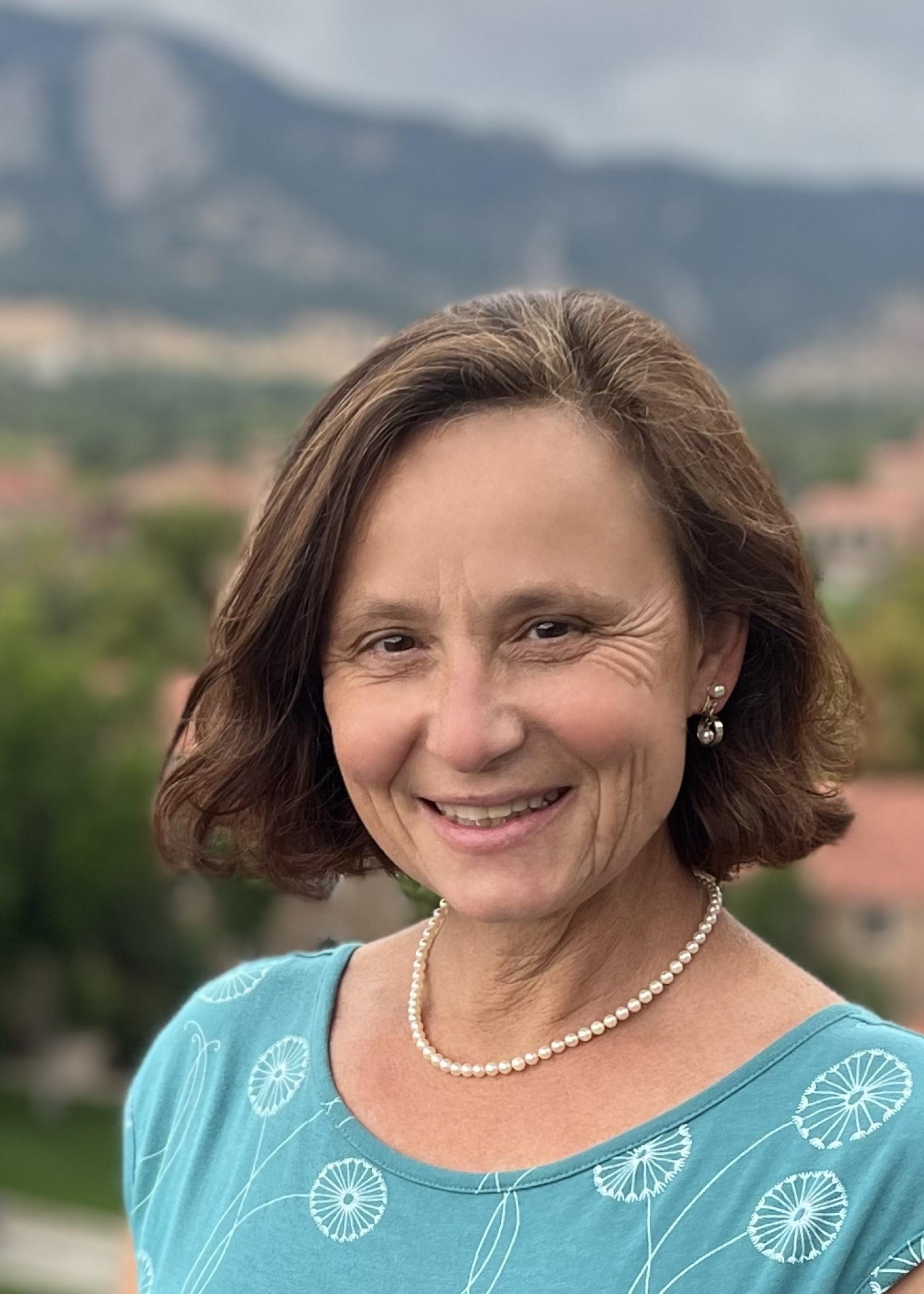
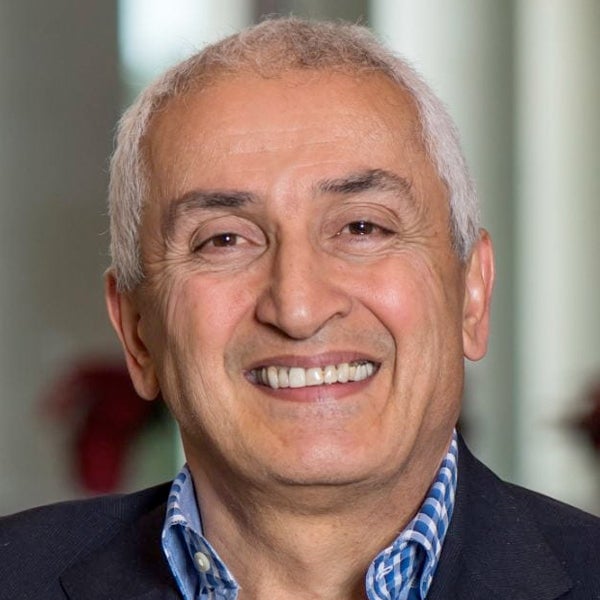
Zoya Popovic is a Distinguished Professor and holds the Lockheed Martin Endowed Chair in RF Engineering at the University of Colorado Boulder's Department of Electrical, Computer, and Energy Engineering. She earned a Dipl.Ing. from the University of Belgrade (1985) and a PhD from Caltech (1990). She has advised over 50 PhD students and was a visiting professor at Technical University of Munich (2001). Her research focuses on high-efficiency microwave/millimeter-wave circuits, smart antenna arrays, wireless powering systems, and biomedical microwave applications. Notable contributions include quasi-optical imaging techniques and low-noise amplifier designs. Key awards: IEEE Microwave Prizes (1993/2006), Humboldt Research Award (2000), Terman Medal (2001) Lab Group Website: [Link] Recent work emphasizes in-band full-duplex systems, GaN MMICs, and quantum-based waveform modulation. Her group maintains advanced facilities for millimeter-wave and terahertz research.
Dr. Hongye Zhang serves as a Lecturer in Superconducting and Cryogenic Electric Machines at the School of Engineering, University of Edinburgh, while maintaining a Visiting Research Fellow position at the University of Manchester. He actively contributes to the European Society for Applied Superconductivity (ESAS) as a Board Member and chairs the international HTS 2026 workshop. His educational foundation includes: BSc and MSc in Electrical Engineering from Xi’an Jiaotong University (2015, 2018) Diplôme d’ingénieur (MEng) from École Centrale de Lyon (2018) PhD in Applied Superconductivity from the University of Edinburgh (2021) Dr. Zhang’s research centers on decarbonizing transport through superconducting/cryogenic electric machines for hydrogen-powered aircraft, integrating artificial intelligence with superconductor technology and cryogenic techniques. His work targets net zero emissions by developing high-power-density propulsion systems that leverage hydrogen energy and advanced numerical modeling of superconductors. Analysis of his 2022-2025 publications reveals dominant themes in superconducting machine design for wind energy and electric aviation, with significant contributions to loss mitigation, flux pump technology, and trapped field magnet applications. His research bridges fundamental superconductor characterization with practical system integration for renewable energy. Recognized with the 2021 IEEE Council on Superconductivity Graduate Study Fellowship, his professional engagements include: Early Career Editorial Board Member for Elsevier’s Superconductivity journal Technical Editor for IEEE Transactions on Applied Superconductivity Program Committee Member for SMT 2023 He leads critical research within the £54-million H2GEAR project developing hydrogen-electric aircraft propulsion, while teaching Power Engineering 2 and Electrical Machines courses. His advisory roles span doctoral supervision and industry collaboration through Energy Systems research institute. Based at the University of Edinburgh’s Faraday Building, Dr. Zhang directs a research group focused on hydrogen energy applications and superconducting machine testing, with strong ties to the H2GEAR consortium and ESAS working groups.
Sai Ravela is a Principal Research Scientist in the Department of Earth, Atmospheric and Planetary Sciences (EAPS) at the Massachusetts Institute of Technology (MIT). His research focuses on nonlinear stochastic dynamics, coherent fluid systems, uncertainty quantification, and autonomous observing technologies. He specializes in developing data-driven methodologies for natural hazard detection, climate change impacts, and environmental risk assessment. Ravela’s work integrates computational science with geophysical applications, including storm surge modeling, extreme rainfall analysis, and geothermal exploration. He pioneers techniques like neural dynamical systems and adversarial learning to improve predictive accuracy in nonstationary climate regimes. His contributions span environmental monitoring systems, autonomous aircraft resilience frameworks, and policy-informed climate vulnerability assessments. Key research areas include: Coastal flood risk in Bangladesh and Vietnam Dynamic data-driven applications systems (DDDAS) Machine learning for geosciences and environmental systems Uncertainty quantification in complex fluid dynamics He leads interdisciplinary projects at MIT’s Computational Science and Engineering (CSE) program, advancing methods for data assimilation, surrogate modeling, and real-time environmental observatories. His innovations bridge theoretical frameworks with practical solutions for climate adaptation and disaster resilience.
Maiken Mikkelsen is the James N. and Elizabeth H. Barton Associate Professor of Electrical and Computer Engineering at Duke University, promoted to Professor in 2025. She holds a secondary appointment as Associate Professor of Physics (2023–present) within Trinity College of Arts & Sciences. Her research bridges Nanophotonics , Quantum Materials , and Ultrafast Spectroscopy , focusing on plasmonic nanostructures and nonlinear metasurfaces for quantum optics and optoelectronic applications. Education: Ph.D. in Physics (University of California, Santa Barbara, 2009), B.S. in Physics (University of Copenhagen, 2004), postdoctoral work at University of California, Berkeley. Her work explores Plasmonics and Quantum Optics to engineer nanoscale light-matter interactions, enabling transformative technologies in Single-Photon Sources , Ultrafast Photodetectors , and Active Metasurfaces . Recent projects include real-time tunable lasing and polarization-controlled nanocavity systems. Her 2016–2025 publications highlight breakthroughs in plasmonic fluorescence enhancement, hot electron dynamics, and room-temperature quantum devices. Grants include Nano Solutions On-Chip (Triad National Security, LLC, 2025–2029) and Meta-Imaging (Air Force Office of Scientific Research, 2021–2026). Her lab, jointly based in Electrical & Computer Engineering and Physics, has graduated PhD students Eunso Shin and Hengming Li, and actively engages in STEM outreach initiatives.
Scott Kerlin is a Senior Lecturer in the Department of Electrical Engineering and Computer Science at Oregon State University's College of Engineering. He holds an M.S. and B.S. in Computer Science from the University of North Dakota. Prior to academia, he worked at the Mayo Clinic on medical software systems and IBM as a build master for enterprise products. His career spans roles including network administrator, lab manager, and Undergraduate Director at UND. Dr. Kerlin's research focuses on bridging industry experience with academic curriculum, particularly in computer science education, project-based learning, and cybersecurity. He emphasizes practical applications of theoretical concepts, such as integrating 3D printing and scanning technologies with security systems for small satellites. His work also explores student efficacy in AI courses and scalable software project management methodologies. He has taught at multiple institutions, including the University of Minnesota and Augsburg University, and held roles at Michigan Tech as Senior Security Engineer. His 2024 Engineering+ Outstanding Teaching Award highlights his commitment to pedagogical innovation. Current projects include in-space 3D printing, solar energy systems, and cryptographic solutions for satellite communications. Key areas of contribution include: 3D printing/Scanning: Material characterization, key replication, and aerospace applications Cybersecurity: Intrusion detection, satellite communications security, and chaotic cryptosystems Educational Innovation: Active learning frameworks, PBL implementation, and student performance modeling His interdisciplinary approach connects computer science fundamentals with real-world engineering challenges, emphasizing sustainability and industry relevance in curricula.
Gautham Narayan is an Associate Professor in the Department of Astronomy at the University of Illinois at Urbana-Champaign (UIUC), with affiliations in Physics and the National Center for Supercomputing Applications (NCSA). He holds roles as Deputy Director for Astrophysics Research at the NSF-Simons SkAI Institute and Deputy Director of the Center for AstroPhysical Surveys. His research focuses on multi-messenger and time-domain astrophysics, cosmology, and machine learning applications in astronomy. Education: PhD in Physics from Harvard University (2013) and BS (Hons) in Physics from Illinois Wesleyan University (2005). His work includes pioneering AI methods for transient detection, leading collaborations like the Young Supernova Experiment (YSE), and developing standards for LSST and WFIRST. He is a Simonyi NSF-CAREER Fellow and Analysis Coordinator for the LSST Dark Energy Science Collaboration. Research interests span cosmology, supernovae, and survey science. Key projects include establishing spectrophotometric standards via HST observations and advancing real-time analysis pipelines like ANTARES. Recent work emphasizes Bayesian models for supernova cosmology and multi-messenger astrophysics. Awards: Simonyi NSF-CAREER Fellowship. Collaborations include DESC, SCiMMA, and the KEGS team. Teaching includes courses on astrophysics and data science, with mentorship of students across undergraduate and graduate levels. Public outreach efforts include Astronomy on Tap events and science communication initiatives.
Elias Passerini is a Researcher at the Institute of Electromagnetic Fields (IEF), ETH Zürich, part of the Department of Information Technology and Electrical Engineering. His work focuses on memristive devices and their applications in neuromorphic computing, photonics, and nanoelectronics. He completed his doctoral thesis on 'Memristors for Neuromorphic Computing' in 2025, exploring volatility control and synaptic response tuning. His research emphasizes atomic-scale memristive systems, three-terminal architectures, and material innovations like Sn alloying for improved device stability. Key contributions include developing versatile nanoscale memristive switches with gate tuning capabilities and demonstrating metamaterial graphene photodetectors with record-breaking bandwidth. Passerini collaborates with the Center for Single-Atom Electronics and Photonics, advancing low-power neuromorphic hardware and optoelectronic integration. His publications span conferences like MEMRISYS and journals such as ACS Nano and Light: Science & Applications .
Stéphanie P. Lacour is a Full Professor at the School of Engineering, École Polytechnique Fédérale de Lausanne (EPFL), where she holds the Foundation Bertarelli Chair in Neuroprosthetic Technology. She leads the Laboratory of Soft Bioelectronic Interfaces (LSBI) and is affiliated with multiple departments including INX-STI, STI-SMT, SV-SSV, and AVP-DLE-EDOC. Since 2025, she has served as EPFL’s Vice-President for Support to Strategic Initiatives, overseeing institutional research strategy. Her research is centered at Campus Biotech in Geneva, where she was the founding director of the Neuro-X Institute. PhD in Electrical Engineering, INSA Lyon, France (1998–2001) Postdoctoral Research, Princeton University and University of Cambridge Joined EPFL in 2011 Her research focuses on soft bioelectronic interfaces that seamlessly integrate with biological tissues. She pioneers the development of stretchable, compliant electronics for implantable and wearable applications, using techniques from MEMS and microelectronics adapted to elastomeric substrates. Her work enables long-term, minimally invasive neural interfacing for applications in neuroprosthetics, rehabilitation, and health monitoring. Key innovations include soft electrocorticography arrays, liquid metal sensors, and encapsulation methods for chronic implants. Her recent publications span high-impact journals such as Nature , Science Robotics , Advanced Materials , and Nature Nanotechnology , covering topics like neural stimulation, soft robotics, wireless implants, and hydrogel-based interfaces . The work demonstrates a strong trend toward multimodal, closed-loop, and translational neurotechnologies with real-world clinical potential. Scientific Awards: No scientific awards explicitly mentioned in the provided text. She advises a large cohort of PhD students and postdoctoral researchers, many of whom have completed their theses under her supervision. Her team has received funding for projects in neural interfacing, bioelectronics, and soft robotics. She is actively involved in teaching courses such as Soft Microsystems Processing and Devices and Neural Interfaces . Lacour leads the Laboratory of Soft Bioelectronic Interfaces (LSBI) , a multidisciplinary research team focused on the fabrication, characterization, and in vivo evaluation of soft bioelectronic systems. The lab collaborates extensively across EPFL and with clinical partners to translate technologies from bench to bedside.
Jon M. Peha is a Full Professor in the Department of Engineering and Public Policy and the Department of Electrical and Computer Engineering at Carnegie Mellon University's College of Engineering. He serves as Founder and Director of the Center for Executive Education in Technology Policy (CEE-TP) and maintains affiliations with the CyLab Security and Privacy Institute and the Information Networking Institute. His career uniquely bridges government service (as FCC Chief Technologist, White House OSTP Assistant Director, and congressional advisor), industry leadership (as CTO for three tech startups), and academic research. Education: Ph.D. in Electrical Engineering, Stanford University (1991) M.S. in Electrical Engineering, Stanford University (1986) B.S. in Electrical Engineering and Computer Science, Brown University (1984) Peha's research spans the technical and policy dimensions of information networks, with particular focus on spectrum management, broadband Internet architecture, wireless communications, cybersecurity, and communications for emergency response. His work integrates engineering principles with economic and regulatory analysis to address real-world challenges in telecommunications infrastructure. Current projects examine connected vehicle communications, spectrum sharing models, and consumer-centric broadband labeling systems that emerged from his large-scale user studies. His research publications demonstrate consistent leadership in both technical innovation and policy analysis, with recent work addressing satellite interference mitigation, V2X communications, and pandemic-era internet performance. The breadth of his scholarship reflects his unique position at the intersection of engineering practice and policy formulation. Scientific Awards: IEEE Fellow AAAS Fellow FCC Excellence in Engineering Award IEEE Communications Society TCCN Publication Award Brown Engineering Medal AAAS Featured Science and Technology Policy Fellow (40@40) Peha actively engages with policymakers through congressional testimony, FCC consultation, and White House advisory roles. His government service has directly informed his academic work on spectrum policy, network neutrality, and public safety communications. He has supervised numerous graduate students across EPP, ECE, and INI programs, with research spanning vehicular networks, spectrum sharing, and emergency communications systems. As Director of CEE-TP, he leads executive education initiatives that bridge technical expertise and policy decision-making. His work with CyLab focuses on cybersecurity and privacy challenges in broadband systems and connected vehicles. Current projects include developing cost-effective spectrum sharing models for intelligent transportation systems and analyzing the economic implications of multi-network access architectures in 5G networks.
Irina Oleinikova is a Professor at the Norwegian University of Science and Technology (NTNU) in the Department of Electric Energy, Faculty of Information Technology and Electrical Engineering. She leads the Power System Operation and Analysis research group and serves as the NTNU Smart Grid Team Leader. She is a steering committee member of the European Energy Research Alliance (EERA) Joint Programme on Smart Grids and an expert in the International Smart Grid Action Network (ISGAN) WG6. Research Interests : Power System Operation, Digital Power System Protection and Control, Grid Resilience, Energy Flexibility, Cybersecurity in Power Systems, and Hydrogen Technology Integration. Her work focuses on advancing smart grids, grid flexibility, and cybersecurity through projects like FME CINELDI, HONOR, ASAP, and ZeroKyst. Key Projects : CINELDI : Developing intelligent electricity distribution grids. HONOR : Cross-sectoral energy flexibility markets. ASAP : Next-generation system protection schemes. ZeroKyst : Hydrogen and charging infrastructure along Norway’s coast. COSPAT : Stability of AC/DC transmission grids via co-simulation. Advising & Grants : Supervises PhD students in digital protection and cybersecurity. Active in projects funded by RCN, STATNETT, and EU Horizon 2020. Leads the Power System Operation and Analysis group and collaborates with SINTEF and industry partners. Labs/Teams : NTNU Smart Grid Team and the Power System Operation research group.
John C. Doyle is the Jean-Lou Chameau Professor of Control and Dynamical Systems, Electrical Engineering, and BioEngineering at the California Institute of Technology (Caltech), where he holds appointments in the Division of Engineering and Applied Science with primary affiliation in the Control and Dynamical Systems Department. His research bridges theoretical foundations with applications across biological, technological, medical, and ecological networks. He earned a BS and MS in Electrical Engineering from MIT (1977) and a PhD in Mathematics from UC Berkeley (1984), followed by consultancy at Honeywell Systems and Research Center (1976-1990). MIT: BS & MS in Electrical Engineering (1977) UC Berkeley: PhD in Mathematics (1984) Doyle's research centers on universal laws and architectures in complex systems, emphasizing robustness-efficiency tradeoffs, speed-accuracy tradeoffs (SATs), diversity-enabled sweet spots (DeSS), bowtie/hourglass structures, and evolvability. His work pioneers System Level Synthesis (SLS) for control systems with sparse, local, saturating, delayed, noisy, quantized, and distributed (SLSDNQD) components, integrating control theory, computation, communication, and machine learning to address challenges from neural networks to infrastructure resilience. Key concepts include virtualization, horizontal transfer, and virality in multiscale systems. Analysis of his publication trends reveals consistent interdisciplinary impact across neuroscience (brain connectivity modeling), systems biology (metabolic oscillations), network science (internet topology), and physics (turbulence, earthquakes), with recurring themes of robust-efficiency limits and architectural principles governing complex networks. His work demonstrates exceptional translation from abstract theory to practical tools like the Matlab Robust Control Toolbox and Systems Biology Markup Language (SBML). His scientific recognition includes: 1990 IEEE Baker Prize (ranked among top 10 most important mathematics papers 1981-1993) Three IEEE Automatic Control Transactions Awards (1998, 1999, 2021) ACM Sigcomm Paper Prize (2004) and Test of Time Award (2016) IEEE Control Systems Field Award (2004) Multiple early-career honors including IEEE Centennial Outstanding Young Engineer (1984) Doyle has mentored generations of students whose contributions include foundational software tools adopted globally. His research has secured sustained funding from NSF, NIH, and other agencies supporting theoretical advances in control frameworks and their applications to biomedical systems, network infrastructure, and environmental modeling. The SBML initiative exemplifies his group's impact in standardizing computational biology research. He leads a highly collaborative research ecosystem at Caltech that integrates engineers, biologists, neuroscientists, and computer scientists to develop universal principles for complex networks. Current efforts focus on translating theoretical insights into health technologies, resilient infrastructure, and climate-responsive systems through the application of robust-efficiency frameworks to emerging challenges in cyber-physical and biological domains.
Behnaam Aazhang is the J.S. Abercrombie Professor of Electrical and Computer Engineering at Rice University and Director of the Rice Neuroengineering Initiative (NEI). He holds a B.S., M.S., and Ph.D. from the University of Illinois at Urbana-Champaign. His roles include leading the multi-university Rice Neuroengineering Initiative and directing the Center for Neuroengineering. He has held an Academy of Finland Distinguished Visiting Professorship (FiDiPro) at the University of Oulu (2006-2014) and received an Honorary Doctorate from the University of Oulu in 2017. Education: Ph.D. in Electrical Engineering, University of Illinois at Urbana-Champaign (1986) M.S. in Electrical Engineering, University of Illinois at Urbana-Champaign (1983) B.S. in Electrical Engineering, University of Illinois at Urbana-Champaign (1981) Research Interests: Dr. Aazhang’s work focuses on signal/data processing, information theory, and neuroengineering applications. Key areas include: Neuronal circuit connectivity and learning impacts Real-time closed-loop neuromodulation for neurological disorders (epilepsy, Parkinson’s, depression) Patient-specific cardiac pacing systems Cybersecurity in cloud computing Awards & Honors: 2022 Rice Outstanding Doctoral Thesis Advisor Award 2019 SIGMOBILE Test of Time Award 2017 Honorary Doctorate (University of Oulu) 2013 IEEE Communication Society Advances in Communication Award AAAS and IEEE Fellowships (2012 and 1999) Grants & Advising: His research is supported by multi-university collaborations and grants. He has advised numerous graduate students in electrical engineering and neuroengineering, though specific names are not listed here. Labs & Teams: Leads the Aazhang Lab and the Rice Neuroengineering Initiative, focusing on translational technologies for neurological and cardiac disorders, including non-invasive neuromodulation and cloud security systems.
Oliver Schmitz is a Professor in the Department of Nuclear Engineering & Engineering Physics at the University of Wisconsin-Madison, where he leads research in plasma edge physics for magnetic confinement fusion and next-generation particle accelerators. His work bridges experimental plasma science, computational modeling, and diagnostic development with applications in both tokamaks and stellarators. Education: PhD (2006), Heinrich-Heine-Universität Diploma (2003), Rheinische Friedrich-Wilhelms-Universität Professor Schmitz's research focuses on 3D plasma edge transport phenomena, plasma-wall interactions, and helicon plasma generation for wakefield accelerators. His group employs advanced computational tools like EMC3-EIRENE for 3D plasma edge modeling and develops active spectroscopic diagnostics to measure plasma parameters through atomic emission analysis. Key themes include resonant magnetic perturbation effects in tokamaks, inherent 3D physics in stellarators, and high-density plasma sustainment for accelerator applications. He actively develops atomic models to interpret spectroscopic data and operates helicon plasma test stands for fundamental process studies. Recent publications reveal strong emphasis on experimental-computational integration for fusion boundary physics, with significant contributions to ITER divertor solutions, stellarator exhaust optimization, and plasma-facing materials. The work shows growing focus on wakefield accelerator diagnostics through helicon plasma sources and advanced spectroscopy, alongside persistent innovation in 3D modeling of plasma-material interfaces. Scientific Awards: 2020 Thomas and Suzanne Werner Chair Professorship 2018 UW Madison Teaching Academy Fellow 2017 ITER Science Fellowship & Vilas Mid-Career Award 2015 DOE Early Career Award & NSF CAREER Award 2011 Torkil Jensen Award (General Atomics) 2007 Günther-Leibfried-Preis (Jülich) Professor Schmitz directs multiple DOE/NSF-funded research programs including his UW Madison laboratory and AWAKE project contributions at CERN. He mentors graduate students through NE 890/990 thesis research courses and has developed nationally recognized K-12 outreach including the "Plasma Show" for elementary schools and "Plasma Academy" for high-school educators developing AP Physics curriculum modules. His leadership extends to university governance through the Kaufman seminar on academic leadership. His research group operates helicon plasma test stands and computational facilities for EMC3-EIRENE simulations, with current efforts focused on high-density plasma sources for accelerators and resilient divertor solutions for stellarators. The group maintains strong international collaborations with ITER, CERN, and major fusion facilities worldwide.
Rong Pan is a Professor at the School of Computing and Augmented Intelligence, Arizona State University (ASU). He holds a Ph.D. in Industrial Engineering from Pennsylvania State University (2002), an M.S. from Florida A&M University (1999), and a B.S. in Materials Science from Shanghai Jiao Tong University (1995). His research focuses on quality and reliability engineering, design of experiments, time series analysis, and statistical learning theory. Key projects involve NSF-funded research on reliability prediction, accelerated life testing, and degradation modeling. He serves as an Associate Editor for the Journal of Quality Technology and has authored over 80 publications. Courses taught include Reliability Engineering, Design of Experiments, and Statistics for Data Analysts. His academic service includes roles as a referee for IEEE Transactions and IIE journals. Research interests emphasize statistical methods for reliability improvement, with recent work on Bayesian inference models, optimal experimental design, and machine learning applications in industrial systems. Grants include collaborations with the NSF, Arizona Department of Transportation, and Science Foundation Arizona. His work bridges theoretical advancements and practical applications in manufacturing, energy systems, and semiconductor reliability. Education: Ph.D. (2002), M.S. (1999), B.S. (1995) Key Research Areas: Reliability Engineering, Bayesian Methods, Time Series, DOE Active Grants: NSF CMMI, SUNY IT Visiting Scholar Program Teaching: IEE 573 Reliability Engineering, DSE 501 Statistics Service: Journal of Quality Technology (Associate Editor), IEEE Transactions (Referee)
Jari Holopainen is a Senior Lecturer at the Department of Electronics and Nanoengineering , Aalto University. His work focuses on advanced antenna systems, wireless communication, and RFID technologies, with significant contributions to broadband, tunable, and wearable antenna designs. Current affiliation: Aalto University Academic role: Senior Lecturer Research interests span antenna design for mobile terminals, microwave engineering, and machine learning applications in RF systems. His publications highlight innovations in: Bluetooth antennas for metallic smartwatches and jewelry Wideband and dual-polarized antenna arrays RFID transponders with beam steering Machine learning-driven load optimization 3D-printed and capacitive-coupling antenna structures Wave propagation and scattering analysis Scientific contributions include: 15+ peer-reviewed articles (2025-2020) Collaborations with leading researchers in electromagnetics (e.g., Ville Viikari, Pertti Vainikainen)