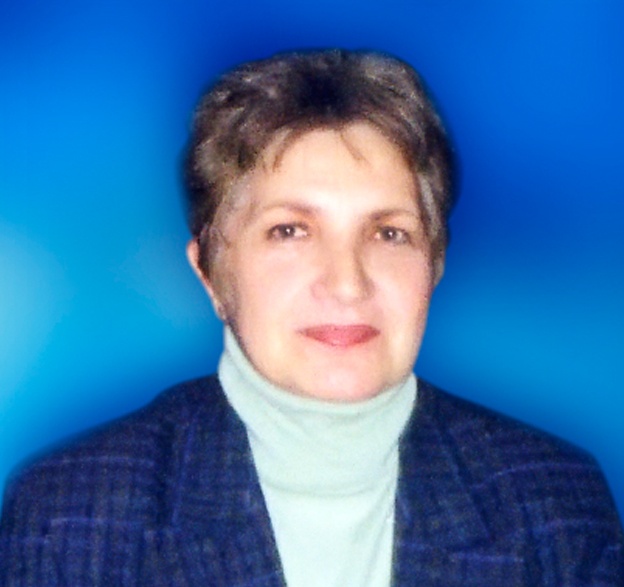
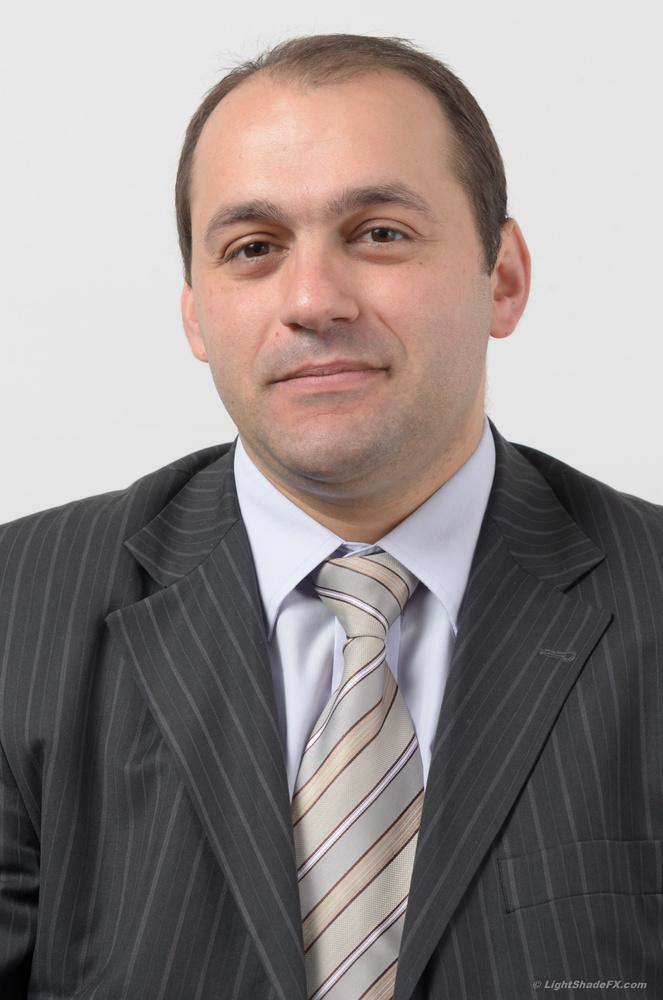
Claudia Steluta Martis is an Associate Professor at the Department of Electrical Machines, Marketing & Management , Technical University of Cluj-Napoca, Romania. Her expertise spans electrical machine design, electromagnetic compatibility, and motor control systems. Date of birth: 19 August 1967, Măcin, Tulcea, Romania Education Industrial High School, Măcin (1981-1985) Technical University of Cluj-Napoca, Electrical Engineering (1985-1990) Research interests focus on design and modeling of electrical machines , particularly doubly-salient permanent magnet motors and electric traction drives. She has contributed to electronically commutated small motor development and electromagnetic compatibility in electromechanical systems. Research projects include National Science Foundation collaborations on doubly-salient motor design, bilateral programs with Italy (University of Cassino), and grants from Romania's National Education Ministry for energy-efficient drives and real-time control systems. Professional experience includes engineering roles at SINTEROM SA and Dania Comprod SRL (1990-1996), followed by academic positions. International mobility includes Erasmus-Socrates stays at Helsinki University of Technology (1999) and University of Cassino (2000).
Serhiy Mykhailovych Tykhovod is an Associate Professor and Head of the Department of Electrical Machines at the Electrotechnical Faculty of Zaporizhzhia Polytechnic National University. With a Doctor of Technical Sciences degree, he has been actively contributing to the university since 1986. His academic career spans several decades of teaching and research in electrical engineering disciplines. Dr. Tykhovod's research focuses on modeling of electromagnetic and electromechanical processes, with particular emphasis on transient phenomena in transformers and electrical circuits. His work bridges theoretical electrical engineering with practical applications, developing innovative computational methods for analyzing complex electromagnetic systems. His research has resulted in numerous publications and a textbook on transformer modeling using magnetoelectric equivalent circuits. His scholarly output demonstrates consistent focus on transient process analysis, magnetoelectric modeling, and computational methods in electrical engineering. The research shows progression from fundamental theoretical work to practical applications in transformer and converter systems, with increasing sophistication in numerical methods and computational approaches over time. Badge 'Excellent Educationist of Ukraine, 3rd degree' Dr. Tykhovod has taught key electrical engineering subjects including Theoretical foundations of electrical engineering, General electrical engineering, and Theory of electrical circuits. His academic leadership as department head has shaped electrical engineering education at the university for many years. While specific grant information isn't provided, his extensive publication record suggests successful research funding throughout his career. As Head of the Department of Electrical Machines, he leads academic and research activities focused on electrical machinery, transformer systems, and electromagnetic processes. His department likely serves as a center for both theoretical and applied research in electrical engineering at Zaporizhzhia Polytechnic National University.
Yuriy Mykolayovych Savonov serves as Associate Professor at Zaporizhzhia Polytechnic National University within the Department of Integrated Welding Technologies and Modeling of Structures under the Faculty of Engineering Physics. With continuous academic service since 1979, he maintains active research and teaching roles including courses on Welding Equipment Schematics and Technological Methods for Increasing Machine Parts Service Life . His educational background includes higher education from V.Ya. Chubar State University of Mass Media (1979), Faculty of Mechanics and Metallurgy, with specialization in "Equipment and Technology of Welding Production" and qualification as Mechanical Engineer. He holds the Candidate of Technical Sciences degree (1989) with thesis on "Development and implementation of welding materials for pulp and paper production equipment made of two-phase steel 12X21N5T". Savonov's research centers on weldability challenges of corrosion-resistant austenitic and austenitic-ferritic steels, with significant contributions to electroslag remelting, corrosion resistance in alkaline environments, and restoration techniques for industrial equipment. His work bridges theoretical materials science with practical industrial applications across metallurgical, pulp/paper, and construction sectors. Analysis of his recent publications reveals strong focus on titanium recycling processes, advanced welding technologies for duplex steels, and innovative surface engineering solutions. His research demonstrates consistent evolution from fundamental welding science toward sustainable material processing and equipment longevity enhancement. Professional activity includes regular participation in the university's "Week of Science" conferences through 2022, with collaborative projects spanning multiple Ukrainian technical institutions. His scholarly output exceeds 30 publications including 5 author's certificates and 1 educational manual, primarily published in Ukrainian metallurgical and engineering journals. Current research infrastructure involves laboratory work at university facilities (room 257-a, building 2) with English communication capability at dictionary level. His ORCID (0000-0003-1347-5366) and Scopus (6505863212) profiles document ongoing scholarly contributions.
Iryna Mykhailivna Kilymnyk is an Associate Professor at the Department of Mathematics, Faculty of Mechanical Engineering, Zaporizhzhia Polytechnic National University. With a distinguished career spanning nearly five decades since joining the university in 1976, she has established herself as a respected academic in both mathematical education and applied mechanics, maintaining active research and teaching activities through 2024. Education: Diploma with honors from Dnipropetrovsk State University, Faculty of Mechanics and Mathematics (1976), specialty: Applied Mathematics Candidate of Technical Sciences (equivalent to PhD) with thesis 'Object-oriented modeling of the thermal stress-strain state of the "casting - metal mold" system' (1997) Research Interests: Dr. Kilymnyk specializes in the mechanics of deformable solid bodies and the methodology of teaching mathematics in higher education. Her work bridges theoretical mathematics with practical engineering applications, particularly in electromagnetic processes simulation and power transformer modeling. She has developed innovative approaches to mathematical modeling of complex physical systems, with a focus on industrial applications. Her research has contributed significantly to understanding thermal stress-strain states in casting processes and electromagnetic field behavior in industrial equipment, with publications spanning mathematical theory, engineering applications, and interdisciplinary medical research. Publication Trends: Over her extensive career, Dr. Kilymnyk has published more than 50 scientific papers, with 9 indexed in Scopus. Her recent work (2023-2024) shows continued productivity with publications spanning mathematical education textbooks, electromagnetic modeling, and interdisciplinary medical applications. Her research demonstrates a consistent focus on applying mathematical principles to solve practical engineering problems while maintaining strong contributions to mathematics education methodology. The breadth of her work reflects both deep expertise in core mathematical disciplines and the ability to apply these principles across diverse fields including electrical engineering, materials science, and medical applications. Awards and Honors: Honorary Diploma of the Ministry of Education and Science of Ukraine (2000, 2004) Zaporizhzhia Polytechnic National University Badge 'For Impeccable Work' (3rd degree, 2008) Zaporizhzhia Polytechnic National University Badge 'For Impeccable Work' (2nd degree, 2015) Badge of the Ministry of Education and Science of Ukraine 'Distinguished Educator of Ukraine' (2020) Zaporizhzhia Polytechnic National University Badge 'For Impeccable Work' (1st degree, 2024) Academic Service: Dr. Kilymnyk serves as responsible for the educational and methodological direction of the Department of Mathematics and is a member of the university staff conference. She has maintained an active research profile while contributing significantly to curriculum development and mathematical education at the university. Her scientific contributions include 1 patent, 3 textbooks, and over 50 scientific papers, with consistent publication activity well into her later career years, demonstrating remarkable scholarly dedication and productivity.
Yuriy Alekseevich Krysan is an Associate Professor at the Department of Electrical Drive and Automation of Industrial Installations at Zaporizhia Polytechnic University. With over 20 years of experience since joining the university in 2002, he has established himself as a specialist in electrical engineering with a focus on electric drive systems and steelmaking furnace regulation. Zaporizhia State Technical University, 1998: Electrical Engineer in "Electrical drive and automation of industrial installations" Zaporizhia State Technical University, 1999: Master of Electromechanics in "Electromechanical automation systems and electric drive" Dr. Krysan's research primarily focuses on the regulation of powerful steelmaking furnaces and electromagnetic processes in electrical equipment. His work spans theoretical modeling, practical implementation, and educational applications in electric drive systems. He has made significant contributions to understanding variable load impacts on synchronous electric drives, optimization of technological processes, and development of monitoring systems for energy converters. His recent publications (2017-2022) demonstrate a consistent focus on electromagnetic processes, electric drive stability, and optimization of steel production systems. The research shows progression from theoretical modeling to practical implementation of control systems, with increasing emphasis on computerized solutions and energy efficiency. Honorary certificate of the October District Administration, Zaporizhzhia, 2008 Dr. Krysan teaches Electric Drive Theory, Computerized Electric Drive Systems, and Electronics and Microprocessor Technology. His educational contributions include developing laboratory stands for asynchronous electric drive research and universal remote control systems for MICROMASTER 440 drives. He has also integrated software tools like Trace Mode into the educational process. His laboratory work focuses on electrical drive systems, particularly for industrial applications including steel production. He has developed specialized test stands for research and educational purposes, contributing to both theoretical understanding and practical implementation of electric drive technologies.
Lyudmila Mykhailivna Logachova is a Senior Lecturer at Zaporizhzhia Polytechnic National University, affiliated with the Faculty of Information Security and Electronic Communications and the Department of Radio Engineering and Telecommunications. With over four decades of academic experience since joining the university in 1980, she has established herself as a dedicated educator and researcher in the field of microwave engineering and electromagnetic theory. Dr. Logachova specializes in the following research areas: Waveguide theory and analysis Microwave filter design and optimization Electromagnetic field propagation Antenna systems design Radio wave propagation in terrestrial environments Millimeter wave applications Her scholarly work demonstrates a consistent focus on waveguide theory and microwave engineering, with particular emphasis on harmonic filters, wave diffraction phenomena, and impedance analysis. Over her career, she has published 18 scientific papers including 2 patents, with recent work extending into applications of millimeter waves in medicine and advanced mobile communication systems. Her research shows a progression from fundamental waveguide theory to more applied technologies in telecommunications. Dr. Logachova has been actively involved in academic conferences, particularly the annual "Science Week" at Zaporizhzhia Polytechnic, where she has presented numerous papers on waveguide filters, antenna systems, and radio wave propagation. Her contributions to the field include both theoretical analyses and practical engineering solutions for high-power microwave systems. As an educator, she teaches several advanced courses including Technical Electrodynamics, Satellite Information Systems, and Microwave Electronic and Quantum Devices. Her pedagogical approach combines theoretical foundations with practical applications, preparing students for careers in radio engineering and telecommunications.
Vitaliy Igorovich Reva serves as an Associate Professor in the Department of Information Security and Nano-electronics at Zaporizhia Polytechnic National University's Faculty of Information Security and Electronic Communications. With a Candidate of Physical and Mathematical Sciences degree, his academic career at the university began in 2014 following his 2012 graduation with honors from Zaporizhia National Technical University where he earned a Master's degree in Micro- and nanoelectronic devices and devices. Dr. Reva's research spans multiple domains within nanotechnology and solid-state physics, with particular expertise in plasmonics, cluster physics, and positron behavior in solids. His work demonstrates a strong theoretical foundation combined with practical applications in nanoelectronics and materials science. His publications reveal a consistent research trajectory focusing on nanoscale phenomena, particularly the energy characteristics of metal clusters and plasmonic effects in nanostructures. Analysis of his 15 most recent publications shows a clear progression from fundamental studies of metal clusters and vacancies toward more applied research in plasmonics and nanoelectronics. His work bridges theoretical physics with practical applications in solar cell technology, catalysis, and biomedical applications. The research demonstrates strong international collaboration, with publications appearing in journals covering physics, materials science, and nanotechnology. Dr. Reva teaches courses including Process management in quality assurance, Metrological quality assurance of products, Computer Engineering and Programming, Microprocessor technology, and Programming technologies, reflecting his expertise in both theoretical and applied aspects of micro- and nanoelectronics.
Adrian SOICA is a Professor at the Department of Automotive and Transport Engineering, Faculty of Mechanical Engineering, Transilvania University of Brașov, Romania. His academic and research activities focus on vehicle dynamics, safety systems, and transportation-related environmental impact, with a particular emphasis on traffic accident reconstruction and emission reduction strategies. Research Focus: Vehicle-Pedestrian Collisions Research Focus: Automotive Composite Materials Research Focus: Traffic Emission Modeling Research Focus: Smart Transportation Systems His publications span accident reconstruction methodologies, composite material design, and sustainable mobility solutions, including studies on seatbelt mechanics, pretensioner systems, and biodiesel efficiency. Recent work explores AI-driven adaptive traffic control (2025) and metaverse integration for autonomous driving (2022). Scientific awards are not explicitly listed in the available data. Contact: Building N, Room NP12, Politehnicii street, no. 1, Brașov, Romania
Lyudmila Borysivna Zhornyak serves as an Associate Professor in the Department of Electrical Apparatus at the Faculty of Electrical Engineering, Zaporizhzhia Polytechnic National University. With over 39 years of academic service since 1985, she holds a Candidate of Technical Sciences degree (2004) specializing in Electrical Machines and Devices. Her educational background includes graduation from Zaporizhia Machine-Building Institute (1982) as an electromechanical engineer specializing in Electrical Devices. Her dissertation focused on accelerating thermal tests of complete power distribution devices. Dr. Zhornyak's research spans Electrical Device Modeling , Thermal Process Analysis in Electrical Equipment , and High-Voltage Equipment Reliability . Her work addresses critical challenges in power distribution systems, electromagnetic field optimization, and insulation technologies for high-voltage applications. She has published extensively on thermal management, shielding systems, and reliability enhancement of electrical apparatus. Her recent publications demonstrate consistent contributions to electrical engineering, particularly in high-voltage equipment design, power quality improvement, and distribution network optimization. The research shows strong practical applications for energy-intensive industries and transportation electrification. As an educator, she teaches courses including Electrical Control Automation Devices, Fundamentals of Microprocessor Technology, and Low Voltage Switchgear Electrical Apparatus. She has authored multiple textbooks on electrical apparatus design and power supply systems for energy-intensive production. Her professional activities include participation in international conferences (SIEMA, IEEE MEES) and research collaborations with institutions including Kharkiv Polytechnic Institute. Her work maintains strong connections between theoretical modeling and practical engineering solutions for electrical apparatus.
Dmitry Alexandrovich Litvinov is a Senior Lecturer at Zaporizhia Polytechnic University, where he has been working since 1994. He is affiliated with the Department of Electrical Machines within the Faculty of Electrical Engineering. Dr. Litvinov holds an ORCID identifier 0000-0002-4043-954X and specializes in high-voltage electrical equipment and transformer technology. Dr. Litvinov received his higher education from Zaporizhia State Technical University, Faculty of Electrical Engineering, in 1994 with honors. His diploma specialty was "electromechanics" with the qualification of "electromechanical engineer." He completed his postgraduate studies from 1998 to 2001. Dr. Litvinov's primary research interests focus on high-voltage insulation tests of electrical machines and transformers and the design of electrical machines and transformers . His work bridges theoretical electrical engineering principles with practical applications in power systems. He has made significant contributions to understanding thermal processes in induction motors, overvoltage phenomena in transformers, and the development of mathematical models for electrical systems. His research has practical implications for improving the reliability and efficiency of electrical power equipment, particularly in high-voltage applications. Dr. Litvinov's publication record demonstrates a consistent focus on electrical machine and transformer technology over the past decade. His work shows a progression from fundamental modeling approaches to practical applications in transformer design and protection systems. The research spans theoretical modeling, experimental validation, and practical implementation in power systems. Honorary certificate from the ZNTU rectorate (2010) Diploma for 1st place in sports competitions (football) at the Spartakiad among teachers of Zaporizhia universities (2015) Dr. Litvinov teaches several core electrical engineering courses including Electric Machines, Power Transformer Production Technology, Fundamentals of Electrical Engineering, High Voltage Equipment, Insulation of High Voltage Installations, and Fundamentals of Electromechanics. His teaching reflects his research expertise and provides students with both theoretical knowledge and practical insights into electrical machine design and operation. Based at office 234 in the university's main building at 64 Zhukovsky Street, Dr. Litvinov is actively involved in the academic community at Zaporizhia Polytechnic University, contributing to both educational and research missions of the institution.
Professor Serhiy Timofeevich Yarimbash is a faculty member at Zaporizhzhia Polytechnic National University, where he serves in the Department of Electrical Machines within the Faculty of Electrical Engineering. Holding the academic title of Professor with a Candidate of Technical Sciences degree, he graduated from Zaporizhia Machine-Building Institute named after V.Ya. Chubar in 1975 as an electromechanical engineer. His research expertise spans electrical engineering, electromechanics, and computer-aided design systems, with a particular focus on the technological preparation of electrical insulation production. Professor Yarimbash teaches specialized courses including Fundamentals of computer-aided design of electrical devices and electromechanical systems, Engineering design of electrical machines and transformers, and Mathematical models and computational research methods in electromechanics. His scholarly contributions have been published in prominent electrical engineering periodicals such as Power Engineering, Electromachinery and Equipment, Electrical Magazine, and Electrical Engineering and Energy. His work demonstrates a consistent focus on integrating computational methods with traditional electrical engineering practices to improve design and manufacturing processes. Professor Yarimbash has published extensively on CAD support systems for electrical equipment production technology and related topics in electrical machine design and manufacturing. His research trajectory shows a clear progression from theoretical foundations to practical applications of computer-aided systems in electrical engineering production environments. He is proficient in Ukrainian, Russian, and English, facilitating international academic collaboration. His office is located in room 260 at the university's main campus at 64 Zhukovsky Street in Zaporizhia, Ukraine.
Svitlana Oleksandrivna Lapkina serves as an Assistant Professor in the Department of Electrical Machines within the Faculty of Electrical Engineering at Zaporizhia National Technical University. She began her academic career at the university in 2012 and maintains an active presence with office room 230 at the main campus on Zhukovsky Street. Her research focuses on electrical engineering with particular emphasis on electrical complexes and systems. Dr. Lapkina teaches several core courses including Electric Machines, High Voltage Equipment, Computer Engineering and Programming, Fundamentals of Electrical Engineering, and Applied Computer Software Packages in Electromechanics. Her educational background includes dual Master's degrees from Zaporizhia National Technical University—one in Electrical Machines and Devices (2011) and another in Organizational Management (2012). Her scholarly work demonstrates expertise in power systems analysis, with three conference publications between 2013-2018 focusing on transformer analysis, induction heating equipment calculation methods, and three-phase asynchronous motor research. These works employ numerical methods and specialized software like FEMM for electromagnetic modeling and analysis. Dr. Lapkina is fluent in Ukrainian, Russian, and English, enabling her to participate in international academic exchanges and access diverse technical literature. Her professional qualifications include design engineering in electromechanics, research capabilities in electrical engineering, and university teaching expertise.
Mihai Lucanu is a Professor at the Gh. Asachi Technical University of Iasi , serving as Dean of the Faculty of Electronics and Telecommunications. His academic work focuses on advanced power electronics and electromagnetic phenomena. Subjects taught: Industrial Electronics, Power Electronics, Pulse Width Modulation Techniques Research areas: Power Converters, Fuzzy Controllers, Electromagnetic Scattering Research Highlights: His expertise spans power electronics optimization, including soft switching converters , power factor correction , and multi-level inverters . In computational electromagnetics, he specializes in Wave Iterative Process simulations for complex scattering problems. Academic Output: His publications cover topics from high-frequency AC choppers to electromagnetic diffraction analysis, with recent 2025 work on voltage ripple and neural network implementations in 3D semiconductor technology. Contact: mlucanu@etc.tuiasi.ro
Lazar Alexandru is an Associate Professor at the Technical University of Iasi, specializing in control systems and electrical engineering. His research focuses on predictive control, model-free algorithms, and their applications in automotive systems, electric machines, and robotics. He has published extensively on topics such as motor control, vehicle platooning, and industrial automation. His work emphasizes practical implementation and simulation using tools like MATLAB and LabVIEW. Research interests include advanced control strategies for electric drives, nonlinear systems, and data-driven methods. His contributions span theoretical development and experimental validation, with a particular emphasis on automotive and aerospace applications. His articles explore predictive current control, model-free adaptive systems, and real-time control architectures. Despite his prolific output, no awards or grants are explicitly mentioned in the text. Advising details are also unavailable, though his work suggests involvement in graduate research projects.
Associate Professor Olimpiu Stoicuta is affiliated with the Polytechnic University of Timișoara's Faculty of Mechanical and Electrical Engineering, Department of Automation, Computers, Electrical and Power Engineering. His research focuses on advanced control systems for electrical motors, renewable energy integration, and econometric analysis of energy policies. He has extensive expertise in sensorless vector control, induction motor modeling, and optical communication technologies. Education details are not explicitly stated in the provided text, but his work indicates a strong background in electrical engineering and control systems. He has published widely on topics including adaptive observers, energy transformation systems, and underground communication solutions. His research interests span multiple domains: (1) Electrical Engineering with emphasis on motor control and power electronics; (2) Renewable Energy focusing on system integration and efficiency improvements; (3) Data Communication involving LiFi and optical networks for industrial applications; and (4) Econometric Modeling related to energy policy analysis in Romania and the EU. Recent publications (2020-2025) highlight trends in AI-driven network optimization, sensorless motor control advancements, and energy policy studies. Articles frequently address practical engineering challenges like underground communication reliability and EV autonomy enhancement. No specific awards or grants are mentioned, though his prolific publication record suggests sustained research activity. Laboratory and team involvement can be inferred through his work on robotics (exoskeleton control) and collaborative projects in industrial automation systems.