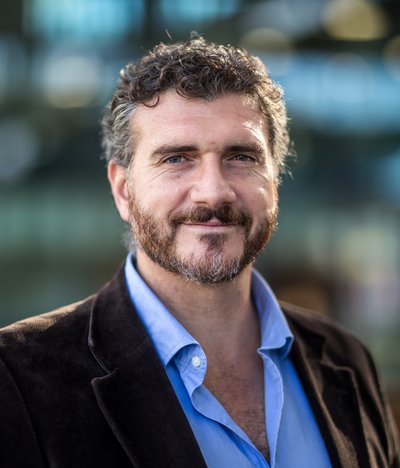
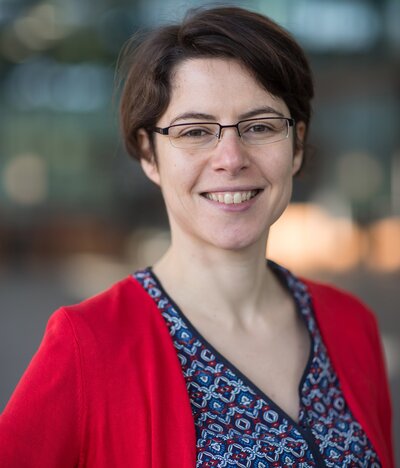
Daria Nemashkalo is a researcher affiliated with the Digital Society Institute and Radio Systems at the University of Twente. Her work focuses on electromagnetic interference (EMI) filter design, time-domain analysis, and multichannel systems, particularly in power electronics and three-phase applications. Key Research Areas: EMI filter performance, mode decomposition, common mode choke saturation, and time-domain measurement techniques. Contributions: Published extensively on EMI mitigation strategies and filter optimization, including work on multichannel testing and real-world implementation challenges. Collaborations: Active in electromagnetic compatibility symposia, notably with peers like Peter Koch and Frank Leferink.
Ramiro Serra is an Associate Professor at the Department of Electrical Engineering at Eindhoven University of Technology (TU/e) in the Netherlands. He is affiliated with the Electrical Energy Systems group and the High Tech Systems Center , focusing on Power Conversion and Electromagnetics . Research Interests include Electromagnetic Compatibility (EMC) , Statistical Electromagnetics , Wireless Coexistence , and Interference Studies . His expertise spans the design, modeling, and operation of Electromagnetic Mode-Stirred Reverberation Chambers , noise propagation in IC substrates, and EMC aspects in large infrastructures. Notable Contributions involve novel methods for EMI Reduction in mixed electrical class modules, VNA-Based TRP Measurements , and quantifying Loading Effects in reverberation chambers. His work impacts domains like Consumer Electronics , Automotive , and Medical Devices . Academic Leadership includes roles in international committees such as the International Steering Committee of EMC Europe , Chair of URSI Commission E , and Secretary of the General National URSI Committee . He also contributes to standardization efforts via IEC 61000-4-21 and CIRED/CIGRE joint working groups.
Dr. Robert Vogt-Ardatjew is a researcher specializing in Radio Systems , with a focus on Electromagnetic Compatibility (EMC) , Risk Management , and Software Defined Radio (SDR) . His work spans Shielding Effectiveness , Propagation Channel Modeling , and Frequency-Selective Emission Detection , contributing to both academic research and practical EMC engineering solutions.
Tom H.F. Hartman is an Assistant Professor specializing in Radio Systems with a focus on Electromagnetic Compatibility (EMC) . His research spans antenna design, EMI mitigation, and measurement engineering, often involving collaborations with institutions in the Netherlands and Germany. He has published extensively in high-impact journals and conferences, including IEEE Transactions on Electromagnetic Compatibility. Key Research Areas : Electromagnetic Interference, Measurement Engineering, Time Domain Analysis, Antenna Design, Energy Systems, Signal Processing His recent work includes breakthroughs in mutual coupling correction for shielded loop antennas and notch filter design for EMC applications. He has received prestigious awards like the 2021 IEEE EMC President Memorial Award and the 2022 IEEE Best Transaction Paper Award . Scientific Awards : 2021 IEEE EMC President Memorial Award 2022 IEEE Richard B. Shultz Best Transaction Paper Award Hartman has supervised multiple PhD and master's students on EMC-related topics, including Pokotilov D. , Vogt-Ardatjew R. , and Moonen N. . His work addresses both theoretical and practical challenges in electromagnetic compatibility, such as common-mode choke saturation and dynamic EMI filtering.
Dr. ir. Anne Roc'h is an Assistant Professor at the Department of Electrical Engineering , Eindhoven University of Technology (TU/e) . Her work bridges cutting-edge research in Electromagnetic Compatibility (EMC) with sustainability and risk-based design philosophies. She actively collaborates with industrial partners in Renewable Energy, Mobility, and Medical Technology sectors. Senior Member, IEEE EMC Society Coordinator, MSCA Doctoral Networks (ETERNITY, PARASOL) Key Focus: Circular design for safety-critical products Annes research emphasizes predictive modeling of electromagnetic noise, material screening, and filter design. She investigates electromagnetic propagation in integrated circuits, printed circuit boards, mm-wave packages, power systems, and cable layouts. Her work addresses the challenges of evolving electromagnetic environments through projects like PARASOL (EU-funded) and ETERNITY (Horizon 2020). Recent publications analyze scenarios affecting input impedance measurements, shielding effectiveness in GTEM cells, and machine learning applications for electric field prediction. These studies highlight her commitment to improving EMC testing methodologies and repeatability standards. Scientific contributions include: Development of reference-plane-invariant material characterization techniques Framework for sampling strategy optimization in EM field measurements Advancing risk-based approaches in EMC compliance
Frederik Van Loock is an Assistant Professor in the Mechanical Engineering Department at Eindhoven University of Technology (TU/e), part of the Processing and Performance of Materials section. His research focuses on the fundamental links between material structure and properties, particularly in polymer-based materials. Key areas include recycled/bio-based polymers, amorphous plasticity modeling using shear transformation zone (STZ) theory, and 3D-printed EMI shielding composites. He holds a PhD from the University of Cambridge (2019) and has conducted postdoctoral research at UC Louvain and TU/e. Education: BSc Aerospace Engineering (TU Delft, 2012) – Highest Distinction MSc Aerospace Engineering (TU Delft, 2014) – Highest Distinction PhD in Solid-State Foaming and Adhesive Joints (University of Cambridge, 2019) Research emphasizes experimental and numerical approaches to address multi-physical problems across scales. Notable contributions include studies on nanolaminates, EMI shielding materials, and polymer deformation mechanisms. Collaborations span academia and industry, with a focus on sustainable, high-performance materials. Key awards include the Young Talent Prize (2014) from the Royal Holland Society of Sciences and Humanities. His work has been published in journals like Journal of the Mechanics and Physics of Solids and Nature Communications . Frederik supervises MSc/PhD students and leads projects on multifunctional composites and nanomechanical systems. He also teaches the Structure and Properties of Materials course at TU/e.
Patrick Anderson is Dean of the Department of Mechanical Engineering and full professor specializing in structure and rheology of complex fluids at Eindhoven University of Technology (TU/e). He chairs the Polymer Technology group within the Institute for Complex Molecular Systems. His academic career spans over two decades since completing his PhD in Mechanical Engineering in 1999, with a one-year industry stint at Océ Technologies before joining TU/e. Professor Anderson's research focuses on: Structure development during flow of complex fluids Interfacial phenomena in polymer processing Additive manufacturing technologies Computational methods for analyzing interfacial flows Rheology of polymer blends and composites His recent publications reveal a strong interdisciplinary approach combining polymer science, rheology, and advanced manufacturing. The research shows increasing focus on sustainable materials like polylactic acid (PLA), 3D food printing applications, and electromagnetic interference shielding solutions using polymer nanocomposites. His methodology consistently integrates computational modeling with sophisticated experimental techniques such as in-situ X-ray and light scattering measurements across multiple length scales. Professional recognition includes: Chairmanship of the Dutch Society of Rheology Editorial Board membership for Macromolecular Materials Engineering International Advisory Board participation for polymer science journals Prestigious visiting professorships at UCSB, Stanford, and ETHZ Professor Anderson has developed educational materials including an interactive textbook for first-year mechanical engineering students published in 2024. His research group collaborates extensively with industry partners through projects like the Dutch Polymer Institute initiative ANGLE, demonstrating his commitment to translating fundamental understanding into practical applications across multiple sectors. He leads the Processing and Performance research group within the ICMS Core at TU/e, focusing on advancing quantitative predictive capability in polymer product design and manufacturing processes.
Prof. Jean-Paul Linnartz is a part-time Professor at Eindhoven University of Technology's Department of Electrical Engineering within the Signal Processing Systems group. He specializes in algorithms for intelligent lighting systems, wireless communication networks, and security with noisy data. His work bridges academia and industry, notably leading Philips Research teams in security, wireless connectivity, and IC design, and currently steering LiFi research at Signify (Philips Lighting). Education: MSc in Electrical Engineering (1986), TU/e PhD in Traffic Analysis of Wireless Networks (1991), Delft University of Technology Research Interests: LiFi and VLC technology optimization LED photonics and thermal modeling Circadian rhythm-informed lighting systems Secure communication protocols His work emphasizes practical industry challenges transformed into foundational research, yielding 75+ patents and 11,000+ citations. Grants & Innovation: Co-founded multiple ventures commercializing research Senior Director and Research Fellow roles at Philips Leading the COST Action NEWFOCUS on optical wireless tech Labs/Teams: Signal Processing Systems group at TU/e, Signify's LiFi R&D division.
Franciscus Bernardus Johannes Leferink is a Full Professor at the University of Twente, holding dual appointments in the Digital Society Institute and Radio Systems department. He also serves as Director of EMC at Thales Nederland B.V. since 1984. His research focuses on electromagnetic compatibility (EMC), power quality, radio systems, and interference mitigation, with applications in 5G, smart metering, and lightning protection. He has contributed to over 470 publications and received prestigious awards like the 2022 Richard B. Shultz Best Transaction Paper Award. Teaching: Introduction to EMC, Post-Academic EMC courses, IEEE Clayton Paul Global University lectures, and Life-Long-Learning programs. Research Interests: EMC engineering, reverberation chambers, spoofing/jamming countermeasures, and TEMPEST (compromising emanations). Recent articles highlight advancements in EMC measurement techniques, adaptive filters, and EMI reduction strategies for power electronics. He actively contributes to conferences and professional societies, including the Dutch EMC-ESD Society where he served as Chair in 2005. His work aligns with UN Sustainable Development Goals related to infrastructure and innovation. Awards: 2022 Richard B. Shultz Best Transaction Paper Award Innovation Honours Thales 2003 Grants/Advising: Extensive collaboration with industry partners like Thales and leadership in interdisciplinary projects. Leferink leads research teams focused on cutting-edge EMC challenges and maintains a strong presence in both academic and industrial R&D ecosystems.
Niek Moonen is an Assistant Professor at both the Digital Society Institute and Radio Systems. His research focuses on electromagnetic compatibility (EMC), power electronics, renewable energy systems, and microgrid technology. He has contributed extensively to understanding conducted electromagnetic interference (EMI), power quality, and energy access solutions in remote and off-grid systems. His work addresses challenges such as EMI mitigation in power electronic converters, optimizing microgrid performance under rapid load changes, and improving energy meter robustness against EMI. Moonen has been recognized with awards including the Richard B. Shultz Best Transaction Paper Award (2023) and multiple Distinguished Reviewer accolades from IEEE Transactions on Electromagnetic Compatibility (2020–2025). Research interests include the interplay between supply and demand quality in off-grid systems, EMC in marine and aerospace applications, and the development of cost-effective monitoring tools for energy access initiatives. His contributions span theoretical analysis, experimental validation, and practical solutions for sustainable energy systems.