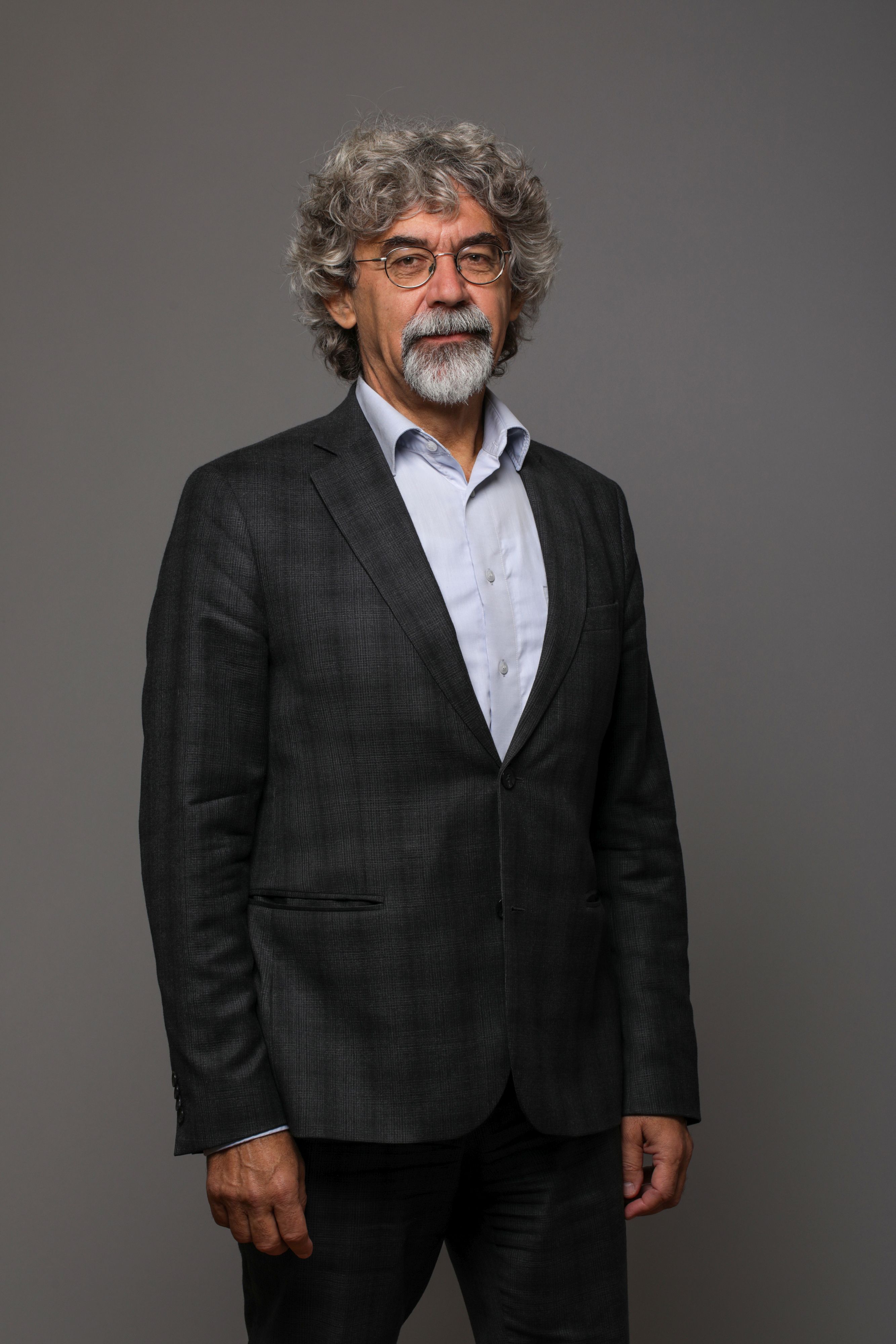
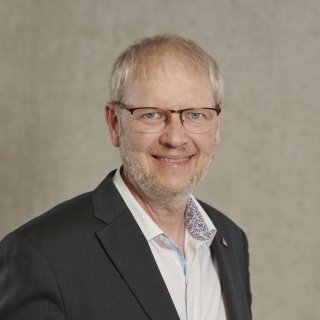
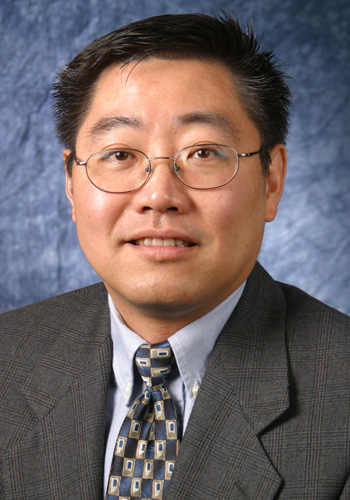
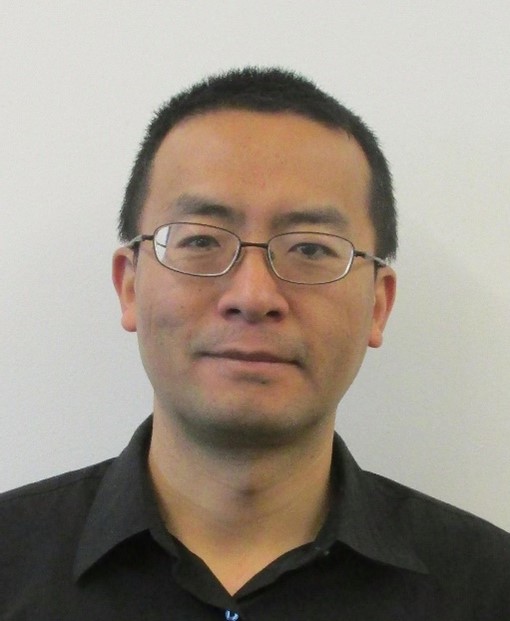
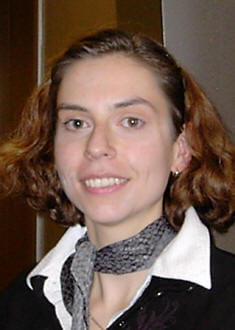
Adrijan Barić is a Researcher at the Department of Electronics, Microelectronics, Computer and Intelligent Systems, Faculty of Electrical Engineering and Computing (University of Zagreb). His work focuses on integrated circuit design, electromagnetic compatibility (EMC), and sensor systems. Expertise in CMOS technology and FPGA-based systems Developed on-chip sensors for stress effects and electromagnetic emissions Contributed to wireless sensor nodes and power converter design His research involves behavioral modeling of integrated circuits, time-domain simulations, and EMC-aware design methodologies. Key projects include: Smart temperature sensors using ring oscillators Conducted emissions analysis in DC-DC converters High-frequency modeling of surface-mount components Contact: adrijan.baric@fer.unizg.hr
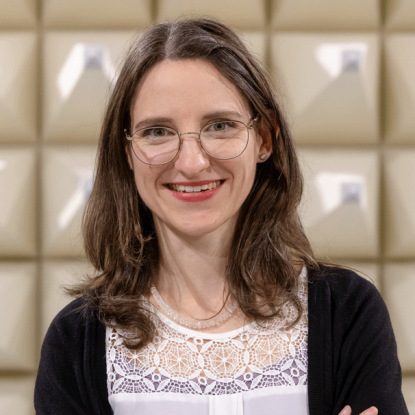
Yvonne Späck-Leigsnering is an Adjunct Professor at the Faculty of Electrical Engineering and Information Technology, Technische Universität Darmstadt (since 2025). She leads the Simulation Team in the ME/EMC department at Robert Bosch GmbH (since 2023) and serves as an Independent Junior Group Leader of the QuinCE W research group (since 2022). Her expertise focuses on computer-aided electromagnetic compatibility and advanced simulation methods in this field. Education: PhD in Engineering (Dr.-Ing.), Technische Universität Darmstadt (2019) Research Interests Her work emphasizes developing innovative simulation techniques to address challenges in electromagnetic compatibility (EMC). This includes optimizing computational models for electromagnetic fields, signal integrity analysis, and practical applications in electronics engineering. Her research bridges theoretical advancements with industrial needs, particularly in automotive and high-tech sectors. Professional Contributions As a leader in both academia and industry, she integrates academic rigor with industrial R&D. Her current roles at Bosch and TU Darmstadt highlight her dual commitment to advancing theoretical frameworks and their real-world implementation. No specific grants or awards are noted in the provided text. Labs/Teams She heads the Simulation Team at Robert Bosch GmbH’s ME/EMC division and leads the QuinCE W research group, focusing on cutting-edge computational electromagnetics applications.
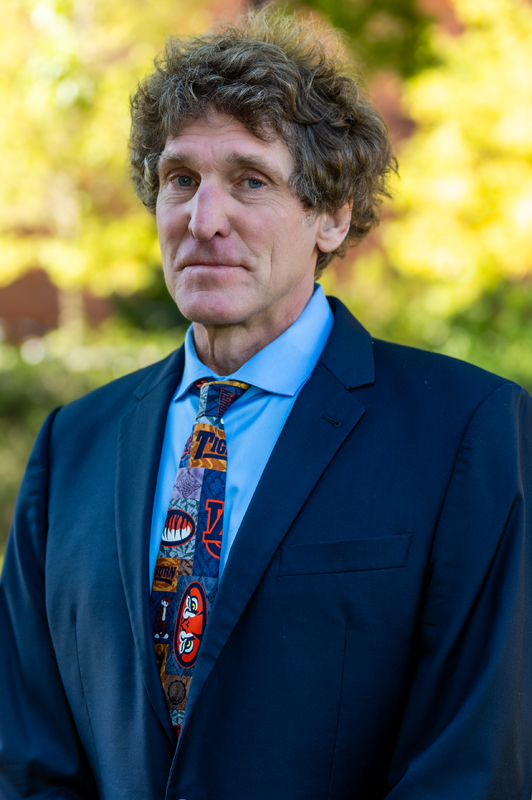
Michael Baginski is an Associate Professor in the Department of Electrical and Computer Engineering at Auburn University. He is based in 423 Broun Hall, Auburn, AL 36849, and can be reached at (334) 844-1817 or via email at baginme@auburn.edu . Education: Ph.D. in Electrical Engineering, Pennsylvania State University M.S. in Electrical Engineering, Pennsylvania State University B.S. in Electrical Engineering, Pennsylvania State University Research Interests: Dr. Baginski's research focuses on advanced computational methods in electromagnetics. His work includes Finite Element Analysis (FEA) applied to electromagnetic systems, Electromagnetic Compatibility (EMC) , and the application of global optimization algorithms to engineering system design. He also investigates lightning phenomenology and other nonlinear atmospheric electrical effects, contributing to both theoretical understanding and practical engineering solutions. He emphasizes effective teaching, advocating for clarity, communication, and student engagement in higher education. Laboratories and Facilities: EMC Computational Lab EMC Screen Room and Chamber He utilizes industry-standard tools such as HFSS and the finite element code PDE2D in his research and teaching. Teaching: Dr. Baginski teaches courses such as ELEC 3320 (covering waveguides, antennas, and microwaves) and ELEC 3310 (magnetostatics), and supervises senior design projects including a railgun design initiative.
Ahmed Hassan is an Associate Professor in the Department of Electrical Engineering at the University of Missouri-Kansas City (UMKC), School of Science and Engineering. He is the founder and director of the Multidisciplinary Multiscale Electromagnetics Lab (MMEL), where he conducts cutting-edge research in applied electromagnetics with applications in nanotechnology, medicine, and defense. Education: Ph.D. in Electrical Engineering, University of Arkansas, 2010 M.S. in Electronics and Communication Engineering, Cairo University, 2006 B.S. in Electronics and Communication Engineering, Cairo University, 2004 Research Interests: His expertise spans applied electromagnetics, nanoelectromagnetics, bioelectromagnetics, computational electromagnetics, electromagnetic compatibility (EMC), and microwave/terahertz imaging. He employs both computational and experimental methods to solve real-world challenges in materials, biomedical sensing, and defense systems. His work often integrates machine learning and high-performance computing for electromagnetic modeling. Publication Trends: His recent research focuses on carbon nanotubes, plasmonic sensors, UAV electromagnetic compatibility, and biomedical applications of microwaves. He frequently uses characteristic mode analysis, computational modeling, and experimental validation to advance understanding in multiscale electromagnetics. Scientific Awards: University of Arkansas College of Engineering Early Career Alumni Award (2021) IEEE Senior Member (2019) UMKC Chancellor’s Early Career Award for Excellence in Teaching (2018) Elected Full-Member, U.S. National Committee for URSI (2018) CS&EE Excellence in Teaching Award (2017) Sigma Xi Outstanding Poster Award, NIST (2014) Doctoral Academy Fellowship, University of Arkansas (2007–2010) Cairo University Faculty Prize (1999–2004) Advising and Grants: Dr. Hassan has advised numerous PhD and MS students, many of whom have received research grants and awards. His lab is supported by major funding from DARPA, NSF, ONR, NIST, and industry partners like Zoloz. Projects include counter-drone technologies, biometric sensing, and nanoscale electromagnetic modeling. He actively recruits PhD students with strong computational or experimental backgrounds. Labs and Teams: The MMEL Lab is equipped with advanced hardware including vector network analyzers, SEM, and high-performance computing workstations, and software tools like COMSOL, FEKO, CST, and HFSS. The lab fosters interdisciplinary collaboration across engineering, physics, and medicine.
Nebojša B. Raičević is a Full Professor at the Department of Theoretical Electrical Engineering, Faculty of Electronics, University of Niš, Serbia. He has been a central figure in advancing computational methods in electromagnetics and high-voltage engineering. His academic journey at the same institution spans from undergraduate studies to full professorship, reflecting deep institutional and technical commitment. Education: PhD in Theoretical Electrical Engineering, Faculty of Electronics, University of Niš (2010) Master's in Theoretical Electrical Engineering, Faculty of Electronics, University of Niš (1998) Bachelor's in Theoretical Electrical Engineering, Faculty of Electronics, University of Niš (1989) His research focuses on electromagnetic field computation , particularly through the development and application of the Hybrid Boundary Element Method (HBEM) . His work spans electrostatic, magnetostatic, and transient phenomena, with applications in high-voltage systems, cable terminations, magnetic bearings, and environmental shielding. He has pioneered methods for electric field optimization and developed novel cable accessories with reduced dielectric stress. The recent publications highlight a consistent trend in numerical modeling , field simulation , and optimization of electromagnetic devices . The works span from theoretical formulations to practical engineering solutions, often involving multi-layered media and complex geometries. Keywords across the articles include computational electromagnetics, high-voltage engineering, and power systems, with subfields such as skin effect, touch/step voltages, and magnetic force modeling indicating a strong focus on safety and efficiency in power infrastructure. Scientific Awards: Best Paper Award at international conferences (2 times) Nebojša Raičević has mentored two PhD students and served on committees for over 18 doctoral defenses, in addition to numerous master’s and diploma theses. He has participated in nine domestic and five international research projects, leading two of them. He is an active reviewer for major SCI/SCIE journals and has served as a guest editor for Electronics (MDPI). His administrative roles include Chair of the IEEE EMC Chapter for Serbia and Montenegro, head of department, and member of university councils. He has conducted eleven research visits abroad and attended three scientific courses, demonstrating international engagement. His lab and team activities are centered around computational electromagnetics and high-voltage systems, with strong collaboration across the Faculty of Electronics and international partners.
Prof. Dr. Osman ÇEREZCİ is currently serving as the Dean of the Faculty of Engineering and Natural Sciences (FENS) at Üskudar University, where he also acts as the Head of the Electrical and Electronics Engineering Department. With a career spanning over decades, he has previously held significant academic positions at Istanbul Technical University (ITU) Sakarya Faculty of Engineering and Sakarya University. Educational Background: Licence in Physics from Istanbul University (1976) Master's Degree in Institute of Science from Uludağ University (1985) Doctorate in Institute of Science from Uludağ University (1985) His research primarily focuses on Electromagnetic fields , Microwave and Antenna Technologies , and Electromagnetic Compatibility . He has made significant contributions to understanding Electromagnetic Pollution , Wave propagation , and the Biological effects of electromagnetic radiation . His recent publications continue to explore these areas with a particular emphasis on environmental impact and health considerations. Prof. ÇEREZCİ has received several prestigious awards, including Microwave Aperture Antennas Summer School (TÜBİTAK, 1988) Quantum Electrodynnamics and Quantum Optics Summer School (NATO-ASI, 1989) Generation & Application of High Power Microwaves Summer School (NATO-ASI, 1996) Environmental UV Radiation: Impact on Ecosystems and Human Health and Predictive Models Summer School (NATO-ASI, 2001) He has supervised numerous postgraduate theses and has contributed to the education and training of many students through undergraduate courses such as Physics I, Physics II, and graduation projects.
Emad Samuel Malki Ebeid is a Professor at the Institute of Mechanical and Electrical Engineering, University of Southern Denmark, specializing in robotics, drone technology, and power line inspection systems. His work bridges embedded systems, FPGA acceleration, and smart grid applications. PhD in Computer Science, University of Verona (2014) Postdoc in Electrical and Computer Engineering, Aarhus University (2016) Research interests focus on robotics , UAV autonomy , and power line inspection , with a strong emphasis on embedded systems and magnetic gripper design . Articles highlight trends in mmWave radar , GPU/FPGA acceleration , and drone swarm coordination for infrastructure maintenance. Scientific contributions include: IEEE Senior Member PI and Coordinator roles in EU Horizon Europe projects (Robots4Green, SPADE) Development of AERIAL-CORE and Drones4Safety frameworks Supervision of PhD students V. D. Hoang , N. H. Malle , and F. F. Nyboe Lab and team involvement spans the Aalborg Robotics 10-year seminar and special sessions at the Euromicro DSD conference. Media features include TV 2 News and 2200 News (2025) on drone-based power line maintenance.
Holger Borcherding is a Professor of Power Electronics, Electrical Drive Technology, and EMC at the Ostwestfalen-Lippe University of Applied Sciences (TH-OWL) . As a board member of the Institute for Energy Research (iFE) and the Open Direct Current Alliance (ODCA) , he leads research on intelligent energy systems and industrial DC networks. His Power Electronics and Electrical Drive Technology working group focuses on energy-efficient solutions for industrial applications, including the DC-INDUSTRIE projects. Education: Studied Electrical Engineering at the University of Hanover (1985-1991) PhD in Power Electronics from the University of Hanover (1999) Research interests span industrial DC grids, fast-switching power semiconductors, highly integrated converters for electromobility, ultra-fast electronics prototyping, EMC optimization, and 3D electronics. His work bridges theoretical advancements with practical implementation, particularly in manufacturing and sustainable energy systems. Publication trends show expertise in DC microgrid stability, capacitor lifespan modeling, converter design, and energy efficiency improvements. Key subfields include resonant oscillations, power quality, industrial automation, and semiconductor reliability. Scientific awards: 2013 Research Prize, TH Ostwestfalen-Lippe 2014 Transfer Prize OWL (IHK Lippe zu Detmold and IHK Bielefeld) 2019 IEEE ICDCM Best Paper Award 2024 Transfer Prize, TH Ostwestfalen-Lippe Supervision and grants include PhD mentorship and leadership in projects like DC-INDUSTRIE 2 , IDE3AL , and UmSiCht . He has secured funding for innovations in DC-powered busbars, 3D circuit board construction, and self-optimizing drilling systems. Labs and teams include the iFE Institute at TH-OWL, where he collaborates with research associates such as Benjamin Jerwan, Simon Cepin, and Tim Stuckmann. He also works with industry partners like Lenze SE and academic alliances including the Mechatronics Center Hannover and the National Platform for Electromobility.
Musa Bute is an Assistant Professor at the Faculty of Engineering , Gaziantep University , Turkey. He holds a doctorate in Electrical and Electronics Engineering from the same university (2018) and has been affiliated with the Electromagnetic Fields and Microwave Technology department since 2019. Doctorate : 2013–2018, Gaziantep University, Electrical & Electronics Engineering Master's : 2011–2013, Gaziantep University Bachelor's : 2006–2011, Gaziantep University His research focuses on electromagnetic property measurement and metamaterials , particularly for applications in civil engineering (e.g., alkali-silica reaction detection) and microwave technology . Recent publications emphasize chiral metamaterials and calibration-free measurement techniques . He has presented at international conferences including: SBMO/IEEE conferences (Brazil, 2015-2017) EMC Türkiye (Ankara, 2017) ISCAE (UK, 2016)
Dr. Ji Chen is a Professor and Chair at the Department of Electrical & Computer Engineering, University of Houston, where he also serves as Director of the NSF I/UCRC Center for EMC Research. His career bridges academic research with industry experience, including prior roles as a staff engineer at Motorola Personal Communication Research Labs (1998-2001). He holds a PhD in Electrical Engineering from the University of Illinois, Urbana-Champaign, with prior degrees from McMaster University and Huazhong University of Science and Technology. IEEE Fellow Fellow AIMBE NSF Career Award Winner Dr. Chen's research focuses on computational electromagnetics , particularly in biomedical applications. Key areas include electromagnetic safety of medical implants in MRI systems , multi-channel transcranial magnetic stimulation (TMS) devices , coupled EM-neuro modulation simulations , and RF field interactions with the human body . He has developed novel solutions for MRI-induced heating mitigation in implants and pioneered wireless power transfer applications for industrial systems. His publication record demonstrates expertise in FDTD modeling for periodic structures, electromagnetic dosimetry, and medical device safety evaluation. Collaborations with Wolfgang Kainz and others have produced significant contributions to MRI safety standards and virtual human modeling for dosimetric simulations. Scientific Awards IEEE EMC Society Technical Achievement Award (2011) IEEE EMC Society Distinguished Lecturer (2009-2010) IEEE APMC Best Paper Award (2008) IEEE Senior Member (2008) ORISE Fellowship (2006) Motorola Engineering Award (2000) Dr. Chen's research group has explored electromagnetic tracking systems for radiotherapy, developed advanced simulation techniques for periodic structures, and investigated safety protocols for pregnant women in metal detector exposure scenarios. His work combines theoretical advancements with practical applications in both medical and industrial electromagnetics.
Zhiping Yang serves as an Adjunct Professor at Missouri University of Science and Technology, affiliated with the Electromagnetic Compatibility Laboratory. His career bridges academia and industry leadership at Waymo, Google, Apple, and Cisco Systems. Education: Ph.D. in Electrical and Computer Engineering, University of Missouri-Rolla, 2000 M.S. in Electrical Engineering, Tsinghua University, China, 1997 Dual B.S. in Electrical Engineering and Applied Math, Tsinghua University, China, 1994 Research Focus: Dr. Yang pioneers advancements in signal/power integrity for high-speed electronics, specializing in IBIS modeling, AI/ML-driven simulation automation, and RF desensitization challenges for data center infrastructure. His work addresses critical bottlenecks in optical/copper interconnects through open-source methodologies. Scientific Recognition: IEEE Fellow (2022) for signal/power integrity contributions Elected member of MST Academy of Electrical and Computer Engineering (2022) IEEE EMC Society Distinguished Lecturer (2017-2018) Research Leadership: As chair of the NSF Industry Advisory Board for IUCRC CEMC (2017-2020), he directed federal research funding strategy. His editorial roles for IEEE Transactions on Electromagnetic Compatibility (2017-2022) and IEEE Transactions on Signal and Power Integrity (2021-present) shape scholarly discourse in the field. Technical Community Building: Dr. Yang drives standardization as IBIS Open Forum board director/librarian (2018-present) and led IEEE EMC & SIPI symposiums as TPC chair (2021-2022), fostering global collaboration in electromagnetic compatibility research.
David Badia Folguera is a Lecturer at the Communications and Signal Theory Department of the School of Engineering, La Salle Campus Barcelona (URL). He has served as Academic Director of the Research Group GRITS and coordinated undergraduate programs in multimedia and computer science since 2013. His research focuses on Electromagnetic Compatibility (EMC), electronic instrumentation systems, and radio communications. He has contributed to projects like Antarctica Project Test , ENVISERA , and SHETLAND-NET , which explore HF communications and sensor networks in extreme environments. He has participated in 6 research projects, including low-power HF communications between Antarctica and Spain, with three stays at the Juan Carlos I Antarctic base. Key Research Areas: EMC, Radio Communications, IoT Technologies Project Highlights: HF Communications in Antarctica, Environmental Sensor Networks, IoT Scalability
Alenka Zajic is a Professor at the School of Electrical and Computer Engineering , Georgia Institute of Technology . Her research focuses on electromagnetic measurements in communications and computing, hardware security, and wireless systems. B.Sc. and M.Sc. from University of Belgrade (2001, 2003) Ph.D. in Electrical and Computer Engineering from Georgia Tech (2008) Key research areas include Electromagnetic Compatibility , Wireless Communications , and Hardware-Oriented Security . She has served as editor for IEEE Transactions on Wireless Communications and executive editor for Wiley Transactions on Emerging Telecommunications Technologies . NSF CAREER Award (2017) Best Paper Awards at IEEE Microarchitecture Symposium (2016), RFID Conference (2018), and more Honored as IEEE Outstanding Engineer (2019) and recipient of multiple teaching awards She leads the Electromagnetic Measurements in Communications and Computing (EMC²) lab and has contributed to advancing RFID and secure hardware design.
Professor Frank Gustrau serves as Dean of the Department of Information Technology, demonstrating leadership in both academic administration and electrical engineering education. His career spans multiple decades with consistent contributions to RF and microwave engineering education. Professor Gustrau's research interests focus on RF and Microwave Engineering , High-Frequency Technology , Electromagnetic Design , and Electromagnetic Compatibility . His work bridges theoretical field theory with practical applications in wireless communications, medical technology, and circuit design. The progression of his publications from foundational German texts to international English editions demonstrates growing global impact in the field. His publication record shows remarkable consistency and evolution, with the forthcoming 4th edition of RF and Microwave Engineering (2025) building on previous works dating back to 2006. These publications represent comprehensive educational resources that have shaped RF engineering curriculum internationally, including a Chinese translation (2015) that expanded their global reach. As an educator, Professor Gustrau teaches across multiple programs: Theoretical Electrical Engineering (TET1/TET2) - Master's level core course EM Design (EMD) - Bachelor's level elective High-frequency technology and EM Simulation (HFE) - Master's level elective covering both theoretical and practical simulation aspects Physics courses for Biomedical and Information Technology programs Professor Gustrau maintains an open-door policy for thesis supervision, actively encouraging students to seek him out during office hours for bachelor's and master's projects in the Department of Information Technology. His teaching approach emphasizes connecting theoretical concepts with practical implementation through simulation tools and real-world applications.
Dr. Krzysztof Iwan is an Assistant Professor at the Department of Power Electronics and Electrical Machines within the Faculty of Electrical and Control Engineering at Gdańsk University of Technology. His office is located in Building A, room EM-214, and he can be contacted via email at krzysztof.iwan@pg.edu.pl or by phone at +48 58 347 1363. His research spans several key areas in electrical engineering and biomedical applications: Power Electronics: Converter systems, semiconductor device modeling, and drive technologies Simulation & Modeling: Development and application of simulation tools like TCAD and Saber Electromagnetic Compatibility: EMI propagation, filtering, and suppression techniques Biomedical Engineering: Surgical simulation for hernia repair and medical visualization Energy Quality: Analysis of harmonic distortions in power networks His publications demonstrate a consistent focus on computational modeling approaches to solve complex engineering problems. Recent work shows an interdisciplinary trend combining power electronics with biomedical applications, particularly in surgical simulation. The majority of his publications involve simulation-based research of power electronic systems and electromagnetic compatibility issues. Dr. Iwan is an active member of the Department's research team which focuses on: Modeling, design and simulation of power electronic converters Control and diagnostics of power electronic converters Electromagnetic compatibility of converters and electrical drives Quality of electrical energy Modeling and diagnostics of electrical machines and transformers Design of piezoelectric sensors and motors CAD and CAE techniques for power electronics