

William Chueh is a Professor in the Departments of Materials Science and Engineering and Energy Science & Engineering at Stanford University. He serves as Director of the Precourt Institute for Energy and Faculty Director of the Energy Innovation and Emerging Technologies Program. His research focuses on redox-active materials for energy storage, conversion, and carbon-neutral energy cycles. Education: PhD, Materials Science, Caltech (2010) BS, Applied Physics, Caltech (2005) Research Interests: Energy storage and conversion systems (batteries, fuel cells, electrolyzers) Multi-scale electrochemical and chemical reaction dynamics Materials design rules for redox-active solids Thermodynamic frameworks for sustainable energy Publication Trends: His work spans fundamental materials synthesis, electrochemical characterization, and modeling of redox reactions. Key themes include solar thermochemical cycles, ceria-based systems for CO2/H2O conversion, and advanced battery technologies. Scientific Honors: Outstanding Young Investigator Award (MRS, 2018) Camille Dreyfus Teacher-Scholar Award (2016) Sloan Research Fellowship (2016) CAREER Award (NSF, 2015) Advising: He advises students in energy technologies, materials science, and electrochemistry, including doctoral and master’s candidates. Contact: wchueh@stanford.edu
جستجوی استاد راهنمای دانشگاهی
برای مسیر پژوهشیتان، استاد راهنما، استاد دانشگاه و پژوهشگر مناسب را پیدا کنید و با آنها ارتباط بگیرید.
نمایش ۱-۱۵ از ۴۳۳ استاد راهنما
اطلاعات پروفایلها از صفحات عمومی دانشگاهها گرفته شده و ممکن است بهروز نباشد.
Prof. Kai S. Exner is a Professor of Theoretical Inorganic Chemistry at the University of Duisburg-Essen's Faculty of Chemistry and a member of the Zentrum für Medizinische Biotechnologie (ZMB). His research focuses on electrocatalysis , particularly optimizing electrode materials for energy applications such as batteries, electrolyzers, and fuel cells. He employs computational methods like ab initio calculations and microkinetic modeling to bridge theoretical insights with experimental and industrial applications, emphasizing sustainable catalyst design without relying on noble metals. His work integrates basic research with applied medical biotechnology through ZMB collaborations, though his primary affiliation lies in the Faculty of Chemistry. Exner has pioneered concepts like the electrochemical-step asymmetry index and free-energy span model, which are critical for screening electrocatalysts. His research group, 'Theoretical Inorganic Chemistry,' actively explores mechanisms behind oxygen and chlorine evolution reactions, emphasizing selectivity control and reaction pathway complexity. Exner received the Gottschalk-Diederich-Baedeker-Preis (2024) for advancing the energy transition through foundational electrocatalysis research. He leads Aktuelles Projekt funded by third-party grants and collaborates with facilities like the Analytics Core Facility Essen (ACE) and Imaging Center Campus Essen (ICCE). His advisory role focuses on guiding theoretical and computational approaches in electrochemistry, and he has established a reputation for interdisciplinary research connecting computational chemistry with practical energy solutions.

WooChul Jungمشاهده پروفایل
دانشیار
WooChul Jung is an Associate Professor at the Department of Materials Science and Engineering, Seoul National University (SNU), previously holding the same role at the Korea Advanced Institute of Science and Technology (KAIST) from 2018 to 2024. His research focuses on energy conversion and storage materials, particularly solid oxide fuel cells, electrolyzers, and catalytic systems involving ionic solids and gas interfaces. Ph.D. in Materials Science & Engineering from MIT (2010) B.S. in Materials Science & Engineering from SNU (2004) Research Interests: Investigating reactions at ionic solid-gas interfaces to enhance catalytic kinetics for fuel cells, electrolyzers, and sensors. Key areas include surface science, electrochemistry, and nano-fabrication. Scientific Contributions: His recent work emphasizes fluorine doping for stable bismuth oxide electrolytes, Ca substitution in LaCoO3 for oxygen evolution, and exsolution strategies for durable nanocatalysts. Publications highlight multidisciplinary approaches combining experimental and computational methods.
Peter Strasser is a Full Professor of Chemistry and Chemical Engineering at the Technical University Berlin, Germany. He holds a Diplom (MSc) in Physical Chemistry from Tübingen University (1995) and a PhD from the Fritz-Haber-Institute of the Max-Planck-Society (1999), supervised by Prof. Gerhard Ertl. His research focuses on electrocatalysis, CO₂ electroreduction, and materials science for energy storage/conversion. He has held roles at the University of Houston (2004–2007) and Symyx Technologies (2000–2004). Education : Tübingen University (1988–1995), Stanford University (1991), Università di Pisa (1992) Affiliations : German Chemical Society (GDCH) leadership roles, Electrochemical Society (ECS) committee memberships Research interests include structure-function relations in electrocatalysts, electrochemical oxygen evolution/reduction reactions, and in-situ spectroscopic techniques. He has organized major conferences such as the “Electrochemistry 2022” meeting and co-chairs symposia on fuel cells and electrolyzers. His entrepreneurial activities include mentoring startups like DexLeChem GmbH and LiquidLoop GmbH. Awards : Carl Wagner Memorial Award (2023), Faraday Medal (2021), Otto-Hahn Medal (2000) Grants/Advising : Extensive funding and mentorship in energy materials research He leads the Technische Chemie division at TU Berlin and collaborates internationally, including guest professorships in China. His work bridges fundamental electrochemistry with industrial applications in renewable energy systems.

Yali Tangمشاهده پروفایل
استادیار
Yali Tang is an Assistant Professor in the Department of Mechanical Engineering at Eindhoven University of Technology (TU/e), specializing in fluid dynamics and transport phenomena within multiphase flows and physicochemical conversions . Her work targets Iron Power technology , green steel production , and alkaline water electrolysis for hydrogen generation, combining advanced computational models with experimental validation . Education: Master's in Chemical Engineering from Sichuan University (2011) PhD in Mechanical Engineering at TU/e (2015) with Prof. Hans Kuipers Research Interests: She focuses on interphase interactions , interfacial transport mechanisms , and high-resolution simulations (down to 40 nm mesh) to predict bubble coalescence and film dynamics. Her studies on hydrogen bubble growth , dendritic iron formation , and gas distribution in electrolyzers aim to refine reactor design and industrial processes. Collaborations with industrial partners ensure practical applicability of her computational models. Recent Publications: Her 2025 work includes dimensional analysis of liquid film formation, solutal Marangoni effects in electrolysis, and X-ray validation of gas distribution models. Earlier studies (2020–2023) cover defluidization behavior of iron fines, CFD-DEM modeling of raceways, and acoustic field applications in particle dynamics. Labs & Collaborations: She leads computational efforts within the Power & Flow group under Prof. Niels Deen, contributing to the EIRES Research cluster. Her work bridges academic research with industrial innovation in fluid dynamics and energy transition technologies.
André Bardow is a Full Professor at the Department of Mechanical and Process Engineering, ETH Zürich. His research focuses on energy systems optimization, life cycle assessment, computer-aided molecular design, and CO2 capture/utilization. Professor (ETH Zürich, 2020–present) Head of Institute of Technical Thermodynamics (RWTH Aachen University, 2010–2020) Visiting Professor (University of California, Santa Barbara, 2015/16) Part-time Director (Forschungszentrum Jülich, 2017–2022) Associate Professor (TU Delft, 2007–2010) Research Interests: His work spans energy and process systems engineering, with emphasis on sustainable technologies. Key areas include: Computer-aided molecular and process design Machine learning for chemical engineering Carbon capture and utilization (CCU) Life cycle assessment (LCA) of industrial processes Thermo-economic modeling of energy systems Multiphase equilibrium analysis Publication Trends: Recent articles focus on integrating machine learning with process design, optimizing CO2 capture in steel production, and advancing electrochemical cooling technologies. Subfields include sustainable plastics, ORC working fluids, and solvent mixture design. Scientific Awards: Fellow of the Royal Chemical Society Recent Innovative Contribution Award (EFCE, 2019) PSE Model-Based Innovation Prize (2018) Covestro Science Award (first recipient) Arnold-Eucken-Award (VDI-GVC) Highly Cited Researcher (Clarivate, 2024) Advising and Grants: Professor Bardow mentors students in process optimization and leads projects like Systemic expansion of territorial CIRCULAR Ecosystems for end-of-life FOAM (Grant 101036854, EC).

Hossein Namiمشاهده پروفایل
دانشیار
Hossein Nami is an Associate Professor at the Department of Green Technology (IGT) and SDU Life Cycle Engineering at the University of Southern Denmark . His research focuses on Power-to-X , Hydrogen production , E-fuel , and system modeling for sustainable energy solutions. PhD, University of Tabriz (2018) Postdoc, Technical University of Denmark (2020-2022) Assistant Professor, University of Southern Denmark (2022-2025) Nami's research output includes 15 articles (2024-2026) on topics like ammonia-fueled fuel cells , geothermal cycles , chemical looping combustion , and electrolysis optimization . His work emphasizes techno-economic analysis, exergy efficiency, and multi-objective optimization for low-carbon energy systems. He leads the FLEX-ENVIRONMENT project (2024-2027) on electrolyzer integration and contributes to CARMA-Green Fuels (2023-2026) and GRACE (2025) for carbon management and grid-aware investment. His teaching includes supervision of MSc theses on renewable hydrocarbons and power-to-X technologies at SDU.
- Power-to-X
- Hydrogen
- E-fuel
- +۳ مورد دیگر
Partha P. Mukherjee is a Professor of Mechanical Engineering and Associate Head for Research at Purdue University's School of Mechanical Engineering. His research focuses on energy storage systems (batteries, fuel cells), mesoscale physics, and materials interactions. He holds a Ph.D. from Pennsylvania State University (2007), an M.S. from IIT Kanpur (1999), and a B.S. from North Bengal University (1997). Research Interests include: Energy storage and conversion mechanisms Mesoscale physics and stochastic modeling Reactive transport in materials systems Thermodynamics and heat/mass transfer Notable Awards: Scialog Fellow (2017) Dean of Engineering Excellence Award (2017) Emerging Investigator distinction (2016) Morris E. Foster Faculty Fellowship (2016) His research group operates the Energy and Transport Sciences Laboratory (ETSL), advancing battery safety, solid-state battery architectures, and electrochemical systems. Recent work emphasizes solid-state electrolyte interfaces and fast-charging dynamics.
- Energy Storage
- Batteries
- Fuel Cells
- +۱۱ مورد دیگر

Neal Sullivan is a Professor of Mechanical Engineering at the Colorado School of Mines (CSM), leading experimental research at the Colorado Fuel Cell Center as its director. His expertise lies in electrochemical ceramics, with a focus on fuel cells, electrolyzers, and membrane reactors for energy conversion and storage. Sullivan’s work spans from materials development to large-scale system integration, addressing applications such as hydrogen production, CO₂-to-fuels processes, and geothermic fuel cell systems for unconventional oil recovery. His research is supported by grants from the U.S. Department of Energy (DOE), NASA, and industry partners, totaling over $15M. Notable projects include the development of proton-conducting ceramic electrolyzers for water splitting, high-efficiency hybrid SOFC-IC engine systems, and Mars-based CO₂ methanation. Sullivan has led collaborative efforts with global leaders in electrochemistry, emphasizing scalability and durability in energy systems. Key contributions include innovations in protonic ceramic fabrication, catalyst integration, and multi-stack system design. His lab focuses on bridging early-stage materials research with full-scale demonstrations, achieving power outputs up to 100 kW. Sullivan’s work has been published in top journals like Nature Energy and International Journal of Hydrogen Energy , with a strong emphasis on practical applications and renewable energy solutions. Labs/Teams: Director of the Colorado Fuel Cell Center. Grants/Advising: PI/co-PI on multiple DOE and NASA grants, including $5M for hybrid SOFC systems and $1.5M for geothermic fuel cells. Advises on advanced materials and system integration for energy storage and conversion.
Thomas Justus Schmidt is a Professor and Chair for Electrochemistry at ETH Zürich and Head of the PSI Center for Energy & Environmental Sciences at the Paul Scherrer Institute (PSI) in Switzerland. He also directs the Swiss Center of Excellence for NetZero Emissions. His research focuses on electrochemical energy conversion and storage, including fuel cells, electrolyzers, and catalyst development. Schmidt received his University Diploma (1996) and PhD (2000) in Chemistry from the University of Ulm, followed by postdoctoral work at Lawrence Berkeley National Laboratory. He has held leadership roles in industry (BASF Fuel Cell GmbH) and academia, including directing the Swiss Competence Center for Energy Research. His awards include the Charles W. Tobias Young Investigator Award and the CW Schönbein Gold Medal. He advises PhD students and leads interdisciplinary teams at ETH and PSI, with a focus on advancing sustainable energy technologies. Education: University of Ulm (Diploma 1996, PhD 2000) Industry Experience: BASF Fuel Cell GmbH (2002–2010) Key Roles: Director of Swiss NetZero Center, Head of PSI Energy & Environmental Sciences His research bridges fundamental electrochemistry with practical applications, emphasizing catalyst design, operando spectroscopy, and sustainable energy systems. Notable projects include high-temperature membrane electrode assemblies and CO₂ electroreduction technologies. Collaborations leverage PSI’s large-scale facilities for advanced material characterization. Scientific contributions include over 200 publications in journals like Nature Chemistry and Advanced Energy Materials . His team explores electrocatalysts for oxygen evolution/reduction reactions and novel materials for energy storage. Current work addresses scalability of electrochemical processes and low-carbon technologies.
- Electrochemistry
- Energy Storage
- Fuel Cells
- +۳ مورد دیگر
Andrea Lanzini is a Full Professor in the Department of Energy (DENERG) at the Polytechnic University of Turin, where he is also a member of the Interdepartmental Center Ec-L - Energy Center Lab. He serves as Scientific Advisor for the Partnership Agreement with Edison and Electricité de France (EDF). His academic and research leadership spans energy system integration, hydrogen technologies, fuel cells, renewable energy communities, and industrial decarbonization. His research interests focus on fuel cell and hydrogen technology , energy system integration and modeling , industrial decarbonization , and renewable energy communities . He leads the M3ES research group and is deeply involved in both fundamental and applied research, with a strong emphasis on sustainable urban energy systems and clean energy transitions. The analysis of his recent publications reveals a consistent focus on hydrogen production and storage, fuel cell durability and performance, biogas and biomethane technologies, and the optimization of hybrid renewable energy systems. His work often combines experimental investigation with techno-economic and environmental assessment, particularly in off-grid and community-scale energy applications. Scientific Awards: Fulbright Grant awarded by United States Department of State - Bureau of Educational and Cultural Affairs/The US-Italy Fulbright Commission, United States (2010) Prof. Lanzini actively supervises numerous PhD students and leads a wide array of research projects, including major EU-funded initiatives such as HYWAY, NoMaH, TIPS4PED, and EDUPED, as well as numerous commercial research contracts with industry and municipalities. He is a key contributor to national and international efforts in energy transition, particularly through his work on Positive Energy Districts and renewable energy communities. His research has significant implications for energy policy, urban planning, and industrial sustainability. He is involved in several research groups and collaborative agreements, including the M3ES Research Group (DENERG) and partnerships with RSE SpA, Edison, EDF, and various public administrations. His work is central to the activities of the Energy Center Lab at Politecnico di Torino.
- Energy
- Renewable energy
- Hydrogen
- +۱۷ مورد دیگر

Prof. Dr. Aliaksandr Bandarenka is a Professor at the Technical University of Munich (TUM) in the TUM School of Natural Sciences , leading the Assistant Professorship of Physics of Energy Conversion and Storage . His research focuses on electrochemical surface science and energy materials development. Education: PhD in Chemistry from Belarusian State University (2005) Key Collaborations: Ruhr University Bochum, University of Twente, Technical University of Denmark Prof. Bandarenka's research explores: Design of electrocatalytic materials via bottom-up approaches Characterization of electrified interfaces Development of sustainable energy conversion/storage systems Surface structure-activity relationships in catalysis Recent article trends (2024) include: ORR electrocatalyst optimization using ZIF-8 templating Advanced impedance spectroscopy for battery/electrolyzer diagnostics Mesoporous oxide materials for energy applications Surface structure effects on double layer capacitance Scientific Recognition: Ernst Haage-Prize (2016) Hans-Jürgen Engell Award (2013) He teaches graduate courses on: Electrified interfaces Energy materials science Electrocatalysis fundamentals Hands-on experiments in battery technology
- Electrocatalysis
- Energy Conversion
- Energy Storage
- +۵ مورد دیگر
Plamen Atanassov is a Chancellor’s Professor in the Department of Chemical and Biomolecular Engineering with a joint appointment in Materials Science and Engineering at the Samueli School of Engineering, University of California, Irvine . His work focuses on developing advanced electrocatalysts for energy conversion and storage systems. Department: Chemical and Biomolecular Engineering, Materials Science and Engineering Academic Rank: Professor (Chancellor’s Professor honorific) Research Themes: Electrocatalysis, Bio-electrocatalysis, Fuel Cells, Energy Harvesting Research Interests: Prof. Atanassov specializes in non-platinum and platinum-based electrocatalysts for fuel cells, bio-inspired energy systems , and carbon dioxide valorization technologies . His group has pioneered: Atomically dispersed metal-nitrogen-carbon catalysts Novel synthesis methods for durable electrocatalysts Machine learning-guided fuel cell optimization Electrochemical ammonia and urea production Hydrogen evolution reaction with non-precious metals Scientific Contributions: With over 380 peer-reviewed papers (101 h-index), 50 issued US patents , and 35+ PhD students advised , his work bridges fundamental electrochemistry and industrial-scale energy solutions. Recent publications emphasize catalyst durability under realistic conditions, CO2 reduction, and sustainable manufacturing practices.
Professor Line Roald is a faculty member in the Department of Electrical and Computer Engineering at the University of Wisconsin-Madison. Her research focuses on power system optimization, renewable energy integration, grid resilience, and wildfire risk mitigation using stochastic optimization and data-driven methods. Education : PhD (2016), MS (2012), BS (2009) from ETH Zurich Key Research Areas : Power Systems Optimization, Renewable Energy Integration, Wildfire Risk Mitigation, Stochastic Programming, Grid Decarbonization Her work addresses critical challenges in sustainable energy systems, including balancing grid efficiency and risk, optimizing electrolyzer scheduling for flexibility, and predicting cascading blackout severity using graph neural networks. She has developed frameworks for carbon intensity comparison and wildfire risk assessment in power systems. Scientific Awards : 2024 Inclusion, Equity and Diversity in Engineering Award 2024 Vilas Faculty Early Career Investigator Award 2023 IEEE Power Tech Best Student Paper Award 2021 NSF CAREER Award 2019 MTLE Fellow Professor Roald mentors graduate students and teaches courses including Introduction to Optimization and On-Line Control of Power Systems . Her publications highlight innovative approaches to grid security, carbon-efficient energy markets, and climate resilience in infrastructure systems.
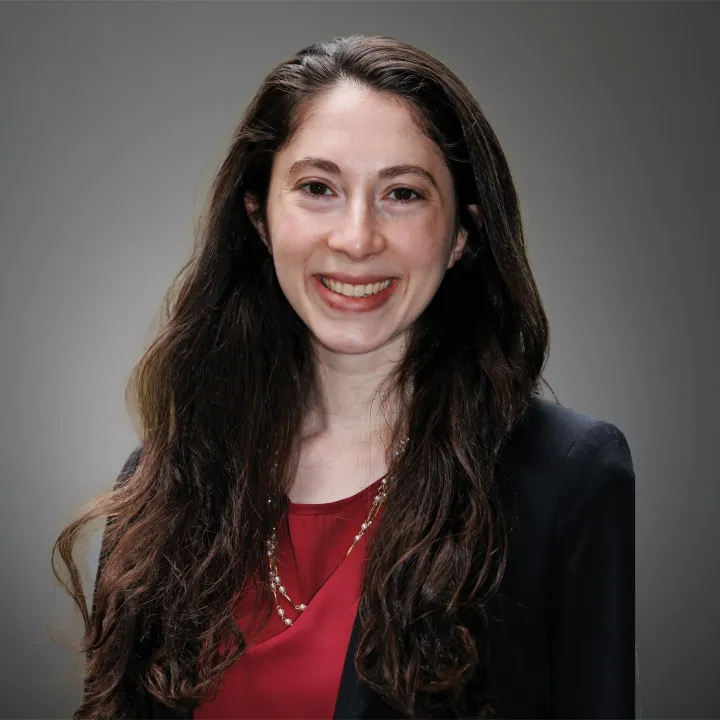
Lea R. Winterمشاهده پروفایل
استادیار
Lea R. Winter is an Assistant Professor in the Department of Chemical and Environmental Engineering at Yale University's School of Engineering & Applied Science. Her research focuses on electrified processes at the nexus of food, energy, water, and climate, with emphasis on sustainable CO 2 conversion, green nitrogen fixation, wastewater valorization, and plasma-electrochemical systems. She leads an active research group and mentors multiple PhD students, postdocs, and undergraduates. Ph.D., Columbia University B.S., Yale University Dr. Winter's research interests lie at the intersection of sustainability and chemical engineering. She pioneers electrified membrane technologies, plasma-activated reactions, and catalytic processes for converting waste streams (CO 2 , nitrates, wastewater) into valuable fuels, chemicals, and fertilizers. Her work integrates electrochemistry, plasma chemistry, and heterogeneous catalysis to develop distributed, circular solutions for environmental challenges. Key themes include green ammonia production , on-demand fertilizer synthesis , and electrified water treatment with resource recovery. Analysis of her recent publications reveals a strong focus on electrified membranes for nitrate and CO 2 conversion, plasma-activated co-processing of N 2 and C 1 gases, and single-atom catalysis for environmental applications. Her research spans fundamental reaction mechanisms to scalable engineering solutions, often published in high-impact journals such as Nature Water , PNAS , and Joule . The work demonstrates a consistent trajectory toward enabling a distributed hydrogen and nitrogen economy through sustainable electrochemical and plasma-driven technologies. Scientific Awards: Beckman Young Investigator Award (2024) Department of Energy Early Career Award (2024) Caltech Young Investigators Lecture Series Award (2022) NEWT Distinguished Postdoctoral Fellowship (2020) NSF Graduate Research Fellowship (2015) North American Catalysis Society Kokes Award (2019) Dr. Winter actively mentors students and has advised several who have gone on to PhD programs and faculty positions. Her lab receives significant research funding, as evidenced by her early-career awards from DOE and NSF. She leads projects on mining nontraditional water sources for hydrogen, plasma-based fertilizer synthesis, and electrified membrane systems. The Winter Lab fosters a collaborative, creative, and safe research environment centered on the principles of CRISP: Creativity, Respect, Investment, Safety, and Partnership. She also contributes to scientific discourse through invited viewpoints on climate education and critiques of emerging technologies like seawater electrolysis. Her lab collaborates widely, including with researchers at Columbia, Caltech, and international institutions.