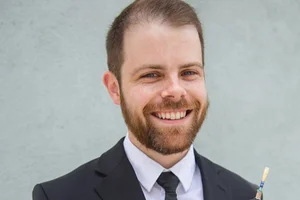
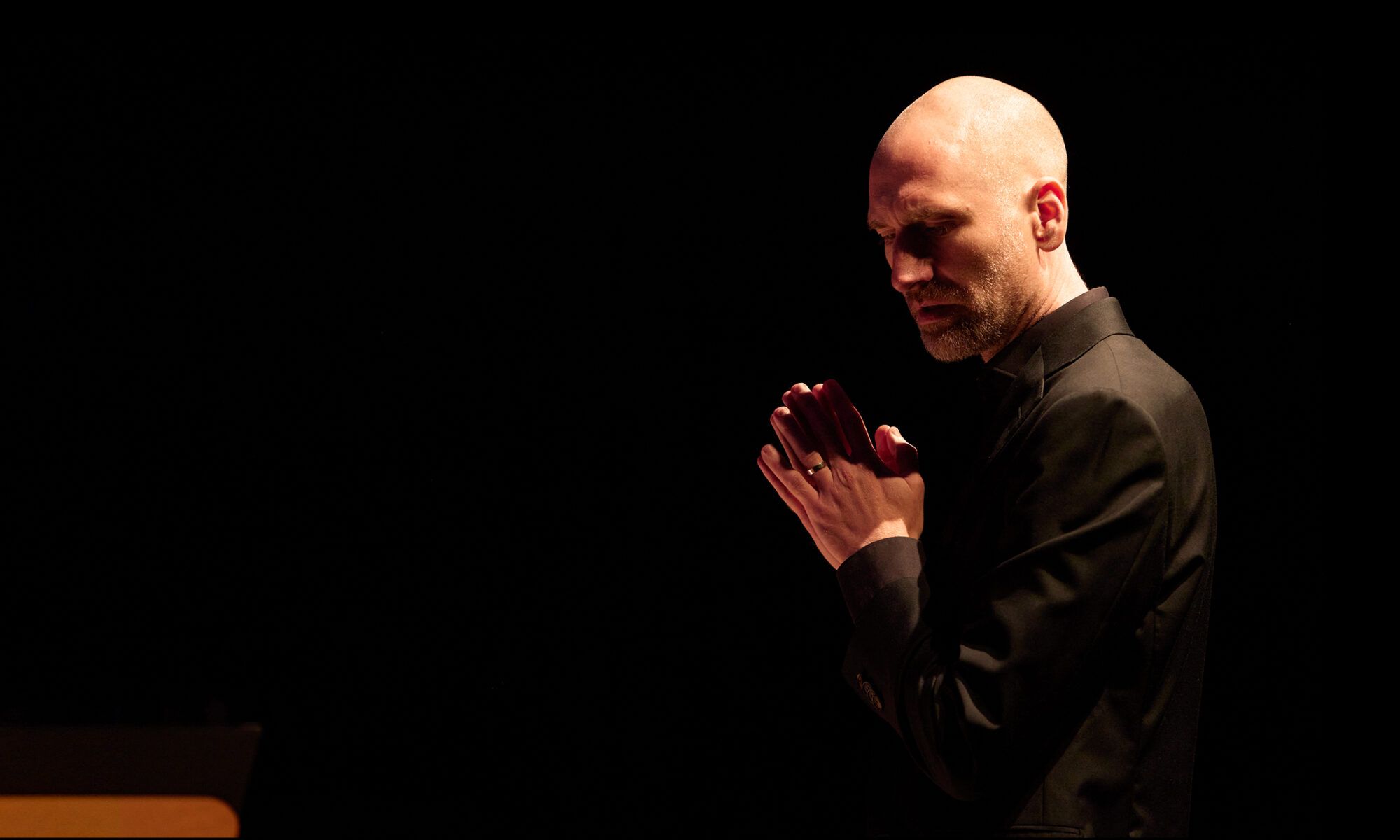
Dominic Thibault is an Assistant Professor at the Faculty of Music, Université de Montréal . His research-creation explores human-machine interaction in musical contexts, focusing on embodied cognition through electroacoustic compositions, audiovisual performances, and musical software development. Co-director, Laboratoire Formes·Ondes Active member, CIRMMT (Centre for Interdisciplinary Research in Music Media and Technology) Research axis leader, Expanded Musical Practice (CIRMMT) Member, Québecor Millénium entrepreneurship committee Scientific committee member, ACFAS
Professor Annie Mahtani is a Professor of Electroacoustic Composition and Practice at the University of Birmingham's Department of Music. She holds a BMus (Hons), MA, MPhil, and PhD from the University of Birmingham and Birmingham City University. Her work focuses on electroacoustic music, acousmatic composition, multichannel audio, spatialisation, and field recordings, with significant contributions to site-specific installations and cross-disciplinary collaborations. She co-directs the SOUNDkitchen collective and serves on key boards such as the British ElectroAcoustic Network (BEAN) and the British Section of ISCM. Her research explores the sonic identity of environmental sounds, large-scale multichannel composition, and ambisonic audio techniques. As a performer with BEAST (Birmingham Electroacoustic Sound Theatre), she develops live acousmatic performances and soundwalks. Recent projects include Becoming Tree (an immersive audio retelling of a literary work) and Minimum Monument , performed at Birmingham Hippodrome. She actively collaborates with dance and theatre companies like Rosie Kay Dance Company. Professor Mahtani teaches undergraduate and postgraduate modules in electroacoustic composition and is involved in admissions and curriculum leadership. Her works have been performed globally in festivals like Klang! Électroacoustique and Sound + Environment, showcasing her innovative contributions to contemporary music and sound art.
Prof. Nicola Jürgensen is a distinguished German clarinetist and Professor of Clarinet at Faculty 1 of Folkwang University of the Arts in Essen, Germany. She also serves as Dean of Faculty 1 and is a Confidential Lecturer for the German Academic Scholarship Foundation. Her career seamlessly integrates performance, education, and artistic leadership. She is the Artistic Director of WDR 3 Campus Concerts and a board member of the Folkwang University Foundation. Professor of Clarinet, Folkwang University of the Arts (2018–present) Dean, Faculty 1 Artistic Director, WDR 3 Campus Concerts Board of Directors, Folkwang University Foundation Principal Clarinet (former), WDR Symphony Orchestra Cologne (2001–2018) Regular coach, German National Youth Orchestra (2020–present) Nicola Jürgensen's research and artistic interests center on clarinet performance, chamber music, and contemporary repertoire. She is deeply committed to historical performance practice, evidenced by her recordings on basset clarinet, and to expanding the global reach of classical music through international masterclasses and festivals. Her work bridges traditional European repertoire and modern experimental works, including performances in avant-garde operatic productions. She has collaborated with leading orchestras and ensembles worldwide, from Berlin and Leipzig to New York, Bangkok, and Auckland. Her recent artistic output reveals a strong focus on rediscovered works (e.g., Wilms' concerto), contemporary compositions (e.g., Kancheli, Zwilich), and cross-cultural collaborations (e.g., German Masters Music Festival in Thailand). She emphasizes pedagogical innovation and performance excellence, mentoring students who now hold principal roles in Germany’s top orchestras. Her recordings and performances consistently highlight expressive depth, technical mastery, and scholarly engagement with historical instruments and arrangements. Scientific and Artistic Awards: Mozart Prize, Wiesbaden Mozart Society German Music Competition Soloists' Prize (1999) Germany Radio Promotion Prize (2002) Nicola Jürgensen has been instrumental in guiding numerous students into prestigious orchestral positions and leads the ensemble 'Folkwang Clarinets' with her students. She holds multiple leadership roles in academic and artistic institutions and continues to perform as a guest principal clarinetist with major orchestras like the Mahler Chamber Orchestra and NDR Elbphilharmonie Orchestra. Her involvement in grants and funding appears indirect through institutional roles and festival organization. She is actively involved with several artistic initiatives, including the 'Spannungen' festival, WDR 3 Campus Concerts, and international masterclass programs. Her ensemble collaborations and educational outreach reflect a sustained commitment to excellence, innovation, and accessibility in classical music.
Valeria Bruschi is a Researcher at the Department of Information Engineering (DII) within the Faculty of Engineering at Università Politecnica delle Marche (UNIVPM) in Ancona, Italy. Her academic profile was last updated on April 13, 2024, and she maintains her office at the Engineering Faculty on via Brecce Bianche, with contact information including phone +39 071-220-4486 and email v.bruschi@staff.univpm.it. Dr. Bruschi's research spans multiple domains within audio and signal processing, with particular expertise in spatial audio systems, automotive human-computer interaction, and biomedical signal applications. Her work bridges theoretical signal processing techniques with practical implementations across diverse fields including automotive safety systems, hearing aid technology, sleep medicine, and agricultural monitoring. She has made significant contributions to head-related transfer function (HRTF) processing, real-time audio enhancement algorithms, and innovative monitoring systems that utilize acoustic signals for various applications. Analysis of Dr. Bruschi's recent publications reveals a strong trajectory in developing practical audio processing solutions with real-world applications. Her work shows increasing integration of machine learning techniques with traditional signal processing approaches, particularly in areas like driver monitoring systems, snoring detection and cancellation, and spatial audio rendering. A notable trend is her focus on creating lightweight, real-time implementations suitable for embedded systems and practical deployment scenarios, while maintaining high performance standards. Her research consistently demonstrates interdisciplinary collaboration, connecting audio engineering with fields as diverse as automotive safety, sleep medicine, and agricultural technology. Dr. Bruschi actively contributes to advancing audio engineering through her research on equalization techniques, noise reduction systems, and immersive audio technologies. Her work on pulse compression techniques for hearing aid distortion measurement represents an important contribution to audiological assessment methodologies. Her publication record demonstrates consistent scholarly output with increasing impact across multiple application domains, reflecting her ability to translate theoretical signal processing concepts into practical engineering solutions.
Matthew Shlomowitz is Professor of Composition at the University of Southampton, actively engaged in contemporary music creation and scholarly work. His position places him at the forefront of innovative compositional practices, with collaborations spanning international ensembles and performers including Rubiks Collective, Ensemble Nikel, and major orchestras worldwide. Shlomowitz's research explores contemporary composition with particular focus on notions of artistic voice, music theatre including performance-lectures, neoclassicism, polytonality, and instrumental music with recorded sound. His work investigates technical approaches within music composition, historical textures, and forms that have fallen out of circulation within contemporary music making, seeking new potentialities for these techniques. His publications reveal a consistent exploration of polytonality across multiple volumes, theatrical works spanning monodramas to collaborative pieces, and scholarly examinations of artistic identity in contemporary music. The works demonstrate his interdisciplinary approach that bridges composition, performance art, and musicology, with particular emphasis on the relationship between historical techniques and contemporary practice. Scientific Awards: Johann-Joseph-Fux-Opernkomposition prize by Land Steiermark (2015) Professor Shlomowitz currently supervises multiple PhD students in Music at the University of Southampton, including James Douglas Howell, Linhao Li, Max Syed-Tollan, and Timothy Cape. He has taught on prestigious short courses internationally including Darmstadt Summer Courses (Germany), Impuls Academy (Austria), Time of Music (Finland), Tzlil Meudcan Summer Course (Israel), and Ensemble Offspring Hatched Academy (Australia). Beyond his academic work, he co-directs the new music group Plus Minus Ensemble and hosts the Soundmaking podcast, creating platforms for contemporary musical discourse and performance.
Dr. John Hails is a Senior Lecturer and Reader in Music at Edinburgh Napier University , where he teaches aesthetics, music psychology, composition, and ethnomusicology. He holds a PhD in Music from Durham University (2008) and has trained under notable composers like Brian Ferneyhough and Richard Barrett. His research focuses on experimental composition, marginal musical practices, and interdisciplinary aesthetics. Educations: Bachelor’s and Master’s training at Durham University and University of Huddersfield PhD by Portfolio of Compositions (Durham University, 2008) Research Interests: John’s work explores unorthodox intonations, fixed media installations, and the intersection of composition with philosophy and ethnomusicology. He actively presents at international conferences on topics like post-structuralist critiques in music education and communal performance practices. Notable Works: His compositions have been performed by ensembles like the London Sinfonietta and broadcast on BBC Radio 3. Key pieces include enlightenment (microtonal trumpet and media) and Nine for ones in nine , reflecting his experimental approach. Awards & Grants: While no explicit awards are listed, his research is funded by Edinburgh Napier University. He is a core member of the Applied Music Research Centre . Supervision & Grants: He has supervised over 15 postgraduate projects, including PhDs on topics like Musical Cultures of Melanesia and Dialogical Music Systems . His supervisory roles span composition, ethnomusicology, and interdisciplinary studies. Labs/Teams: Active in the Applied Music Research Centre , focusing on creative practice and experimental music dissemination.
Dr. Maria Witek is an Associate Professor at the Department of Music, University of Birmingham. Her research focuses on the psychology, cognitive neuroscience, and philosophy of musical experience, particularly rhythm, timing, emotion, and body-movement. She leads the Witek Lab, investigating how dance music experiences emerge from interactions between neural, social, and embodied processes. Notable projects include studying rhythmic skill in DJs (funded by AHRC) and ensemble synchronization in the ARME project (EPSRC-funded). She holds a DPhil from Oxford and previously worked at Aarhus University. Her methods span experimental psychology, neuroimaging, and participatory action research. Education: BA Musicology (Oslo, 2006), MA Music Psychology (Sheffield, 2008), DPhil Music (Oxford, 2013) Research interests include groove theory, disabled DJs' embodied timing, and the social dynamics of music-making. She collaborates with artists and tech companies like Drake Music and Native Instruments to develop inclusive musical tools. Articles focus on rhythmic entrainment, neurodiverse musical practices, and the neural basis of musical pleasure. Current grants include work on disability-inclusive DJ practices and virtual ensemble training systems.
Miguel Chuaqui is a Chilean-American composer and Professor at the University of Utah School of Music, where he serves as Chair of the Composition Area since 2009. Born in 1964 in Berkeley, California, and raised in Santiago, Chile, he holds a PhD in Composition from the University of California at Berkeley, with academic roots in both Mathematics and Music. Education: BA in Mathematics and Music (University of California-Berkeley, 1987), MA in Music (University of California-Berkeley, 1989), PhD in Music (University of California-Berkeley, 1994) Chuaqui's creative practice spans orchestral, chamber, vocal, and electroacoustic works, with performances across the U.S. and internationally by ensembles such as Speculum Musicae, Earplay, and the Society for Electro-Acoustic Music in the United States (SEAMUS). His research emphasizes collaborations in diverse areas, including interactive dance systems with Modern Dance and therapeutic musical applications with the School of Medicine. His compositions reflect an intersection of technology and traditional instruments, often incorporating live electronics and interactive elements. Recent compositions like La Búsqueda (2024), Inseparable (2024), and Encuentro Fugaz (2024) highlight his focus on chamber works and electroacoustic innovation. He has also demonstrated a sustained commitment to solo and ensemble works, integrating Latin American cultural motifs with contemporary techniques. Scientific and Musical Awards Award in Music from the American Academy of Arts and Letters Aaron Copland Recording Grant Eisner Prize Nicola de Lorenzo Award Society for Universal Sacred Music award Induction into the National Association of Composers of Chile President’s Award from SEAMUS (2008) 2024-2025 Big 12 Faculty Fellowship As an educator, Chuaqui has taught courses including Advanced Electronic Music Composition, Senior Composition, and PhD-level Composition at the University of Utah since 2024. He hosted the 2008 SEAMUS National Conference and serves as a NASM Visiting Evaluator, maintaining leadership roles in music education and composition pedagogy.
Aaron Cassidy is an American composer and conductor based in Berlin and Hannover. He serves as Professor of Composition and Director of Incontri – Institut für neue Musik at the Hochschule für Musik, Theater und Medien Hannover. His work emphasizes innovative graphical notations prioritizing physical sound production and non-geometrical rhythm theory. Cassidy’s compositions have been performed globally across 29 countries, with 12 commercial recordings on major labels like Kairos and NEOS. As a conductor, he specializes in contemporary and historical repertoire, leading over 100 world premieres with ensembles such as Ensemble Musikfabrik and ELISION. Notable engagements include the Munich Biennale and Melbourne Recital Centre. His recent research includes a 2025 reflection on non-geometrical rhythm and collaborative Erasmus+ residencies in Klagenfurt. Current projects include works for bassoon, violin-piano duet, and ANAM residency with ELISION in Melbourne (2025). Cassidy’s academic focus bridges compositional theory and performance practice. His research explores notation’s role in shaping musical interpretation, with particular attention to rhythm’s non-metric frameworks. Recent works like Reassessing Non-Geometrical Rhythm (2025) synthesize a decade of theoretical development. His teaching integrates experimental techniques and historical context, fostering innovation in Hannover’s new music institute.
Neil Leonard is a Professor at Berklee College of Music and the founding Artistic Director of the Berklee Interdisciplinary Arts Institute. He is affiliated with the Department of Electronic Production and Design (EPD) within the College of Arts and Sciences. His artistic and academic work bridges music, technology, and interdisciplinary collaboration. Ph.D. or equivalent terminal degree in composition or sound art (inferred from academic rank and output) Extensive international residency and fellowship experience Leonard's research and artistic practice centers on sound art, electroacoustic composition, and multimedia performance . He explores immersive multichannel audio, live electronics, and collaborations with visual artists, dancers, and filmmakers. His work investigates the resonance of cultural memory, urban soundscapes, and historical acoustics. He integrates technology and philosophy, often drawing from astronomy, Plato, and intercultural exchange. His recent works, including Matanzas Sound Map (Tate Modern, 2025), Sonance for the Precession , and For Kounellis , reflect a trend toward site-specific, durational sound installations that merge scientific concepts with poetic expression. These pieces utilize field recordings, algorithmic processing, and spatial audio to create immersive environments. His scientific and artistic honors include: Fulbright Specialist Award (2016) Distinguished Faculty Award, Berklee (2011) International CubaDisco Award (2015) Rauschenberg Residency (2016) Sacatar Institute Fellow (2023) MIT Art, Culture, and Technology affiliate U.S. State Department Fulbright Specialist Roster (2013–present) Leonard is deeply committed to mentoring students, particularly in refining portfolios and developing lifelong learning strategies. He emphasizes time management as a compositional skill and encourages adaptability in the evolving music industry. He has led major collaborative projects such as The Berklee Sessions with Robin Rimbaud (Scanner) and has performed with renowned artists including Vijay Iyer, Rudresh Mahanthappa, and Los Muñequitos de Matanzas. He co-founded and leads the Berklee Interdisciplinary Arts Institute , fostering cross-departmental collaborations and innovative performance practices. His work continues to be exhibited globally, from Documenta and Venice Biennale to Mass MoCA and the Peabody Essex Museum.
Gaute Barlindhaug serves as an Assistant Professor in the Department of Language and Culture at UiT The Arctic University of Norway, within the Faculty of Humanities, Social Sciences and Teacher Education. His academic work bridges artistic practice with scholarly research in sonic arts and cultural documentation. His research interests span Sonic Arts , Sound Studies , Music Technology , and Digital Humanities , with particular focus on the ontological status of sound recordings, the intersection of traditional and digital sound technologies, and the preservation of cultural heritage through both artistic and technological approaches. His work often examines how sonic mediations transform aesthetic experiences and cultural expressions. Analysis of his publications reveals a consistent trajectory exploring the relationship between technology and sonic expression, with recent work incorporating artificial intelligence applications in document preservation. His research demonstrates an interdisciplinary approach that combines artistic practice with scholarly inquiry, particularly evident in his contributions to the Journal for Artistic Research. Barlindhaug is actively involved in multiple research initiatives: Engaging Conflicts in a Digital Era (ENCODE) Worlding Northern Art LAMCOM – Libraries, archives, and museums in the community His scholarly output includes both traditional academic publications and creative works, reflecting his position at the intersection of artistic practice and academic research. His contact information is available through the university directory at gaute.barlindhaug@uit.no.
Dr Yumi Hara Cawkwell is a Senior Lecturer at the Department of Music, Writing & Performance in School of Arts and Creative Industries at University of East London. As a composer, improviser, and performer, she works across piano, harp, voice, and clavichord. Specializes in avant-garde/experimental rock and RIO (Rock in Opposition) movements Known for collaborations with notable musicians from Soft Machine, Henry Cow, Gong, and faUSt Active in both contemporary classical and experimental rock scenes Research Interests: Her work focuses on musical improvisation, composition, and performance with particular emphasis on: Complex rhythmic structures and polymeter applications Cultural identity in diaspora musical practices Hybridization of ethnic and western instruments Memory and transcription in avant-garde contexts Recent Outputs: 2023 album Groove Study explores odd meter applications in dance music, while 2017 conference presentation on Lindsay Cooper's compositions highlights her interest in feminist musicology. Awards & Professional Involvement: 2006 British Composer Awards finalist Committee member, Ivors Composer Awards (British Composer Awards) Board member, JASMIM (Japanese Association for the Study of Musical Improvisation) 2015-2017 Panel chair, Improvisation research at international conferences Teaching: Leads modules in music performance, production techniques, and collaborative projects at University of East London.
Paul Théberge is a Professor at Carleton University, cross-appointed to the Institute for Comparative Studies in Literature, Art and Culture and the School for Studies in Art and Culture (Music). He teaches graduate courses in Cultural Mediations (technologies of culture), Film Studies (sound in visual media), and Music (sound studies), reflecting his interdisciplinary academic home within Ottawa's major research institution. His research interrogates the material and cultural dimensions of sound technologies, with core expertise in music-technology-culture intersections, internet-mediated musical practices, and sonic applications in film/television. Théberge's scholarship bridges musicology, media studies, and science and technology studies, examining how recording technologies reshape creative practice and auditory experience across historical periods from analog tape to digital streaming platforms. Analysis of his 15 most recent publications reveals persistent engagement with sound's materiality—from multichannel audio histories to the embodied nature of listening—and consistent exploration of technological transitions, particularly the internet's disruption of traditional music production/distribution models. His work demonstrates deep methodological versatility spanning archival research, ethnographic observation, and creative composition. Scientific recognition includes: International Association for the Study of Popular Music (US branch, 1998) Society for Ethnomusicology (2000) While the source text doesn't specify current advising activities, his extensive editorial work (e.g., co-editing Living Stereo ) and composition output suggest significant mentorship through collaborative projects. His research has been supported through Canada Research Chair funding and industry partnerships like Sony Classical International.
Dr Ambrose Seddon is a Principal Academic in Music and Audio Technology at Bournemouth University, specializing in electroacoustic and electronic music. He holds a BMus (Hons) from Goldsmiths College, University of London, an MA in Electroacoustic Composition, and a PhD in Music (electroacoustic composition), both from City, University of London. His research focuses on electroacoustic composition, multichannel and ambisonic techniques, form in electroacoustic music, and music analysis. Notable awards include the 1st Prize at the Klang! and Visiones Sonoras competitions, and the European Region Composition Prize at ICMC 2007. He has residences at Elektronmusikstudion (EMS) and Visby International Centre for Composers (VICC). Dr Seddon teaches composition, studio recording, and creative music technology, supervising PhD students in related fields. His work spans sound installations, live electronics with the ensemble NonRecursive, and performances at venues worldwide. Academic roles include external examiner for BSc Music and Sound Technology at the University of Portsmouth and leadership in the Creative Sonic Practice Research Group.
Jeff Lupker serves as an Assistant Professor at Western University's Don Wright Faculty of Music, specializing in the intersection of artificial intelligence and musical creativity. His work develops computational tools that augment human composition through deep learning algorithms and interactive systems, positioning him at the forefront of AI-driven music innovation. Lupker completed his entire academic training at Western University: PhD in Composition (2021) Master of Music in Composition (2016) Bachelor of Music in Theory and Composition (2014) His research program focuses on artificial intelligence applications for musical creation, including deep learning models for algorithmic composition, sentiment analysis of social media as compositional input, and mobile-based spatial audio systems. Lupker investigates how transformer architectures generate musical structures and how real-time web applications enable collaborative performance, emphasizing practical tools that combat writer's block while expanding composers' stylistic range through AI-assisted creativity in electroacoustic and popular music contexts. Analysis of his 2021 publications reveals a cohesive research trajectory leveraging cutting-edge AI methodologies to solve creative challenges in music. The works demonstrate how deep learning transforms composition through systems like Score-Transformer and explore mood-pattern recognition using machine learning, collectively establishing foundational work for human-AI creative collaboration that bridges music theory with big data analytics. As founder of Staccato, Lupker leads the development of an AI co-writing platform that functions as an intelligent creative partner. The system generates lyrical content from keywords and suggests musical continuations, helping composers overcome creative blocks while expanding artistic possibilities across diverse genres through accessible, user-friendly interfaces.