
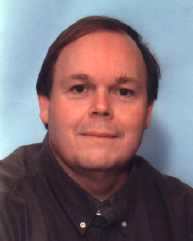
Mark F. Bocko is a Professor of Electrical and Computer Engineering and Physics at the University of Rochester, serving as Chair of the Department of Computer and Electrical Engineering since 2004. He holds a BA from Colgate University and advanced degrees (MS/PhD) in Physics from the University of Rochester. His research spans superconducting digital electronics, quantum computing, music signal processing, and smart sensor systems. Notable awards include the Excellence in Undergraduate Teaching Award (1991, 2002) and Professor of the Year (2002). His research groups focus on high-frequency digital signal processing using Josephson junctions, quantum coherence in superconducting circuits, and applications in music technology such as internet-based real-time musical collaboration. Collaborations include work with the Eastman School of Music and local industries on sensor networks and wireless technologies. Key contributions include developing GHz-rate analog-to-digital converters, quantum bit control systems, and music encoding algorithms. His NSF-funded projects explore internet2 applications for musical interaction and physical modeling in music systems.
جستجوی استاد راهنمای دانشگاهی
برای مسیر پژوهشیتان، استاد راهنما، استاد دانشگاه و پژوهشگر مناسب را پیدا کنید و با آنها ارتباط بگیرید.
نمایش ۷۳۶-۷۵۰ از ۸٬۷۷۶ استاد راهنما
اطلاعات پروفایلها از صفحات عمومی دانشگاهها گرفته شده و ممکن است بهروز نباشد.
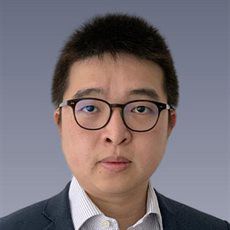
Zhongbei Tianمشاهده پروفایل
استادیار
- Transport Energy System Decarbonisation
- Transport Energy System Modelling and Analysis
- Railway Traction Power Supply Systems
- +۳ مورد دیگر
Dr Zhongbei Tian is an Assistant Professor in Transport Energy Systems at the University of Birmingham's School of Engineering, within the Department of Electronic, Electrical and Systems Engineering. His research focuses on decarbonising transport energy systems, including railway, road, and ship energy systems, with emphasis on energy-efficient train control and sustainable integration of energy systems. He has led projects funded by EPSRC, Royal Society, Horizon 2020, Network Rail, RSSB, and Innovate UK. His work has been implemented globally, including in the UK (Network Rail, Edinburgh Tram), Spain (Madrid Metro), Singapore (SMRT), and China (Beijing and Guangzhou Metro). Awards: 2016 ERESS Award for Best Energy Efficiency Project for Railways. His research spans energy system optimisation and sustainable integration, with over 60 high-impact publications. He collaborates internationally, addressing challenges in decarbonisation across diverse transport sectors. Advising and grants include leadership on major funded initiatives, reflecting his role in advancing transport energy innovation. He leads research groups focused on decarbonisation strategies and energy-efficient systems.
/hjmoen/j.png)
- Autonomous Systems
- Sensor Technologies
- Robotics
- +۳ مورد دیگر
Hans Jonas Fossum Moen is an Associate Professor with a 20% appointment at the Department of Technology Systems, University of Oslo (UiO), and holds a 100% position as a researcher at the Norwegian Defence Research Establishment (FFI). His primary affiliation is with the Section for Autonomous Systems and Sensor Technologies. He is based at the Kjeller campus, with a visiting address at Gunnar Randers Road 19 and a postal address at Postboks 70. His research focuses on advancing autonomous systems and sensor technologies, particularly in the domains of swarm robotics, multi-agent coordination, and optimization algorithms. Key areas include UAV navigation, distributed localization in IoT networks, radar detection enhancement, and adaptive control systems for multi-functional swarms. He emphasizes the integration of biological principles into robotic systems, as evidenced by his participation in the ICRA 2018 Workshop on Swarms. His publications consistently highlight contributions to swarm intelligence, with a focus on improving data quality and efficiency in robotics applications. He has collaborated extensively with colleagues such as Kyrre Glette, Oleg Yakimenko, and Jan Dyre Bjerknes, exploring topics ranging from task allocation in multi-agent systems to evolutionary algorithms for filter optimization. His work bridges theoretical computer science with practical engineering challenges in autonomous systems. No scientific awards have been explicitly mentioned in the provided texts. Moen’s advising and grants narrative indicates no listed advisees or active grant projects, though his 20% UiO position suggests potential involvement in academic supervision. His primary research activities are embedded within FFI and the Autonomous Systems section at UiO, contributing to interdisciplinary efforts in sensor technologies and robotic systems.
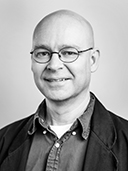
Martin Norgren is a Professor at KTH Royal Institute of Technology, leading the Department of Electromagnetic Fusion Physics. His research focuses on electromagnetic inverse problems, including material characterization, biomedical imaging (e.g., brain current sources), environmental monitoring (e.g., snow and avalanche prediction), and smart grid technologies. He specializes in reconstructing object properties using electromagnetic measurements and has contributed to applications in healthcare, energy systems, and environmental science. His work involves advanced analytical and numerical methods such as mode-matching techniques, perturbation theory, and convex optimization. Notable projects include noncontact current measurement in power grids and transformer diagnostics using microwave radiation. Norgren teaches courses in electromagnetic field theory and electrical engineering design, emphasizing practical applications and interdisciplinary collaboration. Recent research trends highlight advancements in glide/twist symmetry-based metamaterial design, waveguide analysis, and inverse scattering techniques. His studies bridge fundamental physics with applied engineering, addressing challenges in energy infrastructure and medical diagnostics. As a department head, he oversees educational and research programs at KTH, fostering innovation in electromagnetism and fusion physics. His contributions to curriculum development include project-based courses integrating theory and hands-on design.
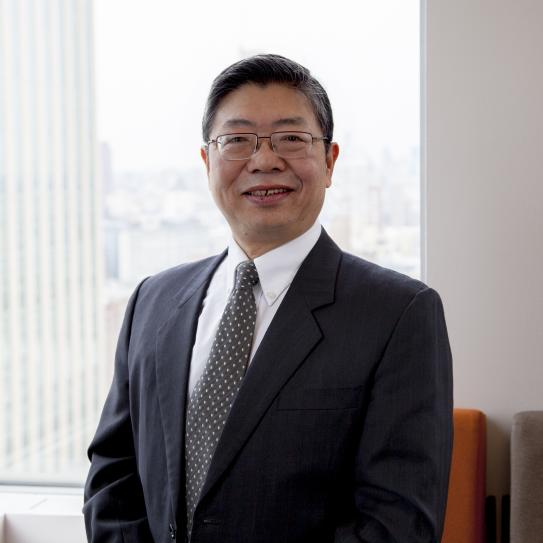
H. Jonathan Chao is a Professor in the Department of Electrical and Computer Engineering at New York University (NYU Tandon School of Engineering). He is the Director of the High-Speed Networking Lab, leading a team of 6 PhD students and 10 Master’s students. His research focuses on software-defined networking, network function virtualization, datacenter networks, and high-speed packet processing. Chao has held significant roles, including Head of the ECE Department (2004–2014) and former CTO of Coree Networks. He has authored over 200 publications and holds 58 patents. His awards include IEEE Fellow and National Academy of Inventors (NAI) Fellow. Education: B.S. and M.S. from National Chiao Tung University (Taiwan), Ph.D. from Ohio State University. Research Highlights Developing solutions for data center networks, network security, and quality of service control. Pioneering work in programmable packet schedulers, reinforcement learning for traffic engineering, and SDN security frameworks like SDNShield. Contributions to hybrid SDN networks, bufferless switch architectures, and energy-efficient data center designs. Awards Fellow of National Academy of Inventors (NAI) Fellow of IEEE Telcordia Excellence Award (1987) IEEE Best Paper Award (2001) IEEE New Jersey Coast Section Speaker of the Year (2003) Advisees & Labs Supervises 6 PhD and 10 Master’s students in the High-Speed Networking Lab. Collaborates with the Center for Advanced Technology in Telecommunications (CATT) to advance telecom innovations. Labs & Teams Directs the High-Speed Networking Lab, focusing on cutting-edge networking solutions, and contributes to CATT’s mission of technology transfer and entrepreneurship.
Parinaz Naghizadehمشاهده پروفایل
استادیار
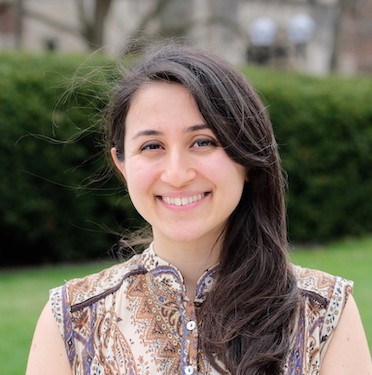
Parinaz Naghizadeh is an Assistant Professor in the Department of Electrical and Computer Engineering at the University of California San Diego (UCSD), affiliated with the Design Lab. She holds a PhD from the University of Michigan and has prior roles at Ohio State University and postdoctoral positions at Purdue and Princeton. Her research focuses on network economics, game theory, AI ethics, optimization, and cybersecurity. She received the NSF CAREER Award (2022), Rising Stars in EECS (2017), and Barbour Scholarship (2014). Education: PhD in Electrical Engineering (University of Michigan), M.Sc. in Mathematics and Electrical Engineering (University of Michigan), B.Sc. in Electrical Engineering (Sharif University of Technology, Iran). Research Interests: She develops mathematical models to analyze decision-making in complex networks, with emphasis on AI ethics, multi-agent systems, and cybersecurity. Recent work explores biases in AI, strategic classification, and incentive mechanisms for security investments. Article Trends: Her recent publications (2023-2025) address strategic classification challenges, multiplex network equilibria, federated learning fairness, and robust control in cyber-physical systems. Themes include ethical AI, game-theoretic security design, and optimization under uncertainty. Awards: NSF CAREER Award (2022), Rising Stars in EECS (2017), Barbour Scholarship (2014) Advising & Grants: No student advisees listed, but active in securing research grants (e.g., NSF CAREER). Works with interdisciplinary teams in UCSD's Design Lab. Labs/Teams: Affiliated with UCSD's Design Lab, focusing on innovative engineering solutions for societal challenges.

Michael Daniele is an Associate Professor at North Carolina State University, jointly appointed in the Department of Electrical & Computer Engineering and the Joint Department of Biomedical Engineering . His research focuses on bioelectronics engineering, particularly in developing microsystems for monitoring, mimicking, and augmenting biological functions. He leads the @BiointerfaceLab , exploring wearable/implantable biosensors, microphysiological systems, and process analytical technologies for biomanufacturing. Education : Ph.D. in Materials Science & Engineering (Clemson University, 2012) Bachelor's in Materials Science & Engineering (Rutgers University, 2009) Research Highlights : Developing "injury-on-a-chip" models for coagulation studies Pioneering hydrogel microneedles for diagnostic devices Advancing light-controlled peptide ligands for protein purification Collaborating with Novartis on viral vector manufacturing Award Recognition : 2024 William F. Lane Outstanding Teaching Award 2019 NSF CAREER Award 2022 University Faculty Scholar Grants & Initiatives : Co-leader of the NC-Viral Vector Initiative (2023–present) NSF-funded projects in biosensor integration and biomanufacturing His work bridges engineering and medicine, with applications in gene therapy, wearable diagnostics, and precision agriculture.
Alan Kin-tak Lauمشاهده پروفایل
استاد مدعو
Prof. Alan Kin-tak Lau is an Adjunct Professor in the Department of Mechanical Engineering & Product Design at Swinburne University of Technology. He previously served as Pro Vice-Chancellor (International and Digital Research), overseeing global research collaborations and digital innovation. His expertise spans advanced materials, manufacturing, and product design, with a focus on aerospace applications, energy storage, and sustainable technologies. Lau holds adjunct roles at Chonbuk National University and is a Fellow of multiple prestigious institutions, including the European Academy of Sciences and the Royal Aeronautical Society. Affiliations: Swinburne University of Technology Roles: Adjunct Professor, Former Pro Vice-Chancellor Research interests include nanomaterials for energy storage (e.g., supercapacitors, hydrogen systems), composite materials for aerospace, and eco-friendly manufacturing. He leads interdisciplinary projects like the Aerostructures Innovation Research Hub and the Research Centre for New Energy Transition. Lau has secured over AUD 100M in grants and supervised numerous PhD projects on topics like graphene composites and additive manufacturing. Notable awards include the VEBLEO Best Scientist Award (2020), UGC Teaching Excellence Award (2013), and the Young Engineer of the Year Award (2004). He chairs international conferences and serves on boards of companies like King’s Flair International. His work bridges academia and industry, with patents and commercial applications in sustainable materials and EV technologies.
Shoufeng Lanمشاهده پروفایل
استادیار
- Nanophotonics
- Quantum Photonics
- Metamaterials
- +۳ مورد دیگر
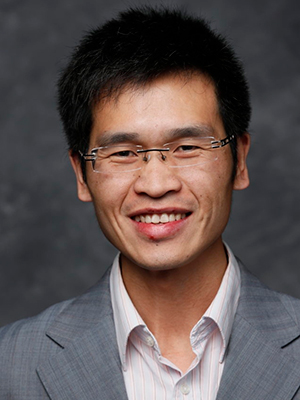
Dr. Shoufeng Lan is an Assistant Professor in the Department of Mechanical Engineering at Texas A&M University's College of Engineering, with affiliated appointments in Electrical & Computer Engineering and Materials Science & Engineering. His research focuses on advanced nanophotonics, exploring light-matter interactions across disciplines including quantum photonics, metamaterials, and 2D materials. Educational background includes a Ph.D. in Electrical and Computer Engineering with a Physics minor from Georgia Institute of Technology (2017), M.S. in ECE/Physics from University of New Mexico (2012), and dual B.S./B.E. degrees from Nankai University/Tianjin University (2007). Research interests span: Light-assisted control, sensing and manufacturing mechanics Plasmonic/metamaterial development Nonlinear/quantum/topological photonics Photon-induced chemical and biomedical synthesis His publications demonstrate consistent innovation in nanophotonics with recent focus on optical metamaterials, exciton control, and machine learning applications in photonics. Award highlights include the 2022 IAC Undergraduate Teaching Award and 2018 Sigma Xi Best Thesis Award. Current doctoral students include Yixin Chen and Sam Lin. Funded research includes NSF-supported work on Optical Hybrid Materials and DARPA-supported semiconductor manufacturing initiatives. Leads the Lán Laboratory (Lab for Advanced Nanophotonics) focusing on photon-matter interactions for energy and information technology applications.

Nagham Saeedمشاهده پروفایل
دانشیار
- Electrical and Electronic Engineering
- Industrial Internet of Things (IIoT)
- Artificial Intelligence in Engineering
- +۹ مورد دیگر
Dr. Nagham Saeed is an Associate Professor in Electrical and Electronic Engineering at the School of Computing and Engineering, University of West London, where she has been actively engaged in teaching and research since 2007. She holds a PhD in Intelligent MANET Optimisation from Brunel University and leads the Industrial Internet of Things (IIoT) research group. Her academic service includes editorial and technical committee roles for IEEE and MDPI, and she is a Chartered Engineer (CEng), Senior Member of IEEE, Member of IET, and Senior Fellow of the Higher Education Academy (HEA). PhD in Intelligent MANET Optimisation System, Brunel University (2011) Her research focuses on intelligent systems for smart cities, applying artificial intelligence to telecommunications, energy modeling, and industrial applications. She explores AI-driven optimization in next-generation networks, smart grid integration, battery management systems, and sustainable ICT. Her work also extends to engineering education, particularly feedforward teaching methods and student engagement. The recent publications reveal a strong trend in applying AI and machine learning to solve real-world challenges in energy systems, IoT, transportation, and environmental sustainability, often with a focus on smart cities and renewable integration. Dr. Saeed has been recognized with several awards, including: 2021 University of West London Student Union Best Supervisor/Tutor Award 2022 IEEE Region 8 Outstanding Women in Engineering Section Volunteer Award She mentors early-career engineers and academics and actively promotes electrical and electronic engineering among young girls. She has served as the 2023 IEEE Women in Engineering UK & Ireland Chair and is currently the Vice Chair (Chair-Elect) for the IEEE UK & Ireland Section (2024–2025). Her leadership spans technical innovation, academic service, and diversity advocacy in engineering. She teaches across a range of programs, including MSc Industrial Internet of Things, BEng and MSc Electrical and Electronic Engineering, and supervises PhD research in related fields.
- Control Theory
- Network Systems
- Distributed Control
- +۵ مورد دیگر
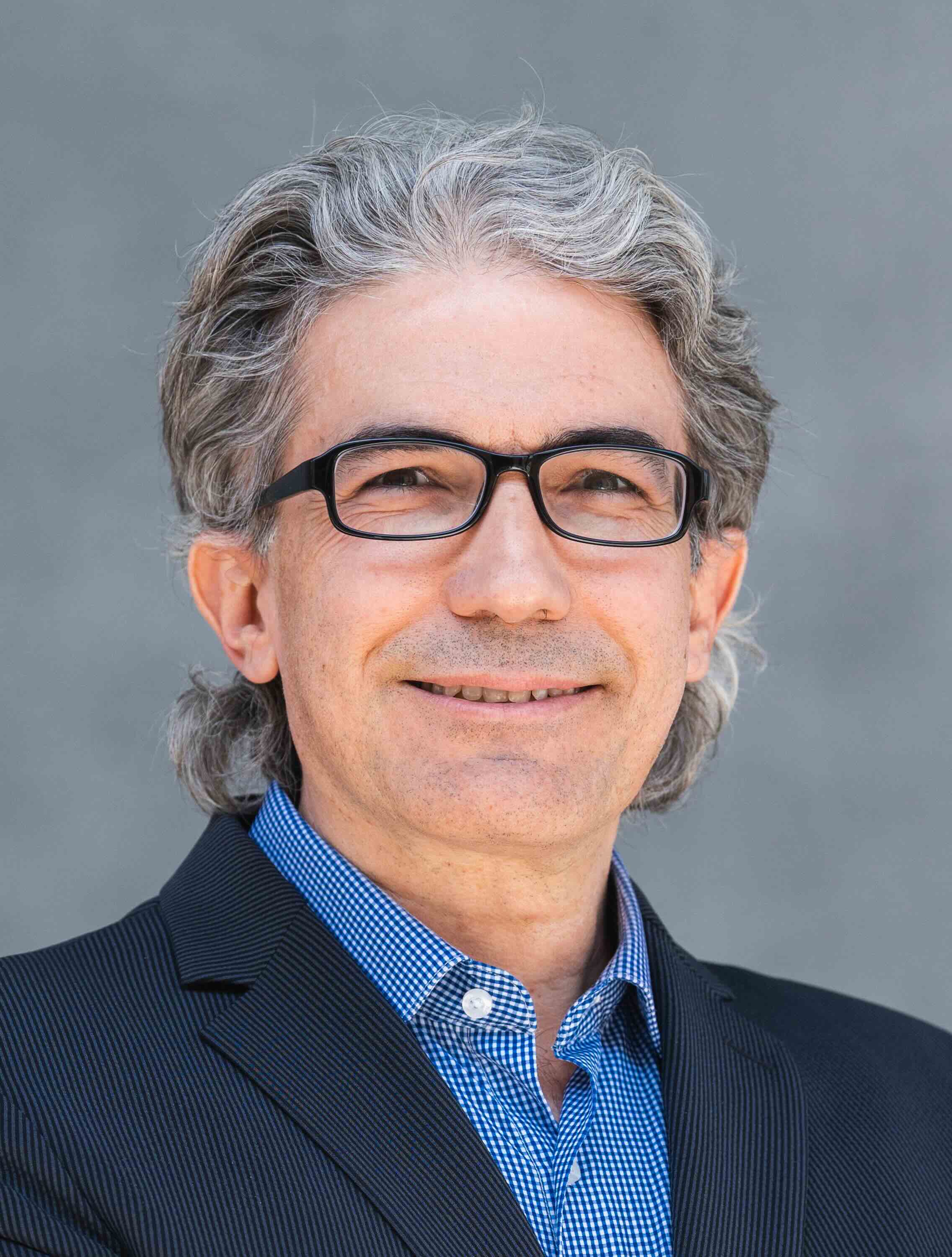
Francesco Bullo is a Distinguished Professor of Mechanical Engineering at the University of California, Santa Barbara (UCSB), affiliated with the College of Engineering. He holds joint appointments in Electrical and Computer Engineering, Computer Science, and the Center for Control, Dynamical Systems, and Computation. His research focuses on distributed control, network systems, and neural networks, with notable contributions to contraction theory and social dynamics analysis. Education: Laurea (1994, University of Padova), PhD (1998, Caltech). Leadership roles: Former IEEE CSS President, SIAG CST Chair. Research interests include biological/artificial neural networks, distributed control of robotic networks, and synchronization in power grids. He authored books like Lectures on Network Systems and Contraction Theory for Dynamical Systems . His work spans 300+ publications, including impactful articles on Hopfield networks, power grid stability, and optimization. Awards include IEEE Fellow, ASME Fellow, and SIAM Fellow. Advising and grants: Mentored over 30 PhD students and led major projects like the NSF MURI on team behavior modeling. Current research includes neural synchronization and AI-driven control. Labs/teams: Directs the UCSB Center for Control, Dynamical Systems, and Computation, and collaborates on interdisciplinary initiatives like the Network Science for Medicine white paper.
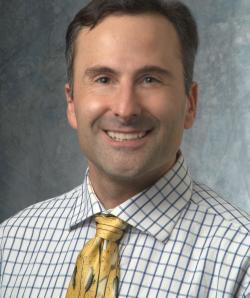
Vincenzo Liberatore is an Associate Professor in the Department of Computer and Data Sciences at Case Western Reserve University’s Case School of Engineering, and currently serves as Associate Chair. His research focuses on smart grid technologies, real-time network control, distributed systems, and randomized algorithms. He holds a PhD and MS in Computer Science from Rutgers University (1998 and 1994), and a BS in Electrical Engineering from Sapienza University of Rome (1992). Dr. Liberatore developed the Energy Information Dashboard (EIDA) with FirstEnergy, an educational tool modeling electricity markets and grid dynamics. He has contributed to patents like the 2014 'High-Performance Streaming Dictionary.' His work spans publications in control systems, theoretical computer science, and energy grid communication. He has served on program committees for the Workshop on Factory Communication Systems (WFCS) and International Conference on Mobile Data Management (MDM). Teaching responsibilities include courses in computer science and engineering, reflecting his expertise in both academia and industry-relevant research.

Wiebke Meesenburgمشاهده پروفایل
استادیار
Wiebke Meesenburg is an Assistant Professor in the Department of Civil and Mechanical Engineering at the Technical University of Denmark (DTU), specializing in Thermal Energy. She is actively involved in research on large-scale heat pump systems, district heating integration, and digital twin applications for energy optimization. Her research focuses on sustainable thermal energy systems, particularly the design, monitoring, and optimization of heat pumps in district heating networks. Key areas include dynamic modeling, real-time adaptation, fouling mitigation, and the integration of renewable energy sources. She contributes to advancing energy efficiency and sustainability in urban infrastructure. The recent publications highlight a strong trend toward digitalization and optimization of thermal systems, with an emphasis on model-based monitoring, digital twins, and operation scheduling using advanced algorithms. Her work bridges mechanical engineering, energy systems, and computational modeling to improve system performance and reliability. She has supervised PhD research and contributed to major projects such as the implementation of digital twins for heat pump systems and EnergyLab Nordhavn. Collaborations involve key figures in energy research at DTU, including Professor Brian Elmegaard. While no formal awards are listed, her active participation in conferences and project leadership demonstrates recognition in her field. Wiebke Meesenburg has been involved in organizing and presenting at international events, including the 35th International Conference on Efficiency, Cost, Optimization, Simulation and Environmental Impact of Energy Systems and workshops on Modelica and flexible heat supply. Her work is embedded in interdisciplinary teams focused on future energy infrastructures and smart urban energy systems.
Bruce Stephenمشاهده پروفایل
مدرس ارشد
- Data-Driven Methods
- Power Systems
- Smart Grids
- +۱۲ مورد دیگر
Bruce Stephen is a Senior Lecturer and Strathclyde Chancellor's Fellow in the Department of Electronic and Electrical Engineering at the University of Strathclyde, where he has been since 1999. His work lies at the intersection of data science and power systems engineering, with a strong focus on real-world industrial applications. His educational background includes a BSc in Aeronautical Engineering from the University of Glasgow (1997), an MSc from the University of Strathclyde (1998), and a PhD in Electronic and Electrical Engineering (2005) from the University of Strathclyde. Dr. Stephen's research centers on data-driven methodologies for solving complex engineering challenges in power systems, particularly under conditions of limited data or domain knowledge. His applications span the entire energy value chain—from generation (nuclear, wind, solar) to transmission, distribution, and end-use. He develops software solutions for condition assessment, anomaly detection, and predictive modeling to support asset management and future grid planning. Notably, he co-founded Silent Herdsman Ltd, a spin-out company applying intelligent systems to precision livestock farming. His recent publications highlight a strong trend toward advanced machine learning techniques such as transfer learning, surrogate modeling, and synthetic data generation (e.g., using CTGANs) to improve reliability and decision-making in power systems. These works emphasize explainability, uncertainty quantification, and scalability, particularly in renewable-rich and data-scarce environments. Dr. Stephen is currently the Principal Investigator on the EPSRC-funded Analytical Middleware for Informed Distribution Networks (AMIDiNe) project, aiming to identify barriers to Net Zero through improved data modeling of unmonitored networks. He has also contributed to major projects including EU FP7 ORIGIN, EPSRC APAtSCHE, AGILE, and Transactive Energy Supply Arrangements. He actively advises students and collaborates on interdisciplinary research. His professional activities include organizing the QFF Quarterly Forecasting Forum (2018) and delivering invited talks at industry workshops. He has supervised datasets and research involving structural health monitoring and industrial diagnostics. His work supports UN Sustainable Development Goals related to affordable and clean energy, industry innovation, and climate action.
Prof. Dr. Matthias Krauledat is a faculty member at Hochschule Rhein-Waal , specifically within the Faculty of Technology and Bionics . His academic career spans both theoretical research and industrial application, with a focus on Machine Learning and Brain-Computer Interfaces . After completing his PhD in Electrical Engineering/Computer Science at Technische Universität Berlin , he has contributed significantly to the advancement of EEG-based communication systems and neural signal processing methodologies. Born in Essen, Germany Studied Mathematics with a minor in Computer Science at University of Münster/Oxford Doctoral research at TU Berlin on Brain-Computer Interfaces Industrial experience at Henkel AG & DMT GmbH Research Interests focus on Machine Learning applications in Neuroscience and Biomedical Engineering , specifically Brain-Computer Interfaces , EEG Signal Processing , and Adaptive Classification Systems . His work explores how algorithms can be developed to enable self-learning computers to solve complex tasks involving neural data interpretation and prediction for previously unseen data in clinical and technological contexts. Publications demonstrate a consistent contribution to Neuroscience and Machine Learning fields, with particular emphasis on Brain-Computer Interface systems from 2004 through 2009. His research has focused on reducing training requirements, improving signal processing accuracy, and developing novel interaction paradigms like the Hex-o-Spell mental typewriter while addressing statistical challenges like covariate shift in neural data analysis. Professional Experience includes academic research at TU Berlin's Intelligent Data Analysis group, industrial software development roles at Henkel AG's Scientific Computing department, and TÜV Nord Group's Optical Metrology and Machine Diagnostics divisions. He maintains active research connections through collaborative publications with leading experts in the field.
نمایش نتایج تا ۷۵۰ مورد اول. برای یافتن نتایج دقیقتر، جستجوی خود را با فیلترها محدود کنید.