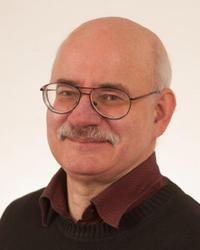
Professor Jacek Pielecha is a distinguished academic at Poznań University of Technology, holding a position at the Faculty of Civil Engineering and Transport within the Institute of Propulsion and Aviation. With over two decades of research experience, he has established himself as a leading expert in vehicle emissions testing and environmental impact assessment of transportation systems. His work bridges theoretical research with practical applications, contributing significantly to emissions measurement standards and environmental policy in Poland and internationally. Professor Pielecha's research interests focus on real-world vehicle emissions measurement, particularly through Portable Emission Measurement Systems (PEMS), analysis of pollutant emissions from various transportation modes, and the environmental impact of transportation infrastructure. His work spans passenger vehicles, hybrid and electric vehicles, rail transport, and even aviation systems, with special attention to particulate matter emissions, effects of vehicle aging on emissions performance, and comparative analysis of different propulsion technologies under actual traffic conditions. His extensive publication record demonstrates consistent scholarly output, with numerous high-impact articles in international journals and conference proceedings. Professor Pielecha has supervised multiple doctoral students whose research has contributed to understanding emissions from alternative fuel vehicles, nanoparticle analysis, and infrastructure impacts on vehicle emissions. His work has practical applications in emissions regulation, vehicle testing protocols, and sustainable transportation planning. As a supervisor, Professor Pielecha offers students opportunities to engage with cutting-edge emissions measurement technologies, participate in real-world testing campaigns, and contribute to addressing critical environmental challenges in transportation. His research group provides access to advanced testing equipment and computational resources for data analysis, with potential for collaboration with industry partners and international research teams.
Dr. Ciprian Zavoianu is an academic researcher at Robert Gordon University (RGU) in the School of Computing, Engineering & Technology. He leads the Net Zero Operations research programme at the National Subsea Centre and is affiliated with the Complex Optimisation Research Group. His work focuses on applying artificial intelligence, particularly evolutionary computation algorithms, to solve complex real-world optimization problems with practical engineering applications. Dr. Zavoianu earned his academic qualifications from West University of Timisoara, Romania (BSc and MSc in Computer Science) and Johannes Kepler University Linz, Austria (PhD in Computer Science, 2015). His doctoral research focused on enhancing multi-objective evolutionary algorithms for computationally-intensive optimization problems. His primary research interests include: Evolutionary Computation Multi-Objective Optimization Data Mining & Machine Learning (particularly for surrogate modeling) Timetabling and Rostering Parallel/Distributed Computing Dr. Zavoianu's recent publications (2021-2025) demonstrate a strong focus on applying optimization techniques to transportation systems, electrical machine design, and sustainable energy solutions. His work consistently addresses the challenge of computationally expensive optimization through innovative surrogate modeling approaches, enabling practical applications of evolutionary algorithms to real-world engineering problems. He has secured multiple research grants including 'Data For Net Zero' and 'Ferry Passenger and Freight Modelling for Shetland,' demonstrating the practical relevance and industry applicability of his research. Dr. Zavoianu actively supervises five PhD/EngD students across diverse topics including predictive analytics for subsea installations, optimization of electrical machines, and operations optimization for harbor operations. His supervision approach emphasizes bridging theoretical algorithm development with practical implementation in engineering contexts. His laboratory work is centered around the National Subsea Centre, where he leads the Net Zero Operations research programme, focusing on sustainable solutions for the energy transition through advanced computational methods.
María Dolores Gil Montoya is a Professor in the Computer Science Department at the University of Almería (UAL), Spain, with a distinguished interdisciplinary research profile spanning computer science, mindfulness applications, and energy systems. Her academic career demonstrates a unique integration of technical expertise with psychological and philosophical perspectives. Her research interests focus on three interconnected domains: Mindfulness Research : Exploring applications in education and sports performance, with particular attention to bridging Eastern and Western philosophical traditions Educational Technology : Developing and implementing cooperative learning methodologies, active learning tools, and ICT integration in higher education Energy Systems : Contributing to research on power quality, electric vehicle infrastructure, and renewable energy integration Dr. Gil Montoya's publication record shows consistent scholarly output across these domains, with her most recent work focusing on the integration of mindfulness practices with educational technology. Her research demonstrates a distinctive approach that combines technical rigor with human-centered perspectives, particularly evident in her work on cooperative learning enhanced by mindfulness principles. She has successfully secured multiple research grants from Spanish government agencies, with projects ranging from high-performance computing applications to drone navigation systems. As a member of the 'Ciencia, consciencia y desarrollo' research group, she contributes to interdisciplinary work that connects technological development with consciousness studies. Her collaborations extend internationally, including work with the University of San Carlos Guatemala's Faculty of Engineering. Dr. Gil Montoya maintains an active research profile with an h-index of 13 in both Scopus and Web of Science, reflecting the impact of her interdisciplinary contributions across computer science, education, and energy research fields.
Prof. Dr. Alfred Höß is a Professor of Electrical Engineering at the Amberg-Weiden University of Applied Sciences, where he has served since 1995. He chairs the examination committee for multiple engineering programs including Electrical and Information Technology, Software Systems Technology, and Industrial IT. His academic leadership extends through over a decade of service on the university senate and various planning committees. Dr. Höß completed his electrical engineering studies at Friedrich-Alexander-Universität Erlangen-Nürnberg (1983-1987), earning his diploma with distinction in 1988. He earned his PhD from Ruhr-Universität Bochum in 1991 with distinction, followed by industry experience at Siemens AG in both medical and automotive divisions before joining academia. Friedrich-Alexander-Universität Erlangen-Nürnberg: Electrical Engineering (1983-1987) Ruhr-Universität Bochum: PhD in High-Frequency Technology (1988-1991) His research spans cutting-edge automotive technologies with particular focus on autonomous driving systems, electric mobility solutions, and wireless communication architectures. Dr. Höß leads multiple EU-funded research projects including Archimedes, AI4CSM, AUTBUS, and Powerized, with emphasis on practical implementations for real-world transportation challenges. His work integrates artificial intelligence with edge computing to solve complex problems in vehicle communication, battery management, and autonomous navigation systems. His publication portfolio demonstrates strong emphasis on practical applications of machine learning in automotive contexts, particularly in range prediction for electric vehicles, federated learning for battery management, and communication systems for autonomous vehicles operating in challenging environments. His research shows consistent progression from fundamental electrical engineering principles to advanced AI integration in transportation systems. Dr. Höß has received notable academic recognition including the Diplompreis Elektrotechnik in 1988 and the Gebrüder-Eickhoff-Preis in 1992 for his doctoral work. Diplompreis Elektrotechnik (1988) Gebrüder-Eickhoff-Preis (1992) He actively mentors numerous graduate students across multiple research projects, supervising master's theses and research assistantships. His laboratory for electrical measurement technology serves as the foundation for hands-on student research. Dr. Höß secures substantial research funding through EU projects and industry collaborations, focusing on practical implementations of advanced automotive technologies. His administrative leadership includes chairing examination committees for multiple engineering programs, demonstrating his commitment to academic excellence and curriculum development. Dr. Höß directs the Electrical Measurement Technology Laboratory at Amberg-Weiden UAS, which serves as the primary research facility for his automotive electronics work. His research teams collaborate across multiple EU-funded projects including ADACORSA for drone communications, PRYSTINE for programmable automotive intelligence systems, and AUTBUS for rural autonomous transportation solutions. These interdisciplinary teams combine expertise in electrical engineering, computer science, and applied mathematics to tackle complex challenges in modern mobility systems.
Professor Roberto Palacin is a faculty member at Newcastle University specializing in transport engineering. His research spans rail systems, sustainable transport, maritime logistics, and data-driven infrastructure optimization, with consistent publication output from 2022 to 2025. His primary research interests focus on decarbonizing transport networks through innovative engineering solutions. Key areas include rail performance analysis using tools like Time Signal at Red (TSAR), electric vehicle charging infrastructure optimization, maritime emissions reduction, and air quality policy interventions. He employs interdisciplinary approaches combining simulation modeling, machine learning, and multi-objective optimization to address complex transport challenges. Analysis of his 14 publications (2022-2025) reveals a strong emphasis on practical applications for sustainable mobility. Recurring themes include the integration of data analytics in rail operations, development of resilient maritime logistics frameworks, and cross-sectoral collaboration for safety and emissions reduction. His work consistently targets real-world implementation of decarbonization strategies across transport modes.
Dr. Jacek Brdulak is a Professor at the Warsaw School of Economics (SGH) in the Department of Economic Geography, based in Building S, Room 2.08 at Batorego 8, Warsaw. He holds a PhD and a Doctor of Science (DSc) degree, reflecting his senior academic standing. His research spans economic geography, transport infrastructure, regional development, and sustainable economics. Key themes include: Impact of infrastructure on regional productivity and growth Transport economics and logistics (e.g., Ukrainian grain corridors) War economics and geopolitical stability Social enterprises and sustainable business models Urban mobility and electric vehicle transitions His recent publications (2022-2025) focus on crisis economics (e.g., war impacts in Ukraine), sustainable development frameworks, transport infrastructure optimization, and social enterprise legislation. This reflects a consistent emphasis on applied economic geography and policy-relevant infrastructure studies. No awards, grants, students, or lab affiliations are documented in available sources.
Jesus Gonzalez Feliu is a Professor of Supply Chain Management at Excelia Business School in La Rochelle, France. He holds a PhD in Computer and Systems Engineering from the Politecnico di Torino (Italy) and an Habilitation à Diriger des Recherches from the University of Paris Est. His academic journey includes positions as Research Engineer at CNRS, Assistant Professor at Ecole des Mines de Saint-Etienne, and current Professor at Excelia Business School since 2020. Habilitation à diriger des recherches, Université Paris Est, France (2016) Doctorat en Génie informatique et des systèmes, Politecnico di Torino, Italie (2008) Master en Transport et mobilité durable, Politecnico di Torino, Italie (2004) Professor Gonzalez Feliu specializes in sustainable urban logistics, demand modeling and forecasting, transport optimization, sustainable food logistics, humanitarian logistics and resilience, and group decision-making processes. His research often focuses on data production and demand estimation, interactive problem solving, and scenario evaluation in logistics contexts. He has made significant contributions to understanding urban freight systems, particularly in developing sustainable solutions for cities in both developed and developing countries. His extensive publication record includes over 75 peer-reviewed journal articles, 2 monographs, and guest editorship of more than 10 special journal issues. His most recent work demonstrates a continued focus on spatial accessibility in logistics warehouses, urban goods transport demand estimation, and sustainable supply chain solutions, with particular attention to applications in developing countries and humanitarian contexts. Chair of Urban Logistics Lab Scientific Committee, Deakin University, Melbourne (2019-2023) Member, Urban Mobility Observatory, Universidad del Pacifico, Lima (2020-present) Professor Gonzalez Feliu has supervised numerous research projects and collaborations across Europe, Latin America, and Australia. His work bridges theoretical modeling with practical applications, particularly in developing decision support systems for urban logistics planning and management. His international perspective is reflected in his research on logistics systems in diverse contexts, from European cities to developing economies in Latin America.
Juan Manuel Corchado Rodríguez is a Full Professor with Chair at the University of Salamanca, Spain, where he has held numerous leadership positions including Vice President for Research and Technology Transfer (2013-2017), Director of the Science Park, Director of the Doctoral School, and Dean of the Faculty of Science (elected twice). He belongs to the Department of Computer Science and Automation and leads the BISITE Research Group focused on Bioinformatics, Intelligent Computing Systems and Educational Technology. His educational background includes a PhD in Computer Sciences from the University of Salamanca (1998) with thesis titled "Multi-agent systems based on hybrid artificial intelligence algorithms for real-time predictions and complex series" supervised by Dr. José Rafael García-Bermejo Giner, and a second PhD in Artificial Intelligence from the University of the West of Scotland. Corchado's research spans multiple cutting-edge domains in computer science, with primary focus on multi-agent systems, artificial intelligence, and ambient intelligence. His work integrates these technologies to solve real-world problems in smart cities, healthcare monitoring, energy management, and accessibility. He has pioneered approaches that combine wireless sensor networks with intelligent agents to create context-aware systems that can adapt to user needs and environmental conditions. His research particularly emphasizes practical implementations that bridge theoretical advances with tangible applications. Analysis of his recent publications reveals a consistent trajectory toward increasingly integrated intelligent systems. His work has evolved from foundational multi-agent architectures like PANGEA to sophisticated applications in smart territories, energy management, and healthcare. A notable trend is the convergence of multiple AI techniques (neural networks, case-based reasoning, organizational models) within single frameworks. His research increasingly addresses societal challenges through technological solutions, particularly in sustainable urban development and assistive technologies for vulnerable populations. Corchado directs the BISITE Research Group (Bioinformatics, Intelligent Computing Systems and Educational Technology), which operates within multiple university institutes including the University Research Institute in Animation Art and Technology, the University Institute for Science and Technology Studies, and the Biomedical Research Institute of Salamanca. His team develops practical applications of AI and multi-agent systems across various domains, with particular emphasis on creating technologies that improve quality of life and operational efficiency.
Dr. Alfonso González Briones is an Associate Professor in the Department of Computer Science and Automation at the University of Salamanca, where he conducts cutting-edge research in intelligent systems and their applications. He is a prominent member of the BISITE Research Group and has also worked with the GRASIA Research Group at Complutense University of Madrid as a 'Juan De La Cierva' postdoc. His academic journey at the University of Salamanca includes a Bachelor of Technical Engineering in Computer Engineering (2012), a Bachelor's Degree in Computer Engineering (2013), a Master's Degree in Intelligent Systems (2014), and a PhD in Computer Engineering (2018). His research focuses on Ubiquitous Computing and Ambient Intelligence for developing smarter, more energy-efficient cities that improve social welfare and promote sustainable development. His work spans Multiple Agent Systems (MAS), energy optimization, smart cities infrastructure, Industry 4.0 applications, and machine learning techniques for various domains including social networks, transportation, and agricultural systems. Dr. González Briones has published extensively with over 30 journal articles and 60 conference proceedings publications, demonstrating consistent productivity across multiple domains of computer science and artificial intelligence. His research trends show a clear progression from foundational work in multi-agent systems toward increasingly sophisticated applications in smart cities, energy management, and Industry 4.0 contexts, with a growing emphasis on practical implementations that address real-world challenges. 2nd place in 1st SENSORS+CIRTI Award for best national thesis in Smart Cities (CAEPIA 2018) Juan de la Cierva State Program Grant in ICT - Information and Communication Technologies (2018) Member of scientific committees for Advances in Distributed Computing and Artificial Intelligence Journal (ADCAIJ) and British Journal of Applied Science and Technology (BJAST) Reviewer for prestigious journals including Supercomputing Journal, Journal of King Saud University, Energies, Sensors, Electronics, and Applied Sciences As an active researcher, Dr. González Briones has participated in 10 international research projects and served on technical committees for prestigious international conferences including AIPES, HAIS, FODERTICS, PAAMS, and KDIR. His work bridges academic research with practical industry applications, particularly in energy optimization systems, IoT, and Machine Learning solutions for real-world problems. He has also collaborated with private research centers including Virtual Power Solutions in Portugal and AIR Institute, where he worked as Project Manager in Industry 4.0 and IoT projects. His research infrastructure includes work with the BISITE Research Group, where he develops and implements multi-agent architectures for optimizing energy consumption and other complex systems. His laboratory work spans smart home energy management, intelligent transportation systems, semantic analysis for Industry 4.0, and social network analysis applications.
Kijung Shin is an Associate Professor at KAIST (Korea Advanced Institute of Science and Technology), holding dual appointments in the Kim Jaechul Graduate School of AI and the School of Electrical Engineering (Computer Division). He leads the Data Mining Lab and teaches multiple courses including Graph Mining and Social Network Analysis, Data Mining and Search, and other foundational courses in electrical engineering and AI. Education Ph.D. in Computer Science, Carnegie Mellon University (February 2019) M.S. in Computer Science, Carnegie Mellon University (December 2017) B.S. in Computer Science and Engineering, Seoul National University (August 2015) B.A. in Economics (Double Major), Seoul National University (August 2015) Research Interests Professor Shin's research primarily focuses on data mining, graph algorithms, and network science, with particular expertise in hypergraph analysis, tensor decomposition, and graph neural networks. His work bridges theoretical foundations with practical applications, developing algorithms that can efficiently analyze complex real-world networks. His recent research has expanded into multimodal learning, integration of large language models with graph neural networks, and applications in recommendation systems, satellite imagery analysis, and biological data analysis. His approach combines rigorous mathematical analysis with practical implementation, resulting in numerous open-source software tools that have been widely adopted in both academia and industry. His research has significant implications for social network analysis, fraud detection, recommendation systems, and scientific discovery in various domains. Research Trends Professor Shin's recent publications show a clear trajectory toward more complex network structures, particularly hypergraphs that capture higher-order interactions beyond simple pairwise relationships. His work increasingly integrates traditional graph algorithms with deep learning approaches, especially focusing on how graph neural networks can be improved and made more interpretable. There's also a growing emphasis on practical applications in areas like satellite imagery analysis, medical data, and recommendation systems that address real-world challenges. Scientific Awards Received the PAKDD Best Survey Paper Award for 'Multi-Behavior Recommender Systems: A Survey' (2025) Selected as one of the best short paper candidates of ACM RecSys 2024 (top 7) for 'Revisiting LightGCN' (2024) Selected for oral presentation (2.6% of accepted papers) at AAAI 2024 for 'VITA: 'Carefully Chosen and Weighted Less' Is Better in Medication Recommendation' (2024) Received the IEEE ICDM Best Student Paper Runner-up Award for 'TensorCodec: Compact Lossy Compression of Tensors without Strong Data Assumptions' (2023) Received the SIGKDD Best Research Paper Award and CogX Award for Best Student Paper in AI for 'FRAUDAR: Bounding Graph Fraud in the Face of Camouflage' (2016) Received the Best Senior Thesis Award from Seoul National University (2015) Received the Samsung Humantech Paper Award (1st in Computer Science) (2015) Teaching and Mentoring Professor Shin has taught multiple graduate and undergraduate courses at KAIST since 2019, including Graph Mining and Social Network Analysis, Data Mining and Search, and foundational courses in electrical engineering. He has also co-organized tutorials at major conferences including AAAI, KDD, ICDM, and CIKM on advanced topics in hypergraph neural networks and real-world hypergraph analysis. As the leader of the Data Mining Lab, he mentors numerous graduate students and postdoctoral researchers, fostering a collaborative research environment that has produced significant contributions to the field of data mining and network analysis. Research Leadership Professor Shin leads the Data Mining Lab at KAIST, which focuses on developing novel algorithms for analyzing complex networks and high-dimensional data. The lab has produced numerous influential software tools including D-Cube, M-Zoom, CoreScope, and DenseAlert, which are widely used in both academic research and industry applications. His research group maintains active collaborations with institutions worldwide and has received funding from various sources to support their innovative work in data mining and network analysis.
Tuleen Boutaleb serves as Professor and Vice-Dean at the SSE School of Glasgow Caledonian University, United Kingdom, with her research significantly contributing to UN Sustainable Development Goals through sensor network applications. Her work bridges theoretical algorithm development and practical implementations in critical infrastructure systems. Her research program focuses on wireless sensor network optimization, specializing in underwater/mobile variants, energy-efficient protocols, and security mechanisms. Key contributions include novel node deployment algorithms that address non-uniform illumination challenges and routing protocols for flood monitoring systems. Recent work extends to privacy-preserving chaos-based security for 5G-connected autonomous vehicles, demonstrating cross-domain applicability from environmental monitoring to transportation safety. Analysis of her publication trends (2010-2025) reveals consistent output in sensor network theory with accelerating practical applications since 2017, particularly in flood warning systems and vehicular security. The research combines simulation studies with hardware implementations like LoRa technology, showing strong industry relevance through EPSRC-funded projects. Professor Boutaleb secured significant research funding including the British Council's BCWSTEM scholarship program for women in STEM and an EPSRC grant for LoRa-based flood early warning systems. She actively supervises research students and engages in public outreach through the SmartSTEMs initiative, demonstrating commitment to both academic advancement and community impact.