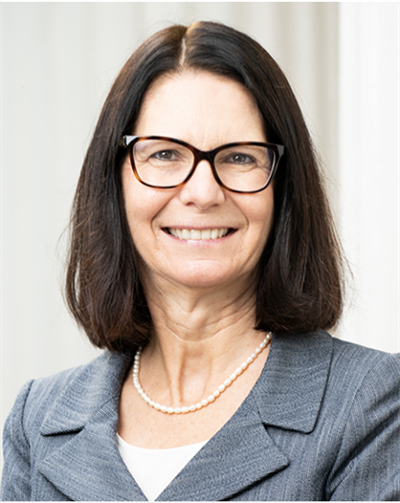
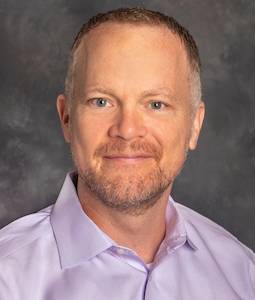
James Gimpel serves as a Professor at the Department of Government and Politics, University of Maryland, where his research focuses on political behavior, elections, and geographic influences on politics. He holds a PhD from the University of Chicago. His research explores: Political Behavior : Voter mobilization, donor psychology, and ideological polarization. Campaigns & Elections : Grassroots strategies, digital outreach, and funding dynamics. Political Geography : Urban-rural divides, migration effects, and redistricting impacts. Redistricting : Legal challenges and spatial equity in representation. Recent publications (2020–2025) analyze electoral trends through geographic and behavioral lenses. Key themes include campaign personalization via social media, the role of small donors in Texas elections, migration-driven political realignment, and the litigation landscape of redistricting. Articles employ survey data, spatial modeling, and case studies to dissect voter decision-making in evolving contexts like post-Dobbs policy shifts.
Claire Harnett is an Associate Professor at the School of Earth Sciences, University College Dublin (UCD), where she leads the Geohazards Research Group and serves as the primary supervisor to four PhD students. She is also involved in setting up a rock mechanics laboratory at UCD, focusing on volcanic rocks and civil engineering applications. Her roles include teaching across Earth Sciences and Civil Engineering programs, particularly contributing to the MSc in Subsurface Characterisation and Geomodelling. Beyond UCD, she is the elected Early Career Representative for the Volcanic and Magmatic Studies Group (VMSG) committee and a Technical Editor for the journal Volcanica . Dr. Harnett holds a BSc from the University of Portsmouth, a PhD from the University of Leeds, and a Professional Diploma in University Teaching & Learning from UCD. Her research emphasizes numerical modeling of volcanic environments, specifically investigating dynamic stability in lava domes, calderas, and hydrothermally altered systems. Key interests include extrusion dynamics, collapse mechanisms, and the interplay between mechanical properties and volcanic hazards. She has secured over €2.8 million in research grants, including leadership of the €10 million European Research Council Synergy Grant (ROTTnROCK), which explores hydrothermal alteration's role in volcano instability. Other grants focus on magma-induced deformation, geomechanical property scaling, and geothermal energy potential in volcanic systems. Recent work combines remote sensing, rock physics, and computational modeling with international teams at GFZ Berlin, EOST Strasbourg, and Uppsala University. Her awards include the UCD Excellence in Teaching & Learning Award (2022), the Bob Hunter Memorial Prize for Best Student Talk (2018), and the Itasca Educational Partnership (2015–2019). She actively contributes to professional activities as a peer reviewer for Journal of Volcanology and Geothermal Research and Scientific Reports .
Christian Kirches is a full professor at the Institute for Mathematical Optimization within the Carl-Friedrich-Gauß-Fakultät (Faculty of Mathematics, Technische Universität Braunschweig). His research focuses on nonlinear optimization , mixed-integer optimal control , and robust optimization for dynamic systems. He was awarded the Klaus-Tschira prize (2011) for public science communication and the Hengstberger prize (2014) for junior researchers, and received an ERC Consolidator Grant (2022) for his work on optimization under uncertainty. Alumni of Heidelberg University (Diploma, Doctorate, Habilitation) Former resident associate at Argonne National Laboratory and postdoctoral appointee at the University of Chicago Leader of a junior research group (2013–2017) at Heidelberg University His recent publications highlight advancements in mixed-integer nonlinear programming , real-time control systems , and optimization for sustainable energy and transportation . He collaborates with researchers on projects like wind farm control, hydrogen aviation networks, and chromatography process optimization. His methodological work on sum-up rounding , trust-region algorithms , and combinatorial integral approximation has been published in journals such as SIAM Journal on Optimization, Mathematical Programming, and IEEE Control Systems Letters. Kirches also serves as area coordinator for Optimization Online and was associate editor for OR Spectrum (2022–2024). Scientific Awards: Klaus-Tschira Prize (2011) Hengstberger Prize (2014) ERC Consolidator Grant (2022) He is an elected member of the COIN-OR initiative and contributes to open-source optimization software. His lab at TU Braunschweig develops algorithms for dynamic systems under uncertainty, with applications in energy management, autonomous traffic, and industrial processes.
Isuru Dassanayake is an Assistant Professor in the Department of Statistics at George Mason University (Fairfax campus), located in the College of Engineering and Computing. He holds a PhD and MS in Statistics from Texas Tech University and a BS in Statistics from the University of Peradeniya, Sri Lanka. His research focuses on advanced statistical methodologies, including Machine Learning, Bayesian approaches, and high-dimensional data analysis, with applications to social and economic prediction (e.g., U.S. election stability modeling using neural networks and visualization tools like Tableau). He also specializes in spatial data analysis and heteroscedastic mixed effects models. Prior to GMU, he taught as a part-time instructor at Texas Tech University and as a Lecturer at the University of Peradeniya. Currently, he teaches STAT344 (Probability & Statistics for Engineers/Scientists) and STAT515 (Applied Statistics & Visualization for Analytics).
Ryan Whitby is a Professor of Finance in the Department of Economics and Finance at the Jon M. Huntsman School of Business, Utah State University. He earned his Ph.D. in Finance from the University of Utah and previously served as an Assistant Professor at Texas Tech University. His broad research spans finance, real estate, and economics, with notable work in behavioral finance, market microstructure, and cryptocurrency. Whitby teaches courses including Real Estate Finance, Investments, and Advanced Econometrics. He advises the Real Estate Club and oversees the Partners Real Estate Fund (PREF), a student-managed investment initiative. His research demonstrates strong interdisciplinary trends, integrating behavioral psychology with financial market analysis and exploring cross-cultural economic phenomena.
Xiping Wang is a Researcher at the USDA Forest Service's Forest Products Laboratory , specializing in nondestructive evaluation of wood materials. Their work focuses on structural condition assessment, tree decay detection, and heat sterilization technologies. Research Trends : Wang's publications emphasize acoustic evaluation methods for standing trees and logs, integrating temperature effects with field investigations. They develop sorting models to enhance log segregation and wood utilization efficiency, bridging engineering principles with forestry applications. Scientific Awards : Elected Fellow, International Academy of Wood Science (2015) Markwardt Award (2014) for wood engineering research George G. Marra Award (2014) for wood/fiber science contributions Innovations Award, University of Minnesota (2011) Outstanding Service Award, University of Minnesota Duluth (2007-08)
Kirsti Loughran is a Research Fellow at Teesside University's School of Health and Life Sciences (SHLS), within the Allied Health Professions Centre for Rehabilitation. She holds a PhD in Physiotherapy from Teesside University (2022), an MClinRes in Older People from Newcastle University (2016), and a Bachelor's in Physiotherapy from the University of East London (2003). Her research focuses on chronic respiratory conditions like COPD, emphasizing balance impairment, falls prevention, and patient engagement strategies. She is actively involved in prehabilitation studies for cardiac surgery patients and innovative digital interventions for chronic breathlessness management. **Education**: PhD: An investigation of pain's impact on falls risk in COPD patients (Teesside University, 2022) MClinRes: Older People (Newcastle University, 2016) Bachelor of Physiotherapy (University of East London, 2003) **Research Interests**: Chronic respiratory disease, balance and gait disorders, prehabilitation protocols, patient and public involvement in research, and digital health solutions for chronic conditions. Her work bridges clinical practice and population health, addressing gaps in COPD management and surgical preparation. **Grants & Projects**: Co-Investigator on a Boehringer Ingelheim-funded project developing a digital COPD self-management tool (2021–2022). Lead researcher on the PrEPS Trial, evaluating prehabilitation for cardiac surgery patients. Collaborates internationally on COPD-related studies. **Labs/Teams**: Part of the Allied Health Professions Centre for Rehabilitation at Teesside University, focusing on translational research in respiratory and cardiac health.
Anders Stockmarr is an Associate Professor at the Department of Applied Mathematics and Computer Science, Technical University of Denmark (DTU), specializing in Statistics and Data Analysis. His research focuses on applying advanced computational methods to solve complex problems in public health, environmental science, and epidemiology. Key areas include chronic disease progression modeling, multimorbidity analysis, and machine learning applications in seagrass monitoring and healthcare systems optimization. He has supervised numerous PhD students and led projects addressing topics such as patient-centered care models for multimorbid patients and low-carbon dietary optimization. Stockmarr’s academic contributions span over 150 publications, with recent work emphasizing register-based studies on disease trajectories and sustainable food systems. He collaborates extensively with institutions on interdisciplinary projects, including seagrass coverage estimation using machine learning and nationwide analyses of chronic heart disease dynamics. His activities include peer reviewing, academic supervision, and public engagement through media contributions on topics like traffic accident risk and human longevity records. Notable research highlights include developing the amVAE model for age-aware multimorbidity clustering and pioneering seagrass detection techniques from underwater videos. His work bridges statistical methodology with real-world applications, addressing global challenges such as climate change mitigation and healthcare system efficiency.
Nadine Aubry is Professor and Senior Advisor to the Dean of Engineering at Tufts University School of Engineering, Department of Mechanical Engineering. An internationally recognized scholar, she previously served as Provost and Senior Vice President at Tufts (2019-2021), Dean of Engineering at Northeastern University (2012-2019), and Department Head at Carnegie Mellon University. Her leadership spans multiple institutions with global impact. Education: Ph.D. in Mechanical and Aerospace Engineering, Cornell University (1987) M.S. in Mechanical Engineering, Université Scientifique et Médicale de Grenoble B.S., Grenoble - Institut National Polytechnique Research Focus: Dr. Aubry pioneers computational approaches in fluid dynamics, specializing in turbulence modeling, microfluidics, and electrohydrodynamics. Her work integrates dynamical systems theory with nanoparticle manipulation and biofluid applications. Recent research emphasizes machine learning-enhanced methods for flow prediction, convective heat transfer optimization, and aerodynamic design using physics-informed neural networks. Publication Trends: Recent articles demonstrate strong emphasis on machine learning applications in fluid mechanics and thermal systems. Dominant themes include physics-informed neural networks for flow prediction, deep reinforcement learning for active flow control, convolutional networks for aerodynamic optimization, and hybrid AI methods for multiphysics problems across aerospace, electronics cooling, and biomedical domains. Awards & Honors: Elected Member: U.S. National Academy of Engineering Fellow: American Academy of Arts & Sciences, American Physical Society, ASME, AAAS, AIAA G.I. Taylor Medal for Fluid Mechanics Research National Academy of Inventors Fellow C.C. Mei Distinguished Lecturer Grants & Leadership: Secured USDA funding for aging research (2014-2019). Chaired International Union of Theoretical and Applied Mechanics assemblies globally. Serves on National Academy of Engineering prize committees and governance boards.
Dr. Joshua M. Tebbs is a Professor in the Department of Statistics at the University of South Carolina, affiliated with the McCausland College of Arts and Sciences. He holds a BS in Mathematics, an MS in Statistics, and a PhD in Statistics from the University of Iowa and North Carolina State University, respectively. His research focuses on categorical data analysis, statistical methods for group testing, order-restricted inference, and applications in public health and biostatistics. He is a Fellow of the American Statistical Association and an elected member of the International Statistical Institute. Dr. Tebbs has served as Editor of the American Statistician (2020–2023) and contributed to numerous academic courses, including STAT 513 (Theory of Statistical Inference), STAT 512 (Mathematical Statistics), and STAT 110 (Introduction to Statistical Reasoning). His work emphasizes methodological advancements in group testing for disease prevalence estimation and has been supported by NIH funding. Key awards include recognition from the ASA and ISI, reflecting his scholarly contributions. His research outputs span statistical methodology, computational tools (e.g., binGroup2 ), and applications in infectious disease surveillance and public health decision-making.
Alessia Antelmi is an Assistant Professor (RTD-A) in the Department of Computer Science at the University of Turin, where she contributes to the Parallel Computing Group. Her work bridges theoretical computer science with real-world applications in social and technological systems. Her educational background includes: Ph.D. in Computer Science with honors from the University of Salerno, focusing on diffusion phenomena modeling using high-order networks Her research centers on complex network structures and human behavior in digital environments: Develops hypergraph representation learning techniques for modeling complex relationships Investigates social influence diffusion and user behavior evolution in online networks Designs agent-based simulations for large-scale system analysis Creates tools for data literacy and knowledge graph education Her approach integrates mathematical modeling with computational experimentation to address challenges in social dynamics and information systems. Analysis of her 15 recent publications (2023-2025) reveals three dominant trends: hypergraph-based methods for complex data representation, large-scale analysis of online communities using agent-based models, and educational tools for data literacy. Her work increasingly incorporates LLMs for social network analysis while maintaining strong theoretical foundations in network science. Her scientific recognition includes: Best paper nominee at CSEDU 2023 for open data education research Best paper nominee at AsiaSim 2019 for Rust-based simulation frameworks She has secured competitive research funding: 55,200 DKK grant under the COCOONS project (2023) led by Prof. Luca Maria Aiello at IT University of Copenhagen Erasmus+ Traineeship grant (2018) to work with Prof. John Breslin at Galway's Data Science Institute Though no advisees are listed, her collaborative publications suggest active mentorship in computational research. She actively contributes to the Parallel Computing Group at the University of Turin, developing frameworks like SWH-Analytics for large-scale software analysis and HypergraphRepository for community-driven data curation.
Mariagrazia Dotoli is a Full Professor in Systems and Control Engineering at the Polytechnic University of Bari, Department of Electrical and Information Engineering, where she has been serving since 1999. She previously held the position of Vice Rector for Research (2011-2013) and served as a member elect of the Academic Senate (2012-2015). Currently, she coordinates the interuniversity PhD course in Industry 4.0 between the Polytechnic University of Bari and the University of Bari Aldo Moro. Her research interests span across multiple domains of systems engineering, with particular focus on discrete event industrial systems, Petri nets, manufacturing systems, supply chains, logistics and transportation systems, traffic networks, and energy systems. Her work bridges theoretical control systems with practical industrial applications, especially in the context of Industry 4.0 and smart manufacturing. Her extensive publication record demonstrates consistent contributions to automation science and engineering, with recent work focusing on warehouse optimization, collaborative robotics, supply chain management, and smart energy systems. Her research shows a clear trend toward integrating classical control theory with modern computational approaches, including machine learning and optimization algorithms for industrial applications. Prof. Dotoli maintains significant editorial responsibilities as Senior Editor of the IEEE Transactions on Automation Science and Engineering and Associate Editor for multiple IEEE journals. She has organized and chaired numerous international conferences including CASE2024, MED2021, and CODIT2020, demonstrating leadership in the automation community. Her academic career shows continuous progression from Assistant Professor (1999) to Full Professor, with additional leadership roles in university administration and international professional organizations. She remains actively engaged in both theoretical research and practical industrial applications of control systems engineering.
James Bailey is an Assistant Professor in the Department of Industrial and Systems Engineering at Rensselaer Polytechnic Institute (RPI). His research bridges optimization, data analytics, machine learning, and social choice through interdisciplinary methodologies. He is affiliated with the Institute for Data Exploration and Applications (IDEA). Ph.D., Algorithms, Combinatorics, and Optimization, Georgia Institute of Technology, 2017 M.S., Industrial Engineering, Kansas State University, 2012 B.S., Mathematics, Kansas State University, 2012 B.S., Industrial and Manufacturing Systems Engineering, Kansas State University, 2012 His research focuses on optimization and game theory, particularly analyzing zero-sum games, spatial social choice, and algorithmic fairness. Key trends include leveraging gradient descent methods for equilibrium characterization, geometric approaches to voting models (e.g., yolk centers), and machine learning applications in safety engineering and matching algorithms. Selected publications include work on multiagent learning in zero-sum games (AAMAS 2019 nomination), network flows, and predictive models for flammability properties. He teaches courses such as Deterministic Methods in Operations Research and Systems Modeling in DSES. Nominated for Best Paper at AAMAS 2019 for "Multi-Agent Learning in Network Zero-Sum Games is a Hamiltonian System"
Dr. Naoko Kurahashi Neilson is a Professor of Physics at Drexel University specializing in high-energy neutrino astrophysics. An elected Fellow of the American Physical Society, she investigates neutrino sources using data from the IceCube South Pole Neutrino Observatory and contributes to the Pacific Ocean Neutrino Experiment. Research Focus: Kurahashi Neilson's program centers on resolving cosmic neutrino sources through cascade event analysis. Her NSF CAREER award supports developing novel source localization techniques using IceCube data. Research interests include neutrino astronomy, particle astrophysics, and multi-messenger astrophysics. Publications: Recent work explores insight cognition, neural correlates of creativity, and EEG applications. Her studies examine optimal cognitive states (flow), individual differences in problem-solving, and brain development relationships with academic outcomes. Outreach and Recognition: Kurahashi Neilson is passionate about STEM accessibility, giving public lectures on neutrino physics. Her research has been featured in BBC documentaries, The New Yorker, and the Museum of Science and Industry.
Professor Rick Stafford is an interdisciplinary scientist at Bournemouth University, specializing in marine conservation, ecosystem governance, and socio-ecological modeling. He has over 11 years of experience at the university and prior roles at institutions in the UK, Hong Kong, and Ecuador, alongside government agency collaborations (e.g., Cefas, Defra). His research focuses on marine protected areas (MPAs), artificial reefs, blue carbon, and policy integration. Stafford leads major projects like MARINEFF and 3DPARE, funded by the European Commission and others, totaling ~£1,000,000. He is a Fellow of the Royal Statistical Society and has authored policy documents for the British Ecological Society. Notable contributions include modeling socio-ecological systems using Bayesian belief networks and advising government inquiries on nature-based solutions. Education : PhD in Marine Ecology and Ecological Modelling, University of Sunderland (2002) BSc (Hons) in Marine Biology, Plymouth University (1999) Research Interests : Stafford’s work bridges ecology, policy, and engineering, addressing challenges like climate change impacts on marine systems and infrastructure. He explores how artificial reefs enhance biodiversity and mitigate coastal erosion while advocating for equitable governance of marine resources. His Bayesian modeling techniques have been applied to projects for JNCC and Defra, emphasizing data-driven policy. Articles Trends : Recent publications emphasize climate resilience, urban ecology, and multi-use marine infrastructure. Themes include predictive modeling for policy, artificial reef design, and genetic diversity in European mammals. Stafford’s work increasingly intersects with political analysis, such as post-election UK policy implications. Awards : Fellow of the Royal Statistical Society Grants & Advising : Principal investigator for coral reef restoration in Bali (Earthwatch Institute) Lead on EU-funded projects like MARINEFF (2017–2023) Co-authored the British Ecological Society’s ‘Nature-Based Solutions’ policy document Labs/Teams : Collaborates with interdisciplinary teams on projects like 3D-printed artificial reefs and coastal infrastructure enhancement, involving partners in academia and government.