Michalis Vazirgiannis is a Professor at LIX, École Polytechnique (France) leading the Data Science and Mining (DaSciM) group. With academic backgrounds in Physics (Athens University), AI (Heriot-Watt University), and Informatics (Athens University), he has conducted research at Fraunhofer, Max Planck MPI, and INRIA/FUTURS while teaching at institutions across Greece, France, China, and Spain. His research spans Machine/Deep Learning for Graphs (GNNs, graph kernels, embeddings) Text Mining & NLP (Graph-of-Words, biomedical text analysis) Combinatorial Optimization for pandemic forecasting and energy systems Event/Anomaly Detection in time series and sensory data Industrial collaborations with Airbus, Google, Tencent, and BNP . He has supervised 29 completed PhD theses, published over 250 papers, and received prestigious awards including Marie Curie and Tencent Rhino-Bird Fellowships. His team leads the ANR-HELAS Chair (2020-2025) focusing on heterogeneous data deep learning.
Alan Bovik is the Cockrell Family Regents Endowed Chair Professor in the Department of Electrical and Computer Engineering at The University of Texas at Austin's Cockrell School of Engineering. He also holds positions at The Institute for Neurosciences and serves as Director of the Laboratory for Image and Video Engineering (LIVE). With a career spanning over three decades at UT Austin, he has progressed from Assistant Professor (1984-1988) to Associate Professor (1988-1994) to his current position as Full Professor (1994-present). Dr. Bovik received his Ph.D. in Electrical and Computer Engineering in 1984 from the University of Illinois, Urbana-Champaign. Professor Bovik's research focuses on image and video quality assessment, visual perception, and digital media processing. He is renowned for developing groundbreaking algorithms including the Structural Similarity (SSIM) index, Visual Information Fidelity (VIF), and various blind quality assessment models like BRISQUE and NIQE. His work bridges engineering and neuroscience, creating perception-based models that optimize visual media delivery while reducing bandwidth consumption. These innovations have had profound industry impact, with his algorithms processing a significant proportion of global internet video traffic. His recent publications demonstrate continued leadership in perceptual quality assessment, with increasing focus on AI-generated content, high dynamic range (HDR) video, and novel applications in medical imaging. The research shows a clear trajectory toward more sophisticated, neural network-based quality metrics that better align with human visual perception across diverse content types. Professor Bovik has received numerous prestigious awards recognizing his contributions to the field: John Fritz Medal (2024) IEEE Edison Medal (2022) IAMB BaM Award (2022) Elected to the United States National Academy of Engineering (2022) Technology and Engineering Emmy Award (2021) IEEE Fourier Award for Signal Processing (2019) Progress Medal from The Royal Photographic Society (2019) Named Honorary Fellow of The Royal Photographic Society (2019) Primetime Emmy Award (2015) Edwin H. Land Medal from The Optical Society (2017) As Director of the Laboratory for Image and Video Engineering (LIVE), Professor Bovik has secured substantial research funding from organizations including the National Science Foundation and the National Institute for Standards and Technologies. His lab has produced numerous influential datasets including the LIVE Image and Video Quality Databases. He has mentored many successful students who have gone on to make significant contributions in academia and industry, though specific student names are not provided in the source materials. The Laboratory for Image and Video Engineering (LIVE) under Professor Bovik's direction has become a world-renowned center for research in perceptual image and video quality. The lab maintains close collaborations with major technology companies including Netflix, Amazon, and YouTube, ensuring that research has direct practical applications. LIVE has developed numerous influential tools and databases that are widely used in both academic research and industrial applications worldwide.
Amir Sufi is the Bruce Lindsay Distinguished Service Professor of Economics and Public Policy at the University of Chicago Booth School of Business, where he has been a faculty member since 2005. He serves as a Research Associate at the National Bureau of Economic Research and co-director of its Corporate Finance Program. Bachelor’s Degree, Walsh School of Foreign Service, Georgetown University (1999) PhD in Economics, Massachusetts Institute of Technology (2005) His research focuses on finance , macroeconomics , and corporate finance . Key areas include household debt dynamics , credit market structure , income inequality , and interest rate impacts on productivity growth . Recent work examines customer capital investment and low-interest rate effects on market concentration . Selected scientific awards include the 2017 Fischer Black Prize, Econometric Society Fellow (2022), and American Academy of Arts and Sciences Fellow (2024). His peer-reviewed publications and working papers span topics from syndicated loans to global household debt cycles , with notable contributions to understanding credit-driven business cycles and government-led consumer credit programs . He teaches courses in leveraged finance , private credit , and corporate restructuring .
Noel T. Clemens serves as a Professor and holds the prestigious Clare Cockrell Williams Centennial Chair in Engineering within the Aerospace Engineering and Engineering Mechanics Department at the University of Texas at Austin's Cockrell School of Engineering. He has been a faculty member since 1993 and served as department chair from 2012 to 2020. His research laboratory is part of the Center for Aeromechanics Research (CAR) where he directs the Flowfield Imaging Laboratory. Dr. Clemens' research focuses on experimental investigations of hypersonic flows, turbulent combustion, and advanced optical diagnostic techniques. His current work emphasizes 3D shock wave/boundary layer interactions, inlet unstart control, flashback in high-pressure combustors, turbulent combustion with non-equilibrium effects, and high-temperature ablation phenomena. He has pioneered laser-based measurement techniques for extreme environments, particularly for hypersonic flight applications where conventional measurement approaches fail. His recent publication record through 2025 demonstrates continued leadership in experimental fluid dynamics, with particular emphasis on plasma diagnostics for ablation studies, shock/boundary layer interaction physics, and advanced optical measurement techniques for extreme environments. The research spans fundamental fluid mechanics investigations to applied aerospace engineering problems relevant to hypersonic vehicle development. Elected to National Academy of Engineering (2024) AIAA Aerodynamic Measurement Technology Award (2022) Elected AIAA Fellow (2019) National Science Foundation Presidential Faculty Fellow (1996) Editor-in-Chief of Experiments in Fluids (2009-2013) Fellow of the American Physical Society Dr. Clemens has secured substantial research funding for his experimental investigations in hypersonics and combustion, leading multiple major research projects with government and industry partners. His laboratory facilities include advanced wind tunnels and state-of-the-art optical diagnostic systems for high-speed flow visualization. The Flowfield Imaging Laboratory at UT Austin serves as a national resource for advanced flow measurement techniques development. As an educator, he teaches core courses in compressible flow, viscous flow, combustion, experimental methods, and laser diagnostic techniques, training the next generation of aerospace engineers in both fundamental principles and cutting-edge measurement technologies.
Haipeng Shen is a Professor of Innovation and Information Management at HKU Business School, The University of Hong Kong, serving as Associate Dean (EMBA and IMBA) and holding the Patrick S C Poon Professorship in Analytics and Innovation. He chairs the Business Analytics and Innovation program and joined HKU in 2015 after previously holding a professorship at the University of North Carolina at Chapel Hill. His academic credentials include: PhD in Statistics, The Wharton School of Business, University of Pennsylvania, 2003 MA in Statistics, The Wharton School of Business, University of Pennsylvania, 2000 BS in Mathematics, School of Mathematical Sciences, Peking University, 1998 Professor Shen's research focuses on data-driven decision making under uncertainty, with expertise spanning big data analytics, business analytics, healthcare analytics, and service engineering. He develops advanced statistical and machine learning methodologies to solve complex operational problems in call centers, optimize stroke care protocols, and enhance financial risk modeling, emphasizing real-time applications in high-stakes environments. Analysis of his recent publications reveals a consistent interdisciplinary approach bridging operations research, statistics, and domain-specific knowledge. His work demonstrates strong methodological innovation in time-series forecasting for service systems, risk assessment frameworks for medical complications, and covariance structure analysis for financial markets, with direct translational impact on business operations and clinical outcomes. His scientific contributions have been recognized with prestigious awards including: Most Influential Publication Award from China Stroke Association (2018) Fellow of the American Statistical Association (2015) Best Advisor of the Year Award from Academy of Asian Business (2018) Elected Member of International Statistical Institute (2015) Cluster Chair for Big Data Analytics at INFORMS International (2015) As an academic leader, Professor Shen has secured significant research funding from organizations including The Xerox Foundation and National Institute on Drug Abuse. He serves as Associate Editor for Management Science, Journal of the American Statistical Association, and Technometrics, while mentoring graduate students in statistical methodology and applied analytics. His current initiatives position HKU Business School at the forefront of healthcare innovation through big data analytics, driving collaborations with medical institutions to transform stroke care and hospital operations in Asia.
Onur Varol is an Assistant Professor at Sabanci University's Computer Science Department and leads the VIRAL Lab, which focuses on computational social science, network science, and machine learning. He has affiliations with the Center of Excellence for Data Analytics. His research spans social bot detection, misinformation analysis, and online behavior modeling.
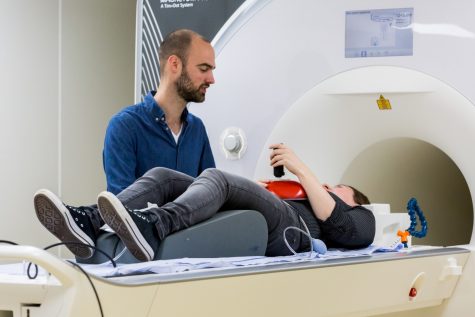
Karin Roelofs is Professor of Experimental Psychopathology at the Behavioural Science Institute (BSI) and Principal Investigator at the Donders Centre for Cognitive Neuroimaging and Donders Institute for Brain, Cognition and Behaviour at Radboud University Nijmegen. She chairs the PI-group "Affective Neuroscience" and holds the chair in Experimental Psychopathology. Her research focuses on psychological and neuroendocrine mechanisms underlying social-motivational behavior in both healthy individuals and patients with stress-related and social-motivational disorders such as social anxiety and aggression. She employs various brain imaging techniques (fMRI, MEG) combined with neural stimulation (TUS, tACS) or pharmacological interventions during emotion control and decision making tasks. Her work investigates how stress influences the neural development of emotion control through longitudinal studies including the Nijmegen Longitudinal Study (NLS), BIBO, and the Police In-Action (PIA) cohort. Her key research questions address how people regulate emotional actions, whether emotion control can be improved by influencing brain activity or through real-time biofeedback, and whether psychopathology can be predicted based on acute stress reactions and recovery patterns. Her publications span high-impact journals including Nature Communications, Nature Human Behaviour, and Nature Reviews Neuroscience, demonstrating her leadership in understanding the neural basis of emotion regulation and stress responses. ERC Advanced Grant (2025) ERC Consolidator Grant (2017) ERC Starting Grant (2012) NWO VICI, VIDI, and VENI grants Elected Member of Royal Netherlands Academy of Arts and Sciences Elected Member of Academia Europaea Professor Roelofs has secured numerous significant grants including the HEART2ADAPT project (2019-2025, ERC-AdG), PIA: Police In-action longitudinal study (2015-2021), and DYNAMORE: Dynamic modelling of resilience (2017-2025). She serves on multiple boards including ALLEA (All European Academies), the Selection committee for the ERC Advanced Grant, and as Board Member of INTRESA (International Resilience Research Alliance). She is also a registered GZ psychologist (BIG) and cognitive behavioral therapist (VCGT), bridging clinical practice with cutting-edge neuroscience research.
Scott L. Diamond is the Arthur E. Humphrey Professor of Chemical and Biomolecular Engineering and Bioengineering at the University of Pennsylvania's School of Engineering and Applied Sciences. He serves as Director of the Penn Center for Molecular Discovery, Director of the Penn Biotechnology Masters Program (one of the largest in the country with over 130 students), and Associate Director of the Institute for Medicine and Engineering (IME). His laboratory is located in the Roy and Diana Vagelos Laboratories at 3340 Smith Walk, 1020 Vagelos Research Laboratories, Philadelphia, PA. Diamond's research spans multiple interconnected fields in blood biology and biotechnology. His work focuses on mechanobiology, thrombolysis, coagulation, bioadhesion, gene therapy, drug/device development, proteomics, drug discovery, systems biology, and microfluidics. His laboratory has developed numerous specialized microfluidic devices for studying blood clotting under various flow conditions, including 8-channel devices for high-throughput clotting assays, side-view devices for clot structure analysis, stenosis devices for high shear clotting assays, and impingement-post devices for studying von Willebrand factor fibers. Diamond's research group has pioneered approaches to model and predict blood function using systems biology principles. His team has developed computational models that integrate reaction-transport phenomena with platelet signaling networks to predict thrombus formation under flow. These models have enabled the development of 'virtual blood' computer simulations that can predict the effectiveness of anticoagulation drugs for individual patients, contributing significantly to personalized medicine approaches in hemostasis and thrombosis. His extensive publication record demonstrates a consistent focus on understanding the fundamental mechanisms of blood clot formation and dissolution. Recent work has emphasized microfluidic approaches for point-of-care diagnostics, patient-specific modeling of platelet function, and the development of novel therapeutic strategies for thrombotic disorders. His research bridges engineering principles with clinical hematology to address significant challenges in cardiovascular medicine. NSF National Young Investigator Award NIH FIRST Award American Heart Association Established Investigator Award AIChE Allan P. Colburn Award George Heilmeier Excellence in Research Award Elected Fellow of the Biomedical Engineering Society (BMES) Diamond has secured significant research funding, including a $2.8 million NIH grant for 'Blood Systems Biology' and a $9.5 million NIH grant for the Penn Center for Molecular Discovery. His laboratory has developed numerous microfluidic devices for blood analysis and has collaborated extensively with clinicians and industry partners. Diamond has served on advisory committees for NSF, NIH, AHA, and NASA, and has consulted extensively for industry and government. With over 180 publications and patents, his work has significantly advanced the understanding of blood clotting mechanisms and the development of diagnostic and therapeutic approaches for thrombotic disorders.
Prof. Dr. Hakkı Polat Gülkan is a Professor at Başkent University's Civil Engineering Department. With a PhD (1971) and Master's (1968) from the University of Illinois in Civil Engineering and a Bachelor's (1966) from METU, his career spans over five decades in earthquake engineering, structural dynamics, and disaster management. PhD: University of Illinois, Civil Engineering (1971) Master's: University of Illinois, Civil Engineering (1968) Bachelor's: Middle East Technical University, Civil Engineering (1966) His research focuses on seismic risk assessment, structural behavior under extreme loads, and disaster mitigation strategies. Key contributions include earthquake simulator development, ground motion analysis, and retrofitting techniques for masonry and reinforced concrete structures. He has published extensively on deformation limits, response spectra, and historical building preservation. Recent work includes 15+ articles from 2024-2012 analyzing Istanbul's seismic hazards, Marmara region dynamics, and post-earthquake structural integrity. Conference papers address Turkey's endemic building vulnerabilities and deformation thresholds for seismic isolation systems. Scientific Achievements: Elected to U.S. National Academy of Engineering (2023) As an active journal reviewer for 13+ publications (2023-2024), he contributes to advancing earthquake engineering discourse. His teaching portfolio includes advanced structural analysis, concrete mechanics, and seismic design courses.
Alexander Russell is a Professor of Computer Science and Mathematics at the University of Connecticut, serving as Director of Graduate Affairs in the School of Computing and Director of the UConn Voting Technology Research Lab. He holds a Ph.D. in Mathematics and an S.M. in Computer Science from MIT, alongside dual B.A. degrees in Mathematics and Computer Science from Cornell University. His research focuses on cryptographic protocols, blockchain security, quantum computing, algorithms, and election auditing. Key areas include consensus algorithms, complexity-theoretic cryptography, and applied cryptography in voting systems. Recent work emphasizes low-variance risk-limiting audits and adaptive security mechanisms for blockchains. Notable contributions span provably secure blockchain protocols (e.g., Ouroboros), election integrity methods, and smartphone-based depression prediction models. His articles address topics like settlement bounds in longest-chain consensus, Byzantine-resilient gossip protocols, and energy-efficient neighbor discovery in mobile networks. Russell advises on interdisciplinary projects at the Voting Technology Research Center and collaborates on grants involving quantum-resistant cryptography and healthcare analytics. His work bridges theoretical computer science with practical applications in secure systems and public infrastructure.
Bonnie Berger is the Simons Professor of Mathematics at the Massachusetts Institute of Technology and head of the Computation and Biology group at MIT's Computer Science and AI Lab. She holds additional appointments as an Associate Member of the Broad Institute, Faculty member of Harvard/MIT Health Science & Technology, and Affiliated Faculty of Harvard Medical School. Her career has been dedicated to pioneering computational approaches in molecular biology, where she has been instrumental in defining the field. Professor Berger's research focuses on designing algorithms to extract biological insights from large-scale data sets. Her work spans Compressive Genomics, Network Inference, Structural Bioinformatics, Genomic Privacy, and Medical Genomics. She actively collaborates with experimental biologists to maximize the power of computation for biological discovery, developing methods that address the challenges of modern high-throughput biological data. Her recent publications demonstrate a strong trend toward integrating machine learning with structural biology and genomic privacy. The articles show increasing sophistication in using deep learning for protein structure prediction, developing privacy-preserving techniques for genomic data sharing, and creating efficient algorithms for massive biological data sets. Her work bridges theoretical computer science with practical biological applications. Professor Berger's scientific recognition includes: Election to the National Academy of Sciences (2021) ISCB Accomplishments by a Senior Scientist Award SIAM Sonya Kovalevsky Lecture Prize Fellowships in ACM, ISCB, AMS, and other prestigious societies Multiple RECOMB Test of Time Awards NIH Margaret Pittman Director's Award She has mentored numerous students who have gone on to make significant contributions in computational biology, including Ellen Zhong, Yun William Yu, and Hyunghoon Cho. Her lab receives substantial research funding supporting projects in genomic privacy, structural bioinformatics, and compressive algorithms for biological data. Professor Berger serves on the Executive Editorial Board of the Journal of Computational Biology and multiple other editorial boards. The Computation and Biology group at MIT CSAIL, which she leads, is at the forefront of developing computational methods for biological discovery. The group combines expertise in algorithms, machine learning, and biology to tackle fundamental challenges in genomics and structural biology. They are currently organizing the Machine Learning in Structural Biology workshop at NeurIPS 2025, highlighting their leadership in this rapidly evolving interdisciplinary field.
Marco Letta is a Tenure-Track Assistant Professor at the Department of Social and Economic Sciences , Sapienza University of Rome. His research focuses on economic development , regional economics , policy evaluation , and applied econometrics , with a strong emphasis on climate change impacts, food security, and machine learning applications in economic policy. University: Sapienza University of Rome Department: Department of Social and Economic Sciences Email: marco.letta@uniroma1.it His recent work explores the climate migration nexus , household resilience , and policy targeting , often leveraging machine learning and empirical econometric methods . Publications span topics such as local inequalities during the COVID-19 crisis , temperature shocks in rural Tanzania , and machine learning applications in state aid regulation . Notable trends in his research include: Integration of machine learning with traditional econometric techniques Focus on climate resilience and migration patterns Analysis of policy impacts in developing economies Investigation of local mortality estimates during global crises Development of cross-country empirical frameworks Current projects include assessing agrifood system vulnerabilities and refining counterfactual policy evaluation methodologies.
Prof. Dr. med. Franz Lennard Ricklefs is a Senior Physician and Head of the Working Group at the Department of Neurosurgery, University of Hamburg Faculty of Medicine. He is a Medical Specialist in Neurosurgery with cross-disciplinary expertise in neuro-oncology, molecular pathology, and extracellular vesicle research. Affiliations: University Medical Center Hamburg-Eppendorf (UKE), European Liquid Biopsy Society (ELBS), International Consortium on Meningiomas (ICOM) Research Interests: His work focuses on neurosurgical oncology, particularly glioblastoma and meningioma pathobiology. He investigates DNA methylation patterns, extracellular vesicle biomarkers, and liquid biopsy implementation in clinical neuro-oncology. Additional interests include surgical outcomes for epilepsy and aneurysm management. Article Trends: Over the last decade, Dr. Ricklefs has published extensively on: Extracellular vesicle applications as liquid biopsy markers DNA methylation subclasses for glioblastoma and meningioma Multicenter surgical outcome benchmarking Immune evasion mechanisms in neuro-oncology Technological innovations in neurosurgical visualization Molecular characterization of rare CNS tumors Professional Contributions: He co-authored the MISEV2023 guidelines for extracellular vesicle studies and participates in international consensus reviews for meningioma classification. His collaborations span institutions across Europe and North America.
Christopher G. Healey is the Goodnight Distinguished Professor of Analytics in the Institute for Advanced Analytics and a Professor in the Department of Computer Science at North Carolina State University. His research spans visualization, data analytics, text analytics, sentiment analysis, machine learning, cognitive psychology, computer graphics, and social media analytics. He has graduated 15 Ph.D. and 26 master's students and secured over $6 million in research funding from agencies including the National Science Foundation, Department of Defense, National Security Agency, Army Research Office, and various industry partners. He has published over 100 peer-reviewed articles and is a senior member of both IEEE and ACM, as well as a member of the NC State Academy of Outstanding Teachers. His research focuses on developing visualization techniques that leverage visual perception to support rapid, accurate, and effective analysis of large, complex datasets. More recently, he has been investigating machine learning for natural language processing and text analytics. His work includes projects on visualizing election results, sentiment estimation for social media, and wildfire narratives using large-scale social media data. His publications demonstrate a strong trend toward integrating machine learning with visualization, particularly for text analytics and social media analysis. He has made significant contributions to visualizing deep neural networks, cyber situation awareness, and pandemic response analytics, showing how visualization can enhance understanding of complex systems and large datasets across multiple domains. IBM Faculty Award (2007, 2008, 2010, 2011, 2012) Senior member, Association of Computing Machinery (ACM) (2007) Senior member, Institute of Electrical and Electronics Engineers (IEEE) (2007) NC State Academy of Outstanding Teachers inductee (2003) National Science Foundation Faculty Early CAREER Award (2001) He has successfully mentored numerous graduate students and secured significant research funding across multiple projects. His work with the Laboratory for Analytic Sciences, National Science Foundation, and Department of Defense demonstrates strong industry and government partnerships. His recent projects focus on visualizing social media narratives, deep neural networks for text understanding, and predictive analytics for large document collections. He leads research groups focused on visualization and analytics, working with teams to develop innovative approaches for data exploration and analysis. His current work continues to push the boundaries of how visualization can be used to enhance understanding of complex data across domains including public health, cybersecurity, and social media analysis.
Michael Levine is the Anthony B. Evnin '62 Professor in Genomics and Professor of Molecular Biology at Princeton University, where he also serves as Director of the Lewis-Sigler Institute for Integrative Genomics. He joined Princeton in 2015 after a distinguished career at UC Berkeley, where he was Professor of Genetics and held leadership roles in genetics and genomics programs. His research focuses on how noncoding regions of the genome regulate gene expression in space and time during development. His lab has pioneered studies in Drosophila and the protovertebrate Ciona intestinalis , uncovering fundamental mechanisms such as enhancer function, transcriptional bursting, short-range repression, and long-range enhancer-promoter interactions. His work has also revealed evolutionary insights into the origins of vertebrate innovations like the neural crest and neurogenic placodes. Levine's recent publications demonstrate a strong emphasis on quantitative and live-imaging approaches to dissect gene regulation dynamics. His work integrates experimental embryology with computational modeling, especially using deep learning to predict transcriptional outcomes. Themes across his recent articles include biomolecular condensates, chromatin architecture, and the physical principles underlying enhancer function. Elected to the National Academy of Sciences (1998) Molecular Biology Award, National Academy of Sciences (1996) Wilbur Cross Medal, Yale University (2009) EG Conklin Medal, Society of Development Biology (2015) Dr. Levine has trained numerous researchers and co-authored studies with emerging scientists, indicating active mentoring and grant-funded research. His leadership roles at major institutes and sustained publication record reflect a robust, well-supported research program. He has also contributed to national genomics initiatives, including service at the DOE Joint Genome Institute. His lab operates at the intersection of molecular biology, genomics, and quantitative developmental biology, utilizing model organisms and cutting-edge imaging and computational tools to unravel the logic of gene regulatory networks.