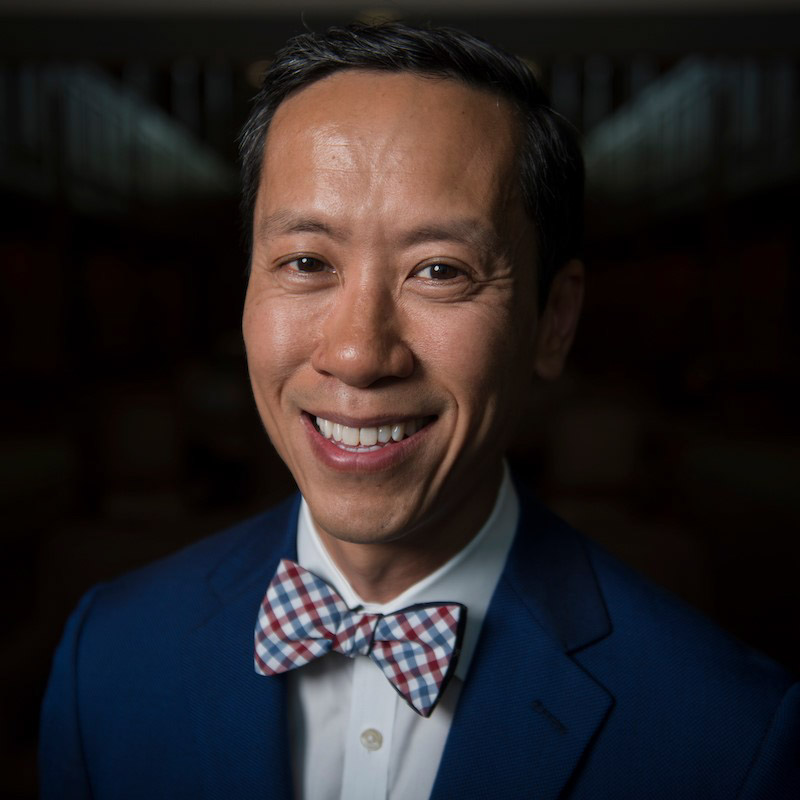
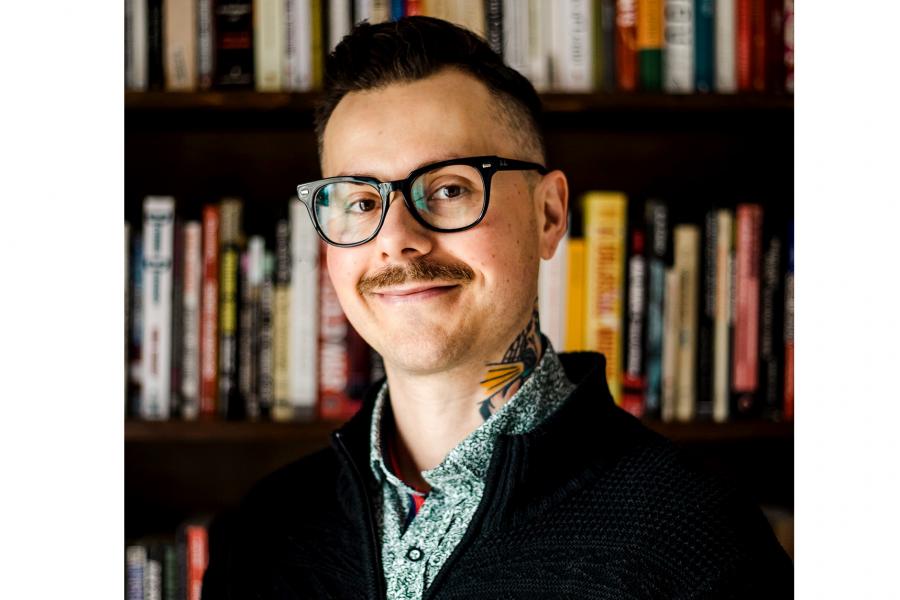
Joseph Thai is an Adjunct Professor specializing in constitutional law and Supreme Court jurisprudence. He holds an A.B. in English from Harvard College (1995) and a J.D. from Harvard Law School (1998). His legal career includes clerkships with Justices John Paul Stevens and Byron White of the U.S. Supreme Court and Judge David Ebel of the Tenth Circuit. He played a pivotal role in challenging Oklahoma's same-sex marriage ban, contributing to landmark civil rights advancements. Recognized as an outstanding educator by students, he is also an active scholar and litigator. Elected to the American Law Institute (2021) Consistently honored as outstanding professor
Prof. Dr. Alexander Stroh-Steckelberg is Professor of Political Science with a focus on African Politics & Development Policy at the University of Bayreuth since 2022. He serves as Deputy Head of the Bayreuth International Graduate School of African Studies (BIGSAS) until 2025 and has held prior roles as Junior Professor and Senior Fellow at BIGSAS (2015–2021). His academic career includes research associate positions at the GIGA German Institute of Global and Area Studies (2006–2015) and teaching roles at the Universities of Abomey-Calavi, Heidelberg, and Lüneburg. Stroh-Steckelberg’s research spans comparative democracy studies , judicial politics , electoral systems , political party dynamics , and development policy in Africa, with regional expertise in Francophone West Africa and Rwanda . His work emphasizes institutional diffusion, informal networks in courts, and the interplay between formal and informal governance structures. Recent publications reveal a focus on judicial appointment policies , electoral manipulation , and local governance challenges across Africa. He contributes to methodological advancements in comparative area studies and network analysis , particularly in non-Western democracies. Stroh-Steckelberg is actively involved in academic communities including the American Political Science Association , German Political Science Association , and Association for African Studies in Germany .
Professor Dan Meagher is a Chair in Law at Deakin University's Faculty of Business and Law, where he leads research in constitutional law and statutory interpretation. He serves as Director of Research at Deakin Law School and actively contributes to legal scholarship through publications, editorial work, and supervision of doctoral candidates. Doctor of Philosophy, University of New South Wales Master of Laws, Monash University Bachelor of Economics, Monash University Bachelor of Laws (LLB), Monash University His research focuses on constitutional law, statutory interpretation, and human rights protections. He explores the principle of legality, responsible government norms, and the interplay between common law and statutory frameworks, often advocating for enhanced rights protections through judicial interpretation. Professor Meagher's scholarly output highlights trends in Australian constitutionalism, including proportionality in secondary legislation, non-discrimination principles, and the evolution of common law rights. His work bridges doctrinal analysis with practical implications for legislative drafting and judicial review. Elected Fellow of the Australian Academy of Law Comments Editor for the Public Law Review Director of Research at Deakin Law School He supervises doctoral research on topics like human rights protection and legislative drafting models. His professional activities include co-editing major legal texts and contributing to debates on constitutional evolution and judicial interpretation.
Norman M. Naimark serves as the Robert & Florence McDonnell Professor of East European Studies and Professor of History at Stanford University, with courtesy appointments in German Studies. He holds senior fellowships at both the Hoover Institution and Freeman Spogli Institute for International Studies, and is affiliated with The Europe Center and the Center on Democracy, Development and the Rule of Law. Education: Ph.D. in History, Stanford University (1972) Naimark specializes in Soviet-era Eastern European history, with dual research pillars: Soviet policies in post-WWII Europe and 20th-century genocide/ethnic cleansing phenomena. His work bridges historical analysis with contemporary human rights discourse, emphasizing geopolitical power dynamics and systematic violence against civilian populations. Methodologically, he combines archival rigor with comparative frameworks across national contexts. His publication trajectory from 1979–2019 reveals evolving focus from Marxist movements in partitioned Poland to Soviet occupation mechanics, culminating in comprehensive genocide studies. The 2019 monograph on Stalin's postwar European sovereignty struggles synthesizes decades of research into Soviet imperial practices. Scientific awards: Officer's Cross of the Order of Merit of the Federal Republic of Germany (1996) Richard W. Lyman Award for outstanding faculty volunteer service (1995) Stanford Dean's Teaching Award (1991-92, 2002-3) Naimark's academic leadership includes directing Stanford's Global Studies Division, Bing Overseas Studies Program, and Center for Russian, East European, and Eurasian Studies. His research informs current policy discussions on authoritarianism and democratic resilience, as evidenced by recent engagements with Belarusian democracy movements and U.S.-Russia relations. He collaborates extensively through Stanford's interdisciplinary centers, particularly contributing historical perspectives to The Europe Center's sovereignty research and the Center on Democracy, Development and the Rule of Law's governance initiatives.
Jonathan N. Katz is the Kay Sugahara Professor of Social Sciences and Statistics at the California Institute of Technology (Caltech). He holds a S.B. from MIT (1990), M.A. from UC San Diego (1992), and Ph.D. from UC San Diego (1995). His career includes roles as Assistant Professor (1995-98), Associate Professor (1998-2003), and Professor (2003-11) at Caltech, with subsequent appointments as Sugahara Professor (2012–present), Executive Officer for Social Sciences (2007), and Division Chair (2007–14). His research focuses on statistical methods in social sciences, electoral systems, and public policy. Key affiliations include the Caltech/MIT Voting Technology Project and the Linde Institute of Economic and Management Sciences. Katz is Deputy Editor for Social Sciences at Science Advances and a Fellow of the American Academy of Arts and Sciences (2011) and the Society for Political Methodology (2008). Research interests span political methodology, formal theory, and American politics. Recent work addresses partisan fairness in electoral systems, statistical rigor in political modeling, and institutional dynamics in legislative and judicial contexts. Notable contributions include critiques of electoral college bias and audits of political behavior research methodologies. Awards: Career Achievement Award in Political Methodology (2024), Inaugural Fellow, Society for Political Methodology (2008). Grants/Labs: Caltech/MIT Voting Technology Project, Linde Institute Directorship (2013–14).
Professor Elaine Fahey is a leading scholar in EU law and global governance at the City Law School, City St George's, University of London, where she serves as Professor of EU Law and Deputy Head of Department (academic programmes). She is co-convener of the Institute for the Study of European Law (ISEL) and the UACES James Madison Trust EUFUtures initiative (2022–2025). Her academic career includes visiting professorships at Washington College of Law (American University), Keio University, and NYU, as well as fellowships at the European University Institute and the University of Graz. LLB, Trinity College Dublin LLM, Sidney Sussex College, University of Cambridge PhD, Trinity College Dublin Barrister-at-Law, Honorable Society of King’s Inns, Ireland Attorney-at-Law, State of New York Senior Fellowship, Higher Education Authority UK Her research focuses on the intersection of EU law with global governance, digital regulation, transatlantic relations, and the Area of Freedom, Security and Justice. She explores how the EU navigates legal frameworks beyond the nation-state, particularly in digital trade, cybersecurity, and data protection. Her work critically examines the EU’s role as a global regulatory actor and its interactions with international institutions. Her extensive publication record includes the monograph The EU as a Global Digital Actor (Hart, 2022) and numerous articles on digital sovereignty, data transfers, and transatlantic cooperation. Recent research analyzes the EU–US Trade and Technology Council (TTC), the evolution of the Privacy Shield, and strategic litigation in digital rights. Her work reveals a strong trend toward understanding how soft law, institutional design, and judicial decisions shape EU external relations and digital governance. Erasmus+ Jean Monnet Chair in Law & Transatlantic Relations (2019–2022) Emile Noël Fellow, NYU Law School Max Weber Fellow, European University Institute Senior Land Steiermark Fellow, University of Graz Senior Fellowship, Higher Education Authority UK Professor Fahey has supervised multiple PhD students, including Isabella Mancini, Giulio Kowalski, and Christos Karetsos, on topics such as algorithmic collusion, digital markets, and investment law. She has led significant research projects, including the ESRC-funded TRILATTRADE grant and the Marie Curie ITN on EU and Transatlantic Investment and Trade (EUTIP). She previously held leadership roles as Associate Dean (International) and interim Associate Dean (Research) at the City Law School. She is an elected member of the EU Studies Association (EUSA) Executive (2021–2025). She has also contributed to public policy through briefings for the Welsh Parliament and reports on CJEU litigation in Ireland. She is associated with research initiatives such as the Institute for the Study of European Law (ISEL) and has collaborated on interdisciplinary projects on Facebook regulation, transatlantic relations, and EU technological sovereignty. Her work bridges legal scholarship, policy, and international academic collaboration.
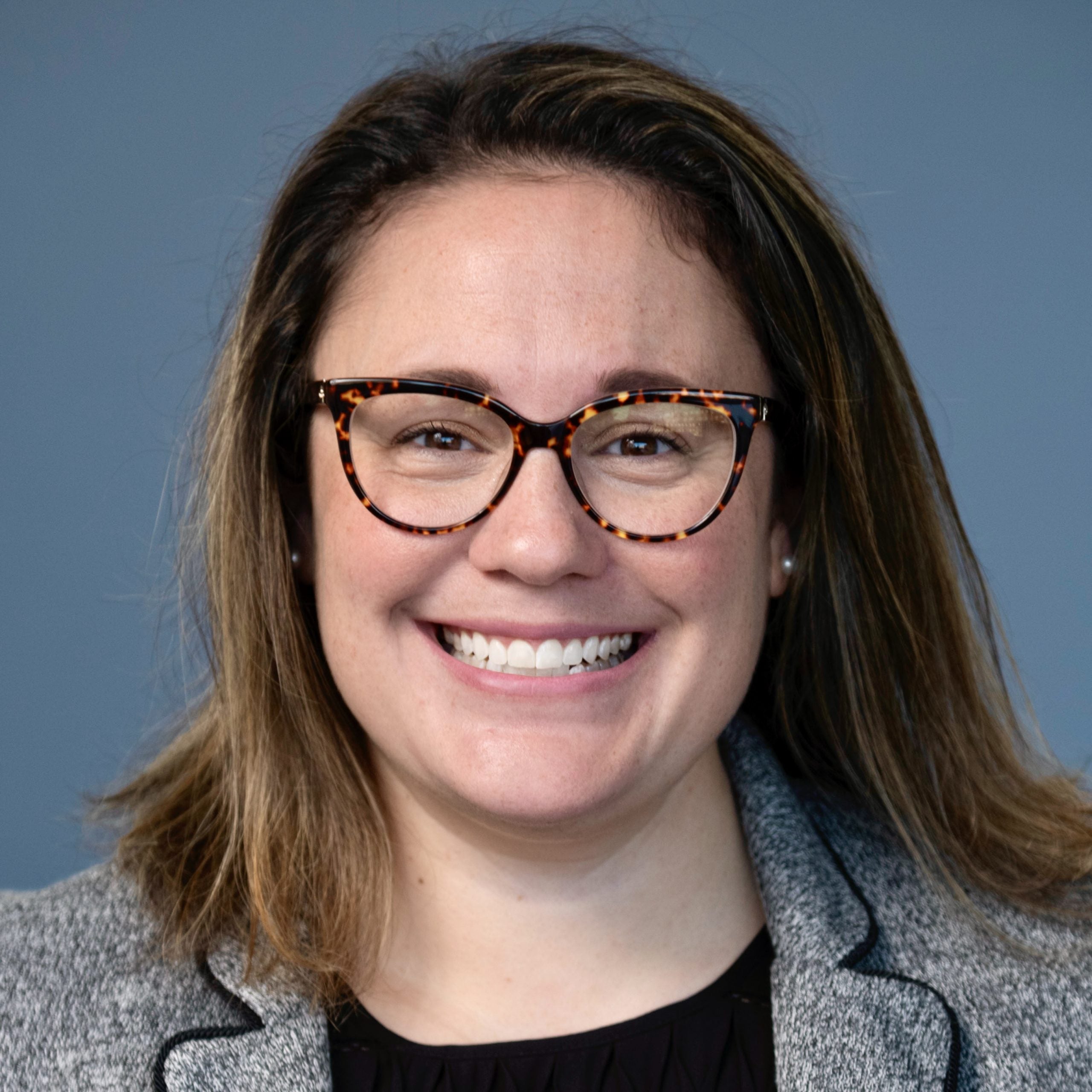
Gretchen A. Macht is an Associate Professor in the Department of Mechanical, Industrial and Systems Engineering at the University of Rhode Island, College of Engineering. She specializes in Human Systems Engineering, with research emphasizing team performance, sustainability, electric vehicles, solar energy systems, and voting systems. Her work bridges engineering, ergonomics, and public policy. Her research interests focus on understanding and optimizing human-centered systems. She investigates team communication and performance through fuzzy cognitive maps and entropy modeling, develops sustainable design practices for products and energy systems, and analyzes user behavior in electric vehicles and solar installations. A significant portion of her research is dedicated to election systems, where she uses simulation to improve accessibility, safety, and efficiency of in-person voting, particularly during public health crises. Her recent publications span topics such as EV charging behavior, solar installation safety, voting simulation, and team dynamics. These works reflect interdisciplinary trends combining systems engineering, data analytics, ergonomics, and sustainability science. She frequently employs simulation, naturalistic data analysis, and human factors methodologies. Dr. Macht has secured substantial grant funding from organizations including the U.S. Election Assistance Commission, National Science Foundation, MIT, and Democracy Fund. She serves as Principal Investigator (PI) or Co-PI on projects related to election systems (e.g., SMILE, URI VOTES), ergonomic redesign of protective gear, and community solar development. She leads the SIS Lab and the URI VOTES initiative, fostering collaborative research on simulation and system design. Her lab supports graduate students in conducting impactful research at the intersection of engineering and societal challenges. Notable grants include: PI, MIT: “Voting in Person - White Paper” (2023) PI, US EAC: “SMILE 2.0” (2022) PI, Democracy Fund: “URI VOTES Pocket Guide Tool” (2022) Co-PI, NSF: “Election Science: Convergence Accelerator Workshop Proposal” (2021) PI, US EAC: “SMILE: Simulation Models for an Immersive Learning Environment” (2021) She has advised several graduate students, including Mehrsa Khaleghikarahrodi, Nicholas D. Bernardo Jr., and Tim Jonas, whose research aligns closely with her focus areas in EVs, elections, and team performance.
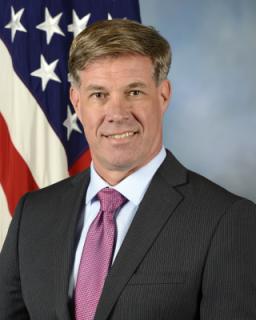
Joseph Felter is a Research Fellow at the Hoover Institution (Stanford University) and the William J. Perry Fellow at the Center for International Security and Cooperation. His career bridges academia, military service, and policy advising, with expertise in counterinsurgency, national security, and US-China relations. He coauthored the influential book Small Wars, Big Data: The Information Revolution and Modern Conflict (2018) and developed the Hacking for Defense curriculum to connect military needs with Silicon Valley innovation. Military Background: Former US Army Special Forces officer with combat deployments in Panama, Iraq, and Afghanistan. Served as commander of the COMISAF Counterinsurgency Advisory and Assistance Team. Academic Roles: Assistant Professor at West Point’s Department of Social Sciences, Adjunct Associate Professor at Columbia University’s School for International and Public Affairs, and current codirector of Stanford’s Empirical Studies of Conflict Project. Research Focus: Politically motivated violence, economic development in conflict zones, and defense innovation. His work appears in top journals like American Economic Review and Journal of Conflict Resolution . Policy Engagement: Key advisor on US defense strategy (2017–2019) and founder of BMNT, a Silicon Valley defense technology incubator. Currently serves on Spirit of America’s board. Scientific Awards: Recognized as a William J. Perry Fellow and US Army War College Fellow. His empirical conflict research informs both academic and policy debates.
Professor Jennifer Payne is Warden of Merton College, Oxford, and a leading authority in company law, corporate finance law, financial regulation, and corporate insolvency. She has authored numerous influential books and articles, and holds significant editorial and advisory roles in the academic and policy-making spheres. Research Interests: Company law and corporate governance Corporate finance and securities regulation Financial regulation and policy Corporate insolvency and debt restructuring Comparative and European financial law Her work spans both theoretical and practical dimensions, with a strong focus on regulatory frameworks, legal reforms, and cross-border financial issues. She has contributed extensively to policy debates and legal developments in the UK and EU. Scientific Awards & Honors: Elected to membership of the International Insolvency Institute (2016) Member of ESMA’s Securities and Markets Stakeholders Group (2016–2018) Member of ESMA’s Corporate Finance Standing Committee Consultative Working Group (2015–2017) Law Delegate of Oxford University Press (2020–present) Expert Advisory Panel member to the Law Commission on Intermediated Securities and Digital Assets Editorial & Advisory Roles: Founder editor, Journal of Corporate Law Studies Founder editor, Oxford Business Law Blog Review Articles editor, Oxford Journal of Legal Studies Contributor to Palmer’s Company Law Visiting Positions: She has held visiting professorships at Melbourne Law School, National University of Singapore, and the University of Auckland, reflecting her international academic influence.
Laverne Jacobs, PhD, is a Full Professor at the University of Windsor's Faculty of Law where she holds the Research Chair in Disability Equality & Administrative Justice. She serves as the founder and Director of the Law, Disability & Social Change Project, a research and public policy center dedicated to fostering inclusive communities. Notably, Professor Jacobs was elected to the United Nations Committee on the Rights of Persons with Disabilities in 2022, becoming the first Canadian to serve on this UN Human Rights Treaty Body. She also serves as Co-Director of the Disability Rights Working Group at Berkeley Law's Center for Comparative Equality & Anti-Discrimination Law and previously held the position of Associate Dean (Research & Graduate Studies) for the Faculty of Law from 2018-2021. B.A. (Honours), McGill University, 1994 LL.B., McGill University, 1999 B.C.L., McGill University, 1999 Ph.D., Osgoode Hall Law School, York University, 2009 Professor Jacobs' research sits at the intersection of disability equality law and administrative law and justice, characterized by an interest in the everyday work of the administrative justice system and the lived experiences of people who use it, particularly persons with disabilities. Her work spans disability rights, administrative justice, human rights law, socio-legal theory, and empirical research methodologies. She has made significant contributions to understanding accessibility legislation, transportation inequality, post-secondary education access for students with disabilities, and the implementation of disability equality principles in administrative decision-making. Her scholarship bridges theoretical legal frameworks with practical applications, emphasizing citizen participation in policy development and the importance of inclusive design in legal systems. Analysis of Professor Jacobs' recent publications reveals a consistent focus on how administrative law can better serve persons with disabilities through inclusive design and accessible processes. Her work demonstrates growing attention to intersectional issues, particularly how women with disabilities experience administrative systems, and increasingly examines the implementation challenges of accessibility legislation across Canadian jurisdictions. She frequently employs empirical research methods to ground her legal analysis in real-world experiences of marginalized communities. Scientific Awards and Honors: Canadian Bar Association Touchstone Award (2021) Canadian Association of Law Teachers (CALT) Academic Excellence Award (2022) Hummingbird Award from the Disabled Women's Network of Canada (DaWN), 2022 Election to the United Nations Committee on the Rights of Persons with Disabilities (2022) Professor Jacobs has held significant leadership roles including service on the Board of Directors of the Income Security Advocacy Centre and the Canadian Institute for the Administration of Justice. Through her role as Director of the Law, Disability & Social Change Project, she has secured research funding to support policy-relevant scholarship on disability rights and administrative justice. Her work has influenced accessibility legislation development across Canada, particularly through her annotated version of the Accessible Canada Act. She provides expert consultation to government bodies and international organizations on disability rights implementation. The Law, Disability & Social Change Project serves as Professor Jacobs' primary research hub, bringing together interdisciplinary scholars, disability advocates, and policy makers to develop practical solutions for creating more inclusive legal and administrative systems. The project has produced numerous research reports, policy briefs, and public resources that translate academic research into actionable recommendations for improving accessibility and disability equality in Canadian society.
Stephen Billings is an Associate Professor of Finance at the Leeds School of Business, University of Colorado Boulder, where he holds the Global Real Estate Capital Markets Chair position. He serves as the faculty director of the MS in Real Estate program and research director for the CU Real Estate Center. His work spans multiple research centers including the Center for Research on Consumer Financial Decision Making and the Michael A. Klump Center for Real Estate. Billings received his PhD in Economics from the University of Colorado, a MS in urban planning from the University of North Carolina, and a BS in economics from Georgetown University. Prior to joining CU Boulder in 2016, he was faculty at the University of North Carolina Charlotte with appointments in both economics and public policy, where he also served as faculty director for the real estate center. His research focuses on the intersection of housing, schools, neighborhoods and crime, addressing critical policy issues including the impact of public investment in light-rail transit on neighborhoods, school segregation's influence on academic achievement and crime, neighborhood gentrification causes, lead-based paint in low-income housing, and the effects of sea level rise and natural disasters on neighborhood sorting and household finances. Billings employs sophisticated analysis of large micro-datasets with studies based on data and policies in Charlotte, NC and Denver, CO. His work connects urban economics with public policy, demonstrating how neighborhood environments shape individual outcomes across multiple dimensions. Billings' recent publication record demonstrates a consistent focus on neighborhood effects, school choice impacts, crime economics, and housing market dynamics. His work frequently examines the intersection of race, housing, and economic outcomes, with particular attention to policy implications. He has developed innovative methodological approaches to studying residential amenities and neighborhood spillovers, with increasing attention to climate change impacts on housing markets. His research appears in top journals including The Quarterly Journal of Economics, American Economic Review: Insights, and Journal of Urban Economics. As an educator, Billings teaches undergraduate and masters classes in real estate finance and economics, as well as doctoral and masters level courses on cost-benefit analysis and statistical methods. He has extensive consulting experience conducting economic impact studies, including assessments of North Carolina's public higher education system, affordable housing needs in Colorado communities, and the economic effects of marijuana legalization on property markets. His practical policy work complements his academic research, creating a bridge between theoretical insights and real-world applications. Billings leads significant research initiatives through the CU Real Estate Center, where he directs studies examining the impact of business improvement districts and other urban development policies. His work bridges academic research with practical policy applications, making substantial contributions to our understanding of how housing, education, and neighborhood environments shape individual outcomes and community development. His December 2023 memo on the HUD Officer Next Door Program exemplifies his engagement with current housing policy issues.
Adam King is an Assistant Professor in the Labour Studies Program at the Faculty of Arts, University of Manitoba. His research focuses on labor regulation, employment standards enforcement, Indigenous labor dynamics, deindustrialization impacts, and labor market policy. He co-investigates a SSHRC Partnership Grant project on migrant labor in settler-colonial contexts. Education: PhD in Sociology (York University, 2019) MA in History (University of Toronto, 2011) BA in Sociology/History (Trent University, 2010) His research examines the political economy of labor regulation, including enforcement mechanisms in federally regulated sectors and contested Indigenous labor relations. He analyzes deindustrialization's social consequences and contributes to debates on job guarantee proposals and right-wing populism's influence on labor movements. Recent publications explore topics like Indigenous labor law frameworks, precarious creative workers' unionization, and gendered identities in deindustrializing communities. He actively engages with media outlets such as CBC, The Globe and Mail, and The Maple's 'Class Struggle' newsletter.
Adam Bonica is an Associate Professor in the Department of Political Science at Stanford University . His research integrates data science and politics , focusing on money in politics , campaigns and elections , judicial politics , and political methodology . Research Interests : Data Science, Political Ideology, Campaign Finance, Judicial Polarization, Quantitative Modeling Contact : Encina Hall West, Room 307, Stanford, CA 94305-6044 | Email : bonica@stanford.edu | Phone : (650) 725-7987 His work has been published in leading journals such as the American Journal of Political Science , Political Analysis , Journal of Economic Perspectives , Journal of Law, Economics, and Organization , and JAMA Internal Medicine . Bonica co-authored The Judicial Tug of War , which explores the politicization of the American judiciary. He has developed comprehensive databases like DIME (Database on Ideology, Money in Politics, and Elections) to advance research on political ideology and campaign finance. Recent publications include analyses of ideological persuasion in U.S. elections, judicial reform dynamics, and supervised machine learning applications in political methodology. His research spans topics such as clerk hiring as ideological indicators , professional networks in fundraising , and polarization trends among physicians and legal professionals .
Dr. Shahrzad Fouladvand is an Associate Professor in International Criminal Law at the University of Sussex's School of Law, Politics and Sociology. Her research focuses on transnational criminal law, human trafficking, and corruption, particularly their interplay in contexts like Albania. She previously worked at the International Criminal Court (ICC) and the International Labour Organisation (ILO), contributing to human rights conventions. A member of RUSI's Strategic Hub for Organised Crime (SHOC), she advocates holistic approaches to combating human trafficking beyond prosecution-centric methods. Dr. Fouladvand holds a PhD from the University of Sussex and is a Fellow of the UK Higher Education Academy. Education: PhD in Law, University of Sussex (2008–2012) Common Professional Examination (CPE)/Graduate Diploma in Law (GDL), University of Huddersfield (2012–2014) Certifications in Machine Learning for Social Scientists (2023) and Social Network Analysis (2020) Research Interests: Dr. Fouladvand explores the nexus between human trafficking and corruption, emphasizing evidentiary challenges and institutional complicity. Her work integrates network analysis and responsibilisation frameworks, critiquing prosecution-centric approaches. Recent projects include a monograph on 'Human Trafficking, Corruption and Corporate Complicity' for Routledge, examining public-sector complicity in trafficking. Key Contributions: Authored over 30 publications, including journal articles and book chapters on ICC jurisprudence, anti-corruption law, and trafficking dynamics. Advised UK parliamentary committees on human trafficking and migration policies. Edited volumes on transnational organized crime and economic criminology. Awards and Fellowships: Fellow of the UK Higher Education Academy (2016) Visiting Scholarship at Max-Planck Institute (2021–2022) Elected Special Rapporteur on Contemporary Slavery for BACL Labs/Teams: Active member of RUSI's SHOC, focusing on policy-relevant research to combat organized crime.
Stephen J. Stedman is a Senior Fellow at the Freeman Spogli Institute for International Studies (FSI) and the Center on Democracy, Development and the Rule of Law (CDDRL) at Stanford University. He serves as Professor of Political Science (by courtesy) and Director of CDDRL's Fisher Family Honors Program in Democracy, Development and Rule of Law. Effective Fall 2025, he will assume the position of faculty director for the Program on International Relations in the School of Humanities and Sciences. Additionally, he is an affiliated faculty member at the Center for International Security and Cooperation (CISAC). Professor Stedman's extensive professional background includes serving as Director for the Global Commission on Elections, Democracy, and Security (2011-12), Research Director of the United Nations High-level Panel on Threats, Challenges and Change (2003-04), and Assistant Secretary-General and Special Advisor to the UN Secretary-General (2005). His work has significantly influenced international policy frameworks, including the creation of UN entities such as the Peacebuilding Support Office and Counter Terrorism Task Force. His research focuses on international relations, democracy studies, and conflict resolution, with particular expertise in elections, security studies, and the rule of law. Professor Stedman has examined critical issues related to electoral integrity in digital environments and health in conflict settings, bridging theoretical frameworks with practical policy applications in global governance. His work demonstrates consistent engagement with contemporary challenges in international democracy and security. Professor Stedman has authored significant publications including the book "Power and Responsibility: Creating International Order in an Era of Transnational Threats" (2009) with Bruce Jones and Carlos Pascual. His recent work includes co-authoring the "Lancet Series on Women's and Children's Health in Conflict Settings" (2021) and the influential "Protecting Electoral Integrity in the Digital Age" report (2020) for the Kofi Annan Commission. As Director of the Fisher Family Honors Program, Professor Stedman oversees a program that provides students with direct engagement opportunities with top-level policy makers, as evidenced by the program's annual Honors College in Washington, D.C., where students gain firsthand exposure to how federal government, policy organizations, and think tanks advance democracy and development worldwide.