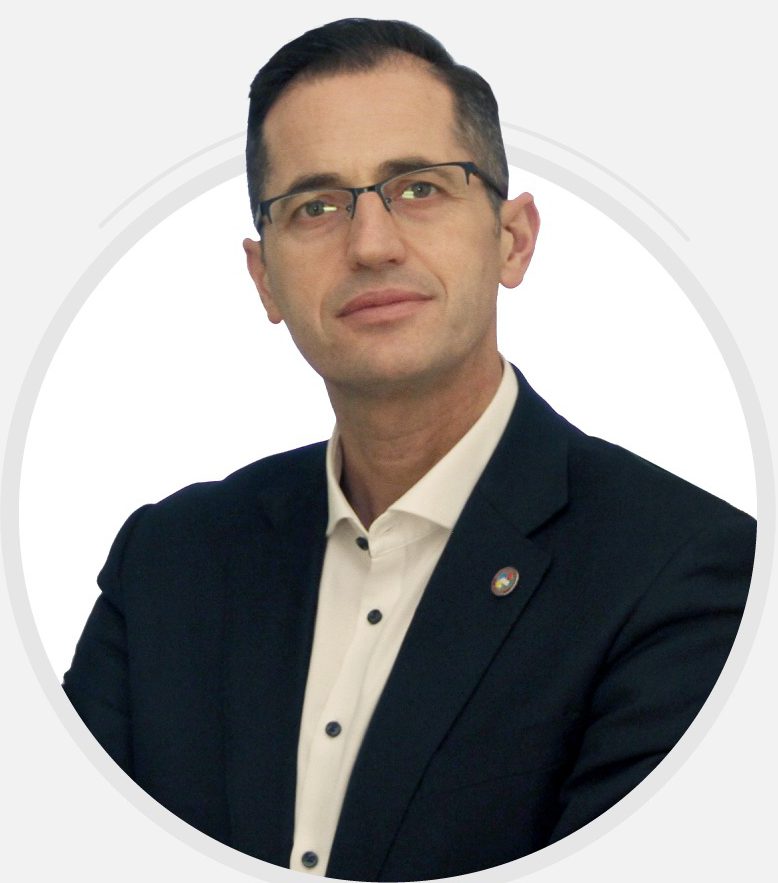
Prof. Blerim Rexha is a full professor at the University of Prishtina's Faculty of Electrical and Computer Engineering, Kosovo. With a Ph.D. in Computer Engineering from Vienna University of Technology (2004), he has led research in cybersecurity, blockchain, machine learning, and electronic voting systems. His teaching portfolio includes data, computer, and internet security courses. Education : Ph.D. in Computer Engineering (Vienna), Electrical Engineer MSc (Prishtina), specialized certifications in software engineering, biometrics, and .NET programming. His research spans cybersecurity (DDoS mitigation, face authentication attacks), blockchain applications (electronic voting bridges, transaction privacy), and machine learning integration (boosted trees for intrusion detection, LSTM for vulnerability scanning). He has contributed to cloud security through novel encryption methods and AI-driven attack detection. Recent publications focus on energy efficiency in cloud vs on-premises systems, XGBoost/CatBoost/LightGBM comparisons for network security, and blockchain bridges for e-voting. His work has addressed privacy preservation in video data, SMS encryption, and eID card pseudo-profiles. Awards include the 2024 Marin Barleti Prize for academic contributions and Best Paper Awards in election security (2015) and Kosovo website vulnerabilities (2013). Honors : Marin Barleti Prize (2024) Cyber Security Ambassador (2018) ICT Academician of the Year (2016) Best Paper Awards (2015, 2013) As academic advisor to the KosovaCyberTeam , he mentors students like Korab Keqekolla and Abian Morina. His leadership extends to Kosovo's Cyber Security State Training Center curriculum development and jury roles in Albanian ICT Awards .
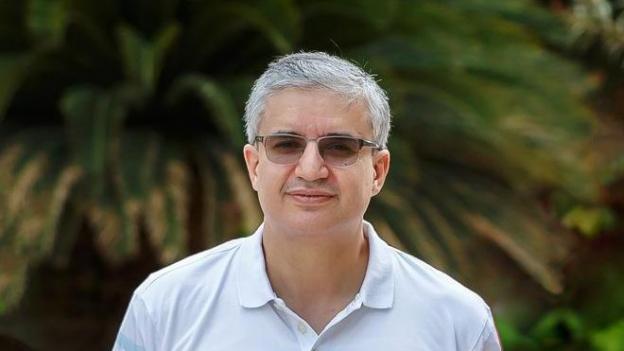
Raghu Bollapragada is an Assistant Professor in Operations Research and Industrial Engineering at the University of Texas at Austin, with affiliations to the Oden Institute and Machine Learning Laboratory. His research designs algorithms for nonlinear optimization, including constrained, stochastic, and distributed methods with applications in machine learning. Supported by NSF, Argonne National Laboratory, and Lawrence Livermore National Laboratory, recent work (2024-2025) develops gradient tracking for decentralized systems, adaptive sampling techniques, and hessian averaging for nonconvex problems. He was elected Vice Chair of Nonlinear Optimization for INFORMS (2024-2026).
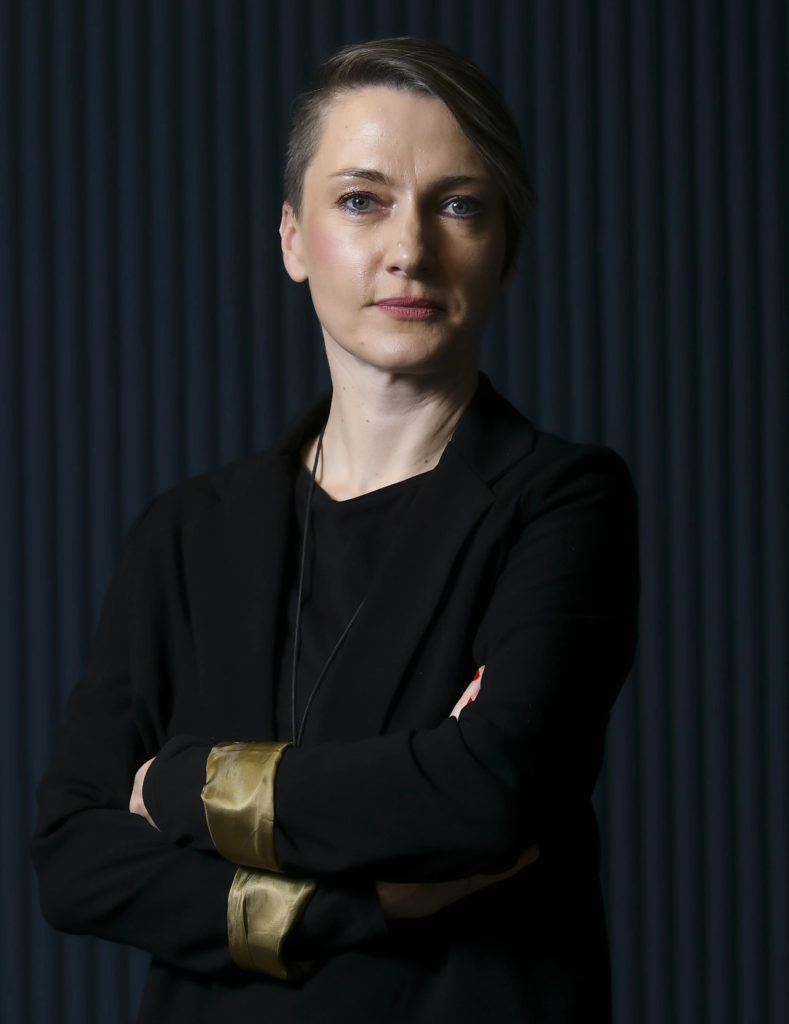
Perpetua Kirby is an Assistant Professor in Childhood and Youth (Education) at the School of Education and Social Work, University of Sussex . She specializes in children’s rights, participation, and agency, utilizing ethnographic and multimodal methodologies to explore democratic approaches to education. Her work bridges research and practice, focusing on sustainability education and transformative models through collaborations with organizations like the Centre for Innovation and Research in Childhood and Youth (CIRCY) and the Centre for Teaching and Learning Research (CTLR) . Research Themes: Children’s rights and agency in educational settings Interdisciplinary sustainability education (Global North/South) Ethnographic and creative research methods Transformative pedagogies for climate uncertainty Key Projects: Nuffield-funded study on children’s voices and data in UK local authorities Collaboration with PASTRES Programme on art-based climate pedagogy Fellow of Sussex Sustainability Research Programme (SSRP) Scientific Awards: Fellow of the Sussex Sustainability Research Programme (SSRP) Teaching: Co-convenes Forest Food Garden elective at University of Sussex Supervises MA in Education and doctoral research training Media Impact: Featured in BBC Radio 4’s Women’s Hour, Financial Times, Huffington Post
Aleksandra Krstić is a full professor at the Faculty of Political Science, University of Belgrade, where she teaches courses including Political Journalism , Visual Representation of Politics , and Media and Journalism in a Global Context . She serves as Vice-Dean for Research Activities and leads the Center for Media and Media Research. PhD in Culture and Media (2015) from University of Belgrade Master's and BA in Journalism from Faculty of Political Science Her research examines media representation of EU institutions , authoritarian communication , digital journalism ethics , and migrant portrayal in Serbian media . Recent work analyzes visual security narratives , presidential communication strategies , and opinion dynamics in social media . Scientific awards include the Đoko Vlajković Foundation Award (2018) and multiple European integration media awards. She leads international projects like DepolarisingEU (COST Action 22165) and Strengthening Local Media in Serbia (US Alumni Grant). Krstić collaborates with institutions including International Organization for Migration (IOM) and European Commission, and serves on editorial boards for Journal of Regional Security and Political Perspectives .
Dr. Abdullahi Tasiu Abubakar is a Senior Lecturer and Director of the PhD Programme in the Department of Journalism at City St George's, University of London. He holds a PhD in Journalism and Mass Communications from the University of Westminster, awarded with no corrections. His professional background includes roles as a producer at BBC World Service (London) and Bureau Editor in Nigeria, alongside reporting for major Nigerian newspapers covering conflicts across West Africa. Research Focus: Dr. Abubakar specializes in media audiences, strategic communications, conflict reporting, and journalism ethics. His work critically examines how global media interacts with African audiences, the ethics of crisis journalism, and the communication strategies of insurgent groups like Boko Haram. Publication Trends: His scholarly output (2011-2024) demonstrates consistent focus on media in conflict zones, digital audience engagement, and African media landscapes. Recent works explore colonial legacies in broadcasting and mobile technology's impact on media consumption. A 2021 computational study represents an interdisciplinary divergence. Awards & Honors: Nigeria’s Best Newspaper Reporter of the Year NUJ Certificate for Professional Excellence Fellow, Higher Education Academy (AdvanceHE, UK) Professional Activities: He supervises PhD, MA, and undergraduate dissertations, has secured multiple research grants, and advises governmental/NGO bodies. As External Examiner at King's College London, he contributes to academic quality assurance. He regularly presents at major conferences (e.g., IAMCR, ICA) on extremism reporting and decolonization of media.
Mohamed-Slim Alouini is a Professor of Electrical Engineering and Associate Dean of the Computer, Electrical and Mathematical Science and Engineering (CEMSE) Division at King Abdullah University of Science and Technology (KAUST) in Saudi Arabia. He also serves as the Associate Vice President for Research and holds the UNESCO Chair in Education to Connect the Unconnected. With over 500 journal publications and more than 46,000 citations, he is a world-renowned expert in wireless communications who was elected IEEE Fellow in 2009 at the age of 39. Education: PhD in Electrical Engineering, California Institute of Technology (Caltech), 1998 MS in Electrical Engineering, Georgia Institute of Technology (Georgia Tech), 1995 Diplôme d'Etudes Approfondies (DEA) in Electronics, Université Pierre & Marie Curie (Sorbonne University), 1993 Diplôme d'Ingénieur, École Nationale Supérieure des Télécommunications (Télécom Paris Tech), 1993 Habilitation, Université Pierre & Marie Curie (Sorbonne University), 2003 Dr. Alouini is a world-renowned expert in wireless communication and networking with research interests spanning diversity combining techniques, MIMO systems, multi-hop/cooperative communications, optical wireless systems, cognitive radio, UAV communications, and advanced modulation schemes. His current focus addresses the technical challenges of uneven information and communication technology distribution, particularly targeting rural, low-income, disaster-prone, and hard-to-reach areas through integrated ground-airborne-space networks. His work bridges theoretical foundations with practical implementations to solve real-world connectivity problems. His recent publications (2020-2024) demonstrate a clear research trajectory toward integrated communication networks combining terrestrial, aerial, and space components. There's growing emphasis on UAV communications, satellite systems, optical wireless technologies, and rural connectivity solutions, with increasing integration of machine learning techniques for network optimization. His work shows consistent focus on addressing the digital divide, with several publications specifically targeting 6G challenges for connecting underserved populations and recycling existing infrastructure for enhanced rural connectivity. Scientific Awards: Member of the European Academy of Sciences and Arts (2019) Fellow of the African Academy of Sciences (2018) IEEE Fellow (2009) Abdul Hameed Shoman Award for Arab Researchers (2016) OIC Science & Technology Achievement Award (2017) Multiple recognitions as Highly Cited Researcher NSF CAREER Award (1999) Dr. Alouini has mentored numerous successful students and post-doctoral fellows who have secured positions at top institutions worldwide including Harvard, Caltech, Imperial College, and faculty positions at Korea University, Hanyang University, and universities across the Middle East. His December 2018 PhD graduate Qurrat-Ul-Ain Nadeem received the prestigious Marconi Society Paul Baran Young Scholars award, while post-doctoral fellows have won IEEE ComSoc Young Professionals Best Innovation Award and attended the Lindau Nobel Meeting. His Communication Theory Lab at KAUST drives significant research in wireless communications with funding supporting extensive publication output and innovative projects. Dr. Alouini leads the Communication Theory Lab at KAUST and holds the UNESCO Chair in Education to Connect the Unconnected, focusing specifically on technical solutions for connecting underserved communities. His lab works on integrated ground-airborne-space networks to bridge the digital divide, with particular emphasis on rural, low-income, and hard-to-reach areas. The team develops practical solutions using UAVs, satellite communications, and recycled infrastructure to provide cost-effective connectivity where traditional approaches fail.
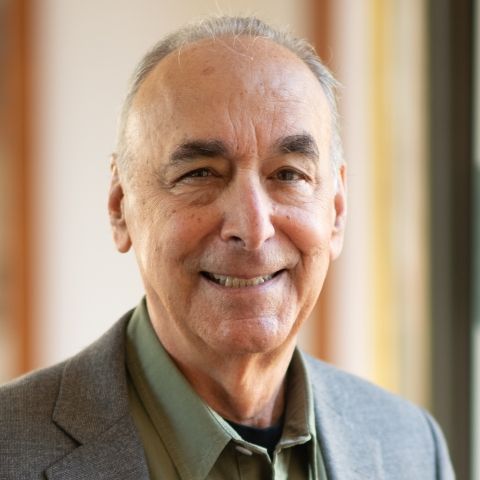
Kenneth S. Abraham is a distinguished Professor at the University of Virginia School of Law, where he has established himself as one of the nation's leading scholars and teachers in the fields of torts and insurance law. With decades of academic excellence, Professor Abraham has shaped legal education and scholarship through his influential writings, teaching, and service to the legal profession. Professor Abraham's research focuses on the intricate relationship between tort law and insurance law, exploring how these two areas intersect to shape risk distribution, liability, and compensation systems. His scholarship spans historical analysis of legal developments, theoretical frameworks for understanding tort principles, and practical applications of insurance coverage doctrines. He has made significant contributions to understanding the evolution of tort liability, the role of insurance in shaping legal outcomes, and the theoretical underpinnings of modern tort doctrine. Professor Abraham's work often bridges historical perspective with contemporary legal challenges, revealing patterns and insights that inform current debates in tort and insurance law. His most recent scholarship demonstrates a continued focus on the theoretical foundations of tort law while addressing emerging challenges in areas such as cyber liability, police accountability, free speech implications for tort liability, and pandemic-related insurance claims. Abraham's articles frequently examine how historical developments have shaped current legal doctrines and identify conceptual gaps in existing tort theory, particularly regarding the underappreciated role of liability insurance in the tort system. William L. Prosser Award from the American Association of Law Schools (2024) Fellow of the American Academy of Arts and Sciences Life Member of the American Law Institute All-University of Virginia Outstanding Teacher Award Distinguished Faculty Achievement Certificate from the State Council of Higher Education for Virginia American Bar Association's Robert B. McKay Law Professor Award First law professor elected as an honorary fellow of the American College of Coverage Counsel Professor Abraham has served on the ALI Council for 20 years and has been an adviser to the ALI's 'Restatement of Torts (Third)' and the senior adviser to the 'Restatement of the Law of Liability Insurance.' His expertise is frequently sought in major insurance coverage cases involving commercial general liability, directors and officers liability, environmental cleanup liability, toxic tort and products liability, and property insurance claims. He has also served as an arbitrator for the Dalkon Shield Claimants Trust, resolving over 100 claims by women seeking damages for injuries caused by the Dalkon Shield intrauterine device.
Claudia Álvares is an Associate Professor in the Department of Sociology at ISCTE - University Institute of Lisbon, where she also serves as an Integrated Researcher at CIES-Iscte - Center for Research and Studies in Sociology. Her academic work is centered on Communication and Culture, with a strong focus on gender, media, and identity politics. She holds a PhD in Media & Communication Studies from Goldsmith's College, University of London (2001), a Master's in Journalism from the same institution (1996), a Bachelor's in Social Communication from the New University of Lisbon (1992), and an Aggregation in Communication Sciences from ISCTE (2023). Her research interests include Media Studies, Gender Studies, Cultural Studies, Critical Theory, and the dynamics of populism and identity in digital public spheres. She explores how media representations shape gender identities, the impact of platformization on journalism, and the discursive formations of political polarization and far-right ideologies. Her recent publications reflect a consistent engagement with feminist media theory, digital citizenship, and the transformation of public discourse. She has published in leading journals such as Journalism Practice , Feminist Media Studies , and European Journal of Communication , with recurring themes of gendered representation, online toxicity, and the legitimacy of mainstream media. Member of the European Science Foundation College of Experts President of ECREA (2012–2016) Senior Editor, Cogent Social Sciences (Taylor & Francis) Editor, Routledge Studies in European Communication Research and Education Álvares has served as a principal investigator in multiple research projects and as an evaluator for the European Research Council, FCT, British Academy, and COST Actions. She has also contributed to international academic service through editorial roles and conference leadership. Her work bridges theoretical rigor with critical engagement in contemporary media and political challenges. She is actively involved in research teams and projects focused on media, democracy, and digital transformation, contributing to interdisciplinary collaborations across Europe.
Adam Kleczkowski is a Professor in the Department of Mathematics and Statistics at the University of Strathclyde, where he holds the Global Talent Chair. He is actively involved in research, supervising PhD students, and contributing to public health policy, particularly in epidemiological modeling. University: University of Strathclyde School: Faculty of Science Department: Department of Mathematics and Statistics Position: Professor Email: a.kleczkowski@strath.ac.uk ORCID: 0000-0003-1384-4352 Twitter: @aklecz Education: Doctor of Science in Theoretical Physics, Jagiellonian University (1989) Master of Physics, Jagiellonian University (1984) Adam Kleczkowski's research focuses on mathematical biology, particularly in modeling infectious diseases in human, animal, and plant populations. His work integrates ecological modeling, bioeconomic analysis, and public health, with applications in food security, sustainability in aquaculture, and pollination services. He specializes in parameter estimation for epidemiological systems and develops models to inform disease control strategies. His recent contributions include modeling the spread of COVID-19 in Scottish care homes and analyzing the risks of measles outbreaks due to declining vaccination rates. His recent publications and blog posts reflect a strong trend in combining rigorous mathematical modeling with accessible science communication. He frequently writes for The Conversation and maintains two blogs—'Statistically (in)significant' in English and 'Pandemia 2021' in Polish—covering topics such as tuberculosis, immigration, aging populations, and election data. His scientific work is supported by major funders including NERC, MRC, BBSRC, Scottish Government, and Defra. Scientific Contributions and Outreach: Member, Science Advice and Response Team, Plant Health Centre (Scotland) Expert contributor to Scottish Government on Plant Health business case Contributor to Scottish Government and Public Health Scotland COVID-19 modeling Author of 14 articles in The Conversation (over 1.5 million reads) Regular science blogger and tweeter (@aklecz) He has led or participated in 24 research projects, including international collaborations such as a Memorandum of Understanding with ICRISAT. He has supervised multiple research students and projects, and his work contributes to UN Sustainable Development Goals related to health, food security, and sustainable agriculture. He is also an Honorary Professor at the University of Stirling (2018–2020), reflecting his ongoing academic influence.
Liu Shan is a Professor in the Department of Radio and Television at Tongji University's School of Art and Media, serving since 2002 with a PhD in Modern and Contemporary Literature from Fudan University. His international academic engagements include visiting positions at City University of Hong Kong, University of Illinois at Urbana-Champaign, and University of Utah under China's Ministry of Education program. His educational trajectory features: Postdoctoral Fellowship, Journalism & Communication, Fudan University (2000-2002) PhD in Modern & Contemporary Literature, Fudan University (1997-2000) MA in Literature & Aesthetics, Xiamen University (1994-1997) BA in Chinese Language & Literature, Hunan Huaihua University (1989-1992) Specializing in media culture and new communication's societal impact , his research examines audience psychology, media representation, and cultural identity formation. Key contributions include analyzing WeChat public spheres, hip-hop subcultures, and historical media narratives, consistently bridging traditional scholarship with digital age phenomena through rigorous textual and audience analysis. His 15 most recent publications (2006-2021) reveal evolving focus from foundational media theory to contemporary digital culture, with increasing attention to Chinese social dynamics. Early works address news reform and audience theory, while recent studies tackle WeChat public life, cosmetic surgery commodification, and underground hip-hop, demonstrating methodological versatility across historical analysis, ethnography, and critical discourse studies. Major recognitions include: Shanghai Philosophy & Social Sciences Award (2006 monograph) Shanghai Academic Year Conference Excellent Paper Awards (2006, 2007) Tongji University 'Famous Course & Excellent Teacher' (2015) Multiple Excellent Thesis Supervisor Awards (2006-2022) 14th Shanghai College Student TV Festival Instructor Award (2021) As Master's Supervisor, he has mentored numerous students evidenced by eight Tongji University thesis awards (2006-2022). His research is funded by National Art Science projects ('Television Audience Theory Research') and Ministry of Education key initiatives ('Contemporary Art Practice & Cultural Competitiveness'). He serves as Editor-in-Chief of Media Criticism and SSCI journal reviewer for CSMC, while contributing to academic governance as Ministry of Education Degree Committee expert. He actively participates in the School's Omnimedia Research Institute and Media Experiment Teaching Center, collaborating with the University Film & Television Association's Media Culture Committee to advance China's media studies landscape through conferences and publications.
Paul D'Angelo is a Professor of Communication, Journalism, and Film at The College of New Jersey's School of the Arts and Communication. He is a leading international scholar in news framing analysis, with a focus on intersections between mass communication and political communication. His work explores media politics, mediatization, and press priming models. Ph.D. in Mass Media and Communication (Temple University, 2002) M.A. in Mass Media and Communication (Temple University, 1993) B.A. in Rhetoric and Communication (Temple University, 1984) His research spans news framing theory, media effects on democratic processes, and historical roots of communication studies in politics and journalism. He has published extensively on framing typologies, metacoverage in election campaigns, and the role of visual elements in framing. Recent projects examine climate change framing through extreme weather coverage and critical incidents in journalism ethics. Professor D'Angelo teaches courses ranging from introductory communication theory to advanced mass media effects and quantitative research methods. He has served on editorial boards of four major communication journals and reviewed for over 30 additional journals. Kappa Tau Alpha Award (2000) Top 3 Paper, International Communication Association (1999) Faculty Sabbatical (2013)
Dr. Beate Josephi is an Honorary Associate in the Discipline of Media and Communications at the University of Sydney. Her research focuses on global journalism, democracy's relationship with media, literary journalism, and journalism education. She has held visiting roles at institutions like Suleyman Demirel University (Kazakhstan) and served in leadership positions within IAMCR (International Association for Media and Communication Research), including roles on election committees and executive boards. Her work bridges theoretical frameworks with empirical studies, emphasizing cross-cultural journalistic practices and ethical reporting. Recent projects include analyzing freelance journalism dynamics during the pandemic and investigating cross-border reporting in the Asia-Pacific region. She has co-edited influential texts such as Journalism Education in Countries with Limited Media Freedom and contributed to global media ethics discourses through works like Handbook of Global Media Ethics . Her research also explores the evolving role of journalists in democracies and the challenges faced by media workers in rapidly changing industries. Education & Professional Background: While specific educational details are not explicitly stated, her extensive academic contributions and editorial roles indicate advanced training in media and communication studies. Her visiting professorships and international collaborations highlight a globally oriented career. Research Trends: Dr. Josephi’s recent publications emphasize cross-border journalism, media ethics in resource-sharing contexts, and the impact of industry contraction on freelance journalists. Her work often combines comparative analyses of global journalism cultures with case studies from diverse regions, including Australia, Asia-Pacific, and post-Soviet states. Key themes include professional identity, gender representation in media, and the tension between journalistic norms and democratic needs. Awards & Grants: While no formal awards are listed, her sustained leadership in international academic associations underscores peer recognition. Her roles in major research projects like the Worlds of Journalism Study (WJS) reflect significant contributions to the field’s foundational knowledge. Labs & Teams: Collaborations include the Worlds of Journalism Study project and partnerships with institutions in Kazakhstan and Uzbekistan, reflecting her commitment to global academic networks.
Duncan Koerber is an Associate Professor at Brock University’s Department of Communication, Popular Culture and Film. He holds a PhD from York University and Ryerson University, an MA in Journalism from the University of Western Ontario, and a BA in English, Professional Writing, and Political Science from the University of Toronto. His research focuses on crisis communication theory, writing pedagogy, and media/journalism history. He teaches courses on business communication, public relations, and crisis communication. Education: PhD, Communication & Culture, York University and Ryerson University MA, Journalism, University of Western Ontario BA, English, Professional Writing & Political Science, University of Toronto Research Interests: His work examines how media shape political identities (e.g., early Canadian newspapers’ role in party formation), modern crisis communication in social media, and writing pedagogy. He investigates why social media crises are so damaging to organizations and explores historical media’s role in political discourse. Recent projects include analyzing municipal pandemic communication and sports crisis management. Publications: Koerber authored Crisis Communication in Canada (2017, UTP) and co-edited a 2020 Canadian Journal of Communication special issue on crisis theory. His research appears in top journals like Public Relations Review and Journal of Canadian Studies . Teaching & Advocacy: He emphasizes practical writing skills for professional contexts. Courses include business communication strategies and crisis management frameworks for organizations facing reputational threats. Labs/Teams: No dedicated lab, but collaborates with Brock’s Communication Research Group on interdisciplinary projects.
Caora McKenna is an Assistant Professor at the University of King’s College in Halifax, specializing in digital journalism, audience engagement, and emerging media platforms. She previously served as Audience Editor at The Globe and Mail and City Editor at The Coast, focusing on Halifax city news, policing, and housing. Her teaching includes courses on digital reporting and journalism ethics. McKenna holds a Combined Honours Bachelor of Journalism from King’s College and a Spanish degree from Dalhousie University. She is fluent in English and Spanish, with research interests in AI’s impact on news, local media sustainability, and audience-centric storytelling. She launched The Signal’s TikTok channel with students and has contributed to over 159 articles across diverse topics including health, politics, and culture. Education: Bachelor of Journalism (Honours), University of King’s College Spanish Language, Dalhousie University Research Interests: Digital optimization, journalism ethics, AI in news production, local media resilience, and audience engagement strategies. She frequently writes about emerging platforms, reader habits, and access to information. Grants & Advising: No formal grants or advisees listed, but her teaching and mentorship at King’s reflect her commitment to student-driven projects like The Signal’s TikTok initiative. Labs/Teams: Involved in the News Workshop at King’s College, fostering experimental journalism projects.
Dr. Kathleen Beckers serves as an Assistant Professor within the Faculty of Social and Behavioural Sciences at the University of Amsterdam, specializing in Journalism, Public opinion, News content diversity, Opinion polls, and Vox pops. Her research examines media representation of public sentiment and its democratic implications. Her primary research domains include: Journalistic perceptions and projection effects in public opinion representation Impact of actor/viewpoint diversity in news content on audience perceptions Framing dynamics in immigration/migration coverage and election reporting Vox pops as alternative public opinion indicators versus traditional polls Disinformation effects on journalist-politician relationships and media trust Analysis of her 2022-2025 publications reveals consistent methodological rigor through experimental designs and content analysis, demonstrating how news diversity influences audience opinions while exposing persistent biases in media representation. Her work particularly highlights framing consequences in migration discourse and electoral coverage. Dr. Beckers engages in PhD supervision though specific advisees remain unlisted; no grant details appear in available documentation.