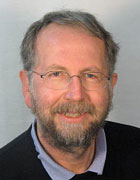
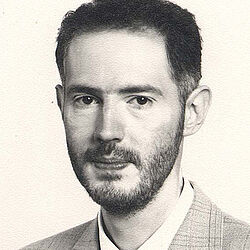
Prof. Thomas Huckle is a Professor of Scientific Computing at the Technical University of Munich (TUM), affiliated with the TUM School of Computation, Information and Technology and the Department of Computer Science. His research focuses on numerical linear algebra, parallel computing, and their applications in physics and computer science. Key interests include solving linear problems on parallel architectures, image processing, multigrid methods, preconditioning, and tensor-based high-dimensional problem approximation. Education: Studied mathematics and physics at the University of Würzburg (diploma in mathematics, 1985 PhD, 1991 habilitation). Professional History: DFG-funded research at Stanford University (1993–1994), appointed to TUM in 1995, and member of the Mathematics Department since 1997. Research Interests: Prof. Huckle’s work spans numerical methods for large-scale systems, including structured matrices, regularization techniques, and quantum computing applications. He develops algorithms for parallel computing environments and contributes to software tools like ELPA for eigenvalue problems. Grants and Labs: Engaged in projects such as the ELPA-AEO eigensolver and ESSEX-II initiatives. Active in the SCCS (Scientific Computing and Computational Science) group at TUM, focusing on high-performance computing and numerical methods.
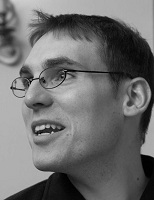
Christian B. Mendl is an Assistant Professor (Rudolf Mößbauer Tenure Track) at Technische Universität München's Department of Computer Science. His research focuses on quantum computing, tensor network methods, computational physics/chemistry, high-performance computing, and theoretical condensed matter physics. He holds a PhD in Physics from LMU München and dual diplomas in Physics and Mathematics from TU München, with postdoctoral experience at Stanford University and TU Dresden. His work bridges quantum algorithms, numerical methods, and interdisciplinary applications. Notable contributions include Riemannian quantum circuit optimization, tensor network simulations, and quantum-classical computing frameworks. He collaborates with institutions globally and actively develops open-source tools like PyTreeNet for tensor networks. Recent research emphasizes scalable quantum algorithms, optimization techniques, and hybrid quantum-classical systems. His work addresses challenges in quantum computing, many-body systems, and high-performance simulation frameworks.
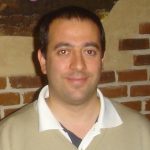
Mahdi Moeini is an Associate Professor in Operations Research and Machine Learning at ENSIIE (École Nationale Supérieure d'Informatique pour l'Industrie et l'Entreprise), affiliated with the SAMOVAR laboratory at Télécom SudParis, Institut Polytechnique de Paris. His research focuses on optimization techniques, including DC programming, combinatorial optimization, and their applications in logistics, healthcare, and finance. Academic Roles: Associate Professor (2022–present), Adjunct Lecturer (2014–2022) at TU Kaiserslautern, Germany. Research Expertise: Portfolio optimization, vehicle routing with drones, emergency medical systems, and metaheuristics. Key Contributions: Published 14 journal papers, 24 conference chapters, and 8 technical reports, with a Habilitation in 2018. Research Interests: Combinatorial optimization, mathematical programming, sustainability in digitization, and machine learning applications. Teaching: Courses include Operations Research, Data Science, Computational Intelligence, and Financial Data Analysis.
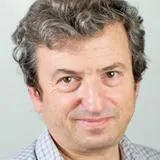
Petr Tichý is an Associate Professor at the Department of Numerical Mathematics, Faculty of Mathematics and Physics, Charles University. He specializes in numerical analysis, matrix computations, and Krylov subspace methods. His work focuses on error estimation in iterative methods and the convergence properties of algorithms like the conjugate gradient method. Education: Ph.D. in Scientific Computations, Charles University (2002) M.S. in Computational Mathematics, Charles University (1997) Research Interests: His research emphasizes numerical linear algebra, including matrix approximations, CG algorithm stability, and the development of efficient error estimation techniques. He has contributed to the analysis of block conjugate gradient methods, Gauss-Radau error bounds, and the theoretical foundations of Krylov subspace methods. Publications: Tichý has authored over 30 peer-reviewed articles and a book on error norm estimation in conjugate gradient algorithms. His recent work includes studies on matrix best approximation and the behavior of error estimates in iterative solvers. Awards: Dean's Award for Best Book (2024) Jaroslav Jirsa Prize (2013) Otto Wichterle Prize (2007) Ivo Babuška Prize (2002) Grants & Collaborations: He has led projects funded by GACR and participated in EU initiatives. Collaborators include Gerard Meurant, Vance Faber, and Jörg Liesen.
Professor Lev Kantorovich is a distinguished academic at King’s College London’s Department of Physics, affiliated with the Thomas Young Centre and the Centre for Non-Equilibrium Science (CNES). He holds a Professorship since 2009, progressing from a Lecturer role (2002) and Reader (2005). His academic journey includes a PhD from Latvian University (1975), followed by postdoctoral work at Keele University and University College London. His research focuses on theoretical simulations of solid surfaces, atomic-scale imaging via AFM/STM, and self-assembly of molecular systems. Key areas include non-equilibrium statistical mechanics, quantum transport in nanojunctions, graphene growth kinetics, and embedded-cluster methods for electronic structure calculations. He develops advanced computational techniques like non-equilibrium Green’s functions (NEGF) and kinetic Monte Carlo simulations. Recent work explores photon-assisted phenomena in nanojunctions, photoinduced surface reconstructions, and catalytic applications of molybdenum subnanoclusters. His mathematical contributions span transforms (Laplace, Fourier), linear algebra, and partial differential equations, underpinning interdisciplinary modeling. Affiliated with CNES, he collaborates globally on non-equilibrium science. His research addresses energy, materials, and nanotechnology challenges, with applications in molecular electronics and surface engineering.
Prof. Thomas Blesgen is a Professor of Mathematics and Digital Technology at Technische Hochschule Bingen, Department 2. He holds a habilitation and PhD in Mathematics from the University of Bonn and University of Leipzig respectively. His career includes research stays at the University of Cambridge, California Institute of Technology, and Max Planck Institute for Mathematics in the Sciences. Research focuses on nonlinear mechanics, electronic structure calculations, multiscale modeling, and materials science. He has pioneered work on Cosserat plasticity, two-phase flow models, and continuum limits of nanomaterials. His methods integrate partial differential equations, calculus of variations, and geometric measure theory. Notable projects include DFG-funded dynamic recrystallization studies and NSF/AFOSR-sponsored electronic structure computations. Recent work addresses microstructure formation in nonlinear elasticity. He teaches applied mathematics across bachelor's and master's programs.
Dirk Blömker is a Professor in the Institute of Mathematics at the University of Augsburg (since 2006). His research focuses on Stochastic Partial Differential Equations (SPDEs) with applications to surface growth models , phase separation (Cahn-Hilliard, Allen-Cahn), stochastic bifurcation , and multiscale analysis (amplitude/modulation equations, fast diffusion). He also works on filter theory (Ensemble Kalman) and numerics of SPDEs . Habilitation : RWTH Aachen (2006) Doctorate : University of Augsburg (2000) Diploma : University of Münster (1997) Intermediate Diploma : University of Münster (1993) Abitur : Gymnasium Lengerich (1989) His work spans rigorous mathematical analysis of SPDEs (existence/uniqueness, blow-up, regularity) and numerical methods (convergence analysis, a-posteriori bounds). Recent articles examine fractional noise, Lévy processes, and ensemble Kalman inversion. Collaborators include Luigi Bianchi, Claudia Schillings, and Philipp Wacker. He has held academic positions at RWTH Aachen (Assistant/Acting Lecturer), University of Bonn (Acting Lecturer), and University of Warwick (DFG Research Fellowship).
Professor Alexander Molev is a distinguished academic affiliated with the Faculty of Science at the University of Sydney . His research focuses on Classical Lie algebras and their representations Vertex algebras Quantum groups Algebraic combinatorics and aligns with the Faculty’s research strengths in Understanding the Universe, Fundamental Laws of Nature, and Complex Systems. Research Trends : His recent work explores super-Yangians, quantum Sugawara operators, and W-algebras for classical and superalgebras. He investigates algebraic structures related to Lie superalgebras, quantum integrability, and symmetry algebras in mathematical physics. Scientific Awards : He has received 2001 : Medal of the Australian Mathematical Society 2019 : Fellow of the Australian Academy of Science Grants : His research has been supported by multiple Australian Research Council (ARC) Discovery Projects, including studies on quantum vertex algebras (2017), classical W-algebras (2014), and affine Lie algebras at the critical level (2013). Education : He earned a PhD from Moscow State University in 1986.
Karl Meerbergen is a Full Professor in the Department of Computer Science at KU Leuven, Faculty of Engineering Sciences. He leads research in numerical analysis and applied mathematics with a focus on eigenvalue problems, model order reduction, and computational linear algebra. He is a member of the Numerical Analysis and Applied Mathematics (NUMA) research unit and holds affiliations with multiple KU Leuven institutes including iSi Health, Leuven.AI, Leuven.AM, and the LGI Gravitation Institute. His research spans several key areas of numerical mathematics with emphasis on algebraic eigenvalue problems, algebraic model order reduction, preconditioning techniques, computational acoustics, tensor computations, exascale computing, generic programming, and parallel computing. His work bridges theoretical numerical analysis with practical applications in engineering and scientific computing. Analysis of his recent publications shows a strong focus on advanced numerical methods for eigenvalue problems, model order reduction techniques, and parallel computing approaches. His work frequently addresses challenges in large-scale scientific computing, with applications in structural dynamics, acoustics, and optimization problems. The research demonstrates increasing sophistication in handling nonlinear and parametric systems through rational approximation methods and specialized preconditioning techniques. Dr. Meerbergen actively contributes to the academic community through his teaching responsibilities and supervision of graduate students. His work has significant implications for computational science and engineering applications requiring efficient numerical solutions to complex mathematical problems.
Jingzhi Li is a Professor and Associate Chair of the Department of Mathematics at Southern University of Science and Technology (SUSTech), where he has been serving since January 2020. Previously, he was an Associate Professor at SUSTech from June 2012 to December 2019. His research focuses on scientific computing, finite element methods, inverse problems in mathematical physics, shape optimization in differential forms, and computational finance. Education: PhD in Applied and Computational Mathematics, Chinese University of Hong Kong, 2009 MS in Computer Science, Wuhan University, 2004 BS in Mathematics, Wuhan University, 2001 Professor Li's research spans multiple areas of computational mathematics with a particular emphasis on inverse problems and their applications. His work combines theoretical analysis with practical numerical methods to solve challenging problems in mathematical physics. He has made significant contributions to the development of globally convergent numerical methods for coefficient inverse problems, finite element methods for high-order PDEs, and optimization techniques using differential forms. His research has applications across various domains including electromagnetic scattering, wave propagation, and computational finance. Analysis of Professor Li's recent publications reveals a strong focus on inverse problems, particularly in the areas of coefficient identification, scattering theory, and phaseless data reconstruction. His work demonstrates consistent innovation in developing convexification methods for solving nonlinear inverse problems with guaranteed global convergence. The research spans multiple mathematical disciplines including partial differential equations, numerical analysis, and optimization theory, with applications in physics, engineering, and medical imaging. Scientific Awards: Career Award, Shenzhen, 2021 Excellent Mentor Award, Shude Residential College, SUSTech, 2020 Dual-excellence Award, Faculty of Science, SUSTech, 2020 Highlight Award, Faculty of Science, SUSTech, 2019 Excellent Research Award, SUSTech, 2016 Excellent Mentor Award, SUSTech, 2016 Peacock Award (Tier B), Shenzhen, 2013 Best Doctoral Dissertation Award, Mathematical Society of Hong Kong, 2011 Shenzhen Excellent Talent Project (Outstanding Young Scientists Project), 2021 National Key Talent Program Youth Project, Mathematics and Science, 2012 Professor Li has demonstrated strong commitment to student mentorship, evidenced by multiple Excellent Mentor Awards from SUSTech. His research has been supported by significant grants including the National Key Talent Program Youth Project and Shenzhen's Peacock Plan. His collaborative work spans multiple institutions, particularly with ETH Zurich and Chinese Academy of Sciences, reflecting a strong international research network. While specific grant details aren't provided in the text, his extensive publication record in top journals suggests substantial research funding. Professor Li's research activities are centered around computational mathematics with particular strength in inverse problems. His work connects theoretical mathematics with practical applications across physics and engineering domains. The consistent publication record in high-impact journals demonstrates an active and productive research program with significant contributions to the field of computational inverse problems.
Jose Luis Andres Yebra is a faculty member at the Universitat Politècnica de Catalunya (UPC), affiliated with the Department of Applied Mathematics IV within the College of Engineering. He has been a central figure in research groups such as COMBGRAPH (Combinatorics, Graph Theory, and Applications) and OMGRAPH (Optimisation Methods on Graphs), contributing extensively to theoretical and applied mathematics. His research interests lie at the intersection of discrete mathematics and computer science, with a primary focus on Graph Theory , Combinatorics , and the design and analysis of Interconnection Networks . His work encompasses Spectral Graph Theory , Network Optimization , and the mathematical modeling of Dynamic Memory Networks , with applications in computer architecture and communication systems. The analysis of his 15 most recent publications reveals a consistent trajectory in extremal graph theory and network design. His research frequently addresses problems related to graph diameter, connectivity, and vulnerability, using spectral methods (eigenvalues of adjacency and Laplacian matrices) to derive bounds and construct optimal network topologies. A significant portion of his work is dedicated to solving the degree-diameter problem and related extremal problems in graph theory, demonstrating a deep commitment to foundational mathematical inquiry with practical implications for high-performance computing. Distinció Jaume Vicens Vives a la Qualitat de la Docència Universitària en la modalitat col·lectiva 7è premi a la Qualitat de la Docència Universitària Andres Yebra has played a significant role in academic service, serving on the editorial boards of prestigious journals such as Discrete Mathematics , IEEE Transactions on Computers , and Journal of Graph Theory . He has been a key participant in numerous competitive R&D+I projects, including national and regional grants focused on combinatorics and graph theory, which have supported his research and collaborations. His academic advising, while not explicitly detailed, is inferred from his long-standing mentorship within research groups and co-supervision of doctoral theses by colleagues. He has been an integral member of the COMBGRAPH and OMGRAPH research groups at UPC, fostering a collaborative environment for the study of combinatorial structures and their applications in network design and optimization. His work has often involved large collaborative efforts, particularly in national research projects, highlighting his role as a team leader and coordinator in the field of discrete mathematics.
Thorsten Hohage is a Professor at the Institute of Numerical and Applied Mathematics, Georg-August-Universität Göttingen, and a Max Planck Fellow at the Max Planck Institute for Solar System Research. His work bridges inverse problems, numerical analysis, and wave equation modeling. Research interests focus on computational methods for inverse problems in helioseismology, aeroacoustics, and imaging. Recent projects include iterative holography for solar differential rotation, phase retrieval in X-ray and EUV imaging, and regularization techniques in Banach spaces. Collaborations span institutions like Zuse Institute Berlin and Johannes-Kepler University Linz. Key publications since 2022 address viscous-inertial solar waves, phaseless scattering, and learned boundary conditions. His work employs advanced numerical algorithms for heterogeneous materials and dispersive media, with applications in astrophysics and biomedical imaging.
Wing Hong Leung (Joseph) is an Assistant Professor in the Department of Mathematics at Rutgers, The State University of New Jersey. His research focuses on advanced topics in number theory and automorphic forms. Rutgers University Leung's work spans several key areas in mathematics: Subconvexity bounds for L-functions Trace formulas and functional equations Character sums and reciprocity laws Shifted convolution sums for GL(3)×GL(2) Applications of the delta method to automorphic forms Converse theorems via beyond endoscopy His publications highlight a trend in addressing deep theoretical problems in analytic number theory, particularly through the lens of automorphic representations and their associated L-functions. Techniques involving delta methods, Voronoi formulas, and spectral theory are recurrent themes. No scientific awards or honors are explicitly mentioned in the provided texts. No formal advisees or teaching roles beyond faculty title are documented in the scraped data. Similarly, grants or research funding are not referenced.
Joseph Stover is a Professor of Mathematics at Gonzaga University with expertise in probability theory, stochastic processes, and mathematical modeling. His research focuses on theoretical ecology and population dynamics, with specific interests in stochastic domination, monotonicity, and coupling techniques. Dr. Stover received his Ph.D. in Applied Mathematics from the University of Arizona and his B.S. in Mathematics from the University of Texas. His educational background has provided a strong foundation for his interdisciplinary research that spans mathematics, ecology, and statistics. His research interests include: Stochastic processes and probability theory Stochastic domination and monotonicity Theoretical ecology and population modeling Population spread and dispersal in biological invasions Interacting particle systems and multitype contact processes Markov chain Monte-Carlo and exact sampling methods Analysis of Dr. Stover's publications from 2010-2022 reveals a consistent focus on stochastic processes applied to ecological systems. His work demonstrates a progression from theoretical mathematical frameworks to increasingly applied ecological contexts, particularly examining how individual variability affects population dynamics. Recent publications show continued development of stochastic domination techniques while expanding into linguistic applications as evidenced by his 2021 paper on Zipfian analysis of speech patterns. Dr. Stover teaches a range of mathematics courses including Calculus, Real Analysis, Probability Theory, and Mathematical Statistics. His teaching portfolio reflects his research expertise, particularly in advanced courses like MATH 421 (Probability Theory) and MATH 422 (Mathematical Statistics). Outside of his academic work, Dr. Stover maintains interests in philosophy, religion, the metaphysical foundations of mathematics and science, human history, and language. He also enjoys outdoor activities such as hiking, camping, and rock climbing, which complement his research interests in theoretical ecology.
Dr. Christian Döding is a Research Fellow at the Institute for Numerical Simulation, University of Bonn, since 2023. Previously, he held a postdoctoral position at Ruhr University Bochum (2021-2023). His research focuses on numerical analysis of partial differential equations and applied dynamical systems, with applications in quantum physics and superconductivity. Education PhD in Mathematics, Bielefeld University, 2019 (Supervisor: Wolf-Jürgen Beyn) M.Sc. in Mathematics, Bielefeld University, 2015 B.Sc. in Mathematics and Physics, Bielefeld University, 2013 Research Interests His expertise spans multiscale finite element methods, structure-preserving time integration, and convergence analysis for nonlinear PDEs. He specializes in numerical solutions for nonlinear Schrödinger equations, Gross-Pitaevskii equations, and Ginzburg-Landau equations, with direct applications to Bose-Einstein condensates and superconductivity. His work also addresses stability analysis, pattern dynamics, and computational methods for nonlinear waves in evolution equations. Publication Trends Recent publications (2022-2025) demonstrate concentrated research on multiscale numerical techniques for quantum physics PDEs. Key themes include homogenization of wave propagation in time-varying media, vortex-capturing algorithms for superconductivity models, and energy-conserving integrators for rotating quantum systems. His methodology consistently emphasizes error estimation, stability analysis, and structure preservation, frequently utilizing localized orthogonal decomposition frameworks. Research Environment Dr. Döding is embedded in the research group at the Institute for Numerical Simulation (University of Bonn), which maintains active collaborations in computational mathematics and scientific computing, particularly in physics-driven PDE applications.