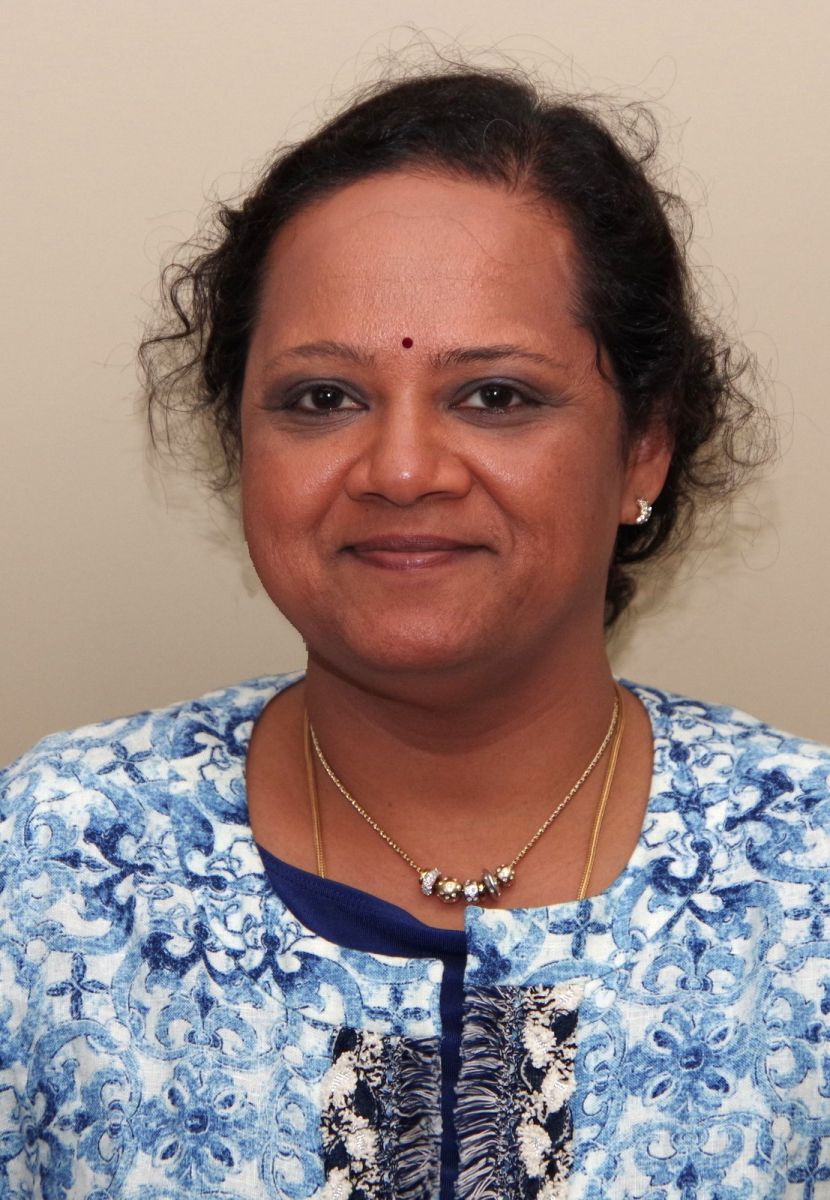
Katya Krupchyk is a Professor in the Department of Mathematics at the University of California, Irvine (UCI). Her research focuses on inverse problems, partial differential equations (PDEs), microlocal analysis, and spectral theory. She holds a position in the Analysis and Partial Differential Equations group at UCI. Her work often involves collaborations with leading institutions and researchers globally, addressing challenges in mathematical physics, geometric inverse problems, and nonlinear analysis. Dr. Krupchyk teaches advanced courses in real analysis, functional analysis, and partial differential equations. She has contributed to editorial boards for journals such as Journal of Spectral Theory , SIAM Journal on Mathematical Analysis , and Inverse Problems and Imaging . Her research spans theoretical and applied aspects of inverse problems, including studies on fractional operators, magnetic Schrödinger equations, and anisotropic media. Recent work emphasizes high-frequency analysis, nonlinear perturbations, and reconstruction algorithms for geometric inverse problems.
Kyle Luh is an Assistant Professor at the University of Colorado Boulder in the Department of Mathematics, part of the College of Arts and Sciences. His research focuses on probability, random matrix theory, and randomized algorithms. Education: Ph.D. in Mathematics from Yale University (2017) His recent work explores eigenvalue gaps in random matrices, controllability of non-Hermitian systems, and applications to sparse reconstruction. Publications span topics like circular law for block band matrices, Littlewood–Offord inequalities, and stability analysis in quantum walks. Key trends in his research include spectral analysis of random graphs, robustness in learning algorithms, and combinatorial aspects of matrix theory. His articles highlight intersections between pure probability and applied computational methods.
James R. Lee is a Professor in the Department of Computer Science at the University of Washington. His research spans theoretical computer science, probability, and geometry. He has held visiting scientist roles at Microsoft Research (2023, 2018, 2017) and participated in programs at the Simons Institute (2023, 2020, 2018, 2017, 2014). Research Interests: Algorithms, complexity theory, convex optimization, metric embeddings, spectral graph theory, probability, stochastic processes, and the interplay between discrete and continuous analysis. Teaching: Courses on modern algorithms, quantum computing, optimization theory, and spectral methods in theoretical computer science. Scientific Contributions: Developed sparsification algorithms for generalized linear models and norms with near-linear size guarantees (STOC'24, FOCS'23). Extended Cheeger-type inequalities to higher eigenvalues (STOC'12, STOC'18). Proved super-polynomial lower bounds for LP/SDP relaxations in constraint satisfaction (STOC'15, FOCS'13). Disproved Benjamini-Papasoglou conjectures on annular separators (Discrete Comp. Geom. 2024). Advanced understanding of random walks in geometric and unimodular graphs (Israel J. Math. 2023, GAFA 2023). Scientific Awards: Best Paper Award, STOC 2015
Claire Vernade is a Group Leader at the University of Tübingen within the Cluster of Excellence Machine Learning for Science. She holds an Emmy Noether award (2022) and an ERC Starting Grant (2024) for her projects FoLiReL and ConSequentIAL , focusing on theoretical reinforcement learning and non-stationary environments. Education: PhD from Telecom ParisTech (2017) Post-doctoral researcher at University of Magdeburg (2018) Her research bridges sequential decision making, bandit problems, and reinforcement learning theory. Recent work explores lifelong learning, distributional RL, and game-theoretic approaches to PCA, emphasizing mathematical rigor and algorithmic innovation. Recent publications highlight trends in non-stationary RL , continual learning , and bandit algorithms with complex feedback structures. Key subfields include meta-learning, adaptive control, and theoretical guarantees in dynamic programming. Scientific Awards: Emmy Noether Award (2022) ERC Starting Grant (2024) Outstanding Paper Award & Oral Presentation, ICLR (2021) She mentors PhD and master's students in theoretical machine learning, with current advisees including Nicolas Nguyen, Onno Eberhard, and Ziyad Sheebaelhamd. Her lab actively recruits candidates in bandit algorithms and RL theory through the IMPRS-IS and ELLIS doctoral programs. Claire co-leads diversity initiatives like Tübingen Women in Machine Learning and Women in Learning Theory, advocating for inclusivity in AI research. She has organized workshops at ICML and EWRL, and contributed to union activism in the tech industry.
Jonathan Weare is a Professor of Mathematics at the Courant Institute of Mathematical Sciences, New York University. He holds affiliations with the Faculty of Arts and Science and the Graduate School of Arts and Science. His academic journey includes roles as an Associate Professor at the University of Chicago (2014–2019) and Assistant Professor (2011–2014), following postdoctoral work as a Courant Instructor at NYU. He earned his Ph.D. in Mathematics from UC Berkeley in 2007. His research focuses on stochastic algorithms and models, with applications in astrophysics, biophysics, computational chemistry, and climate science. Key areas include Monte Carlo methods, rare event simulation, and machine learning-driven scientific analysis. Collaborations with domain experts ensure his work addresses real-world challenges in diverse fields. Recent publications emphasize advancements in trajectory stratification, rare event prediction using machine learning, and efficient algorithms for high-dimensional problems. Notable contributions include the BAD-NEUS framework and AI-based solar system instability predictions. His group’s interdisciplinary approach bridges computational methods with scientific inquiry. Weare has advised numerous students and mentored postdocs, fostering talent in applied mathematics and computational science. His work on Mercury’s orbital dynamics and extreme weather prediction showcases the societal impact of his research. Current projects explore AI applications in weather modeling and rare event analysis, leveraging cutting-edge machine learning techniques. Labs/Teams: His research group at Courant develops stochastic algorithms and collaborates with interdisciplinary teams in computational chemistry, climate science, and astrophysics. Key collaborations include the University of Chicago and Columbia University.
Hoon Hong is a Professor in the Department of Mathematics at North Carolina State University (NC State), affiliated with the College of Sciences. He holds editorial roles, including former Editor-in-Chief of the Journal of Symbolic Computation. His primary research focuses on developing mathematical theories, algorithms, and software for solving algebraic constraints in mathematics, science, and engineering. Key areas include computer algebra, computational real algebraic geometry, and quantifier elimination. Education: PhD in Mathematics from The Ohio State University (1990). He leads the Symbolic Computation research group and has advised numerous PhD and Master’s students since 1993. His work emphasizes efficiency in solving algebraic constraints through novel mathematical frameworks and algorithmic improvements, often leveraging structure and approximation techniques. Research Interests: Hong’s research centers on solving algebraic constraints via mathematical theories (e.g., subresultants, discriminants), algorithm design (e.g., parameterization, reparameterization), and software development (e.g., ImUp package). He explores applications in geometric modeling, optimization, and numerical analysis, with a focus on real algebraic geometry and symbolic computation. Notable Contributions: Development of the ImUp package for uniformity-improved curve reparameterization, structural analysis of cyclotomic polynomials, and advancements in quantifier elimination techniques. His work bridges theoretical computer algebra with practical applications in engineering and science. Lab/Team: Active in the Symbolic Computation group at NC State, collaborating on projects related to algebraic algorithms, computational geometry, and mathematical software development.
Professor Guoyin Li is a faculty member at the School of Mathematics & Statistics , University of New South Wales (UNSW Sydney). He holds a Ph.D. from The Chinese University of Hong Kong (2007) and has been at UNSW since 2011, currently serving as Professor and Research Director. Research Interests His work spans optimization , variational analysis , and multilinear algebra , with applications in robust optimization , structural engineering , and machine learning . He specializes in nonconvex nonsmooth optimization , tensor eigenvalue problems , and exact semi-definite programming relaxations . Recent Publications His articles focus on robust optimization for structural design, nonlinear approximation techniques, and conic programming for uncertain data. Key journals include Foundations of Computational Mathematics , Mathematical Programming , and Computer Methods in Applied Mechanics and Engineering . Awards and Grants Fellow of the Australian Mathematical Society (2023) 2022 AustMS Medal 2024 Marguerite Frank Award ARC Discovery Grants (2021-2023, 2025-2027) ARC Research Hub Project (2017-2021) Professional Roles He serves on editorial boards of SIAM Journal on Optimization , Optimization Letters , and Journal of Optimization Theory and Applications , and has delivered plenary lectures at international conferences in Austria, Spain, and Canada.
Dr. Roy Lederman is an Assistant Professor at the Department of Statistics and Data Science , Yale University. He is affiliated with the Quantitative Biology Institute (QBio) , the Applied Math Program , the Institute for Foundations of Data Science (FDS) , and the Wu Tsai Institute (WTI) . He was awarded the Sloan Research Fellowship (2023) . He previously held a Gibbs Assistant Professorship at Yale (2014-2015) and a postdoc at Princeton University (2015-2018) . Education: PhD in Applied Mathematics, Yale University (2014); dual BSc in Physics and Electrical Engineering, Tel-Aviv University. Teaching: Courses include Computational Tools for Data Science, Signal Processing, and Mathematical Machine Learning. Research Areas: Dr. Lederman works at the intersection of computational biology , structural biology , Bayesian inference , numerical analysis , and machine learning . His recent work focuses on cryo-EM and hyper-molecules for studying molecular heterogeneity, alternating diffusion for common variable recovery, and Zernike polynomials for 3D imaging. He also develops Hamiltonian Monte Carlo methods and randomized DNA sequencing algorithms . Publications Trends: His publications (15 most recent) emphasize structural biology and cryo-EM applications, machine learning (Bayesian deep learning, diffusion maps), numerical analysis (Fourier/Laplace transforms), and computational biology (DNA sequencing algorithms). Key sub-fields include heterogeneity analysis , manifold learning , Hamiltonian Monte Carlo , and Zernike polynomials . Scientific Awards: Sloan Research Fellow (2023) Dr. Lederman actively mentors graduate students and postdocs at Yale, and co-organizes the One World Cryo-EM seminar series . His lab develops open-source software (e.g., prolate function implementation ) and explores theoretical bounds on transforms and common variable recovery in multi-sensor experiments.
Adrian Lewis is the Samuel B. Eckert Professor of Engineering at Cornell University, affiliated with the College of Engineering and the Department of Operations Research and Information Engineering . He specializes in variational analysis and nonsmooth optimization, focusing on eigenvalue optimization and semi-algebraic geometry. His research has been supported by NSF grants, including DMS-1613996. He holds prestigious awards like the SIAM Fellow and the Lagrange Prize. Research interests include optimization algorithms, convex analysis, and the interplay between geometry and optimization. Notably, his work on eigenvalue optimization and nonsmooth problems has advanced theoretical and computational methods. He has contributed to journals like Mathematical Programming and SIAM Journal on Optimization , and serves as Co-Editor of Mathematical Programming A . Professional achievements include the 1995 Aisenstadt Prize, SIAM Outstanding Paper Award (2005), and the INFORMS Computing Society Prize (2018). He has held leadership roles, such as Director of ORIE (2010–2013), and editorial positions across multiple journals. His research also explores metric spaces, subgradient methods, and nonsmooth algorithms, reflecting a commitment to foundational and applied optimization challenges.
David P. Woodruff is a Professor in the Department of Computer Science at Carnegie Mellon University, part of the Theory Group within the School of Computer Science. He is actively involved in academic leadership roles, including chairing the CATCS (Conference on Theoretical Computer Science) and serving as PC chair for SODA 2024 and ICALP 2022. His research focuses on algorithms, data streams, machine learning, numerical linear algebra, sketching, and sparse recovery. He has been recognized with awards such as the Herbert Simon Award for teaching and the PODS Best Paper Award. Woodruff has advised numerous students and postdocs, including notable scholars like Ainesh Bakshi, Rajesh Jayaram, and Hongyang Zhang. His work often addresses foundational challenges in theoretical computer science, with contributions to distributed computing, streaming algorithms, and privacy-preserving techniques. He has published extensively in top conferences like NeurIPS, ICML, FOCS, and STOC, covering topics ranging from low-rank approximation to adversarial robustness in data streams. His teaching includes courses like Algorithms for Big Data and core algorithms courses, reflecting his commitment to both research and education. Collaborations span academia and industry, with applications in genomics and secure computation. Woodruff is a key contributor to the Foundations of Data Science program at the Simons Institute.
Arian Novruzi is a Full Professor in the Department of Mathematics and Statistics at the University of Ottawa, Faculty of Science. His expertise lies in partial differential equations (PDEs), shape optimization, numerical analysis, and mathematical modeling. He holds an MSc from the University of Tirana and a PhD from the University of Nancy. His research integrates theoretical and applied mathematics, with a focus on fluid dynamics, biomedical applications, and engineering challenges. Education: MSc in Mathematics, University of Tirana PhD in Mathematics, University of Nancy Dr. Novruzi’s research interests include the analysis and numerical solutions of PDEs, optimization of geometric shapes for engineering systems, and modeling of complex physical phenomena such as blood flow and tumor radiation therapy. His work bridges pure mathematics with practical applications, addressing problems in fluid mechanics, materials science, and biomedical engineering. His recent publications highlight advancements in non-diffusive neural network methods for hyperbolic conservation laws, blood flow modeling using Navier-Stokes equations, and the optimization of convex domains for energy maximization. These studies emphasize both theoretical rigor and computational innovation. Awards: No scientific awards explicitly mentioned in the provided texts. Dr. Novruzi has supervised students such as Terence C. Ngouoko. His grants and collaborations are not detailed here, but his research has implications for energy-efficient engineering designs and medical treatments. He has authored a Springer textbook on PDEs, reflecting his commitment to educational resources in mathematical sciences.
Professor Wang Li-Lian is a faculty member in the Division of Mathematical Sciences at Nanyang Technological University (NTU), Singapore. He holds the rank of Professor of Applied Mathematics and has been affiliated with NTU since 2006, progressing through roles including Assistant and Associate Professor before his current position. His research focuses on spectral methods, computational acoustics/electromagnetics, and PDE-based image processing. He has supervised multiple PhD and Master's students, including Zhang Jing, Gu Ying, Yang Zhiguo, and others. Education and career highlights include a Postdoctoral Research Associate at Purdue University (2002-2003), followed by a Visiting Assistant Professorship (2003-2005). His academic work spans spectral element methods, fractional differential equations, and high-order numerical techniques for wave scattering problems. Notable contributions include advancements in spectral-Galerkin methods for nonlocal operators and exact nonreflecting boundary conditions for Maxwell's equations. Research interests emphasize high-accuracy numerical schemes, with applications to fractional PDEs, metamaterial simulations, and image processing. His publications (over 100+ articles) reflect expertise in spectral methods, computational physics, and mathematical modeling. Teaching responsibilities include courses on partial differential equations, numerical analysis, and scientific computing.
Shuangping Li is an Assistant Professor in the Department of Statistics and Data Science at Yale University. She was previously a Stein Fellow in the Department of Statistics at Stanford University (2022–2025). Her research lies at the intersection of probability theory, high-dimensional statistics, theoretical machine learning, and the theory of algorithms. Ph.D. in Applied and Computational Mathematics, Princeton University (2022) B.Sc. in Mathematics, University of Hong Kong Her research interests include probability theory , high-dimensional statistics , theoretical machine learning , and theory of algorithms . She investigates foundational aspects of random constraint satisfaction problems, neural networks, spectral methods, and phase transitions in high-dimensional models. Her work often draws from statistical physics and combinatorics to explain algorithmic behavior. The recent articles highlight a strong focus on binary perceptrons , clustering in network models , and algorithmic phase transitions . Keywords across publications include probability, theoretical computer science, machine learning, and statistical inference. Subfields reveal deep engagement with spin glass theory, discrepancy minimization, spectral embedding, and information-computation gaps. Scientific awards include: Stein Fellow, Department of Statistics, Stanford University (2022–2025) She has advised and taught at both Stanford and Yale, including courses such as Advanced Probability , Theory of Probability , and Stochastic Processes . She has organized seminars at Stanford and has delivered invited talks at institutions including Cornell, Duke, UC Berkeley, and Princeton. Her collaborative research involves prominent scholars such as Allan Sly, Emmanuel Abbe, and Tselil Schramm. There is no mention of external grants, but her postdoctoral fellowship suggests research funding support. She is involved in academic service through organizing the Stanford Statistics and Probability Seminars. She maintains an active research presence with publications in top venues like STOC, FOCS, COLT, ICLR, and journals such as Annals of Probability and Annals of Statistics .
Dr. Chitra Rangan is a Professor in the Department of Physics at the University of Windsor and serves as the Associate Dean of the Faculty of Graduate Studies. She holds cross-appointments in Chemistry and Biochemistry (2008–2011) and has been a Visiting Associate Professor at the University of Michigan (2006–present). Her research focuses on quantum control, nanoplasmonics, and light-matter interactions, with applications in clinical diagnostics and quantum computing. She leads the BiopSys NSERC Strategic Network and contributes to Mathematics of Information Technology and Complex Systems (MITACS) . Education: Ph.D. in Physics, Louisiana State University (2000) M.Sc., Indian Institute of Technology, Madras (1993) B.Sc., University of Madras (1991) Affiliations: Ontario Physics Education Network (PI) NSERC Evaluation Committee (2018) International Day of Light Steering Committee (2018) Her research interests span quantum control theory, nanoplasmonic biosensors, and optimization in medical physics. She has advised over 40 students, many of whom pursue advanced degrees or careers in academia and industry. Notable grants include NSERC, CFI, and Mitacs funding. Publications highlight advancements in quantum state initialization, nanoplasmonic sensor design, and trapped-ion qubit control. Awards include the CAP Medal for Teaching and UWindsor Research Excellence (Emerging Scholars). Dr. Rangan actively promotes science outreach, organizing events like Science Rendezvous Windsor and delivering public lectures on quantum mechanics and medical physics. She has mentored dozens of students through co-op programs and summer projects, emphasizing hands-on learning and interdisciplinary collaboration.
Professor Dinh Phung is the Head of the Department of Data Science & AI at Monash University. His research focuses on machine learning, deep learning, generative AI, and robust AI systems. He has authored over 250 publications, with applications in NLP, computer vision, digital health, and cybersecurity. Phung holds a PhD and BSc(Hons) in Computer Science from Curtin University. He leads major projects like 'Can Machines Unlearn?' and 'Trustworthy Generative AI', funded by the Australian Research Council and the Department of Defence. Education: Doctor of Philosophy, Computer Science, Curtin University (2005) Bachelor of Science (Honours), Computer Science, Curtin University (2001) Research Interests: Machine learning, deep learning, and generative models Optimal transport and Bayesian methods Robust and trustworthy AI Applications in digital health, cybersecurity, and autism research Key Projects (2023–2029): Can Machines Unlearn? (2025–2029): Safety in AI Trustworthy Generative AI (2024–2026): Foundation models Robust Machine Learning via Optimal Transport (2023–2025) Awards and Grants: Australian Research Council grants for AI safety and robustness Department of Defence funding for robust learning systems Collaborations: Global partnerships in AI ethics, cybersecurity, and healthcare. Active advisory roles, including with the Victorian Parliamentary Library.