
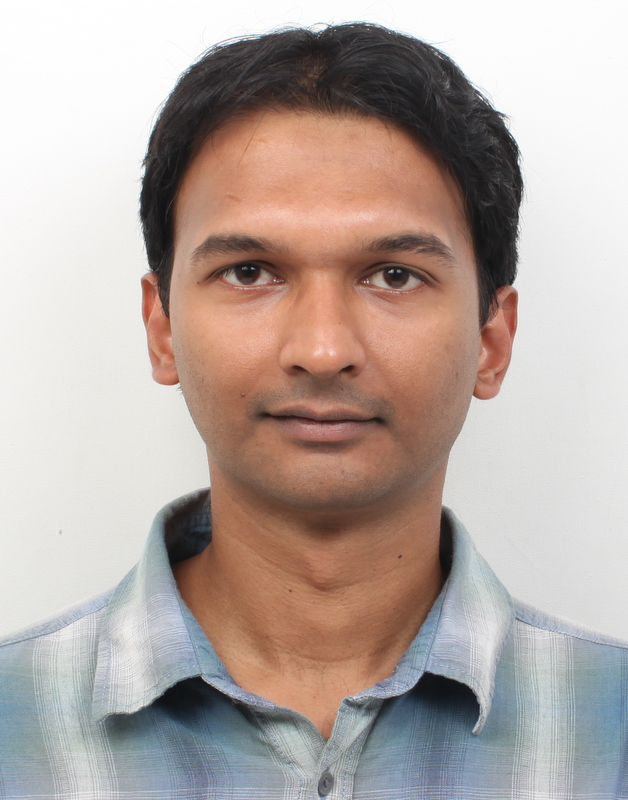
Shivaram Kalyanakrishnan is an Associate Professor at the Department of Computer Science and Engineering , Indian Institute of Technology Bombay , specialising in Artificial Intelligence and Machine Learning . His research spans sequential decision making , multiagent learning , multi-armed bandits , and humanoid robotics , with applications in robot soccer , computer games , and online advertising . He teaches advanced courses like CS 747: Foundations of Intelligent and Learning Agents and CS 748: Advances in Intelligent and Learning Agents , focusing on end-to-end system design and theoretical analysis. His scientific awards include the Best Student Paper Award at RoboCup International Symposium 2006 and nomination for Best Student Paper Award at AAMAS 2007 . His work on reinforcement learning and policy iteration has been published in leading venues such as IJCAI , ICML , and COLT , with recent contributions to railway scheduling and bandit algorithms. While no explicit list of advisees is provided, his research projects and publications suggest mentorship of students in collaborative efforts. Contact : shivaram@cse.iitb.ac.in .
جستوجوی استاد و پژوهشگر
استاد راهنما، استاد دانشگاه یا پژوهشگر مناسب برای مسیر پژوهشیتان را پیدا کنید و با او ارتباط بگیرید.
نمایش ۱-۱۵ از ۱٬۱۳۳ استاد راهنما
اطلاعات این پروفایلها از صفحات عمومی دانشگاهها جمعآوری شده و ممکن است بهروز نباشد.

Prof. Dr. Roland Büchi is a Professor at the School of Engineering, Zurich University of Applied Sciences (ZHAW), specializing in control systems engineering and applied AI. His affiliation includes leadership roles in research projects such as the ongoing 'Digital Bridge to Computer Science' initiative. With a career spanning decades, he maintains active research output and industrial collaborations. Research Interests: Büchi focuses on control systems optimization , particularly PID controller tuning using AI methods, system identification, and applications in robotics and drone technology. His work bridges theoretical control theory with practical implementations in mechatronics. Recent efforts explore machine learning for hysteresis modeling and swarm optimization for control systems. Publication Trends: His 15 most recent works (2018-2024) emphasize AI-driven control optimization , drone technology advancements, and engineering education. Dominant themes include PID parameter tuning for time-delayed systems, drone telemetry, and adaptive learning algorithms. A notable shift toward AI/ML applications in control engineering emerged post-2020. Labs and Teams: Büchi collaborates with researchers like Lukas Gruber and has historical ties to ETH Zurich’s robotics projects. His work involves experimental validation at ZHAW’s engineering facilities, with patents in turbocharger magnetic bearing systems.
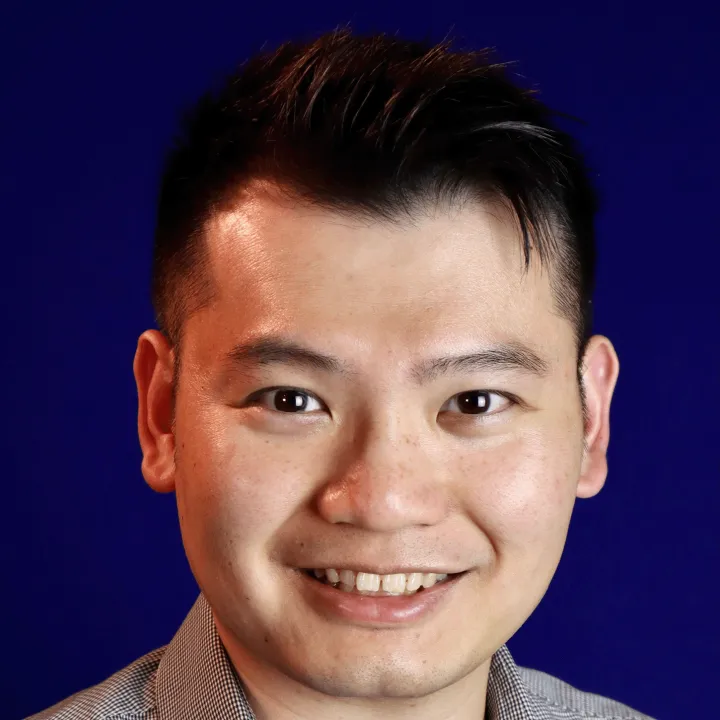
Alex Wongمشاهده پروفایل
استادیار
- Sensor fusion
- Unsupervised learning
- 3D vision
- +۲ مورد دیگر
Alex Wong is an Assistant Professor of Computer Science at Yale University, specializing in computer vision, robotics, and medical imaging. His research focuses on sensor fusion, unsupervised learning, 3D vision, robust perception under adverse conditions, and medical image analysis. He holds degrees from the University of California, Los Angeles (UCLA), including a B.S., M.S., and Ph.D. in Computer Science. Wong’s work bridges theoretical advances with practical applications, particularly in depth estimation, autonomous systems, and medical diagnostics. He has received prestigious awards such as the NeurIPS Outstanding Student Paper Award (2011) and the ICRA Best Paper Award in Robot Vision (2019). His research often addresses challenges in unstructured environments, emphasizing robustness and adaptability. Recent projects include developing novel frameworks for unsupervised depth completion, adversarial robustness in vision systems, and multimodal fusion techniques. His contributions span conferences like CVPR, ICCV, and ICRA, with a strong focus on advancing AI for real-world applications in healthcare and robotics. Education: B.S., Computer Science, UCLA M.S., Computer Science, UCLA Ph.D., Computer Science, UCLA Awards: NeurIPS Outstanding Student Paper Award (2011) ICRA Best Paper Award in Robot Vision (2019) His lab at Yale Engineering focuses on AI-driven solutions for perception challenges, collaborating across disciplines to advance medical imaging and autonomous systems. Current efforts explore generative models, continual learning, and vision-language integration for robust scene understanding.

Peter A. Raymond is the Oastler Professor of Biogeochemistry at Yale University's School of the Environment and Department of Geology and Geophysics. He serves as Senior Associate Dean of Research & Director of Doctoral Studies and is Co-Director of the Yale Center for Natural Carbon Capture. Raymond leads the Raymond Biogeochemistry Lab, which investigates the biogeochemistry of inland waters, enhanced weathering, methane cycling, and blue carbon systems through cutting-edge field, laboratory, and modeling approaches. Education B.S., Marist College Ph.D., College of William and Mary/Virginia Institute of Marine Science Research Focus Raymond's research fundamentally reshapes our understanding of carbon cycling in aquatic systems, demonstrating that rivers serve as dynamic conduits rather than passive pipes in the global carbon cycle. His work examines how biology and watershed variables alter carbon chemistry in streams, rivers, and estuaries, with particular emphasis on understanding global carbon cycles in relation to climate change. Raymond employs radiocarbon measurements to explore the age and turnover of carbon in aquatic ecosystems, revealing that rivers are variable sources of both old and young terrestrial dissolved organic carbon to oceans. The Raymond Lab is particularly known for developing the Pulse-Shunt Concept, which challenges traditional views of riverine biogeochemistry by emphasizing the episodic and dynamic nature of elemental fluxes. Current research directions include enhanced weathering and alkalinity studies for carbon removal, global greenhouse gas budgets through projects like RECCAP 2, natural methane cycling in aquatic systems, and blue carbon ecosystems such as mangroves and salt marshes. Publication Trends Raymond's recent publications (2023-2025) demonstrate a strong focus on global carbon and methane cycling, with particular attention to inland water systems' role in the Earth's climate system. His work increasingly integrates large-scale datasets with field measurements to understand how climate change and human activities affect greenhouse gas emissions from rivers and streams. A significant portion of his recent work contributes to international efforts like the Global Carbon Project, aiming to refine estimates of global carbon and methane fluxes. His research also shows growing emphasis on carbon removal strategies, particularly enhanced rock weathering through the Earthshot-funded GOAL-A project, and their potential for climate mitigation. Scientific Recognition Fellow of the American Association for the Advancement of Science Member of the Connecticut Academy of Science and Engineering Coastal and Estuarine Research Federations Cronin Award for Young Scientists ISI highly cited author Past Editor and Chief of the American Geophysical Union's journal Global Biogeochemical Cycles Mentorship and Funding Professor Raymond currently mentors four doctoral students (Jon Gewirtzman, Shou-En "Samuel" Tsao, Benjamin Saalidong, and Mingyu Zhang) and masters student Bella Garrioch. His research is supported by multiple grants from the National Science Foundation (NSF), including CAREER awards, and participation in the Earthshot-funded GOAL-A (Global Ocean And Land Alkalinization) project. Raymond has also been involved in significant collaborative projects with USGS data to research how climate and land use change alter carbon export from US watersheds, and with Lamont Doherty to develop methods for measuring air-sea gas exchange of CO2 in rivers and estuaries. Research Infrastructure The Raymond Biogeochemistry Lab at Yale is a dynamic research group comprising research scientists, postdocs, doctoral and masters students, and postgraduate researchers. The lab recently acquired a Mini Carbon Dating System (MICADAS) at Yale, significantly expanding their research capabilities in ecosystem carbon turnover and verification of natural climate solutions. The lab collaborates globally on projects in the Arctic, Hudson River, and middle Atlantic Bight, and is actively involved in the NASA Carbon Monitoring System BlueFlux field campaign to assess carbon exchange in coastal wetlands.
Tim G. J. Rudnerمشاهده پروفایل
استادیار
- Machine Learning
- Deep Learning
- AI Safety
- +۱۲ مورد دیگر
Tim G. J. Rudner is an Assistant Professor in the Department of Statistical Sciences at the University of Toronto, a Faculty Member at the Vector Institute, and a Title A Fellow at Trinity College, University of Cambridge. He was previously an Assistant Professor and Faculty Fellow at New York University. University: University of Toronto School: Faculty of Arts and Science Department: Department of Statistical Sciences Affiliation: Vector Institute, Trinity College (Cambridge) He holds a PhD in Computer Science and an MSc in Statistics from the University of Oxford, where he was advised by Yee Whye Teh and Yarin Gal, and a BS in Applied Mathematics and Economics from Yale University. PhD: Computer Science, University of Oxford MSc: Statistics, University of Oxford BS: Applied Mathematics and Economics, Yale University His research focuses on building robust, transparent, and trustworthy machine learning systems, particularly for high-stakes applications. He develops probabilistic models that improve generalization under distribution shifts, provide reliable uncertainty estimates, and enable fair and interpretable predictions. His work spans generative models, large language models, healthcare, and biomedical discovery. The recent publications highlight a strong trend toward function-space modeling, Bayesian regularization, and AI safety. Tim's work emphasizes principled uncertainty quantification, robustness to subpopulation and semantic shifts, and the development of frameworks for AI governance and specification. His research bridges theoretical advances with real-world applications, especially in safety-critical domains like medicine and defense. Tim has received numerous accolades including being named a Rhodes Scholar, Qualcomm Innovation Fellow, and 2024 Rising Star in Generative AI. He was awarded a $700,000 Foundational Research Grant and a $30,000 Apple Seed Grant for improving LLM trustworthiness. Rhodes Scholar Qualcomm Innovation Fellow AISTATS Notable Paper Award (2024) Outstanding Paper Award, ICLR GenAI4DM Workshop (2024) Apple Seed Grant ($30,000) Foundational Research Grant ($700,000) NeurIPS Spotlight Talk 2024 Rising Star in Generative AI He actively mentors students, particularly first-generation and low-income scholars, and has contributed to major policy frameworks including the OECD AI Classification Framework and a series of CSET issue briefs on AI safety. His work demonstrates a strong commitment to responsible AI development, combining technical rigor with societal impact. Tim leads research efforts at the intersection of machine learning theory and practical deployment, with ongoing projects in generative modeling, reliable LLMs, and AI governance. His lab produces high-impact work regularly published at top-tier conferences such as NeurIPS, ICML, and AISTATS.

- Computer Vision
- Machine Learning
- Object Recognition
- +۱۱ مورد دیگر
David W. Jacobs is a Professor in the Department of Computer Science at the University of Maryland, with a joint appointment at the University of Maryland Institute for Advanced Computer Studies (UMIACS). He also served as the interim Director of the University of Maryland Center for Machine Learning starting in 2018. University: University of Maryland School: College of Computer, Mathematical, and Natural Sciences Department: Department of Computer Science Academic Rank: Professor Education: He received his B.A. from Yale University, and M.S. and Ph.D. in Computer Science from MIT. Research Interests: His research primarily focuses on computer vision and machine learning, particularly visual object recognition, lighting variation modeling, 3D reconstruction, perceptual organization, motion understanding, and the integration of vision with graphics and human-computer interaction. A major applied contribution is the development of Leafsnap , an electronic field guide app for plant identification, which has been downloaded over 1.5 million times and used in biodiversity and educational contexts. Publication Trends: His recent scholarly output centers on deep learning, convolutional networks, residual architectures, generative models (especially GANs), and interpretability. His work often bridges theoretical insights with practical applications in vision and AI. Scientific Awards: Honorable Mention, Best Paper Award, CVPR 2000 Best Student Paper Award, UIST 2003 Best Paper Award, Eurographics 2016 2011 Edward O. Wilson Biodiversity Technology Pioneer Award for Leafsnap Teaching and Advising: He has taught advanced courses such as CMSC 422 (Introduction to Machine Learning) and CMSC 828L (Deep Learning). He mentors students through course projects and research, though specific advisees are not listed. He has collaborated with institutions like Columbia University and the Smithsonian on impactful interdisciplinary projects. Labs and Teams: He is affiliated with UMIACS and leads research efforts in vision and learning, contributing to the University of Maryland Center for Machine Learning. His team has developed several mobile applications including Leafsnap, Birdsnap, and Dogsnap, demonstrating a strong focus on real-world deployment of vision technology.
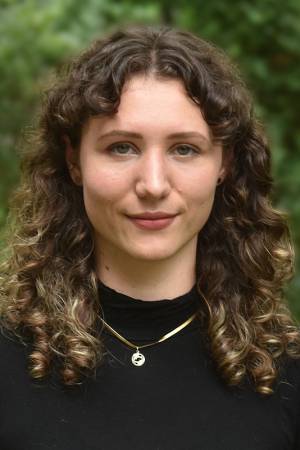
Andrea Bajcsyمشاهده پروفایل
استادیار
Andrea Bajcsy serves as an Assistant Professor in the Robotics Institute and School of Computer Science at Carnegie Mellon University, leading the Interactive and Trustworthy Robotics Lab (Intent Lab). Her work focuses on enabling robots to safely interact with open-world environments through novel algorithms in control theory and machine learning. Her educational background includes a Ph.D. in Electrical Engineering & Computer Science from UC Berkeley under Anca Dragan and Claire Tomlin, followed by a postdoctoral position with Jitendra Malik and industry experience at NVIDIA's Autonomous Vehicle Research Group. Research centers on quantifying robot confidence, computing safe interaction policies for nuanced hazards (tearing, spilling, breaking), and aligning AI with human values. Key methodologies integrate optimal control, reinforcement learning, dynamic game theory, and deep learning, applied to robotic arms, quadrotors, quadrupeds, and autonomous vehicles. Core areas include safety for physical human-robot interaction, robot learning for manipulation, and world modeling. Recent publications (2024-2025) reveal a concentrated effort on uncertainty-aware safety mechanisms, out-of-distribution adaptation, and language-based safety specification. Her work increasingly bridges conformal prediction with interactive learning while leveraging vision-language models for real-time policy steering, as evidenced by multiple CoRL, RSS, ICRA, and ICLR acceptances. Scientific Awards: NSF CAREER Award (2025) Advises four active PhD students (Kensuke Nakamura, Ravi Pandya, Junwon Seo, Yilin Wu) and leads research funded by the NSF CAREER grant. Organizes community initiatives including the Northeast Systems and Control Workshop and ICRA workshops on Safely Leveraging VLMs in Robotics and Public Trust in Autonomy. Directs the Intent Robotics Lab, which develops theoretical frameworks and practical implementations for open-world robot safety. The lab maintains strong industry ties through NVIDIA collaborations and emphasizes real-world deployment across multiple robotic platforms.
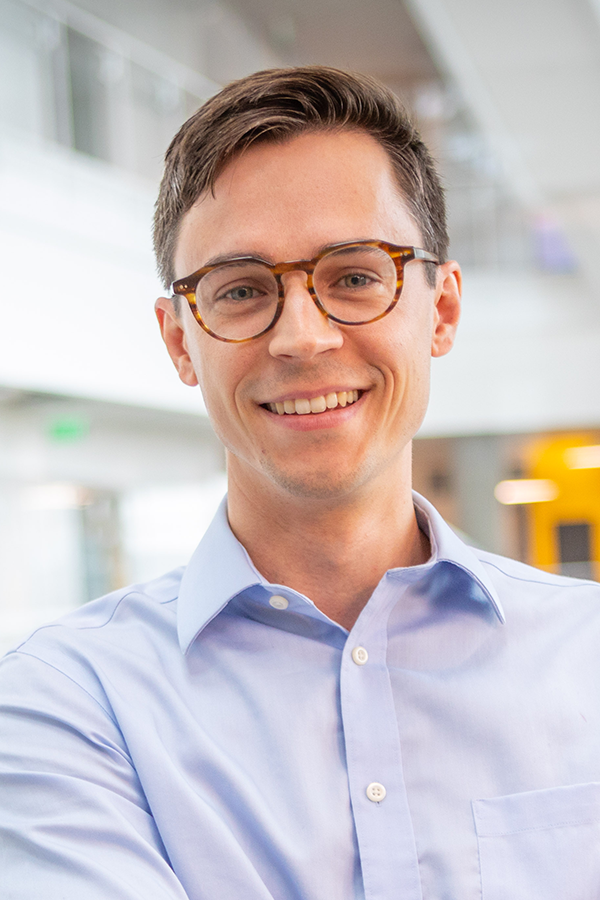
Patrick Sladeمشاهده پروفایل
استادیار
Patrick Slade is an Assistant Professor of Bioengineering at Harvard University's School of Engineering and Applied Sciences (SEAS). His lab, the Slade Lab, focuses on developing assistive devices to enhance mobility through the integration of biomechanics, robotics, and human-centered artificial intelligence. Key research areas include exoskeletons, prosthetics, wearable sensors for health tracking, and navigation aids for visually impaired individuals. Research Interests: The lab emphasizes translating research into practical solutions, such as personalized exoskeletons and robotic systems to improve mobility. Recent work includes optimizing human-robot interaction algorithms and publishing in high-impact journals like Nature . Collaborations with labs like the Biodesign Lab and BIONICs Lab highlight cross-disciplinary efforts. Publications: Over 15 articles since 2017 span topics like exoskeleton design, energy expenditure modeling, and Bayesian reinforcement learning. Notable contributions include a 2022 Nature paper on personalized exoskeleton assistance and a 2021 study on navigation aids for impaired vision. Awards & Grants: Students in his group have received prestigious NSF GRFP fellowships and conference awards, reflecting the lab's emphasis on innovation. The lab actively engages in grant-funded projects to advance assistive technology. Lab & Team: The Slade Lab opened at Harvard in 2023 and includes PhD students and postdocs working on devices like robotic exoskeletons and health-tracking systems. Future work focuses on scalable solutions for mobility challenges through interdisciplinary approaches.

Professor Gabriel Brostow is a faculty member in the Department of Computer Science at University College London (UCL), where he leads research in Computer Vision and Human-Computer Interaction. He also serves as Chief Research Scientist and Senior Director of the R&D Team at Niantic, the company behind Pokémon GO. His work bridges academic research and industry applications, focusing on developing AI systems that enhance human capabilities through what he terms 'Human in the Loop AI'—now commonly referred to as Human-Centered AI. Brostow completed his BS in Electrical Engineering at UT Austin, followed by a PhD with Irfan Essa at Georgia Tech. He then pursued postdoctoral research with Roberto Cipolla's Computer Vision & Robotics Group at Cambridge University as a Marshall Sherfield Fellow, and with Marc Pollefeys in ETH Zurich's CVG Group. His research explores how AI, particularly Computer Vision, can serve as 'super-tools' for professionals across various domains including filmmaking, architecture, robotics, and scientific research. Specific interests include assistive technology for everyday life, authoring systems that maximize user effort, 3D reconstruction, depth estimation, and vision-language models. His work often involves creating systems that are validated through real-world human interaction to ensure practical utility. Analysis of his recent publications reveals a strong focus on practical applications of Computer Vision that directly interact with humans. His research spans 3D scene understanding, depth estimation, sketch-based interfaces, and multimodal AI systems. There's a clear emphasis on creating benchmarks and tools that facilitate human-AI collaboration, with applications in assistive technology, urban planning, filmmaking, and biodiversity monitoring. His work frequently appears at top conferences including CVPR, NeurIPS, ECCV, and CHI. Marshall Sherfield Fellowship Brostow actively mentors PhD students, with current advisees including Ross Murphy, Skanda Koppula, Gizem Unlu, Omiros Pantazis, and Jamie Watson. His alumni include numerous PhD graduates and MSc students who have gone on to successful careers in academia and industry. He emphasizes selecting students based on passion and potential rather than just academic credentials, valuing traits like helpfulness, drive, and hunger to learn. His research is supported through collaborations with major institutions and companies including DeepMind, MIT, and the University of Edinburgh. He leads a research group at UCL that collaborates closely with Niantic's R&D team, creating a unique bridge between academic research and industry application. His team's work frequently involves developing novel Computer Vision techniques that are validated through real-world human interaction, ensuring practical utility alongside technical innovation. The group explores blue-sky research problems with applications ranging from assistive technology to professional tools for filmmakers, architects, and scientists studying diverse environments.
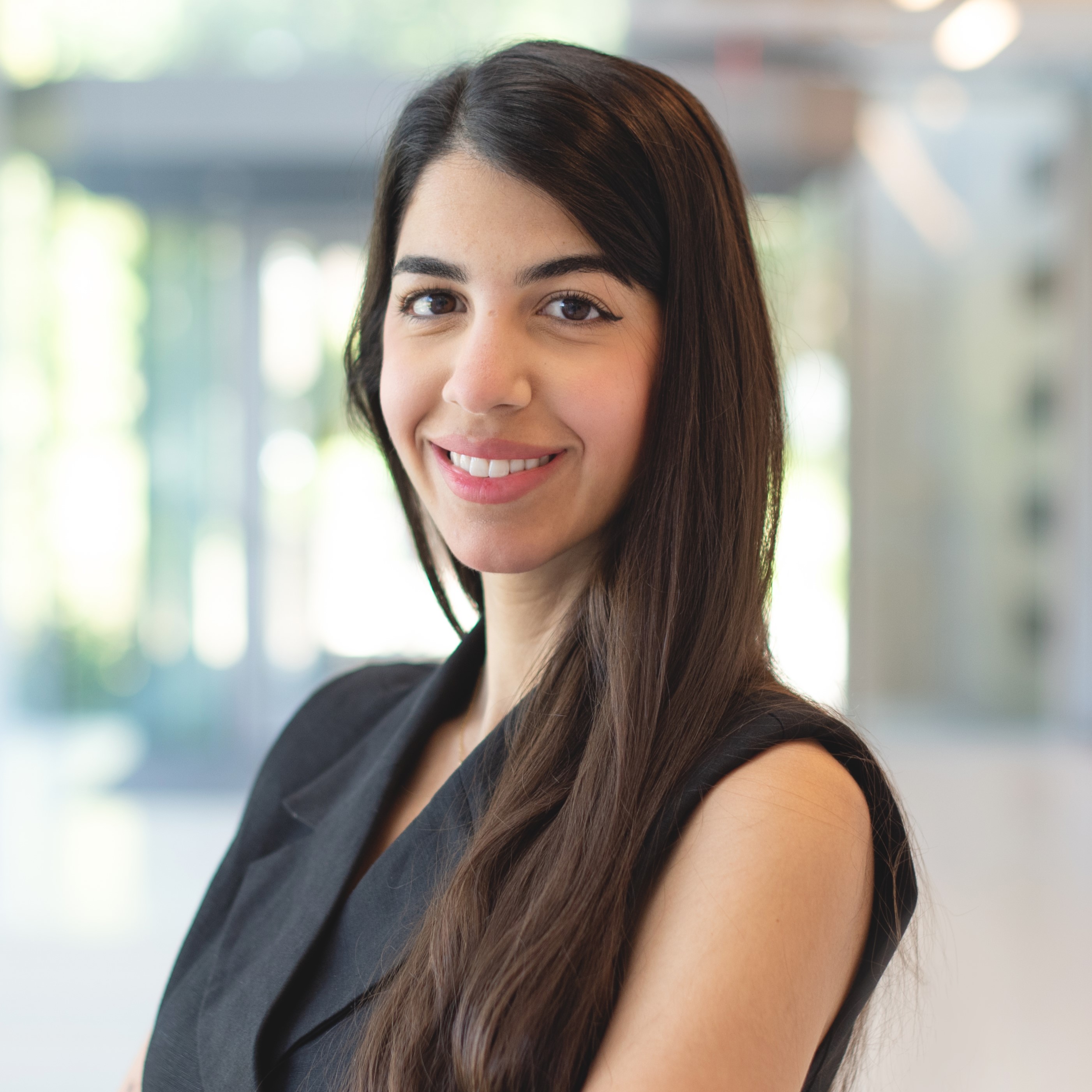
Aline Eidمشاهده پروفایل
استادیار
Aline Eid is an Assistant Professor in the Department of Electrical and Computer Engineering at the University of Michigan Ann Arbor, directing the Beam Dynamics research group. Her work bridges electromagnetics, wireless systems, and autonomous technologies, with a focus on mmWave/sub-THz sensing, backscatter communications, and wireless power transfer. PhD in Electrical and Computer Engineering (Georgia Tech, 2021) MS in Electrical and Computer Engineering (American University of Beirut, 2017) Postdoctoral Associate at MIT Media Lab (Signal Kinetics group) Research Interests: She pioneers systems that use electromagnetic waves to address societal challenges in Sustainable energy networks Smart cities/infrastructures Autonomous vehicles/robots Her group develops mmID tags for radar vision, batteryless sensors, and 5G-based wireless power grids. Scientific Impact: Recognized with awards including IEEE RFID Best Paper (2023) Proceedings of the IEEE Best Paper (2023) IEEE MTT-S Graduate Fellowship (2020) She leads commercialization efforts for warehouse robotics via MTRAC grant and startup Atheraxon. Advising: Mentors 8 students across PhD (Skanda Harisha, Sepideh Ghasemi, Yunfei Liu), Master's (Longyu Guo), and undergraduates (Mohamed Safawi, Katherine Shih, Andy Wang, Adrian Velazquez) in projects spanning robotics, IoT, and electromagnetic engineering. Labs: Beam Dynamics group at U-M Radiation Laboratory, collaborating with Atheraxon and MTRAC for technology translation.
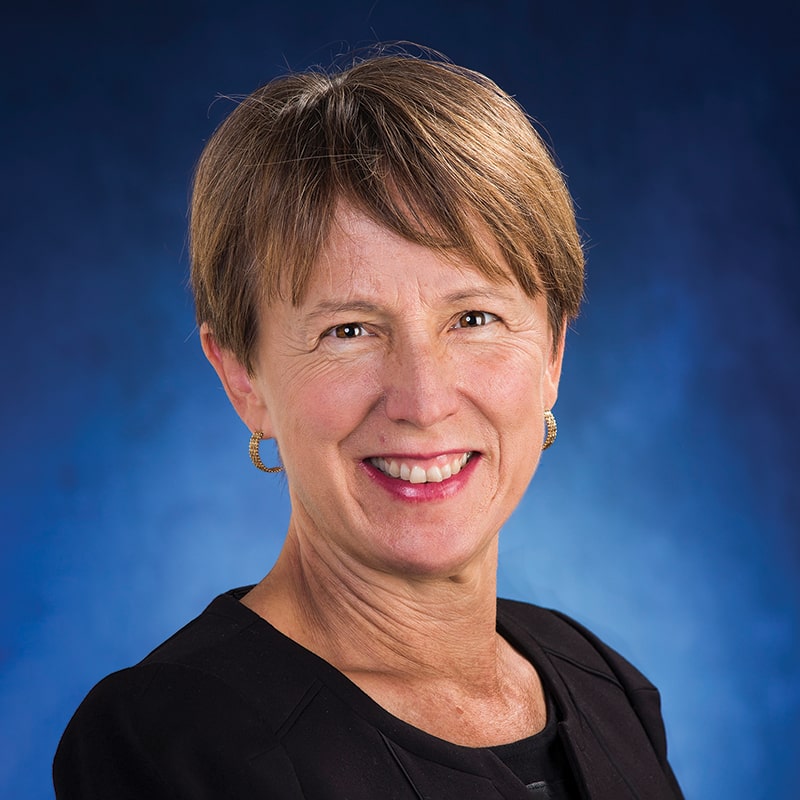
- Statistical Genetics
- Genomics
- Biostatistics
- +۵ مورد دیگر
Kathryn Roeder is the UPMC University Professor of Statistics and Life Sciences at Carnegie Mellon University (CMU), affiliated with the Dietrich College of Humanities and Social Sciences and the Departments of Statistics & Data Science and Computational Biology. Her research focuses on developing statistical methods for genetic and genomic data, particularly in identifying autism risk genes and analyzing single-cell multi-omic data. She earned her Ph.D. in Statistics from Penn State University and has been at CMU since 1994, previously serving as Vice Provost for Faculty (2015–2019). Education: Ph.D. in Statistics, Penn State University (1988) B.S. in Wildlife Resources, University of Idaho (1982) Research Interests: Her work integrates modern statistical techniques (high-dimensional statistics, machine learning, networks) to study complex diseases like autism and schizophrenia. Recent efforts include tools for analyzing single-cell RNA-seq and proteomic data, such as UNICORN, DAWN, and SCEPTRE. Key Awards: COPSS Distinguished Achievement Award (2020) National Academy of Sciences Member (2019) COPSS Presidents’ Award (1997) AAAS Fellow (2020) Advising & Grants: She has advised over 20 Ph.D. students, many contributing to landmark studies in autism genetics. Her grants include NIH funding for projects like the Autism Sequencing Consortium. Current research teams focus on computational biology and statistical genetics. Labs & Collaborations: Her lab develops software tools (e.g., TADA, MIND) and collaborates with the Autism Sequencing Consortium and iPSYCH-BROAD Consortium on large-scale genomic studies.
Professor Daniel Rueckert is a leading academic in Artificial Intelligence and Medical Imaging, holding dual positions at Imperial College London (as Professor of Visual Information Processing) and Technical University of Munich (Alexander von Humboldt Professor for AI in Medicine and Healthcare). He obtained his MSc from Technical University Berlin (1993) and PhD from Imperial College London (1997), followed by postdoctoral work at King’s College London. At Imperial, he led the Department of Computing (2016–2020) and founded the Biomedical Image Analysis group. His research focuses on AI-driven medical image analysis, including algorithms for image reconstruction, registration, and clinical decision support. His research interests span AI applications in healthcare, machine learning for medical imaging, and computational methods for clinical diagnostics. Notable contributions include over 500 publications and 60+ PhD graduates, with key works in federated learning, cardiac motion analysis, and biomarker development. Awards include the Leibniz Prize (2025), Royal Academy of Engineering Fellowship (2015), and multiple ERC grants. He leads the BioMedIA research group and is an editorial board member of Medical Image Analysis . Recent publications highlight advancements in AI-driven medical imaging, such as secure federated learning frameworks and deep learning models for disease prediction. His work bridges academic and industrial sectors through initiatives like IXICO, an Imperial spin-out. Current affiliations include roles at both Imperial and TUM, emphasizing interdisciplinary collaboration in healthcare technology. Advising and grants: Supervised over 60 PhD students and 40 post-docs. Secured grants including ERC Synergy (2013) and ERC Advanced (2020). Active in labs focused on biomedical image computing and AI in healthcare systems. Collaborative efforts include the BioMedIA group and TUM’s AI initiatives. Labs/teams: Leads the Biomedical Image Analysis group at Imperial and the TUM AI in Medicine team. Collaborates extensively on projects like cardiac imaging analysis and federated learning for healthcare.

Ilker Yildirimمشاهده پروفایل
استادیار
Ilker Yildirim is an Assistant Professor of Psychology at Yale University, where he leads the Cognitive and Neural Computation Lab (CNCL). He received his Ph.D. from the University of Rochester in 2014. His research focuses on understanding how perception transforms raw sensory signals into meaningful representations of objects and scenes through computational modeling approaches. His research interests include: Computational modeling of visual perception and cognition Intuitive physics and physical reasoning Bayesian inference and probabilistic models in cognition Integration of graphics and physics engines in cognitive modeling Neural mechanisms of object representation Attention and resource allocation in dynamic scenes Yildirim's lab develops computational frameworks that bridge cognitive processes with neural mechanisms, using tools including probabilistic models, simulation engines, and deep learning. His work often involves testing these models through behavioral and neural experiments to create unified accounts of perception and cognition. His recent publications reveal a strong focus on how humans perceive physical properties of objects, particularly soft materials and liquids, and how attention dynamically allocates resources during scene perception. Among his notable achievements is receiving an NSF CAREER award for his project "CAREER: CompCog: Reverse-engineering neural mechanisms of object cognition with multilevel computational modeling," which will run from 2025 to 2030. His Nature Human Behaviour paper by Qi Lin was featured on CBS News, Germany's NZZ, and Wired Italy. Yildirim mentors a diverse group of graduate students and postdocs working on various aspects of perception, cognition, and computational modeling. His students have received prestigious awards including the Jane Olejarczyk Award and the Leonard J. Savage Prize.
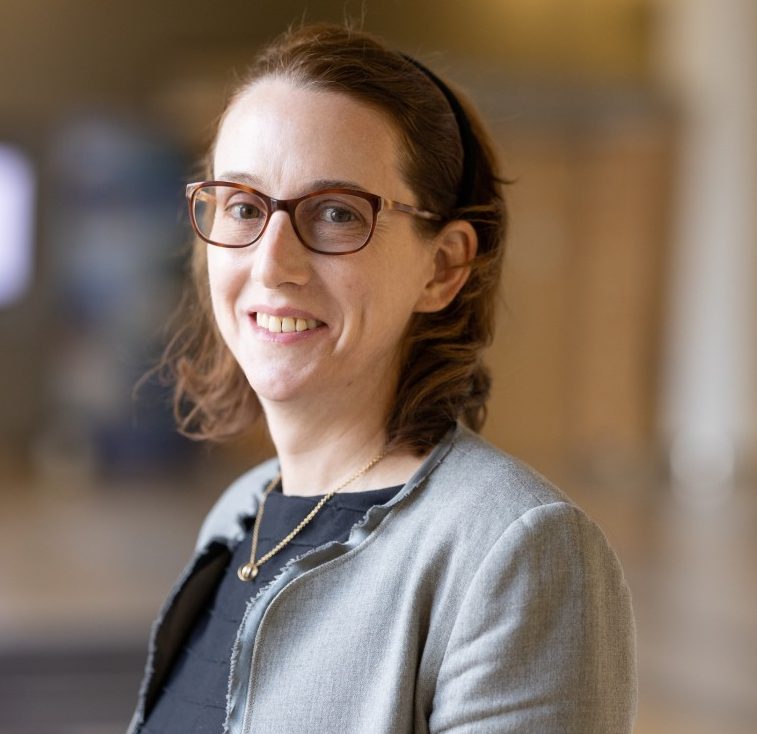
Mary Lanzerottiمشاهده پروفایل
استادیار
Mary Lanzerotti is a Collegiate Assistant Professor in the Bradley Department of Electrical and Computer Engineering at Virginia Tech. She specializes in signal processing, control systems, and medical evacuation technology. Her research focuses on hoist stabilization for MEDEVAC rescues, RF signal estimation, and material science involving liquid films. She is also deeply involved in educational initiatives, including hybrid course development and student advising strategies. Education: A.B. summa cum laude from Harvard College (1989), M. Phil. from the University of Cambridge (1991), M.S. and Ph.D. from Cornell University (1994–1997). Research Interests: Signal processing algorithms, mechanical stabilization of hoist systems, quantum computing verification, and integrated circuits design. Recent work includes gyroscopic data-driven control systems and multi-tier RF signal estimation methods. Service Roles: Member of faculty search committees, assessment committees, and the Graduate Honor System panel. Active in institutional accreditation and curriculum modernization efforts. Labs/Teams: Collaborates with interdisciplinary teams on projects involving aerospace rescue systems, laser material interaction studies, and microelectronics verification.
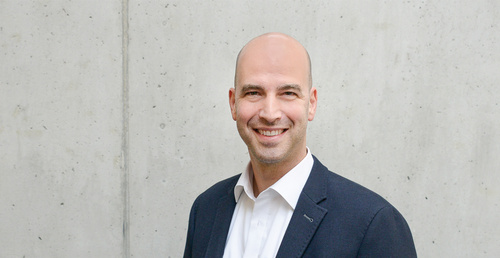
Manuel Kaufmann is a Lecturer in the Department of Computer Science at ETH Zürich. His work focuses on advanced 3D human motion capture, sensor-based systems, and computer vision applications. He is affiliated with the Institute of Informatics (inf.ethz.ch) and contributes to research in real-time motion tracking, dataset development, and machine learning integration for human-robot interaction. Research interests include holistic human-scene reconstruction from monocular videos, gaze estimation using EEG signals, and expressive avatar creation. His projects emphasize practical applications in robotics, sports analytics, and biomedical engineering, often leveraging electromagnetic and inertial sensors for high-precision data acquisition. His publications reflect a trend toward multi-modal data fusion, real-world dataset creation (e.g., WorldPose, ARCTIC), and addressing challenges in loose garment modeling (Reloo). These efforts aim to improve markerless motion capture, crowd analysis, and human-robot collaboration. No scientific awards or grants are explicitly listed. He has no documented advisees, though his research may involve collaborations with students or teams. His office is located at OAT X 23, Andreasstrasse 5, Zürich, Switzerland, and contact details include a phone number and professional email.
فقط ۷۵۰ نتیجه اول نمایش داده میشود. برای رسیدن به نتایج دقیقتر، جستوجو را با فیلترها محدودتر کنید.