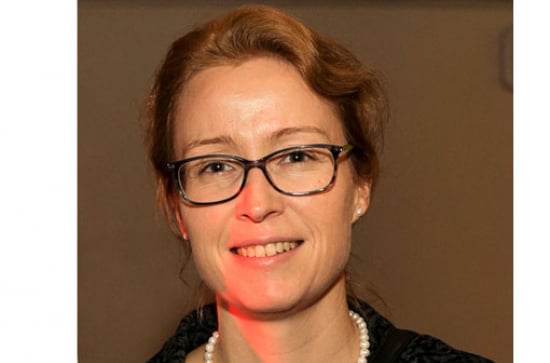
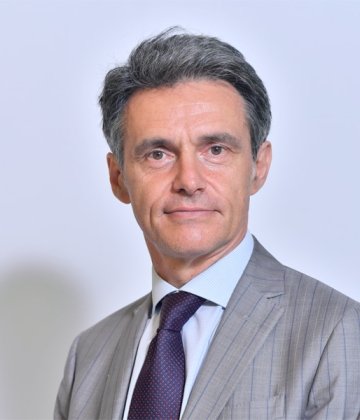
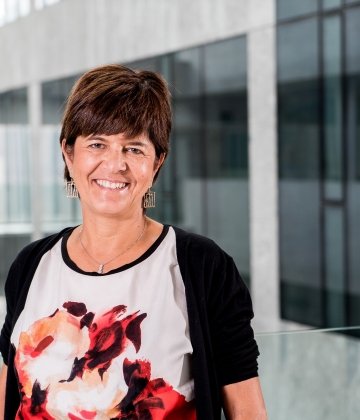
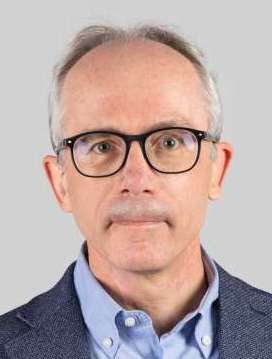
Steve Hailes is a Professor of Wireless Systems at the Department of Computer Science, University College London. He has served as Head of Department since 2019 and Deputy Head from 2005. His research spans wireless networks, computational trust, AI, and sensor systems for health, ecological, and environmental applications. Education: PhD and undergraduate degree from Cambridge University Appointment: Joined UCL in 1991 (postdoc), Lecturer in 1992 Research interests include: Trust and security in networked systems (co-founder of computational trust) Security of industrial control systems AI/ML applications in security and causal discovery Multi-agent reinforcement learning and moral behavior modeling Gas sensor fabrication and deployment for diverse applications Recent publications focus on feature selection for cybersecurity , moral alignment in LLM agents , trust-based consensus algorithms , and causal discovery using reinforcement learning . Collaborations include co-authors like Westphal, Musolesi, and Tennant. Applications span healthcare (dementia, JIA), ecology (endangered species in Botswana), and environmental monitoring (CO distribution, meth lab detection).
Joseph Tao-yi Wang is a Distinguished Professor in the Department of Economics at National Taiwan University (NTU). He holds a PhD from UCLA and previously served as a Postdoctoral Scholar and Visiting Associate at Caltech. His research spans experimental economics, neuroeconomics, game theory, and behavioral economics, with a focus on strategic decision-making, market design, and learning in games. Wang directs the Taiwan Social Sciences Experimental Laboratory (TASSEL), which hosts large-scale experimental research and conferences like the 2017 APESA. His work integrates eye-tracking, pupillometry, and machine learning to study cognitive processes in economic decisions. Wang is also active in educational innovation, developing flipped classroom models with experiments for economics courses. His publications consistently explore behavioral deviations from game-theoretic predictions, such as overcommunication in sender-receiver games and learning patterns in auctions. Recent work emphasizes reproducibility in management science and AI applications in education. Wang’s research uses diverse methodologies—from neuroimaging to field experiments—to test economic theories in real-world contexts. Wang mentors through NTU’s Berkeley Economics Student Assistant Program (BESAP) and organizes mini-courses for high school students. He has not received scientific awards per the available data.
Westley Weimer is a Professor in the Department of Electrical Engineering and Computer Science (EECS) at the University of Michigan, College of Engineering. He teaches advanced courses such as EECS 590 (Advanced Programming Languages) and EECS 481 (Software Engineering), and has previously taught at the University of Virginia. His research integrates software engineering, programming languages, and cognitive science, focusing on automated program repair, program analysis, and the neuroscience of code comprehension. University: University of Michigan School: College of Engineering Department: Department of Electrical Engineering and Computer Science Academic Rank: Professor His research interests include automated program repair (e.g., GenProg), software quality, cognitive modeling of programming, neuroimaging studies of code review, and the application of medical imaging to software engineering. He explores deep questions at the intersection of consciousness, time, and computation, advocating for interdisciplinary approaches to understanding the mind through programming behavior. The most recent publications reflect a trend toward empirical and cognitive studies in software engineering, combining automated repair with human factors, neuroimaging (fMRI, TMS), and real-world software challenges. Themes include bias in code review, programming under cognitive influences, and the neurological basis of code comprehension. His work increasingly bridges computer science with psychology, neuroscience, and social science. Scientific awards include multiple Distinguished Paper Awards at ICSE, FSE, and ESEC/FSE, Best Paper and Runner-up awards, and several 10-Year Most Influential Paper Awards from ASE, GECCO, POPL, and ASPLOS, recognizing the lasting impact of his contributions to automated software repair and program analysis. He has advised numerous PhD and Master’s students, many of whom have gone on to faculty positions or industry research roles. He contributes to academic service through organizing diversity and inclusion initiatives, maintaining graduate career resources, and promoting ethical and inclusive practices in computing. He leads a vibrant research group focused on improving software quality through both technical and human-centered innovations, with ongoing projects in automated repair, cognitive modeling, and secure systems.
Ameet Talwalkar is an Associate Professor in the Machine Learning Department at Carnegie Mellon University and Chief Scientist at Datadog. He holds a PhD from the Courant Institute at NYU (2010) where he received the Janet Fabri Prize for Best Thesis. His professional achievements include co-founding Determined AI (acquired by HPE), creating MLlib in Apache Spark, co-authoring the textbook 'Foundations of Machine Learning,' and spearheading the MLSys conference. Talwalkar's research focuses on fundamental challenges in machine learning systems, including distributed ML, federated learning, neural architecture search, and human-AI interaction. His work bridges theoretical foundations with practical applications across domains like computational biology, PDE solving, and code generation. Current interests include AI for science, specialized model development, and agent-based systems. His publications demonstrate strong focus on ML systems optimization, foundation model evaluation, and interpretable AI. Recent works investigate specialized foundation models, PDE-solving frameworks, code generation tools, and human-AI interaction paradigms. The research consistently targets efficiency, scalability, and practical deployment challenges. Best Paper Award at EAAMO 2023 Best Student Paper at NYAS ML Symposium 2009 Runner-up for Best Real-world Application at Socal ML Symposium 2017 Janet Fabri Prize for Best PhD Thesis (2010) Talwalkar leads the CMU MLSys Lab focused on scalable ML systems and has served as Board President for the MLSys conference series. His educational contributions include developing courses like 'Machine Learning with Large Datasets' and creating the LEAF benchmark for federated learning and NAS-Bench-360 for neural architecture search.
Philip Thomas is an Associate Professor and Doctoral Program Director at the Manning College of Information and Computer Sciences, University of Massachusetts Amherst. He leads the Autonomous Learning Lab (ALL) and co-founded the Reinforcement Learning Conference (RLC). His research focuses on reinforcement learning, AI safety, and algorithms that ensure safety guarantees for high-risk applications like healthcare and digital marketing. Education: PhD in Computer Science, University of Massachusetts Amherst (2015) MSc in Computer Science, Case Western Reserve University (2009) BSc in Computer Science, Case Western Reserve University (2008) Research Interests: Thomas specializes in designing biologically plausible reinforcement learning algorithms and ensuring safety through frameworks like Qualia Optimization and Seldonian Algorithms . His work emphasizes off-policy evaluation, fairness guarantees, and ethical AI. Recent projects include developing benchmarks for medical decision-making (e.g., ICU-Sepsis) and analyzing adversarial robustness in speech denoising models. Articles Trends: His recent work spans high-confidence policy evaluation, fairness metrics, and algorithmic safety. Key themes include improving benchmarking practices, rethinking eligibility traces, and leveraging state abstraction for consistent off-policy evaluation. Awards & Grants: Armstrong Award Co-PI on Army Research Grant (IoBT), NSF grant (FMitF) Significant funding from Adobe Research Advising & Grants: Thomas has overseen grants totaling millions and mentored students in reinforcement learning and AI safety. His current focus includes exploring qualia optimization for doctoral applications (2026-2027). Labs & Teams: He directs the Autonomous Learning Lab and collaborates on interdisciplinary projects at the Center for Data Science, emphasizing ethical AI and safe machine learning systems.
Subir Biswas is a Professor in the Department of Electrical and Computer Engineering (ECE) at Michigan State University (MSU), part of the College of Engineering. His research focuses on wireless networking, low-power protocols, vehicular networks, and health monitoring systems, conducted through the NeEWS laboratory. He holds a Ph.D. from the University of Cambridge and degrees from Jadavpur University. Education: Ph.D., Computer Engineering, University of Cambridge (1994) M.S., Electrical Engineering, Jadavpur University (1989) B.S., Electrical Engineering, Jadavpur University (1987) Professional Experience: Professor, MSU ECE (2011–present) Associate Professor, MSU ECE (2003–2010) Research interests include traffic analysis firewalls, pricing calculus for social wireless networks, low-energy green networking, and ultrasound-based sensor systems . He leads the NeEWS lab, exploring embedded systems and network middleware. His work spans IoT, cybersecurity, and biomedical applications like wearable sensors for autism monitoring and hydration tracking. Publications emphasize innovative protocols (e.g., pulse position coding) and machine learning for network optimization. Collaborations include NSF-funded projects and industry partnerships (e.g., Tellium Optical Systems).
Xiaofeng Shao is a Professor of Statistics & Data Science at Washington University in St. Louis, with a joint appointment in the Department of Economics. He holds a PhD from the University of Chicago and previously served at the University of Illinois at Urbana-Champaign for 18 years. He is a Fellow of the Institute of Mathematical Statistics and the American Statistical Association. His research focuses on econometrics, time series analysis, change-point detection, high-dimensional statistics, nonparametric methods, and functional data analysis. Recent work emphasizes object-valued time series modeling and machine learning applications in high-dimensional and imaging data. Notable contributions include the dependent wild bootstrap method and self-normalization techniques for time series inference. Key awards include Fellowships from leading statistical societies. His publications span over 20 years, addressing topics like change-point detection in climate projections, statistical methods for COVID-19 infection trends, and high-dimensional dependence testing.
Huazheng Wang is an Assistant Professor in the School of Electrical Engineering and Computer Science at Oregon State University. His research focuses on reinforcement learning, information retrieval, and trustworthy AI. He received his Ph.D. from the University of Virginia (2021) and B.E. from the University of Science and Technology of China (2015). He holds awards including the 2025 EECS Fabulous Teacher Recognition and SIGIR 2019 Best Paper Award. His work addresses challenges in robust reinforcement learning, adversarial attacks on bandit systems, and applications in scientific discovery. Education: Ph.D., Computer Science, University of Virginia (2021) B.E., Computer Science and Technology, University of Science and Technology of China (2015) Research interests emphasize developing efficient algorithms for reinforcement learning, multi-armed bandits, and their applications in recommendation systems, protein optimization, and security. Notable contributions include provably efficient risk-aware reinforcement learning frameworks and adversarial attack analysis on bandit systems. Recent work includes NSF-funded research on neural bandits (IIS-2403401) and publications in top venues like ICML, NeurIPS, and AAAI. His lab explores embodied LLM agents for team cooperation and federated collaborative online monitoring frameworks.
Rozenn Dahyot is a Professor of Computer Science at Maynooth University within the Faculty of Science & Engineering. She previously held roles as Assistant and Associate Professor in Statistics at Trinity College Dublin (2008-2021) and Lecturer in Computer Science (2005-2008). Her research interests bridge Digital Signal Processing, Computer Vision, Machine Learning, and Statistical Analysis. She organized the European Signal Processing Conference (EUSIPCO2021) in Dublin and served as President of the Irish Pattern Recognition and Classification Society (IPRCS) from 2014-2020. Her work spans topics like semantic scene understanding, CNN compression, and medical image segmentation. Key contributions include advancements in graph-based image analysis, reinforcement learning optimization, and AI-driven systems for disaster management. Dahyot is a member of IEEE, ACM, and EURASIP, contributing to both academic and industrial collaborations.
Mithuna S. Thottethodi is a Professor and Interim Associate Head of Teaching and Learning at the Elmore Family School of Electrical and Computer Engineering at Purdue University. He holds a B.Tech. from the Indian Institute of Technology, Kharagpur (1996), and a Ph.D. in Computer Science from Duke University (2002). His research focuses on computer architecture, interconnection networks, distributed systems, and security, with notable work on sparse tensor accelerators and processing-near-memory architectures. His work has been funded by the NSF, AT&T, and SK Hynix. Research interests include security, interconnection networks in multicores, storage performance optimization, and memory hierarchies. Notable contributions span hardware accelerators for machine learning, secure speculative execution, and datacenter network congestion control. He has advised over 20 graduate students, many of whom have joined top tech firms like Google, Microsoft, and Intel. Awards: NSF CAREER Award (2007) Wilfred Hesselberth Teaching Excellence Award (2021) Multiple Eta Kappa Nu Outstanding Professor Awards Teaching includes undergraduate courses like EE 437 (Computer Design) and graduate courses such as ECE 666 (Advanced Computer Architecture). He also advises VIP and EPICS student teams.
Andrea Beltratti is a Full Professor at Bocconi University, specializing in financial economics and asset pricing. He holds a Ph.D. in Economics from Yale University (1989) and a B.A. in Economics from the University of Turin (1982). His research focuses on stock and bond volatility, mortgage markets, environmental economics, and financial crises. Notably, his work on asset price dynamics was mentioned during the 2013 Nobel Prize Ceremony. He teaches courses on equity portfolio management, financial investments, and real estate valuation. Education: Ph.D., Yale University; B.A., University of Turin Key Research Areas: Financial markets, banking systems, sustainable development, and macroeconomic policy Beltratti’s publications span journals like the Journal of Banking and Finance, Journal of Financial Economics, and Oxford Economic Papers. His award-winning contributions include analyses of global credit crises and asymmetric contagion effects in European sovereign debt markets. He actively contributes to academic discussions through teaching and research on fintech, infrastructure finance, and alternative investments.
Dr. Sonia Petrone is a Full Professor of Statistics at Bocconi University's Department of Decision Sciences. She earned her PhD in Statistics from Bocconi University and has held academic positions at the University of Pavia and University of Insubria before joining Bocconi. Her extensive international experience includes research visits across North America, Latin America, Europe, India, and Russia. Her research specializes in Bayesian statistics, with contributions to foundational theory, predictive modeling, Bayesian nonparametrics, and stochastic processes. She currently directs the Bocconi Summer School in Advanced Statistics and Probability and previously led the PhD program in Statistics (2011-2018). Her research portfolio demonstrates consistent focus on Bayesian nonparametric methods, predictive modeling, and applications to complex data structures. Recent work explores urn processes, time series analysis, and network modeling using innovative Bayesian approaches. Awards & Honors: IMS Medallion Lecture Award (2018) ISBA Foundational Lecture Award (2016) Fellow of International Society for Bayesian Analysis Fellow of Institute of Mathematical Statistics Fellow of European Laboratory for Intelligent Systems Fellow of Bocconi Institute of Data Science She has held editorial leadership positions as Editor of Statistical Science (2020-2022) and Bayesian Analysis (2010-2014), and served as President of the International Society for Bayesian Analysis (2014).
Matteo Maffei is a Full Professor at TU Wien, leading the Security and Privacy group. He joined in 2017 after 11 years at Saarland University's CISPA. He holds a Ph.D. in Computer Science from Ca’ Foscari University of Venice (2006). He coordinates the TU Wien Cybersecurity Center, the SecInt Doctoral School, and the FWF Special Research Program SPyCoDe. His research focuses on formal methods for security and privacy, blockchain technologies, and web security. Roles: Full Professor, Coordinator of TU Wien Cybersecurity Center, Module Head of Christian Doppler Lab for Blockchain Technologies (CDL-BOT), Board Member of Vienna Cybersecurity and Privacy Research Cluster (ViSP). His work emphasizes formal verification of cryptographic protocols, smart contracts, and decentralized systems. Key achievements include ERC Advanced (2024) and Consolidator (2018) Grants, and leadership roles in conferences like IEEE Computer Security Foundations Symposium (CSF). Research Interests: Formal methods, smart contracts, blockchain scalability, web security, privacy-preserving protocols, and decentralized systems. His recent projects include optimizing Lightning Network channels, secure multi-hop payments, and AI-driven robustness verification. Publications: Over 200 publications in top venues like CCS, IEEE S&P, and CRYPTO. Recent work includes advancements in blockchain interoperability (e.g., Alba bridges), light client protocols (Blink), and neural network verification techniques. Grants & Awards: ERC Advanced Grant (2024), ERC Consolidator Grant (2018), DFG Emmy Noether Fellowship (2009). Led projects funded by EU Horizon, FWF, and industry partners like ABC Research GmbH. Advising & Labs: Supervised over 20 PhD/Master theses. Active in the Christian Doppler Lab for Blockchain Technologies and the SPyCoDe SFB. Collaborates with institutions like SBA Research and Stanford University.
Paolo Tonella is a Full Professor and Director of the Software Institute at the Faculty of Informatics, Università della Svizzera italiana (USI) in Lugano, Switzerland. He also holds an Honorary Professorship at University College London (UK) and previously led the Software Engineering group at Fondazione Bruno Kessler (Italy). His research focuses on software testing, analysis, and AI-driven systems. He has authored over 200 peer-reviewed papers and 100 journal articles, with an H-index of 72. He teaches courses in Data and Software Engineering and Informatics, including Information Modeling, Probability & Statistics, and Knowledge Search. Key contributions include foundational work on web application testing (ICSE MIP award), evolutionary testing techniques (eToc/EvoSuite tools), and reverse engineering of object-oriented systems. He led the ERC-funded PRECRIME project on anticipatory testing. His recent work addresses AI dependability, autonomous systems testing, and deep learning fault analysis. Scientific awards include the ICSE MIP Award (2001) and ERC Advanced Grant (2018). He has served on editorial boards for major journals like IEEE Transactions on Software Engineering and ACM TOSEM. Current roles include leadership in the Software Institute and organizing the SIESTA summer school.
Assoc. Prof. Dr. Sema Alaçam Doğan has been affiliated with Istanbul Technical University since 2014, serving as an Associate Professor in the Department of Architecture . She has held administrative roles including Deputy Head of Department and Erasmus Coordinator. Education : PhD in Informatics in Architectural Design (2008-2014), MS in Informatics in Architectural Design (2005-2008), and BS in Architecture (1999-2005) from Istanbul Technical University. Her research explores Computational Design , Artificial Intelligence in Architecture , and Sustainable Material Innovation . She investigates digital tools for heritage preservation, daylight optimization in BIM, and cognitive development in architecture students. Recent publications analyze AI-assisted design literacy , machine learning for Sinan mosques , and environmental comfort in Harran houses . Her work integrates algorithmic frameworks with sustainable practices. Scientific awards include multiple ITU Publication and Performance Awards (2021-2024), FABFEST Prizes , and the 2024 Artemis Educator Award from NASA. Active projects like "Physical Computation in Architectural Drawing" and "Robotic Fabrication with Recycled Wind Turbine Blades" demonstrate her leadership in computational and sustainable research.