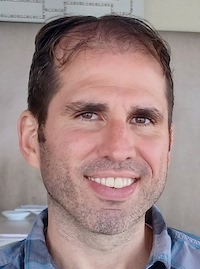
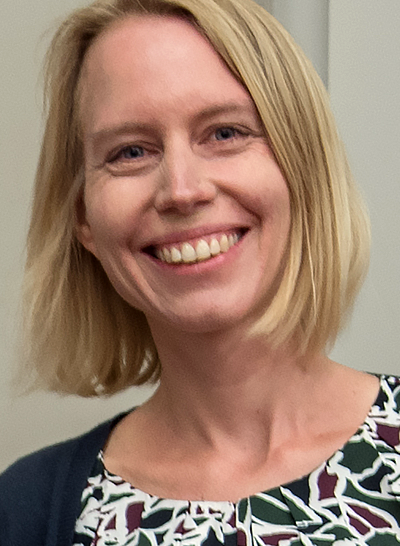
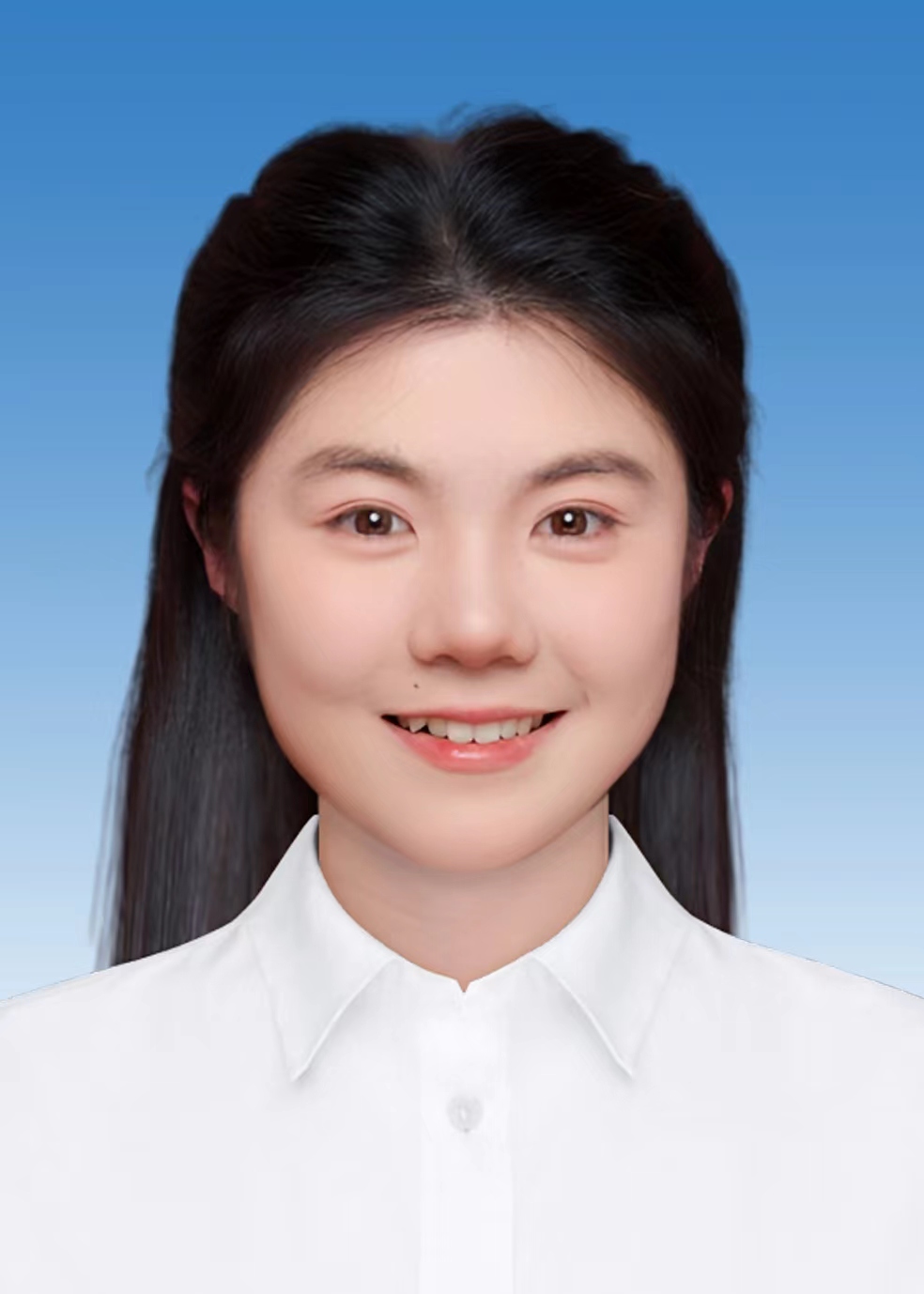
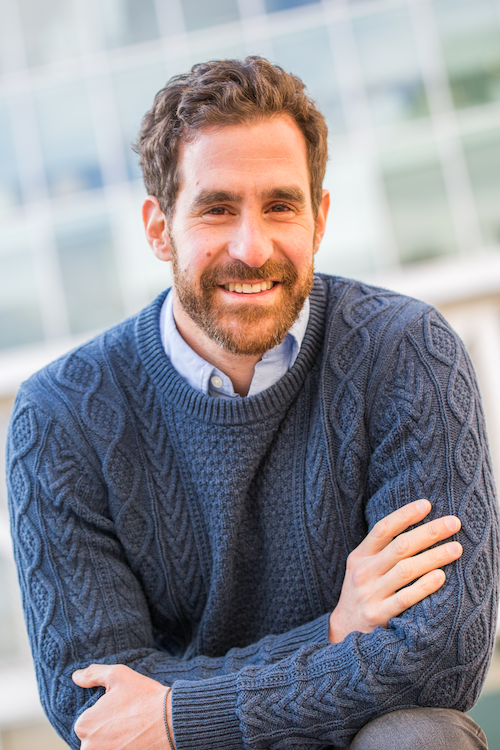
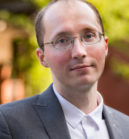
Alex Wein is an Assistant Professor of Mathematics at the University of California, Davis. His research bridges theoretical computer science, statistics, and probability, with a focus on the mathematical foundations of data science. Key areas include understanding optimal algorithms for signal detection in noise, computational complexity of statistical inference (especially via the low-degree polynomial framework), tensor analysis, and applications of group actions in computational problems. Research Interests: Mathematics of data science: optimal algorithms for hidden structure detection Computational-statistical gaps via low-degree polynomials Tensors: computational challenges and applications Bayesian inference and connections to statistical physics Group actions in molecular structure determination and representation theory Recent Talks: Banff International Research Station (2024): 'Optimality of AMP Among Low-Degree Polynomials' Bernoulli-IMS Symposium (2020): 'Low-Degree Framework for Statistical Inference' Professional Service: Program committee member for COLT, STOC, FOCS Organizer of workshops on computational complexity and statistical inference
Hong Ye Tan is currently a Hedrick Assistant Adjunct Professor in Computational and Applied Mathematics at the University of California, Los Angeles (UCLA), hosted by Professor Stanley Osher. Previously, he completed his PhD at the University of Cambridge's Department of Applied Mathematics and Theoretical Physics as a member of the Cambridge Image Analysis group and the Cantab Capital Institute for the Mathematics of Information, supervised by Professors Carola-Bibiane Schönlieb, Subhadip Mukherjee, and Junqi Tang with funding from GSK.ai. His educational trajectory is exceptional: admitted to the University of Hong Kong at age 11 in 2015 (youngest in recent history) and to Cambridge at age 13 for doctoral studies. He passed his PhD thesis with no corrections, focusing on provably convergent algorithms leveraging geometric structures in data. Tan's research centers on machine learning theory, specifically investigating why learning succeeds through interactions between problem structure, data distributions, optimizers, and network architectures. His work bridges differential geometry (manifold hypothesis, intrinsic complexity), optimization (convex learning-to-optimize, Plug-and-Play inverse problems), and sampling theory (noise-free MCMC methods). He develops theoretically grounded algorithms with practical applications in imaging and unsupervised learning, emphasizing provable convergence guarantees derived from classical mathematics. Analysis of his 13 recent publications reveals a cohesive research program connecting optimal transport theory, manifold learning, and regularization techniques. His work demonstrates how geometric insights enable efficient solutions for high-dimensional problems, particularly in image analysis where dimensionality effects transform from curse to blessing. Key themes include Wasserstein proximal methods, dataset distillation via quantization, and accelerating mirror descent through equivariance. His scientific recognition includes: Masason Foundation Fellowship GSK.ai PhD Fellowship Tan has secured research funding through the GSK.ai PhD studentship and operates within Professor Stanley Osher's group at UCLA. He maintains active collaborations from his Cambridge tenure, particularly with the Cambridge Image Analysis group. Notably, he handles 100% of coding and 98% of writing for first-author publications, actively encouraging code reuse by the community. His work continues to explore foundational questions in learning theory while developing practical tools for inverse problems and imaging science.
Hamdi Joudeh is an Associate Professor in the Department of Electrical Engineering at Eindhoven University of Technology (TU/e). He is affiliated with the Information and Communication Theory (ICT) Lab and the Signal Processing Systems (SPS) Group. His research focuses on information theory, communications, and signal processing, with applications in wireless networks and radar systems. He holds a Ph.D. in Electrical Engineering from Imperial College London and has held research positions at Technische Universität Berlin and Imperial College London. His research interests include quantum sensing, error exponents, MIMO systems, and channel coding. He leads projects such as the IT-JCAS (Information Theoretic Foundations of Joint Communication and Sensing) and ANTERRA (Beam Prediction for Fast-Moving LEO), addressing challenges in 5G/6G communication and radar technologies. He has received an ERC Starting Grant (2023) for his work on environment-scanning mobile networks. Education: Ph.D. in Electrical Engineering (Imperial College London), M.Sc. in Communications and Signal Processing (Imperial College London) Editorial Roles: Editorial board member of IEEE Transactions on Signal Processing , IEEE Communications Letters , and EURASIP Journal on Wireless Communications and Networking Labs/Teams: ICT Lab, SPS Group, and leads projects at TU/e’s Center for Wireless Technology Grants: ERC Starting Grant, TKI-HTSM/22.0547/TKI2212P11 RAIDAR, and others His recent work explores the intersection of communication and sensing, including quantum radar processing and robust beamforming techniques. He has published extensively on topics like error exponents, MIMO channel analysis, and interference management, with over 40 peer-reviewed articles.
Oliver Layton is an Associate Professor and Associate Chair of the Computer Science Department at Colby College, Maine. His research bridges computational neuroscience and machine learning, focusing on neural modeling of visual perception and self-motion estimation. He teaches courses in Mathematical Data Analysis and Visualization (CS252), Neural Networks (CS343), and Deep Learning (CS444). Postdoctoral scholar, Rensselaer Polytechnic Institute Ph.D., Cognitive and Neural Systems, Boston University B.A., Mathematics and Computational Neuroscience, Skidmore College His expertise spans computational neuroscience, neural modeling, and visual perception, with emphasis on optic flow processing and its applications. Research explores how biological systems (like primate MSTd) estimate heading and self-motion, using biologically inspired neural networks and dynamic sensory encoding models. Recent publications focus on deep learning approaches to optic flow analysis, heading perception stability, and curvilinear motion modeling. Key trends include applying convolutional neural networks to simulate MSTd tuning, investigating sparseness and ReLU activation impacts, and comparing human and AI performance in self-motion estimation tasks.
Jeffrey H. Shapiro is a Professor at the Massachusetts Institute of Technology (MIT) School of Engineering. His career began with an NSF Fellowship and a Ph.D. at MIT in 1970, followed by a brief tenure as an Assistant Professor at Case Western Reserve University before returning to MIT in 1973, where he has remained for over five decades. His research spans optical and quantum communication, sensing, and imaging, bridging physics and communication theory. Key contributions include foundational work on quantum photodetection, two-photon coherent states, and quantum illumination. His work on adaptive optics, squeezed states, and quantum key distribution has shaped modern quantum communication protocols. Current research explores zero added-loss multiplexing for entanglement distribution and hardware-efficient bosonic codes for quantum computing. Notable awards include the NSF Fellowship. Collaborations with researchers like Robert Kennedy, Horace Yuen, Prem Kumar, Franco Wong, and Isaac Chuang have driven experimental and theoretical advancements. His group at MIT’s Research Laboratory of Electronics focuses on quantum-classical boundary phenomena. Scientific Awards: NSF Fellowship
Graham Feingold is a NOAA Research Scientist at the Chemical Sciences Laboratory within the Earth System Research Laboratories in Boulder, Colorado, and a CIRES (Cooperative Institute for Research in Environmental Sciences) Fellow affiliated with the University of Colorado Boulder. His research focuses on aerosol-cloud-precipitation interactions and their implications for climate change, utilizing high-resolution models and observational data from aircraft and surface remote sensing systems. Dr. Feingold's research interests center on process-level studies of shallow clouds and how they're modified by particulate matter (aerosols), particularly examining the cloud feedback problem in a warming climate. His work investigates emergence and self-organization in cloud fields, aerosol effects on precipitation, and the importance of small cumulus clouds for climate. His research spans aerosol-cloud-precipitation interactions , climate feedback mechanisms , atmospheric remote sensing , and cloud microphysics , with particular emphasis on marine stratocumulus and shallow cumulus cloud systems. His most recent publications reveal a strong focus on cloud water adjustments to aerosol perturbations, mesoscale organization of trade wind cumulus clouds, radiative effects in the vicinity of clouds, and causal relationships in aerosol-cloud interactions. The research demonstrates increasingly sophisticated approaches combining observational data, high-resolution modeling, and advanced analytical techniques like wavelet phase coherence analysis to understand complex cloud-aerosol-climate relationships. NOAA Environmental Technology Laboratory Award for Innovative Research (1998) NOAA Office of Atmospheric Research Outstanding Paper Award (2002) NOAA Administrator's Award (2003, 2008) American Geophysical Union Fellow (2013) NOAA Bronze Medal Award for Atlantic Trade-wind Ocean-atmosphere Mesoscale Interaction Campaign (2022) Wageningen Institute Visiting Fellowship (2018) Dr. Feingold has served as a lead author for the IPCC AR5 Chapter 7 (Clouds and Aerosols) and currently serves on the Aerosol-Cloud-Precipitation-Climate (ACPC) steering committee and NASA's Aerosol and Cloud-Convection-and-Precipitation (A-CCP) Scientific Community Cohort Advisory Group. His research group develops and applies the TAU Cloud Microphysical Code using the Method of Moments, which has been implemented in various atmospheric models including RAMS, UKMO LEM, and WRF. His current work increasingly addresses the potential impacts and scientific underpinnings of marine cloud brightening as a climate intervention strategy.
Mohammadreza MOUSAVI-KALAN is an Assistant Professor of Statistics at CREST-ENSAI. Previously, he was a postdoctoral fellow in the Department of Statistics at Columbia University. He received his Ph.D. in Electrical Engineering from the University of Southern California (USC) and his B.Sc. from Sharif University of Technology. Dr. MOUSAVI-KALAN's research focuses on theoretical foundations at the intersection of statistics and distributed computing. His primary interests include statistical machine learning, transfer learning, optimization theory, and distributed computing systems. He investigates how to design efficient algorithms that can leverage knowledge across related tasks while providing rigorous theoretical guarantees for learning procedures. His work addresses fundamental questions about sample complexity, computational efficiency, and statistical performance in modern machine learning settings. His publication record reveals a clear research trajectory from foundational work on distributed optimization (2018-2019) toward specialized topics in transfer learning and statistical hypothesis testing (2020-2025). A consistent theme across his work is establishing theoretical limits (minimax bounds, rate analyses) for practical machine learning problems. His recent publications focus on outlier detection, Neyman-Pearson classification frameworks, and transfer learning theory, demonstrating evolution toward more specialized statistical learning problems with practical applications. Dr. MOUSAVI-KALAN has established strong collaborative ties with researchers at USC, including Mahdi Soltanolkotabi, Salman Avestimehr, and Songze Li. His most influential work includes the Lagrange coded computing framework for distributed systems, which addresses critical challenges in resiliency, security, and privacy. His research bridges theoretical computer science, statistical learning theory, and practical distributed systems challenges, with implications for secure and efficient large-scale machine learning applications.
Tom Franken, MD, PhD, is an Assistant Professor of Neuroscience at the Department of Neuroscience, Washington University School of Medicine in St. Louis. He leads the Franken Lab which focuses on understanding how the primate brain parses complex sensory information to construct organized representations of the external world. Dr. Franken's research centers on visual perception mechanisms, particularly border ownership computation where neurons in early visual areas (V2, V4) signal which side of a border belongs to a foreground object. His work has revealed that border ownership signals are organized in columnar clusters with deep layer neurons carrying the earliest signals, supporting the hypothesis of feedback from higher brain areas. The lab employs high-channel count electrophysiology (Neuropixels) in behaving non-human primates, behavioral techniques, causal approaches, and computational methods to study these neural mechanisms. Analysis of Dr. Franken's recent publications shows a strong focus on visual scene segmentation and neural computation, with significant contributions to understanding how the brain organizes visual input into meaningful objects. His 2025 work demonstrates that brain-like border ownership signals emerge in deep recurrent artificial neural networks trained to predict natural videos, suggesting these signals are fundamental to efficient visual processing. Earlier work also extends into auditory neuroscience, particularly sound localization mechanisms. Dr. Franken's laboratory is actively recruiting researchers, indicating ongoing projects in visual and auditory neuroscience with applications to understanding conditions where perceptual organization fails, such as agnosia, schizophrenia, or autism.
Yin Sun is the Godbold Associate Professor in the Department of Electrical and Computer Engineering at Auburn University. His research focuses on timely information updates, wireless networks, and IoT, with emphasis on data freshness metrics and remote estimation systems. He earned his B.S. and Ph.D. in Electronic Engineering from Tsinghua University. Education: B.S. Electronic Engineering, Tsinghua University Ph.D. Electronic Engineering, Tsinghua University His research interests include wireless communications, cloud computing, and machine learning applications in safety-critical systems. Notable achievements include co-authoring the seminal book on Age of Information and receiving the NSF CAREER Award for his work on goal-oriented status updating. He also serves as Technical Co-Chair for the ACM MobiHoc Symposium and leads Auburn's Wireless Engineering Research and Education Center, addressing real-world communications challenges through interdisciplinary collaboration. Awards include the 2021 Best Paper Award (Journal of Communications and Networks) and contributions to food pantry inventory optimization via machine learning. His work bridges theoretical foundations with practical systems, emphasizing real-time data relevance and efficient resource allocation strategies. Advisees/Grants: Leads NSF-funded projects on semantic status updating and collaborates on applications like disease detection in agriculture. Active in advising graduate students through his lab's focus on edge computing and network optimization. Labs/Teams: Core member of Auburn's Wireless Engineering Research and Education Center, fostering multi-university collaborations in communications research.
Dr. Mark M. Wilde is an Associate Professor in the School of Electrical and Computer Engineering at Cornell University and an Adjunct Professor in the Department of Physics and Astronomy at Louisiana State University. He holds a Ph.D. in electrical engineering from the University of Southern California. His primary research focuses on quantum information theory, quantum computing, quantum error correction, and quantum computational complexity. He has authored influential textbooks such as *Quantum Information Theory* and *Principles of Quantum Communication Theory*, widely used in graduate courses globally. Wilde’s research explores foundational aspects of quantum communication, including quantum Shannon theory, network quantum information theory, and quantum algorithms. He has contributed to advancements in quantum error correction, quantum cryptography, and thermodynamics. His work bridges theoretical insights with practical applications in quantum technologies. Notably, he has co-authored groundbreaking results on quantum channel capacities, entanglement-assisted quantum coding, and quantum hypothesis testing. Wilde has secured grants from institutions like the Simons Foundation and the National Science Foundation. His awards include the IEEE Fellow distinction and the 2018 AHP-Birkhauser Prize. He collaborates extensively, publishing over 100 peer-reviewed articles, and his research impacts fields from quantum computing to biophysics. His recent work emphasizes quantum algorithms, thermodynamic limits, and privacy-preserving quantum protocols. Education: Ph.D. in Electrical Engineering, University of Southern California (2009). Grants: Supported by NSF, Simons Foundation, and others. Labs/Teams: Leads research groups in quantum information theory and collaborates with interdisciplinary teams on quantum algorithms and applications.
Stefanie Jegelka is an Associate Professor (on leave) at MIT's Department of Electrical Engineering and Computer Science, and a Humboldt Professor at Technical University of Munich (TU Munich). She is a member of CSAIL (Computer Science and Artificial Intelligence Laboratory), IDSS (Institute for Data, Systems, and Society), and Machine Learning at MIT. Her research spans algorithmic machine learning with focus on modeling, optimization algorithms, theory, and applications. Dr. Jegelka completed her PhD at the Max Planck Institutes in Tuebingen and ETH Zurich, followed by a postdoc at UC Berkeley's AMPlab and computer vision group. Her academic journey reflects a strong foundation in both theoretical and applied aspects of machine learning. Her research focuses on exploiting mathematical structure for discrete and combinatorial machine learning problems, robustness, and scaling machine learning algorithms. Key areas include submodular optimization, graph neural networks, invariant and equivariant learning, and representation theory in machine learning. Her work bridges theoretical foundations with practical applications across various domains, with particular emphasis on how mathematical structure can enhance algorithmic performance. Dr. Jegelka's recent publications demonstrate significant contributions to understanding the theoretical properties of graph neural networks, developing methods for invariant learning, and advancing representation learning techniques. Her work consistently shows strong connections between mathematical structure and machine learning performance, with applications spanning natural language processing, computer vision, and scientific domains. Sloan Research Fellowship NSF CAREER Award DARPA Young Faculty Award Dr. Jegelka has advised numerous graduate students and postdocs, many of whom have gone on to successful careers in academia and industry. Her research has been supported by prestigious grants from NSF, DARPA, ONR, and industry partners including Google, Two Sigma, and Adobe. She serves as Program Chair for ICML 2022 and has held numerous editorial and organizational roles in the machine learning community. She leads a research group investigating fundamental questions in machine learning, particularly how mathematical structure can be leveraged to develop more efficient, robust, and scalable learning algorithms. Her group collaborates across disciplines, connecting theoretical machine learning with applications in science and engineering, and has produced influential work on submodularity, graph representation learning, and invariant learning methods.
Carlisle Rainey is an Associate Professor in the Department of Political Science at Florida State University (FSU), where he also serves as Director of the Research Intensive Bachelor’s Certificate Program. He holds a Ph.D. in Political Science from FSU (2013) and an M.S. in Mathematical Statistics (2012) and Political Science (2009). Prior to FSU, he was an Assistant Professor at Texas A&M University (2015–2018) and the University at Buffalo, SUNY (2013–2015). His research focuses on political methodology, Bayesian and computational methods, and statistical inference. Notable contributions include work on logistic regression separation, equivalence testing, and research transparency. He teaches courses in quantitative methods, political methodology, and American/Comparative Politics. Rainey’s publications appear in top journals like the American Political Science Review, American Journal of Political Science, and Political Analysis. His recent work emphasizes statistical power analysis, data availability practices, and experimental design. Active in academic service, he chairs the Political Methodology section for the 2026 APSA conference and serves on NSF review panels.
Chengxi Li is a Postdoctoral Researcher at the Division of Information Science and Engineering (ISE) within the School of Electrical Engineering and Computer Science at KTH Royal Institute of Technology, Stockholm. He works under Prof. Mikael Skoglund and Prof. Ming Xiao, with a visiting position at École Polytechnique Fédérale de Lausanne (EPFL) under Prof. Rachid Guerraoui. His research focuses on distributed learning, federated learning, signal processing, and information theory, with applications in sensor networks and wireless communication systems. Li holds a Ph.D. in Electronic Engineering from Tsinghua University (2022) and a B.S. in Information and Communication Engineering from the University of Electronic Science and Technology of China (2018). He has also completed visiting studies at the University of Wollongong and City University of Hong Kong. His work has been recognized through awards such as the Beijing Municipal Outstanding Doctoral Dissertation (2023) and the Excellent Doctoral Dissertation from the China Education Society of Electronics (2023). His research interests emphasize developing theoretical foundations and algorithms for distributed systems, including federated learning frameworks, secure signal processing, and efficient communication strategies in decentralized networks. Key contributions include innovations in gradient coding for straggler mitigation, robust federated learning under label quality disparities, and distributed detection in sensor networks with secrecy constraints. Li has secured grants as Principal Investigator, including the MSCA Postdoctoral Fellowship (2024–2026) and the Digital Futures Postdoc Fellowship (2023–2025). He mentors Master student Aiyang Yu and actively contributes to academic service, including reviewing for top journals like IEEE Transactions on Signal Processing and organizing workshops on secure federated learning. His work bridges foundational research and practical applications, with publications in prestigious venues such as IEEE Transactions on Signal Processing, IEEE Transactions on Communications, and IEEE Internet of Things Journal. Current projects explore communication-efficient learning algorithms and secure distributed systems for next-generation networks.
Omri Weinstein is an Assistant Professor in the Department of Computer Science at Columbia University. His research bridges Information Theory, Data Structures, and Optimization, focusing on dynamic data structures and dimensionality-reduction techniques to accelerate optimization and search. He received his PhD from Princeton University and was a Simons Society Junior Fellow at the Courant Institute (NYU). Education: PhD in Computer Science, Princeton University Simons Society Junior Fellowship, Courant Institute (NYU) His work explores the theoretical foundations of data structure lower bounds, communication complexity, and secure computation. Recent research includes advancements in dynamic matrix inversion for linear programming, oblivious near-neighbor search, and the interplay between matrix rigidity and data structure efficiency. Key trends in his publications include: Proving polynomial and super-logarithmic lower bounds for static and dynamic data structures Developing novel techniques in information complexity and protocol compression Applications in parallel algorithms, compressed data structures, and algorithmic game theory Scientific Awards: NSF CAREER Award Simons Society Junior Fellow Best Paper Award at CSR '13 Advising and Grants: Advised PhD students Hengjie Zhang and Shunhua Jiang MsC student Victor Lecomte and postdoc Alexander Golovnev Research funded by NSF CAREER Award on data structure lower bounds Labs and Teams: Omri is affiliated with the Theoretical Computer Science Group at Columbia and leads the Data-Structure Lower Bounds Reading Group.
Edgar Dobriban is an Associate Professor of Statistics and Data Science at the University of Pennsylvania's Wharton School, with a secondary appointment in Computer and Information Science. He leads a research group focused on problems at the interface of statistics, machine learning, and AI. Education PhD in Statistics, Stanford University (2017) BA in Mathematics, Princeton University (2012, Summa cum Laude/with Highest Honors) Research Focus His work spans uncertainty quantification, AI safety, robustness, high-dimensional asymptotic statistics, distributed learning, fairness, and COVID-19 testing methodologies. Current projects include developing conformal prediction methods, jailbreaking robustness benchmarks (JailbreakBench), and safety alignment techniques for large language models. Publication Trends Recent papers predominantly address AI safety and reliability, featuring novel methods for uncertainty quantification in language models (calibration, conformal prediction), adversarial robustness (jailbreaking defenses), and distribution shift adaptation. Theoretical foundations blend with practical applications in high-dimensional statistics. Awards and Honors Peter Gavin Hall IMS Early Career Prize (2024) Sloan Research Fellowship (2023) ICSA Outstanding Young Researcher Award (2023) NSF CAREER Award (2021) AFOSR/Army Research Office YIP Awards (2024, 2023) COPSS Emerging Leader Award (2023) Research Leadership He leads the Wharton Statistics and Data Science research group, recruiting PhD students through Statistics & Data Science, CIS, and AMCS programs. Current projects involve collaborations with Penn Medicine and the NSF-Simons Mathematical and Scientific Foundations of Deep Learning initiative. He co-founded the ASA StatsUpAI Special Interest Group and co-organized the Shenzhen Conference on Random Matrix Theory (2023).