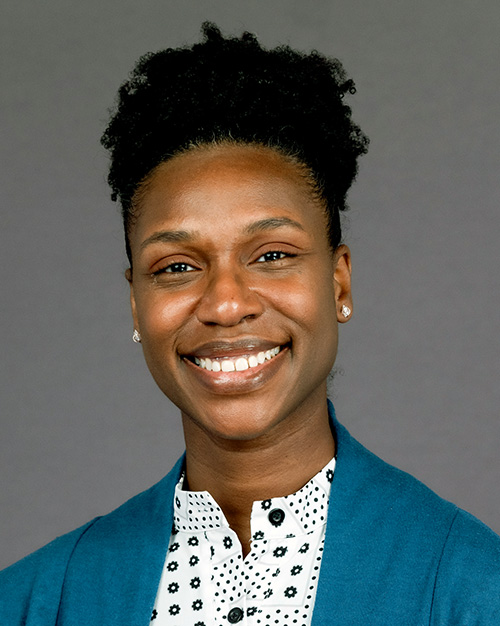
Kisha Porcher is an Associate Professor in the Department of English at the University of Delaware, specializing in English Education. She serves as the Student Teaching Coordinator and holds a Ph.D. in Teaching and Teacher Education from George Mason University, alongside degrees from Spelman College and Teachers College Columbia University. B.A., English and Secondary Education, Spelman College M.A., Curriculum and Instruction, Teachers College Columbia University Ph.D., Teaching and Teacher Education, George Mason University Her research focuses on centering Blackness through frameworks like the Black Gaze and archeology of the self (Sealey-Ruiz, 2019), emphasizing racial identity development and community-engaged learning. She explores systemic assets for Black and Brown students while advocating for anti-racist pedagogies in urban education settings. Her recent publications highlight trends in critical literacy instruction , decolonizing curricula , and equity-driven teacher training , with a strong emphasis on racial justice and linguistic diversity. Notably, she received the College of Arts & Sciences Faculty Teaching Excellence Award in 2022. Porcher’s work bridges teacher self-reflection and structural reform , positioning educators as disruptors of systemic inequities. Her scholarship spans topics from cultural competency to community-embedded pedagogies, reflecting her commitment to redistributing power in educational systems.
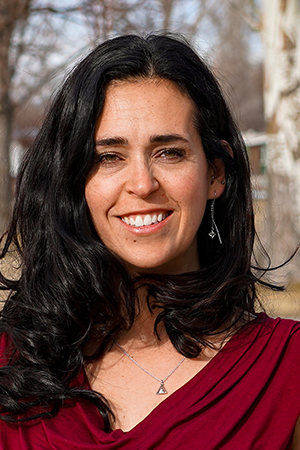
Janine Ferguson serves as a Part-Time Lecturer and Academic Program Support Officer at Charles Sturt University's School of Education (Dubbo campus), with over ten years of teaching experience in the Faculty of Arts & Education focusing on Child Development and Early Childhood Education, complemented by a decade in NSW regional public schools that ignited her dedication to rural education. Her academic foundation includes a Bachelor of Teaching (Early Childhood), which anchors her expertise in early learning frameworks and developmental psychology within regional contexts. Her research and teaching interests prioritize Early Childhood Education, Child Development, and Rural Education, emphasizing pedagogical adaptations for small-community schooling environments and teacher preparation pathways in underserved areas. Current initiatives include supporting the Collaborative Teacher’s Aide Pathway and Grow Your Own Teacher Training programs, expanding access to educator qualifications in regional Australia. Scientific awards: No awards documented in source materials. Student advising and research grants: Source text specifies no graduate advisees, funded projects, or grant acquisitions.
Rovincer Najjuma is a Lecturer in Digital Education and the Global South at the University of Edinburgh's Moray House School of Education and Sport, affiliated with the Centre for Research in Digital Education. His research focuses on digital education ecosystems, intersectionality frameworks, and leveraging technologies to enhance access for marginalized populations in post-conflict regions and the Global South. Education: PhD in Education; Master of Education in Curriculum Design; Postgraduate Diplomas in ICT in Education and Education; Bachelor of Social Science (Political Science & Public Administration). Research explores digital education policy, mobile learning, refugee education, and generative AI applications. He has pioneered digital professional development programs in Africa, including designing Makerere University's first fully online Masters in Instructional Design Technology. Grants include Royal Society of Edinburgh funding (2024-2025), USAID/Resilient Africa Network grants (2021-2024), and Commonwealth Academic Fellowships. Key collaborations include work with University of Oxford on mobile technologies in teacher preparation, University of Stellenbosch's Emerging Scholars Initiative, and UNICEF-funded projects on non-state schools in Uganda.
Kelly K. Ivy, Ph.D. is an Assistant Professor at the University of the District of Columbia (UDC) in the College of Arts and Sciences. Specializing in culturally responsive math teaching and urban STEM education, she contributes to teacher self-efficacy research and curriculum development. Her work bridges academic inquiry with practical applications in K-12 and higher education contexts. Doctor of Philosophy in Mathematics Education, University of Maryland, College Park Master of Education in Curriculum & Instruction, Trinity Washington University Bachelor of Science in Mathematics, Secondary Education Professional Minor, Howard University Dr. Ivy’s research focuses on urban STEM education , culturally responsive pedagogy , and equitable mathematics instruction . She emphasizes teacher self-efficacy and interdisciplinary literacy, particularly in linguistically diverse classrooms. Her publications highlight strategies for improving STEM outcomes for African American students and reflective practices in culturally relevant teaching. Recent publications (2019–2024) span topics including equitable teaching , Black female STEM perspectives , and curriculum innovation . These works employ qualitative research methods and stress cultural relevance in urban settings. Faculty Scholar of Promise Award, UDC’s College of Arts and Sciences (2024) Dr. Ivy serves as Co-Project Manager for the Katherine G. Johnson Math Teacher Training Institute (2025–Present) and has participated in the Maryland Collaborative for Research in Urban STEM Education (2020–23). Her advocacy for Black students in STEM includes presentations at national conferences and media engagements.
Rebecca Bilous is a Lecturer in the Department of Management at Macquarie University, affiliated with the Macquarie School of Education. Her academic work focuses on curriculum development, work-integrated learning, and community partnerships. She holds an ORCID identifier (0000-0002-1419-1755) and can be contacted at rebecca.bilous@mq.edu.au. Dr. Bilous has contributed significantly to research on stakeholder engagement in educational programs and co-creation initiatives involving students, communities, and workplace partners. Her research emphasizes ethical practices in service learning, volunteer preparation for child-focused contexts, and sustainable curriculum design. Bilous has led or collaborated on projects such as the 'Classroom of Many Cultures' initiative (2014–2017), which co-created support curricula with international community partners and students. Her work bridges theoretical frameworks with practical applications in higher education and global development. Notable contributions include exploring reciprocal learning models, stakeholder-driven curriculum development, and the integration of volunteering into educational frameworks. Her research often addresses challenges in fostering meaningful partnerships between universities, communities, and workplaces to enhance student learning and societal impact.
Patrick T. Dowling, M.D., M.P.H., is the Kaiser Permanente Endowed Professor of Community Medicine and Chair of the UCLA Department of Family Medicine. He holds dual degrees from the Medical College of Ohio (1974) and the University of Michigan School of Public Health. Dr. Dowling's career spans over four decades in family medicine, residency training, and health policy advocacy, with a focus on underserved populations. He has directed residency programs at Cook County Hospital, Brown University, and Harbor-UCLA Medical Center before leading UCLA's Family Medicine department since 1998. His research emphasizes health policy, chronic disease management, cross-cultural medicine, and integrating substance abuse treatment into primary care. He co-founded UCLA's IMG pathway program to train bilingual (English-Spanish) international medical graduates for underserved areas. Dr. Dowling has advised the National Health Service Corps and LA County Public Health Commission, and currently serves on Drew University's Board of Trustees. Publications highlight systemic barriers to healthcare access, physician practice location determinants, opioid epidemic responses, and community-based participatory research. His work bridges medical education innovation with socioeconomic health equity, reflecting lifelong commitment to universal healthcare access inspired by his early work with Cesar Chavez's United Farm Workers Clinics.
Elizabeth Davis is an Extension Associate Professor at Utah State University (USU) and serves as the Kane County Director. She works in the Home and Community Department, focusing on youth development, STEM education, and family engagement activities. Education: MS in Family Consumer and Human Development (Adolescent Focus), Utah State University (2010) Research Interests: Social-emotional learning for youth Integrating STEM into family and community settings Improving college and career readiness Enhancing relationships through educational programs Publications: Her work includes peer-reviewed articles on behavioral medicine, STEM curriculum development, and technical reports on relationship-building initiatives. Key themes span youth development, educational outreach, and health interventions. Scientific Awards: 2nd Place Marketing Public Relations (2021) Excellence in 4-H STEM Programming (2021) Extension Innovator Award (2021) 1st Place Innovative Program (2021) Marketing/Public Relations Award (2020) Achievement of Service Award (2020) Innovative Program Award (TEAM) (2020) Grants & Teams: She contributes to Utah State University Extension projects, including the Hidden Gems adventure guides and 4-H STEM programming. Her work emphasizes community-based learning and health outcomes.
Alana Clifton-Cunningham is a dedicated educator and researcher in fashion and textile design at the University of New South Wales, Faculty of Arts, Design & Architecture. With over two decades of experience in higher education, she has established herself as a leader in sustainable and innovative design education. Her work bridges traditional craftsmanship with cutting-edge technologies, creating experiential learning environments that prepare students for contemporary design practice while addressing global sustainability challenges. Educational Background: 2021 | UNSW - Learn to Lead: Progress Needs Resilient Leaders 2019 | UTS - Graduate Certificate in Higher Education Transdisciplinary Learning 2008 | UNSW (COFA) - Master of Design (Hons) Research 2002 | UTS - Graduate Certificate in Higher Education Teaching and Learning 2001 | TAFE - Diploma of Marketing Management 1993 | UTS - Bachelor of Design (Hons) (Fashion and Textile Design) Clifton-Cunningham's research focuses on sustainable fashion practices, with particular emphasis on circular economy principles in textile production and garment design. Her work explores scalable models for textile remanufacturing, clothing waste reduction, and sustainable workwear systems. She is deeply engaged in addressing clothing sizing issues and standards in Australia, advocating for more inclusive approaches to fit and body diversity. Her commitment to equity, diversity, and inclusion underpins all aspects of her leadership and teaching, making her a strong advocate for responsible design futures that prioritize both environmental sustainability and social justice. Her publication record demonstrates a consistent focus on the intersection of design education, cultural exchange, and sustainable practices. Notable works include her 2022 book chapter on cross-cultural textile workshops in India, her 2018 analysis of undergarment technology evolution, and her contributions to exhibitions like 'Out of Hand' at the Powerhouse Museum. These works collectively highlight her emphasis on hands-on, experiential learning that connects students with real-world sustainability challenges and cultural contexts. Research Grants: 2024 | Redesigning Clothing Waste Using a Circular Design Framework - LP230200929 $220,473K 2024 | Department of Community and Justice - $17,900 2024 | Education Focussed Community of Practice (PVCESE) - $2,500 2023 | Department of Community and Justice - $15,900 2023 | Education Focussed Community of Practice (PVCESE) - $6,995 2017 | AbbVie Pharmaceutical Pty Ltd, HS Support Garments: Chief Investigator - $35,000 Clifton-Cunningham actively supervises research in fashion and textile design, with a focus on sustainable practices and innovative design processes. Her extensive industry network, including partnerships with major fashion labels, brings real-world insight into the classroom. She has led international global studios, including immersive programs in India where students collaborate with artisans. Her current ARC Linkage project 'Redesigning Clothing Waste Using a Circular Design Framework' represents a significant contribution to sustainable fashion research. Her creative practice is reflected in numerous exhibitions, including the Seoul International Fashion Art Biennale (2016, 2018), Wangaratta Contemporary Textile Awards, and the Powerhouse Museum's 'Out of Hand' exhibition. These artistic endeavors complement her academic work, demonstrating the practical application of her research interests in sustainable and innovative textile design.
Sarah Wilson is Professor of Modern and Contemporary Art at The Courtauld Institute of Art, University of London. She has been a faculty member since 1982 and has held leadership roles including Head of the Modern and Contemporary Section (2005-2008) and Head of Diploma programmes (2014-2015). She is internationally recognized as the English-language expert on Post-War European art and has held visiting positions at Paris-IV Sorbonne and the University of Versailles-Saint Quentin. Wilson was educated at the University of Oxford (BA English Literature) and at the Courtauld Institute of Art (MA and PhD). She was awarded the title Chevalier des Arts et des Lettres in 1997 for services to French art and culture, and received the International Association of Art Critics' Award for Distinguished Contribution to Art Criticism in 2015. She has held visiting professorships at Paris-IV Sorbonne (2002-2004), École Nationale Supérieure des Beaux-Arts (2006-2007), and University of Versailles-Saint Quentin (2012-2013). Sarah Wilson's research spans post-war and Cold War European art, contemporary global art practices, and the intersections between conceptual art, political theory, and visual culture. Her work extends from European avant-gardes to contemporary art across the former Soviet Union and Asia. She is particularly known for her expertise in French Stalinism, neo-Marxism and the arts, and conceptual art practices beyond the 'first world.' Wilson has initiated important academic programs such as the 'Global Conceptualism' MA course with Boris Groys, which connects Anglo-American conceptual art with practices from Moscow and beyond. She has also expanded her research to include modern and contemporary Asian art since 2013. Her extensive publication record shows a consistent focus on European art history with increasing engagement with global perspectives, particularly Asian contemporary art since 2013. Wilson's scholarship bridges art historical analysis with philosophical inquiry, especially regarding French theory and its visual manifestations. Her major publications include 'Paris, Capital of the Arts, 1900-1968' (2002) and 'The Visual World of French Theory: Figurations' (2010), with a second volume 'The Visual World of French Theory II: Interventions' in preparation. Chevalier des Arts et des Lettres (1997) International Association of Art Critics' Award for Distinguished Contribution to Art Criticism (2015) Marie Curie Actions – RBUCE-UP, Chaire d'excellence, Université de Versailles-Saint Quentin (2012-2013) Professor Wilson has supervised 36 PhD students to completion and over 230 MA dissertations, creating what she describes as 'a unique English-language archive in the field of post-1945 European and global art history.' Her former students now hold prominent positions in major institutions worldwide including Tate, the British Museum, Design Museum, Scottish National Gallery of Modern Art, British Council, Centre Georges Pompidou, Kunsthalle Bremen, and universities across Europe and North America. She has received significant research funding including a Marie Curie Actions grant for her project 'Globalisation before globalisation: avant-gardes, academies, revolutions.' Wilson is actively involved with the Courtauld alumni's former East Wing Collection (now VS1, Vernon Square) and has contributed to the Research Forum's programmes. She has curated numerous exhibitions including the 'Global Conceptualism'-related projects and served on the curatorial team of the 1st Asian Biennale (China-Guangzhou) in 2014. Her commitment to women artists has led to early exhibitions of artists like Zofia Kulik and Alina Szapocznikow before their international prominence. She is involved with CCRAC (Cambridge-Courtauld Russian Art Centre), Calvert 22, and Pushkin House in London, reaching out to Russia and Eastern Europe.
Marjorie Corman Aaron serves as Professor of Practice and Director of the Center for Practice at the University of Cincinnati College of Law, where she teaches negotiation, client counseling, trial practice, mediation, and decision analysis. Her leadership oversees the law school's trial practice program and student competition teams in dispute resolution. Her academic foundation includes a BA from Princeton University and JD from Harvard Law School. Professor Aaron's research revolutionizes lawyer-client communication through structured decision-making frameworks. She pioneered methodologies for counseling clients through legal uncertainties, emphasizing decision tree analysis to quantify risks and outcomes. Her seminal works "Client Science" and "Risk and Rigor" bridge psychological insights with practical legal strategy, transforming how attorneys navigate complex negotiations and settlement discussions while maintaining ethical rigor. Her scholarly trajectory reveals consistent innovation in dispute resolution pedagogy, evolving from foundational decision analysis techniques to contemporary explorations of mediator neutrality in politically charged contexts and ethical implications of nondisclosure agreements. Her distinguished recognition includes: Harold C. Schott Scholarship Award (2019) Goldman Prize for Excellence in Teaching (2010) University President’s Excellence Award for Teaching (2006) American College of Civil Trial Mediators Education/Training Achievement Award (1998) CPR Institute for Dispute Resolution Second Prize for Excellence (1995) As an educator, she mentors students through national competition teams while extending her impact via workshops for law firms, corporations, and government entities. Her digital platforms (clientsciencecourse.com and riskandrigor.com) provide global resources for legal educators, complemented by frequent guest lectures at Harvard, Michigan, and international institutions. The Center for Practice functions as an experiential learning hub under her direction, integrating theoretical knowledge with hands-on trial advocacy training and dispute resolution simulations that prepare students for real-world legal practice.
Sivasurender Chandran is an Assistant Professor in the Department of Physics at the Indian Institute of Technology Kanpur, specializing in Polymer and Soft Matter Physics. His research focuses on fundamental aspects of polymer behavior, particularly in non-equilibrium states and thin film systems. Education: PhD, Indian Institute of Science, Bengaluru (2014) M.Sc., Anna University, Chennai (2008) B.Sc., Muthurangam Government Arts College, Vellore (2006) Dr. Chandran's research centers on polymer physics with emphasis on non-equilibrium states, thin film behavior, and crystallization kinetics. His work investigates how processing pathways affect molecular-level polymer properties, stress relaxation in polymer films, and cooperative processes in polymer melts. He employs experimental techniques to study fundamental aspects of polymer dynamics and material properties. His publication record demonstrates expertise in polymer thin films, non-equilibrium states, and material processing. His research shows particular strength in understanding how sample history affects polymer crystallization and how segmental rearrangements influence stress relaxation in nonequilibrated systems. The 2019 paper selected as ACS editor's choice highlights his significant contributions to understanding molecular-level polymer properties. Dr. Chandran maintains an active research program in polymer physics at IIT Kanpur, where he continues to investigate fundamental questions about polymer behavior in various states and configurations. His work bridges theoretical understanding with practical material science applications.
Bingzhang Chen is a Senior Lecturer in the Department of Mathematics and Statistics at the University of Strathclyde, Faculty of Science. He previously held positions as a Chancellor’s Fellow at the same institution, a researcher at the Japan Agency of Marine-Earth Science and Technology (JAMSTEC), and was affiliated with Xiamen University and Mount Allison University. His academic journey began with a PhD from the Hong Kong University of Science and Technology. Education: PhD in Trophic interactions within the microbial food web, Hong Kong University of Science and Technology (Awarded 2009) His primary research interests lie at the intersection of biological oceanography and theoretical ecology, with a strong focus on ecosystem modeling. He investigates how biodiversity, particularly of phytoplankton, influences marine ecosystem functioning such as primary production and the biological carbon pump. A central theme in his work is understanding the differential temperature sensitivity between autotrophs and heterotrophs, a question that bridges statistical analysis, metabolic theory, and Earth system science. His recent publications highlight a consistent trend in developing and applying individual-based models (e.g., PIBM 1.0), analyzing large datasets on plankton thermal responses, and studying the impacts of climate change and anthropogenic activities (like nutrient input) on marine microbial communities across diverse regions from the South China Sea to the North Pacific and Scottish coastal waters. His work often combines modeling with observational data to address fundamental ecological questions. Scientific Awards: David Cushing Prize (2015) from the Journal of Plankton Research New Century Excellent Talent (2012) from the Ministry of Education of China Dr. Chen is actively involved in research supervision, currently guiding five PhD students. He has been the Principal Investigator on multiple research projects funded by organizations such as the Leverhulme Trust, FILAMO, and the National Science Foundation. His expertise in programming (R, Fortran, MATLAB) underpins his methodological approach. He also contributes to the scientific community as an Associate Editor for the prestigious journal Limnology and Oceanography . His work is associated with efforts to understand and model invasive species dynamics, such as the spread of Sargassum muticum in Scottish waters, and he is involved with external advisory groups like the MASTS Marine Artificial Intelligence Forum.
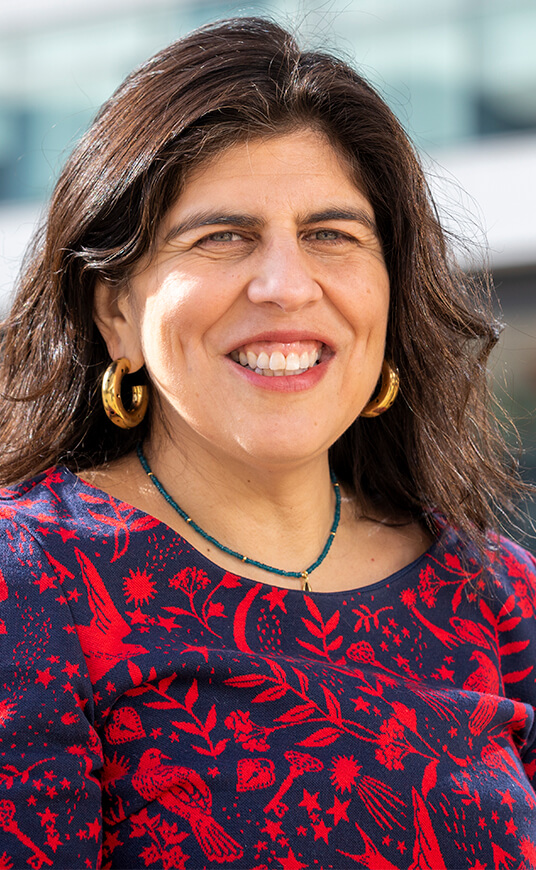
Ann Rivet is an Associate Professor of Science Education at Teachers College, Columbia University, and serves as the Associate Director of the Center for Sustainable Futures. She previously held the role of Program Officer in the Directorate for STEM Education at the National Science Foundation from 2016 to 2019. Her expertise lies in science education, particularly in Earth and environmental science, curriculum design, and urban school reform. Education: Ph.D. in Science Education, University of Michigan M.S. in Science Education (Earth Science), University of Michigan Sc.B. in Physics, Brown University Research Interests: Dr. Rivet's research focuses on how students develop deep understandings of Earth and environmental science concepts. She examines the intersections of scientific reasoning, instructional design, and assessment, primarily at the middle and secondary school levels. Her current work investigates how crosscutting scientific concepts influence students’ understanding of core disciplinary ideas, and how phenomena-based instructional approaches can support learning about large-scale Earth systems. She is actively involved in supporting the adoption and implementation of the Next Generation Science Standards (NGSS) through policy and practitioner-level initiatives, including the development of free, open-source curriculum materials for middle and high school science. Publications & Trends: Her work has been published in leading journals such as Science , the Journal of Research in Science Teaching , and the American Educational Research Journal . Her publications span topics from learning progressions in science to contextualizing instruction for urban students, reflecting a deep commitment to both theoretical and applied aspects of science education. Grants & Funding: Principal Investigator, NSF: "Collaborative Research: Bridging the Gap Between Tabletop Models and the Earth System" ($982,080) Science Team Member, GE Foundation: "Harlem Schools Partnership for Science and Math Education" ($5,000,000) Co-Principal Investigator, Carnegie Foundation: "Enhancing Teacher Preparation for Adolescent Literacy" ($100,000) Co-Principal Investigator, NSF: "GSE/RES Girls’ Science Practices in Urban High Poverty Communities" ($499,334) Principal Investigator, NSF (subaward): "Developing the Next Generation of Middle School Science Materials" ($137,198) Leadership & Outreach: Dr. Rivet has led multiple federally funded projects aimed at improving science education in urban schools. She has also contributed to national policy discussions through her role at the NSF and continues to shape science education standards and practices through her research and curriculum development efforts.
Laura Ascenzi-Moreno serves as Professor of Bilingual Education and Bilingual Program Coordinator in the Childhood, Bilingual and Special Education Department at Brooklyn College, City University of New York (CUNY), School of Education. Her academic leadership focuses on developing educators capable of serving linguistically diverse student populations through equity-centered pedagogical frameworks. Her educational foundation includes a B.A. in Anthropology and Education from Swarthmore College (1994), an M.A. in Individualized Studies in Education from Harvard Graduate School of Education (1999), New York State Permanent Certification for PreK-6 (2002), a Bilingual ESL and Teacher Leadership Program from Bank Street College (2004), and a Ph.D. in Urban Education from CUNY Graduate Center (2012). Dr. Ascenzi-Moreno's research pioneers translanguaging applications across literacy instruction, assessment, and computational learning environments. She investigates how emergent bilinguals' linguistic repertoires can transform reading development, teacher knowledge construction, and multimodal assessment practices. Her work consistently centers equity through frameworks like syncretic reasoning and accompáñamiento, challenging deficit ideologies while promoting asset-based approaches to multilingual education. Analysis of her 2020-2024 publications reveals an accelerating interdisciplinary trajectory where translanguaging principles increasingly intersect with computer science education. This evolution demonstrates strategic expansion from foundational literacy research into computational literacies, with growing emphasis on co-design methodologies and teacher agency in developing multilingual CS curricula. Her scientific recognition includes the 2024 NCTE Outstanding Elementary Educator Award, Language Arts Distinguished Article Award, and major NSF grants totaling $1.3 million for computational literacy projects. Additional honors encompass Fulbright Scholarship work in Colombia, PSC-CUNY research awards, and Westinghouse Science Talent Search distinction. As Principal Investigator of NSF-funded PiLa-CS and former CUNY-NYSIEB Associate Investigator, she secures substantial grant support while mentoring teacher candidates. Her service includes NCTE Elementary Steering Committee leadership (2022-2026), journal reviewing, and Brooklyn's New York Teacher Table participation addressing educator recruitment/retention. Dr. Ascenzi-Moreno co-directs the Participating in Literacies in Computer Science project and maintains active collaboration with NYC schools through translanguaging professional development initiatives. Her work with the CUNY-NYSIEB project established foundational frameworks now implemented across New York bilingual programs.
Melissa Roderick is the Herman Dunlap Smith Professor at the Crown Family School of Social Work, Policy, and Practice. She co-directs the Chicago Consortium on School Research and specializes in the critical transitions from high school to college and urban education reform. Her work combines qualitative and quantitative methods to address dropout prevention, grade retention, and summer program efficacy. Focus on student transitions Co-director, Chicago Consortium on School Research Expert in mixed-methods research Grants from J. P. Morgan Chase, Spencer, and Wallace Foundations Roderick's research explores college readiness , noncognitive factors , and urban school reform . Her work emphasizes data-driven interventions and policy analysis, particularly in Chicago Public Schools. Recent publications highlight college match indicators , academic momentum , and systemic barriers in college access. Her scholarly contributions include analyses of: Advanced Placement program efficacy Noncognitive skill development Postsecondary outcomes for IB students Long-term impacts of ninth-grade interventions Scientific recognition includes: Crown Family School teaching excellence award Chicago Sun-Times '100 Most Powerful Women' (2004) Roderick has received funding from multiple foundations, including the J. P. Morgan Chase Foundation, Spencer Foundation, and Wallace Foundation. She currently chairs the board of North Lawndale College Preparatory Charter High School and has led initiatives to restructure urban school systems through longitudinal data analysis and curriculum reform.