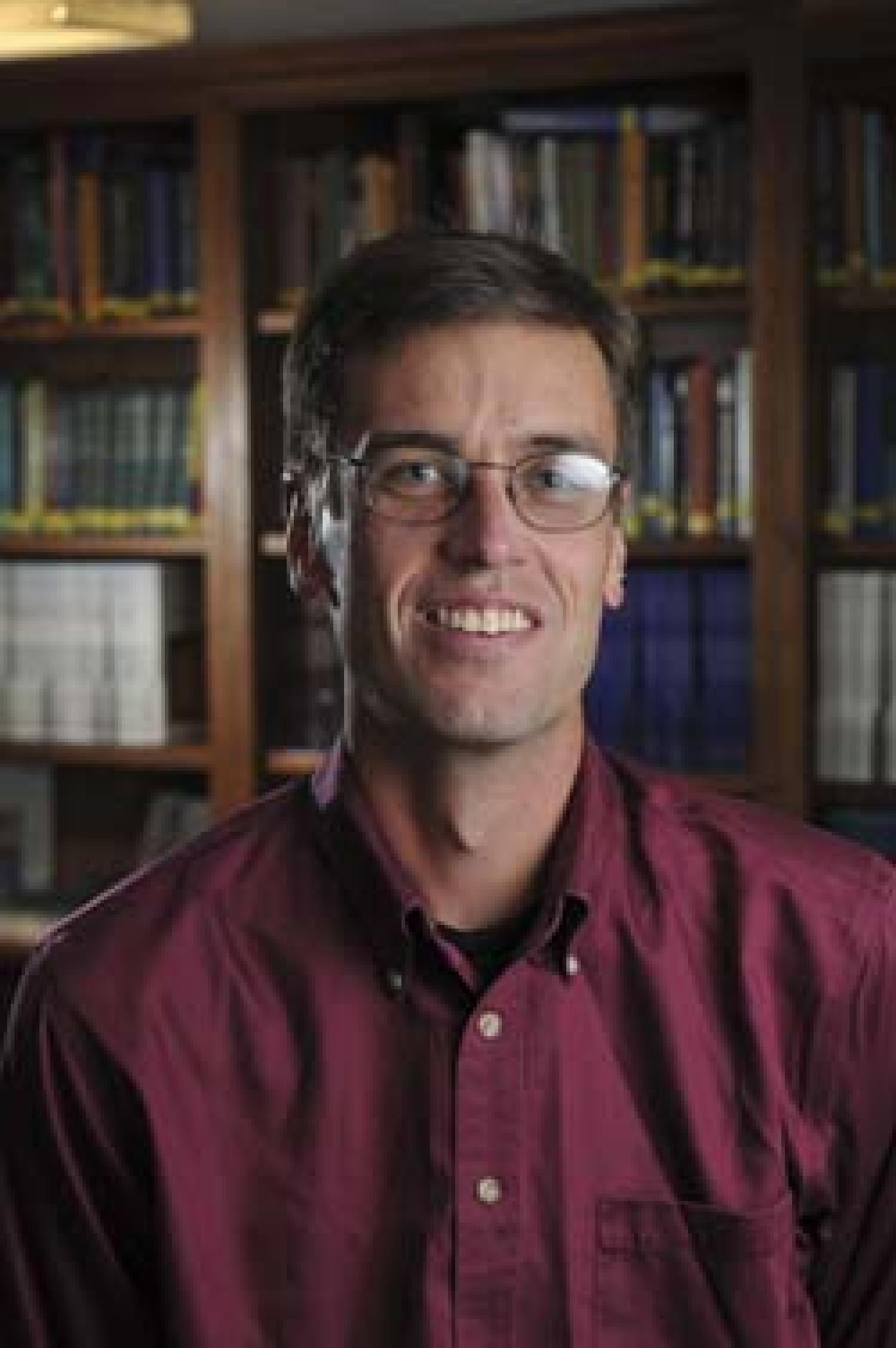
Erik Willcutt is a Professor in the Department of Psychology and Neuroscience at the University of Colorado Boulder. His research focuses on the genetic and neurobehavioral underpinnings of ADHD, learning disabilities, and developmental psychopathologies. He holds positions at the Institute for Behavioral Genetics and the Center for Neuroscience. Education: PhD in Psychology from the University of Denver (1998). Research Interests: Etiology and assessment of ADHD, reading disabilities, and developmental psychopathologies. His work integrates behavioral genetics, neuroimaging, and longitudinal twin studies to understand cognitive and psychiatric disorders. Key topics include neuroanatomical correlates of ADHD, genetic influences on dyslexia, and comorbidity between learning disabilities and psychiatric conditions. Publications highlight advanced methods like genome-wide association studies (GWAS) and phenotype harmonization (e.g., Rosetta method). His work bridges molecular genetics with clinical psychology, emphasizing translational research. Lab/Affiliations: Active in the Institute for Behavioral Genetics and collaborates with interdisciplinary teams studying neurodevelopmental disorders. Office located at Muenzinger D451B.
Bruce W. Smith is an Associate Professor at the University of New Mexico, College of Arts and Sciences, Department of Psychology. His research focuses on resilience , mindfulness interventions , and positive psychology with applications in health and stress management. Ph.D., Arizona State University (2002) Director, The Phoenix Lab Email: bwsmith@unm.edu Smith's research investigates how individuals bounce back from stress and adversity, including through mindfulness , positive psychology , and narrative-based approaches like the "hero’s journey". He developed the Brief Resilience Scale , widely used in stress and health research. His work spans health psychology, examining stress responses in chronic illness (cancer, cardiovascular disease) and emergency responders (firefighters). He has also explored mindfulness-based adaptations for Latino communities and positive psychology classes that improve student well-being. Smith teaches courses in Health Psychology , Positive Psychology , and Psychology Teaching Practicum . Current graduate students in his lab include Kaitlyn Schodt and Naila deCruz-Dixon . He is not accepting new students for Fall 2025 or 2024. Key themes across his publications (2008-2023) include: Resilience measurement and applications Mindfulness in stress reduction Positive psychology interventions Cultural adaptations for mental health His work emphasizes practical applications in both clinical settings and educational environments , with a focus on undergraduate well-being and trauma-informed approaches to personal growth.
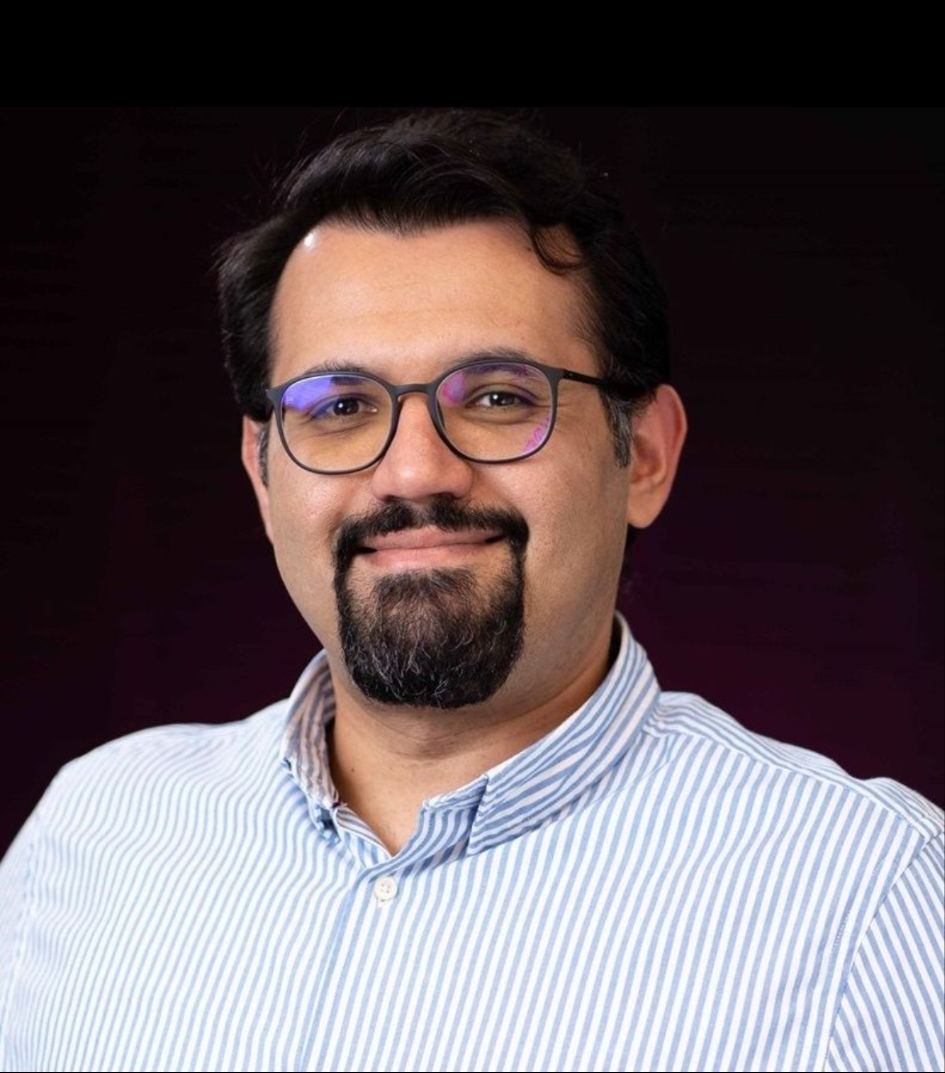
Dr. Ehsan Abbasnejad is an Associate Professor at Monash University's Department of Data Science and Artificial Intelligence, and holds adjunct positions at the Australian Institute for Machine Learning (AIML, University of Adelaide) and the Centre for Augmented Reasoning (CAR). He specializes in foundational AI, focusing on vision-language tasks, adversarial machine learning, and reinforcement learning. His work bridges theory with real-world applications in agriculture, energy, healthcare, and sports. Education: PhD in Computer Science from Australian National University (ANU). Research Interests: Machine Learning Theory and Adversarial Defenses Neural Network Robustness and Generalization Multimodal Learning (Vision-Language) Continual and Transfer Learning Applications in Energy, Healthcare, and Robotics Awards: Finalist for Australian AI Academic/Researcher of the Year (2024) Multidisciplinary competition wins (e.g., OzMineral Explorer Challenge) Advising & Grants: Australian Research Council (ARC) Discovery Project on Reinforcement Learning CSIRO's Next Generation Graduate Fund Accepting PhD students in foundational AI and applications Labs & Teams: Director of Foundational Machine Learning & Reasoning at Monash, leading global teams in AI competitions and industry collaborations (Microsoft Research, NEC Labs America).
Rebecca Willett is a Professor of Statistics and Computer Science at the University of Chicago and Faculty Director of AI at the Data Science Institute. She holds the Worah Family Professorship and is a member of the Wallman Society of Fellows. Her research focuses on machine learning, signal processing, and scientific computing, with applications in astronomy, climate science, and biochemistry. She has held visiting roles at institutions including UCLA and INRIA. Key roles include Deputy Directorships at the NSF-Simons Institute for Theory and Mathematics in Biology and the SkAI Institute. Education: PhD in Electrical and Computer Engineering from Rice University (2005), followed by faculty roles at Duke University (2005–2013) and the University of Wisconsin-Madison (2013–2018). Awards include the 2024 SIAM Data Science Career Award, NSF CAREER Award (2007), and AFOSR Young Investigator Award (2010). Research interests span inverse problems, optimization theory, and interdisciplinary applications. Her work bridges high-dimensional statistics and imaging science. Recent articles emphasize neural network theory, climate data assimilation, and biophysical modeling. Awards include SIAM Fellowship, IEEE Fellowship, and teaching excellence awards. She leads initiatives in AI ethics, broadening participation in STEM, and serves on key committees like the National Academies' CATS. Labs/Groups: Machine Learning Group at UChicago, CERES Center for Unstoppable Computing. Grants include NSF, DOE, and collaborations with Argonne National Laboratory.
Heather Zheng is the Neubauer Professor of Computer Science at the University of Chicago, co-directing the SAND Lab (Security, Algorithms, Networking and Data) with Prof. Ben Y. Zhao. She holds IEEE (2015) and ACM (2023) Fellowships, and was recognized as MIT TR35 (2005) for cognitive radio research. Her work bridges mobile/IoT security, adversarial ML, and generative AI ethics. Zheng earned her PhD in Electrical and Computer Engineering from University of Maryland in 1999, with prior roles at Bell-Labs, Microsoft Research Asia, and UCSB. Education: PhD in Electrical and Computer Engineering, University of Maryland, College Park (1999) Research Focus: Explores cutting-edge challenges in: Security implications of mobile/IoT sensors (e.g., bracelet-of-silence countermeasures) Adversarial machine learning defense mechanisms (e.g., Blacklight attack detection) Generative AI governance (Glaze, NightShade copyright tools) Awards: ACM Fellow (2023) IEEE Fellow (2015) World Technology Network Fellow Labs & Collaborations: Leads SAND Lab focusing on security, ML, and networked systems. Active in UChicago's Systems Group exploring cloud/edge computing architectures.
Furkan Alaca is an Assistant Professor at Queen's University's School of Computing, part of the Faculty of Arts and Science. His research focuses on user authentication systems, addressing security and usability challenges. He holds a Ph.D. (2018) in Computer Science from Carleton University, an M.A.Sc. (2012) in Electrical and Computer Engineering, and a B.Eng. (2010) in Communications Engineering, all from Carleton University. His academic career includes teaching roles at Queen's University and the University of Toronto Mississauga, where he taught courses such as Cryptography, Cybersecurity, and Discrete Mathematics. He is affiliated with Queen's Security Research Group and Computer Security Research Lab. Research interests include computer and internet security, usable security, authentication mechanisms, and systems security. He has contributed to advancements in web authentication frameworks, malware analysis, and privacy-preserving technologies. His work spans conferences like IEEE and ACM, with notable publications in cybersecurity, machine learning, and network efficiency. Current teaching includes CISC 447 (Introduction to Cybersecurity) and CISC 468 (Cryptography). He has advised on courses ranging from undergraduate programming to graduate-level security topics.
Matthew Payne is an Associate Professor in the Department of Film, Television, and Theatre at the University of Notre Dame. His affiliations include roles as Director of Graduate Studies and regional director for the Learning Games Initiative, a multi-institute research collective focused on game archiving and education. His research spans video game studies, media literacy, military entertainment, and the cultural history of video games. He explores play theory, media and war, and the intersection of media production with new technologies. The 15 most recent articles highlight his focus on video game studies, transmedia narratives, and the cultural implications of gaming. These works cover topics from Nintendo Amiibo to slow game time mechanics in Red Dead Redemption 2, with recurring themes of military representation and ludic storytelling. Matthew Payne has co-edited notable works including How to Play Video Games and Joystick Soldiers , emphasizing collaborative approaches to game studies and critical analysis of military gaming.
James B. Rawlings is the Mellichamp Process Control Chair in the Department of Chemical Engineering at the University of California, Santa Barbara, and holds the rank of Professor. His research focuses on chemical process control, reaction engineering at the molecular level, and computational modeling with tools like Octave. He has held prominent roles, including the Paul A. Elfers Chair at UW Madison and the Steenbock Professor of Engineering. Education: PhD in Chemical Engineering from the University of Wisconsin-Madison (1985), BS in Chemical Engineering from The University of Texas at Austin. Postdoctoral training at the Institute for System Dynamics and Process Control, University of Stuttgart (1985-1986). Research interests include nonlinear systems, model predictive control (MPC), moving horizon estimation (MHE), and stochastic reaction engineering. His work bridges theory and industrial applications, emphasizing robustness and practical implementation. Awards: Elected Fellow of the National Academy of Engineering (2016), IFAC (2016), and IEEE (2012). Recipient of the Process Automation Hall of Fame (2016), Vilas Distinguished Achievement Professor (2015), and numerous AIChE awards. Honorary doctorate from Technical University of Denmark (2011). Grants & Leadership: Led NSF-funded projects on MPC and control systems. Developed Octave, a widely used computational tool. Active in academic leadership and curriculum development, recognized with teaching awards including the Chancellor’s Distinguished Teaching Award (2013). Labs & Teams: Directs research groups focused on control theory, computational tools, and industrial process optimization. Collaborates with industry on MPC implementation and disturbance modeling.
Bettina Migge is a Full Professor in the School of Languages, Cultures and Linguistics at University College Dublin, where she has been a faculty member since 2004. She previously held academic positions at Goethe University Frankfurt and earned her PhD in Linguistics from The Ohio State University. She served as Head of School from 2016 to 2021 and has held leadership roles in research centers and committees, including the Royal Irish Academy and the Society for Pidgin and Creole Linguistics, of which she is President until 2023. She is Co-Editor of the Journal of Pidgin and Creole Languages and actively contributes to COST Action LITHME, focusing on language and technology. Her educational background includes studies at Universität Hamburg, Université de Cameroun, Freie Universität Berlin, and The Ohio State University, culminating in a PhD focused on African languages in creole genesis, with fieldwork in Suriname and Benin. She is fluent in Dutch, English, French, German, and Ndyuka/Pamaka. Bettina Migge's research centers on sociolinguistics, language contact, and creole languages, with a focus on multilingual contexts undergoing rapid social change such as urbanization and migration. Her work spans French Guiana, Suriname, and Ireland, examining structural and socio-pragmatic aspects of language use, linguistic landscaping, and computer-mediated communication. She has led significant projects like the trilingual DicoNenge(e) dictionary and has explored the role of AI in reshaping language practices. Her recent publications reflect a critical engagement with the impact of AI and machine learning on language, revealing colonial continuities in language technologies and questioning dataist ideologies. She investigates how language is materially produced in both colonial and digital contexts, emphasizing power, authenticity, and control. She has received research funding from the National Science Foundation (USA), IRCHSS, IRC, Ulysses grants, and French research units like SeDyL. Her collaborative projects include work on complementation in creoles, South Dublin English, and language practices in multilingual border zones. Bettina Migge supervises MA and PhD students in sociolinguistics, linguistic landscaping, and World Englishes. She is involved in numerous editorial and professional associations, including the Society for Caribbean Linguistics and The Global Council on Anthropological Linguistics. She has coordinated modules such as World Englishes, Sociolinguistics, and Research in Creole Languages. She leads and participates in public engagement activities, including workshops on AI in linguistics, multilingualism in Ireland, and dictionary launches. Her research team includes collaborators from Europe and beyond, and she is committed to participatory and ethnographically grounded approaches in language documentation and analysis.
Xiaoxiao Long is a Tenure-Track Associate Professor at the School of Intelligence Science and Technology, Nanjing University. He joined NJU as an associate professor in February 2024. Previously, he earned his Ph.D. from the University of Hong Kong (HKU) under the supervision of Prof. Wenping Wang (IEEE & ACM Fellow) and Prof. Taku Komura. His educational background includes: Ph.D. in Computer Science from University of Hong Kong Bachelor's degree in Control Science & Engineering from Zhejiang University Dr. Long's research focuses on computer graphics and 3D computer vision, with particular emphasis on 3D Vision, Physical AI, and World Models. His long-term goal is to develop General-Purpose AI with spatial capabilities. His work bridges theoretical understanding of 3D spaces with practical implementations of spatial AI systems, with applications spanning robotics, virtual reality, and augmented environments. He employs innovative neural network approaches and geometric constraints to advance 3D scene understanding and reconstruction. His publication record shows strong momentum with multiple papers accepted to top-tier conferences including CVPR (5 papers in 2025 alone), ICML, ICLR, ECCV, and TPAMI. His research demonstrates a clear progression from foundational geometric estimation techniques (ASN++) toward more comprehensive spatial AI systems. His scientific recognition includes: Excellent Young Scholars Fund (Overseas) from NSFC Dr. Long has successfully mentored numerous students who have published at major venues and gone on to pursue advanced degrees at prestigious institutions including USTC, Beihang University, HKU, UCAS, Virginia Tech, and HKUST. He is currently recruiting Ph.D. and master's students for Fall 2026, seeking candidates interested in pushing the boundaries of 3D computer vision and spatial AI. His laboratory focuses on developing advanced techniques for 3D scene understanding, neural rendering, and physical AI. Current projects span Gaussian-based representations, neural radiance fields, and geometric estimation, with applications in robotics, virtual environments, and spatial reasoning systems.
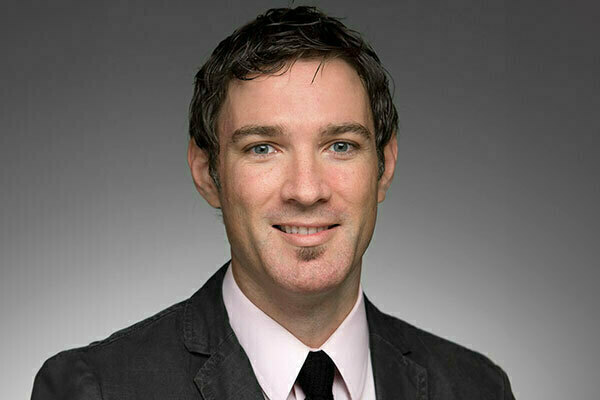
Clark Olson is a Professor in the Division of Computing & Software Systems at the University of Washington Bothell, part of the School of Science, Technology, Engineering & Mathematics. He earned his Ph.D. in Computer Science from UC Berkeley (1994), M.S. in Electrical Engineering (1990), and B.S. in Computer Engineering (1989) from the University of Washington, Seattle. Education: Ph.D. in Computer Science (2017) from University of California, Berkeley M.S. in Electrical Engineering (1990) from University of Washington, Seattle B.S. in Computer Engineering (1989) from University of Washington, Seattle His research focuses on computer vision, robot navigation, and clustering algorithms. He has developed techniques for Mars rover terrain mapping, subspace clustering, and geometric feature matching. His work bridges theory and application in autonomous systems and image analysis. Analysis of his publications reveals expertise in computer vision (8 papers), clustering algorithms (4 papers), and robotics (5 papers). Key subtopics include Mars exploration (3 papers), Hough transforms (3 papers), and probabilistic methods (3 papers). Professor Olson teaches courses ranging from introductory programming (CSS 161-162) to advanced topics in computer vision (CSS 487-587) and algorithm design (CSS 549). He also advises on the CSSE Capstone (CSS 497) projects requiring rigorous prerequisites and structured evaluation criteria.
Erik Learned-Miller is a Professor and Chair of the Faculty at the Manning College of Information and Computer Sciences (CICS), University of Massachusetts Amherst. He is based in the Department of Computer Science and leads the Computer Vision Lab, with strong affiliations to the Center for Data Science. His work bridges machine learning and computer vision, focusing on foundational and ethical aspects of visual recognition systems. Education: PhD in Electrical Engineering and Computer Science, Massachusetts Institute of Technology, 2002 MS in Electrical Engineering and Computer Science, Massachusetts Institute of Technology, 1997 BA in Psychology, Yale University, 1988 Learned-Miller's research centers on machine learning methods for computer vision problems, particularly in scenarios with limited labeled data. His work includes one-shot learning , face detection and recognition , image and video segmentation , joint image alignment , and text recognition . He emphasizes unsupervised, self-supervised, and semi-supervised learning paradigms, and is actively involved in addressing societal concerns around the regulation of face recognition technology. His contributions have had a major impact on the computer vision community, most notably through the creation of widely used benchmarks such as Labeled Faces in the Wild and the Face Detection Database and Benchmark , which have become standard evaluation tools in the field. Scientific Awards and Honors: NSF CAREER Award (2006) Mark Everingham Award (2019) Microsoft-MIT Graduate Student Fellowship Learned-Miller has played significant roles in the academic community, including serving as Program Chair for the 2015 Conference on Computer Vision and Pattern Recognition (CVPR) and as a member of the editorial board of the Journal of Machine Learning Research . He has secured competitive research funding, including the NSF CAREER award, supporting his long-term research agenda. While specific advisees are not listed, he mentors graduate students through his lab and departmental roles. He leads the Computer Vision Lab at UMass Amherst, a research group focused on advancing the state of the art in visual understanding through machine learning. The lab is part of the broader research ecosystem within CICS and collaborates with the Center for Data Science, contributing to interdisciplinary efforts in AI and data-driven science.
Aaron D. Ames is the Bren Professor of Mechanical and Civil Engineering, Control and Dynamical Systems, and Aerospace at the California Institute of Technology (Caltech). He serves as the Booth-Kresa Leadership Chair and Director of the Center for Autonomous Systems and Technologies since 2025. His academic journey includes a BS in Mechanical Engineering and BA in Mathematics from the University of St. Thomas (2001), followed by an MA in Mathematics and a PhD in Electrical Engineering and Computer Sciences from UC Berkeley (2006). Research Interests span theoretical and experimental work in hybrid systems, nonlinear control, and bipedal robotic locomotion. Specific focus areas include: Control Barrier Functions (CBFs) for safety-critical systems Powered prostheses and robotic assistive devices Legged locomotion for bipedal and quadrupedal robots Cyber-physical systems and autonomous control Model predictive control and real-time optimization Humanoid robotics and geometric safety filters Recent publications emphasize risk-aware control, safety verification, and locomotion on constrained environments, with applications to drones, exoskeletons, and quadrupedal robots. His work often integrates theoretical advancements with practical validation through the AMBER Lab. Scientific Awards & Honors : NSF CAREER Award (2010) Donald P. Eckman Award (2015) Leon O. Chua Award (2005) Bernard Friedman Prize (2006) Teaching includes graduate courses on nonlinear control, hybrid systems, and robotics at Caltech, alongside prior roles at Georgia Tech and Texas A&M. He leads the AMBER Lab (Bipedal Robotics) and has secured major grants from the National Science Foundation, NASA, and industry partners like Miso Robotics and SRI International.
Supratik Chakraborty serves as the Bajaj Group Chair Professor in the Department of Computer Science and Engineering at Indian Institute of Technology Bombay. He maintains dual affiliations with the Centre for Formal Design and Verification of Software and the Centre for Liberal Education at IIT Bombay, demonstrating his cross-disciplinary engagement. Professor Chakraborty's research spans formal methods with focus on formal verification, rigorous analysis of system models, and automated synthesis of systems from specifications. His work bridges theoretical foundations with practical applications, particularly in developing mathematically provable guarantees for increasingly complex hardware, software, and intelligent systems. Current research interests include constrained counting and sampling, scalable formal verification of software and hardware systems, automated synthesis of programs and circuits, and applications of automata, logic and finite model theory to practical verification challenges. His publication trajectory shows a significant evolution from traditional hardware and software verification toward addressing verification challenges in machine learning and AI systems. Recent work increasingly focuses on interpretability of black-box models, verification of neural networks, and synthesis techniques applicable to intelligent systems. The research demonstrates strong interdisciplinary connections between formal methods, programming languages, and artificial intelligence. IIT Bombay Excellence in Thesis (CSE) Award 2011 (for Bhargav Gulavani's thesis) IIT Bombay Excellence in Thesis (CSE) Award 2017 (for Abhisekh Sankaran's thesis) Best Paper in Algorithms and Architecture track at IEEE International Conference on Computer Design: VLSI in Computers and Processors, 1998 Professor Chakraborty has successfully supervised 11 doctoral students, with research spanning formal verification techniques, Boolean functional synthesis, constrained counting, and applications to hardware and software systems. His students have gone on to positions at major institutions including Microsoft Research, TCS Research, Georgia Tech, and BARC, reflecting the strong industry and academic impact of his mentorship. Current research directions show increasing emphasis on verification challenges posed by machine learning systems and AI. His research group at IIT Bombay, while not explicitly named in the materials, appears to focus on formal methods with strong connections to the Centre for Formal Design and Verification of Software. The group maintains active collaborations with international researchers including Moshe Y. Vardi at Rice University, and has made significant contributions to verification tools like VeriAbs that bridge theoretical advances with practical applications.
Dr. Pedro Nava is an Associate Professor and Director of Educational Leadership in the School of Education and Counseling Psychology at Santa Clara University. His scholarship centers on educational equity for Chicanx/Latinx and immigrant communities, combining critical race theory, participatory action research, and community-engaged methodologies. Education Ph.D. in Urban Schooling – University of California, Los Angeles, 2012 Ed.M. in Administration, Planning, and Social Policy – Harvard University, 2003 B.A. – California State University, Fresno, 1996 Research Interests Dr. Nava’s research interrogates systemic inequalities in urban and rural schooling, emphasizing critical pedagogy and critical race theory . He investigates how immigration status intersects with educational opportunity, and he collaborates with families and communities to co-construct transformative practices through participatory action research . His work also explores family-school-community engagement , leveraging community cultural wealth frameworks to amplify migrant and undocumented voices in educational policy and practice. Publication Trajectory Across more than two decades, Dr. Nava’s publications trace the evolution of critical scholarship in education. Early works examine institutional barriers for Chicano students, while recent studies integrate quantitative ethnography and testimonio methodologies to illuminate intersectional experiences of Latinx youth, undocumented graduate students, and farmworker families. Scientific & Community Awards No formal awards are enumerated in the provided text. Advising & Grants While specific grants and advisees are not listed, Dr. Nava’s leadership role as Director of Educational Leadership implies extensive mentoring of master’s and doctoral students, as well as oversight of grant-funded initiatives that advance equity-focused leadership preparation. Labs, Teams & Centers Dr. Nava directs the Educational Leadership programs within the School of Education and Counseling Psychology, fostering interdisciplinary collaboration and community-engaged research teams that partner with local schools, nonprofits, and migrant organizations.