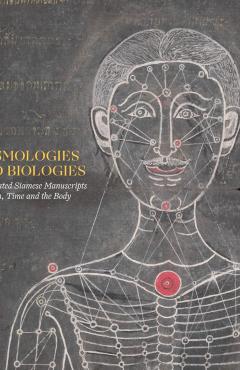
Justin McDaniel is the Edmund J. and Louise W. Kahn Endowed Professor of the Humanities at the University of Pennsylvania's Department of Religious Studies. His research focuses on Lao, Thai, Pali, and Sanskrit literature, Buddhist rituals, manuscript studies, and Southeast Asian history. He has authored multiple award-winning books and published over 100 articles and reviews. Education includes a BA from Boston College (1993), MTS from Harvard Divinity School (1998), MA and PhD in Sanskrit and Indian Studies from Harvard University (2001, 2003). His research explores intersections between Buddhism, material culture, and social history. Recent work includes studies on Siamese manuscripts and Thai Buddhist art. He has held grants from NEH, Mellon, Rockefeller, and others. Awarded teaching excellence at multiple institutions, McDaniel’s innovative courses like Existential Despair and Living Deliberately have been featured in national media. He serves as co-editor for Buddhism Compass and Journal of Lao Studies . Publications include Cosmologies and Biologies (2024), Wayward Distractions (2023), and Architects of Buddhist Leisure (2015), supported by NEH and Kyoto University. Forthcoming projects address Thai manuscripts and Buddhist biographies.
Dr. Joanna Cohen is an Associate Professor in American History at Queen Mary University of London's School of History. She specializes in 19th-century U.S. history, focusing on consumption, citizenship, capitalism, and material culture. Her work explores how commercial practices shaped civic identity and emotional responses to loss during the Civil War era. Education: BA (Cambridge), MA (Northwestern University), PhD (University of Pennsylvania). Research Interests: Consumer culture and citizenship Visual/material culture in 19th-century America Capitalism's intersections with race/gender Emotional history of economic trauma Awards: 2014 Grier Prize for best article Huntington Library Fellowship Newberry Library Fellowship Supervision: Guides doctoral research on 19th-century American capitalism, consumption, and visual culture. Public Engagement: BBC Radio contributor, podcast appearances, and frequent conference speaker at events like the Freethinking Festival.
Jing Zeng is an Assistant Professor of Computational Communication Science at the University of Zurich, Switzerland. She holds a PhD in Media and Communication from Queensland University of Technology (2017), an MSc in Social Science of the Internet from the Oxford Internet Institute (2013), and a BA in International Communications from the University of Nottingham (2012). Her research focuses on digital platforms, computational social science, AI governance, and misinformation dynamics. She has held academic appointments at Utrecht University (2022–2024) and fellowships at institutions including the Max Planck Institute for the History of Science and the Weizenbaum Institute. Zeng is a leader in digital media research, serving on editorial boards for journals such as Big Data & Society and Convergence , and co-editing the Technology, Power & Society book series. Her work bridges critical platform studies with empirical analyses of conspiracy theories, climate communication, and TikTok culture. Zeng’s research has been recognized through awards including the ICA Computational Methods Interest Group Top Paper (2020) and the Utrecht University Teaching Award (2023). She actively engages in public discourse through media commentaries in The Guardian , The Atlantic , and Science|Business , addressing topics like AI ethics, platform governance, and disinformation. Her current projects explore AI imaginaries, visibility moderation on TikTok, and cross-cultural digital activism. Education: PhD (QUT), MSc (Oxford), BA (Nottingham) Affiliations: Association of Internet Researchers (AoIR Executive Board), IPIE Scientific Network
Camille Landais is a Professor of Economics at the London School of Economics and Political Science (LSE), where she leads the Department of Economics. She serves as Director of STICERD (Suntory and Toyota International Centres for Economics and Related Disciplines) and Co-Director of the LSE-Gates Hub for Equal Representation in the Economy (H.E.R.). Additionally, she is a member of the French Council of Economic Advisers (CAE). Her research expertise spans Public Finance, Labour Economics, Applied Microeconomics, and Microeconometrics, with a focus on gender inequality, taxation policies, and child penalties. Landais holds a PhD in Economics from the Paris School of Economics. Her research interests include optimizing public spending efficiency, analyzing the economic impacts of family policies, and addressing wealth inequality through tax reforms. Recent work emphasizes the 'child penalty' phenomenon, migration responses to wealth taxation, and strategies for achieving full employment. She has contributed to high-impact publications such as the Review of Economic Studies and collaborates internationally on projects like the Child Penalty Atlas. Landais teaches advanced courses in public economics and actively engages in policy advising. She directs research centers that prioritize interdisciplinary approaches to economic challenges and inequality reduction. Her work frequently involves large-scale data analysis, including banking data and microsimulation techniques, to evaluate policy outcomes. Education: PhD in Economics, Paris School of Economics Research Centers: Director of STICERD, Co-Director of H.E.R., International Inequalities Institute Associate Teaching: EC325/EC426/EC534 (Public Economics modules) Professional Roles: Member of French Council of Economic Advisers, Editor of LSE Public Policy Review
Dr Stella Bolaki is Reader in American Literature and Medical Humanities at the School of English, University of Kent, and Co-Director of the Centre for Health and Medical Humanities. She has been a faculty member since 2011, after holding positions at the University of Glasgow and the University of Edinburgh, where she also held a postdoctoral fellowship at the Institute for Advanced Studies in the Humanities (IASH). Her educational background includes a BA from Athens and an MSc and PhD from the University of Edinburgh. BA, Athens MSc, University of Edinburgh PhD, University of Edinburgh Stella’s research spans interdisciplinary fields including contemporary American literature, medical humanities, disability studies, and Black feminist theory. Her work critically examines narratives of illness, chronic conditions, self-care, and the intersection of art and health. She has pioneered research on artists’ books as tools for wellbeing, testimony, and community engagement, particularly in contexts of trauma and social injustice. Her recent publications and projects reveal a consistent focus on expanding narrative forms in medical humanities—moving beyond traditional literary modes to include photography, performance, film, and digital storytelling. Themes of inequality, mental health, climate anxiety, and embodiment recur across her work, especially in her ongoing monograph on self-care. Fellow of the Higher Education Academy Wellcome Trust funding recipient British Academy funding recipient Research England grant awardee Kent’s AHRC Impact Acceleration Account funding Stella supervises doctoral research across a wide range of interdisciplinary topics and has co-supervised a CHASE-funded project on health zines. She contributes to teaching in American literature and medical humanities at the Kent and Medway Medical School. Her professional service includes editorial roles for Contemporary Cultural Studies in Illness, Health and Medicine and the Journal of Literary & Cultural Disability Studies , and leadership in the Eastern Arc Medical and Health Humanities Network and the Kent Medical Humanities Network. She leads public-facing research through creative workshops, exhibitions, and events such as ‘Artists’ Books and the Medical Humanities’ and ‘Mending the Psyche: Art as Reparation’, often in collaboration with NHS partners and community organizations.
William B Gartner serves as the Bertarelli Foundation Distinguished Professor of Family Entrepreneurship at Babson College's F.W. Olin Graduate School of Business, where he also directs research at the Bertarelli Institute for Family Entrepreneurship. Having joined Babson's faculty in 2017, Gartner brings over 40 years of experience studying entrepreneurial phenomena, with particular expertise in family entrepreneurship dynamics. He previously held distinguished chairs at the University of Southern California and Clemson University, establishing himself as a leading scholar in the field. Gartner earned his PhD, MBA, and BBA from the University of Washington, forming the foundation for his extensive research career. His academic journey began during entrepreneurship's early days in the late 1970s when he took one of the first entrepreneurship courses as an MBA student at the University of Washington, when only six students initially enrolled in the class. Gartner's research primarily explores how families act entrepreneurially, examining topics including entrepreneurial legacy, intergenerational knowledge transfer, and the transformation of family businesses across generations. His work bridges entrepreneurship theory with practical applications, particularly focusing on how entrepreneurial legacies can drive innovation in family businesses. He is particularly interested in the linguistic innovations entrepreneurs employ and how storytelling shapes entrepreneurial identity and practice. His scholarship has evolved to incorporate humanities perspectives, recognizing that literature, philosophy, and history provide valuable insights into entrepreneurial thinking and behavior. Analysis of Gartner's recent publications reveals a strong emphasis on family entrepreneurship as an ongoing process rather than a static state, with increasing attention to methodological innovation in entrepreneurship research. His work demonstrates growing interest in the role of narrative, visual methods, and qualitative approaches to understand complex entrepreneurial phenomena. The research shows consistent focus on family business succession as transformation rather than simple transfer, with increasing attention to adolescent entrepreneurial development and the influence of parenting styles. 2025 — Top 1% of Scholars in all subjects, Stanford/Elsevier's Top 2% Scientist Rankings 2024 — The FamCap25 – The Top FamilyEnterprise Academics, FAMILY CAPITAL MAGAZINE 2022 — Justin G. Longnecker Fellow, United States Association of Small Business and Entrepreneurship 2016 — Dedication to Entrepreneurship Award, Entrepreneurship Division, Academy of Management 2013 — Foundational Paper Award, Entrepreneurship Division, Academy of Management 2005 — International Award for Entrepreneurship and Small Business Research Gartner actively mentors doctoral students and early-career researchers, frequently collaborating on publications addressing complex family business dynamics. His editorial roles as Special Issue Editor for Entrepreneurship and Regional Development and Academy of Management Perspectives demonstrate his influence in shaping research agendas. He has secured significant research funding supporting studies on entrepreneurial legacy, family business succession, and adolescent entrepreneurial development, though specific grant amounts aren't detailed in the available materials. As Director of Research at the Bertarelli Institute for Family Entrepreneurship, Gartner leads initiatives connecting academic research with practical applications for family businesses. His work emphasizes the transformative potential of entrepreneurship within family contexts, challenging traditional notions of family business succession as mere transfer of ownership. Through workshops and seminars, he helps families explore how entrepreneurial legacies can lead to new innovations while preserving core values across generations.
Robert Corna is a Lecturer in the Department of Media Arts, Sciences and Studies at the Roy H. Park School of Communications, Ithaca University. His work focuses on film production and visual storytelling methodologies. Role: Lecturer Specialty: Film Production Affiliation: Roy H. Park School of Communications, Ithaca University Corna's research interests span cinematic techniques, digital filmmaking, and contemporary cinema analysis. As a media arts educator, he contributes to pedagogical practices in visual storytelling and production workflows.
M. Tamer Özsu is a University Professor of Computer Science at the David R. Cheriton School of Computer Science, University of Waterloo, where he holds a Cheriton Faculty Fellowship. He also serves as a Distinguished Visiting Professor at Tsinghua University and is the Founding Director of Waterloo-Huawei Joint Innovation Laboratory since 2018. His extensive contributions to computing have earned him numerous prestigious awards including the 2024 ACM Presidential Award for long-standing and significant contributions to the computing field. Professor Özsu's research focuses on data engineering aspects of data science, particularly addressing data management issues with two main foci: management of non-traditional data and large-scale distributed data management. He is renowned for his seminal book "Principles of Distributed Database Systems" (co-authored with Patrick Valduriez), now in its fourth edition, and the "Encyclopedia of Database Systems" (co-edited with Ling Liu), in its second edition. His work bridges theoretical foundations with practical system implementations, targeting grand societal challenges through computational approaches. His recent publications reveal a strong trend toward graph analytics, streaming data processing, and the integration of large language models with vector data management. The research shows increasing focus on GPU-accelerated graph processing, RDF query optimization, and multimodal data analysis, reflecting the evolution of data management challenges in the era of big data and AI. His work continues to address fundamental challenges in distributed data systems while adapting to emerging technologies and application domains. Scientific Awards and Fellowships ACM Presidential Award (2024) IEEE TCDE Education Award (2024) IEEE Innovation in Societal Infrastructure Award (2022) CS Can | Info Can Lifetime Achievement Award (2018/2019) ACM SIGMOD Test-of-Time Award (2015) ACM SIGMOD Contributions Award (2006) The Ohio State University College of Engineering Distinguished Alumnus Award (2008) Fellow of the Royal Society of Canada Fellow of the American Association for the Advancement of Science (AAAS) Life Fellow of the Association for Computing Machinery (ACM) Life Fellow of the Institute of Electrical and Electronics Engineers (IEEE) Fellow of the Asia-Pacific Artificial Intelligence Association (AAIA) Elected member of the Science Academy, Türkiye Professor Özsu has been deeply involved in academic leadership and community building. As Founding Editor-in-Chief of ACM Books (2013-2019), he launched a series that by 2019 had published 28 major books with another 30 under contract. His service to ACM, particularly through SIGMOD, has been exemplary and widely recognized. He directs the Waterloo-Huawei Joint Innovation Laboratory, which focuses on cutting-edge research in data management and distributed systems, fostering strong industry-academia collaboration.
Doç. Dr. Muhammed Aras is an Associate Professor in the Department of Mechanical Engineering at Baskent University (Başkent Üniversitesi), with a research focus on sustainable machining processes, tool wear monitoring, and surface roughness optimization. His work spans advanced manufacturing technologies, energy storage systems, and biomedical device design. PhD in Manufacturing Engineering (2018), Gazi Üniversitesi MSc in Mechanical Education (2013), Gazi Üniversitesi BSc in Mechanical Engineering (2010), Tabriz Islamic Azad University Research interests include sustainable machining (dry/hard turning, cooling-lubrication strategies), tool wear analysis (CBN, ceramic and coated inserts), and surface integrity optimization using AI-based methods (firefly algorithm, TOPSIS, Grey Relational Analysis). His 15 most recent articles (2017-2024) examine topics like: Surface roughness prediction in dry hard turning Energy storage technology viability assessments Cutting parameter optimization for various steels Acoustic/vibration monitoring in machining He has received scientific awards including the Teşvik Ödülü (Encouragement Award, 2015). His patent on an automatic orthognathic surgery articulator and book chapters on tool monitoring systems demonstrate his multidisciplinary impact.
Naomi Rogers, Ph.D. (She/Her) is Professor of the History of Medicine in the Section of the History of Medicine and the Program in the History of Science and Medicine at Yale University. She holds courtesy appointments in the History Department and the Women's, Gender and Sexuality Studies Program, and serves on Yale's Dean's Advisory Council for LGBTQI Affairs. Professor Rogers teaches undergraduate, graduate, and medical students, regularly lecturing on the history of AIDS, reproduction, health economics, eugenics, nutrition, disability, and health activism. Professor Rogers' educational background includes: PhD in History from University of Pennsylvania (1986) MA from University of Pennsylvania (1986) BA in Music from Melbourne University (1980) BA with Honors from Melbourne University (1979) Her research focuses on 20th and 21st century history of medicine with emphasis on health inequities and social justice. Professor Rogers' historical interests span gender and health, disease and public health, disability studies, feminism, alternative medicine, health policy, and health activism. Her work critically examines the intersection of medical practices with social movements, particularly how marginalized communities have challenged medical orthodoxy throughout American history. She has published extensively in journals such as American Journal of Public Health, Bulletin of the History of Medicine, Journal of Medical Humanities, Radical History Review, Social History of Medicine, and Women and Health. Professor Rogers' recent scholarship demonstrates a consistent focus on the historical dimensions of contemporary health issues, particularly vaccine politics, abortion history, and community health activism. Her publications reveal patterns of resistance to medical authority, the role of race and gender in shaping health outcomes, and the historical roots of current health justice movements. Her work bridges academic history with public engagement, as evidenced by her frequent media commentary on COVID-19 and other health issues in outlets including BBC Radio, CNN, Huffington Post, National Public Radio, New York Times, Wall Street Journal, and Washington Post. Among her notable recognitions: AAHN's Lavinia L. Dock Award for Exemplary Historical Research for 'Polio Wars: Sister Kenny and the Golden Age of American Medicine' (2014) Presenter of the AAHM's Garrison Lecture: 'Radical Visions of American Medicine: Politics and Activism in the History of Medicine' (2017) Professor Rogers has been actively involved in academic leadership and mentoring. She has served as Director of Graduate Studies for the 2022-23 academic year, Chair of the Women's Faculty Forum, and Liaison to the Committee on Status of Women in Medicine. Her service extends to editorial boards including the Journal of the History of Medicine and Allied Sciences since 2018. She has also contributed to public understanding of medicine through consultations for documentaries including 'The Polio Crusade' (PBS), 'On the Basis of Sex' (Focus Features), and 'War on Science' (in process). Currently, Professor Rogers serves on the Medical School's OBGYN 'Dobbs' Sessions Planning Committee, which has organized webinars for the Yale community, and was co-organizer of the history-themed session 'Rooted in History: Abortion, Law and American Health Care.' She is working on her book project 'Health Radicalism and the Humanization of American Medicine' (under contract with Oxford), examining critics of medical orthodoxy since 1945 including civil rights, consumer, and feminist activists. She also conducts ongoing research on antisemitism in American medicine in the decades before and after World War II.
Margaret Carlyle is an Assistant Professor in the Department of History and Sociology at the Irving K. Barber Faculty of Arts and Social Sciences, University of British Columbia Okanagan. She is a graduate student supervisor and member of UBCO’s Science and Technology Studies (STS) Collective. Her academic journey includes postdoctoral research at the University of Chicago and University of Cambridge, and a Visiting Assistant Professor role at the University of Minnesota. Research Interests: Carlyle specializes in the history of medicine, science, and technology within early modern France and transatlantic contexts. Her work examines women’s roles as experimentalists, artisans, and translators in scientific knowledge formation, utilizing archival and museum sources. Key themes include scientific imaging, medical technologies, gender and women’s studies, and the intersection of race and science in the French Atlantic World. Selected Articles: Recent publications analyze Enlightenment anatomy education, reproductive technologies, and transnational scientific networks. Her research spans topics from midwifery training to fetal representation in media, reflecting interdisciplinary engagement with medical humanities and material culture. Scientific Awards: SSHRC Insight Development Grant (2021–2023) UBCO Curricular Innovation Grant (2023) CIHR Project Grant (2023–2027) Molina Fellow at Huntington Library (2014) Teaching & Public Engagement: Offers courses on science and empire, reproductive technologies, and pandemics. Created the SSHRC-funded Reproductive Technologies podcast and co-curated the University of Chicago’s 'Fetus in Utero' digital exhibition. Collaborates on medical education tools for chronic gynecological pain.
Dr. Martha Sidury Christiansen is a Professor of Applied Linguistics/TESOL at the University of Texas at San Antonio , where she serves in the College of Education and Human Development . She is the Principal Investigator of Project RESPETO , a NSF-funded initiative exploring racial equity in engineering education. Her work spans sociolinguistics, digital literacies, and raciolinguistic analysis, with a focus on transnational multilingual communities. Born in Veracruz, Mexico Ph.D. in Foreign/Second Language Education (Ohio State University, 2013) M.A. in English Composition (Indiana University, 2007) B.A. in English Language Teaching (Universidad Veracruzana, 2002) Her research examines how transnational youth navigate digital spaces through multiliteracies , challenges Western academic writing norms via Mexican decolonial methodologies , and investigates raciolinguistic intersections in identity formation. The 15 most recent publications reveal a strong focus on digital communication , transnationalism , and critical pedagogy across journals like TESOL Quarterly and Language@Internet . 2023-2025: Expanding raciolinguistic frameworks in digital contexts 2021-2022: Analyzing multimodal identity construction 2019-2020: Exploring Mexican bilinguals' online language use She has received multiple honors including ACUE Fellow (2023), Fulbright Scholar (2017), and Faculty Leadership Fellow (2021-2022). Her presentations at conferences like ICOLLITE and DDVM Lab highlight her expertise in critical sociolinguistic awareness and digital discourse analysis . Dr. Christiansen actively consults for nonprofits on linguistic equity and multilingual education .
Victoria Lemieux is a Professor at the University of British Columbia (UBC) Faculty of Arts, School of Information, and Cluster Lead for Blockchain@UBC, Canada’s largest research cluster focused on blockchain technology. Her research centers on risks to trustworthy records in blockchain systems and their impact on transparency, financial stability, and human rights. She has pioneered Canada’s first research-oriented graduate blockchain training program and organized multiple interdisciplinary summer institutes. Education: Ph.D. in Archival Studies from University College London (2002), Certified Information Systems Security Professional (CISSP, 2005). Affiliated with UBC’s Peter Wall Institute for Advanced Studies, Sauder School of Business, and Institute for Computers, Information and Cognitive Systems (ICICS). Research interests span blockchain technology , trustworthy records , risk management , information governance , and visual analytics , with recent work addressing healthcare data frameworks, Web3 AI integration, and socio-cultural dynamics of decentralized systems. She has published extensively on blockchain applications in archives, land transactions, and privacy-preserving technologies. Scientific Awards : 2015 Emmett Leahy Award 2015 World Bank Big Data Innovation Award 2016 Emerald Literati Award 2016 Emerald Literati Outstanding Paper Award Supervision: Currently accepts doctoral students in Computational Archival Science and blockchain-related archival research. Affiliated with the Blockchain@UBC cluster and multidisciplinary research teams exploring decentralized systems for social good.
Claire Robins serves as Professor of Museology and Art at University College London's Institute of Education, leading the Art, Design & Museology Academic Group and acting as Department Graduate Tutor for the Department of Culture, Communication and Media. Her work critically bridges art practice, museum studies, and educational theory to advance democratic engagement in cultural institutions. Education: PhD in Museum Education, University of London (2009) Master's degree in Gallery/Museum Education, University of London Bachelor's degree in Fine Art, St Martins School of Art (now University of the Arts London) Research Focus: Robins investigates the intersection of artists' practices with critical pedagogy, emphasizing progressive education and avant-gardist strategies in twentieth-century knowledge production. Her scholarship examines how contextual forces shape learning definitions in museums, with particular attention to materialities, pedagogic forms, and democratic potential within institutional frameworks. This work consistently challenges conventional museum narratives through artist-led interventions. Publication Trends: Her 15 most recent publications (2012-2025) reveal sustained exploration of museology-art education synergies, highlighting pedagogic innovation through artists' interventions, critical assessment frameworks, and democratic museum practices. Key thematic threads include narrative disruption in galleries, sustainability in art education assessment, and the transformative role of fiction in reimagining museum epistemologies. Advising & Leadership: Robins has supervised PhD/EdD students since 2010 and directed the MA Art Education, Culture and Practice program (2011-2023). She currently teaches MA modules in Museums and Galleries in Education and leads the Education and Curation component, while mentoring MA dissertations. Her leadership extends to developing gallery-based short courses with Engage. Professional Engagement: As editorial board member for Arts & Communication and Engage , and active participant in ICOM and NSEAD, Robins shapes global discourse through international keynotes (e.g., Korean Society for Education in the Arts, 2019) and curated seminars like Soft Subjects: Material Practice in Gallery Education (2024). Her review work for Routledge and Intellect Books further demonstrates scholarly stewardship.
Irene Albers is a full Professor at Free University of Berlin's Department of Philosophy and Humanities, holding dual appointments at the Peter Szondi Institute for General and Comparative Literature and Institute for Romance Philology since 2004. She chairs both the Examination Board and Doctoral Committee for General and Comparative Literature, serves as Trustee of Studienstiftung des deutschen Volkes since 2004/05, and has been Principal Investigator for the Friedrich-Schlegel Graduate School for Literary Studies and Cluster Languages of Emotion since 2007. Her research bridges comparative literature, anthropology, and visual culture with institutional leadership spanning editorial projects and international conferences. Her educational background includes: Born in Bremen (1967) Romance Studies, Philosophy, and German Studies at Universities of Tübingen, Tours, and Konstanz M.A. from University of Konstanz (1993) Ph.D. from University of Konstanz (1999) on literature and photography in Émile Zola, Proust, and Claude Simon Albers' core research examines literary anthropology through colonial/postcolonial lenses, focusing on French literary engagement with Africa, surrealism, and literature-photography intersections. She pioneered studies on Michel Leiris' ethnological poetics and Claude Simon's photographic techniques, extending to historical emotion research (anatomy of affects, body language) and romance novella traditions. Her work consistently challenges Eurocentric literary canons through primitivism critique and heteronomy aesthetics, emphasizing textual restitution and cultural reclamation. Recent publications (2018-2025) reveal a sharp turn toward colonial restitution ethics, particularly in oral literature provenance. Articles increasingly analyze literature as colonial loot, connecting French modernism with African/Caribbean contexts through collaborative projects with anthropologists like Eléonore Devevey. This trajectory builds from earlier surrealist studies to concrete frameworks for decolonizing literary scholarship, spotlighting institutional complicity in cultural appropriation while advancing symmetrized modernity revisions. Scientific awards include: Senior Fellow and Prize Winner of the Zukunftskolleg, University of Konstanz (2009) Albers supervises master's and doctoral students through dedicated AVL colloquia while securing major research funding as Principal Investigator for Friedrich-Schlegel Graduate School (2007-present) and Cluster Languages of Emotion (2007-2012). Her current DFG-funded project 'Literature as Colonial Loot?' with Andreas Schmid pioneers philological provenance research. Earlier, she contributed to Collaborative Research Center 511 'Literature and Anthropology' (Konstanz, 1999-2002) and DFG-funded conferences on Claude Simon. She leads the DramaNet research project and co-edits the 'machina' series at transcript Verlag since 2010. As board member (2007-2009) and deputy (2008-2012) of Cluster Languages of Emotion, she coordinates Area D 'Cultural Codings of Emotions'. Her Zukunftskolleg fellowship (2012-2013) and Marcel Proust Society collaborations underscore sustained engagement with literary anthropology networks.