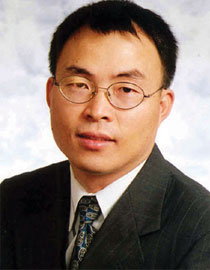
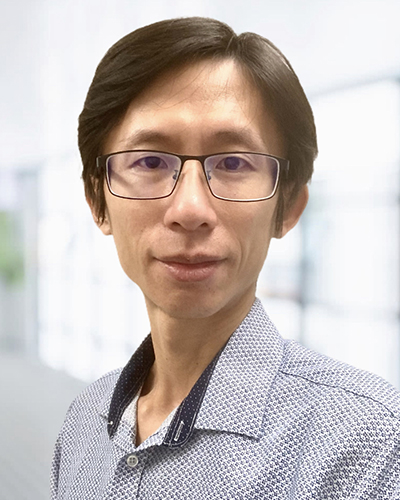
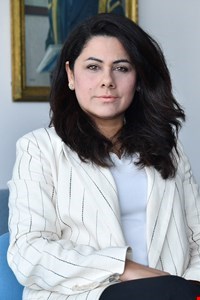
Professor Margaret Reynolds is a Professor of English and Modern Culture at Queen Mary University of London's School of English and Drama. She holds degrees from Oxford and London University, specializing in 19th–21st century literature, poetry, and the transmission of classical works. Her research includes feminist critiques of forgotten texts like Elizabeth Barrett Browning’s Aurora Leigh , which earned her the British Academy’s Rose Mary Crawshay Prize (1993). She has taught at Leeds, King’s College London, and Birmingham University, and was a Visiting Fellow at Clare Hall, Cambridge (Life Member). Education: MA (Oxford), PhD (London) Key Works: The Sappho History , Victorian Women Poets , Penguin’s Adam Bede Her research interests span classical reception, adoption narratives, and contemporary poetry. She has contributed to The Guardian and The Times , worked on BBC Radio (including presenting Adventures in Poetry ), and served as a Foundling Museum Trustee until 2022. Her memoir The Wild Track (2021) explores her adoption journey. Awards: Rose Mary Crawshay Prize (1993) Teaching: Courses on London’s literary culture, modern writing, and children’s literature.
Simon Dixon is a Professor of Computer Science and Director of the UKRI Centre for Doctoral Training in Artificial Intelligence and Music (AIM CDT) at Queen Mary University of London. He also serves as Deputy Director of the Centre for Digital Music (C4DM). His work focuses on music informatics, AI, and computational musicology, with emphasis on music signal analysis, performance modeling, and MIR applications. He leads projects funded by UKRI, Innovate UK, and industry partners like Yamaha and Spotify. Dixon has supervised over 20 PhD students and contributed to major initiatives like the Jazz Digital Archives Project and the Dig that Lick study on jazz melodic patterns. His research has been recognized with awards including the Peter Claricoats Award and Turing Fellowship. Education: PhD in Computer Science, BSc(Hons) in related field, with music qualifications (AMusA LMusA) Roles: AIM CDT Director, C4DM Deputy Director, EU H2020 MIP-Frontiers PI Research: Music transcription, expressive performance analysis, MIR, and AI applications in music education Key projects include industry collaborations (e.g., Yamaha for jazz piano modeling), semantic audio analysis, and large-scale music corpus studies. His team has pioneered methods in chord detection, source separation, and alignment algorithms, with top rankings in MIREX evaluations. Publications span journals like TISMIR and ICASSP, with a focus on foundational MIR techniques and AI-driven music systems. His work bridges technical innovation with cultural heritage through projects like JazzDAP and the Dig that Lick analysis of jazz solos.
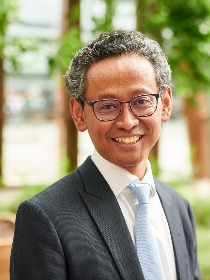
Prof. Bayu Jayawardhana is a Full Professor in Mechatronics and Control of Nonlinear Systems at the University of Groningen, affiliated with the Faculty of Science and Engineering. He leads the Jayawardhana Group focusing on opto-mechatronics and advanced nonlinear control theories. His roles include Director of Engineering and Scientific Director of the Engineering and Technology Institute Groningen. He holds editorial positions in journals like International Journal of Robust and Nonlinear Control and European Journal of Control . Education: PhD in Control and Power Group from Imperial College London (2006), M.Eng from Nanyang Technological University (2003), and B.Eng from Institut Teknologi Bandung (2000). Research interests span opto-mechatronics for high-tech systems, nonlinear control, and systems biology. Key projects include digital twins for energy optimization, control of ocean energy systems, and modeling of cryogenic actuators for telescopes. His work integrates AI and model-based methods for high-performance systems. Notable awards include the 2016 FSE Faculty Teacher of the Year Award and the Ben Feringa Impact Award (2020). He advises on ventures like Ocean Grazer B.V. and Sencilia B.V. Teaching includes graduate courses on nonlinear control, opto-mechatronics, and fitting dynamical models to data. His research labs include the Groningen Centre for Systems and Control and the Data Science and Systems Complexity Center.
Gaye Stephens serves as Assistant Professor in the School of Computer Science and Statistics at Trinity College Dublin, where she is a core member of the Centre for Health Informatics alongside Dr. Lucy Hederman and Prof. Mary Sharp. She actively contributes to institutional governance as a board member of the Irish Platform for Patient Organisations, Science and Industry (IPPOSI) and serves on the school's research ethics committee. Her research centers on patient-centered health informatics with focus areas including Electronic Health Record design , citizen engagement methodologies (such as Citizen Juries and Think-ins), and scalable information models for healthcare integration. She pioneers approaches that position patients as central stakeholders in health data governance, addressing critical challenges in digital health literacy, informed consent frameworks, and interoperability between legacy and emerging health technologies. Analysis of her recent publications reveals consistent focus on knowledge engineering for healthcare , with particular emphasis on temporal data modeling in knowledge graphs (2024-2025), nurse knowledge elicitation through serious games (2023-2024), and novel methodologies like the WICKED framework for capturing clinical wisdom (2022-2023). Her work consistently bridges technical informatics with human-centered design principles. Stephens actively contributes to national health informatics infrastructure through memberships in: Royal Academy of Medicine of Ireland Council of Clinical Information Officers National Standards Authority of Ireland Health Informatics Group Health Informatics Society of Ireland (including Nursing and Midwifery group) e-Health Ireland ECOSYSTEM working group She supervises across undergraduate, MSc (Health Informatics and Global Health), and PhD programs while leading client-based final year projects. Her teaching portfolio includes Introduction to Health Informatics, Information Modeling, Connected Health, and Electronic Health Record Architectures, with research advising spanning health data governance and patient engagement projects. Stephens co-leads the Knowledge and Data Engineering Group's Health Informatics research stream, focusing on semantic interoperability, adaptive hypermedia systems, and novel engagement models for health data governance. Her current projects emphasize citizen-centered EHR architectures and interdisciplinary approaches to healthcare data integration.
Yuri Zhukov is an Associate Professor at Georgetown University, holding dual appointments in the Edmund A. Walsh School of Foreign Service and the Department of Government (College). His research focuses on armed conflict, state repression, and geospatial data science, with notable work on the Russian invasion of Ukraine and historical legacies of political violence. He earned his Ph.D. in Government from Harvard University, an M.A. in National Security Studies from Georgetown, and a B.A. in International Relations from Brown University. Education: Ph.D., Government, Harvard University M.A., National Security Studies, Georgetown University B.A., International Relations, Brown University His research interests span the intersection of political violence and quantitative methods. He has pioneered geospatial analysis tools like VIINA to track conflict incidents and developed databases such as xSub for subnational violence studies. His work on Ukraine’s economic resilience during the 2022 invasion and vaccine hesitancy in low-income countries highlights his interdisciplinary approach to global challenges. His articles frequently address modern warfare dynamics, repression strategies, and historical conflict impacts. Awards include the 2015 Bruce Russett Award for excellence in conflict research. Zhukov’s advising and grants focus on military conflict, authoritarian regimes, and global health policy, reflecting his commitment to understanding systemic drivers of violence and governance.
Drew Weatherhead is an Assistant Professor (part-time) in the Department of Psychology and Neuroscience at Dalhousie University, affiliated with the Faculty of Science. His research focuses on early language acquisition, sociolinguistic development, and how infants and children process accented speech and speaker characteristics such as race. Education : COGS-P-BCH, Queen’s University PhD, University of Waterloo Postdoctoral Fellow (PDF), University of British Columbia Research Interests : Dr. Weatherhead investigates mechanisms of language acquisition in infants and young children, using methods like eye-tracking and fNIRS. His lab explores how social factors (e.g., race, accent) influence linguistic perception and learning. Key areas include sociolinguistic variation, race-based expectations in word learning, and bilingualism. Publications : His work emphasizes the intersection of social cognition and language development, with recent studies on accent processing, speaker race, and contextual influences on word generalization. Outputs span journals like Developmental Science , Cognition , and Journal of Experimental Psychology . Advising & Labs : Dr. Weatherhead is currently not accepting new Clinical PhD, Honours, or Directed Research students (2026-2027). He leads the Cognition and Language Learning Research Group, focusing on experimental methods to decode early language mechanisms.
Norbert O. Reich is a Distinguished Professor in the Department of Chemistry & Biochemistry at the University of California, Santa Barbara (UCSB), affiliated with the College of Letters and Science. He joined UCSB in 1987 after completing his Ph.D. at UCSF in 1984 and an NIH postdoctoral fellowship there. His research focuses on enzyme mechanisms, particularly DNA methylation and telomerase, with applications in antibiotic and cancer therapy design. He also develops innovative chemical biology tools, including gold nanoshell-based drug delivery systems and fluorescence-based protein tracking methods. Education: Ph.D. in Chemistry from UCSF (1984). Awards: Regent's Junior Faculty Fellowship (1987), American Cancer Society Faculty Research Award (1991), UC President's Award for Excellence in Undergraduate Research (1994). Research Interests: Epigenetic regulation via DNA methylation in bacteria and mammals Enzyme mechanisms of DNA methyltransferases (e.g., DNMT3A, CcrM) Design of therapeutic inhibitors targeting epigenetic enzymes Light-controlled delivery of proteins/RNA via gold nanoshells Protein-DNA interaction analysis using microfluidic arrays Awards and Recognition: His honors reflect contributions to both research and education, emphasizing his dual impact in science and teaching. Lab and Collaborations: Leads the Reich Lab, collaborating with researchers like Tom Pettus (UCSB) and Erkki Ruoslahti. Projects include antibiotic development, cancer epigenetics, and nanotechnology-driven drug delivery. Future Work: Expanding applications of nanoshell technology for targeted gene silencing and exploring allosteric inhibitors of DNMT3A for cancer treatment.
Daniel A. McAdams is the Robert H. Fletcher Professor in Mechanical Engineering at Texas A&M University and serves as the NSF Program Director of Convergent Activities. His research develops design theory and methodology with focus on functional modeling, bio-inspired design, and technology evolution. Educational Background: PhD in Mechanical Engineering from University of Texas at Austin MS in Mechanical Engineering from California Institute of Technology BS in Mechanical Engineering from University of Texas at Austin His research investigates innovation in concept synthesis through computational methods, bio-inspired design approaches, and technology evolution applied to product development. Current projects include function-sharing principles in biological systems, digital twin architectures, and patent mining for technology forecasting. Recent publications explore applications of speculative fiction in design ideation, graph-theoretic approaches for digital twins, and automated assessment in engineering education, demonstrating cross-disciplinary innovation across design science. Awards and Honors: ASME Design Theory and Methodology Award Distinguished Achievement Award for Student Relations Multiple Faculty Fellow awards Design Studies Best Paper Award Outstanding Faculty Mentor Award He leads the Product Synthesis Engineering Lab, advancing design methodologies for complex engineered systems through computational approaches and biological analogies.
Zixiang Xiong is a Professor and Associate Department Head in the Department of Electrical and Computer Engineering at Texas A&M University, holding the Robert M. Kennedy '26 Endowed Professorship II. He earned his Ph.D. in Electrical Engineering from the University of Illinois at Urbana-Champaign in 1996. His career includes roles at Princeton University, University of Hawaii, and Texas A&M since 1999. Education: Ph.D., Electrical Engineering, University of Illinois at Urbana-Champaign, 1996 Visiting Research Associate, Princeton University, 1995–1997 University of Hawaii, 1997–1999 Research Interests: Focuses on machine learning, image/video processing, federated learning, network information theory, biomedical engineering, and communications. His work spans distributed source coding, genomic signal processing, and energy-efficient systems. Publications & Awards: Over 200 publications, including seminal works on distributed video coding and network information theory. Notable awards include the NSF Career Award (1999), ONR Young Investigator Award (2001), IEEE Fellow (2006), and the ECE Outstanding Faculty Award (2024). His research has led to patents in video compression and multimedia systems. Grants & Advising: Active in NSF-funded projects on coding theory and energy-delay tradeoffs. Advises numerous PhD and MS students, with over 50 alumni in academia and industry. Collaborates on biomedical imaging, remote sensing, and federated learning initiatives. Labs & Teams: Leads a dynamic research group at Texas A&M, focusing on cutting-edge projects in signal processing and machine learning applications. Collaborates with industry and governmental agencies on applied research.
Chung-Lin Martin Yang is an Assistant Professor (Instructional Track) in the Department of Brain and Cognitive Sciences at the University of Rochester, School of Arts & Sciences. His research focuses on psycho- and neurolinguistics, speech perception/production, word recognition, word learning, evolution of human cognition, and second language acquisition. His work investigates how orthography influences second language phonological encoding, the role of Broca’s area in non-linguistic sequence learning, and neural correlates of emotional processing in early childhood. He has published extensively on topics such as bilingual phonological processing, individual differences in language learning, and the impact of orthographic depth on lexical representation. Notable research themes include the interplay between orthographic cues and phonological encoding in Mandarin and English, as well as neurodevelopmental aspects of emotional and linguistic processing in children. His contributions bridge cognitive neuroscience, psycholinguistics, and educational linguistics. Dr. Yang holds a PhD in Cognitive Science and teaches courses related to language acquisition and cognitive mechanisms. His lab explores experimental methods to understand how linguistic and cognitive systems interact during learning and perception.
Paula Mendes is a Professor of Advanced Materials and Nanotechnology at the University of Birmingham's School of Chemical Engineering. She leads the interdisciplinary Mendes Research Group, focusing on nanoscience, biosensors, and nanotechnology applications in healthcare. Her work bridges engineering, chemistry, and biology to address challenges in biofouling, molecular diagnostics, and medical technologies. She is affiliated with the Healthcare Technologies Institute (HTI), advancing translational research in regenerative medicine and diagnostics. Education: MSc (1997) and PhD (2002) in Chemical Engineering from the University of Porto. Postdoctoral research at the University of Birmingham and UCLA under Fraser Stoddart. Academic career at Birmingham since 2006, promoted to Professor in 2013. Research Interests: Development of electrically switchable surfaces for on-demand biosensing Nanomaterials for cancer diagnostics and molecular imprinting Anti-biofouling materials and nanoelectrocatalysts for fuel cells Integration of nanotechnology with biological systems Awards: ERC Advanced Grant (2024), IChemE Global Award (2016), Women in Tech Academic Award (2019), and over 100 published manuscripts. Advising & Grants: Supervises doctoral students in molecular diagnostics and biosensor development. Holds grants including EPSRC Leadership Fellowship and ERC Consolidator/Advanced Grants. Her group collaborates across disciplines to translate nanotechnology into clinical applications. Labs/Teams: Mendes Research Group at the University of Birmingham, part of the HTI network. Active in editorial roles for journals like Responsive Materials and ChemBioEng Reviews .
Lili Liu is the Dean of the Faculty of Health and a Professor at the University of Waterloo. Her research focuses on leveraging technologies to support older adults and family caregivers, particularly those living with dementia. She leads projects funded by Age-Well NCE, including apps for dementia risk management, usability scales for locating missing persons, and national data strategies. Collaborating with Ryerson University, she develops drone algorithms for locating cognitively impaired individuals. Education: PhD, MSc, and BSc in Rehabilitation Science and Occupational Therapy from McGill University. Research interests emphasize assistive technologies, caregiver support, smart home systems, and mixed-methods approaches. She explores ethical challenges in tech adoption, such as privacy concerns in alert systems and guardianship implications. Recent work includes digital storytelling interventions and frameworks for autonomy and independence in aging populations. Publications span dementia-related wandering, technology acceptance, and fall detection, with a focus on translational research. She advocates for policy changes through initiatives like Alberta’s Bill 210 (Silver Alert system). Current lab activities include the Aging and Innovation Research Program (AIRP), focusing on tech solutions for aging challenges.
Pietro Bortolotti is a senior researcher at the National Wind Technology Center, focusing on wind energy systems. He leads U.S. Department of Energy-funded projects like Big Adaptive Rotor and Holistic Systems Engineering, advancing land-based wind turbine technology through multidisciplinary design and multi-fidelity optimization approaches. Education: Bachelor in Energy Engineering, Politecnico di Milano Master in Sustainable Energy Technology, Technical University of Delft PhD in Mechanical Engineering, Technical University of Munich His research spans MDAO of wind energy systems , rotor design , and aeroservoelasticity , with applications in turbine aerodynamics, noise reduction, and AI-driven environmental monitoring. Recent work includes comparing downwind/upwind turbine configurations, bat tracking systems, and large-scale turbine optimizations. Key trends in his 2024–2025 publications reflect advancements in rotor dynamics , multi-fidelity modeling , and AI integration for wildlife monitoring. Collaborations include institutions like DTU, TU Delft, and NREL, with tools like WISDEM, WEIS, and OpenFAST underpinning his research. His professional journey includes postdoctoral work at NREL (2018–2019), research roles at Technical University of Munich (2013–2018), and a research assistantship at Denmark Technical University (2012–2013). He contributes to projects improving numerical models for wind turbine analysis and optimization.
Pierre Dillenbourg is a Full Professor at École polytechnique fédérale de Lausanne (EPFL) in the School of Computer & Communication Sciences, where he leads the CHILI Lab (Computer-Human Interaction for Learning & Instruction). He has held significant leadership roles, including Director of the Center for Digital Education and academic director of the Swiss EdTech Collider, an incubator for start-ups in learning technologies. He co-founded LEARN, the EPFL Center for Learning Sciences, and served as Associate Vice-President for Education and Vice-President for Academic Affairs (Provost) ad interim. PhD in computer science from University of Lancaster (UK) Diploma in educational science from University of Mons (Belgium) His research focuses on interactive technologies for learning , including computer-supported collaborative learning, educational robotics, eye tracking, and AR/VR applications. He has pioneered work in dual vocational education systems through the DUAL-T leading house and contributed to the development of MOOCs at EPFL. Current work: Interactive technologies for learning and collaboration (computational and cognitive aspects) Notable initiatives: Swiss EdTech Collider, DUAL-T, LEARN Center Scientific Awards Fellow of the International Society for Learning Sciences Pierre Dillenbourg has advised over 20 PhD students and currently teaches courses on Digital Education and Theoretical Foundations of Learning Sciences . He is affiliated with multiple EPFL units, including the Doctoral Program in Learning Sciences and the Doctoral School Committee.
Dr. Asieh Hosseini Tabaghdehi is a Senior Lecturer in Strategy & Business Economy at Brunel Business School, Brunel University of London. She serves as Programme Lead for the BSc International Business Programme and Trade2Grow Executive Education Programme. Additionally, she is Impact Lead at the Brunel Centre for AI: Social and Digital Innovation, where she leads the capability area in the Future of Work. Dr. Tabaghdehi is also an economist and social impact advisor for the independent NGO, Social Innovation Movement. Dr. Tabaghdehi earned her PhD in Economics and Finance (2008) and MSc in International Money, Finance, and Investment (2015), both from Brunel University London. She also holds a BA in Theoretical Economics from University of Mazandaran. She completed the Postgraduate Certificate in Academic Practice and is a Fellow of the Higher Education Academy. Dr. Tabaghdehi is internationally recognized for her research on digital transformation, with particular expertise in the ethical integration of artificial intelligence and digital technologies. Her work focuses on how emerging technologies shape industries, labor markets, and society, with emphasis on enhancing SME growth through technological innovation. She explores applications across critical sectors including social care, supply chain management, and environmental sustainability. A central theme in her research is smart data governance, ensuring ethical, transparent, and responsible use of data in decision-making processes. Her research portfolio demonstrates a consistent focus on the intersection of technology, ethics, and business strategy. She has developed frameworks like the Digital Business Auditing Framework, which has been adopted internationally for smart city initiatives. Her work connects academic research with practical policy applications, as evidenced by her presentations as oral and written evidence to the House of Commons Select Committee. Her publications span AI ethics, digital footprint implications, fertility economics, and healthcare cost analysis, showing interdisciplinary breadth while maintaining thematic coherence around digital transformation's societal impact. Scientific Awards and Recognition Semi-finalist: Research Impact Award at Brunel University London, 2023 Staff Award: Exceptional in Collegiality and Supportive to Colleagues at Brunel University London, 2022 Exceptional Performance at Regents University London, 2018-19 Staff Award in Teaching, Learning and Assessment at Regents University London, 2016 Best Lecturer Award at London Brunel International College, 2014 Best Lecturer Award at London Brunel International College, 2013 Dr. Tabaghdehi actively supervises PhD students researching areas including Smart Data Governance, Ethical AI Governance, Digital Innovation Impact, Responsible AI Adoption Strategies, Sustainability, and Future of Labour Market. She has secured research funding from multiple sources including the Economic & Social Research Council (ESRC), Brunel University London, and Brunel Business School. Her current projects include research on AI Adoption and Governance, Youth digital addiction, Algorithm Reliability Framework, and SMEs digital footprints. She has also co-designed the "Digital Adoption" module for the UK Government's Help to Grow Management program, demonstrating the practical application of her research. As a member of multiple professional organizations, Dr. Tabaghdehi serves as an associate practitioner at Social Value International, associate member of the Big Innovation Centre, and member of the All-Party Parliamentary Group on AI. She is also a member of the ESRC Review College, British Academy of Management Review College, and Energy Institute UK, contributing to the broader academic and policy communities through these roles.

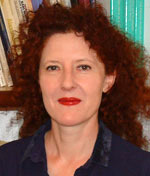

/prod01/channel_3/media/tcd/scss/headshots/Gaye-Stephens-BW.jpg)