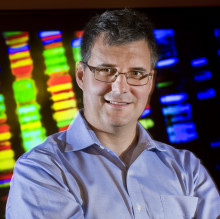
Prof. Dr. Timothy Roscoe is a Full Professor in the Department of Computer Science at ETH Zurich. His research focuses on operating systems, networking, and distributed systems. He was inducted as an ACM Fellow in 2014 for contributions to these fields. Previously, he worked at Intel Research Berkeley, UC Berkeley (Adjunct Professor), and Sprint Labs. His work includes foundational contributions to systems like PlanetLab, P2 Declarative Networking, and the Nemesis OS. Roscoe holds a PhD from the University of Cambridge and has led projects in cloud computing, wide-area network measurement, and secure systems design. His current research emphasizes hardware-software co-design, formal verification of systems, and scalable memory architectures. Education: PhD in Computer Science, University of Cambridge (1995) Key Roles: Principal Researcher at Intel Berkeley Lab, Visiting Researcher at National ICT Australia Research Highlights: Contributions to distributed systems (PlanetLab), declarative networking (P2), and secure microkernels (seL4 integration). Current projects address challenges in disaggregated memory systems, coherent interconnects, and trustworthy embedded systems. Awards: ACM Fellow (2014), numerous grants and industry collaborations. Labs/Teams: Systems Group at ETH Zurich, focusing on OS design, hardware architectures, and formal methods.
Professor Martin Schrimpf is a Tenure Track Assistant Professor at EPFL, holding dual appointments in the School of Life Sciences (SV) and the School of Computer and Communication Sciences (IC). His research bridges computational neuroscience, deep learning, and cognitive science to model human natural intelligence in vision and language. He leads the NeuroAI Lab, focusing on aligning artificial neural networks with brain mechanisms and human behavior. Education: PhD in Brain and Cognitive Sciences from MIT (2017–2022), MSc in Software Engineering from TUM/LMU/UNA (2014–2017), and BSc in Information Systems from TUM (2011–2014). His work has been recognized with awards including the Neuro-Irv Open Science Prize, McGovern Fellowship, and Takeda AI+Health Fellowship. He co-founded Integreat, a social impact startup recognized with Google.org’s Impact Challenge and TUM’s Social Impact Award. Research interests include neuroAI, brain-like models, and clinical translation (e.g., visual prosthetics). He has published in top venues like Neuron, Nature Human Behavior, NeurIPS, and ICLR. Current projects involve developing topographic language models (TopoLM) and investigating causal language network interactions using LLMs. Teaching: Courses include Neuroscience Foundations for Engineers and Brain-like Computation and Intelligence . Supervised over 26 students, including PhD candidates Badr Alkhamissi, Ben Lönnqvist, and Yingtian Tang. Active in grants from SNSF, NeuroX, and EPFL’s AI Center. Labs/Teams: NeuroAI Lab at EPFL Neuro-X Institute. Future directions include advancing brain-inspired models for clinical applications and expanding interdisciplinary collaborations between neuroscience and AI.
Prof. Dr. Gülşen Eryiğit is a Professor at Istanbul Technical University within the Faculty of Computer and Informatics , Department of Artificial Intelligence and Data Engineering . She founded and directs the ITU Natural Language Processing Group , Turkey's leading team in Turkish-language NLP, and serves as Senior Action Editor for ACL RR , Director of ITU TÖMER (Turkish Language Teaching Center), and Co-Chair of the EU UniDive Cost Action WG3. Education: PhD in Computer Engineering from ITU (2007), MSc and BSc from ITU and Marmara University Research: Focuses on Natural Language Processing for Turkish, including dependency parsing , coreference resolution , multiword expressions , and language education technology Her recent work involves multilingual transfer learning , LLM applications for Turkish text simplification, and gamification for morphology education. She has received prestigious awards like the Siemens Excellence Award and TÜBİTAK's Above Threshold Award . Her research has produced 65+ publications and 29+ projects funded by EU, TÜBİTAK, and industry partners. Scientific Awards: Siemens Excellence Award (2007) Above Threshold Award (TÜBİTAK, 2015) Certificate of Appreciation (EU 7th Framework, 2012) Thank You Plaque (ITU, 2017) The ITU NLP Group under her leadership has developed Turkey's first licensed NLP software exported internationally. She collaborates with European institutions through COST actions and participates in ACL, CoNLL, and LREC conferences. Her lab focuses on language technology for Turkish , including sign language processing and social media normalization.
Michael J. Aziz is the Gene and Tracy Sykes Professor of Materials and Energy Technologies at Harvard University's John A. Paulson School of Engineering and Applied Sciences (SEAS). He serves as Area Chair for Materials Science and Mechanical Engineering and is a Faculty Associate at the Harvard University Center for the Environment. His research focuses on electrochemical engineering for energy and environmental applications, including redox flow batteries, carbon capture, and sustainable energy technologies. Aziz leads the Aziz Group, which develops grid-scale energy storage solutions and innovative methods for CO₂ removal. He holds equity in Quino Energy, a startup commercializing his battery research, and serves as Chief Scientist and Board Member. His work bridges fundamental materials science with practical engineering, emphasizing ClimateTech solutions. Key contributions include aqueous organic redox flow batteries, quinone-based carbon capture systems, and wearable energy storage devices. Education & Affiliations: Affiliated with SEAS since joining Harvard, his academic roles include coordinating the Graduate Consortium for Energy and Environment (2009–2018). His lab (Materials Science Group) is located at McKay 504, with administrative support from Sabrina Azinheira. Research Interests: Aziz's group investigates electrochemical energy storage, CO₂ capture via electrochemical systems, and novel materials for sustainable technologies. They employ advanced techniques like operando electrochemical fluorescence microscopy to study porous electrode dynamics and battery degradation mechanisms. Their work emphasizes scalability and real-world applicability, such as grid-scale battery infrastructure and decarbonization strategies. Recent Trends in Publications: Aziz's recent work emphasizes carbon capture innovations (e.g., acid-base concentration swing methods), hydrogen storage under ambient conditions, and electrochemical synthesis of industrial chemicals like hydrogen peroxide. His group also develops open-source tools like RFBzero for battery modeling and explores bioinspired materials (e.g., self-gelling hydrogel batteries). Awards & Recognition: While no personal awards are explicitly listed in the text, his team members (e.g., Dawei Xi) have received accolades such as the 2025 Carbon Future Young Investigator Award. Aziz's contributions have been recognized through industry partnerships and startup ventures. Advising & Industry Impact: Aziz advises PhD students focusing on electrochemical systems (e.g., Jordan Sosa, Tommy George). His industry engagement includes licensing intellectual property to Quino Energy, which achieved a manufacturing milestone in 2024 for grid-scale battery systems. His research bridges academia and industry, addressing climate challenges through technological innovation. Labs & Teams: The Aziz Group includes interdisciplinary researchers from electrochemistry, chemical engineering, and materials science. Collaborators include institutions like MIT and industry partners. Current projects target next-gen batteries, CO₂ removal systems, and scalable energy storage solutions.
Dr. Stan Ahalt serves as the inaugural Dean of the UNC School of Data Science and Society (SDSS) and holds a professorship in the Department of Computer Science at UNC-Chapel Hill. He previously directed the Renaissance Computing Institute (RENCI) and currently acts as its executive advisor. Additionally, he is the associate director of informatics and data science at NC TraCS, the translational research institute at UNC. His academic journey includes a 22-year tenure as professor of electrical and computer engineering at Ohio State University and leadership roles at the Ohio Supercomputer Center. Ahalt’s research focuses on applying data science to societal challenges such as healthcare, climate, and judicial reform. Key initiatives include the National Consortium for Data Science and the iRODS project, which advanced enterprise data management systems. Ahalt has secured over $34.5M in grants to lead high-impact projects like the NHLBI BioData Catalyst (unifying biomedical data), the NCATS Translator (accelerating clinical discovery), and the NIH HEAL Initiative (ensuring FAIR data standards). He mentors students across doctoral and master’s programs, teaching data science fundamentals in courses like COMP 116: Introduction to Scientific Programming. His work emphasizes interdisciplinary collaboration, evidenced by roles in RENCI, NC TraCS, and the SDSS. Ahalt’s contributions span cyberinfrastructure development, educational innovation, and translational research, positioning UNC as a national leader in data science.
Alexey Gorshkov is an Adjunct Professor at the University of Maryland (UMD) affiliated with the Joint Quantum Institute (JQI) and the Quantum Information and Computer Science Laboratory (QuICS). His primary academic role is in theoretical physics, focusing on quantum optics, quantum information science, and condensed matter physics. He leads a research group exploring quantum magnetism with alkaline-earth atoms, driven-dissipative systems, topological matter, and strongly interacting photons. His work bridges AMO (atomic, molecular, and optical) systems with high-energy and condensed matter physics, emphasizing quantum simulation and novel quantum technologies like precise clocks and quantum computers. Education details are not explicitly listed, but his research collaborations with institutions like JQI and UMD suggest advanced academic training in theoretical physics. His research interests revolve around understanding and controlling quantum many-body systems, particularly in far-from-equilibrium scenarios, entanglement dynamics, and dissipation effects. He has contributed to studies on Rydberg atoms, quantum routing protocols, and error mitigation in quantum simulators. Recent articles highlight his work on quantum protocols for verifying speedups, time-independent information flow, and entanglement dynamics. His group's achievements include demonstrating one-dimensional anyons and developing methods for correlated noise estimation with quantum sensors. Awards and grants are not explicitly mentioned in the provided text, but his prolific publication record indicates sustained research impact. Labs and teams associated with him include the JQI and QuICS, where he collaborates on experimental and theoretical projects. Graduate student and postdoc positions are available in his group, focusing on areas like quantum magnetism and topological systems. His work often involves close ties with experimental groups, emphasizing practical applications of theoretical breakthroughs.
Dr. Mo Adda is a Principal Lecturer at the University of Portsmouth's School of Computing, part of the Faculty of Technology. He holds a PhD in Distributed Systems and Parallel Processing from the University of Surrey. His research focuses on network security, distributed systems, wireless networks, and cybercrime prevention. He leads projects in the Centre for Cybercrime and Economic Crime, exploring fault management in networks, blockchain applications, and IoT forensics. With 16 supervised theses, he advises on topics like energy-efficient cloud systems and machine learning for environmental modeling. His work bridges academia and industry, addressing challenges in software-defined networks, traffic control, and secure data sharing in social networks. Education: PhD in Distributed Systems (University of Surrey) Affiliations: Centre of Excellence in Defence, Risk & Resilience; Portsmouth Centre for Advanced Materials and Manufacturing Research Interests Dr. Adda's research spans: Network security and fault detection mechanisms Blockchain applications in IoT and forensics Energy-efficient cloud data center optimization Machine learning for climate modeling Self-organizing network protocols Grants & Collaborations His projects include collaborations with industry partners on secure data leakage detection in cloud systems and resilient wireless protocols for harsh environments. He has pioneered fault classification systems using clustering algorithms and fuzzy logic. Labs & Teams He contributes to the Centre for Cybercrime and Economic Crime, focusing on digital forensics and network intrusion analysis. His team develops frameworks for privacy management in social networks and proactive routing in software-defined networks.
Qi Alfred Chen is an Assistant Professor in the Department of Computer Science at the University of California, Irvine (UCI), within the Donald Bren School of Information and Computer Sciences. He also holds affiliations with the Department of Electrical Engineering and Computer Science (EECS), the Institute of Transportation Studies at UC Irvine (ITS-Irvine), the Center for Embedded and Cyber-physical Systems (CECS), the Institute for Software Research (ISR), and the UC Irvine Cybersecurity Policy & Research Institute (CPRI). His research focuses on network and systems security, with particular emphasis on autonomous vehicle and IoT security. Dr. Chen received his Ph.D. from the University of Michigan in 2018. His educational background has prepared him for his current research in security of critical computer systems. His work bridges theoretical security principles with practical implementations in real-world systems. Chen's research interests center on network and systems security , with a major focus on smart systems and IoT security , particularly in transportation and autonomous vehicle systems . His work addresses security challenges through systematic problem analysis and mitigation, discovering and mitigating security problems in next-generation transportation systems, smartphone OSes, network protocols, DNS, GUI systems, and access control systems. His research has high impact in both academic and industry contexts, with over 10 top-tier conference papers, a DHS US-CERT alert, multiple CVEs, and coverage in major news media like Fortune and BBC News. His publication record shows a clear evolution from foundational work on network protocols and smartphone security toward increasingly sophisticated security analyses of autonomous vehicle systems and AI-powered transportation technologies. The research trajectory demonstrates growing technical sophistication and real-world impact, with recent work focusing on physical-world adversarial attacks against autonomous driving perception systems, LiDAR spoofing, and security of multi-sensor fusion in autonomous vehicles. NSF CAREER Award (2022) on securing the AI stack in emerging autonomous and connected CPSs Chancellor's Award for Excellence in Undergraduate Research Mentorship, UC Irvine (2021) 5th place nation-wide at National CCDC competition (2021, as faculty advisor) 1st place (Gold Medal) at CCDC Western Regional competition (2021) ProQuest Distinguished Dissertation Award, University of Michigan (2019) Dr. Chen has mentored numerous successful students, including PhD candidates and undergraduates who have gone on to positions at major tech companies like Meta, Uber, Amazon, and Intel. His research group has secured significant funding, including an NSF CAREER award, and has made substantial contributions to the field through high-impact publications and vulnerability disclosures. He is also the co-founder of the ISOC VehicleSec Symposium and has organized the AutoDriving CTF contest at DEF CON. Chen leads the AV & IoAT Security Research Group at UCI, focusing on security challenges in autonomous vehicles and the broader Internet of Autonomous Things. His team has developed numerous attack demonstrations and security analyses that have received significant media attention and influenced industry practices. The group maintains an active YouTube channel showcasing their security research.
Vincent Aleven is a Professor in the Human-Computer Interaction Institute (HCII) at Carnegie Mellon University, where he leads the CATS Lab focused on developing 'smart classrooms' through human-AI collaboration in educational settings. His work bridges learning sciences, human-computer interaction, artificial intelligence, and education to create dynamic learning environments that leverage complementary strengths of learners, educators, and AI systems. His research centers on intelligent educational systems with core interests in cognitive modeling, metacognitive skill development, and case-based reasoning. Key initiatives include AI-based tutoring software for individual/collaborative learning (e.g., middle-school math equation solving), tools supporting self-regulated learning (help-seeking, self-assessment), teacher orchestration dashboards, and browser-based authoring tools like CTAT/Tutorshop that lower development barriers for intelligent tutoring systems. Current projects investigate smartphone-based homework solutions, gamified tutoring interfaces, and comparative effectiveness against platforms like Khan Academy. Scientific Awards: No specific awards mentioned in source materials. Professor Aleven advises graduate students including Kexin Bella Yang and Conrad Borchers. His research is supported by multiple grants, notably a $2M award for testing AI-based mobile tutoring software in underserved middle-school contexts. Major projects encompass: MEME Project : Boosting math outcomes through motivation and self-regulation Metacognition and Motivation : Pittsburgh Science of Learning Center initiative Rapid Tutor Development : Streamlining cognitive model creation Learning-Oriented Dialogue : Enhancing engagement via collaborative problem-solving The CATS Lab operates through deep collaboration with teachers and students in real classrooms, currently exploring how smartphone accessibility, targeted tutor redesign, and parental involvement optimize homework effectiveness. Future directions address AI support for tutors/parents, balancing self-regulatory development with domain learning, and democratizing tutor authoring for educators.
Dr. Muhammad Umar Farooq is a Lecturer and Module Director at York St John University's London Campus , specializing in Business, Marketing, and Project Management education for postgraduate students. He joined the university in 2022 and previously held roles as an Associate Lecturer at the University of West London, while also contributing to teaching and supervision at the University of East London and Regent’s University London. He holds a Doctorate in Business Administration (DBA), an MBA, and a Postgraduate Diploma in Leadership and Strategy, coupled with the prestigious Fellow of the Higher Education Academy (FHEA) distinction. His research focuses on digital marketing, SME innovation, AI applications in content creation, and project management strategies. Notable areas include generative AI for SME competitiveness, sustainable lean practices in construction, and agile methodologies in software development. He actively contributes to academic governance as an external examiner at Northumbria University and the University of Huddersfield. Teaching modules include Marketing Communication , Digital Marketing Strategy , Strategic Project Management , and Applied Research Project . His work bridges academic rigor with industry insights, emphasizing practical applications for organizational success. Research Awards: Recognized as FHEA. Professional Contributions: External examiner roles, LinkedIn engagement, and RaY Postgraduate Research supervision.
Yonatan Bisk is an Assistant Professor at Carnegie Mellon University within the Language Technologies Institute (with courtesy appointment in Robotics Institute). His research bridges Natural Language Processing , Robotics , and Embodied AI , focusing on language grounding, theory of mind, and multimodal interaction. Education : Ph.D. in Computer Science from University of Illinois at Urbana-Champaign Postdoctoral Experience : USC ISI, University of Washington, Allen Institute for AI Industry Appointments : Microsoft Research, Meta AI His research emphasizes embodied language systems and social intelligence in AI . Recent projects include WebArena for autonomous agents, SOTOPIA for social reasoning, and HomeRobot for open-vocabulary manipulation. He leads the REAL Center (Robotics, Embodied AI, and Learning) to foster interdisciplinary collaboration. Key scientific awards include selection for the DARPA ISAT Study Group (2024). He teaches courses like "Talking to Robots" and "Multimodal Machine Learning" while serving as area chair/editor across NLP, Robotics, and ML communities.
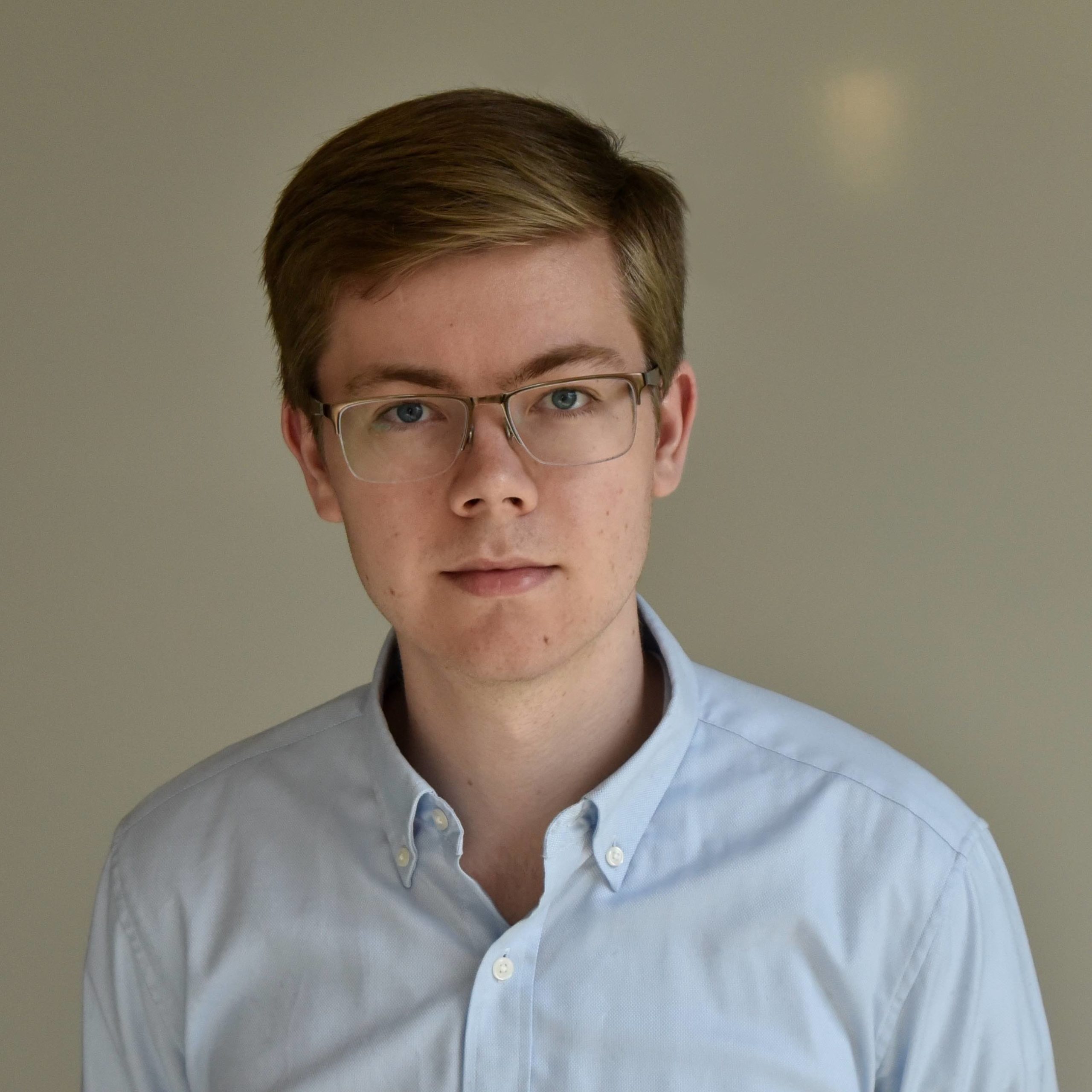
Sebastian Riedel is a Professor at University College London (UCL) and a Researcher at DeepMind, leading the UCL NLP Lab. His work focuses on teaching machines to read, reason, and write, integrating Natural Language Processing (NLP) with Machine Learning. He holds an Allen Distinguished Investigator award and has held roles at FAIR, UMass Amherst, Tokyo University, and the University of Edinburgh. Education: PhD in Computer Science from the University of Edinburgh (advisor: Ewan Klein), postdoctoral research at UMass Amherst (advisor: Andrew McCallum), and research at Tokyo University (advisor: Tsujii Junichi). Research Interests: NLP, machine learning, information extraction, and multimodal models like Gemini. He develops tools such as UCLEED (BioNLP event extractor), frontlets (Scala map wrappers), and thebibbrag (BibTeX to HTML converter). Awards: Allen Distinguished Investigator. Software contributions include GitHub repositories for NLP, machine learning, and data tools. Contact: s.riedel@ucl.ac.uk | Office: 1st Floor, 90 High Holborn, London WC1V 6LJ | Office Hours: Mondays 11 AM–12 PM.
Connor Coley is the Henri Slezynger (1957) Career Development Assistant Professor at the Massachusetts Institute of Technology (MIT) School of Engineering. His research bridges chemistry and machine learning, focusing on autonomous molecular discovery, predictive chemistry, and laboratory automation. Education: Ph.D., MIT (2019) M.S.CEP., MIT (2016) B.S., Caltech (2014) Research Interests: Dr. Coley’s work centers on domain-informed machine learning for chemistry, computer-aided molecular design, and autonomous laboratories. Key themes include predictive modeling of chemical reactivity, optimization of synthesis pathways, and integration of AI with experimental data for drug discovery and materials science. Publications: His recent articles highlight advancements in AI-driven reaction prediction, molecular representation learning, and laboratory automation. Trends include applications of Bayesian optimization, contrastive learning, and diffusion models to chemical discovery. Scientific Awards: Camille Dreyfus Teacher-Scholar Award (2025) James W. Swan Outstanding Faculty (2025) Schmidt Futures AI2050 Early Career Fellow (2022) NSF CAREER Award (2021) Forbes 30 Under 30: Healthcare (2019) Software & Tools: He leads the open-source ASKCOS software suite for synthesis planning, adopted by 35,000+ chemists and deployed at 15+ pharmaceutical companies. His team also develops tools for metabolomics and molecular representation learning.
Dr. Mihai Pop is a Professor of Computer Science and Director of the University of Maryland Institute for Advanced Computer Studies (UMIACS). He holds appointments in the Department of Computer Science, UMIACS, and the Center for Bioinformatics and Computational Biology (CBCB). His research focuses on computational biology, metagenomics, and algorithm development for genomic data analysis. He received a Ph.D. in Computer Science from Johns Hopkins University (2000), followed by work at The Institute for Genomic Research (TIGR) developing genome assembly algorithms. Education: Ph.D., Computer Science, Johns Hopkins University, 2000. Research Interests: Bioinformatics, genomics, metagenomics, computational geometry, software testing. His lab develops tools for analyzing microbial communities and has pioneered methods for metagenomic assembly and analysis. Notable tools include the AMOS genome assembly toolkit. Recent Article Trends: Recent work emphasizes long-read sequencing, metagenomic profiling (e.g., TIPP3), and strain-level analysis (e.g., Strainy). He addresses challenges in scaling sequence-based searches and improving taxonomic resolution in large datasets. Awards: ACM Fellow (2019), ISCB Fellow (2022), UMD Excellence in Teaching Award (2015). Grants & Leadership: Co-leader of the Human Microbiome Project data analysis group. Active in diversity initiatives to promote inclusivity in computational fields. Labs/Teams: Pop Lab (pop-lab.org) focuses on computational methods for microbial genomics and metagenomics.
Bernhard J. Berger is a Lecturer in the Department of Computer Engineering at the Institute of Embedded Systems, Hamburg University of Technology (TUHH). His research focuses on software security, static code analysis, machine learning, optimization, and research data management. He has held significant roles such as Program Committee member for ICPC 2025 and MSR 2025, and has received awards including the Best Reviewer Award (ICPC 2023) and Best Engineering Paper Award (SCAM 2019). His work spans interdisciplinary applications including maritime systems security, GPU-accelerated AI, and evolutionary algorithms. Recent studies emphasize AI-driven security tools (e.g., ML-SAST) and domain-specific language approaches to optimization (EvoAl). He has contributed to over 30 peer-reviewed publications, with notable work in IEEE Transactions on Software Engineering and Science of Computer Programming. Berger collaborates closely with industry through DAAD review committees and serves on artifact evaluation boards for ISSTA and ARES conferences. Education: Doctoral Thesis (2022), Diploma in Computer Science (2007) Key Projects: ArchSec tool suite, Threat Modeling Frameworks, Bauhaus static analysis methodology Lab Affiliation: Embedded Systems Design Group His advisory roles include Deputy of TUHH's Election Verification Committee and Session Chair at IEEE Congress on Evolutionary Computation 2023. Current research trends integrate machine learning with static analysis for automated vulnerability detection, while also exploring explainable AI techniques for neural network optimization.





/prod01/yorksjacuk/media/content-assets/staff-profile-images/1705856253539.jpg)