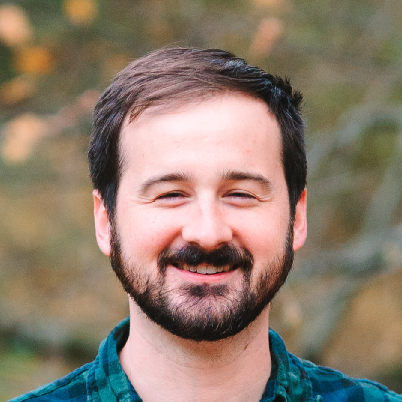
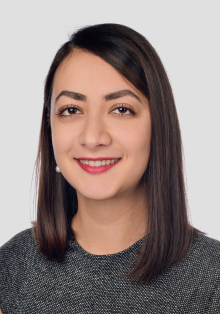
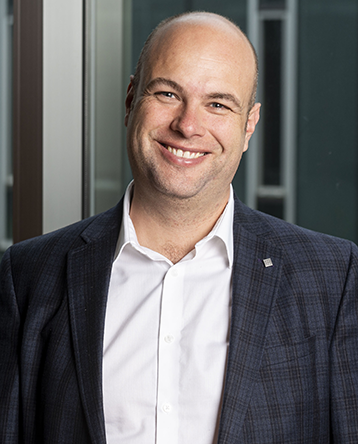
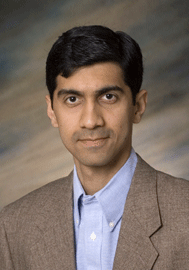
Chris Donahue is an Assistant Professor in the Computer Science Department at Carnegie Mellon University . He also serves as a part-time Research Scientist at Google DeepMind on the Magenta team. His work focuses on leveraging generative AI to enhance human creativity, particularly in music. Education: PhD in Computer Science (UC San Diego), Postdoctoral Scholar (Stanford University) His research spans controllable generative modeling of music and audio , with a focus on real-time interactive systems. Projects like Piano Genie , Beat Sage , and Copilot Arena demonstrate his commitment to real-world deployment. His Generative Creativity Lab (G-CLef) explores AI applications beyond music, including programming and natural language. Recent publications highlight advancements in multimodal music evaluation , real-time adaptation , and AI-driven sound morphing . He co-developed Magenta RealTime , an open-weight real-time music generation model, and MusicFX DJ Mode . Scientific Awards: Best Paper Award (top 1) at NAACL Student Research Workshop 2025 Best Paper Award (top 1% of submissions) at CHI 2025 Best Paper Runner-up at ISMIR 2021 He co-advises PhD students like Wayne Chi (NDSEG Fellow) and mentors Irmak Bukey . His lab receives support from the AIxArts incubator fund at CMU .
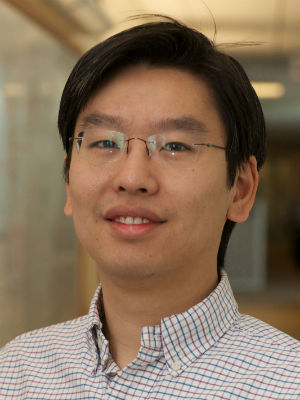
Harris H. Wang is an Associate Professor in the Department of Systems Biology and Department of Pathology and Cell Biology at Columbia University's Vagelos College of Physicians and Surgeons, where he also serves as Interim Chair of Systems Biology. He is affiliated with the Center for Computational Biology and Bioinformatics (C2B2) and the Integrated Program in Cellular, Molecular and Biomedical Studies (CMBS). B.S., Physics and Mathematics, MIT Ph.D., Biophysics, Harvard University Dr. Wang's research lies at the intersection of systems and synthetic biology, focusing on developing foundational technologies for genome engineering, microbiome manipulation, and synthetic genomics. His lab pioneers methods such as MAGE, MAGIC, CAST, and CAMII to enable high-throughput genetic manipulation, in situ microbiome engineering, and AI-driven microbial culturomics. Key research themes include understanding microbial community dynamics, engineering cellular memory systems, designing biocontained genetic circuits, and applying synthetic biology to human health challenges in personalized medicine and infectious disease. His recent publications reveal a strong trend in spatial and functional metagenomics, CRISPR-based microbiome editing, and synthetic biology tools for data storage and genetic stability. The articles span high-impact journals like Nature , Science , and Nature Biotechnology , reflecting his leadership in developing scalable, programmable biological systems. Scientific Awards: NIH Director’s Early Independence Award Forbes 30 Under 30 in Science Sloan Research Fellowship NSF CAREER Award ONR Young Investigator Award Burroughs Wellcome Fund PATH Award Schaefer Scholar Blavatnik National Award Vilcek Prize PECASE Dr. Wang has advised numerous PhD and postdoctoral researchers, many of whom have gone on to independent scientific careers. His lab is supported by major grants from NIH, NSF, DARPA, DOE, and foundations including the Bill & Melinda Gates Foundation and CZ Biohub NY. He is actively involved in educational initiatives, including organizing Columbia’s iGEM team and the Cold Spring Harbor Laboratory Synthetic Biology course. The Wang Lab is based at the Columbia University Irving Medical Center and is part of national consortia such as the Engineering Biology Research Consortium (EBRC) and the Genome Project-Write (GP-Write) initiative. The lab develops and applies cutting-edge technologies in automation, machine learning, and synthetic biology to engineer microbiomes for applications in medicine, global health, and climate change.
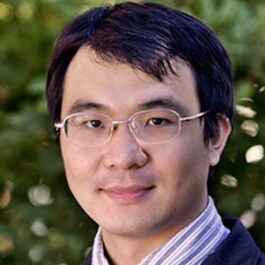
Renjie Feng is a Research Fellow in Mathematics and AI at the School of Mathematics and Statistics and the Sydney Mathematical Research Institute , University of Sydney. His work bridges probability theory, statistics, and applications in machine learning, deep learning, and artificial intelligence. His research interests focus on probability theory and its applications to machine learning , random matrix theory , and statistical physics . He investigates extreme value problems, spectral properties of random matrices, and topological features of random fields over Riemannian manifolds. Recent publications highlight trends in random matrix theory (GUE, GOE, GSE), extreme gap problems , determinantal point processes , and Wiener chaos . Collaborative works with F. Götze, D. Yao, and R. Adler emphasize U-statistics , multivariate linear statistics , and random topology inspired by Poisson point process studies.
Halil Ali is a Lecturer in Data Science (Education Focused) at the School of Computing Technologies, RMIT University. His research spans privacy-preserving machine learning, blockchain technologies, and cybersecurity. Key research areas include federated learning , quantum-enhanced AI , secure biometrics , edge unlearning , and privacy in healthcare data . His recent publications focus on resilient AI systems , blockchain applications , and ethical data handling in emerging technologies. His work demonstrates expertise in integrating machine learning with blockchain security across domains like IoT, smart grids, and metaverse healthcare. He contributes to practical frameworks for zero-trust architectures , lightweight consensus protocols , and quantum-classical hybrid models .
Han Liu is a Professor in the Department of Computer Science at Northwestern University's McCormick School of Engineering. He directs the MAGICS (Modern Artificial General Intelligible and Computer Systems) Lab and the Center for Foundation Models and Generative AI at Northwestern, with prior roles as director of the Deep Reinforcement Learning Center at Tencent AI Lab and professor at Princeton and Johns Hopkins Universities. PhD in Machine Learning and Statistics from Carnegie Mellon University (2012), advised by John Lafferty and Larry Wasserman Han Liu's research focuses on integrating artificial intelligence with computer systems, particularly through foundation models and probabilistic graphical models. His work aims to revolutionize science, engineering, and business by deploying statistical machine learning methods in edge and cloud computing environments. Recent research trends include transformer-based models, modern Hopfield networks, genomic foundation models, and theoretical analysis of attention mechanisms. His 2025 publications explore topics like species differentiation with DNA embeddings, universal approximation capabilities of transformers, and metaverse spatial reasoning. Alfred P Sloan Fellowship in Mathematics IMS Tweedie New Researcher Award ASA Noether Young Scholar Award NSF CAREER Award Presidential Early Career Awards for Scientists and Engineers Han Liu serves as associate editor for the Journal of American Statistical Association, Electronic Journal of Statistics, Technometrics, and the Journal of Portfolio Management. He has directed research centers at Northwestern and contributed to major conferences as area chair (NeurIPS, ICML, ICLR).
Snježana Babić serves as Associate Professor and Head of the Graduate Study Program Informatics - Teaching Major at the Faculty of Informatics in Pula , University of Pula. With a PhD obtained in 2016 and university affiliation since 2017, she teaches across undergraduate and graduate programs focusing on ICT fundamentals, web design, digital competencies, and informatics education methodology. Her educational background includes graduation in 1993 followed by doctoral studies culminating in 2016. Though specific institutions aren't detailed in the text, her career trajectory shows progression from foundational ICT teaching to specialized informatics education leadership. Babić's research centers on educational technology adoption with particular emphasis on programming pedagogy for young learners through the MEMA method. Her work investigates digital competencies across multiple educational contexts, from primary schools to higher education. Recent publications demonstrate rapid adaptation to emerging technologies, with 2025 studies examining ChatGPT integration in Croatian educational settings and cross-cultural applications of programming methods. Analysis of her 15 most recent publications reveals consistent focus on technology acceptance models applied to Croatian educators and students. The research trajectory shows evolution from foundational e-learning systems (2016-2020) to cutting-edge AI and robotics applications (2022-2025), maintaining strong methodological focus on teacher motivation , implementation barriers , and culturally-specific adoption factors . Her teaching portfolio demonstrates deep integration with research interests: Undergraduate: ICT Fundamentals, Web Design and Application Graduate: Digital Competencies in Education, Informatics Education Methodology, Practicum for IT Educators Cross-disciplinary: ICT in Nursing, Healthcare Informatics Babić actively contributes to institutional leadership as program head while maintaining robust research productivity. Her work bridges theoretical technology adoption frameworks with practical implementation challenges in Croatian educational contexts, particularly examining how emerging technologies like humanoid robots and AI assistants can be effectively integrated into teaching practices.
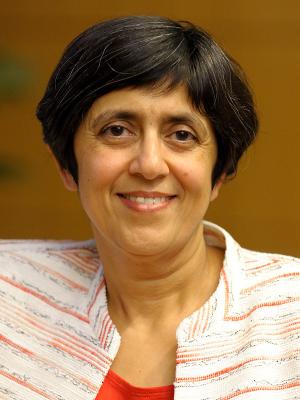
Sarita V Adve is the Richard T. Cheng Professor of Computer Science at the University of Illinois at Urbana-Champaign, where she conducts research spanning hardware, programming languages, operating systems, and applications with a focus on domain-specific systems. Her work bridges theoretical foundations and practical implementations, particularly in extended reality and heterogeneous computing. Her educational background includes a Ph.D. and M.S. in Computer Science from the University of Wisconsin-Madison (1993, 1989) and a B.Tech in Electrical Engineering from the Indian Institute of Technology Bombay (1987). Prior to joining Illinois, she served on the faculty at Rice University from 1993 to 1999. Adve's research centers on generalizable and scalable specialization for domain-specific systems, with current emphasis on extended reality (XR) systems including virtual, augmented, and mixed reality. She chairs the ILLIXR consortium to democratize XR research and developed the first fully open-source XR system (ILLIXR). Her foundational contributions include memory consistency models for C++ and Java programming languages, the Spandex coherence framework for heterogeneous systems, and software-driven approaches for hardware reliability. Her work spans hardware reliability (SWAT and RAMP projects), power management (GRACE system), and instruction-level parallelism. Recent publications reveal a strong focus on energy-efficient XR systems, hardware-software co-design for AI workloads, and resilience analysis. Her team explores rendering offload, visual-inertial odometry optimization, and compositional error injection frameworks, often targeting tradeoffs between energy, latency, and accuracy in mobile and edge environments. Fellow of the American Academy of Arts and Sciences Fellow of the ACM and IEEE ACM/IEEE-CS Ken Kennedy Award Anita Borg Institute Woman of Vision in Innovation Award ACM SIGARCH Maurice Wilkes Award Alfred P. Sloan Research Fellowship UIUC University Scholar University of Illinois Campus Award for Excellence in Graduate Student Mentoring Adve actively mentors students and has received multiple teaching awards. She co-founded the CARES movement to address discrimination in CS research events and chairs CS@Illinois CARES. Her service includes leadership roles in ACM SIGARCH (2015-2019), DARPA/ISAT study group, ACM Council, and Computing Research Association. She has secured significant funding including DARPA initiatives and Google Faculty Research Awards. She leads the ILLIXR consortium and has established collaborative research programs such as the $8.3M DARPA Joint University Microelectronics Program. Her lab focuses on open-source XR development, heterogeneous system architectures, and reliability-aware designs, with strong industry and government partnerships.
Maria Gorlatova is an Associate Professor of Electrical and Computer Engineering at Duke University's Pratt School of Engineering, where she leads the Intelligent Interactive Internet of Things (I3T) Lab. She also holds a secondary affiliation as Faculty Network Member of the Duke Institute for Brain Sciences and has previously served as Assistant Professor of Computer Science. Dr. Gorlatova earned her Ph.D. in Electrical Engineering from Columbia University (2013), following M.Sc. and B.Sc. (Summa Cum Laude) degrees in Electrical Engineering from University of Ottawa, Canada. Prior to joining Duke, she was an Associate Research Scholar in the Electrical Engineering Department and Associate Director of the Princeton EDGE Lab at Princeton University (2016-2018). She also has industry experience with Telcordia Technologies, IBM, and D. E. Shaw Research. Her research focuses on advancing intelligent behavior in Internet of Things systems and applications, particularly in mobile pervasive systems and the Internet of Things. Her work crosses traditional discipline boundaries, requiring thinking across multiple layers of system and protocol stacks. Current research themes include breaking barriers for technologies that enable fundamentally new deployments and experiences, such as energy harvesting, artificial intelligence adapted to IoT constraints, and augmented reality. Her lab specifically develops edge- and IoT-enabled intelligent augmented reality platforms, with applications in healthcare and human-robot collaboration. Analyzing her recent publications reveals a strong focus on augmented reality systems, particularly for medical applications. Her work spans computer vision for AR, spatial tracking, SLAM systems, vision-language models for AR security, and VR/AR applications in neurosurgery and rehabilitation. A significant portion of her recent work addresses challenges in mixed reality for medical procedures, demonstrating the translational impact of her research. Google Anita Borg USA Fellowship Canadian Graduate Scholar CGS NSERC Fellowships Columbia University Presidential Fellowship Columbia University Jury Award for Outstanding Achievement in Communications ACM SenSys Best Student Demonstration Award IEEE Communications Society Young Author Best Paper Award IEEE Communications Society Award for Advances in Communications Best Research Artifact Award, IEEE IPSN (2020) N2 Women Rising Star, Networking Networking Women (N2Women) (2019) Dr. Gorlatova's research has been supported by various funding sources that enable her work on edge computing for augmented reality, IoT systems, and medical applications. She actively mentors graduate students who frequently appear as first authors on her publications, indicating strong student involvement in her research. Her I3T Lab at Duke focuses on creating human-facing pervasive mobile computing platforms that enable transformative applications, with recent emphasis on creating advanced augmented reality platforms that integrate edge computing and IoT technologies. The I3T Lab is developing next-generation AR systems with capabilities in edge AI, collaborative spatial awareness, AR user cognitive context sensing, and AR QoS/QoE evaluation. Current projects include applications in healthcare (particularly neurosurgery guidance and rehabilitation) and human-robot collaboration scenarios, demonstrating the lab's focus on real-world impact of pervasive computing technologies.
Christopher Potts is Professor and Chair of Linguistics at Stanford University, with a courtesy appointment as Professor of Computer Science. He serves as Director Emeritus of the Stanford Center for the Study of Language and Information (CSLI) and leads the Pragmatic Enrichment & Contextual Interface Lab. His work bridges theoretical linguistics and computational approaches to language understanding. Education: B.A. in Linguistics from New York University (1999) Ph.D. in Linguistics from University of California, Santa Cruz (2003) Potts' research focuses on how computational methods can illuminate linguistic phenomena, particularly in the areas of semantics, pragmatics, and sentiment analysis. His work explores how emotion is expressed in language and how linguistic production and interpretation are influenced by context. He has made significant contributions to understanding conventional implicatures, sentiment analysis frameworks, and the application of neural networks to linguistic problems. His recent work has increasingly focused on the interpretability of large language models and the development of frameworks like DSPy for building reliable AI systems. An analysis of Potts' recent publications reveals a strong trend toward the intersection of linguistic theory and practical AI applications. His work spans theoretical linguistics (e.g., compositionality, preposing constructions), neural network interpretability, and practical NLP systems (e.g., ColBERT, DSPy). The research demonstrates consistent focus on making language models more transparent, controllable, and linguistically informed, with particular attention to how context shapes meaning. Scientific Awards: Best Paper Award at 2024 ACL for 'Mission: Impossible Language Models' Outstanding Paper Award at 2024 ACL for 'CausalGym' ACL Test of Time Award 2023 Dean's Award for Distinguished Teaching (2015-2016) Best New Data Set or Resource Award at 2015 EMNLP Potts has secured numerous research grants as PI or Co-PI from major organizations including Google, Amazon, NSF, Office of Naval Research, and Stanford's HAI institute. His current projects focus on evaluation of retrieval-augmented generation systems, LLM-mediated communication in organizations, interpretability techniques for language models, and frameworks like DSPy for building next-generation AI systems. He has mentored numerous researchers who have gone on to make significant contributions in NLP and computational linguistics. As Director of CSLI (2013-2020) and current Chair of Linguistics at Stanford, Potts has played a key leadership role in shaping interdisciplinary research at the intersection of language, computation, and cognition. His Pragmatic Enrichment & Contextual Interface Lab continues to be a hub for innovative research combining formal linguistic theory with cutting-edge computational methods.
Bahar Asgari is an Assistant Professor in the Department of Computer Science at the University of Maryland, College Park. She holds appointments in CS, UMIACS, and ECE, and directs the Computer Architecture and Systems Lab (CASL). Her research focuses on domain-specific architecture design, near memory processing, and reconfigurable computing. Before joining UMD, she worked at Google, contributing to system optimization and memory utilization strategies. Education: Ph.D., Georgia Institute of Technology, 2021. Research Interests: Developing energy-efficient architectures for sparse problems, scientific computing acceleration, FPGA optimizations, and reconfigurable hardware systems. Her work addresses challenges in memory efficiency, parallelization, and hardware-software co-design across domains like machine learning and IoT. Key Awards: 2024 UMD Excellence in Teaching Award 2023 DOE Early Career Award Advising & Grants: Supervises 9 graduate students and leads projects sponsored by NSF, DOE, and industry partnerships. Her lab explores systolic arrays, near-data processing, and fault-tolerant computing. Labs/Teams: Directs CASL, which builds next-generation computing systems through hardware innovation and algorithm-architecture co-design.
Ram Rajagopal is an Associate Professor of Civil and Environmental Engineering and Electrical Engineering at Stanford University, and a Senior Fellow at the Precourt Institute for Energy. He leads the Stanford Sustainable Systems Lab (S3L), focusing on large-scale monitoring, data analytics, and stochastic control for infrastructure networks, particularly power systems. His research emphasizes renewable energy integration, smart distribution systems, and demand-side data analytics. Education: PhD in Electrical Engineering and Computer Sciences & MA in Statistics (UC Berkeley), MS in Electrical and Computer Engineering (UT Austin), and BEng in Electrical Engineering (Federal University of Rio de Janeiro). Research interests include power grid optimization, renewable energy systems, and data-driven approaches to infrastructure challenges. He has pioneered work in grid flexibility, distributed energy resources, and machine learning applications for energy systems. His lab develops technologies like Smart Dim Fuses and the EV-EcoSim platform for EV charging infrastructure optimization. Received NSF CAREER Award, Powell Foundation Fellowship, and Berkeley Regents Fellowship Over 30 patents and best paper awards Advises/founded companies in sensor networks, power systems, and data analytics Labs/Teams: Stanford Sustainable Systems Lab (S3L), Powernet Project. His work spans grid resilience, energy equity, and scalable energy solutions.
WANG Ye is an Associate Professor in the Department of Computer Science at the School of Computing, National University of Singapore (NUS). He holds a PhD in Information Technology from Tampere University of Technology, Finland, and has been a tenured faculty member at NUS since 2002, following his industry research role at Nokia Research Center. He is the director of the Sound and Music Computing Lab at NUS, leading cutting-edge research in AI-driven music and health technologies. PhD, Information Technology, Tampere University of Technology, Finland (2002) MSc, Telecommunications, Braunschweig University of Technology, Germany (1993) BSc, Telecommunications, South China University of Technology, China (1983) His research is centered on Sound and Music Computing for Human Health and Potential (SMC4HHP) , with a focus on eHealth, eLearning, mobile/wearable computing, and music information retrieval. His work spans AI for stroke rehabilitation, language learning through singing, singing voice synthesis, and automatic music transcription. He has pioneered systems like SLIONS (language learning via karaoke), CocoLyricist (AI co-creation for stroke recovery), and SinTechSVS (expressive singing voice synthesis). The latest articles highlight a strong trend in AI-driven music and health technologies , particularly in controllable lyric generation, singing voice synthesis, automatic pronunciation assessment, and multimodal music transcription. The research increasingly integrates large language models, explainable AI, fairness, and real-world deployment, reflecting a shift from theoretical exploration to practical, human-centered applications in healthcare and education. Dr. Wang has received numerous scientific honors, including: Best Paper Awards at ACM MM, ISMIR, IEEE ISM, and CHI First Prize, Asia Pacific Assistive, Rehabilitative, and Therapeutic Technologies Challenge (2015) Faculty Teaching Excellence Award, NUS School of Computing (2024) Top Paper Award, ACM Multimedia 2022 AI in Medicine Collaborative Grant for CocoLyricist project He has supervised over 11 PhD and 20 MComp students and is currently guiding six PhD candidates. His grants come from MOE, NRF, A*STAR, Nokia, and Smule. He has served as General Chair of ISMIR2017 and TPC Co-Chair of ICOT2017, and is on the editorial boards of IEEE Transactions on Multimedia and Journal of New Music Research. He has also developed and taught the first course on Sound and Music Computing in Singapore. Dr. Wang leads the Sound and Music Computing Lab (SMC Lab) , a multidisciplinary team exploring the synergy of music computing, AI, mobile technology, and cloud systems for health and education. The lab actively collaborates with medical institutions such as NUS Yong Loo Lin School of Medicine, Singapore General Hospital, and Harvard Medical School, and is currently working on projects in AI-supported language learning, stroke rehabilitation, and intelligent music interfaces.
Sebastian Scherer is an Associate Research Professor at the Robotics Institute (RI), Carnegie Mellon University (CMU), where he leads cutting-edge research in autonomous aerial systems and robotics. His work focuses on enabling unmanned rotorcraft to operate safely and efficiently in cluttered, low-altitude, and extreme environments. Education: Ph.D. in Robotics, Carnegie Mellon University (2010) MS in Robotics, Carnegie Mellon University (2007) BS in Computer Science (Minor in Robotics), Carnegie Mellon University (2004) His research interests span robotics, artificial intelligence, autonomous navigation, obstacle avoidance, SLAM, visual-inertial odometry, energy infrastructure, and public policy . He has made seminal contributions to UAV autonomy, including the first obstacle avoidance for micro aerial vehicles in natural environments (2008) and the first automatic landing zone detection and landing on a full-size helicopter (2010). His recent publications (2023–2025) demonstrate a strong focus on resilient autonomy, multi-robot exploration, foundation models for robotics, and large-scale dataset development. His team has released key datasets like TartanGround , BETTY , and SubT-MRS , and simulation tools like Pegasus Simulator , indicating a systems-level approach to advancing real-world autonomy. The research trends emphasize self-supervised learning, robust perception, risk-aware planning, and multi-modal fusion for off-road and urban environments. Scientific Awards: Popular Science Best of What's New 2010 Award AIAA@Infotech Best Paper Runner-up Award (2010) Siebel Scholar Dr. Scherer has advised numerous students and leads a vibrant research group focused on high-impact robotics applications. He has secured significant grants related to UAV autonomy, energy infrastructure, and urban air mobility. His lab develops experimental infrastructure such as AIrTonomy for testing next-generation autonomous aerial vehicles. He is actively involved in advancing SLAM and localization in extreme environments, notably through participation in the DARPA Subterranean Challenge. His team develops large-scale datasets and benchmarking frameworks to push the boundaries of robustness and generalization in mobile robotics.
Timothy M. Hospedales is a Professor of Artificial Intelligence at the Institute of Perception, Action and Behaviour within the School of Informatics at the University of Edinburgh . He also serves as VP AI and Head of Samsung AI Research Centre Europe . His research focuses on efficient and robust AI , emphasizing meta-learning , lifelong transfer-learning , and domain adaptation in both probabilistic and deep learning frameworks. Applications span computer vision , vision and language , reinforcement learning for robotics , and finance . Professor at University of Edinburgh (2020–present) ELLIS Fellow (2021) Head of Samsung AI Research Europe (2020–present) Founding Director of Applied Machine Learning Lab at QMUL (2012–2016) His work includes pioneering contributions to meta-learning , few-shot learning , and self-supervised methods , with notable awards such as the Best Paper Prize at ICML AutoML 2018 and Best Student Paper at ICPR 2018 . He has co-authored 15+ recent papers on topics like Vision-Language Models , Medical AI Fairness , and Diffusion Model Optimization . He served as Program Co-Chair for BMVC 2018 and AAAI 2022 , and authored a book on Visual Adaptation in the Deep Learning Era (2022). Co-Chair, BMVC 2018 Guest Editor, IET CV Special Issue (2016) Keynote Speaker at TASK-CV Workshop (ECCV 2016) Special Issue on Fewer Labels (IEEE PAMI 2020) His leadership extends to organizing workshops like the Learning-to-Learn Workshop at ICLR 2021 , Meta-Learning Workshop at NeurIPS 2020 , and Domain Generalisation Workshop at ICLR 2023 . Current projects include Meta-Omnium (CVPR 2023) for general-purpose meta-learning and MetaAudio (ICANN 2022) for few-shot audio classification benchmarks.
Vijay Raghunathan is a Professor in the Department of Electrical and Computer Engineering at Purdue University's College of Engineering. His work focuses on hardware and software architectures for embedded systems, wireless sensors for IoT, and wearable/implantable electronics with emphasis on low power design, energy harvesting, emerging memory technologies, and secure system design. Academic Rank: Professor Department: Electrical and Computer Engineering University: Purdue University Research Focus: Energy-efficient embedded systems, IoT, wearable devices His research explores low power design at both board-level and system-on-chip scales, micro-scale energy harvesting , and reliable/secure system design for medical devices. Recent work focuses on Processing-in-Sensor/Memory for battery-free AIoT devices, state space models for neural processing units, and security coprocessor integration in autonomous systems. Analysis of his publications reveals trends in energy-efficient neural network acceleration , approximate computing for edge inference , and compute-in-memory architectures . Key subfields include collaborative edge-cloud partitioning , sparse DNN accelerators , and security frameworks for medical devices. Vijay's work also addresses energy-accuracy tradeoffs in multimodal cognitive systems and intermittent computing using non-volatile memory technologies. His contributions span from microcontroller energy management to security protocols for implantable electronics.