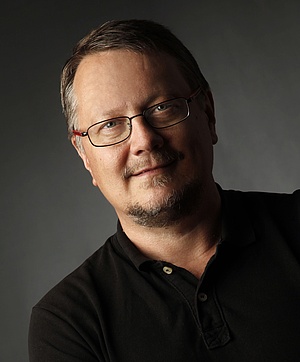
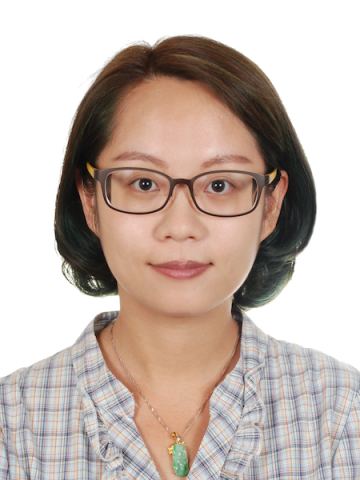
Thomas Werner Pusztai is a Researcher at the Department of Distributed Systems, TU Wien. His work focuses on cloud-edge continuum systems, serverless computing, and service-level objective (SLO) management. He contributes to projects like RapidREC, TEADAL, and the EU-funded RAINBOW initiative. His research spans distributed scheduling algorithms, edge-cloud resource allocation, and SLO-aware middleware frameworks like Polaris and HyperDrive. Education: Completed a Diploma in Computer Science at TU Wien with a thesis on Model-based design and architecture of fog computing applications (2019). Active in academic conferences, presenting at IEEE/ACM Edge Computing, Cloud, and Fog/Edge events. Research interests include edge computing, cloud-native systems, IoT applications, and optimizing SLO compliance through novel scheduling techniques. His work emphasizes practical frameworks for real-world distributed systems challenges. Projects include developing HyperDrive for serverless function scheduling in 3D edge-cloud spaces, Polaris for SLO-aware microservices orchestration, and SLO Script for complex elasticity-driven SLO implementations.
Stefan Nastic is an Assistant Professor at the Technische Universität Wien (TU Wien), affiliated with the Faculty of Informatics and the Distributed Systems department. He serves as Curriculum Coordinator for the Master’s program in Distributed and Next Generation Computing, and is a Substitute Member of the Curriculum Commission for Informatics. His research focuses on distributed systems, edge computing, serverless computing, IoT, and smart cities. He holds a PhD in IoT cloud systems (2016) and a BSc (not explicitly stated). Key research contributions include frameworks for serverless edge-cloud continuum (e.g., HyperDrive, GoldFish), federated learning applications (e.g., adaptive human activity recognition), and IoT infrastructure governance (e.g., Polaris Scheduler). He leads projects like RapidREC (2023–2025) on supply chain optimization and participates in initiatives like TEADAL (2022–2025) for edge-cloud workflows. Publications span 30+ peer-reviewed articles in top venues like IEEE IoT, ACM, and IEEE Cloud. He supervises graduate students on stateful serverless functions, federated learning, and edge-cloud scheduling. His work addresses challenges in resource management, latency reduction, and scalable distributed systems.
Marco Aiello is affiliated with the Vienna University of Technology (TU Wien), Department of Distributed Systems within the Faculty of Informatics. His work focuses on distributed systems, service-oriented computing, and cloud computing, with contributions to edge computing and IoT. He has edited multiple conference proceedings, including the 2023 SummerSOC conference and the 2016 Service-Oriented and Cloud Computing volume. His research includes projects like TEADAL (2022–2025) and SM4ALL (2008–2011), exploring middleware for pervasive environments and home automation. Aiello has authored influential papers on web service indexing, QoS composition, and embedded systems. He received the 2006 Web Service Challenge award for his indexing work. Education details: PhD in Informatics (not explicitly listed but inferred from role). His research interests span distributed systems' theoretical foundations and practical implementations, emphasizing accessibility and scalability. Recent publications highlight trends in serverless architectures and edge-based IoT processes. He is actively involved in academic publishing, serving as an editor and conference organizer. Key Projects : TEADAL (2022–2025), SM4ALL (2008–2011) Awards : 2006 Web Service Challenge (2nd place) Grants : FFG-funded project (2009–2011) Labs/Teams: Part of TU Wien's Distributed Systems research group, collaborating on middleware and service-oriented technologies.
Dr. Vincenzo De Maio is a PostDoc Researcher at the Department of Computational Sustainability, Faculty of Informatics, Technische Universität Wien. His research spans quantum computing, edge computing, distributed systems, and sustainable computing, with a focus on hybrid quantum-classical systems and edge AI applications. Current projects: HPQC (2023–2025), ThEMIS FWF (2024–2027), TRITON FWF (2023–2027) Previous projects: RUCON (2016–2023), SWAIN (2021–2024) His research explores the integration of quantum computing with classical systems, particularly in software engineering, workflow decomposition, and hyperparameter optimization. He also works on edge computing for smart cities, environmental monitoring, and traffic safety applications. Recent publications analyze quantum compilation bottlenecks, hybrid quantum-classical workflow orchestration, and quantum neural network optimization. He supervises master's theses on topics like quantum edge benchmarking and hyperparameter tuning. Key collaborations with Prof. Ivona Brandic and others Active in IEEE/ACM conferences and Springer publications
Lukas Grasmann is a Researcher at the Faculty of Informatics, Vienna University of Technology (TU Wien), based in the Databases and Artificial Intelligence research group (Institute E192-02, Room HA0302). His contact details include email lukas.grasmann@tuwien.ac.at and phone +43-1-58801-192216, with professional activities centered on cutting-edge database technologies and AI applications. His educational qualifications comprise: Bachelor of Science (BSc) Diplom-Ingenieur (Dipl.-Ing.) in Engineering Grasmann's research spans database systems and artificial intelligence with emphasis on big data analytics, distributed query processing, and skyline query optimization. His work focuses on integrating specialized query paradigms into Apache Spark SQL for efficient large-scale data analysis, particularly applied to perishable food supply chain optimization for waste reduction. This intersects computer science fundamentals with sustainability-driven practical implementations. His 2022-2023 publications reveal a concentrated research trajectory in enhancing Spark SQL's capabilities for skyline queries, addressing both theoretical optimization challenges and real-world deployment in distributed environments. The work demonstrates consistent innovation in bridging database theory with big data infrastructure, advancing scalable solutions for multi-criteria decision problems. Scientific recognition: No formal awards or fellowships documented in source materials Research funding and collaborations include: Lead researcher on FFG-funded project "AI-driven collaborative supply and demand matching platform for food waste reduction" (2022-2025) Contributor to HyperTrac project (2018-2022) focusing on traceability systems Active participant in KnowledgeGraph initiative (2020-2028) developing semantic knowledge networks He operates within TU Wien's Databases and Artificial Intelligence research ecosystem (Institute E192), collaborating with specialists like Pichler and Selzer on database scalability challenges. The group maintains strong industry connections through applied projects targeting supply chain intelligence and food waste analytics.
Arturo Azcorra Saloña is a Full Professor at Universidad Carlos III de Madrid and the founder & Director of IMDEA Networks Institute. He has held leadership roles in technology transfer, including Director General positions at CDTI and the Spanish Ministry of Science and Innovation. Education: M.Sc. in Telecommunications Engineering (1986) and PhD in Telecommunications (1989) from UPM, MBA with honors from Instituto de Empresa (1993) Research interests focus on Multi-access Edge Computing , Network Function Virtualization , and 5G networks , with significant contributions to Software Defined Networks and Smart connectivity systems . His publications span wireless networking, vehicular networks, and formal methods, with high-impact papers on 802.11 protocols, 5G architecture, and vehicular mobility optimization. Scientific awards: Elected Chairman of Networld2020 ETP, Special University award for extraordinary merits (2002), National PhD prize (1990), Best graduating student prize (1986) Research management includes coordinating EU projects like 5G-TRANSFORMER, 5G-CROSSHAUL, and networks of excellence such as CONTENT and E-NEXT. He co-founded the ACM CoNEXT conference and contributes to European 5G PPP initiatives.
Zhang Yan is a Full Professor at the Department of Informatics, University of Oslo, Norway. He previously served as Head of Department and Chief Scientist at Simula Research Laboratory (2014–2016). His research focuses on advanced communication technologies including Internet of Things (IoT), 5G/6G networks, mobile edge computing, and blockchain applications. He has held significant roles such as IEEE VTS Distinguished Lecturer (2016–2020) and Chair of IEEE TCGCC (2019–2021). His honors include IEEE Fellow (2020), election to Academia Europaea (2020), and recognition as a Web of Science Highly Cited Researcher (2018–2019). Research interests span interdisciplinary areas like network dynamics, socio-economic systems, and algorithmic design. His work bridges theoretical foundations with practical applications in smart grids, vehicular networks, and global trade systems. Recent publications emphasize network science methodologies applied to economic complexity and information diffusion. Professional contributions include editorial roles for top journals and leadership in EU-funded projects. His awards reflect impactful contributions to both technical innovation and scientific leadership in informatics and communications.
Zoran Obradovic holds the prestigious L.H. Carnell Professorship of Data Analytics at Temple University where he serves as Professor in the Computer and Information Sciences Department and the Statistics Department. He also directs the Center for Data Analytics and Biomedical Informatics and maintains secondary appointments at Temple's Fox School of Business. Internationally, he serves as Research Professor at The Mathematical Institute of the Serbian Academy of Sciences and Arts, and as Visiting Professor at both the School of Medicine and School of Management at the University of Belgrade. His research spans multiple cutting-edge domains of data science: Bioinformatics and protein disorder prediction Healthcare informatics and clinical decision support systems Machine learning for complex networks and big data Spatial and temporal data analytics Applications in healthcare management, social networks, and earth science Dr. Obradovic pioneered research on intrinsically disordered proteins, earning multiple CASP awards. His work addresses challenges related to heterogeneous, spatial, and temporal data analytics with applications across healthcare, power systems, earth science, and social sciences. His research has been funded by prestigious organizations including NIH, NSF, DARPA, DOE, and industry partners. With approximately 450 publications and an H-index of 68 (over 33,000 citations), his scholarly impact is substantial. He serves as editor-in-chief of the Big Data journal and chairs the SIAM Data Mining conference steering committee, reflecting his leadership in the field. Scientific Recognition Elected Member of Academia Europaea (2015) Foreign Member of Serbian Academy of Sciences and Arts (2015) Asia-Pacific Artificial Intelligence Association Fellow (2021) Multiple best paper awards at international conferences Temple University's President's Outstanding Faculty Research Award (2009) Three consecutive CASP awards for protein structure prediction (2002-2006) Dr. Obradovic has mentored approximately 50 postdoctoral fellows and Ph.D. students, many of whom now hold positions at leading academic institutions and tech companies including Amazon, Facebook, IBM, Microsoft, and Uber. He has served on editorial boards for 13 journals and organized numerous international conferences in data mining and bioinformatics. His Center for Data Analytics and Biomedical Informatics develops advanced data science methods addressing real-world challenges in healthcare, science, engineering, and business applications, with active recruitment for Ph.D. students and postdoctoral researchers.
Kathrin Figl is a Full Professor (Tenured) for Human-centric Information Systems Design at the Department of Information Systems, Production and Logistics Management at the University of Innsbruck. Previously, she held positions as an Assistant Professor at WU Vienna University of Economics and Business and as a research associate at the University of Vienna. Her educational background includes a doctoral degree in Information Systems (2008, with honors, awarded the Dr. Maria Schaumayer Prize) and dual master's degrees in Information Systems (2004) and Psychology (2006), all from the University of Vienna. This interdisciplinary foundation bridges technical and psychological perspectives in her research approach. Professor Figl's research centers on human-centered information systems with particular emphasis on cognitive aspects of digital interaction: Human-AI interaction and algorithmic management systems Digital nudging techniques and online manipulation Eye-tracking methodologies in user research Cognitive biases and heuristics in digital environments Fake news perception and detection mechanisms Webpage prototypicality and its effects on user attitudes Business process modeling as cognitive tools Her publication trajectory demonstrates a sophisticated evolution from foundational work on business process modeling to cutting-edge research on device-specific cognitive effects and misinformation perception. A hallmark of her methodology is the rigorous application of empirical approaches, particularly eye-tracking studies, to investigate how screen design, device type, and interface elements influence human cognition and decision-making across digital platforms. Professor Figl has earned significant recognition for her scholarly contributions: Dr. Maria Schaumayer Prize for doctoral excellence Three Best Paper Awards at major international conferences Excellent Teaching Award from WU Vienna Recognition as a top reviewer for Software & Systems Modeling journal Outstanding service awards as associate editor and track chair She has secured substantial research funding including an FWF Lisa Meitner Programme grant (€145,260) on Web Design Prototypicality and an Austrian Nationalbank Research Grant (€55,000) on Cognitive Effectiveness in Business Process Modeling. While specific advisees aren't documented in the provided materials, her extensive publication record with numerous co-authors indicates active mentorship of graduate researchers. Her work with eye-tracking technology suggests leadership of a specialized laboratory environment for studying human-computer interaction, with established collaborations including the Technical University of Denmark and Queensland University of Technology.
Christine Sindelar serves as Associate Professor and Head of the Hydraulics Laboratory at the Institute of Hydraulic Engineering and River Research, Department of Landscape, Water and Infrastructure, University of Natural Resources and Life Sciences, Vienna (BOKU). Her academic leadership spans experimental river research, fluid mechanics, and hydraulic engineering with a strong emphasis on practical applications for river management and restoration. Her educational trajectory includes a habilitation in Experimental River Research and Fluid Mechanics (2022), a PhD-equivalent doctorate in Civil Engineering from Graz University of Technology (2011), a degree in Technical Mathematics from the University of Linz (2000), and teacher certification in mathematics, psychology, and philosophy (1997). Habilitation: Experimental River Research and Fluid Mechanics (2022) PhD: Civil Engineering, Graz University of Technology (2011) M.Sc.: Technical Mathematics, University of Linz (2000) B.Ed.: Teaching Certification, University of Linz/Salzburg (1997) Dr. Sindelar's research integrates experimental and computational methodologies to address critical challenges in river systems. Her work focuses on sediment transport dynamics, fish passage engineering, scale modeling of hydraulic structures, and nature-based river restoration solutions. She pioneers innovative techniques such as 1:1 physical modeling and Lagrangian particle tracking to investigate complex fluid-particle interactions and river morphodynamics. Her leadership in the Responsible River Modeling Center (RRMC) drives advancements in sustainable river management practices across European waterways. Analysis of her 15 most recent publications reveals a dominant focus on sediment pulse dynamics (33%), fluid-particle interactions (27%), and scale modeling techniques (20%). Her work consistently bridges fundamental fluid mechanics with practical engineering applications, particularly in regulated river systems and hydropower infrastructure. Key emerging trends include the application of nature-based solutions for ecological restoration and advanced measurement techniques for turbulent flow structures. Her scientific recognition includes: Manfred Schwanninger Preis - BOKU Teaching Award (2021) ÖAW Stipendium 'For Women in Science' (2011) Dr. Sindelar has mentored 20 graduate students through thesis supervision, with research spanning hydraulic structure design, sediment transport modeling, and river restoration techniques. Her externally funded research portfolio includes 14 active projects totaling over €2.5 million in grants from diverse sources: Competitive Grants: Austrian Science Fund (FWF): PiCASSO XL (€480,000), Particle Collision Model (€320,000) European Commission: Mura-Drava-Danube Corridor (€1.2M) Industry Partnerships: Multiple hydropower-related physical modeling projects (€650,000) Municipal Projects: City of Vienna: Wienfluss restoration (€180,000) As Head of the Hydraulics Laboratory, she directs a multidisciplinary team conducting cutting-edge experimental research using advanced facilities including 1:1 scale river modeling systems, high-resolution particle tracking velocimetry, and specialized sediment transport measurement apparatus. The laboratory serves as a national hub for river engineering research and collaborates extensively with European water management authorities on transboundary river projects.
Andreas Nunnenkamp is an Associate Professor at the University of Vienna, affiliated with the Department of Quantum Optics, Quantum Nanophysics, and Quantum Information. His research spans quantum optomechanics, topological materials, and non-Hermitian systems, with a focus on driven-dissipative dynamics and synthetic quantum states. Research Interests: Quantum information processing in engineered systems Topological phases and nonreciprocal transport Optomechanical quantum state stabilization Prethermal phases and time crystals Disorder effects in quantum many-body systems Publication Trends: Recent work explores non-Hermitian topology (2021-2023), quantum synchronization (2014-2017), and foundational optomechanics (2010-2013). Key themes include directional amplification, Majorana modes, and Floquet dynamics. Teaching Activities: Lab-Course: Theoretical Physics Specialization Lectures Bachelor's Seminar Quantum many-body systems courses
Corinna Brungs is a Senior Scientist at the University of Vienna , affiliated with the Faculty of Life Sciences and the Department of Pharmaceutical Sciences (Division of Pharmacognosy). Her research focuses on applying cutting-edge mass spectrometry techniques for natural product identification, biomarker discovery, and untargeted metabolomics workflows. Developing open mass spectral libraries Advancing data processing strategies Specializing in tattoo pigment and metabolite analysis Research Highlights: Brungs bridges phytochemistry and computational metabolomics through method development in mass spectrometry. Her work includes creating standardized protocols for: Tattoo pigment identification In-source fragmentation analysis Non-targeted drug exposure profiling Integration of mobility-resolved spectrometry Scientific Awards: 2025 Early Career Prize (Metabolomics Society) 2025 Early Career Travel Award (Metabolomics Society) 2022 Czech Academy of Sciences Fellowship Publications (2022-2025) demonstrate leadership in: MALDI-TIMS-MS2 bioimaging MZmine 3 software development Metabolomics data reproducibility Mass spectral library matching
Franz Wotawa is a Professor of Software Engineering at Graz University of Technology. He holds a M.Sc. (1994) and PhD (1996) from Vienna University of Technology. He has served as head of the Institute for Software Technology from 2003–2009 and since 2020. His research focuses on model-based reasoning, software testing, autonomous systems, and diagnosis, with over 390 peer-reviewed publications. He founded Softnet Austria (2006) to bridge research and industry. He leads the Christian Doppler Laboratory for Quality Assurance Methodologies for Autonomous Cyber-Physical Systems since 2017 and has supervised 90+ master and 36+ PhD students. His awards include the 2016 Lifetime Achievement Award from the International Diagnosis Community. He is a member of Academia Europaea, IEEE, and AAAI. **Education**: M.Sc. in Computer Science, Vienna University of Technology, 1994 PhD, Vienna University of Technology, 1996 **Research Interests**: Model-based reasoning, qualitative reasoning, theorem proving, mobile robotics, verification/validation, software testing/debugging, AI, and autonomous systems. **Notable Projects**: A-IQ Ready (2022–2026): Quantum sensing for autonomous systems. ALFA (2024–2027): AI for smart diagnosis in building automation. Bilateral AI (2024–2029): Combining symbolic and sub-symbolic AI. VARCOS (2025–2028): Vehicle-road cooperative systems for autonomous driving. **Awards & Memberships**: Lifetime Achievement Award (2016, International Diagnosis Community) Senior Member, AAAI Member of Academia Europaea, IEEE, ACM, and Austrian Computer Society **Labs/Teams**: Christian Doppler Laboratory for Quality Assurance Methodologies (since 2017). Active in Cluster of Excellence “Bilateral AI” at TU Graz.
Prof. Alexander Onysko is a full-time Professor and Head of the Institute of English and American Studies at the University of Klagenfurt's Faculty of Cultural and Educational Sciences. His academic roles include membership in the Curricular Commission for English and American Studies and the Faculty Conference. His research focuses on cognitive linguistics, sociolinguistics, and world Englishes, with particular interest in language contact, multilingualism, and conceptual metaphors. Recent research projects explore interdisciplinary topics like media literacy, swarm intelligence in robotics, and sustainable business ecosystems. Notable publications in 2025 address online political avoidance, robotic exploration algorithms, and healthcare workforce retention during pandemics. He actively contributes to academic administration and has supervised multiple institutional innovation projects. His work bridges linguistic theory with practical applications in education and technology-driven solutions.
Hsiang-Yun Wu is a Research Fellow at the Computer Graphics department of Vienna University of Technology (TU Wien), actively contributing to information visualization and visual analytics. Her work spans biological network visualization, graph drawing, schematic network maps, and data physicalization, with a focus on interactive techniques and human-centric design. Projects: ArtVis (2022–2027) , SANE (2024–2027) , SMGV-Esprit (2024–2027) , and HumAlgo (2018–2023) . Affiliations: Member of the Visualization Group at TU Wien. Her recent publications emphasize uncertainty visualization, network physicalization, and dynamic graph representations. Notably, she received the EuroVis 2019 Honorable Mention Award for optimizing stepwise animations. Wu supervises diploma theses in areas like metabolic pathway visualization and semantic-aware character animation. Key research trends include integrating biological data with urban-style schematic maps ( Metabopolis ), physicalization workflows for anatomical education ( Slice and Dice ), and mixed labeling strategies in 3D environments.