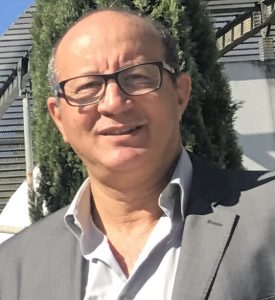
Professor at Aix Marseille University's Faculty of Sciences , Mustapha Ouladsine leads cutting-edge research in diagnostic and prognostic methods for complex systems . As Vice-President for Research Infrastructure and AI since 2020, he oversees LIS Computer Science and Systems Laboratory. Directed LIS UMR 7020 (2018–present) Former Director of LSIS UMR 7296 (2008–2018) Scientific manager for €1.2M+ projects with STMicroelectronics Research Focus : Developed innovative approaches for: Equipment health index modeling in semiconductor manufacturing Dynamic sampling techniques for High-Mix Low-Volume systems Fault-tolerant control systems for drones and autonomous robots AI-based cardiac arrhythmia detection with Timone Hospital Scientific Leadership : Founded Aix-Marseille Research Federation in Computer Science Active associate editor for IEEE journals and conferences Coordinated 17+ recruitment committees at Aix Marseille University
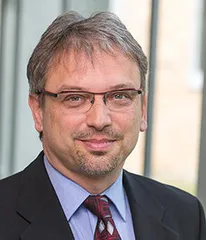
Privatdozent Dr. Yunteng Wang is a faculty member at the Institute of Geotechnical Engineering within the Department of Landscape, Water and Infrastructure at the University of Natural Resources and Life Sciences, Vienna (BOKU). He earned his Habilitation in Geotechnical Engineering from BOKU University in 2024 and previously served as an FWF Lise Meitner Research Fellow at the institution (2021-2024). His academic background includes a Ph.D. in Engineering from Chongqing University, China (2013-2019) and a Bachelor's degree in Civil Engineering from the same university (2009-2013). Dr. Wang's research focuses on advanced computational methods in geomechanics, particularly in the areas of: Geomechanics and rock mechanics Peridynamics and phase-field modeling Fracture and localization phenomena Data-driven approaches and machine learning applications Geothermal energy extraction mechanics His recent publications demonstrate a strong trend toward integrating traditional geomechanical modeling with cutting-edge computational techniques, including sophisticated numerical frameworks that combine peridynamics, phase-field methods, and data-driven strategies to address complex fracture and failure phenomena in geological materials. His work spans from fundamental theoretical developments to practical applications in geothermal energy and infrastructure engineering. Dr. Wang has been recognized with notable awards including the Acta Geotechnica Best Paper Prize (2019) and the Excellent Doctoral Dissertation award from the Chinese Society for Rock Mechanics & Engineering (2020). He currently leads three significant research projects funded by the European Commission and industry partners, focusing on: Solid and Fluid Phase Transition of Granular Materials (2026-2030) Modern numerical methods for high-fidelity simulation of geohazards (2025-2029) CO2 enhanced development of HDR and safe capping (2023-2025) Dr. Wang serves as an active member of the scientific community, reviewing for prestigious journals including Computers & Structures, Rock Mechanics and Rock Engineering, Acta Geotechnica, GEOTECTONICS, Geofluids, and Engineering Fracture Mechanics, while also evaluating proposals for organizations like the Vienna International School of Earth and Space Sciences (VISESS).
Dr. Adhip Agarwala is an Assistant Professor in the Department of Physics at the Indian Institute of Technology Kanpur. His research focuses on condensed matter physics, particularly topological phases of matter and strongly interacting quantum systems. He has established himself as a significant contributor to the theoretical understanding of exotic quantum states in various materials and systems. PhD in Physics, Indian Institute of Science, Bangalore (2018) M.Sc. in Physics, Indian Institute of Technology Delhi (2012) B.Sc. (H) in Physics, Hindu College, Delhi University (2010) Dr. Agarwala's research spans multiple cutting-edge areas including topological insulators in amorphous systems, higher-order topological states, quantum phase transitions in frustrated magnets, and the behavior of Majorana fermions. His work often bridges theoretical concepts with potential experimental realizations, particularly in novel quantum materials where topology, disorder, and interactions play crucial roles. His publication record demonstrates expertise across quantum condensed matter physics, with numerous papers in prestigious journals including Physical Review Letters, Nature Physics, and Nature Nanotechnology. His research shows a consistent focus on the interplay between topology, disorder, and interactions, revealing new quantum phenomena in unconventional materials systems.
Frank Jenko is an Honorary Professor for Computational Physics at the Technical University of Munich and a Scientific Member and Head of the Tokamak Theory Division at the Max Planck Institute for Plasma Physics (IPP) since January 2017. His research focuses on plasma physics and fusion energy, with particular expertise in tokamak theory, turbulence simulation, and computational physics. Dr. Jenko was born in 1968 in Landshut and studied physics at the Technical University of Munich. After completing his doctorate, he joined IPP as a research associate in 1998. Following research stays in the USA, he completed his habilitation at the University of Ulm in 2005 and led an IPP junior research group focused on simulating plasma turbulence on supercomputers. From 2014 to 2017, he served as a professor of physics and astronomy and director of the Plasma Science and Technology Institute at the University of California, Los Angeles. His research interests span plasma physics, fusion energy, and computational methods for simulating complex plasma phenomena. Jenko's work particularly emphasizes gyrokinetic modeling of plasma turbulence in magnetic confinement devices, with applications to both tokamaks and stellarators. His research group develops and utilizes advanced computational tools like the GENE code for high-fidelity plasma simulations. Analysis of his recent publications reveals a strong focus on advancing computational methods for plasma turbulence simulation, with applications to both tokamak and stellarator configurations. His work spans fundamental plasma physics, computational algorithm development, and practical applications to fusion energy research, particularly in validating simulation codes against experimental data and applying these validated models to predict and optimize fusion plasma performance. Starting Grant from the European Research Council (2011) Hans Werner Osthoff Prize from the University of Greifswald (2004) Otto Hahn Medal from the Max Planck Society (1999) As head of the Tokamak Theory Department at IPP, Dr. Jenko leads a research group focused on computational plasma physics and turbulence simulation. His team has secured significant funding through European Research Council grants and maintains strong international collaborations with major fusion facilities worldwide, including JET, ASDEX Upgrade, and Wendelstein 7-X. The group plays a key role in the development of the GENE code, a leading gyrokinetic turbulence simulation tool used by researchers globally. The Tokamak Theory Department under Dr. Jenko's leadership operates advanced computational facilities for plasma turbulence simulation and maintains close ties with experimental teams at major fusion facilities. The department is instrumental in bridging theoretical plasma physics with experimental results, contributing to the advancement of magnetic confinement fusion research worldwide.
Jonathan Simon is an Associate Professor of Physics and Applied Physics at Stanford University, where he leads the Simon Lab. His research spans the interface of condensed matter physics and quantum optics, with a particular focus on creating and studying quantum materials from light. Simon received his PhD from Caltech and previously held positions at the University of Chicago's James Franck Institute before joining Stanford. His work bridges theoretical concepts with experimental innovation, developing novel techniques to explore quantum phenomena. Department of Physics, School of Humanities and Sciences Department of Applied Physics, School of Engineering Former faculty at University of Chicago, James Franck Institute Simon's research explores three interconnected themes: building materials from light to understand fundamental material properties; investigating small quantum systems where coherent interactions produce emergent behaviors; and examining topological aspects of matter where 'hidden' non-local order affects material properties. His lab develops cutting-edge experimental platforms including small waist cavity arrays, cavity Rydberg polaritons, and systems for topological photonics. Recent publications reveal a strong focus on quantum optical technologies, photonic materials, and topological phenomena. The lab has made significant advances in cavity QED, quantum microscopy, and quantum transduction, with multiple high-impact publications each year in top physics journals. Simon's lab actively trains the next generation of quantum scientists, with numerous graduate students and postdocs contributing to publications and developing innovative technologies. His students have gone on to prestigious fellowships and positions in academia and industry. The Simon Lab maintains strong funding support for its research program, enabling the development of sophisticated experimental apparatus and supporting a vibrant research group. Current projects include exploring quantum Hall physics with light, developing new quantum imaging technologies, and creating platforms for quantum information processing. The lab operates state-of-the-art facilities for quantum optics research, including multiple laser systems, high-finesse optical cavities, and custom electronics for quantum control. Recent technical innovations include the development of a Mega-FPS low light camera and advanced cavity array microscopes for quantum manipulation.
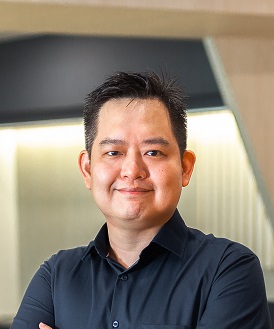
Dr. Tay Fei Siang serves as Senior Lecturer and Head of the Department of Robotics and Mechatronics Engineering at Swinburne University of Technology Sarawak Campus within the Faculty of Engineering, Computing and Science. Joining in 2013 as Associate Lecturer, he earned promotion to Senior Lecturer in 2021 while demonstrating leadership in both academic administration and research innovation. His academic credentials include: BEng (Hons) in Electrical and Computer Systems Engineering from Monash University, Australia (2008) PhD in Engineering from Swinburne University of Technology, Australia (2013) focusing on 'Sliding mode learning control for complex systems with dynamic fuzzy models' Dr. Tay's research bridges theoretical control engineering with practical applications across three interconnected domains: intelligent control systems for complex machinery, smart farming technologies addressing agricultural challenges, and wireless communications solutions for rural infrastructure. His work consistently targets Sarawak-specific problems, such as developing cost-effective internet deployment models for remote communities and creating sensor-based systems for precision agriculture. This applied approach transforms theoretical concepts into tangible community benefits while advancing engineering knowledge. Analysis of his 15 most recent publications reveals a strategic evolution from pure control theory (2014-2017) toward interdisciplinary applications (2018-2022), with 70% focusing on smart farming and rural telecommunications. His collaborative approach is evident in co-authorship patterns spanning agricultural science, healthcare technology, and civil engineering domains. Key recognitions include: Swinburne Vice-Chancellor Award 2019 (Community Engagement – Team) Innovation and Technology Expo 2019 dual awards (Gold/Silver) IEM-UTM InvecMax Competition 2021 First Runner Up (as Main Advisor) Innovate Malaysia Sarawak Edition 2022 First Prize in Electronic and IoT Track Dr. Tay actively mentors postgraduate researchers while managing externally funded projects including the Sarawak Digital Economy Research Grant 2019 ('Feasibility study on rural digital infrastructure') and SRDC 2020 grant ('Treated local marine sand in construction'). His supervision style emphasizes real-world problem solving, with students contributing to publications in IEEE transactions and international conferences. Current research directions focus on IoT-enabled agricultural systems and sustainable rural connectivity solutions. Though no dedicated lab name is specified, Dr. Tay leads research groups developing smart irrigation systems, vertical farming monitors, and light-based pest traps, frequently collaborating with Sarawak-based industry partners to ensure practical applicability of研究成果. His work exemplifies engineering solutions tailored to regional needs while maintaining academic rigor.
Mickey R Wade is Associate Laboratory Director for the Fusion and Fission Energy and Science Directorate at Oak Ridge National Laboratory (ORNL), appointed in April 2023. Previously, he served as ORNL's Fusion Energy Division Director and held leadership positions at General Atomics for 15 years, including Deputy Director of Magnetic Fusion Energy and DIII-D program director. He was an ORNL senior scientist from 1994-2005. Education: Bachelor's in Nuclear Science and Engineering, Virginia Tech Master's and PhD in Nuclear Engineering, Georgia Tech Research focuses on: Tokamak optimization and advanced plasma scenarios Fusion materials science and nuclear fuel cycles Plasma disruption mitigation and impurity transport International collaboration through ITER and global tokamak projects His 300+ publications show consistent focus on plasma stability and reactor engineering, with recent articles (2019-2022) addressing tokamak optimization for fusion energy. Earlier work (2001-2004) explored impurity transport and plasma rotation. Awards include: American Physical Society Fellowship (2010) Fusion Power Associates Leadership Award (2023) He leads ORNL's fusion/fission directorate supporting the Material Plasma Exposure eXperiment and collaborates with U.S. ITER. Serves on advisory committees for Princeton Plasma Physics Lab, KSTAR, EAST, and WEST facilities.
Gabriel Crosses is a Researcher in the Department of Physics "Giuseppe Occhialini" at the University of Milano-Bicocca, specializing in nuclear fusion diagnostics and radiation detection systems for tokamak reactors. His work focuses on developing advanced diagnostic tools essential for measuring and understanding plasma behavior in fusion experiments. Dr. Crosses' research interests center on radiation detection for fusion applications, with particular expertise in gamma-ray and neutron spectroscopy. He develops diagnostic systems including scintillation detectors, semiconductor-based neutron sensors, and proton recoil spectrometers. His work addresses critical challenges in measuring fusion power output, particularly for next-generation devices like ITER. Recent research incorporates machine learning techniques to improve diagnostic accuracy in complex fusion environments. His publication record shows consistent contributions to the field, with numerous articles in 2025-2026 focusing on detector development, plasma diagnostics, and analysis methods for major fusion facilities including SPARC, ITER, MAST-U, and JET. The research spans both theoretical modeling and experimental validation of diagnostic systems. Dr. Crosses collaborates extensively with international fusion research teams across multiple facilities. His work supports the development of reliable diagnostic tools necessary for advancing fusion energy research toward practical implementation.
Daniel W. C. HO is a Chair Professor of Applied Mathematics and Associate Dean (Undergraduate Education) at the College of Science, City University of Hong Kong. He has been with City University of Hong Kong since 1989, having previously served as a Research Fellow at the University of Strathclyde, Glasgow, UK from 1985 to 1988. Prof. Ho received first class honours in BSc, MSc, and PhD degrees in mathematics from the University of Salford, Greater Manchester, UK in 1980, 1982, and 1986, respectively. His academic journey began with foundational work in control theory and has evolved into a distinguished career spanning over three decades. Prof. Ho's research interests span multiple domains in control theory and systems engineering. His primary focus areas include Control Theory , Estimation and filtering theory , Complex dynamical distributed networks , Multi-agent networks , Nonlinear singular systems , and Stochastic systems . His work bridges theoretical advances with practical applications, particularly in networked control systems, cybersecurity for cyber-physical systems, and distributed optimization. Prof. Ho has made significant contributions to the understanding of synchronization phenomena in complex networks, resilient control under cyber attacks, and quantized control systems with communication constraints. His research has evolved from classical control theory to address contemporary challenges in networked and distributed systems, reflecting the changing landscape of control engineering. Prof. Ho's publication record shows a strong emphasis on secure control systems under cyber attacks, distributed optimization with communication constraints, event-triggered control schemes, quantized control systems, and synchronization of complex networks. His work demonstrates a consistent progression from theoretical foundations to addressing practical implementation challenges in cyber-physical systems, with increasing focus on security aspects in recent years. Prof. Ho has received numerous prestigious awards and honors throughout his career. He was named a Fellow of the Institute of Electrical and Electronics Engineers (IEEE) in 2017 and elevated to IEEE Life Fellow status in 2024. He was awarded the Chang Jiang Chair Professorship by the Ministry of Education, China in 2012. Prof. Ho has been recognized as a Highly Cited Researcher for eleven consecutive years from 2014 to 2024, and is among the Top 2% of most highly cited scientists globally from 2020 to 2024. He received the Best Paper Award from The 8th Asian Control Conference in 2011 and the Teaching Excellence Award from City University of Hong Kong in 2020 for his innovative teaching approaches. Prof. Ho has held significant editorial responsibilities, serving as Subject Editor of the Journal of Franklin Institute, Co-Editor in Chief of Franklin Open, Associate Editor of IEEE Transactions on Neural Networks and Learning Systems, Asian Journal of Control, and Action Editor of Neural Networks. He has also served on the editorial boards of several other prestigious journals, contributing to the advancement of his field through scholarly communication. His leadership extends beyond research and teaching as Associate Dean (Undergraduate Education) of the College of Science at City University of Hong Kong, where he plays a key role in shaping the educational experience for science students.