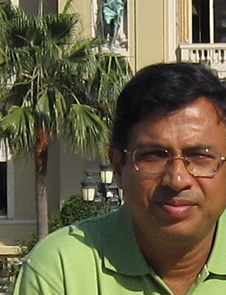
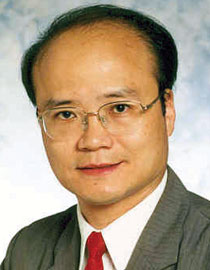
Professor Marius Portmann is the UQ-Cisco Chair of Network Security at the School of Electrical Engineering and Computer Science (EECS), University of Queensland. His expertise spans Cybersecurity, IoT, and Applied AI. He holds a PhD from ETH Zurich (2003) and has led research in Software Defined Networking (SDN), blockchain, and energy-harvesting IoT systems. Education: PhD in Electrical Engineering from Swiss Federal Institute of Technology (ETH Zurich), 2003. Research focuses on securing IoT networks, AI-driven intrusion detection, and sustainable sensor systems. He has pioneered self-powered IoT systems using energy harvesters and developed frameworks like FlowTransformer for network analysis. His work bridges theoretical advancements with practical applications in smart tourism, energy efficiency, and edge computing. Recent publications highlight innovations in DDoS detection (P4-Secure), sensor-based environmental monitoring (EcoShower), and graph-based anomaly detection (XG-BoT). His datasets (e.g., NF-ToN-IoT-v3) are widely used in ML-based cybersecurity research. Collaborations include industry partners like Cisco and institutions like RMIT. Grants and leadership roles in interdisciplinary projects underscore his impact. He advises on IoT security standards and contributes to open-source tools for network research. Current projects explore edge-AI integration and sustainable sensor networks.
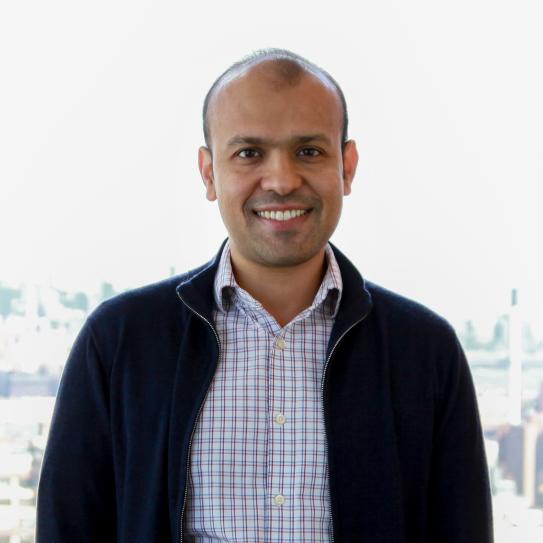
Professor Aniruddha Desai is a Research Professor and Director of the Centre for Technology Infusion (CTI) at La Trobe University. He holds a Bachelor’s in Industrial Electronics, a Master’s in Micro-electronics, and a PhD in Computer Science. His expertise spans microelectronics, AI, IoT, and sensor networks, with a focus on socially impactful applications like transportation, healthcare, and precision agriculture. Research Interests: Ultra-low power systems Micro-nano electronics AI/ML and edge computing IoT and sensor networks Transportation and logistics Major Projects: Led multi-million-dollar R&D programs in areas such as smart cities, energy management, and smart farming. Notable collaborations include the IIT Kanpur - La Trobe University Research Academy and the Asian Smart Cities Research and Innovation Network. Awards: Recipient of the 2016 Vice-Chancellor’s Award for Research Excellence and the 2020 Victorian Tall Poppy Award for Science. Served on advisory panels for the Australian Research Council and provided expert testimony in parliamentary inquiries. Labs/Teams: Directs the CTI, which delivers technology-based innovations to industry and government. Co-founded the Asian Smart Cities network to advance urban technology solutions.
Amiya Nayak is a Professor at the School of Electrical Engineering and Computer Science of the University of Ottawa. His research focuses on Fault-Tolerant Computing , Distributed Systems , and Ad hoc and Sensor Networks . He specializes in cybersecurity, IoT security, blockchain integration, and machine learning applications in healthcare and vehicular networks. His work addresses challenges in secure communication protocols, distributed learning frameworks, and energy-efficient network designs. Notable research areas include: IoT Security : Developing frameworks for threat detection, privacy-preserving systems, and blockchain-empowered IoT defenses. Federated Learning : Enhancing healthcare predictions and IoT management through decentralized, privacy-aware machine learning. Vehicular Networks : Securing Vehicle-to-Everything (V2X) communication and optimizing QoS in cooperative internet of vehicles (IoV). Network Optimization : Leveraging deep reinforcement learning and graph neural networks for WDM network restoration and edge computing. His publications (2020–2025) highlight contributions to: Secure authentication protocols in medical sensor networks. AI-driven metaverse security solutions. Decentralized energy trading using NFTs. Energy-efficient sleep scheduling in wireless body area networks (WBANs). Nayak holds a Ph.D. and is a P.Eng. (Professional Engineer). His work bridges theoretical computer science with practical applications in telecommunications and healthcare systems.
Jonathan Weare is a Professor of Mathematics at the Courant Institute of Mathematical Sciences, New York University. He holds affiliations with the Faculty of Arts and Science and the Graduate School of Arts and Science. His academic journey includes roles as an Associate Professor at the University of Chicago (2014–2019) and Assistant Professor (2011–2014), following postdoctoral work as a Courant Instructor at NYU. He earned his Ph.D. in Mathematics from UC Berkeley in 2007. His research focuses on stochastic algorithms and models, with applications in astrophysics, biophysics, computational chemistry, and climate science. Key areas include Monte Carlo methods, rare event simulation, and machine learning-driven scientific analysis. Collaborations with domain experts ensure his work addresses real-world challenges in diverse fields. Recent publications emphasize advancements in trajectory stratification, rare event prediction using machine learning, and efficient algorithms for high-dimensional problems. Notable contributions include the BAD-NEUS framework and AI-based solar system instability predictions. His group’s interdisciplinary approach bridges computational methods with scientific inquiry. Weare has advised numerous students and mentored postdocs, fostering talent in applied mathematics and computational science. His work on Mercury’s orbital dynamics and extreme weather prediction showcases the societal impact of his research. Current projects explore AI applications in weather modeling and rare event analysis, leveraging cutting-edge machine learning techniques. Labs/Teams: His research group at Courant develops stochastic algorithms and collaborates with interdisciplinary teams in computational chemistry, climate science, and astrophysics. Key collaborations include the University of Chicago and Columbia University.
Dr. Richard Jiang is a Senior Lecturer (Associate Professor) at Lancaster University's School of Computing and Communications. His research focuses on Artificial Intelligence, Neurocomputing, Quantum AI, Privacy Computing, and Medical Computing. He has pioneered secure pattern recognition in encrypted domains and quantum neuromorphic computing. With over £1M in research grants from EPSRC and others, he has authored 100+ publications and supervised over 20 PhD students. Dr. Jiang's work includes the Face2Brain method for neurodegenerative assessment and explainable models for brain aging analysis. He contributes actively to academic committees, editorial boards, and conferences like the World Conference on eXplainable AI. His research spans ethical AI frameworks, quantum algorithms for medical imaging, and privacy-preserving biometric systems.

Alexandr Lucas is a Teaching Professor in Robotics at the University of Sheffield's School of Computer Science. He joined in September 2019 and holds roles including Deputy Admissions Tutor (General Engineering) and IPE Tutor. His research focuses on developmental neuro-robotics, cognitive assessment via human-robot interaction, and educational robotics applications. He contributes to courses like COM1005 (Machines and Intelligence) and COM3528 (Cognitive and Biomimetic Robotics), developing teaching materials for MiRo robots and simulators. Publications include work on cognitive skill assessment using cloud computing and robotic systems, visual finger-counting for neuro-robotics learning, and public perception analysis of robots in urban environments. He co-founded the SERAI Network CIC and maintains active roles in robotics education and outreach. Lucas has created extensive teaching resources, including guides for MiRoCloud simulation platforms and visual coding tools (MiRoCODE). His work emphasizes practical robotics education and bridging theory with hands-on experiments in undergraduate and postgraduate programs.
Professor Glen Tian is a Professor at the School of Computer Science , Queensland University of Technology . He holds two PhDs: one in computer and software engineering from the University of Sydney (2009) and another in industrial automation from Zhejiang University (1993) . His academic career spans institutions including Hong Kong University of Science and Technology, Curtin University, and the University of Maryland at College Park. Editor-in-Chief of the Handbook of Real-Time Computing (Springer) Associate Editor for Information Sciences (Elsevier) and Asia-Pacific Journal of Chemical Engineering (Wiley) His research focuses on big data computing , cloud computing , computer networks , smart grid communication and control , networked control systems , and cyber-physical system security . Applications include power systems , medical big data , vehicular networks , and transport systems . Recent publications highlight advancements in smart grid communications , distributed optimization , secure multi-agent systems , and medical imaging analysis . He has led QUT's Big Data Lab and served as Leader of QUT's Networks and Communications Discipline . Scientific achievements include Over 20 research grants totaling >$6M 6 Australian Research Council (ARC) grants 1 MRFF-TTRA grant ($745,623) 1 ATN-DAAD Australia-Germany Collaborative Grant 1 DEST International Science Linkage grant He supervises PhD students in big data bioinformatics , smart grid optimization , and cyber-physical security , while mentoring 30+ postdocs and research fellows. Current projects include mitigating cyberattacks on power systems and developing AI-based atheroma diagnostic tools .
Siddharth Garg is the Institute Associate Professor of Electrical and Computer Engineering at NYU Tandon School of Engineering, leading the EnSuRe Research Group. He holds a Ph.D. from Carnegie Mellon University (2009) and a B.Tech. from IIT Madras. His research focuses on secure and energy-efficient computing systems, integrating machine learning, cybersecurity, and hardware design. He previously held roles as Assistant Professor at NYU Tandon (2014-2020) and the University of Waterloo (2010-2014). Key affiliations include NYU Center for Cybersecurity (CCS), NYU Wireless, and the Center for Advanced Technology in Telecommunications. His work has been recognized with prestigious awards like the NSF CAREER Award (2015) and inclusion in Popular Science’s 'Brilliant 10' (2016). Notable research includes private inference optimization, secure hardware IP protection, and adversarial machine learning defenses. Publications highlight advancements in zero-knowledge proofs, AI-driven chip design, and mitigating backdoor attacks in neural networks. His grants include funding from NYU Wireless and NSF initiatives like the Chips4All project. The EnSuRe group emphasizes bridging software and hardware design gaps using AI and fostering cybersecurity education.
John M. Archibald is a Professor in the Department of Biochemistry and Molecular Biology and the Department of Microbiology & Immunology at Dalhousie University's Faculty of Medicine in Halifax, Nova Scotia, Canada. He serves as Director of the Institute for Comparative Genomics (ICG) and holds the Arthur B. McDonald Research Chair of Excellence. Dr. Archibald has been a department member since 2003 and was University Research Professor from July 2016 to June 2021. Dr. Archibald earned his PhD from Dalhousie University. Following postdoctoral research at the University of British Columbia with Patrick Keeling, he returned to Dalhousie as a faculty member in 2003. Dr. Archibald's research focuses on the genes and genomes of microorganisms, particularly examining how genes are transferred between eukaryotes, prokaryotes and viruses, and how endosymbionts become organelles. His laboratory uses molecular biological and computational methods to study the genes and genomes of prokaryotic and eukaryotic microorganisms. Key research areas include the pivotal molecular and biochemical events that have shaped eukaryotic evolution, understanding evolutionary relationships among eukaryotic microbes, how endosymbionts become organelles, and how eukaryotic genes, genomes and proteins change over time. Current work examines the spread of photosynthetic organelles (chloroplasts) in eukaryotes and the extent of lateral (horizontal) gene transfer in nuclear genomes. His recent publications demonstrate a strong focus on protist genomics, endosymbiosis, and the evolution of eukaryotic cells. The research spans multiple disciplines including genomics, evolutionary biology, microbiology, and bioinformatics, with particular emphasis on understanding the complex evolutionary history of eukaryotes through comparative genomic approaches. His work often involves international collaborations and large-scale genomic projects. Dr. Archibald has received numerous scientific honors including: Election as Fellow of the Royal Society of Canada Election as Fellow of the American Academy of Microbiology (2015) Arthur B. McDonald Research Chair of Excellence University Research Professor (July 2016-June 2021) Membership in the Canadian Institute for Advanced Research (2003-2017) Visiting By-Fellow at Churchill College, University of Cambridge (2012) Appointment to the Royal Society of Canada's College of New Scholars, Artists and Scientists (2017) Dr. Archibald actively mentors graduate students and postdoctoral fellows, with current advisees including PhD students Cedric Blais, Dmytro Tymoshenko, and Jessica Latimer, and MSc student Charlotte Maclean. His lab has received substantial research funding that supports these trainees and enables cutting-edge genomic research. He has served in editorial roles for prestigious journals including Current Biology, Environmental Microbiology and BMC Biology, and was Treasurer of the International Society for Molecular Biology & Evolution (2009-2011). The Archibald Lab operates within the Institute for Comparative Genomics at Dalhousie University, which was officially launched in September 2021 with Dr. Archibald as Director. The lab maintains active collaborations with researchers worldwide and contributes to major international genomic initiatives including the Aquatic Symbiosis Genomics Project.
Dr. Jingjing Qiu is an Associate Professor in the Department of Mechanical Engineering at Texas A&M University (TAMU), leading the Advanced Materials & Manufacturing (AM²) Lab. Her research focuses on advanced manufacturing, nanomaterials, multifunctional composites, sustainable materials, energy harvesting, and healthcare applications. She holds a Ph.D. in Industrial & Manufacturing Engineering from Florida State University (2008), and M.S./B.S. degrees in Materials Science from Beihang University (2004/2001). Prior to academia, she gained 1 year of industrial experience as a Quality Engineer at SAIC Motor. Research interests include AI-driven nanomaterials synthesis, low-carbon manufacturing processes, and biomedical innovations such as drug delivery systems for brain tumors. The AM² Lab emphasizes interdisciplinary collaboration in materials science, data science, and sensor integration for energy and medical devices. Recent work highlights include AI-assisted microplastics removal, thermoelectric energy harvesting via graphene aerogels, and neuromorphic computing systems. Her team actively pursues postdoctoral and PhD candidates for research in energy/healthcare materials, requiring expertise in nanomaterials characterization (e.g., SEM, XPS, electrochemical techniques) and interdisciplinary problem-solving. Lab facilities support cutting-edge fabrication and testing of functional materials. Publications span over 15 years, with recent trends in sustainable manufacturing, soft robotics, and bio-inspired materials. Ongoing projects include DOE-funded initiatives on rare earth recycling and low-carbon ceramic production. No scientific awards are explicitly listed in the provided texts.
Xi Zhang is a Full Professor in the Department of Electrical and Computer Engineering at Texas A&M University . He is also the Founding Director of the Networking and Information Systems Laboratory. His academic career includes research fellowships at the University of Technology Sydney and James Cook University, as well as prior roles at AT&T Bell Laboratories and AT&T Laboratories Research. Education: B.S. and M.S. in Electrical Engineering & Computer Science, Xidian University, China M.S. in Electrical Engineering & Computer Science, Lehigh University, USA Ph.D. in Electrical Engineering-Systems, University of Michigan, USA Research Interests: His work focuses on Quality-of-Service (QoS) theory, 6G/Next-Generation Wireless Networks , Massive MIMO , Integrated Sensing and Communications (ISAC) , and Network Function Virtualization (NFV) . He has pioneered advancements in statistical delay/error-rate bounded QoS , AI-driven 6G architectures , and mURLLC (massive ultra-reliable low-latency communications) . Awards & Honors: IEEE Fellow (2014) for contributions to QoS theory in mobile wireless networks NSF Early Career Award (2004) Multiple Best Paper Awards (IEEE GLOBECOM, WCNC, ICC) Outstanding Faculty Award from Texas A&M (2020) Leadership Roles: He has held key positions as Technical Program Committee (TPC) Chair for major conferences (e.g., IEEE GLOBECOM 2011, IEEE ICDCS 2026) and serves as Editor for top-tier journals like IEEE Transactions on Communications and IEEE Transactions on Wireless Communications . Labs & Teams: He leads the Networking and Information Systems Laboratory , focusing on 6G mobile networks, ISAC systems, and AI-driven network architectures.
Faisal Mahmood is a Professor at the Department of Clinical Research, University of Southern Denmark (SDU), with dual affiliations at Odense University Hospital (OUH). He is a key member of the Research Unit of Oncology and the AgeCare - Academy of Geriatric Cancer Research in Odense, where he leads advanced research in imaging biomarkers for radiotherapy response. His work bridges clinical oncology and medical physics, with a focus on improving cancer treatment through innovative imaging techniques. Research Interests: Dr. Mahmood's research centers on imaging biomarkers of response to radiotherapy , with expertise in radiation therapy , medical image processing , and diffusion MRI . His work explores tumor microstructure using time-dependent diffusion imaging and MRI-Linac systems, with applications in glioblastoma and pancreatic cancer. He is actively involved in developing low-dose, adaptive radiotherapy protocols to enhance treatment precision. The recent trend in his publications shows a strong focus on adaptive radiotherapy , quantitative MRI , and biologically guided treatment . His work integrates engineering principles with clinical oncology, emphasizing reproducibility and feasibility in clinical settings. Topics such as automatic beam gating, diffusion coefficient discrepancies across scanners, and histological validation of imaging biomarkers reflect his translational research approach. Scientific Awards and Recognition: Research supported by Knæk Cancer foundation Advising and Grants: Dr. Mahmood has supervised at least 3 academic works, including PhD-level research. His projects are supported by institutional and external funding, notably from cancer research foundations. He actively collaborates with multidisciplinary teams across Denmark and internationally, contributing to both national and global oncology research initiatives. Labs and Research Teams: He is affiliated with the Research Unit of Oncology and the AgeCare - Academy of Geriatric Cancer Research at OUH, where he contributes to cutting-edge research in geriatric oncology and advanced radiotherapy. His team integrates clinical data, imaging physics, and machine learning to develop personalized treatment strategies for cancer patients.
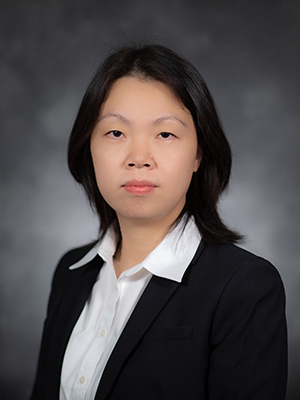
Tongtong Wu is a Research Fellow in the Department of Data Science & AI at Monash University, actively contributing to cutting-edge research in artificial intelligence and natural language processing. She collaborates with leading researchers such as Gholamreza Haffari and Yuefeng Li on projects involving knowledge extraction, continual learning, and generative modeling. Education: Ph.D. in Artificial Intelligence, Southeast University (Jiangsu, China), awarded December 20, 2023. Thesis: Structured Knowledge Extraction with Limited Data . Her research focuses on developing advanced AI models for structured knowledge extraction, with emphasis on generative event extraction, weakly supervised learning, and continual adaptation of language models. She leverages deep learning and probabilistic methods to improve model robustness and generalization in low-data regimes. The recent publications demonstrate a strong trend toward integrating external knowledge into generative frameworks and advancing weakly supervised techniques for real-world NLP tasks. Her work spans event detection, topic modeling, and socio-cultural norm discovery, often using pretrained language models and mutual information-based regularization. Scientific Awards: No awards listed in the provided text. She is currently a Chief Investigator on the active project Lifelong Version-controlled Code Generation (2025–2026), indicating involvement in grant-funded research. While there is no mention of formal student supervision, her collaborative output suggests integration within a vibrant research team. She is affiliated with a research network focused on AI and data science at Monash, contributing to both journal articles and top-tier conference proceedings.
Martin Nordal Petersen is an Associate Professor at the Department of Electrical and Photonics Engineering , Technical University of Denmark (DTU) . His work spans Internet of Things (IoT) , optical networking , and wireless communication systems, with notable contributions to LoRa , NB-IoT , and LPWAN technologies. He actively supervises PhD projects on topics such as machine learning in IoT edge devices , secure 5G communication , and smart community architectures . Active projects (2024–2027): Machine Learning in IoT Edge Devices , Deterministic and Secure 5G Communication Finished projects (2021–2024; 2018–2021; 2015–2018): Reliable M2M/IoT Communication , Smart Communities , IoT 100% , Network Slicing His research explores: IoT Reliability : Multi-RAT communication, backup systems, and signal propagation Optical Networks : Alien wavelength integration, SDN control, and network emulation platforms Wireless Innovation : GPS-free geolocation, maritime NB-IoT use cases, and multimode fiber distribution Current collaborations emphasize cross-disciplinary applications of IoT in healthcare , industrial ergonomics , and smart environments .
Riccardo Tommasini is an Associate Professor at INSA Lyon , a leading engineering institution in France. He leads the Stream Processing and Knowledge Graphs research within the DB Team at LIRIS laboratory under Professor Angela Bonifati. His academic journey began with a PhD in Computer Science from Politecnico di Milano under Emanuele Della Valle, with a dissertation titled Velocity on the Web to be published as a Springer book. Research Interests : Advancing stream processing for real-time data systems Extending knowledge graphs with dynamic data Designing graph databases for big data applications Creating query languages for heterogeneous data environments Building data engineering pipelines with Apache Airflow Enabling big graph processing in distributed settings Key Contributions : Developed Zodiac framework for Datalog reasoning under rule amendments (ICDE 2025) Co-authored foundational Streaming Linked Data book with Springer (2023) Created RSP4J API for RDF stream processing (ESWC 2021) Designed challenge-based learning curriculum for Data Engineering courses Scientific Recognition : Received ANR JCJC grant for POLYFLOW project (2024) Awarded Best Resource at ESWC 2021 Managed industrial collaborations with Neo4j, InfluxData, and Confluent Advising & Teaching : Supervises Mohamed Ragab (PhD candidate at University of Tartu) Course Leadership : Foundational Data Engineering course at INSA Lyon and University of Tartu Structured around Apache Airflow , Docker, and graph databases