Dalibor Radovanović is a researcher at Singidunum University , affiliated with the Faculty of Business Informatics . His work spans cybersecurity, blockchain technologies, and their applications in business and IoT systems. Education: Doctoral Dissertation (2016, Singidunum University) Master's & Basic Studies (Faculty of Business Informatics) Secondary Education: ETŠ Nikola Tesla Research Interests include: Security frameworks for IoT and blockchain integration Smart card and wireless network vulnerabilities E-governance and corporate IT audit methodologies Machine learning applications in cybersecurity Environmental performance optimization in agribusiness Publication Trends reveal a focus on blockchain (2022), cybersecurity (2009-2022), and IT governance (2010-2017). His work bridges theoretical analysis with practical implementations in Serbia's digital economy. Collaborations with scholars like Marko Šarac and Saša Adamović highlight interdisciplinary approaches to securing financial systems, educational institutions, and industrial IoT applications.
Nebojša Bačanin Džakula is an academic affiliated with Singidunum University's Faculty of Mathematics, specializing in Computer Science. He earned his PhD in 2015 with a thesis on improving swarm intelligence metaheuristics for global optimization. His research focuses on AI-driven solutions for cybersecurity, energy forecasting, and optimization algorithms. He has authored/co-authored books on cloud computing and web programming. His work bridges metaheuristics with machine learning, addressing challenges in IoT security, renewable energy prediction, and healthcare diagnostics. He actively contributes to conferences like Sinteza and IEEE events, emphasizing practical applications of AI and optimization in real-world scenarios. Education: Completed doctoral studies at the Faculty of Mathematics (2009–2015). Extensive industry certifications include Microsoft, CompTIA, and Oracle credentials, enhancing his technical expertise. Research Interests: Develops hybrid models combining metaheuristics (e.g., PSO, GA) with deep learning for tasks like intrusion detection, price forecasting, and medical diagnostics. Specializes in optimizing neural networks and feature selection using advanced algorithms. His work often addresses societal challenges in sustainability, cybersecurity, and healthcare. Recent Publications: Focus on AI-driven solutions for IoT security, renewable energy prediction, and medical diagnostics (e.g., Parkinson’s detection via LSTM networks). His articles appear in prestigious journals like Engineering Applications of Artificial Intelligence and Applied Soft Computing.
Marina Milovanović is a Professor at the University of Singidunum, Faculty of Informatics and Computing, Department of Mathematics. She holds dual doctoral degrees from the Faculty of Science, University of Kragujevac (Department of Mathematics, 2014) and Faculty of Entrepreneurial Business, Union University (2008), along with Master's and Bachelor's degrees from the Faculty of Mathematics, University of Belgrade (2000-2005 and 1995-2000 respectively). Faculty of Science, University of Kragujevac, Department of Mathematics (PhD, 2014) Faculty of Entrepreneurial Business, Union University (PhD, 2008) Faculty of Mathematics, University of Belgrade (Master's, 2000-2005) Faculty of Mathematics, University of Belgrade (Bachelor's, 1995-2000) Svetozar Marković High School, science and mathematics major (1991-1995) Professor Milovanović specializes in Mathematics Education and Educational Technology, with particular expertise in interactive multimedia applications for teaching mathematics. Her research consistently bridges theoretical mathematics with practical educational technology solutions, evolving from traditional multimedia approaches to incorporating cutting-edge AI and machine learning techniques. She has authored multiple books including 'Interactive multimedia in mathematics teaching' (2015) and collections of solved mathematics problems for entrance exams. Her recent publication record through 2025 demonstrates active engagement in interdisciplinary research, particularly at the intersection of educational technology, artificial intelligence, and practical applications in fields ranging from software engineering to medical diagnostics. Her work shows a clear trajectory from foundational educational technology research toward more sophisticated AI-enhanced learning systems. Professor Milovanović has made significant contributions to semantic web applications in education, particularly through Moodle LMS enhancements, and has explored SCADA applications in industrial contexts. Her collaborative research spans multiple countries and institutions, reflecting an international scholarly network. She has extensive experience developing computer tools for engineering education and has published on diverse topics including petroleum industry processes, environmental management, and financial mathematics. Her work demonstrates consistent application of computational approaches to solve domain-specific problems across multiple disciplines.
Aleksandar Jevremović is a Full Professor at the Faculty of Informatics and Computing, Singidunum University (Belgrade, Serbia), and holds multiple academic and professional roles. He is the Serbian representative at the UNESCO IFIP Technical Committee on Human-Computer Interaction since 2018. He has served as Vice-Dean of his faculty (2015–2018) and held visiting professorships at institutions like Ss. Cyril and Methodius University (North Macedonia) and Tallinn University (Estonia). His research focuses on cybersecurity, IoT, AI, and e-learning innovation. Education and Affiliations: External Researcher at the Mathematical Institute of the Serbian Academy of Sciences and Arts Visiting Scholar at Cyprus Interaction Lab (Cyprus University of Technology) Alumni/Postdoc Researcher at Tallinn University's HCI Group Member of IEEE and the Informatics Association of Serbia Research Interests: Jevremović’s work spans cybersecurity (e.g., intrusion detection, secure IoT protocols), human-computer interaction (HCI), AI-driven education tools, and neurotechnological applications like EEG-based assessment systems. He emphasizes practical solutions for digital safety, such as children’s online protection and cryptographic key generation from biometric data. Grants and Projects: Member of the External Advisory Committee for the EU-funded ONTOCHAIN project (2022–2023) Mentor for training schools like AAPELE Training School and NET4Age-Friendly initiatives Trainer in IoT, cybersecurity, and health promotion programs across Europe Labs and Teams: He collaborates with interdisciplinary teams on projects like CASPER (Children Agents for Secure and Privacy Enhanced Reaction) and led the development of WIDE, a collaborative web development education platform.
Marko Šarac is a Professor at Singidunum University in the Faculty of Informatics and Computer Science . He holds a Master's degree in Contemporary Information Technologies (2008) and a PhD in Advanced Protection Systems (2013) from the same institution. His research spans Cybersecurity, Artificial Intelligence, Blockchain, Internet of Things (IoT), Machine Learning, and Data Privacy . Education: Master: Contemporary Information Technologies, Singidunum University, 2008 PhD: Advanced Protection Systems, Singidunum University, 2013 Research Focus: SSL Traffic Security, Virtual Datacenters, Biometric Cryptography, and IoT Healthcare Systems Developed frameworks for Explainable AI in Metaverse Security , Blockchain-based IoT Security Gateways , and Machine Learning for Medical Diagnostics Notable Publications: 2025: CNN-enhanced attack detection for IoT-based Metaverse 2024: Modified Firefly Algorithm for medical dataset classification 2023: Space weather prediction using metaheuristics Projects: Co-author on 9+ books including Internet Marketing (2020) and Computer Network Security (2014) Contributed to 50+ peer-reviewed journals and conference papers on cybersecurity and AI Grants & Collaborations: Active in IEEE , ZINC , and Sinteza conference series Collaborated with researchers across Europe and Asia on IoT, Blockchain, and Cloud Security Contact: msarac@singidunum.ac.rs
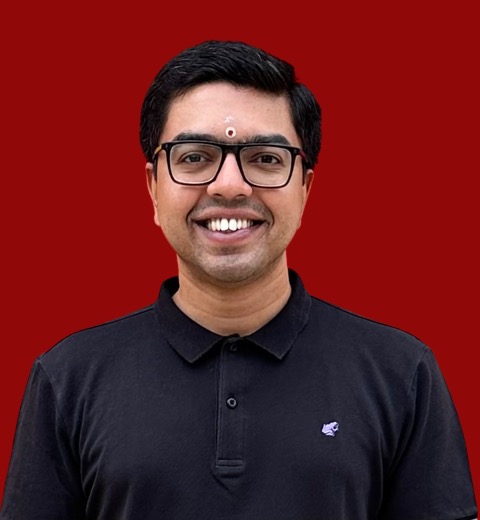
P. N. Karthik is an Assistant Professor in the Department of Artificial Intelligence at the Indian Institute of Technology (IIT) Hyderabad. He holds a Ph.D. and Master of Science in Engineering from the Indian Institute of Science (IISc), Bengaluru, advised by Prof. Rajesh Sundaresan, and was previously a Research Fellow at the National University of Singapore (NUS) working with Prof. Vincent Y. F. Tan. Research Interests: His primary research areas include multi-armed bandits, federated learning, differential privacy, reinforcement learning, information theory, and statistics. He focuses on sequential decision-making under uncertainty, privacy-aware learning systems, and optimization in distributed environments. Publication Trends: His recent work centers on best arm identification in various bandit settings, including restless, federated, and differentially private frameworks. These studies, published in top venues like IEEE Transactions on Information Theory, AISTATS, ISIT, ICLR, and AAAI, reflect a strong theoretical foundation with practical implications in AI and data science. Scientific Awards: Faculty Teaching Excellence Award 2025, IIT Hyderabad First place, Electronics and Communication Engineering category, 100 seconds competition, INAE Kanpur Chapter Teaching and Mentoring: He teaches courses such as Stochastic Processes and Programming for AI, receiving consistently high instructor ratings (up to 4.95/5.0). He mentors TAs and emphasizes conceptual clarity, active learning, and student engagement. He has collaborated with industry and government bodies like BMTC and Netradyne on transportation research. Academic Service: He serves on technical program committees for ISIT and APWDSIT and has organized events like the 2024 JTG/IEEE ITSoc Summer School. His collaborators include prominent researchers such as Vincent Y. F. Tan, Rajesh Sundaresan, Krishna Jagannathan, and Yeow Meng Chee.
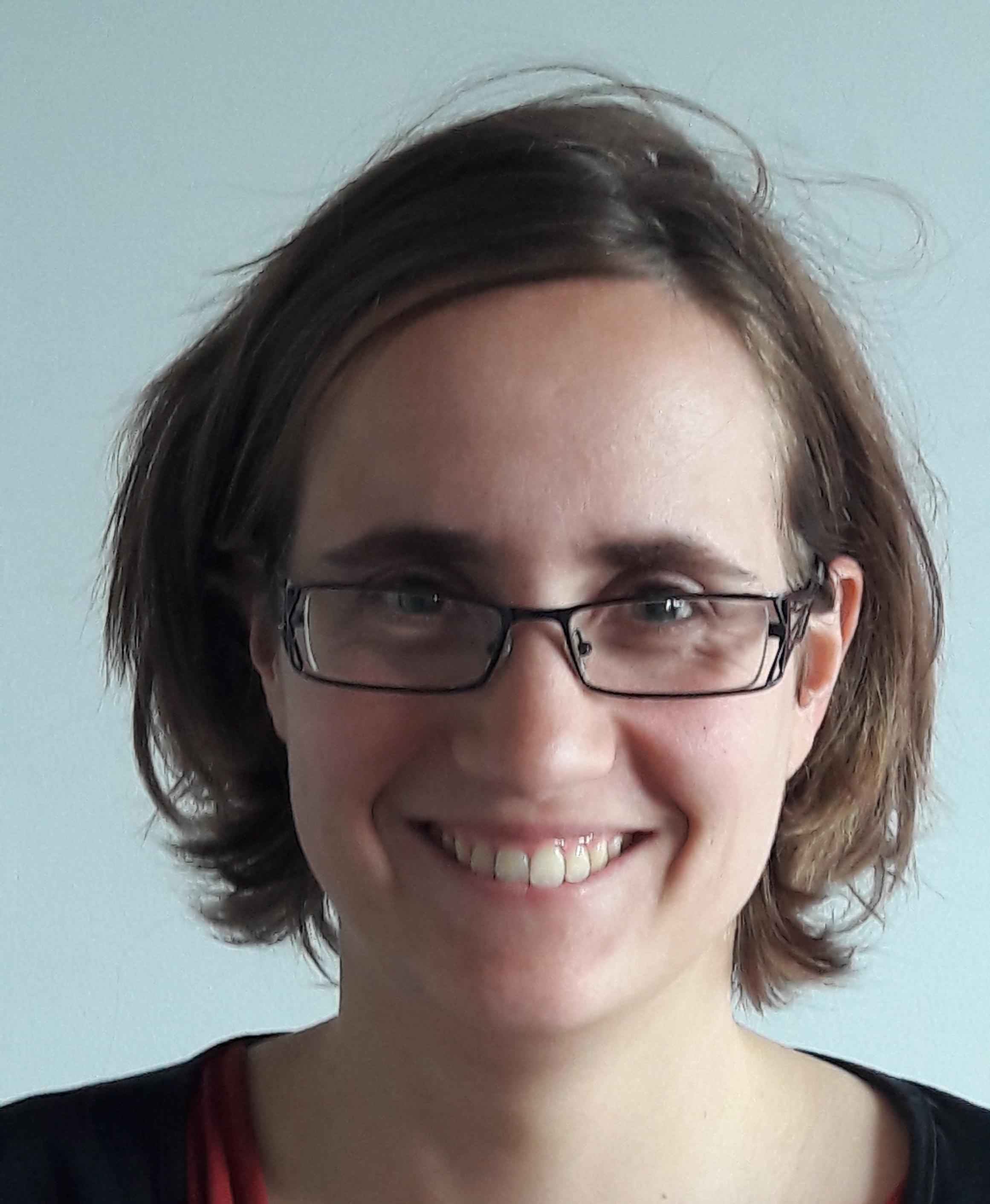
Aline Parreau is a junior researcher at CNRS, affiliated with the GOAL team of the LIRIS laboratory at Université Claude Bernard Lyon 1. Her research focuses on discrete mathematics, combinatorial games, graph theory, and positional games. She earned her PhD in Discrete Mathematics from Université Joseph Fourier (Grenoble) in 2012, followed by postdoctoral research at the University of Liège. She coordinates the ANR project P-GASE, studying combinatorial and algorithmic aspects of positional games on graphs. PhD: Identification problems in graphs (2012), supervised by Sylvain Gravier. Postdoctoral work: Discrete Mathematics at University of Liège (2013–2014). Her teaching includes operational research and computer science courses at various institutions, including Lyon 1 University and Lille 1 University. She is actively involved in scientific mediation through initiatives like Maths à modeler and MATh.en.JEANS, promoting mathematical research to the public. Key activities include advising PhD and MSc students, organizing seminars, and contributing to research on graph theory, combinatorial games, and algorithmic optimization.
Miloš Dobrojević serves as a Professor at Singidunum University's Faculty of Informatics and Computing in Belgrade, Serbia. His academic foundation includes doctoral, postgraduate, and bachelor studies at the University of Belgrade's Faculty of Mechanical Engineering. His research spans Artificial Intelligence , Internet of Things , and Computer Vision with emphasis on practical applications. Key focus areas include metaheuristic optimization of neural networks for tasks like crop yield prediction, medical diagnostics, and cybersecurity. Recent work demonstrates strong industry relevance in precision agriculture, drone detection systems, and sustainable homestead automation. Analysis of his 15 most recent publications reveals a consistent pattern of applying modified metaheuristics to enhance deep learning models across diverse domains. His work bridges theoretical AI advancements with real-world implementations in agriculture, healthcare, and energy systems. Scientific Contributions: Author of 3 textbooks including 'Veb informacioni sistemi' (2024) and 'Veb programiranje' (2021) Published 40+ journal/conference papers between 2003-2025 Active contributor to Springer book chapters on AI applications Dobrojević's work demonstrates strong practical orientation with projects in Serbian renewable energy transition, flood prevention systems, and municipal e-government solutions. His recent collaborations with researchers like N. Bacanin and M. Zivkovic show consistent output in high-impact journals. Current projects focus on generative AI for medical data and computer vision for agricultural optimization. His laboratory work centers on IoT-based monitoring systems for environmental applications, particularly water management in mountainous regions. Ongoing research explores drone detection networks and waste classification systems using advanced computer vision techniques.
Petar Biševac is a Lecturer at the Faculty of Informatics and Computing within Singidunum University , Belgrade. His academic work focuses on applied artificial intelligence and machine learning. Education : Not explicitly detailed in available texts. Research Interests : Spanning Artificial Intelligence , Neural Networks , Image Processing , and Metaheuristic Optimization , his research emphasizes hybrid AI systems for biomedical signal processing, cryptocurrency forecasting, and image analysis. Publications : Recent works include anomaly detection in ECG/EEG signals, vehicle damage recognition, and Ethereum price forecasting using LSTM and metaheuristic algorithms. Collaborations : Frequently works with researchers like Nebojsa Bacanin, Milan Zivkovic, and Predrag Spalević. Contact : Email pbisevac@singidunum.ac.rs
Sanja Aleksic is an Associate Professor at the Faculty of Electronic Engineering, University of Nis, specializing in Microelectronics and Microsystems. Her academic career began with a Physics degree from the Faculty of Philosophy in Nis (1995), followed by a Master's (2009) and PhD (2015) in Applied Physics from her current faculty. Her research focuses on semiconductor materials, photoacoustic spectroscopy, and electronic device modeling. She has published extensively in peer-reviewed journals, with 9 papers indexed with impact factors. Her work bridges applied physics and engineering, particularly in analyzing thermal and elastic properties of materials using advanced techniques like photoacoustic analysis and neural network modeling. Education: Bachelor's in Physics, Faculty of Philosophy, University of Nis (1995) Master's in Applied Physics, Faculty of Electronic Engineering, University of Nis (2009) PhD in Applied Physics, Faculty of Electronic Engineering, University of Nis (2015) Research Interests: Microelectronics, semiconductor characterization, thermoelastic effects, photoacoustic signal analysis, and material property modeling. Notably, her work employs electro-acoustic analogies to study silicon and TiO₂-coated materials, as well as neural network approaches for high electric field stress modeling in VDMOSFETs. Her recent studies (2020–2025) emphasize cutting-edge topics like solar parking canopy optimization and biomarker-based clinical outcomes in pandemic scenarios. Publications: Over 30 peer-reviewed articles, with a focus on photoacoustic techniques, semiconductor device simulation, and energy systems. Her work spans journals like Journal of Applied Physics , International Journal of Thermophysics , and Journal of Computational Electronics . Key themes include material property extraction, thermal-mechanical coupling, and sustainable energy solutions. Awards: None explicitly listed in provided texts. Labs/Teams: Engaged in interdisciplinary research at the Faculty of Electronic Engineering, collaborating on projects involving material characterization, renewable energy systems, and bio-medical applications. Active in both national and international research networks, though specific lab affiliations are not detailed here.
Daniel M. Dankovic is a Full Professor at the Faculty of Electronics, University of Niš, Serbia, where he also obtained his B.Sc., M.Sc., and Ph.D. degrees. He is affiliated with the Department of Microelectronics and heads both the department and the Laboratory for Practical Teaching in Electronic Components and Microsystems. He is actively involved in national and international research projects and contributes to academic publishing as an assistant editor of Microelectronics Reliability and editor of Facta Universitatis, Series: Electronics and Energetics . Ph.D. in Nanotechnology and Microsystems, Faculty of Electronics, University of Niš (2009) M.Sc. in Microelectronics, Faculty of Electronics, University of Niš (2006) B.Sc. in Electronics and Telecommunications, Faculty of Electronics, University of Niš (2001) His research focuses on the reliability of semiconductor devices, particularly Negative Bias Temperature Instability (NBTI) in p-channel power VDMOSFETs, radiation effects, degradation mechanisms, and microsystem design. He also contributes to engineering education, especially in PCB design and hands-on training. His work bridges theoretical modeling, experimental validation, and practical teaching methodologies. The recent publications (2012–2020) reflect a strong thematic consistency in semiconductor device reliability, with emphasis on NBTI, radiation interactions, and measurement techniques. Additionally, he explores IoT-based smart monitoring systems and innovative approaches in engineering education, demonstrating interdisciplinary engagement across microelectronics, applied physics, and pedagogy. Daniel M. Dankovic holds no explicitly listed scientific awards in the provided text. He advises students through research collaboration, particularly evident in co-authored publications with junior researchers, though no formal list of advisees is provided. He is currently involved in 4 national and 1 international research project, indicating active grant funding and collaborative research. His leadership roles include heading key academic units and organizing major IEEE conferences in the region. He leads the Laboratory for the implementation of practical teaching in the module Electronic Components and Microsystems and the Master's program in Electronics and Microsystems, ensuring integration of research and education in advanced electronics.
Pavle Dakic is affiliated with Singidunum University as a researcher in the Faculty of Informatics and Computing . His work spans multiple disciplines including Software Engineering , Machine Learning , and Autonomous Vehicles . Doctoral studies in Electrical Engineering and Computing at Singidunum University (2015-2024) Doctoral studies in Applied Informatics at Slovak Technical University (2020-2024) Master’s in Contemporary Information Technologies at Singidunum University (2014-2015) His research focuses on CI/CD pipelines , automotive software compliance , and cybersecurity in autonomous systems. He has published extensively on topics like intrusion detection in IoT/IIoT and AI-powered call centers . Recent publications include work on AI integration in business , robotic vehicle sustainability , and metaheuristic optimization for intrusion detection . His collaborations span international institutions and researchers.
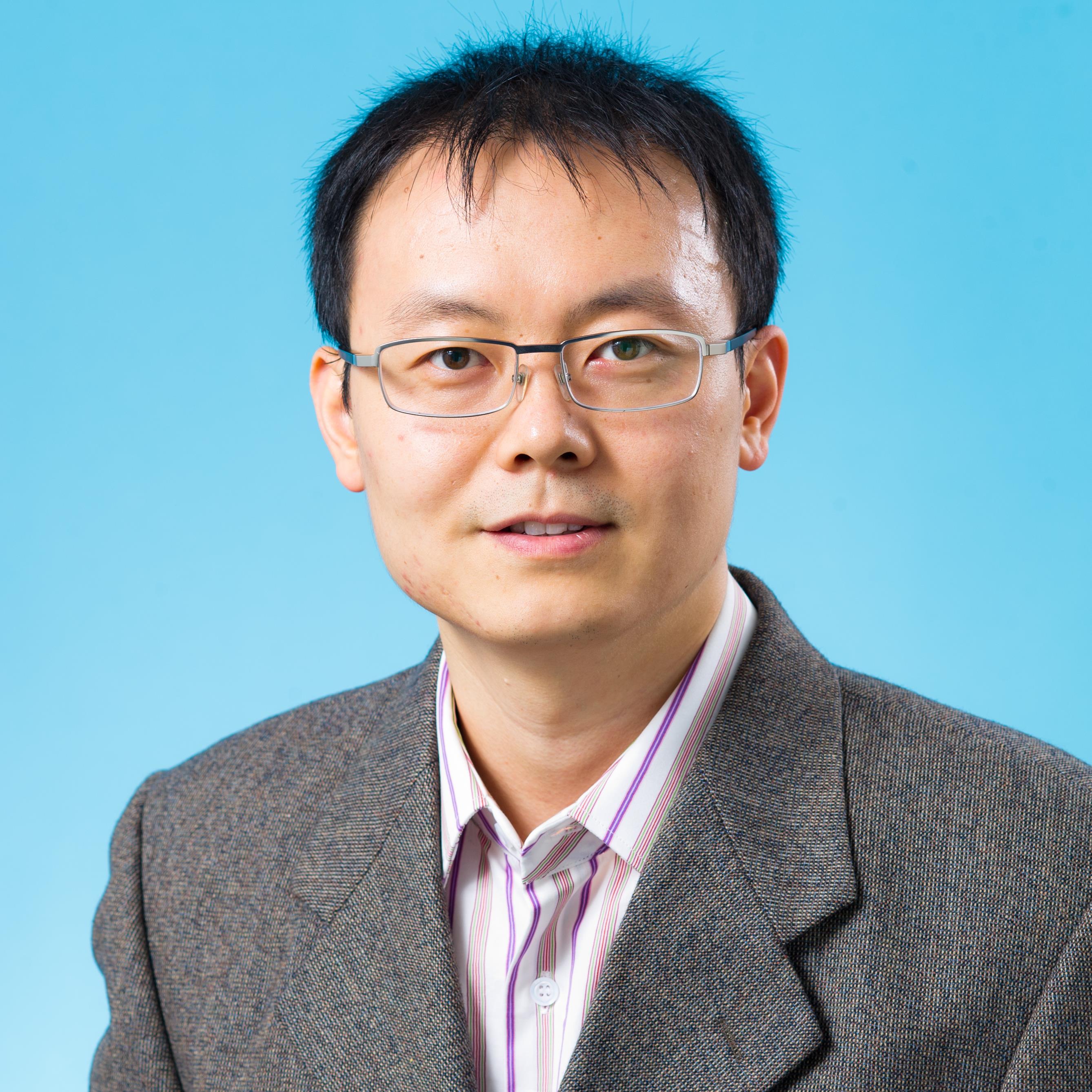
Le Yang is a Postdoctoral Research Fellow in the Department of Electrical and Computer Engineering at the National University of Singapore (NUS), working under Professors Vincent Y. F. Tan and Wang Chi Cheung since September 2024. Her research focuses on algorithmic decision-making under uncertainty with applications in optimization and learning systems. Her academic journey includes: Ph.D. in Systems Engineering from City University of Hong Kong (2020-2024) advised by Prof. Siyang Gao Master's in Financial Studies from Shandong University (2017-2020) supervised by Prof. Zhen Wu Bachelor's in Statistics from Shandong University's School of Mathematics (2013-2017) Her research integrates theoretical frameworks from stochastic processes with practical implementations in sequential decision problems. Key contributions advance computational methods for multi-armed bandit scenarios and simulation-based optimization, particularly addressing constrained environments through Bayesian approaches and Thompson sampling variants. Current work bridges reinforcement learning theory with operations research applications. Recent publications demonstrate evolving focus from foundational stochastic control during graduate studies toward cutting-edge bandit algorithms and knowledge gradient improvements. Her 2025 Automatica paper establishes theoretical guarantees for constrained best-arm identification, while 2023 NeurIPS work enhances simulation optimization efficiency. Actively seeking academic positions, Dr. Yang maintains collaborations with NUS faculty and CityU's Systems Engineering department. She welcomes research partnerships in her core domains of sequential decision making and stochastic optimization.
Mario V. Zlatovic is a Full Professor at the Faculty of Chemistry, University of Belgrade , specializing in Natural Products Chemistry, Computational Chemistry, and Medical Chemistry. He has held various academic roles since 1988 and currently teaches courses on Chemical Bonding, Molecular Modeling, and Organic Chemistry. Born: 7 April 1963, Šibenik, Croatia Languages: Serbian (native), English, Russian, Croatian Research Focus: His work explores non-covalent interactions in proteins and small molecules, particularly in superoxide dismutases and anion-π systems . He designs antimicrobial and antimalarial agents, emphasizing structure-based drug design and 3D-QSAR analysis . Scientific Contributions: Over 15 years, his publications span materials science (DFT calculations), enzyme inhibition (α-glucosidase), and marine bioconjugates. He combines computational methods with experimental validation in drug discovery. Fulbright Fellow (2009-2010) at National Cancer Institute, USA Supervisor of HemNet (2020-present) Member of Faculty Council and Examination Recognition Commission Teaching: Offers courses on Molecular Modeling, Chemical Informatics, and Project Management. His educational work includes a 2015 publication on homology modeling pedagogy.
Aleksandar Aleksić is an Associate Professor at the Faculty of Engineering Sciences, University of Kragujevac, specializing in Engineering Management within the Department for Production Engineering. His academic position was officially confirmed on June 9, 2021, and he maintains an active research profile through the SciDAR repository. Dr. Aleksić's research interests span Engineering Management, Quality Management, Decision Making, Risk Assessment, Fuzzy Logic, and Machine Learning Applications. His scholarly work demonstrates a strong focus on integrating advanced computational methods with traditional engineering management practices to solve complex industrial problems. He has made significant contributions to fields such as PFMEA 4.0 maturity assessment, organizational resilience, and multi-criteria decision-making under uncertainty. His recent publications (2024-2025) reveal a clear research trajectory emphasizing the application of fuzzy logic, machine learning, and exact solution methods to engineering management challenges. Notably, his work bridges theoretical advancements with practical industrial applications, particularly in manufacturing systems, asset maintenance, and quality performance enhancement. The consistent publication output across multiple high-impact topics demonstrates his active engagement in cutting-edge research. As a faculty member at one of Serbia's leading engineering institutions, Dr. Aleksić contributes to the academic community through his teaching in production engineering and his research that addresses contemporary challenges in engineering management. His work has implications for both academic theory and industrial practice, particularly in the areas of risk management, process optimization, and decision support systems.