Luca Barbierato is a Fixed-term Assistant Professor at the Department of Control and Computer Engineering (DAUIN), Politecnico di Torino, specializing in applied artificial intelligence, cybersecurity, and co-simulation infrastructures for integrated energy systems. He actively contributes to research in edge computing, IoT, and sustainable energy technologies. Research Focus: AI applications in energy systems, secure IoT infrastructures, and co-simulation frameworks Teaching Roles: Invited PhD teaching component (2025/26), teaching assistant across multiple programs His recent publications address critical areas including OpenTitan-based security controllers, urban building energy modeling, and distributed power system co-simulation. Barbierato's work aligns with SDG Goals 7 (Affordable Energy), 9 (Innovation Infrastructure), and 11 (Sustainable Cities). Notable scientific recognition includes the Learning to Teach (L2T) badge from Politecnico di Torino.
Gabriele Tolomei is an Associate Professor of Computer Science at Sapienza University of Rome. He leads the HERCOLE Lab (Human-Explainable, Robust, and Collaborative Learning) and focuses on advancing AI systems that are interpretable, robust, and decentralized. His research spans machine learning, computer security, and adversarial learning. PhD in Computer Science, Ca' Foscari University of Venice (2011) MSc in Computer Science, University of Pisa (2005) BSc in Computer Science, University of Pisa (2002) His research interests are centered on Explainable AI , Robust Machine Learning , and Collaborative Learning . He has contributed to areas such as counterfactual explanations for graph neural networks, community membership privacy, and fairness in graph algorithms. His work intersects Web Search and Mining with Computational Advertising , emphasizing user engagement and post-click satisfaction. He teaches courses like Operating Systems for BSc Computer Science and Big Data Computing for MSc Computer Science. Current PhD students under his supervision include Edoardo Gabrielli, Fabiano Veglianti, Flavio Giorgi, Matteo Silvestri, and Vittoria Vineis. The HERCOLE Lab, established in 2021, promotes interdisciplinary research on human-centered AI, adversarial resilience, and edge computing. Collaborators include Fabrizio Silvestri (Full Professor), Federico Siciliano (Postdoctoral Researcher), and Ziheng Chen (Research Scientist at Walmart Labs).
Leonardo Soria is an Associate Professor at the Department of Mechanics, Mathematics & Management at the Polytechnic University of Bari. His research focuses on applied mechanics, structural dynamics, and vehicle vibrations, with a strong emphasis on computational modeling and experimental validation. Department: Mechanics, Mathematics & Management Email: leonardo.soria@poliba.it Contact: +39 080 596 3484 His work spans topics such as viscoelastic foundations, flutter analysis, road roughness identification, and structural health monitoring. He employs advanced methodologies like the unsteady compressible source and doublet panel method, operational modal analysis, and machine learning techniques for diagnostics. Recent publications highlight his contributions to vibro-acoustical analysis of microsystems, robustness of measurement probes, and shock response synthesis in aerospace. His research also explores fluid-structure interactions in nanoscale systems and energy harvesting from vibrating polymers. Professor Soria actively investigates the dynamics of sharp-edged beams, helicopter cabin vibrations, and vehicle suspension performance assessment. His studies often bridge theoretical models with experimental validation, particularly in scenarios involving Brownian excitation, hydrodynamic coupling, and seismic loading.
Manuela Battipede is Associate Professor of Flight Mechanics & Control at the Politecnico di Torino , Department of Mechanical and Aerospace Engineering (DIMEAS). Since 2002 she has led research and teaching in aerospace guidance, airworthiness, neural-network-based virtual sensors, and trajectory optimisation, coordinating EU H2020 and Clean Sky projects, industrial airworthiness certification contracts, and supervising PhD students in aerospace engineering. Education & Academic Career Joined Politecnico di Torino as a confirmed Associate Professor (Prof.ssa Associata Confermata). Visiting Researcher, West Virginia University, USA (April–September 2002). Research Interests Her work integrates control theory , flight mechanics , and artificial-intelligence-based sensing to enhance safety and efficiency of air and space vehicles. Key themes include: 4-D trajectory optimisation for climate-neutral aviation. Certifiable virtual air-data systems using neural networks. Flutter suppression and intelligent flight control for fixed-wing and rotary-wing aircraft. Low-thrust orbital mechanics, collision avoidance, and end-of-life disposal for satellites. Lighter-than-air platforms and VTOL hybrid drones for earth-observation and fire-monitoring missions. Scientific Awards & Recognition PoCN – Proof of Concept Network (2015), AREA Science Park, Italy. Regular evaluator for SESAR Joint Undertaking, EU H2020, and European Commission programmes. Doctoral Advising & Funding Since 2011 she has served on the PhD board of the Aerospace Engineering doctorate at Politecnico di Torino, currently supervising: Giorgio Antonio Orlando (39th cycle, 2023–) Gabriele Tarascio (39th cycle, 2023–) She has been Scientific Director of >20 competitively funded projects (EU Clean Sky MIDAS, ESA, MIUR-PRIN, EASA certification contracts, etc.) and commercial consultancy contracts exceeding €3 M. Laboratories & Teams Battipede leads the Modelling, Simulation and Control of Aircraft research group at DIMEAS, managing real-time hardware-in-the-loop test rigs, CubeSat development platforms, and an integrated multi-aircraft simulation laboratory for education and industrial validation.
Professor Luca Fanucci is a Full Professor of Electronics at the Department of Information Engineering , University of Pisa. He serves as Rector's Delegate for Inclusion of Students with Disabilities and leads research in integrated circuits, embedded systems, and assistive technologies . Institutional roles include membership in the National University Conference of Delegates for Disability (CNUDD) and leadership in the PhD program in Information Engineering. Born: Montecatini Terme (1965) Education: Laurea in Electronic Engineering (1992), PhD in Information Engineering (1996), University of Pisa Professional Journey: ESA research (1992-1996), CNR researcher (1996-2004), University of Pisa faculty (2004-present) His research focuses on: System-level design of integrated circuits and embedded systems Hardware-software co-design for low power consumption Spacecraft and satellite communication systems Medical devices and telemonitoring platforms Assistive technologies for disabilities Recent publications highlight AI in space applications and telemedicine systems . Key projects include the Ingeniars spin-off for satellite communications and the AsTech National Laboratory for assistive technologies. Scientific Recognition : IEEE Fellow (2019) 40+ patents H-index 34 (5000+ citations) He coordinates international conferences (DATE, HiPEAC, Spacewire) and serves as Associate Editor for Technology and Disability and Microprocessors and Microsystems journals.
Alessandro Di Giorgio is Associate Professor of Automatic Control at the Department of Computer, Control and Management Engineering Antonio Ruberti (DIAG) , Sapienza University of Rome, where he teaches courses on Automation, Network Control and Handling, and Modeling & Simulation. He coordinates the Smart Energy Research Group of the Consorzio per la Ricerca nell’Automatica e nelle Telecomunicazioni and acts as scientific referent of the university start-up Applied Research to Technologies . Education Ph.D. in Systems Engineering, Sapienza University of Rome, 2010 M.Sc. in Physics (110/110 cum laude), Sapienza University of Rome, 2005 Research interests revolve around advanced control architectures for future power systems, with particular emphasis on smart-grid planning and real-time operation , model-predictive control of micro-grids , large-scale integration of renewable generation and storage , stochastic optimisation of electric-vehicle charging infrastructures , and cyber-physical security against malicious attacks . His work combines systems theory with practical implementations validated within several European and national projects. Recent publications (2023-24) demonstrate a clear trend toward data-driven and stochastic model-predictive strategies that coordinate millions of grid-edge resources—electric vehicles, batteries, renewable plants—while guaranteeing economic efficiency, reliability and resilience of distribution networks. Projects & Technology Transfer Scientific responsible in 10 EU-funded research projects on smart grids and electromobility Principal Investigator of Italian academic and Industria 2015 programmes Co-founder & scientific reference, start-up Applied Research to Technologies (technology transfer on EV-charging optimisation) He is member of the Networked Systems Cybersecurity initiative and serves as reviewer and organiser for major IEEE conferences on power systems and control.
Alessandro Giuseppi is an Assistant Professor in Tenure Track at the University of Rome La Sapienza's Department of Computer, Control, and Management Engineering (DIAG). He leads research in intelligent control systems and smart networks at the Network Control Laboratory, while serving as CTO of the startup Automation Intelligence and Control (AICO). As Associate Editor for IEEE Transactions on Automation Science and Engineering and International Journal of Control, Automation, and Systems , he bridges academic research with practical applications. M.Sc. & Ph.D. in Automatic Control from La Sapienza National Scientific Qualification for Associate Professor (2023) Active in EU/National funded projects since 2016 His research spans intelligent systems, network control, and AI integration in automation. Publications emphasize federated learning, deep learning applications, and control theory advancements across domains like autonomous vehicles, healthcare, and industrial automation. Key awards include the Minerva Prize (twice) and Telespazio's T-TeC. Recent publications address: (1) Federated learning with adaptive topologies, (2) Healthcare AI for diabetes management and portal hypertension diagnosis, (3) Industrial AI for manufacturing quality control, and (4) Smart network control in 5G/6G telecommunications. 2023 Premio Minerva - Best Postdoctoral Researcher 2021 Premio Minerva - Best PhD Candidate 2021 Best ETRI Journal Paper 2020 Telespazio Technology Contest Winner As course instructor, he teaches Intelligent and Hybrid Control, Automazione, and Laboratorio di Automatica. His leadership extends to co-founding startup AICO and collaborating with CRAT research consortium on Horizon Europe projects.
Gilbert Babin is a Professor of Information Technologies at HEC Montréal, where he is affiliated with GRESI, ERPsim Lab, and Tech3Lab. He has been cited 1331 times according to Google Scholar, indicating significant scholarly impact in his field of research. His research interests span several key areas in information systems and business technology: Enterprise Resource Planning (ERP) systems Business simulation and serious games Cognitive aspects of information systems use Business intelligence and analytics Operations management education Professor Babin's work demonstrates a strong focus on the intersection of information technology and business processes, particularly through simulation-based approaches. His publication history shows an evolution from technical optimization problems (1996-2007) to applied business contexts (2010-2012), with his most recent work exploring the integration of neuroscientific approaches with enterprise systems. His research on ERP simulation games has been particularly influential, with his 2011 paper receiving 132 citations. His current research trajectory includes innovative cross-disciplinary work combining information systems with cognitive neuroscience, examining how brain-computer interfaces can enhance sustained attention in business contexts. This represents a cutting-edge direction that bridges traditional information systems research with emerging neurotechnologies.
Kalyanmoy Deb serves as the Koenig Endowed Chair Professor in the Department of Electrical and Computer Engineering at Michigan State University, USA. A foundational figure in Evolutionary Multi-objective Optimization (EMO) since 1993, he has held visiting professorships at IITs in India, Aalto University (Finland), University of Skövde (Sweden), and Nanyang Technological University (Singapore), establishing global research collaborations. His research centers on evolutionary optimization algorithms and their applications in multi-criterion decision-making, predictive modeling, and machine learning systems. Prof. Deb's work bridges theoretical advances in computational intelligence with practical implementations across engineering domains, significantly advancing the field of artificial intelligence through scalable multi-objective solution frameworks. His exceptional contributions have been recognized with: IEEE Evolutionary Computation Pioneer Award Infosys Prize TWAS Prize in Engineering Sciences CajAstur Mamdani Prize Distinguished Alumni Award from IIT Kharagpur Edgeworth-Pareto award Bhatnagar Prize in Engineering Sciences Bessel Research award Humboldt Fellowship Fellow of IEEE and ASME Fellow of three Indian science and engineering academies With over 549 publications, 149,000+ Google Scholar citations, and an h-index of 123, Prof. Deb directs the Computational Optimization and Innovation Laboratory (COIN Lab), driving cutting-edge research in evolutionary computation. His editorial leadership spans 18 major journals, though specific details regarding student mentorship and grant funding remain undocumented in available sources.
Bradley Nelson is Professor of Robotics and Intelligent Systems at ETH Zurich, serving as Full Professor since 2002 after prior appointments as Assistant Professor at the University of Illinois at Chicago (1995-1998) and Associate Professor at the University of Minnesota (1998-2002). He chaired the Department of Mechanical and Process Engineering from 2005-2007 and currently leads the ETH Electron Microscopy Center (EMEZ). His academic credentials include: B.S.M.E. from the University of Illinois at Urbana-Champaign M.S.M.E. from the University of Minnesota Ph.D. in Robotics from Carnegie Mellon University (1995) Nelson's research pioneers microrobotics and nanorobotics for biological and medical applications, integrating automation, computer vision, and control systems to develop microscale surgical tools and targeted drug delivery systems. His work bridges engineering precision with healthcare innovation, focusing on minimally invasive medical interventions through nanoscale robotic systems. His exceptional contributions are recognized by: McKnight Land-Grant Professorship and Presidential Fellows Award Office of Naval Research Young Investigator and NSF CAREER Awards Robotics and Automation Society Distinguished Lecturer designation Scientific American 50 recognition (2005) for nanotube manufacturing Consecutive Best Paper Awards and RoboCup Nanogram Competition victories (2007, 2009) Through editorial board service and laboratory leadership, Nelson drives advancements in medical robotics while directing the ETH Electron Microscopy Center to enable cutting-edge nanoscale research across disciplines.
Simone Incardona serves as a Research Fellow in the Department of Physics and Chemistry 'Emilio Segrè' at the University of Palermo, where he contributes to advanced instrumentation for gamma-ray astronomy and interdisciplinary machine learning applications. His institutional affiliation centers on the Cherenkov Telescope Array (CTA) project, specifically the development of the Schwarzschild-Couder Telescope (SCT) prototype. His research spans astroparticle physics instrumentation with emphasis on silicon photomultiplier (SiPM) technology and front-end electronics for Cherenkov light detection. Key focus areas include ASIC design for telescope cameras, optical system commissioning, and neural network architectures for time series analysis. This dual expertise in hardware development and computational methods supports cutting-edge observations in high-energy astrophysics. Analysis of his 2021-2023 publications reveals concentrated work on the pSCT prototype, addressing SiPM array assembly, SMART ASIC characterization, and Crab Nebula detection. The research trajectory demonstrates progression from component-level testing (2021) to integrated system validation (2023), with consistent contributions to CTA's medium-sized telescope instrumentation. No scientific awards were documented in available sources. Student advising activities and research grant details remain unspecified in current records, though his role involves supervising technical aspects of telescope instrumentation projects. He operates within the University of Palermo's CTA collaboration team, focusing on the pSCT's camera development and optical subsystems. This group interfaces with international partners in the global Cherenkov Telescope Array Observatory, contributing to hardware validation and observational campaigns.
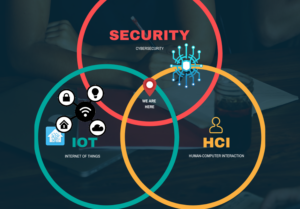
Luca Mannella is a Research Fellow at the Department of Control and Computer Engineering (DAUIN) , Politecnico di Torino. His work spans Cybersecurity , Internet of Things (IoT) , Software Engineering , and Human-Computer Interaction (HCI) . PhD in Computer and Control Engineering from Politecnico di Torino (2024) M.Sc. and B.Sc. in Computer Engineering from Politecnico di Torino (110/110 final score) His research focuses on IoT security , particularly in smart home gateways and automotive systems , with recent work on SOCMATI (Social Media Automotive Threat Intelligence) and COLTRANE-V projects. He has contributed to frameworks for CAN attack simulation , cryptomining detection , and privacy-preserving vulnerability scanning . Publications since 2018 reflect expertise in malware optimization , Cloud-IoT security , and edge computing for constrained devices. His teaching roles since 2020 include Web Applications and Algorithms and Programming courses. He is also a member of the SMILIES research group and co-founded the Mu Nu Chapter of IEEE-HKN .
Stefano Di Carlo is a Full Professor at the Department of Control and Computer Science (DAUIN) at Politecnico di Torino. He is the Coordinator of the Doctoral School in Artificial Intelligence and a member of the PolitoBIOMed Lab and the Doctoral School Council. His research spans Artificial Intelligence , Computer Architecture , Bioinformatics , and Cybersecurity , with a focus on 3D bioprinting , hardware security , and reliability analysis . Research Interests : Approximate computing systems Cybersecurity for connected vehicles Spiking neural networks and neuromorphic hardware Multicellular synthetic biological systems Hardware-based malware detection Biomedical simulation tools Article Trends : His recent publications address approximate computing (7/15), cybersecurity (6/15), and bioinformatics (4/15). Key subtopics include RISC-V security , gradient inversion attacks , photonic computing , and real-time fault injection . Scientific Awards : Best Paper Awards at IEEE AQTR (2010, 2012), IEEE DDECS (2013), and BIOINFORMATICS/BIOSTEC (2014) IEEE Computer Society Golden Core Award (2006), Meritorious Service Award (2010) IEEE Fellow (2011-) and Senior Member Advising & Grants : He supervises 14 PhD students and leads projects like Vitamin-V (RISC-V cloud services), APROPOS (approximate computing), and SERICS (cybersecurity). His lab, SMILIES, focuses on resilient computer architectures and bioinformatics . Labs & Teams : Lab 6 - Research Laboratory (DAUIN) SMILIES - Resilient computer architectures and life sciences PolitoBIOMed Lab - Biomedical engineering
Giuseppe Ruscica is an Associate Professor in the scientific disciplinary sector ICAR/11 (Building Production) at the Department of Engineering and Applied Sciences of the University of Bergamo. He has been with the university since 2012, initially serving as a Researcher until 2023 before being promoted to his current position. Dr. Ruscica earned his PhD in "Architectural, Urban, and Environmental Design and Restoration" from the University of Catania in 2009 and a Degree in Building Engineering with highest honors (110/110 cum laude) from the same institution in 2004. His research focuses on innovative approaches to architectural design and construction, with particular emphasis on responsive and shape-shifting architectures, tensegrity systems, reciprocal structures, and origami-like operations. He also investigates automation for self-supporting masonry shells and develops building components with electromagnetic radiation shielding capabilities using sustainable materials like biochar. His work extends to low-cost IoT sensor systems for environmental monitoring in construction contexts. Dr. Ruscica's publications reveal a strong trend toward integrating sustainable materials with advanced construction technologies, particularly focusing on electromagnetic shielding applications using biochar composites. His research bridges traditional construction methods with cutting-edge digital technologies including Building Information Modeling (BIM), augmented reality, and virtual reality applications for construction sites. He serves as Lecturer for courses including "Technology of Construction Elements and Building Information Modeling" and "Building Ergonomics" for the Building Technologies Engineering program, and co-teaches "Building Information Modeling (BIM)" for the Master's Degree in Construction Engineering.
Dr. Silvia Boschi serves as a Lecturer in the Department of Health Sciences at the University of Genoa, Italy, specializing in advanced medical imaging technologies and radiology education. Her core research and teaching expertise encompasses: Medical Imaging Radiology Computed Tomography Medical Physics Diagnostic Radiology She delivers specialized instruction in the Medical Radiology Techniques for Imaging and X-Ray degree program, focusing on cutting-edge CT protocols and acquisition technologies. Her current teaching assignments include Computed Tomography Techniques and Protocols (course code 110646) and Acquisition Technologies and Techniques in Computed Tomography for academic years 2024-2025 and 2025-2026. No scientific awards or grant funding details are documented in the available materials. Dr. Boschi maintains active academic engagement through curriculum development for radiology technology training, though student advising activities and laboratory affiliations are not specified in current records.