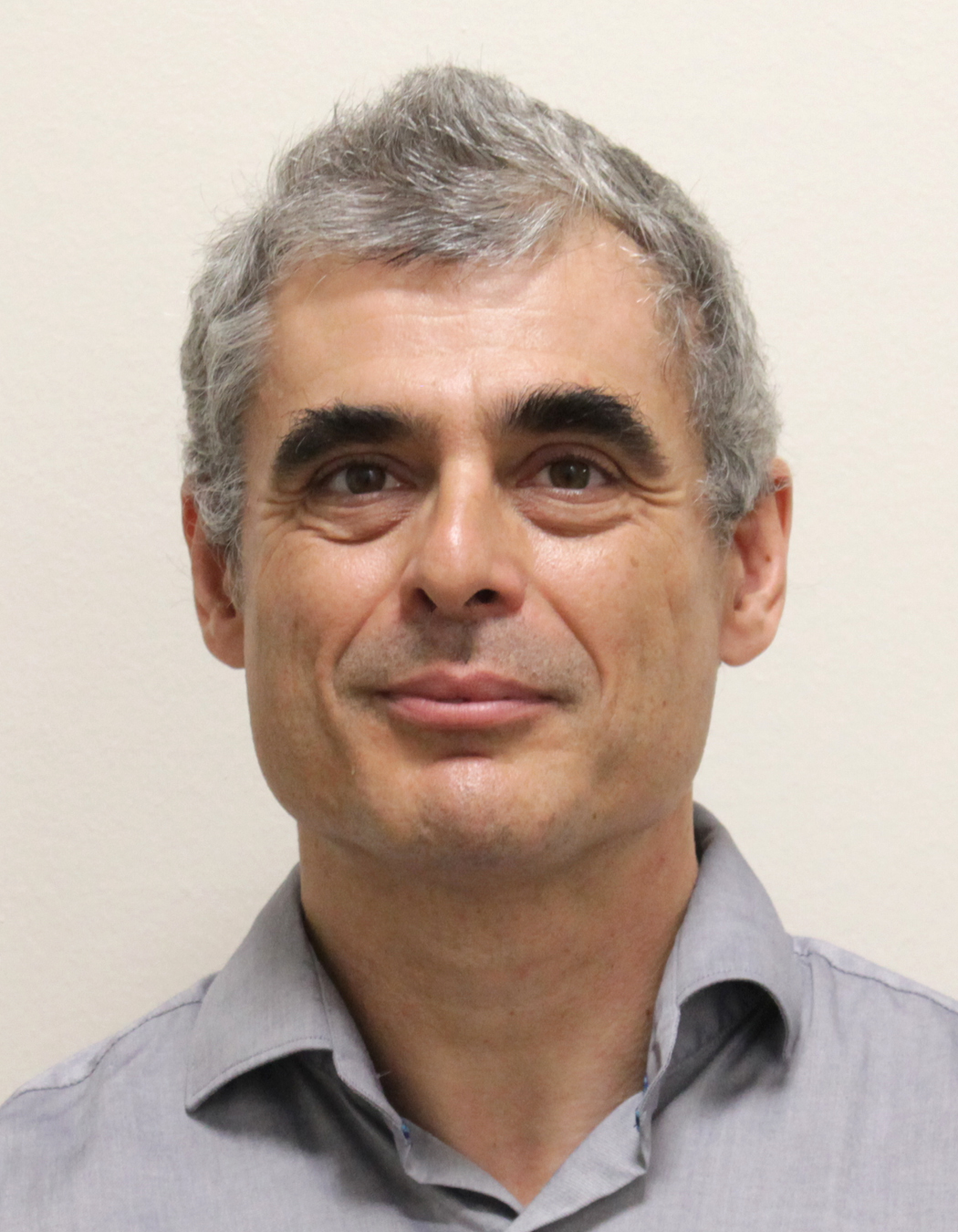
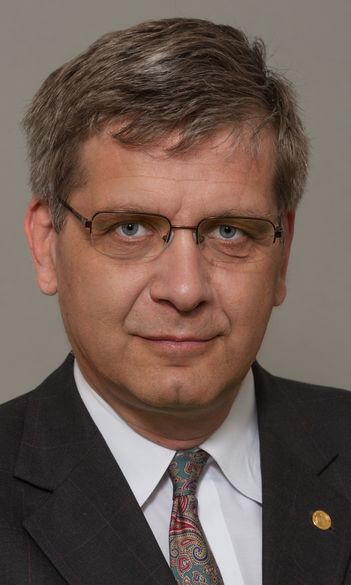
Máté Szabó is an Assistant Professor at the University of Debrecen , affiliated with the Faculty of Informatics and the Department of Information Technology . His email contact is szabo.mate@inf.unideb.hu . He works in areas such as Machine Learning , Smart Cities , and Mobile Computing . His research spans topics like microservice architecture for ensemble models, Markov modeling of traffic flows, and distributed machine learning on mobile platforms. He has explored neural models for conversational AI and gamification in programming education through Minecraft-based challenges. His work also addresses edge computing and data parallelism in mobile environments. His publications (2016–2024) reflect trends in machine learning deployment on Android platforms smart city traffic analytics gamified educational tools cognitive modeling of numerical understanding microservice-based model integration .
János Kertész is a Professor at the Department of Network and Data Science at Central European University (CEU) since 2012, and previously held the position of Professor at the Budapest University of Technology and Economics (1992–2018). He obtained his PhD in Physics from Eötvös University (1980) and DSc from the Hungarian Academy of Sciences (1989). His research spans statistical physics applications, complex networks, and financial analysis. He has authored over 280 papers and served on editorial boards of journals like Journal of Physics A and Physical Review E . His research focuses on interdisciplinary topics including social network dynamics, systemic risk in economic systems, and algorithmic bias in digital environments. Notable awards include the Széchenyi Prize (Hungary’s highest scientific honor) and the Finland Distinguished Professorship. He has led projects such as SAI (Socially Explainable AI) and HUMANE-AI-NET, addressing algorithmic bias and AI ethics. His work bridges physics-based modeling with real-world social and economic systems, emphasizing computational approaches to corruption, opinion formation, and innovation diffusion. Key contributions include modeling cascading failures in interdependent networks and analyzing attention dynamics on platforms like Sina Weibo during the pandemic. He advises on systemic risk mitigation strategies and collaborates internationally, with visiting roles in Germany, the U.S., France, Italy, and Finland.
Andrea Kő is a researcher at the Corvinus University of Budapest's Institute of Data Analysis and Informatics, with a focus on artificial intelligence, fintech, and big data applications. She has held positions in the Department of Information Systems until 2022 before transitioning to her current role. Her work emphasizes investment recommenders, Industry 4.0 readiness, and e-government solutions. Her research spans financial technologies, manufacturing optimization, and organizational resilience in SMEs. Notable contributions include hybrid AI models for production systems and frameworks for digital transformation assessment. She actively contributes to international conferences like EGOVIS and BiDEDE, editing proceedings and presenting on topics such as robo-advisors and smart manufacturing. Key projects include the CCMS2.0e maturity model for Industry 4.0 adoption and studies on pandemic impacts on SMEs. Her work integrates machine learning (ANFIS, MMNN) with domain-specific challenges, addressing both theoretical and practical aspects of digital innovation across sectors.
Márk Jelasity is a Full Professor in the Department of Algorithms and AI at the University of Szeged, Hungary, where he has been working since 2016. Previously, he served as a research advisor (equivalent to full professor) and senior research scientist at the Research Group on Artificial Intelligence (RGAI) of the Hungarian Academy of Sciences. His career includes numerous international research positions at institutions in Sweden, Norway, France, Italy, and the Netherlands. Professor Jelasity's research spans distributed systems, peer-to-peer computing, gossip protocols, and decentralized machine learning. His work bridges theoretical foundations with practical applications, particularly in the areas of self-organizing systems and privacy-preserving computation. His research has significant implications for smart grid technologies, secure distributed systems, and robust machine learning. His publication record shows a clear evolution from foundational work in gossip protocols and peer-to-peer systems toward cutting-edge research in decentralized machine learning, adversarial robustness, and privacy-preserving AI. Recent publications demonstrate his leadership in comparing gossip learning with federated learning approaches and exploring novel techniques for enhancing robustness in neural networks. Bolyai Plaquette (2015) 10 years best paper award at ACM/IFIP/USENIX Middleware Conference (2014) Best paper award at IEEE International Conference on Peer-to-Peer Computing (2014) Best paper award at IEEE International Conference on Self-Adaptive and Self-Organizing Systems (2013) Scientific Award of the Faculty of Science and Informatics, University of Szeged (2013) Fulbright Scholarship to visit Cornell University (2013) Multiple Bolyai Scholarships (2007-2014) Professor Jelasity has been actively involved in the academic community as an organizer of major conferences including DAIS'16 (TPC co-chair), SASO 2010 (General Co-Chair), and SASO 2007 (TPC co-chair). His leadership in the field is evidenced by his extensive publication record in top venues and his role in editing special issues and conference proceedings.
László Lengyel is a Professor at the Budapest University of Technology and Economics (BME), affiliated with the Department of Automation and Applied Informatics . His work bridges theoretical and applied computer science, focusing on industrial automation, IoT systems, and model-driven engineering. Research interests include Model transformations and domain-specific languages IoT device management and multi-domain integration Software obfuscation and cybersecurity Graph algorithms and distributed computing (MapReduce) Real-time data analysis in manufacturing Automotive sensor networks His recent publications reflect expertise in model-driven IoT architectures , granule manufacturing automation , and MapReduce-based graph analysis , with a focus on industrial and automotive applications. He contributes to open-source frameworks like SensorHUB and explores gamification in driver behavior systems.
Imre Salma is a Professor at the Department of Analytical Chemistry within the Faculty of Science at Eötvös Loránd University (ELTE). His research focuses on atmospheric chemistry, aerosol physics, and environmental science, with an emphasis on particle formation, air quality, and health impacts. He holds a Doctor of Science (DSc) degree and has extensive experience in analytical techniques, including eddy accumulation and convolutional neural networks for particle detection. Salma’s work examines ultrafine particles in urban environments, investigating their sources, dynamics, and health consequences. His research spans long-term data analysis (e.g., 11-year datasets), lockdown effects on pollution, and regional comparisons across Europe. He also explores oxidative potential of particles, lung deposition mechanisms, and firework-related air quality degradation. Key applications include improving air quality monitoring, informing policy, and advancing climate models. His publications span aerosol nucleation mechanisms, hygroscopic properties, and interdisciplinary approaches bridging chemistry, computer science, and public health. Salma collaborates internationally, contributing to initiatives like the COST Action 633. His lab is located at the Institute of Chemistry in Budapest, with a focus on cutting-edge analytical methods and environmental problem-solving.
Dr. Balázs Varga is a Research Fellow at the Department of Control for Transportation and Vehicle Systems, Budapest University of Technology and Economics (BME). He holds a PhD in Transportation and Vehicle Sciences (2021) and an MSc in Vehicle Engineering (2015) from BME. His industry experience includes roles at AVL Hungary as a Software and Function Developer (2016–2018) and academic positions at Chalmers University of Technology (2015) and SZTAKI (2012–2014). Current Role: Research Fellow (2021–present) Teaching: Programming, Control Theory, Traffic Modeling (English language course) Research Interests: Varga specializes in road traffic modeling and control, focusing on AI-based traffic estimation and dynamic traffic management. His work integrates machine learning with mesoscopic and microscopic traffic simulation tools like SUMO to optimize urban mobility and reduce emissions. Projects: He leads the 2020–2024 national development project 'Dynamic, adaptive traffic control services and evaluation tools based on digitally connected data sources' (2019-1.1.1-PIACI KFI). This initiative leverages connected data sources for real-time traffic control and policy evaluation. Key Publications Trends: His recent articles explore topics such as graph neural networks for sensor placement, multiobjective control of emissions, and mixed-reality V2X testing. These works emphasize data-driven approaches, emission reduction, and simulation frameworks for autonomous vehicles.
Dr. Gergely Vakulya is an Associate Professor and Research Fellow at Óbuda University. He specializes in interdisciplinary research spanning cybersecurity, agricultural technology, sensor networks, and image processing. His work integrates hardware design, algorithm development, and real-world applications. Dr. Vakulya’s recent focus includes developing rumen bolus sensors for dairy cattle health monitoring, gamification of cybersecurity training, and innovative methods in camera exposure time measurement. He is affiliated with Óbuda University’s Budai Road and Pirosalma Street campuses, with an office at building F room 316. His research frequently addresses challenges in data collection, sensor fusion, and embedded systems. Research Interests: Dr. Vakulya’s expertise includes cybersecurity frameworks (e.g., CTF challenges), agricultural IoT systems (e.g., rumen bolus sensors for livestock monitoring), and image processing techniques (e.g., genetic algorithms for shape approximation). His work on visible light communication (VLC) and wireless sensor networks highlights his contributions to communication protocols and energy-efficient systems. Recent trends in his publications emphasize cross-disciplinary approaches, such as applying AI methods to agricultural sensor data and optimizing sensor networks for real-time applications. Advising & Grants: No specific advising relationships or grants are listed in available materials. His research infrastructure is likely supported through institutional and collaborative projects. Labs/Teams: While not explicitly stated, his research likely involves collaborations within Óbuda University’s engineering and computer science departments. His work on rumen sensors and VLC systems suggests potential affiliations with robotics, biomedical engineering, or smart agriculture research groups.
Ágnes Vathy-Fogarassy is Habilitated Associate Professor and Head of the Department of Computer Science and Systems Technology at the University of Pannonia's Faculty of Engineering and Informatics. She also serves as the Rector's Commissioner for Artificial Intelligence Education and Development and the Dean's Representative for Quality Assurance and Accreditation. Additionally, she leads the Data-intensive Artificial Intelligence Methods and Systems Research Laboratory and the Healthcare Analytics Research and Development Center. Her educational background includes: PhD in Information Science (2009) Studies at Eötvös Loránd University in Computer Science (1999-2007) Studies at University of Pannonia in Computer Science (1995-1998) Mathematics-Physics and Computer Science Teacher training at Berzsenyi Dániel Teacher Training College (1995) Ágnes Vathy-Fogarassy's research focuses on machine learning, artificial intelligence, data science, and their applications in healthcare . Her work spans predictive analytics, network analysis, and medical informatics, with a particular emphasis on developing AI methods for healthcare data analysis. She has pioneered approaches for N-glycomics-based biomarker discovery, cancer treatment prediction, and heart failure risk assessment using machine learning techniques. Her interdisciplinary research bridges computer science with medical applications, creating innovative solutions for healthcare challenges. Her recent publications demonstrate a strong trend toward applied AI in healthcare , with significant work on diabetes classification, chemotherapy effectiveness prediction, and cardiovascular risk assessment. She also maintains active research in automotive AI applications (vehicle dynamics prediction) and renewable energy optimization (solar power plant modeling). Her work consistently combines theoretical machine learning advancements with practical implementations across diverse domains. Her notable scientific achievements include: László Méray Award, University of Pannonia (2024) Tarján Memorial Medal, John Neumann Computer Science Society (2022) Pro Sciencia Award, University of Pannonia (2021) Veszprém Women's Roundtable Association Women's Empowerment Award (2019) Pro Universitate Pannonica silver medal (2017) PE-MIK Best Female Instructor (2017) As an academic advisor, Ágnes Vathy-Fogarassy has successfully guided multiple PhD students to completion, including Dániel Leitold (2020), Szabolcs Szekér (2024), and János Kontos (2025). She currently supervises several ongoing doctoral research projects with Attila Knolmajer, Tamás Miseta, Veronika Gombás, and Eszter Szakács. Her commitment to talent development is evident through her students' numerous Best Paper awards at international conferences and successful TDK papers. She has developed the curriculum for several data science subjects and established the Data Science master's program at the University of Pannonia in 2023. She leads two major research entities: the Data-intensive Artificial Intelligence Methods and Systems Research Laboratory (founded 2021) and the Healthcare Analytics Research and Development Center (founded 2017). These teams focus on cutting-edge AI research with particular emphasis on healthcare applications, bringing together interdisciplinary researchers to tackle complex data challenges in medical domains.
Dr. Henrietta Tomán serves as an Assistant Professor in the Department of Data Science and Visualization at the University of Debrecen's Faculty of Informatics, where she bridges advanced mathematical theory with practical medical imaging applications. Her work integrates abstract algebraic structures with cutting-edge AI systems to solve critical healthcare challenges. Her research portfolio spans three interconnected domains: Medical image processing (particularly ensemble-based segmentation and quality assessment for ophthalmic diagnostics) Geometric structures (quasigroups, loops, and differentiable manifolds) Stochastic optimization for resource-constrained AI systems Analysis of her publication trajectory reveals evolving expertise: early work (2010-2014) established foundations in geometric loop theory applied to image processing, while recent research (2020-2024) pioneers stochastic fusion techniques for medical image ensembles under computational constraints. Her most significant contributions involve translating mathematical abstractions into robust clinical decision-support tools, particularly in diabetic retinopathy detection and epidemic modeling. Current work demonstrates increasing focus on real-time AI systems that maintain accuracy under hardware limitations, reflecting urgent needs in telemedicine and mobile health applications. Dr. Tomán maintains active collaboration within the Doctoral School of Informatics and contributes to Hungary's national research initiatives in medical AI, with consistent publication output in top-tier venues spanning computer vision, medical imaging, and mathematical computing.
Csaba Pál is a Research Professor and Principal Investigator at the Synthetic and Systems Biology Unit within the Biological Research Center of the Hungarian Academy of Sciences. His research focuses on understanding bacterial resistance evolution, particularly against antibiotics, and developing novel antimicrobial strategies. He leads a team exploring high-throughput screening techniques, genome engineering, and systems biology approaches to combat multidrug-resistant pathogens. Dr. Pál's work integrates experimental and computational methods to study evolutionary dynamics, including the genetic basis of resistance and collateral sensitivity. His lab has contributed significantly to the development of recombineering-based genome editing tools (e.g., pORTMAGE/pSEVAMAGE systems) for precise bacterial genome manipulation. Recent research highlights include investigations into the rapid evolution of antibiotic resistance in clinically relevant pathogens (e.g., ESKAPE pathogens) and the design of balanced dual-targeting antibiotics. His team’s findings on antibiotic hypersensitivity and the genomic landscape of compensatory evolution have advanced strategies for predicting and mitigating resistance. Dr. Pál collaborates internationally, leading projects funded by initiatives such as the NKFI Research Grant and the János Bolyai Fellowship. His lab trains students and postdoctoral researchers in cutting-edge techniques, emphasizing translational applications in antimicrobial development and microbial systems biology.
Prof. Péter G. Szalay is a Professor at the Faculty of Natural Sciences of Eötvös Loránd University, holding dual roles in the Institute of Chemistry and the Department of Physical Chemistry . He leads the Theoretical Chemistry Laboratory and serves as Head of the Department of Physical Chemistry. His academic memberships include being a Corresponding Member of the Hungarian Academy of Sciences (2025), a Member of Academia Europaea (2022), and an Elected Member of the International Academy of Quantum Molecular Sciences (2019). Education: Bachelor's degree in Chemistry (ELTE, 1986) PhD in Chemistry (University of Vienna, 1989) Candidate of Science (1991), MTA Doctorate (1999), Habilitation (ELTE, 2001) Research Focus: His work centers on quantum chemistry , computational molecular dynamics , and excited-state electronic structure . He pioneers ab initio methods for studying electron transport in single-molecule junctions, ozone vibrational spectra, and nucleobase photochemistry. Key techniques include coupled-cluster theory , density functional embedding , and vibronic coupling analysis . Publications highlight advancements in charge transfer modeling , excimer potential energy surfaces , and matrix isolation spectroscopy . His 2025 studies on Edward Teller’s contributions and 2024 works on molecular conductance exemplify cutting-edge theoretical insights. Recent trends focus on integrating nuclear quantum effects and vibrational influences into electronic transport models. Awards: His recognition includes the 2025 Hungarian Academy of Sciences Corresponding Membership, reflecting his leadership in quantum molecular sciences. Earlier honors include the 2019 European Academy of Sciences and Arts membership. Advising & Grants: While specific student names are not listed, his roles imply active mentorship in theoretical chemistry. His lab’s computational frameworks have been supported by institutional and international grants. Labs/Teams: Directs the Theoretical Chemistry Laboratory , collaborating globally on CFOUR and COLUMBUS quantum chemistry software packages. His research integrates experimental and computational methods to solve challenges in atmospheric chemistry, astrochemistry, and nanoelectronics.
Péter Ekler is an Associate Professor at the Department of Automation and Applied Informatics , Budapest University of Technology and Economics (BME) , Hungary. He is affiliated with the Applied Mobile Research Group (AMORG) and the Applied Computer Science Group , focusing on cutting-edge research in AI, IoT, and mobile systems. Research Interests: Artificial Intelligence and Machine Learning Internet of Things (IoT) and Smart Cities Wireless Sensor Networks and Energy-Efficient Routing Network Coding and Mobile Peer-to-Peer Systems Blockchain and Distributed Systems Computer Vision and Sensor Data Analysis His recent work includes the development of AI-based thermal imaging systems, energy-aware IoT routing, and secure authentication mechanisms using JWT. He has published extensively on optimizing IoT performance, enhancing mobile streaming with network coding, and applying machine learning to real-world sensor data. Scientific Contributions: Published over 50 peer-reviewed articles from 2013 to 2023 Active on platforms like Google Scholar, Scopus, ResearchGate, and ResearcherID Research spans both technical systems and historical studies in science Contact & Affiliations: Email: Ekler.Peter@aut.bme.hu Location: Q.B226, Magyar tudósok krt. 2., Budapest 1117, Hungary Phone: +36 (1) 463-3702 LinkedIn: http://hu.linkedin.com/in/peterekler
Tibor Kovács is an Associate Professor at the Budapest University of Technology and Economics, affiliated with the Department of Automation and Applied Informatics. He has contributed extensively to applied informatics, focusing on graph database systems, 3D scanning technologies, industrial process optimization, and noise-resistant algorithms. His work bridges theoretical research with practical implementations in manufacturing, sensor design, and data management. Research Interests: Graph database benchmarking and optimization 3D geometry scanning and curvature adaptation Industrial production network performance analysis Energy efficiency in manufacturing systems Robust line/edge detection algorithms XML tree search methodologies Publication Trends: His recent work emphasizes scalable data systems (2019) and geometric sensor optimization (2018), while earlier studies focus on industrial energy efficiency (2016), technical advisory networks (2010), and foundational computer vision algorithms (2004–1994).
Szegletes Luca is a Senior Lecturer at the Budapest University of Technology and Economics, affiliated with the Department of Automation and Applied Informatics as part of the Applied Mobile Research Group (AMORG). Her research spans multiple interdisciplinary domains, focusing primarily on integrating machine learning techniques with biofeedback systems. Her work demonstrates expertise in diffusion probabilistic models for EEG signal processing, deep learning applications in embedded systems, and reinforcement learning frameworks. She has pioneered methods for physiological data analysis, including blood pressure measurement and face anonymization in low-power environments. Notable research contributions include adaptive educational game frameworks, cognitive profiling systems, and biofeedback-driven difficulty control mechanisms. Her publications reflect a strong focus on bridging computational methods with cognitive science and biomedical applications.