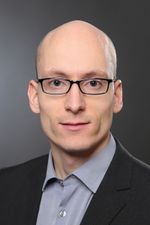
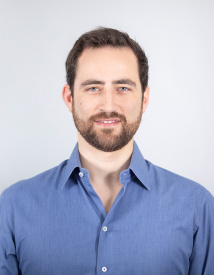
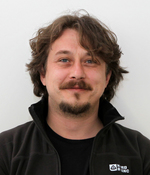
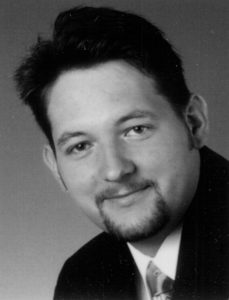
Hannes Straß is a Research Associate in the Computational Logic Group at Technische Universität Dresden's Faculty of Computer Science. He holds a Dr. rer. nat. (2012) and habilitation (2017) from Leipzig University, with research focusing on logic-based knowledge representation and non-monotonic reasoning. His work develops formal frameworks for abstract argumentation, standpoint-enhanced description logics, and tractable multiperspective reasoning systems for ontology management. Recent advances include automated reasoning support for Standpoint-OWL 2 and computational methods for managing ontological diversity. Publications demonstrate innovations in characterization logics, standpoint modalities, and decomposition methods for abstract dialectical frameworks, contributing to scalable knowledge representation. He teaches courses including Theoretische Informatik und Logik and Foundations of Knowledge Representation, while leading research in the KIMEDS and M/EDGE projects on AI-assisted medical software certification.
Martin Werner is an Assistant Professor of Big Geospatial Data at the Institute of Cartography and Geoinformatics, Faculty of Civil Engineering and Geodetic Science, Leibniz University Hannover. His research focuses on spatio-temporal data analysis at large scales, emphasizing distributed computing, machine learning, and high-performance computing (HPC). Key research interests include geospatial data management, remote sensing, and applications in transportation and environmental monitoring. He has contributed to peer-reviewed journals and conferences, addressing topics such as GPS trajectory analysis, point cloud segmentation, and social media integration in geospatial systems. Publications highlight advancements in geoinformatics, including case studies on bathymetry and satellite imagery classification. No scientific awards are listed, but his work reflects significant engagement with cutting-edge computational geospatial methods.
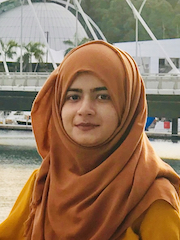
Dr. Anum Talpur is a Research Fellow at the University of Hamburg's Department of Computer Networks under Prof. Dr. Mathias Fischer. Her work focuses on Network Security, AI-driven cybersecurity solutions, and resilient infrastructure protection. She is affiliated with the Faculty of Mathematics, Informatics and Natural Sciences and contributes to projects like SOVEREIGN, a critical infrastructure security initiative. Research interests include intrusion detection systems, QUIC protocol security, and vehicular network security. Recent publications explore load balancing vulnerabilities, holistic infrastructure defense frameworks, and ML applications in vehicular networks. She collaborates with researchers such as Liliana Kistenmacher and Prof. Fischer on projects addressing cutting-edge cybersecurity challenges. Her work integrates theoretical advancements with practical implementations for modern networked systems.
Michael Haustermann is a Researcher at the University of Hamburg's Faculty of Informatics, within the Theoretical Foundations Group. His work focuses on Petri net-based modeling tools, software engineering methodologies, and domain-specific languages. He contributes to the development of the Renew toolset for Petri net modeling and simulation, emphasizing formal methods and their application in collaborative systems. His research spans IoT architectures, agent-oriented software systems, and education technologies like adaptive testing frameworks (VideoFOS and FormAdTe). He has published extensively on Petri net applications in concurrency, software engineering, and system design, collaborating with institutions globally. Current projects include advancing Petri net tools for model-based development and exploring edge computing architectures.
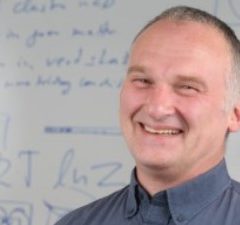
Prof. Thorsten Pöschel holds a professorship at Friedrich-Alexander University Erlangen-Nuremberg (FAU), leading the Lehrstuhl für Multiscale Simulation of Particulate Systems. His research focuses on computational modeling of particulate systems and complex materials. Located in Erlangen, he contributes to FAU's interdisciplinary research ecosystem through collaborations with institutions like Max Planck and Fraunhofer societies. While specific awards or grants are not detailed in the provided text, his affiliation with FAU's innovative departments indicates involvement in cutting-edge simulation technologies. The university's emphasis on cross-disciplinary work suggests his research bridges physics, materials science, and engineering applications. Prof. Pöschel's department is part of FAU's broader commitment to advanced technical education and innovation, reflected in initiatives like the ZOLLHOF tech incubator and entrepreneurship programs such as the EELISA Entrepreneurship School.
Björn Eskofier is a Professor at the School of Advanced Optical Technologies (SAOT) of Friedrich-Alexander-Universität Erlangen-Nürnberg (FAU Erlangen). His research focuses on Machine Learning, Biomedical Engineering, Digital Health, and Sensor Technology with applications in stress detection, gait analysis, and radar-based biomedical monitoring. His 2025 publications demonstrate expertise in machine learning for physiological signal analysis , wearable sensor systems , and radar-based health monitoring across fields like stress response, sleep staging, and palliative care. Current work emphasizes multimodal data fusion and open-source biomedical frameworks . Key collaborations include University Hospital Erlangen , IEEE Engineering in Medicine and Biology Society , and European Health Psychology Society . His team develops EmpkinS emotion-based biofeedback systems and gaitmap open-source gait analysis ecosystem.
Nicolas Legewie is Professor for Methods and Social Structure Analysis at the University of Münster's Institute of Sociology, having assumed this position permanently on June 1, 2025, after serving as Acting Professor since October 2023. Previously, he held academic positions including Scientific Partner (Postdoc) at the University of Erfurt, Visiting Researcher at the University of Pennsylvania, and Postdoctoral Fellow at the German Institute for Economic Research. Master's degree in Social Sciences from Humboldt University of Berlin (2007-2010) PhD from Berlin Graduate School of Social Sciences, Humboldt-University zu Berlin (2011-2015) Professor Legewie's research centers on social inequality, education, migration & integration, social networks, artificial intelligence, and research methods , with a particular specialization in video data analysis. His methodological innovations bridge traditional sociological approaches with cutting-edge digital techniques, creating new pathways for analyzing social interaction through computer vision and AI applications. His publication trajectory reveals a consistent methodological focus that has evolved toward increasingly sophisticated applications of video data analysis in social research. Recent work demonstrates growing integration of artificial intelligence techniques, particularly in analyzing social interactions and studying refugee integration processes. His research often employs mixed-methods designs, combining quantitative data with qualitative insights to address complex social phenomena. Professor Legewie has secured funding for multiple significant research projects including the Leibniz Competition-funded 'Mentoring of Refugees (MORE)' study, 'Das Erwachsenwerden türkischer Migrantennachkommen,' and more recently, externally-funded projects on discrimination in everyday interactions using computer vision, rampage school shootings, and attitudes toward AI in public institutions. Discrimination in everyday interactions – A field-experimental study using computer vision (2023-2024) A mixed-methods study of rampage school shootings (2023-2024) Attitudes toward the use of Artificial Intelligence in public institutions (2023-2024) At the University of Münster, Professor Legewie teaches courses including Statistics I & II, Methods of Empirical Social Research, and specialized seminars on Big Data, social mobility, and the sociological perspective on artificial intelligence. His work contributes significantly to the development of digital sociology and the methodological toolkit available for contemporary social research.
Prof. Dr. Lutz Feld is a full professor and head of the Chair of Experimental Physics I B and the Institute of Physics I at RWTH Aachen University. He leads the High-Energy Physics Teaching and Research Area and is deeply involved in the CMS experiment at CERN's LHC. His work spans detector development, data analysis, and major leadership roles in German and international particle physics initiatives. University: RWTH Aachen University School: Faculty of Mathematics, Computer Science and Natural Sciences Department: Department of Physics Position: Professor (since 2004) Email: lutz.feld@physik.rwth-aachen.de Prof. Feld studied physics at the University of Bonn, earning his diploma in 1993 and doctorate in 1996 with research on the ZEUS experiment at DESY. He completed his habilitation in 2002 at the University of Freiburg, where he served as a scientific assistant and private lecturer before joining RWTH Aachen. 1988–1993: Physics studies, University of Bonn 1993: Diploma, University of Bonn (ZEUS experiment) 1996: PhD, University of Bonn (ZEUS experiment) 1997–1999: CERN Fellow (CMS silicon tracker development) 1999–2003: Scientific Assistant, University of Freiburg (ATLAS SCT) 2002: Habilitation, University of Freiburg 2003–2004: Private Lecturer, University of Freiburg 2004–present: Professor, RWTH Aachen University His research focuses on experimental high-energy physics, particularly the search for physics beyond the Standard Model such as supersymmetry, and the development of advanced silicon detector systems for the CMS experiment. He has led major upgrades of the CMS pixel and tracking detectors, including novel DC-DC power systems and thermal simulations for future high-luminosity phases. His work combines cutting-edge instrumentation with deep data analysis to probe fundamental questions in particle physics. The 15 most recent publications reflect a strong trend in both experimental data analysis (especially supersymmetry searches using dilepton and diphoton signatures) and innovative detector development (silicon trackers, power systems, thermal design). Keywords span high-energy physics, instrumentation, and data analysis, with subfields including jet physics, photoproduction, radiation-hard detectors, and LHC upgrades. The articles show a consistent focus on CMS-related projects, from early ZEUS work to current HL-LHC developments. Prof. Feld has received recognition for his teaching and leadership: Teaching Award of the Physics Department (2013) Spokesperson of the Physics Department (2008–2010) Chair of CMS Tracker Institution Boards (2014–2017) Spokesperson of BMBF FSP-104 (2018–2021) Chairman of the Committee for Elementary Particle Physics (since 2021) He has supervised numerous bachelor’s, master’s, and doctoral students, many of whom are listed as current or former members of his research group. His research is supported by major grants from DFG, BMBF, HGF, and EU, including the DFG Research Training Group 'Physics of the Heaviest Particles at the LHC' and BMBF programs FSP-102 and FSP-104. He has also contributed to public outreach through lectures, children’s university events, and virtual CMS visits. Prof. Feld leads a vibrant research group at RWTH Aachen, actively involved in detector construction (e.g., TEC+ endcap), data analysis (searching for new physics), and future upgrades for the CMS experiment. The group participates in national collaborations such as the Helmholtz Alliance 'Physics at the Terascale' and organizes key conferences like TEWPP and DCMS-FSP meetings.
Prof. Dr. Frank Stefan Tautz is a leading academic and research director at Forschungszentrum Jülich, serving as Director of the Peter Grünberg Institute (PGI-3): Quantum Nanoscience. He leads the Photoemission Tomography and Quantum Dynamics Group and holds the title of Universitätsprofessor, indicating a full professorship. His work is central to advancing quantum nanoscience through cutting-edge experimental techniques. Institution: Forschungszentrum Jülich GmbH School: Peter Grünberg Institute Department: Quantum Nanoscience (PGI-3) Role: Director, Research Group Leader Stefan Tautz's research focuses on photoemission tomography, quantum dynamics, and the imaging of molecular orbitals . His group utilizes low-temperature scanning probe microscopy and advanced electron spectroscopy to study quantum coherent functionality in nanostructures. A major thrust of his work is visualizing electron behavior in real and momentum space, pushing the boundaries of ultrafast imaging and quantum sensing. The recent publications and projects highlight a strong trend in quantum imaging, orbital dynamics, and sensor development . The ERC Synergy Grant 'Orbital Cinema' exemplifies the interdisciplinary and high-impact nature of his research, combining physics, materials science, and instrumentation to achieve super slow-motion microscopy of electrons. His team's development of a new quantum sensor capable of atomic-scale magnetic field detection marks a milestone in quantum technology. Scientific awards and recognitions include: ERC Synergy Grant: Orbital Cinema Supervision of award-winning PhD student Anja Haags (ICSOS Young Scientist Prize) Gerhard Ertl Young Investigator Award (awarded to group member Dr. Taner Esat) DFG Emmy Noether Fellowship (awarded to group member Dr. Felix Lüpke) Tautz actively mentors young scientists, including PhD students and postdoctoral researchers. His lab secures significant external funding, including ERC and DFG grants, supporting advanced instrumentation like the NanoESCA MARIS. He fosters strategic international collaborations, notably with the IBS Center for Quantum Nanoscience in Korea. His group is integral to large-scale initiatives like QSolid, aiming to build Germany’s first quantum computer demonstrator. Key laboratories and teams under his leadership include: Photoemission Tomography and Quantum Dynamics Group Orbital Cinema Project Team Quantum Sensing and Information (led by Dr. Taner Esat) Layered Quantum Systems (led by Dr. Felix Lüpke) Quantum NanoLab MCES150
Patrik Vagovic is a Staff Scientist at the European XFEL GmbH, affiliated with the Center for Free-Electron Laser Science (CFEL), a collaborative research center between DESY, the University of Hamburg, and the Max Planck Society. He leads research in the Coherent Imaging Team, focusing on advanced X-ray imaging techniques using X-ray free-electron lasers. His work bridges the gap between fundamental physics and practical applications in materials science, biology, and fluid dynamics. Dr. Vagovic's research interests center around developing and applying cutting-edge X-ray imaging methodologies, particularly high-speed and phase-sensitive techniques. His work encompasses X-ray phase contrast imaging, coherent diffractive imaging, tomography, and advanced data processing methods. He has pioneered MHz frame rate X-ray imaging capabilities at the European XFEL, enabling unprecedented observation of ultrafast phenomena previously impossible to capture with conventional X-ray sources. Analyzing his recent publication record reveals a strong focus on pushing the temporal and spatial boundaries of X-ray imaging. His work demonstrates a consistent progression from developing fundamental imaging techniques to applying them to complex scientific problems across multiple disciplines. The research shows increasing sophistication in both hardware development (optical systems, detectors) and computational methods (phase retrieval, machine learning). Dr. Vagovic actively collaborates with international research teams across Europe and beyond, contributing to numerous high-impact publications in top journals including Optics Express, Journal of Synchrotron Radiation, and Nature Communications. His work on MHz X-ray microscopy has particularly advanced the field of time-resolved imaging of irreversible phenomena. As part of the Coherent Imaging Team at European XFEL, Dr. Vagovic works with state-of-the-art instrumentation including the SPB/SFX instrument, where he has developed pump-probe capabilities and advanced diagnostics for megahertz pulse trains. His research group utilizes advanced computational approaches alongside experimental innovations to solve complex imaging challenges.
Prof. Dr. Petra Imhof is a full professor of Computational Chemistry at Friedrich-Alexander-Universität Erlangen-Nürnberg (FAU), where she serves as Technical Director of the Computer Chemistry Center. She leads a dynamic research group focused on understanding biomolecular processes through advanced computer simulations. Her work bridges chemistry, biology, and physics, with strong emphasis on enzyme mechanisms, DNA-protein interactions, and computational biophysics. Her research interests include: Computational modeling of enzymatic reaction mechanisms using QM/MM methods Protein-DNA recognition and specificity, especially in DNA repair enzymes like thymine DNA glycosylase and restriction endonuclease EcoRV Proton transfer dynamics in membrane proteins such as cytochrome c oxidase Allosteric communication networks in proteins Transition network analysis for complex macromolecular transitions Computational spectroscopy, including vibrational and fluorescent protein studies Her recent publications reveal a strong focus on DNA repair mechanisms, metalloenzyme inhibition, and the physical chemistry of biomolecular recognition. The works span from fundamental biophysical questions to applications in drug design and biosensor development, reflecting a deep integration of theory and biochemical insight. Prof. Imhof has mentored numerous researchers, including PhD and postdoctoral students, many of whom are listed as co-authors on her publications. She has not received any explicitly mentioned scientific awards in the provided text. She leads an active research team investigating protein dynamics, enzymatic catalysis, and DNA damage recognition using molecular simulations. The group employs cutting-edge computational techniques to model complex biological systems, with applications ranging from basic science to therapeutic development.
Dr. Marcus Handte is a Senior Researcher at the University of Duisburg-Essen, focusing on networked embedded systems, context-aware computing, and sustainable mobility. His academic journey includes a Habilitation in Computer Science (2013) and a PhD in Natural Sciences (2009) from Universität Stuttgart, alongside a Master's degree from Georgia Institute of Technology (2002). Research Interests Context-aware applications Localization and location-based systems Sustainable mobility solutions Internet of Things (IoT) Smart city infrastructure Privacy-preserving technologies His recent work involves developing platforms for multimodal mobility analysis (MOBYDEX), wireless EV charging systems (TALAKO, FAIR), and innovative approaches to indoor localization. Publications span journals like Machine Vision and Applications and conferences in pervasive computing. Scientific Recognition Best Poster Award at ACM KMIS 2023 Dr. Handte has contributed to projects such as ATMo2, INNAMORUHR, and GAMBAS, and maintains active collaborations across institutions. His expertise in adaptive middleware and distributed systems continues to shape research in smart mobility and ambient intelligence.
Junaid Shuja is a researcher with significant contributions to Mobile Edge Computing , Cloud Environments , and IoT Systems . Collaborating with scholars like Kashif Bilal , Abdullah Gani , and Ehzaz Mustafa , his work spans computation offloading, resource allocation, and security frameworks. Research Highlights 2017: Analysis of Vector Code Offloading in Heterogeneous Architectures 2021: Survey on Machine Learning for Edge Caching 2023: Reinforcement Learning for Computation Offloading in Vehicular Networks 2024: Blockchain Applications in Land Lease Systems and Employee Transfers 2025: Deep Reinforcement Learning for Resource Optimization His recent work focuses on Deep Learning and Blockchain for latency-sensitive applications in IoT and vehicular networks, published in IEEE Access , Cluster Computing , and Telecommunication Systems . Key co-authors include Faisal Rehman , Abdallah Namoun , and Muhammad Bilal .
Simon Ciranka serves as a Research Scientist at the Adaptive Rationality center of the Max Planck Institute for Human Development in Berlin since 2024, following a Salto Fellowship at Institut Nicod, École Normale Supérieure Paris (2023-2024) and postdoctoral research at the same Adaptive Rationality center (2021-2023). His educational trajectory includes a Dr. rer. nat. from Free University Berlin (2021) and doctoral training at the Max Planck UCL Centre for Computational Psychiatry and Ageing Research (2017-2020): PhD: Max Planck UCL Centre for Computational Psychiatry and Ageing Research (2017-2020) Doctorate: Free University Berlin (2021) Dr. Ciranka's research integrates computational modeling with developmental neuroscience to investigate adolescent decision-making under uncertainty. His work examines how socioeconomic status , social learning , and neuronal mechanisms shape risk perception and adaptive behavior. Key contributions include: Quantifying socioeconomic effects on reward valuation Modeling social influence as a double-edged sword in adolescence Linking reinforcement learning asymmetries to transitive reasoning Analyzing environmental statistics in developmental risk-taking His 11 publications (2019-2025) reveal a cohesive research program advancing computational frameworks for adolescent decision science. The work demonstrates increasing methodological sophistication in modeling social-ecological influences on neural decision mechanisms, with recent emphasis on socioeconomic determinants and uncertainty processing. Dr. Ciranka's research has been supported through competitive appointments including the Salto Fellowship and Max Planck Society positions. His collaborative work spans the Max Planck Institute for Human Development and international partners like University College London. As a core member of the Adaptive Rationality Research Team, he contributes to the center's mission of investigating psychological and neural foundations of adaptive decision-making across the lifespan through computational, behavioral, and neuroimaging approaches.
Thatchaphol Saranurak is an Assistant Professor in the Computer Science and Engineering Division at the University of Michigan, College of Engineering. He holds a Ph.D. in Computer Science from KTH Royal Institute of Technology (2018), advised by Danupon Nanongkai, and was previously a Research Assistant Professor at the Toyota Technological Institute at Chicago (2018–2020). His research lies at the intersection of theoretical computer science and algorithm design, with primary interests in fast graph algorithms , dynamic algorithms , robust algorithms against adaptive adversaries , and combinatorial optimization . His work has significantly advanced the state-of-the-art in areas such as maximum flow (Gomory-Hu trees), vertex and edge connectivity, dynamic matching, expander decompositions, and distributed graph algorithms. His recent publications (2023–2025) reveal a strong trend toward deterministic, near-linear time algorithms for fundamental graph problems, often leveraging expander hierarchies and dynamic sparsification techniques . He has made breakthroughs in dynamic matching, connectivity oracles, and multi-commodity flow, frequently publishing in top venues like FOCS, STOC, and SODA. He has received several prestigious honors, including: Presburger Award 2023 NSF CAREER Award Sloan Research Fellowship His advising and grant activities are supported by major funding such as the NSF CAREER Award and Sloan Fellowship, and he actively mentors and collaborates with a large network of co-authors. He is also involved in organizing academic events, such as the Dagstuhl Seminar on Graph Algorithms. He teaches courses such as Expander and Graph Algorithms and maintains an active research group focused on pushing the boundaries of algorithmic efficiency and robustness.