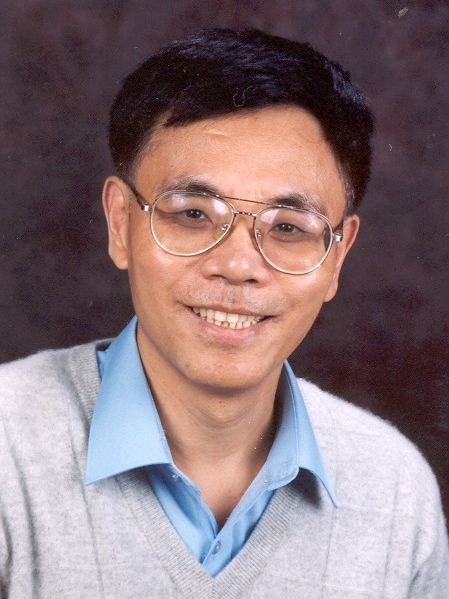
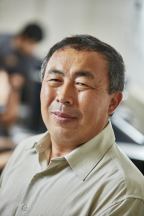
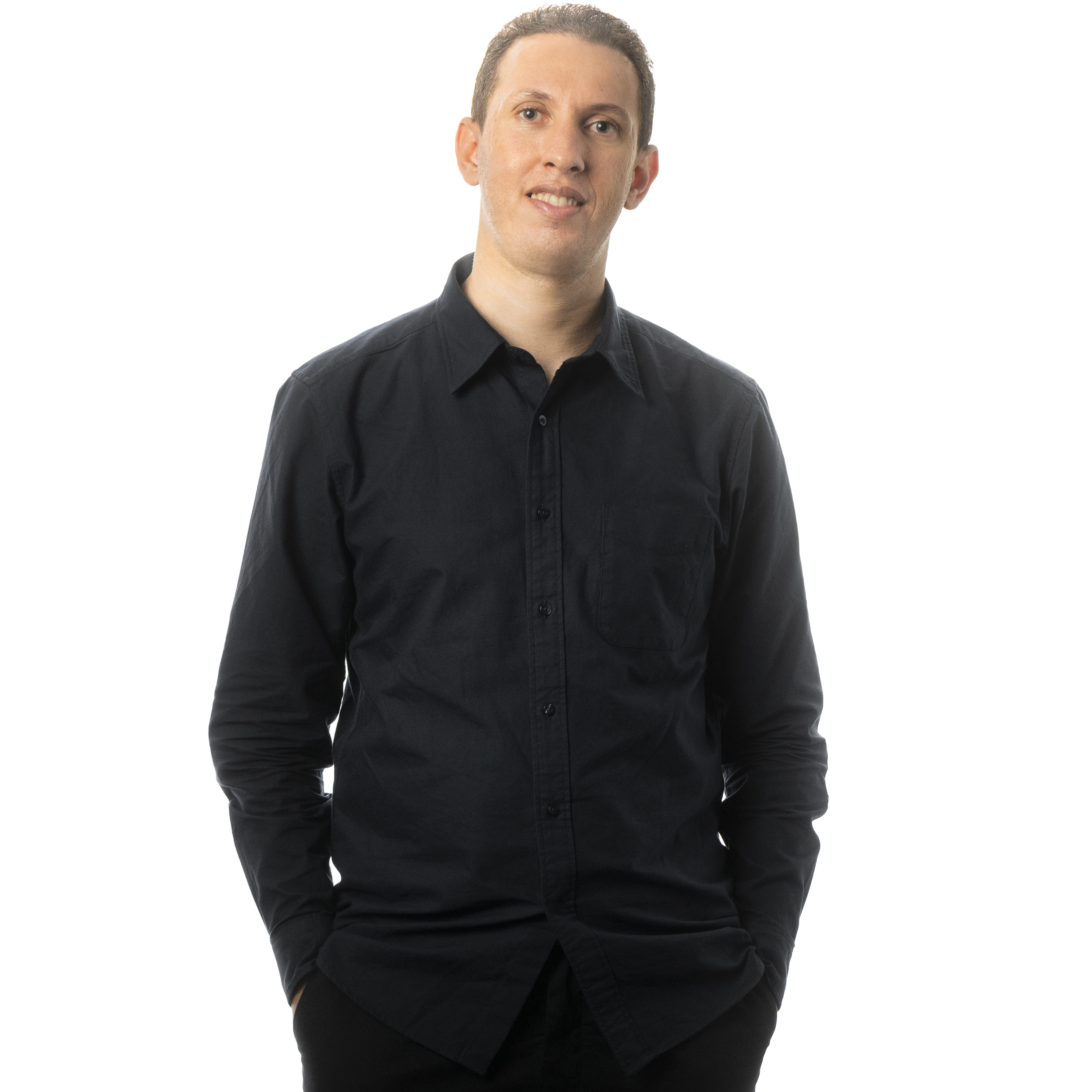
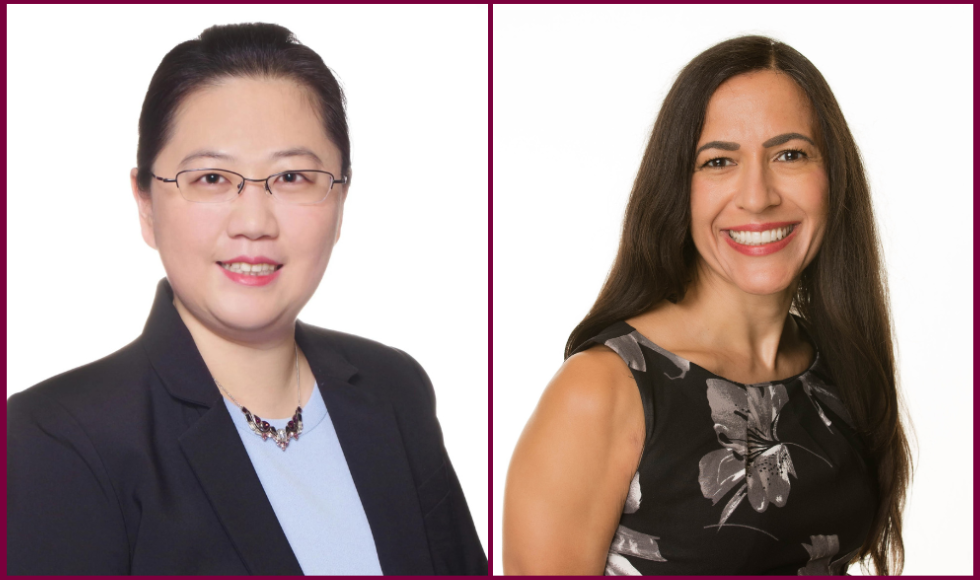
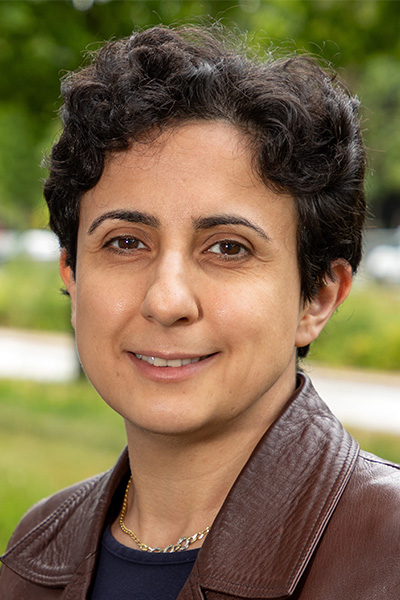
Ke Wang is a Professor in the School of Computing Science at Simon Fraser University . His research focuses on Data Mining , Database Systems , Data Privacy , and Graph and Network Data . He holds a Ph.D. and M.Sc. from the Georgia Institute of Technology (1986 and 1984, respectively). Teaching includes courses like Database Systems II , Introduction to Data Mining , and Special Topics in Databases . He has advised numerous students and alumni, many of whom now work in tech, academia, and industry. Notable awards include the 2013 Faculty of Applied Sciences Research Excellence Award and the ECIR 2019 Best System Paper . His work emphasizes privacy-preserving techniques and has led to contributions like the Introduction to Privacy-Preserving Data Publishing textbook. He has served as a conference chair for major data mining events like SDM 2015/2016 and holds editorial roles in journals like ACM TKDD. His lab, the Database and Data Mining Laboratory , focuses on actionable solutions for real-world data challenges.
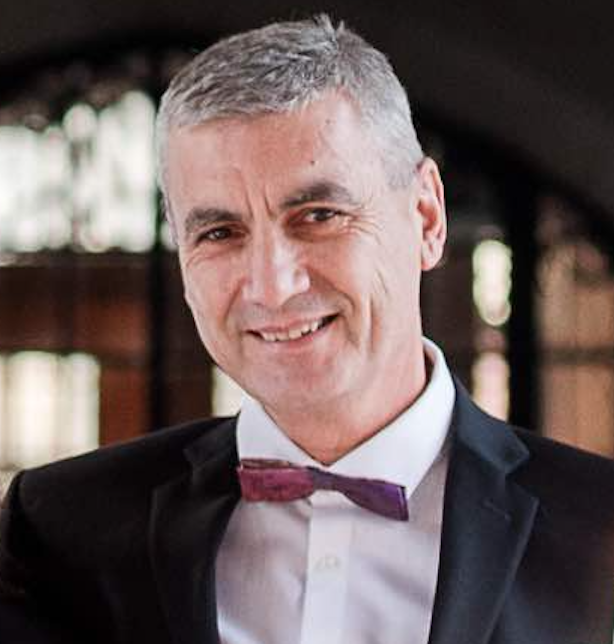
About Marin Litoiu is a Professor at York University, holding dual affiliations in the Department of Electrical Engineering and Computer Science at the Lassonde School of Engineering and the School of Information Technology in the Faculty of Liberal Arts and Professional Studies. He is a Fellow of the Canadian Academy of Engineering and a recipient of the 2020 IBM Faculty of the Year Award. His research focuses on cloud computing, self-adaptive systems, DevOps, IoT, and machine learning-driven performance engineering. Research & Awards Litoiu leads the Dependable Internet-of-Things Applications (DITA) program, funded by NSERC, and co-founded Bitnobi Inc., acquired by Myant. His notable awards include the CASCON 2019 Most Influential Paper Award and Best Paper Awards at multiple conferences. His work emphasizes practical applications of adaptive systems, cybersecurity, and smart infrastructure integration. Grants & Projects NSERC CREATE Program: $1.65M for the DITA program (2018) York Innovation, TIAP, NSERC, and OCI-funded Bitnobi incubation Leadership in multiple CASCON workshops on cloud computing and AIOps Labs & Teams Litoiu’s lab has produced impactful startups like Bitnobi and pioneered research in self-driving systems, edge computing, and AI-driven operations. His team collaborates with industry partners like IBM and explores cutting-edge topics such as LLMs in performance optimization and fault detection.
Dr. Yujie Tang is an Assistant Professor in the Faculty of Computer Science at Dalhousie University, Canada, where she has been serving since September 2022. Prior to this, she was an Assistant Professor at Algoma University (2019–2022) and a Post-Doctoral Fellow at the University of Waterloo (2017–2019). Her academic journey includes a PhD from the University of Waterloo and earlier degrees from Harbin Institute of Technology and Lanzhou Jiaotong University. PhD – University of Waterloo (2017) M.E. – Harbin Institute of Technology, Shenzhen, China B.E. – Lanzhou Jiaotong University, Lanzhou, China Her research focuses on intelligent networking and computing technologies for future IoT and 5G/6G systems. Key areas include Internet of Vehicles (IoV), AI-empowered edge computing, resource management in heterogeneous networks, software-defined networking, and UAV-assisted communications. She employs machine learning and optimization techniques to design energy-efficient and high-performance network protocols. The most recent publications reflect a strong trend in applying AI and machine learning to solve complex problems in vehicular networks, edge caching, and spectrum management. Her work spans top-tier IEEE journals such as IEEE Transactions on Vehicular Technology , IEEE Internet of Things Journal , and IEEE JSAC , with a clear emphasis on real-world deployable solutions for next-generation wireless systems. Faculty Research Startup Fund, Dalhousie University, 2022 NSERC Discovery Grant, 2021–2026 Algoma University Research Fund, 2021 Faculty Research Startup Fund, Algoma University, 2019 Best Speaker Award, University of Waterloo, 2017 Faculty of Engineering Award (4 times), University of Waterloo, 2013–2017 University of Waterloo Graduate Scholarship, 2013–2015 International Doctoral Student Award, 2012–2016 Graduate Research Studentship (twice), 2011–2012 Provost Doctoral Entrance Award for Women, 2011 Dr. Tang actively supervises graduate and undergraduate students and has secured competitive research grants, including the NSERC Discovery Grant. She serves on the technical program committees of major IEEE conferences such as INFOCOM, GLOBECOM, and ICC, and regularly reviews for top journals like IEEE JSAC , IEEE TWC , and IEEE TVT . She currently leads a research group focusing on B5G/6G networks, IoV, and edge computing, and she is actively recruiting new students and visiting scholars. Her research group operates within the Faculty of Computer Science at Dalhousie University, where she leads projects in intelligent resource management, AI-driven networking, and integration of space-air-ground networks. She is a member of IEEE, IEEE Communications Society, and IEEE Vehicular Technology Society.
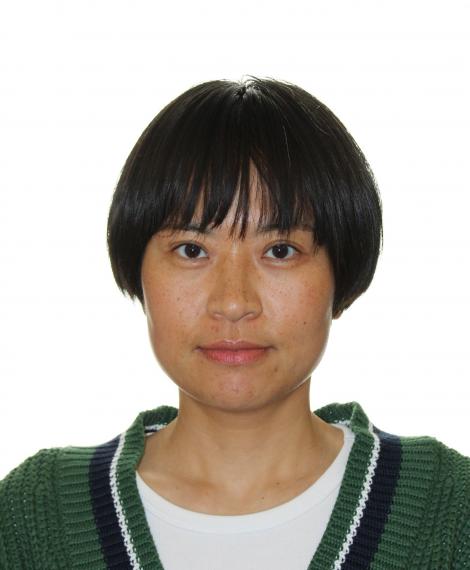
Olga Veksler is a Professor at the University of Waterloo's Department of Computer Science, part of the Faculty of Mathematics. She holds a Ph.D. and M.Sc. from Cornell University (1999) and a B.A. from New York University (1995). Her research focuses on computer vision, machine learning, and discrete optimization, with notable contributions to image segmentation, graph algorithms, and deep learning integration. Her work emphasizes semantic segmentation, salient object detection, and efficient optimization techniques for graphical models. Education: Ph.D. in Computer Science, Cornell University, 1999 M.Sc. in Computer Science, Cornell University, 1999 B.A. in Computer Science, New York University, 1995 Her research explores intersections between machine learning and traditional computer vision challenges, particularly leveraging graph-based optimization and CRF models. Recent trends in her work include weakly supervised learning, sparse non-local CRF applications, and test-time adaptation strategies for salient object detection. She has pioneered methods for shape priors in multi-object segmentation and efficient graph-cut algorithms. Her advising and grant activities are foundational to her research, though specific grant details are not listed here. She maintains a lab focused on advancing computer vision through algorithmic innovation, with contributions to both theoretical frameworks and practical applications in medical imaging and scene understanding.
Diana Allen is a Professor in the Department of Earth Sciences at Simon Fraser University, where she leads the Groundwater Resources Research Group (GRRG). Her research focuses on hydrogeology with particular emphasis on groundwater resource evaluation and hydrogeological modeling, with current research on climate change impacts on groundwater systems, groundwater resources in mountainous and coastal regions, and low temperature geothermal systems. Education: B.Sc. Honours, Carleton University, 1986 M.Sc., Carleton University, 1988 Ph.D., Carleton University, 1996 Dr. Allen's research spans several key areas of hydrogeology and water resources. Her work on climate change impacts examines how extreme climate events affect groundwater systems, particularly in mountainous regions. She has developed methodologies for reconstructing historical groundwater levels using tree ring widths to understand long-term drought patterns. Her research on coastal aquifers assesses vulnerability to salinization, while her work in Northeast British Columbia evaluates water security risks associated with shale gas development. She also investigates aquifer-stream connectivity and the impacts of pumping on streamflow. Dr. Allen's publication record shows a strong focus on applied hydrogeology with significant contributions to understanding groundwater responses to climate extremes, drought assessment methodologies, and coastal aquifer vulnerability. Her research combines field studies with numerical modeling across diverse environments from mountainous regions to coastal deltas. Dr. Allen has successfully secured funding from major agencies including NSERC, the Canadian Mountain Network, the Pacific Institute for Climate Solutions, and various BC government ministries. Her research has practical applications for water resource management under climate change. As a dedicated educator and mentor, Dr. Allen supervises numerous graduate students working on cutting-edge hydrogeological research projects across British Columbia and beyond. Her students pursue careers in hydrogeology and environmental geoscience, applying GIS methods and computational hydrogeology to analyze field data.
Dr. Wenjing Zhang is an Assistant Professor in the School of Computer Science at the University of Guelph, Canada. She holds a Ph.D. in Computer Science from the University of Guelph (2024) and was a visiting research scholar at the University of Arizona's Department of Electrical and Computer Engineering (2016–2018). Her research focuses on cybersecurity in AI/ML, including security threats to models, privacy-preserving techniques, and data privacy in generative AI. She leads projects on robust defenses against adversarial attacks, secure federated learning, and privacy-preserving prompt engineering for LLMs. Dr. Zhang’s research areas include: Security in AI/ML (e.g., poisoning, evasion, prompt injection attacks) Model Privacy (protection of internal parameters) Data Privacy (synthetic data generation, privacy-preserving prompt engineering) She has secured a five-year NSERC Discovery Grant (2025–2030) for her research on enhancing security, privacy, and fairness in generative AI. Her work has been published in top-tier venues such as NeurIPS, IEEE Transactions on Information Forensics and Security, and IEEE Transactions on Communications. She is a recipient of the 2022 Westin Scholar Award and serves on technical committees for IEEE conferences including CNS 2025 and ICC 2025. Her team collaborates on interdisciplinary projects involving federated learning, information theory, and reinforcement learning. She actively seeks partnerships in security, privacy, and generative AI applications.
Frederick A. A. Kingdom is a Professor in the Department of Ophthalmology at McGill University's Faculty of Medicine, focusing on Perception, Cognition and Cognitive Neuroscience . His research explores the interplay between early visual feature detection (edges, bars) and intermediate stages forming contours, textures, and surfaces through spatial vision, color vision, stereopsis, texture perception, brightness/lightness perception, and transparency studies . Email: fred.kingdom@mcgill.ca Key research domains include: Perceptual Mechanisms : Lateral inhibition, contrast normalization, spatial bandpass filters, and their role in brightness/lightness perception and illusions like simultaneous brightness contrast. Color Vision : Red-green vs blue-yellow system distribution, chromatic contrast requirements for stereopsis, color-based depth processing limitations, and color-shading effects that parse surfaces vs illumination. Texture Analysis : Detection thresholds for orientation/frequency/contrast modulated textures, co-circularity in texture perception, and texture statistical sensitivity (e.g., kurtosis importance). Shape Processing : Shape-frequency/shape-amplitude aftereffects, global vs local shape coding, and contour inflection adaptation. His work combines psychophysics , fMRI , image processing , and computational modeling to dissect visual system architecture, particularly how color and luminance signals are integrated/separated in early cortical processing.
Yongjoo Park is an Assistant Professor in the Department of Computer Science at the University of Illinois at Urbana-Champaign (UIUC), affiliated with the Grainger College of Engineering. He leads research in data-intensive AI systems as a member of the Data and Information Systems (DAIS) lab, focusing on novel data systems that bridge database theory and practical AI applications. His work emphasizes open-source contributions through GitHub and direct societal impact. Research interests center on systems for data-intensive AI , particularly efficient Retrieval-Augmented Generation (RAG) systems for exploratory AI, data science versioning, and in-storage computing. Key projects include Kishu (the world's first undoable Jupyter notebook with time-travel capabilities), CARE (a causal-relational system for structured/unstructured data), and AirDB/AirIndex (serverless transactions and automatic index optimization). His group develops tools enabling scalable, optimized AI workflows from storage layers to LLM inference. Recent publications reveal a strong focus on interactive data systems (85% of recent work), with significant contributions to notebook environments (Kishu), vector databases (ISCA'25), and RAG optimization. Awards highlight technical innovation, including SIGMOD 2025 Best Demo Award and NSF CAREER funding. His open-source philosophy drives GitHub releases of all major systems. SIGMOD 2025 Best Demo Award (Kishu) NSF CAREER Award (Novel data science systems) SIGMOD'23 Best Artifact Award Honorable Mention (DeepOLA) IBM-Illinois Project Selection (VectorDB/RAG) Mentorship spans 12 current PhD/MS students and 6 graduated advisees, including Supawit Chockchowwat (now Postdoc at Google, future Assistant Professor at CMKL University). He teaches advanced courses like CS511 (Advanced Data Management) and recruits 1-2 new PhD students annually, prioritizing data systems research. His lab emphasizes diversity, individual respect, and concrete outcomes in a collaborative workspace.
Halim Yanikomeroglu is a Full Professor and Chancellor's Professor at Carleton University's Department of Systems and Computer Engineering, part of the Faculty of Engineering and Design. His research focuses on wireless communications, including 5G/6G networks, non-terrestrial systems (HAPS/LEO satellites), MIMO, and cognitive radio. He has supervised numerous graduate students and holds IEEE Fellow status and the Harold Sobol Award. His work integrates machine learning, federated learning, and sustainability into next-generation networks. Affiliations: Carleton University, IEEE Education: Ph.D. (Toronto), M.A.Sc. (Toronto), B.Sc. (Middle East Technical University) Research interests span cellular networks, relay architectures, and energy-efficient systems. He pioneered cell-switching strategies for green networks and contributed to HAPS and UAV-based infrastructure. His recent work addresses NTN integration, AI-driven spectrum management, and 6G innovations. Awards include IEEE Fellow (2017) and multiple Research.com leadership accolades. His 150+ publications span journals like IEEE Transactions and conferences like ICC. Advising over 50 students, he emphasizes interdisciplinary solutions for future wireless challenges.
Gautam Kamath is an Assistant Professor at the University of Waterloo's Cheriton School of Computer Science, a Faculty Member at the Vector Institute, and a Canada CIFAR AI Chair. He leads The Salon, a research group focused on statistics, algorithms, machine learning, and optimization. His work bridges theoretical foundations with practical applications in data privacy and robustness, contributing to both academic research and real-world deployments that impact millions of users. Dr. Kamath earned his PhD and SM degrees in Electrical Engineering and Computer Science at MIT, where he was advised by Costis Daskalakis. Prior to MIT, he graduated from Cornell University in May 2012 with a degree in Computer Science and Electrical and Computer Engineering, where he worked with Bobby Kleinberg. His academic journey reflects a strong foundation in both theoretical computer science and practical applications. His research focuses on developing solutions for trustworthy and reliable machine learning and statistics, with particular emphasis on data privacy and robustness. He addresses fundamental problems in these areas, revitalizing statistical toolkits for the modern data era where privacy preservation is paramount. His work spans theoretical foundations of differential privacy to practical applications that have been deployed at scale, including contributions to systems that protect the sensitive information of hundreds of millions of individuals. Analysis of his recent publications reveals a strong trend toward addressing the interplay between privacy, robustness, and machine learning performance. His work increasingly examines practical deployment challenges while maintaining theoretical rigor, with growing emphasis on diffusion models, generative AI, and the legal implications of AI systems. There's a clear trajectory from foundational privacy theory toward addressing real-world implementation challenges across diverse application domains. Canada CIFAR AI Chair Ontario Early Researcher Award 2024 Caspar Bowden Award for Outstanding Research in Privacy Enhancing Technologies STOC Best Student Presentation Award ICML 2024 Best Paper Award Microsoft Research Fellow at the Simons Institute for the Theory of Computing Dr. Kamath actively mentors students, with notable successes including Valentio Iverson winning the Germain-Erdős Undergraduate Award and Chris Trevisan receiving the CRA Outstanding Undergraduate Researcher Award. His service to the research community is extensive, serving as Editor-in-Chief of TMLR, on the Executive Committee of the Learning Theory Alliance, and on steering committees for major conferences including ICML, COLT, and ALT. He has organized numerous workshops focused on privacy-preserving machine learning and differential privacy. Through The Salon research group, Dr. Kamath fosters a collaborative environment where postdoctoral fellows, graduate students, and undergraduates work together on cutting-edge problems at the intersection of statistics, algorithms, machine learning, and optimization. The group maintains strong connections with industry partners and participates in major research initiatives, including the Vector Institute's privacy and security research efforts. Looking forward, Dr. Kamath will be moving to the Computer Science department at NYU's Courant Institute of Mathematical Sciences in September 2026, where he plans to expand his research program.
Xuemin (Sherman) Shen is a University Professor in the Department of Electrical and Computer Engineering at the University of Waterloo. He is a Fellow of the Institute of Electrical and Electronics Engineers (IEEE), the Royal Society of Canada, the Canadian Academy of Engineering, and the Engineering Institute of Canada. Professor Shen serves as Editor-in-Chief of multiple prestigious journals including the IEEE Internet of Things Journal and Springer Peer-to-Peer Networking and Applications. Dr. Shen received his Doctorate in Electrical Engineering from Rutgers University in 1990, following a Master of Applied Science from the same institution in 1987. His undergraduate degree is a Bachelor of Applied Science in Electrical Engineering from Dalian Marine University, China (1982). Professor Shen's research spans wireless communications and networking, with particular expertise in resource allocation, mobility management, wireless network security, and privacy preservation. His work extends to IoT applications, connected and automated vehicles, network digital twins, and satellite-terrestrial networks. His research has been applied to vehicular networks, wireless body area networks, remote e-healthcare systems, and smart grid technologies, demonstrating both theoretical depth and practical impact across multiple domains. His recent publications reveal strong trends in AI-assisted networking, security and privacy preservation for IoT applications, and energy management in vehicular and smart grid systems. The research shows an increasing focus on integrating AI techniques with traditional networking approaches, addressing critical challenges in security, privacy, and resource management for next-generation wireless systems. R.A. Fessenden Award (2019) from IEEE Canada James Evans Avant Garde Award (2018) from the IEEE Vehicular Technology Society Joseph LoCicero Award (2015) from the IEEE Communications Society Education Award (2017) from the IEEE Communications Society West Lake Friendship Award from Zhejiang Province (2023) President's Excellence in Research from University of Waterloo (2022) Canadian Award for Telecommunications Research (2021) Professor Shen has mentored over 100 graduate students and postdoctoral fellows throughout his career, with many now holding prominent academic positions at top universities worldwide. His supervision has been recognized with multiple awards including the Award of Excellence in Graduate Supervision (2006) from the University of Waterloo. He has served in numerous leadership roles including Past President of the IEEE Communications Society and has chaired major international conferences including IEEE Globecom 2024.
Dr. Abdelhak Bentaleb is an Assistant Professor in the Department of Computer Science and Software Engineering at Concordia University and founder/director of the IN2GM Lab. His research focuses on optimizing networked multimedia systems using machine learning, with emphasis on video streaming, edge computing, and 5G/6G networks. He holds a PhD from the National University of Singapore (awarded SIGMM and DASH-IF Best Thesis prizes) and completed a postdoctoral fellowship there. Education: PhD in Computer Science, National University of Singapore (2019) Postdoctoral Research Fellowship, National University of Singapore (2019-2022) Research Interests: AI-driven video streaming optimization, low-latency media delivery, network protocols, immersive media technologies, and IoT systems. Current projects explore end-to-end AI-enabled systems for QoE optimization in video delivery using reinforcement learning and deep learning techniques. Awards: SIGMM Award for Outstanding PhD Thesis DASH Industry Forum Best PhD Dissertation Award Multiple DASH-IF Excellence Awards His work includes over 50 publications in top venues (e.g., ACM MMSys, IEEE INFOCOM, USNIX NSDI) and 3 patents. The IN2GM Lab focuses on applied AI/ML solutions for networked systems challenges.
Hong Han is an Assistant Professor in the Department of Biochemistry & Biomedical Sciences within McMaster University's Faculty of Health Sciences and a member of the Centre for Discovery in Cancer Research (CDCR). She holds a Canada Research Chair and leads the Han Lab, which focuses on cancer biology, RNA regulation, and innovative high-throughput technologies for therapeutic discovery. Dr. Han earned her Ph.D. from the University of Toronto (2010-2016) and has established herself as a leading researcher in glioblastoma and alternative splicing regulation. Her interdisciplinary research integrates cancer biology, RNA science, and multilayer gene regulation to uncover mechanisms underlying cancer progression and treatment resistance. Her laboratory pioneers integrated technological platforms for large-scale genetic/drug screening and ultra-high-throughput single-cell profiling. The research focuses on three main areas: alternative splicing regulation in cancer (particularly glioblastoma and prostate cancer), multilayer mechanisms of glioblastoma heterogeneity and microenvironment evolution, and multiplexed screening approaches for therapeutic discovery in treatment-resistant cancers. Analysis of Dr. Han's recent publications reveals a strong emphasis on single-cell technologies to characterize glioblastoma heterogeneity, minimal residual disease states, and tumor-immune interactions. Her work increasingly bridges basic RNA biology with translational applications, particularly in developing novel therapeutic strategies targeting splicing networks and immune evasion mechanisms. Canada Research Chair Dr. Han teaches Advanced Techniques in the Biomedical Sciences (BIOCHEM 734). Her research program is supported by multiple funding sources, as evidenced by her extensive publication record in high-impact journals including Nature, Cell, Molecular Cell, and Nature Communications. She employs a comprehensive approach combining in vitro, in vivo, and patient cohort studies with cutting-edge genomic technologies. The Han Lab has developed innovative multiplexed screening platforms that enable simultaneous interrogation of thousands of conditions, ranging from CAR-T cells to small molecule therapeutics. This approach accelerates the discovery of novel cancer targets and therapeutic strategies for treatment-resistant cancers.
WonSook Lee is a tenured Full Professor in the School of Electrical Engineering and Computer Science at the University of Ottawa’s Faculty of Engineering. Her expertise spans medical imaging, machine/deep learning, computer graphics, and computer vision. She earned her Ph.D. in Computer Science from the University of Geneva (Switzerland) and holds degrees from POSTECH (Korea) and NUS (Singapore). Before academia, she worked at Korea Telecom, Samsung Advanced Institute of Technology, and Eyematic Interfaces Inc. (USA). Her research focuses on applications such as virtual/augmented reality, MRI/CT/Ultrasound analysis, and 3D mesh modeling. She has authored over 130 publications, including 30+ journal papers, and serves on conference committees and editorial boards. Lee has secured major grants (NSERC, CFI, ORF) as Principal Investigator and contributed to global initiatives like South Korea’s National Research Foundation. Her lab explores cutting-edge techniques in medical imaging, AI-driven object detection, and multimodal systems. Notable projects include adversarial perturbation analysis for model robustness, cross-domain GANs for semantic segmentation, and real-time ultrasound-enhanced pronunciation training. She actively promotes interdisciplinary research in healthcare technology and autonomous systems.
Shiva Nejati is a Professor at the University of Ottawa 's School of Electrical Engineering and Computer Science . He holds a PhD in Computer Science from the University of Toronto and previously worked as a Senior Scientist (2012-2019) and Scientist (2009-2012) at the SnT Centre (University of Luxembourg) and Simula Research Laboratory. Research focus: Software engineering for cyber-physical systems (autonomous vehicles, IoT), blending formal verification, machine learning, and search-based testing Key tools developed: ARIsTEO, SOCRaTEs, SimCoTest, EPIcuRus Editorial roles: Associate Editor for EMSE Journal (2025–), ASE Journal (2025–), IEEE Transactions on Software Engineering (2020–2024) His work combines formal methods , empirical software engineering , and AI/ML to address verification challenges in complex systems, particularly through evolutionary algorithms and surrogate modeling . Notable collaborations include industry partners in telecommunications, automotive, and aerospace sectors. Recent publications emphasize large language models for requirements analysis, adversarial testing of vision systems, and multi-objective optimization for test generation. His Sedna Research Lab actively trains graduate students in these cutting-edge methodologies.