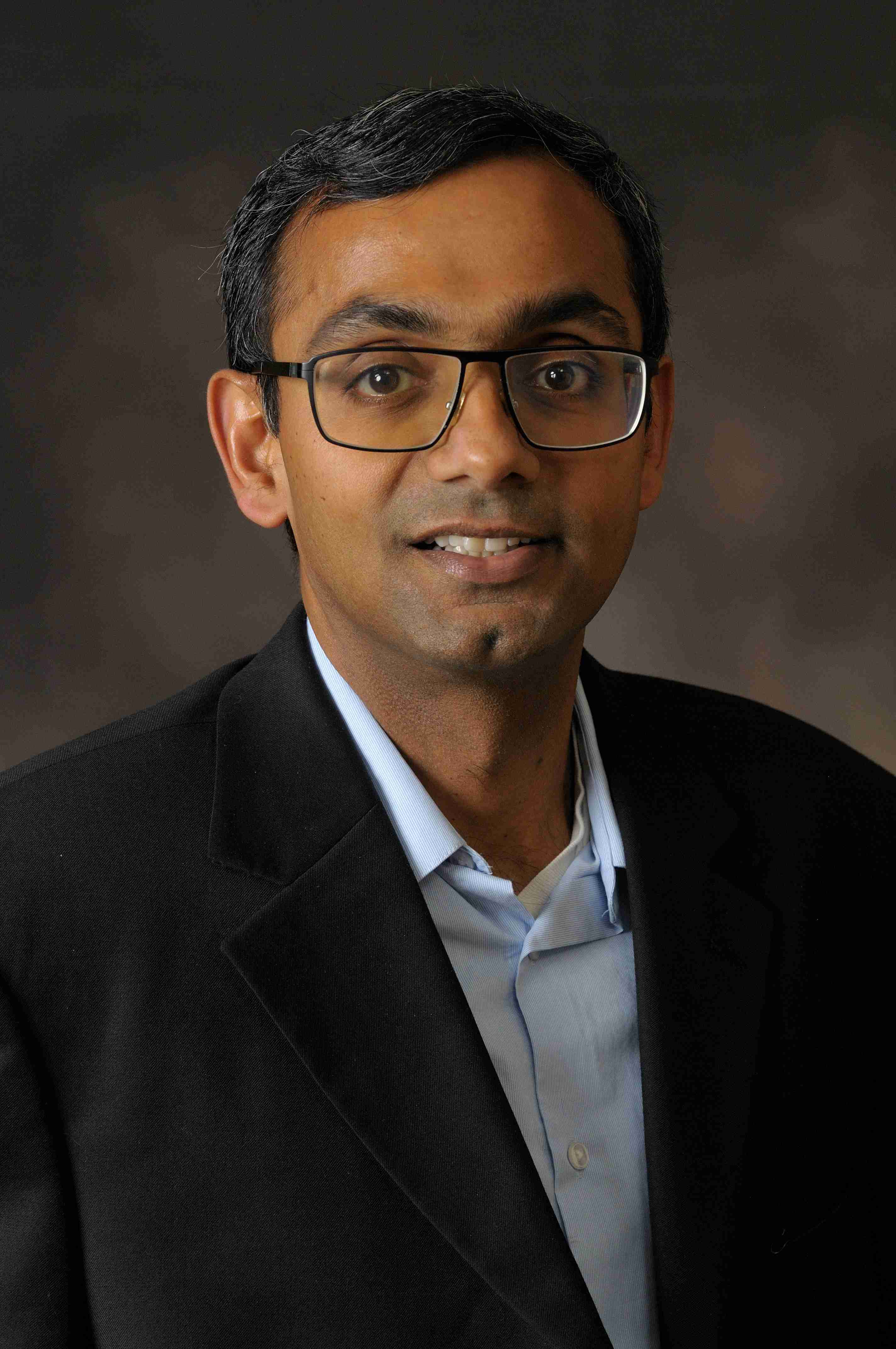
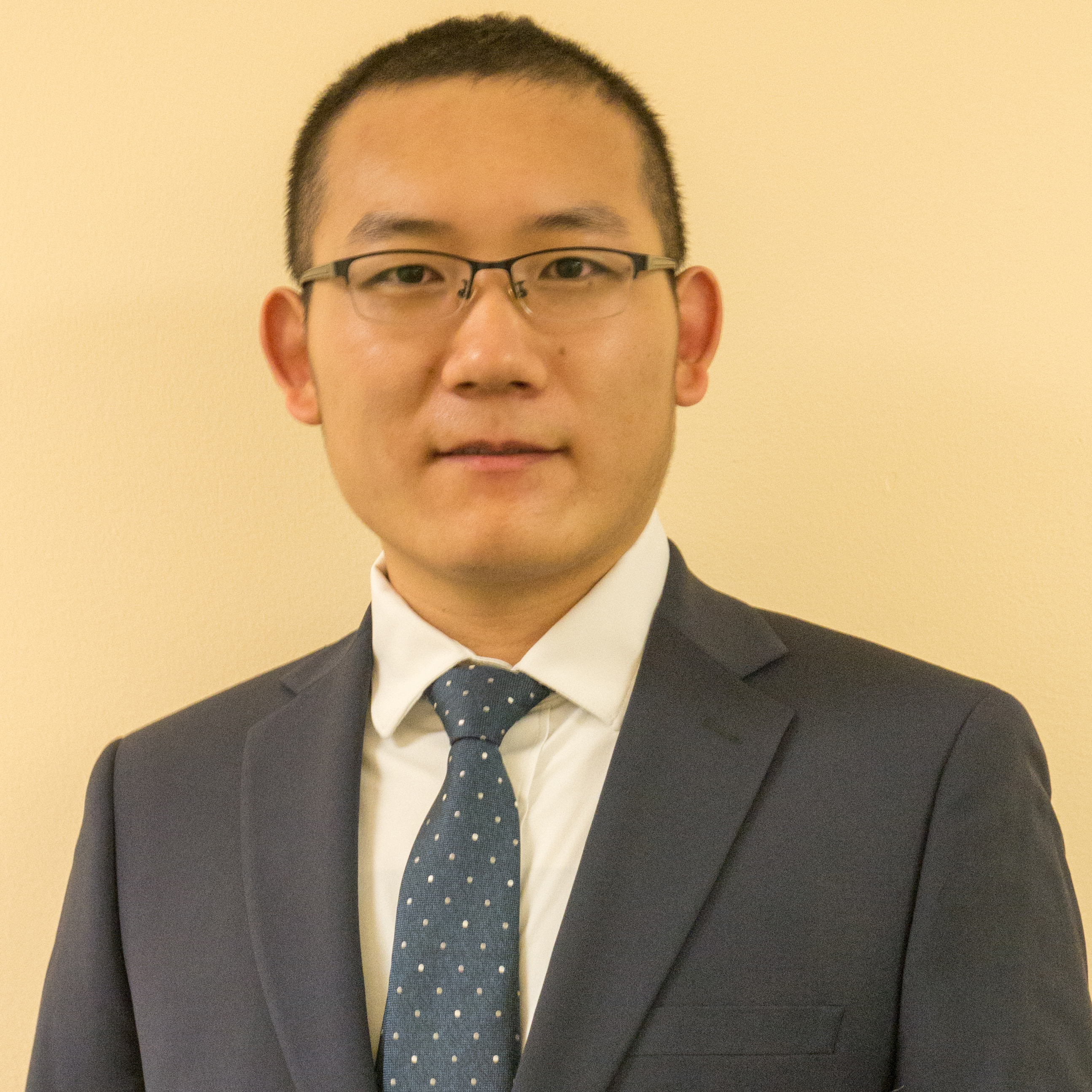
Ronald Dreslinski is a Professor in the Department of Computer Science and Engineering at the University of Michigan, College of Engineering. His work focuses on computer architecture, memory systems, and reconfigurable computing, with applications in machine learning, wireless communication, and autonomous systems. Research spans hybrid memory systems, fault-tolerant networks, and low-power processors Key technologies include PIM (Processing-in-Memory), systolic arrays, and Galois field accelerators His publications highlight trends in adapting reconfigurable architectures for sparse data, optimizing wireless communication decoders, and integrating neural networks with traditional circuit design. He mentors PhD students through weekly 1-on-1 meetings, project-specific sessions, and group presentations. The department emphasizes broadening participation in computing and student support through community initiatives.
Dr. Siamak Layeghy is a Lecturer in the School of Electrical Engineering and Computer Science at The University of Queensland. He holds a PhD in Information Technology and Electrical Engineering from UQ (2018). His research focuses on AI/ML-driven cybersecurity solutions, particularly network intrusion detection systems (NIDS), IoT security, edge learning, and software-defined networking (SDN). Education : PhD in Information Technology and Electrical Engineering, The University of Queensland (2018) Research Interests : Application of ML techniques (Transformers, GNNs, GANs) for network and IoT security Edge computing and hardware acceleration (e.g., Edge TPU) Domain-invariant NIDS and cross-platform security solutions Federated learning and blockchain for collaborative intrusion detection His work emphasizes explainability, generalization, and real-world deployability of AI models in cybersecurity. Publications : Over 50 peer-reviewed articles, including high-impact journals like Expert Systems with Applications and IEEE Transactions . Key themes include sensor-based anomaly detection, SDN security, and framework development (e.g., FlowTransformer). Labs/Teams : Active contributor to the development of open-source frameworks like FlowTransformer and datasets such as NF-CSE-CIC-IDS2018-v3. Collaborates with industry partners on IoT security and edge computing.
Niraj Jha is a Professor of Electrical and Computer Engineering at Princeton University, affiliated with the School of Engineering and Applied Science. He joined Princeton in 1987 and became a full professor in 1998. His research focuses on smart healthcare, machine learning algorithms, IoT security, and neuro-symbolic AI. He leads projects in wearable medical sensors for disease detection, transformer synthesis, and cybersecurity for cyber-physical systems. Jha has authored/co-authored over 480 papers, 25 patents, and multiple books, including Testing and Reliable Design of CMOS Circuits and Nanoelectronic Circuit Design . He has received prestigious awards like the ACM and IEEE Fellowships, and the Distinguished Alumnus Award from IIT Kharagpur. Education: Ph.D., University of Illinois at Urbana-Champaign, 1985 M.S., State University of New York at Stony Brook, 1982 B.Tech., Indian Institute of Technology Kharagpur, 1981 Research Interests: Jha’s work bridges AI, hardware design, and healthcare. Key areas include: Predictive healthcare via wearable sensors and ML ensembles Transformer acceleration for edge computing Cybersecurity for IoT and 5G systems Neuro-symbolic AI for small-data learning Optimization via reinforcement learning His lab explores body-area networks, synthetic control for clinical trials, and energy-efficient architectures. Publications & Awards: Over 20 papers have won best paper awards. Notable recognitions include the Princeton Graduate Mentoring Award (2004) and the 2025 ACM recognition for Learning Interpretable Differentiable Logic Networks . Advising & Labs: Jha advises graduate students on topics like neural architecture search (e.g., FlexiBERT) and healthcare AI (e.g., DOCTOR framework). He directs the Andlinger Center for Energy and the Environment and has led the Center for Embedded System-on-a-Chip Design. His lab collaborates on projects like SHF: Small grants for transformer synthesis and NSF-funded initiatives. Labs & Teams: Active in Princeton’s Global Health Initiative and collaborates across disciplines, including robotics and data science. His research group develops tools like CODEBench (co-design frameworks) and TUTOR (decision-rule-based ML).
Gavin Brown is a Professor of Computer Science at the University of Manchester, affiliated with the Data Science Institute and the Machine Learning and Optimisation group. His research focuses on machine learning theory, ensemble methods, feature selection, and hardware-accelerated learning. He holds roles in interdisciplinary initiatives like the Centre for Digital Trust and Society, EnnCore project (privacy-preserving neural architectures), and the Robotics and Artificial Intelligence Centre. Education: PhD in Computer Science from the University of Birmingham (2003), with a thesis on 'Diversity in Neural Network Ensembles'. Research interests span theoretical foundations of machine learning, including bias-variance decomposition, ensemble diversity, and algorithmic stability. Applications include healthcare (e.g., outlier detection in vital signs), robotics (low-cost prediction hardware), and ethical AI (conceptual guarding of neural networks). He has pioneered work on feature selection for resource-constrained systems and neuromorphic computing. Recent articles emphasize unifying ensemble theory, hardware-efficient learning (FPGA-based feature selection), and clinical applications of machine learning. Projects include EnnCore (privacy-preserving AI), RAI Centre (robot-AI ethics), and Data Visualisation for clinical trials. He leads or co-leads 8 major projects, including £multi-million initiatives in digital trust, robotics, and AI. Supervised 24 doctoral students, with a focus on interdisciplinary work combining theory and applied machine learning.
Dr. Chang Liu is a Senior Lecturer in Electronic Engineering at the University of Edinburgh's School of Engineering. He received his B.Sc. in Automation from Tianjin University (2010) and Ph.D. in Testing, Measurement Technology and Instrument from Beihang University (2016). Following postdoctoral research at Empa-Swiss Federal Laboratories, he joined the Agile Tomography Group at Edinburgh. His research focuses on laser spectroscopy, laser imaging, and data-driven imaging techniques for applications in reacting flow-field diagnostics and environmental monitoring. Key specialties include design of near/mid-infrared LAS sensing systems, development of high-sensitivity imaging methodologies, spectroscopic modeling, inverse problem solving, and embedded system design. His publications demonstrate a consistent focus on advancing tomographic imaging techniques, with recent work emphasizing machine learning integration, hardware acceleration, and industrial applications in aero-engine monitoring. Research consistently addresses challenges in spatial/temporal resolution enhancement and real-time system implementation. Dr. Liu teaches courses in Digital System Design, Analogue Circuits, and Embedded Systems. He leads multiple research projects including EPSRC-funded initiatives on laser imaging of turbine engine combustion species. His team collaborates with industrial partners to develop cutting-edge laser-based sensing solutions.
Karthik Pattabiraman is a Professor and Associate Head (Graduate Affairs) in the Department of Electrical and Computer Engineering at the University of British Columbia (UBC), Canada. He holds a PhD in Computer Science from the University of Illinois at Urbana-Champaign (UIUC), an MS from UIUC, and a B.Tech from the University of Madras. His research focuses on dependable computer systems, computer security, cyber-physical systems, and software engineering. He has led the Dependable Systems Lab and other research groups like RADICAL and LERSSE. Education: PhD (UIUC, 2009), MS (UIUC, 2004), B.Tech (University of Madras, 2001). Postdoctoral research at Microsoft Research (2009). Research Interests: Dependable systems, security in cyber-physical systems, software reliability, and edge computing. His work includes fault injection frameworks (e.g., TensorFI, BinFI), resilience techniques for ML systems, and intrusion detection in robotic vehicles. Awards: Inaugural Rising Star in Dependability Award (2020), UBC Killam Research Prize (2018), IEEE/IFIP DSN Best Paper (2021), and recognition for contributions to dependability and security. Lab Activities: Dependable Systems Lab, Real-Time and Dependable Computing Lab (RADICAL), Secure Systems Engineering (LERSSE), and Software Analysis and Testing (SALT) Lab. Current sabbatical at Meta (2024-2025).
Chilukuri K. Mohan is a Professor at Syracuse University, affiliated with the Syracuse Evolutionary and Neural Systems Exploration (SENSE) Lab. He holds a Ph.D. from the State University of New York at Stony Brook and a B.Tech. from the Indian Institute of Technology, Kanpur. His research focuses on neural networks, evolutionary algorithms, bioinformatics, reinforcement learning, and anomaly detection. Current projects include automated object design optimization, networked autonomous systems analysis, explainable reinforcement learning, and code stylometry for authorship detection. He collaborates extensively with scientists in bioinformatics and cybersecurity domains. Notable awards include the IEEE Region 1 Technological Innovation Award (2019) and the International Society of Applied Intelligence's Distinguished Scholar Award (2011). His work spans theoretical algorithm development and applied domains like quantum chemistry, sensing-communication systems, and biometric security.
Zhihao Jia is an Assistant Professor in the Computer Science Department at Carnegie Mellon University (CMU). He is affiliated with the CMU Catalyst Group and the Parallel Data Lab, focusing on advancing systems for machine learning, quantum computing, and large-scale data analytics. Previously, he was a research scientist at Facebook and earned his PhD from Stanford University (2020), advised by Alex Aiken and Matei Zaharia. His bachelor's degree is from Tsinghua University's Special Pilot CS Class under Andrew Yao. His research emphasizes accelerating deep learning computations on modern hardware and optimizing quantum circuits for intermediate-scale quantum devices. Notable contributions include speculative reasoning techniques, efficient LLM serving systems, and quantum circuit simulators. He teaches advanced courses such as 15418 and 15618 at CMU. Zhihao advises PhD students including Zhuoming Chen, Zikun Li, and Xinhao Cheng. His work bridges systems research with emerging applications, aiming to enhance computational efficiency and scalability. He collaborates on projects like Specexec, Helix, and Atlas, addressing challenges in distributed computing and quantum simulation.
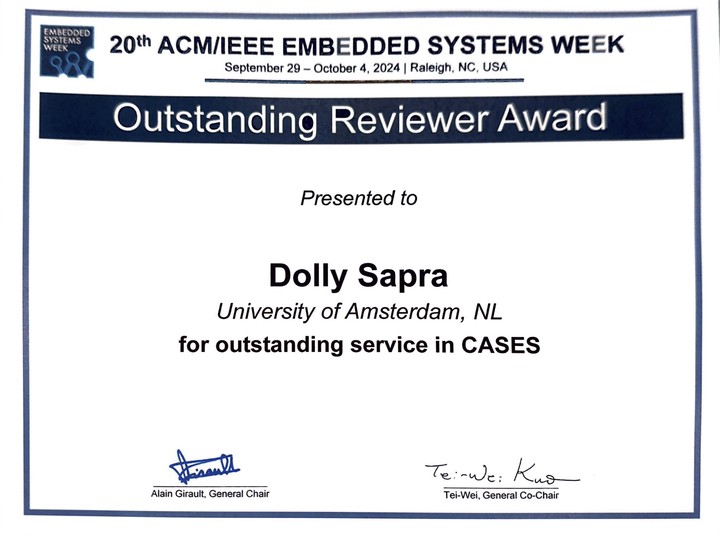
Dolly Sapra is a researcher at the University of Amsterdam , affiliated with the Department of Computer Science under the Faculty of Science . Her work focuses on adaptive deep learning, secure neural inference, energy-efficient computing, and fault-aware systems. She received the IEEE/ACM CASES '24 Outstanding Reviewer Award . Her research spans Machine Learning , Edge Computing , and Embedded Systems , with a focus on Model elasticity for CNNs Privacy-preserving edge intelligence Power-efficient inference Transformer optimization Climate-aware computing . The 15 most recent articles highlight her leadership in adaptive neural architectures , secure multi-party inference , and sustainable computing , with applications in embedded systems and real-time environments .
Manya Ghobadi is an Associate Professor in the Department of Electrical Engineering and Computer Science at MIT, affiliated with the Computer Science & Artificial Intelligence Laboratory (CSAIL). Her research focuses on efficient systems for machine learning, cloud infrastructure, and reconfigurable networks. She holds appointments in both the School of Engineering and the Department of EECS at MIT. Education: PhD from the University of Toronto, prior experience at Microsoft Research and Google before joining MIT. Research Interests: Systems for ML, cloud infrastructure, data center networks, optical networks, hardware-software co-design, and network optimization. Publications: Over 50+ papers in top venues including SIGCOMM, NSDI, HotNets, and MLSys, with awards such as the NSF CAREER and Sloan Fellowship. Students: Advises 10+ PhD candidates including Mingran Yang (Microsoft Research Fellow) and Sudarsanan Rajasekaran. Awards: Sloan Fellowship, ACM SIGCOMM Rising Star, Optica Simmons Memorial Speakership. Labs/Teams: Leads research on photonic computing (NetBlocks, Lightning) and network optimization (Cassini, TopoOpt). Collaborates with industry partners like Juniper and Google.
Associate Professor Liwei Li holds a position at the School of Electrical and Computer Engineering, University of Sydney. She is a SOAR Fellow and a member of the Net Zero Institute and the Sydney Nano Institute. Her research focuses on microwave photonics, photonic sensing, and integrated photonics, with applications in nanotechnology and fiber optics. Li has been recognized with awards including the Sydney Research Accelerator (SOAR) Prize (2022), Sydney Equity Prize (2022), and multiple teaching commendations (2016–2021). She advises PhD students on projects like microwave circuits for silicon carbide integrated photonics and high-resolution optical spectrum analysis. Her research explores cutting-edge topics such as machine learning-enhanced photonic sensors, silicon carbide photonic integration, and athermal sensor design. Key contributions include work on Kerr nonlinearity in silicon carbide platforms and optical bistability in microring resonators. Li has also pioneered error-correction techniques for multi-parameter sensing using cascaded photonic crystal resonators. Her work bridges optical signal processing with practical applications in sensing and telecommunications, leveraging silicon photonics and advanced materials like cubic silicon carbide. Teaching includes courses like Signals and Systems (ELEC2302) and Electrical and Optical Sensor Design (ELEC5516). She has received grants for projects such as 'Advanced Photonics Packaging' and collaborates on interdisciplinary initiatives like hydrogen gas sensing for clean energy. Li’s lab is part of the University of Sydney Nanoscience Hub, emphasizing prototype development and real-world impact.
Shuaiwen Song is a SOAR Associate Professor (tenured) at the School of Computer Science , University of Sydney, and directs the Future System Architecture (FSA) Lab . He holds affiliated professor positions at the University of Washington's Electrical Engineering department and serves as a Visiting Professor at Microsoft. Key research areas: High Performance Computing (HPC), Hardware-Software Co-design, Emerging Architectures (heterogeneous, quantum), and System ML Current projects: Large-Scale Sparse Model Design (Google), Tiered Memory Systems (Google), Compiler Optimizations for Heterogeneous Computing (Microsoft/Alibaba), Planet-Scale XR Systems (Meta), Quantum System Architecture (Australian Research Council) His work bridges system software and hardware, focusing on holistic design for complex many-accelerator systems and futuristic architectures like VR/AR and quantum accelerators. Recent publications highlight advancements in temporal graph processing, VR rendering, and ReRAM-based CNN training. He has received prestigious awards including IEEE Mid-Career Award for Scalable Computing , Alibaba AIR Faculty Award , and Australia's Most Innovative Engineers recognition.
Jason Mars is a Professor at the University of Michigan's Department of Electrical Engineering and Computer Science, leading the Clarity-Lab. His research focuses on cross-layer architectures and runtimes for future computing systems, particularly in warehouse-scale computers. He has pioneered projects like Sirius (an open voice/vision personal assistant), Protean Code (dynamic code transformations), and Adrenaline (tail latency management). His work addresses challenges in energy efficiency, resource allocation, and performance optimization in large-scale systems. Key contributions include architectural designs for AI services, thermal management strategies, and compiler techniques for approximate computing. Mars collaborates with industry leaders like IBM and has advised numerous students who have published at top conferences such as ASPLOS and HPCA. Recent research spans AI ethics, scalable programming models (e.g., Data Spatial Programming), and edge-cloud collaboration frameworks like Neurosurgeon. He has delivered invited talks at Baidu, IBM Watson, and conferences worldwide, emphasizing the societal impact of computing systems.
Prof. Katia Parodi is a Professor at the Chair of Medical Physics within the Faculty of Physics at Ludwig Maximilian University of Munich. Her research focuses on advanced imaging techniques for particle therapy, including proton and ion beam applications. She leads studies in proton computed tomography (CT), ionoacoustic monitoring, and radiobiological assessments of high-dose-rate therapies like FLASH radiotherapy. Her work integrates cutting-edge technologies such as photon-counting CT, machine learning for dosimetry prediction, and novel contrast agents for multimodal imaging. She also explores applications of radioactive ion beams for precision oncology and has pioneered the SIRMIO small-animal irradiation platform for pre-clinical research. Key research interests include improving proton beam range verification through bremsstrahlung imaging, optimizing particle therapy with AI-driven algorithms, and understanding biological effects of ultra-high dose-rate irradiation. She collaborates on international projects, including FLUKA code development for radiation simulations and European initiatives on privacy-protected patient data analysis. Her publications highlight advancements in in-beam PET systems, molecular dynamics simulations of radiation effects, and the development of 3D-printed phantoms for proton CT. Current efforts emphasize translating AI innovations into clinical practice for personalized radiotherapy.
Dr. Hailu Xu is an Assistant Professor in the Department of Computer Engineering & Computer Science at California State University, Long Beach (CSULB). He holds a Ph.D. in Computer Science from Florida International University (2020), M.S. from University of Toledo (2016), and B.S. from North China Electric Power University (2014). His research focuses on systems design with emphasis on big data processing, stream processing, edge/cloud computing security, and AI integration. He designs systems for social stream data analysis, failure recovery in distributed systems, and combating misinformation in social networks. Research interests include: AI-driven system optimization Edge-cloud collaboration for real-time processing Security in distributed environments Federated learning frameworks Anti-spam mechanisms for social platforms Recent work highlights trends in federated learning efficiency, fault recovery in stream systems, and scalable misinformation detection. His 2023 Neurocomputing paper introduced WSSGCN, while 2024's StraightLine scheduler addresses ML workload optimization. Received NSF Panel Reviewer role (2023) PC member for IEEE Big Data 2024 and ACM Multimedia 2022 Advising undergraduate/graduate students in CS/CE fields. Current projects involve federated learning optimization and edge computing security. His lab develops systems like COS2 for pandemic misinformation detection and Xunified for GPU memory management.