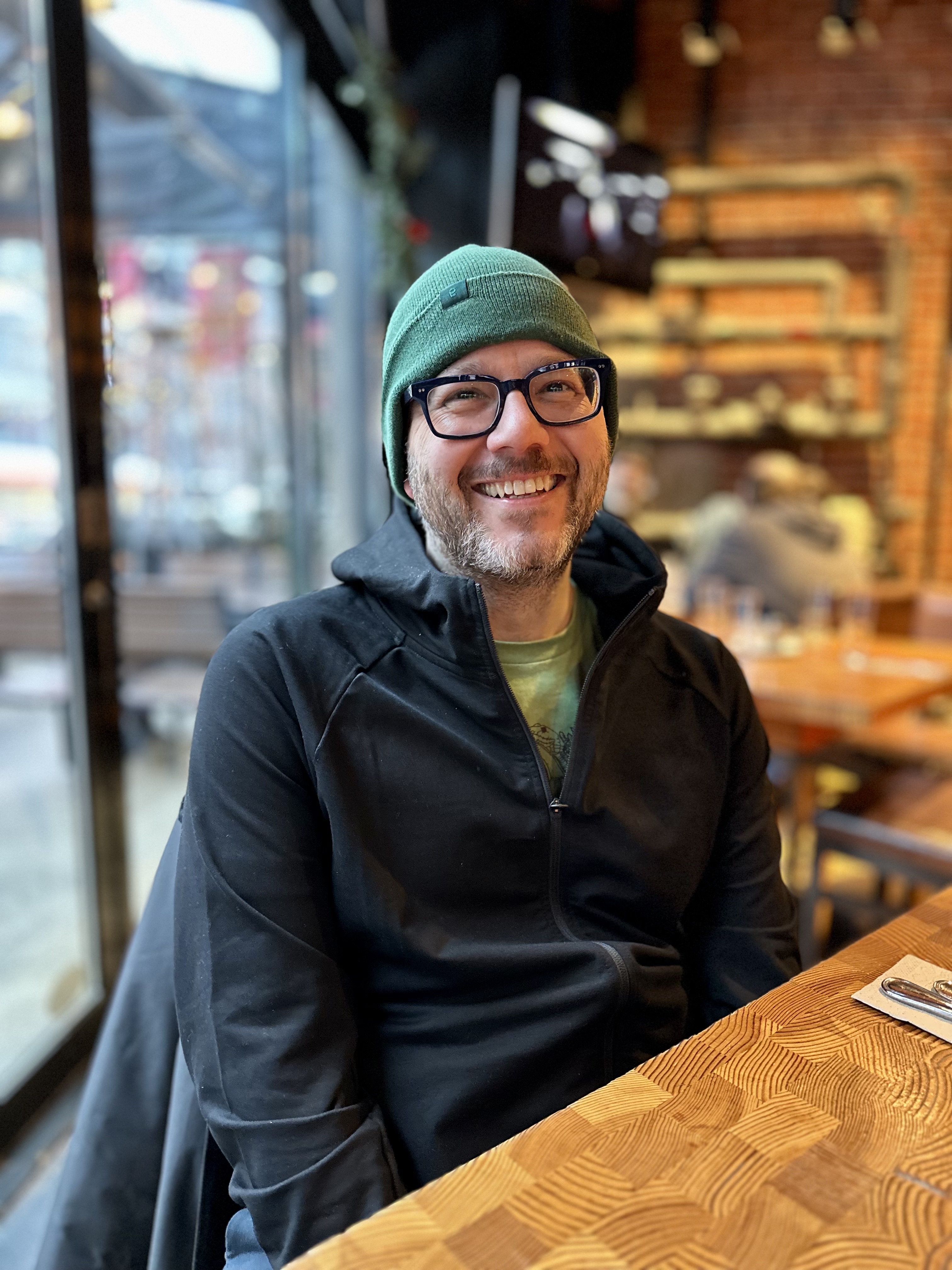
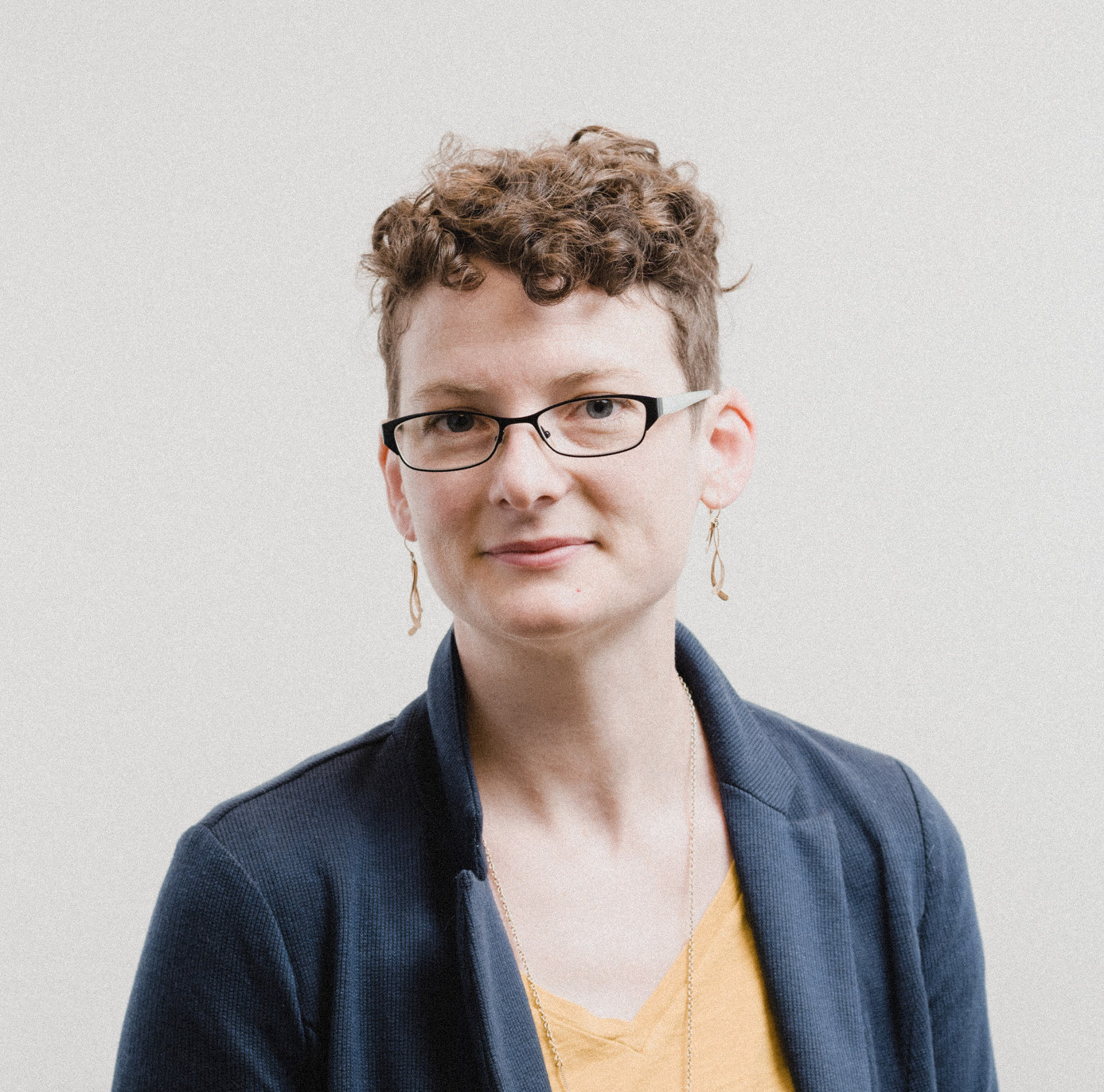
Kyra Morris is a Research Fellow at Princeton University, affiliated with the Department of English and Environmental Studies Program. She specializes in environmental humanities, ecopoetics, and 20th/21st century anglophone literature. Her work bridges academic and public writing, emphasizing place-based research and climate storytelling. Education: BA in English (Yale University), MPhil in Modern and Contemporary Literature (University of Cambridge) Her research focuses on landscapes of loss and recovery, particularly through post-1945 poetry. Her dissertation, Landscapes of Loss, Forms of Recovery , examines works by William Carlos Williams, Seamus Heaney, and Robert Macfarlane. She incorporates first-person interludes from site visits to connect literary forms with environmental ethics. Publications include an article in Interdisciplinary Studies in Literature and the Environment (2024) and a forthcoming piece on the New Jersey Meadowlands in The Atlantic . She co-founded the Ecotheories Colloquium, inviting scholars like Anna Tsing and Cary Wolfe to Princeton. Teaching roles include positions at Princeton’s English Department, Edna Mahan Correctional Facility, and institutions in India and the U.S. She is a member of Blue Lab, a climate storytelling initiative.
University of California , Santa Barbara (UCSB)United States
Caleb Luna is an Assistant Professor of Feminist Studies at the University of California, Santa Barbara. They hold a Ph.D. in Performance Studies with a Designated Emphasis in Gender and Women’s Studies from UC Berkeley (2022) and a B.A. in Anthropology and Women’s and Gender Studies from the University of Texas at Austin (2015). Previously, they served as a UC President’s and Mellon Foundation Postdoctoral Fellow in Feminist Studies at UCSB. Research focuses on fat studies, queer of color critique, disability studies, and women of color feminisms. Key interests include examining race, size, sexuality, and disability in media and culture, with a commitment to embodiment as a tool for collective liberation. Their work spans academic publishing, performance art, and podcasting (e.g., co-hosting Unsolicited: Fatties Talk Back ). Publications include the award-winning book REVENGE BODY (Nomadic Press, 2022) and articles in Fat Studies , Performance Matters , and Queer Nightlife . Research areas encompass anti/colonialism, body politics, HIV/AIDS, and visual arts. Their cultural work challenges normative frameworks while centering marginalized voices in movements for liberation. Luna’s scholarly contributions emphasize interdisciplinary approaches, blending performance studies, media analysis, and decolonial theory. They actively engage in public-facing scholarship through podcasts, anthologies, and community-driven projects.
Dr. André Krebber is a Lecturer in Social and Cultural History (Human-Animal Studies) at the University of Kassel . His work bridges cultural and intellectual history, focusing on human-nature relationships, animal history, and ecotheories. Education: Studied at the Universities of Lüneburg, Canterbury, and Oxford. Research: Explores intersections of scientific, artistic, and non-European knowledge practices, particularly through octopus studies in the OktoLab project. Awards: Susan Manning Postdoctoral Fellow (2017–2018), upcoming Kyoto fellowship (2024). Publications: Co-edited Animal Biography (2018) and Handbook of Historical Animal Studies (2021). His work challenges anthropocentric frameworks and seeks solutions to environmental crises through historical and interdisciplinary lenses.
Anne McConnell is a Professor at West Virginia State University, specializing in contemporary literature and philosophy from France, Latin America, and the United States. Her research focuses on animal studies and ecocriticism, with recent work exploring interspecies communication, falconry practices, and ethical obligations in human-animal relationships. She has authored two books: Approaching Disappearance (2013) and Stepping Off the Edge (2021), alongside numerous articles in journals such as ISLE and GeoHumanities . Her teaching includes world literature, critical theory, and writing courses. She resides in Fayetteville, WV, alongside two humans and two cats. Office hours are listed across multiple days, reflecting her active academic engagement. Publications span interdisciplinary topics including literary ecology, posthumanism, and narrative forms. While no formal grants or awards are noted, her work consistently bridges environmental ethics with textual analysis, offering innovative perspectives on interspecies and ecological dynamics.
Vincent Nardizzi is a Professor in the Department of English Language and Literatures at the University of British Columbia , with research expertise in English Renaissance literature , Shakespeare studies , ecotheory , plant studies , queer studies , and early modern science studies . He is a founding member of the research network Oecologies: Inhabiting Premodern Worlds and an associate member of UBC’s Institute for Gender, Race, Sexuality, and Social Justice . Education: BA from University of Pennsylvania (1995), PhD from Duke University (2001) Current Research: Botanical biography of Thomasin Tunstall (orchid studies), early modern lunar/solar reconceptions, speculative natural history Publications: Two monographs - Wooden Os (2013) and Marvellous Vegetables (2025), plus numerous edited collections and 20+ peer-reviewed articles Research Focus examines intersections between ecological anxiety and queer embodiment in premodern contexts. His work combines word/image analysis with material culture studies to re-examine botanical texts as intellectual resources for counter-histories of embodiment. Current projects explore plant-human entanglements , lunar literary science , and vegetal biographies . Awards & Grants : 2024 Killam Research Prize 2018 Dean of Arts Faculty Research Award 2014-15 Peter Wall Institute residency Multiple SSHRC Canada grants Folger Shakespeare Library funding Bibliographical Society of America support
Rebecca Scott is an Associate Professor of Sociology at the University of Missouri, with affiliate faculty status in the Geography Department since January 1, 2020. Her appointment in Geography reflects the strong interdisciplinary connections between her sociological work and geographical approaches to environmental issues, particularly environmental justice and resource extraction in Appalachian regions. Dr. Scott earned her Ph.D. from the University of California-Santa Cruz in 2007. Her academic trajectory has focused on the complex intersections of environment, identity, and social inequality, with particular attention to how landscapes become sites where identities are formed and contested. Scott's research examines environmental inequality through critical lenses of gender, race, and class, with special emphasis on how these categories shape experiences of environmental change and resource extraction. Her work combines cultural studies, feminist theory, and environmental sociology to understand the relationships between people, places, and environmental transformation. She investigates how fossil fuel extraction reshapes social relations, identities, and communities, particularly in Appalachia where she has conducted extensive ethnographic research. Her publications reveal a consistent focus on environmental justice issues, with particular attention to mountaintop removal coal mining, fracking, and pipeline development. Scott analyzes how these extractive practices transform not only physical landscapes but also social identities and community structures, examining the intersections of environmental change with racialization, gender construction, and class formation. Dr. Scott's research has been supported by multiple System-Wide Research Board Grants from the University of Missouri, including funding for projects on fracking ('Unreal Estates: Fracking Nature, Property and Personhood,' 2018) and Appalachian identity ('Extracting Identities: Nature, Race, and Gender in the WV Coalfields,' 2009). She has also received a Summer Research Fellowship and Research Council Grant from the University of Missouri-Columbia in 2008, and was awarded the Feminist Studies Award in 2006 for her work on masculinity in mountaintop removal discourse. Currently, Scott is working on a book centered on fracking and the pipeline boom, with a particular focus on property as a technology of personhood and exploitation. This work extends her longstanding interest in how environmental changes reshape social relations and identities, examining the complex ways that property relations mediate experiences of extraction and environmental transformation.
David Bialock is an Associate Professor in the Department of East Asian Languages and Cultures at the University of Southern California. His research focuses on premodern Japanese literature, classical poetry, ecocriticism, and the intersection of music with medieval Japanese literature and ritual. He holds a B.A. in Classical Greek and French from the University of Michigan (no specific year stated), an M.A. and Ph.D. in East Asian Languages and Cultures from Columbia University, and completed a postdoctoral fellowship at Stanford University (1996–1997). His research explores themes such as the Tale of the Heike , medieval Japanese mythology, and environmental humanities, often situating Japanese literature within broader interdisciplinary frameworks. He has published extensively on topics including biwa music’s role in narrative, literary reception history, and ecological criticism. Awards: Japan Foundation Fellowship (2003–2004), Andrew Mellon Post-doctoral Fellowship (1996–1997), and a Fulbright-Hays Grant (1992–1993). Bialock has led the Department of East Asian Languages and Cultures at USC (2011–2014) and contributed to major projects like the Cambridge History of Japanese Literature . His work bridges literary analysis with cultural, environmental, and religious dimensions of medieval Japan.
Jeffrey Theis serves as Professor and Chair of the Program Area for General Education (PAGE) in the Department of English at Salem State University. His teaching portfolio includes specialized courses such as ENG 716 Ecopoetics, Shakespeare seminars (ENL 340/341), and honors thesis capstones (ENG 998/IDS 600H/601H), reflecting his dual commitment to literary scholarship and undergraduate mentorship. His academic credentials feature: Ph.D. in English, University of Wisconsin at Madison M.A. in English, University of Illinois at Chicago B.A. in English, Kenyon College Theis pioneers ecocritical analysis of early-modern literature with particular focus on Shakespearean ecosystems. His research interrogates dwelling practices and housing technologies within Renaissance contexts while bridging historical scholarship to contemporary climate discourse. Key thematic threads include: Plant-animal-human relationality in Cymbeline Forest symbolism in Milton's Paradise Lost Poaching legislation as environmental governance Country house poetry as ecological critique Recent publications (2020-2024) reveal evolving emphasis from textual analysis toward urgent climate applications, notably examining "Poor 'Tom's a-cold'" through housing insecurity frameworks. His scholarship consistently connects 16th-17th century environmental thought to modern sustainability challenges. Professor Theis actively mentors honors students through thesis capstones and interdisciplinary seminars. His collaborative work with Dr. Elizabeth Kenney demonstrates commitment to cross-departmental initiatives like "Connecting the Arts and Humanities through Shakespeare." Administrative leadership as PAGE Chair further evidences institutional engagement beyond conventional faculty roles.
Dyani Johns Taff is an Assistant Professor of English at Colby College, specializing in early modern literature, gender studies, maritime humanities, environmental justice, and premodern critical race studies. Her work critically examines the intersections of power, environment, and identity in 16th–17th-century texts, with ongoing projects exploring gendered seascapes and maritime monsters in political discourse. Research Focus : Taff's scholarship centers on ecocritical and feminist analyses of early modern literature. Her research interests include: Maritime metaphors in political authority and resistance Environmental justice in premodern contexts Race, gender, and monstrosity in seafaring narratives Queer ecologies and nonhuman collaborations Publications : Her articles demonstrate a consistent focus on water-based ecocriticism, gender politics, and archival recovery—spanning poets like Hester Pulter, dramatists like Shakespeare, and novelists like Aphra Behn. Recurring themes include protest literature, slow violence, and the subversion of patriarchal structures through environmental imagery. Awards and Honors : Best Article Award (2023) from the Society for the Study of Early Modern Women and Gender Folger Shakespeare Library Fellowship (2021) Andrew W. Mellon Research-Teaching Fellowship (2014) UC Davis Outstanding Graduate Teaching Award (2014) Teaching and Mentorship : At Colby College, Taff teaches courses such as Literature and Environment , Staging Pirates and Captives , and Shakespeare and Injustice . She employs collaborative pedagogies to engage diverse learners in critical analyses of historical inequities.
Eva Rosa Darias Beautell is a Full Professor of Canadian Literature at the University of La Laguna (ULL) in Spain, specializing in English and German Philology. She is affiliated with the IUEM institute and leads the research group NARRA (Espacios narrativos: Estados Unidos y Canadá). Her academic career has been focused on Canadian literary and cultural studies with particular emphasis on urban representations, affect theory, and gender perspectives. Dr. Darias Beautell earned her PhD from the University of La Laguna with the thesis "Shifting sands the bearing of contemporary theoretical discourses on the fiction of four canadian women writers" (1997), supervised by Dr. Bernhard Hans Ludwig Dietz Guerrero. As a pre-doctoral student, she received prestigious research grants including the Government of Canada Pre-Doctoral Award (1992-1993) and the Spanish FPU grant. Her research interests span multiple interconnected fields within Canadian literary studies. She has pioneered work at the intersection of urban studies and literature , examining how Canadian cities, particularly Vancouver, are represented in contemporary writing. Her scholarship increasingly engages with affect theory , exploring concepts of vulnerability, precarity, and compassion in Canadian narratives. She maintains a strong focus on gender studies and feminist theory , particularly regarding women writers and representations of female experience. Her work also addresses diasporic and postcolonial perspectives in Canadian literature, examining cultural hybridity and identity formation. Dr. Darias Beautell's publications reveal a clear trajectory from early work on Canadian women writers toward more complex interdisciplinary explorations of urban spaces, affective economies, and vulnerability in contemporary Canadian literature. Her recent scholarship demonstrates sophisticated engagement with theoretical frameworks from Judith Butler and other critical thinkers, applying these to analyze how Canadian literature engages with pressing social issues. Her scientific achievements include: Four research segments (sexenios) awarded by the National Research Agency Government of Canada Pre-Doctoral Award (1992-1993) Spanish FPU research grant Publications cited in authoritative works including The Cambridge History of Canadian Literature and The Oxford Handbook of Canadian Literature Dr. Darias Beautell has directed seven fully-funded international research projects on Canadian and American literatures, including "The City, Urban Cultures and Sustainable Literatures" (FFI2010-20989) and "Justice, Citizenship and Vulnerability" (FFI2015-63895-C2-1-R). She currently leads the international research network "TransCanadian Networks: Excellence and Transversality from Spain about Canada towards Europe" (FFI2015-71921-REDT + RED2018-102643-T). She has supervised five PhD theses and seven MA theses, mentoring the next generation of Canadian studies scholars. As part of her academic community engagement, she serves as co-editor of the journal Canada and Beyond: A Journal of Canadian Literary and Cultural Studies, and has guest-edited special issues on contemporary Canadian cultural production. Her current research focuses on the confluence between urban studies and affect theory, with plans for a monographic book about representations of (un)happiness in contemporary Vancouver writing.