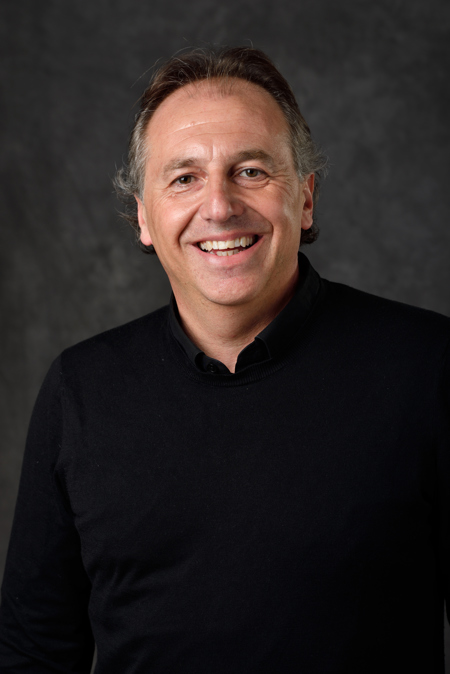
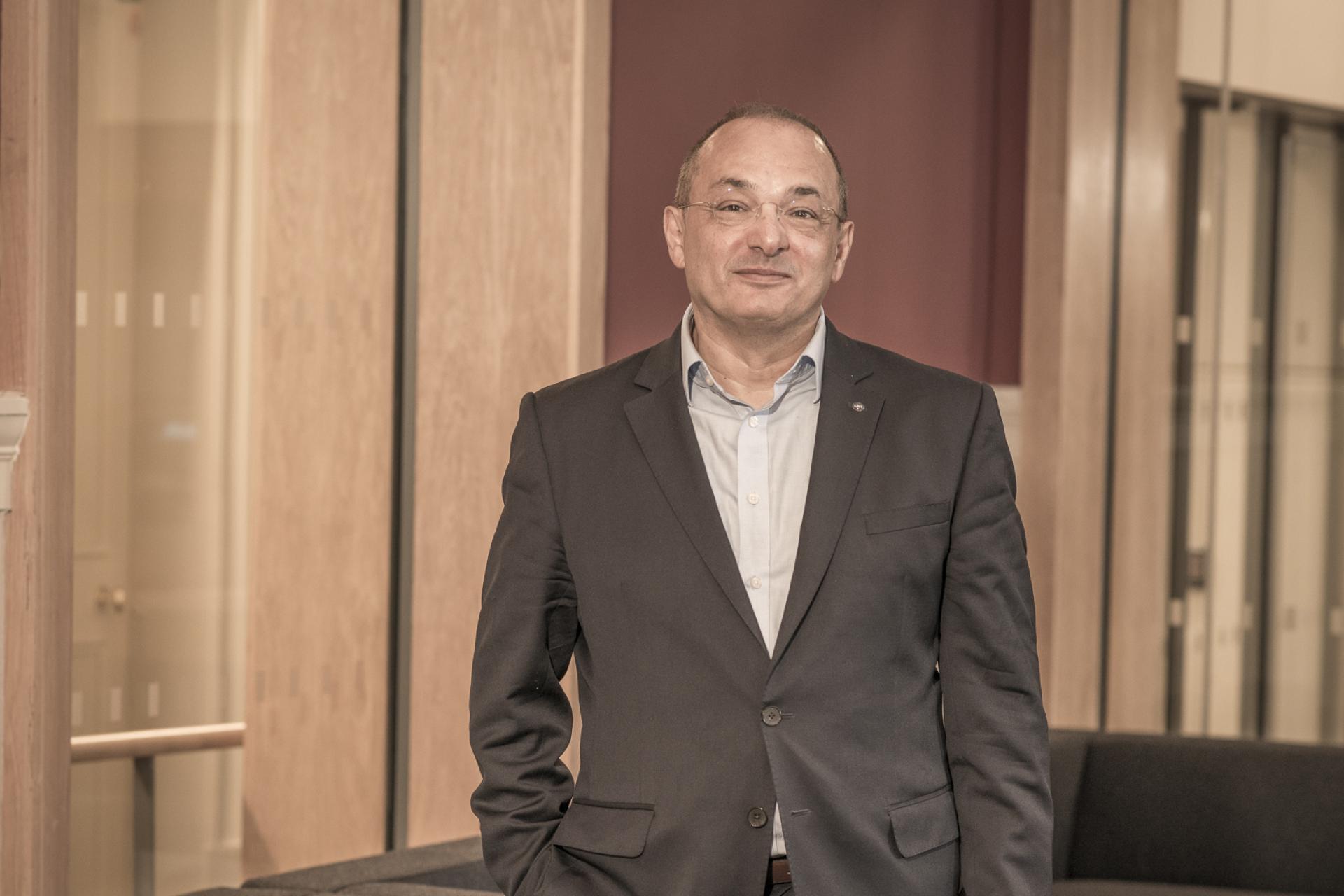
Dr. Koustuv Saha is an Assistant Professor of Computer Science at the University of Illinois Urbana-Champaign (UIUC), leading the OnCARE lab. He holds a PhD from Georgia Tech and a B.Tech from IIT Kharagpur. His research focuses on computational social science, social computing, and ethical AI applications in mental health and wellbeing. His work bridges computer science with psychology, sociology, and public policy to address societal challenges. Education: PhD in Computer Science (Georgia Tech, 2021), B.Tech in CSE (IIT Kharagpur, 2012). Previous roles include Senior Researcher at Microsoft Research Montreal (FATE group) and industry research experience in Silicon Valley. Research interests include wellbeing sensing technologies, algorithmic fairness, and large language models’ societal impacts. Recent work examines caregiver mental health, deceptive wellness apps, and AI ethics in content moderation. His studies combine causal inference, NLP, and multimodal data analysis. Publications span top venues like CHI, CSCW, ICWSM, and JMIR. Notable awards include Georgia Tech’s Outstanding Dissertation Award (2022) and Snap Research Fellowship (2020). He advises on AI governance and collaborates with policymakers, clinicians, and industry. OnCARE lab explores human-centered AI for societal good, with projects on mental health support systems, ethical tech design, and algorithmic transparency in health contexts. Current focus includes caregiver AI tools, LLM-based empathetic systems, and workplace wellbeing interventions.
Mark S. Hoddle is a Professor of Entomology and Biological Control Specialist at the University of California, Riverside (UCR), where he has headed research in his laboratory since 1997. He serves as the Director of the Center for Invasive Species Research and is a Principal Investigator focusing on biological control of invasive pests. His work bridges academic research with practical applications for California agriculture. Education: D.Sc. Zoology (2018), University of Auckland, New Zealand Ph.D. Entomology (1996), University of Massachusetts, Amherst M.S. Zoology (1991), University of Auckland, New Zealand B.S. Zoology (1988), University of Auckland, New Zealand Dr. Hoddle specializes in biological control, the intentional use of host-specific natural enemies to suppress pest populations. His research focuses on identifying pest problems amenable to biological control, locating and releasing natural enemies, and evaluating their impact on pest population growth. He works extensively with invasive species affecting California agriculture, particularly pests of citrus, avocado, palm trees, and other crops. His approach combines field evaluations with laboratory studies of pest and natural enemy biology and behavior. Analysis of Dr. Hoddle's recent publications reveals a strong focus on invasive species threatening California agriculture, particularly the Asian citrus psyllid, red palm weevil, and brown marmorated stink bug. His research integrates field and laboratory approaches, with emphasis on phenology modeling, natural enemy evaluation, and innovative control methods. Much of his work addresses the economic and ecological impacts of invasive pests on specialty crops. Scientific Awards: Entomological Society of America, Pacific Branch Entomology Team Leader Award (2023) UC-ANR Distinguished Service Award for Outstanding Research (2022) Fellow, Entomological Society of America (2018) California Department of Pesticide Regulations IPM Achievement Award for Asian Citrus Psyllid Biocontrol (2018) IOBC Distinguished Scientist of the Year (2015) Multiple awards from the Entomological Society of America (2007, 2012, 2013, 2014) Dr. Hoddle has mentored numerous students and researchers throughout his career, including postdoctoral scholars and specialists who contribute to his laboratory's work on invasive species. His research has been supported by various granting agencies, private institutions, and commodity boards, enabling extensive international projects focused on identifying and implementing biological control solutions for invasive pests. He has facilitated the Harry Scott Smith Scholarship Fund to support graduate students in biological control. Dr. Hoddle directs the Center for Invasive Species Research at UCR and leads a productive laboratory team that includes postdoctoral scholars, specialists, and students. The lab conducts research on multiple invasive species threatening California agriculture and natural ecosystems, with particular emphasis on citrus, avocado, and palm tree pests. Current projects include proactive biological control of the spotted lanternfly and research on invasive palm weevils, avocado pests, and other emerging threats.
Dr. Mary Lacity is a Distinguished Professor of Information Systems at the Sam M. Walton College of Business, University of Arkansas, and holds the David D. Glass Endowed Chair. She is also a Visiting Professor at the London School of Economics for Spring 2025. Director of Walton College’s Blockchain Center of Excellence (2014-2019) Former Curators’ Distinguished Professor at University of Missouri Holds visiting positions at MIT, Washington University, and Oxford University Senior Editor for MIS Quarterly Executive Contributing Editor for Journal of the British Blockchain Association Her research focuses on enterprise adoption of emerging technologies, particularly blockchain, metaverse, service automation, and ethical technology use. She has conducted extensive case studies and surveys on automation and Web3 implementation across hundreds of organizations globally. Recent publications include books like Human Privacy in Virtual and Physical Worlds (2024) and Blockchain Fundamentals for the Web 3.0 (2022). She has over 30 books and 26,300 Google Scholar citations (h-index: 68). 2014: Inducted into IAOP’s Outsourcing Hall of Fame 2024: Recognized as top 2% scholar in Business and Management (Stanford) 2024: Top 1% scholar in Business and Management (ScholarGPS) Fellow of the Association of Information Systems She actively contributes to blockchain standards via the Global Standards Mapping Initiative (GSMI) of the Global Blockchain Business Council and the Linux Foundation’s Trust over IP (ToIP). Her work bridges academic research and practical applications in enterprise technology adoption.
Scott L. Stephens is a Professor in the Department of Environmental Science, Policy, and Management (ESPM) at the University of California, Berkeley. He holds a Ph.D. in Wildland Resource Science from UC Berkeley (1995) and a B.S. in Electrical Engineering from Sacramento State University (1985). His research focuses on wildland fire science, fire ecology, and forest management, with an emphasis on how climate change and policy influence fire regimes. He leads the Stephens Lab, which conducts interdisciplinary studies on fire behavior, ecosystem resilience, and policy reform. Key contributions include advocating for prescribed burning and Indigenous stewardship practices to mitigate wildfire risks. Stephens has testified before congressional committees on forest health and has been recognized as a Clarivate Highly Cited Researcher (2024). His work integrates ecological, policy, and management perspectives to address contemporary fire challenges. Education: Ph.D., Wildland Resource Science, UC Berkeley, 1995 B.S., Electrical Engineering, Sacramento State University, 1985 Research Interests: Wildland fire behavior and effects Fire ecology and ecosystem interactions Climate change impacts on fire regimes Policy and management of fire-adapted landscapes Scientific Contributions: Stephens has authored or co-authored over 150 peer-reviewed articles, including seminal works on prescribed fire efficacy, forest restoration, and policy reform. His lab’s research has been featured in BioScience , Ecological Applications , and policy briefs for federal agencies. Lab and Collaborations: The Stephens Lab collaborates with Indigenous communities, federal agencies, and international researchers to advance fire science. Notable projects include the Fire and Fire Surrogate Study (FFS) and the Stewardship Project, which advocate for integrating Indigenous burning practices into federal policies.
Helen Jarvie is a Professor of Water and Global Environmental Change at the University of Waterloo, Canada. She holds adjunct and visiting professor positions at the University of Arkansas (Fluvial Sciences), Plymouth University (Environmental Chemistry), and the University of Tokyo (Water Quality Science), and is a UK Centre for Ecology & Hydrology Fellow. Her research centers on river-system biogeochemistry, with intense focus on nutrient (phosphorus and nitrogen) cycling, eutrophication, and water quality across watershed-to-global scales. She investigates how climate variability, land-use change, and human activities drive water-quality impairment, and develops strategies for improved nutrient stewardship to build resilience in water resources. Her work uniquely bridges the critical tension between phosphorus-dependent food security and water-quality protection, given phosphate rock's non-renewable status. Analysis of her 2015-2019 publications reveals dominant trends in phosphorus dynamics research, spanning watershed management, global phosphorus budgets, and the water-energy-food nexus. Key themes include unintended consequences of agricultural conservation practices on soluble phosphorus loads, stoichiometric responses to hydrologic extremes, and sustainable phosphorus stewardship frameworks addressing eutrophication while ensuring resource security for future food production.
Maria Monica Wihardja serves as a Visiting Fellow and Co-coordinator of the Media, Technology and Society Programme at ISEAS–Yusof Ishak Institute while holding an Adjunct Assistant Professor position at the National University of Singapore. Her career bridges academic research and high-impact policy engagement, including former roles as World Bank Economist in the Poverty and Equity Global Practice and senior advisor to Indonesia's Presidential Executive Office on strategic economic reforms. Her educational background features: PhD in Regional Science, Cornell University MPhil in Economics, Cambridge University BA in Applied Mathematics-Economics, Brown University Wihardja's research integrates economic analysis with sociotechnical systems, focusing on digital transformation's impact on labor markets, food security, and democratic processes. She examines how technological disruption creates both opportunities for inclusion and risks of inequality, particularly through studies of platform economies, electoral disinformation, and sustainable agro-food systems. Her methodology combines quantitative econometrics with policy-oriented field research, often leveraging large-scale datasets from government and private sector partnerships. Analysis of her recent publications reveals three dominant research trajectories: (1) Digital economy effects on labor market polarization and inclusion, (2) Food system resilience through agricultural modernization, and (3) Geopolitical dimensions of supply chain reconfiguration. These intersect with her policy engagement in ASEAN economic integration frameworks and Indonesia's G20 presidency initiatives. Her scientific recognition includes: Nikkei Asian Scholar 2023 award Wihardja actively shapes regional discourse through editorial roles at East Asia Forum and Center for Indonesian Policy Studies. Her grant-funded work frequently involves World Bank partnerships and Indonesian government collaborations, particularly on stunting prevention and food policy reforms. Current projects examine deepfake impacts on electoral integrity and sustainable financing mechanisms for green transitions. She leads the Media, Technology and Society Programme at ISEAS, coordinating interdisciplinary research on digital governance and Southeast Asian technology policy. The programme partners with regional think tanks, government agencies, and private sector stakeholders to develop evidence-based policy responses to technological disruption.
Professor Jason Hall-Spencer is a globally recognized marine biologist at the University of Plymouth and a full professor at the University of Tsukuba (Japan), with an adjunct role at Xiamen University. His research focuses on ocean acidification, invasive species (e.g., lionfish), and climate change impacts on marine ecosystems. He pioneered the use of underwater CO2 seeps as natural analogues for climate change studies, a methodology now adopted globally. His work has influenced policies to protect deep-water corals and Arctic reefs, and he leads projects like RELIONMED to combat lionfish invasions in the Mediterranean. Education: Studied Applied Marine Biology at Heriot-Watt University, completed a PhD on coralline algae at Millport Marine Station, and conducted fieldwork across Europe, Asia, and the Pacific. His career includes discovering UK deep-water coral reefs and Arctic reefs, leading to their legal protection. Research Interests: Ocean acidification effects on marine organisms, invasive species management, CO2 seep dynamics, coral reef ecology, and marine conservation. His work combines field experiments, policy advocacy, and community engagement to address global marine challenges. Grants and Collaborations: Secured €1.7M from the EU Life Programme for lionfish control and a $400K grant on plankton dynamics. Collaborates with organizations like the Marine Biological Association and international researchers on projects such as the Ocean Organ to visualize CO2 impacts. Labs/Teams: Leads the Marine Conservation Research Group at Plymouth, coordinating initiatives like RELIONMED and influencing global marine policies through partnerships with governments and NGOs.
Dr. Emre Alp is an Associate Professor at the Environmental Engineering Department of Middle East Technical University (METU) , where he has served since 2014. Previously, he held roles as Assistant Professor (2011-2014), Instructor (2008-2011), and Part-time Instructor (2008). His research spans Watershed Management , Water-Energy-Food Nexus , and Environmental Economics , with a focus on Diffuse Pollution and Water Quality Modeling using GIS and Remote Sensing . Education : Ph.D. in Civil and Environmental Engineering (2006), M.S. in Environmental Engineering (1999), and B.S. in Environmental Engineering (1997) from METU and Marquette University. Research : His work integrates Environmental Risk Assessment with optimization models like SWAT for nutrient load analysis, economic valuation of ecosystems, and urban waterway pollution control. Key projects include Sustainable Stormwater Management on METU campus and Water-Energy Nexus studies in Turkey. Publications : Over 14 refereed journal articles since 2007, focusing on Urban Hydrology , Environmental Economics , and Watershed Modeling . Awards : Post-Doctoral Scholarship (Marquette University, 2006-2008) and Research/Teaching Assistantships (Marquette, 2000-2006). Students : Supervised 2 Ph.D. and 7 M.S. theses on topics like climate change impacts, water allocation, and pollution control.
Daniel Schnurr holds the Chair of Machine Learning, especially Uncertainty Quantification at the University of Regensburg since August 2022, where he conducts research at the intersection of artificial intelligence, data economics, and digital market regulation. Previously, he headed the Data Policies research group at the University of Passau, building his expertise in the economic and regulatory aspects of digital markets. His educational background includes a doctorate in business informatics from the Karlsruhe Institute of Technology (2016), where he also worked for three years as a research associate at the Institute for Information Systems and Marketing. He completed his undergraduate and master's studies in Information Systems at KIT (2007-2013), with international experience at Concordia University in Canada and Singapore Management University. Professor Schnurr's research focuses on the technical, economic, and social implications of new machine learning methods and data as a decisive competitive factor and driver of innovation in digital markets. His work examines how data functions as both an economic asset and regulatory challenge, particularly in contexts of market power, competition policy, and AI governance. He investigates uncertainty quantification in machine learning systems while considering their broader economic and societal impacts. His publication portfolio demonstrates consistent output in top-tier journals including Management Science, Journal of Information Technology, and Journal of Competition Law & Economics, with recent work increasingly focusing on AI regulation, data access remedies, and uncertainty-aware AI systems. The trajectory shows evolution from telecommunications infrastructure research to contemporary digital market and AI regulation issues. As a Research Fellow at the Centre on Regulation in Europe (CERRE) since 2022, he has authored numerous policy reports addressing regulation of cloud computing services, digital platforms, and data economy frameworks. His policy contributions bridge academic research with practical regulatory implementation, particularly regarding the European AI Act and Digital Services Act. His research program involves experimental approaches to understanding data markets, human-AI interaction dynamics, and regulatory effectiveness. Through his work at CERRE and collaborations with international scholars, he contributes to shaping evidence-based digital policy in the European context while maintaining strong connections to academic research communities in information systems and economics.
Janina Grabs is Professor of Sustainability Research at the University of Basel, where she heads the subject area of Sustainability Research within the Department of Social Sciences at the Faculty of Humanities and Social Sciences. She is responsible for social science teaching in the Master's program in Sustainable Development and leads a research group investigating sustainability governance in global value chains, particularly in tropical agricultural commodities. Her academic background includes a PhD in Political Science from Westfälische Wilhelms-Universität Münster (2018), with research stays at Carleton University in Ottawa and Yale University in New Haven. Prior to her current position since June 1, 2024, she worked as an assistant professor at ESADE Business School in Barcelona (2021-2024) and as a postdoc at ETH Zurich (2019-2021). Professor Grabs' research focuses on transnational sustainability governance in global value chains, examining how states, firms, NGOs and other actors can improve environmental and social sustainability in commodity production. Her interdisciplinary work bridges political economy, regulatory governance, and business in society scholarship to investigate who defines sustainability in the marketplace, what rule-making mechanisms exist, their effectiveness, and potential unintended consequences on smallholders' livelihoods. She places special emphasis on coffee, palm oil, and cocoa sectors, exploring how global production and consumption processes can be steered toward more sustainable directions within market frameworks. Analysis of her recent publications reveals a strong focus on zero-deforestation initiatives, supply chain due diligence legislation (particularly the EU Deforestation Regulation), jurisdictional approaches to sustainable commodity governance, and the evolving role of various actors in sustainability governance. Her work spans multiple commodities but shows particular depth in coffee and palm oil sectors, examining both environmental and social dimensions of sustainability through field research in Colombia, Honduras, Costa Rica and Indonesia. Her significant contributions to the field have been recognized with prestigious awards: 2021 Organizations and the Natural Environment Book Award from the Academy of Management 2022 Lynton Keith Caldwell Award for the best book in the field of science, technology and environmental politics from the American Political Science Association Professor Grabs actively mentors doctoral students and postdoctoral researchers including Alexandra Bögner, Charline Depoorter, Lucia Casalegno, Lesly Nassila, and Philipp Dunker. Her research is supported by multiple third-party funded projects such as EXPECT-AGRI (investigating political economy of expectations in agri-food sustainability transformations), PACSMAC (examining paradoxes of climate-smart coffee production), and research on zero-deforestation commitments in the palm oil sector. She also serves as book review editor for the journal Regulation & Governance and participates in professional associations including the ECPR Standing Group on Regulatory Governance and the International Studies Association. She leads the Sustainability Research Group at the University of Basel, which conducts interdisciplinary research on sustainability governance and transformations toward more sustainable socio-economic systems, with particular focus on agri-food, energy, and mobility sectors while addressing critical questions of justice, equity, and inclusivity in sustainability transitions.
Thomas Berger is a Professor at the University of Hohenheim , affiliated with the Faculty of Agricultural Sciences and leading the Department of Economics of Land Use . He also contributes to the Computational Science Hub and Hohenheim Tropics initiatives. Focus Areas: Climate change adaptation, land-use modeling, biodiversity-productivity trade-offs, agent-based simulation, and machine learning in agricultural systems. Key Projects: Simulation frameworks for smallholder resilience in Ethiopia, bioeconomic modeling in the Amazon, and hybrid intelligence applications in European agricultural policy. Recent Publications: 2025 study on climate change effects on insecticide reduction in Germany, 2024 work on reconciling biodiversity with productivity via hybrid models, and 2023 methodological contributions to surrogate modeling and seasonal forecast integration. Research Trends: Interdisciplinary integration of climate science, agricultural economics, and computational modeling, with increasing emphasis on AI-assisted decision support systems and sustainability policy validation. Teaching & Outreach: Offers Agricultural Economics seminars and Hohenheim Tropics discussions, requiring advance email registration for office hours.
Bruno Basso serves as the Hannah Distinguished Professor in the Department of Earth & Environmental Sciences at Michigan State University, based in 307A Natural Science Building. He teaches GLG 446: Water and Food and maintains active research in sustainable agricultural systems, with contact via 517-353-9009 or basso@msu.edu. His work bridges academic research with practical farm applications across the US Midwest. His core research interests include: Food Security and Plant Resilience mechanisms Soil Science with emphasis on organic carbon dynamics Precision Agriculture technologies (drones, remote sensing) Climate-Smart Agriculture practices Nitrogen and phosphorus use efficiency Yield stability analysis through spatial-temporal modeling Regenerative agriculture impacts on greenhouse gas emissions Ecosystem services valuation in crop-livestock systems Analysis of his 2023-2025 publications reveals a dominant focus on quantifying climate benefits from regenerative practices using multi-model ensembles. His work consistently addresses scalability for farmer adoption, with strong emphasis on N₂O emissions mapping, soil carbon durability, and yield stability zones. Key methodological innovations include hybrid SAR-remote sensing integration and AI-driven nutrient prescription systems, primarily applied across Midwest corn-soybean systems. No scientific awards were documented in the provided materials. While specific advising details are absent, his leadership in the LTAR cropland common experiment and Soil Inventory Project indicates active mentorship of graduate researchers. His research likely attracts significant USDA and NSF funding given the scale of field experiments and modeling initiatives focused on decarbonizing agriculture. Dr. Basso co-leads the Soil Inventory Project at Kellogg Biological Station, developing integrated sampling, data repository, and modeling frameworks for regenerative agriculture. His team combines ground observations, remote sensing, and biophysical modeling to quantify soil carbon and greenhouse gas fluxes, collaborating with farmers, industry partners, and international researchers to translate science into on-farm practices.
Professor Emilios Avgouleas holds the Chair of International Banking Law and Finance at the University of Edinburgh's School of Law. He is a leading expert in financial regulation, fintech policy, and systemic risk governance. His research focuses on blockchain technology, sustainable finance, and digital finance frameworks. He serves on the European Securities and Markets Group, advises the World Economic Forum, and collaborates with institutions like the European Banking Institute and the Monetary Committee of the International Law Association (MOCOMILA). Education: PhD (LSE), LLM (LSE), LLB (Athens University). Research grants include Leverhulme Trust funding and collaborations with the Asian Development Bank and Hong Kong University. He has been a visiting professor at Harvard, Yale, Tsinghua, and other global institutions. Research interests span financial stability, bank resolution mechanisms, and the intersection of technology with legal frameworks. His recent work addresses CBDCs, crypto regulation, and post-pandemic banking challenges. Over 80 peer-reviewed articles and books include *Governance of Global Financial Markets* (CUP, 2012) and co-edited volumes on systemic risk and capital markets union. Grants and awards: AHRC (2008-2009), Australian Research Council (2013-2016), Leverhulme Trust. He advises the European Parliament on financial stability and NPLs. Engages in high-level policy dialogues with regulators like the Bank of England, FCA, and ECB.
Prof. Douglas Sheil is a Chairholder in Forest Ecology and Forest Management at Wageningen University & Research. He holds a MA in Natural Sciences from Cambridge and an MSc in Forestry from Oxford. His career includes roles at the University of Oxford, CIFOR (Indonesia), the Institute for Tropical Forest Conservation in Uganda, and the Norwegian University of Life Sciences (NMBU). His research focuses on tropical forest ecology, biodiversity conservation, and human-forest interactions, with over 200 publications. He co-authored the influential textbook Tropical Rain Forests: Ecology, Diversity, and Conservation (2010). Awards include the Biotropica Prize (2004) and the Queen’s Award for Forestry (2015). Education: MA (Natural Sciences, Cambridge), MSc (Forestry, Oxford) Key Roles: Director of Institute for Tropical Forest Conservation (2008–2012), Professor at NMBU (2013–2020) Research Interests: Tropical forest dynamics, climate change impacts, conservation strategies, and the socio-ecological dimensions of forest management. His work spans field studies in Africa, Southeast Asia, and Oceania, emphasizing interdisciplinary approaches to address deforestation, biodiversity loss, and sustainable land use. Recent Trends in Articles: Focus on mycorrhizal networks, oil palm impacts, lightning disturbance, and mammal population responses to human activity. He explores mechanisms linking forest structure to ecosystem services, such as carbon sequestration and water regulation, often integrating remote sensing and global datasets. Awards: Biotropica Prize, Queen’s Award for Forestry Grants/Projects: Studies on lightning effects in African forests, camera trap mammal surveys, and policy analyses for vegetable oil sustainability. Labs/Teams: Leads interdisciplinary groups at Wageningen, collaborating with CIFOR and international networks. Active in IUCN committees to translate science into conservation policy.
Dr. Michael Sinclair is a Lecturer in Urban Analytics at the University of Glasgow , affiliated with the Division of Urban Studies and Social Policy and the Urban Big Data Centre . He convenes the MSc in Urban Analytics and co-leads the Socio-Environmental Action research cluster . His research focuses on leveraging novel data sources (e.g., mobile apps, social media) to address societal and environmental challenges, particularly human-nature interactions and greenspace valuation. Sinclair leads projects funded by the UK Government’s Department for Culture, Media and Sport and the Economic and Social Research Council (ESRC). His work emphasizes ethical use and representativeness of big data, with applications in urban policy, ecosystem services, and environmental sustainability. Sinclair has secured grants totaling over £1M, including projects on greenspace accessibility and urban data dashboards. He supervises students on GIS and urban analytics topics and contributes to policy-relevant datasets like Tamoco Open Spaces . Notable achievements include developing methodologies for valuing nature-based recreation and advancing spatial interaction models for urban green spaces. His research bridges Human Geography and Environmental Science, with publications in journals like Ecosystem Services and Global Environmental Change .