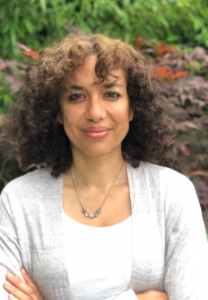
Dr Megan Evans is a Senior Lecturer in Public Sector Management at the School of Business, UNSW Canberra. She is an interdisciplinary social scientist focusing on environmental laws, policies, and tools, particularly in biodiversity and carbon offsetting frameworks. Education: PhD in environmental policy (Australian National University), BSc (Ecology) and BA (Mathematics) from The University of Queensland Her research drives policy impact in carbon offset integrity , biodiversity conservation , and environmental markets , including contributions to the Australian Government’s Biodiversity Offset Policy and the Queensland Land Restoration Fund . Her recent work examines biodiversity credits, carbon-negative technologies, and policy implementation challenges in human-induced regeneration projects. Key awards: Young Tall Poppy Award (2021) UQ Faculty of Science Rising Star Award (2018) ARC CEED scholarships (2014, 2017) She supervises five PhD students and has completed supervision of Dr Toiaba Binta Taher (PhD, with Professor Catherine Althaus). Her grants include an ARC DECRA Fellowship (2020–2023) and funding from the Department of Agriculture, Water and the Environment. Contact: megan.evans@unsw.edu.au
Koenraad Muylaert is a Full Professor at the Faculty of Science, KU Leuven, and head of the Biology department at KU Leuven Kulak. His research focuses on microalgae ecology and phytoplankton physiology , with applications in eutrophication studies , wastewater treatment , and biofuel production . Based in Kortrijk, Belgium, he works with international teams in Ecuador, Qatar, and Belgium. Current projects on mountain lake eutrophication and urban aquatic systems Specializes in nano-material flocculation and omega-3 fatty acid production from microalgae Research Trends from his recent articles show emphasis on: Microalgae harvesting innovations (cellulose nanocrystals, PDMAEMA polymers) Comparative processing techniques (DAF vs sedimentation, drying methods) Biotechnological applications in flavor chemistry and microbiome interactions Laboratory operates at KU Leuven's Kortrijk campus, with strong collaborations in environmental engineering and food science . His work bridges fundamental ecological research with industrial biotechnology for sustainable solutions.
Dr Nikki Ji-Yeon Lee is a Senior Lecturer in Asian Media at Nottingham Trent University's Department of Humanities, School of Social Sciences. With prior academic appointments at Yonsei University and Korea National University of Arts in Seoul, her career bridges UK and Korean academic spheres. She co-founded the London Korean Film Festival in 2001 and maintains active industry connections as a former independent documentary filmmaker and film event interpreter. Her educational background includes: BA and MA in Sociology from Yonsei University, Seoul MA in TV Documentary from Goldsmiths College, University of London PhD in Cultural Studies from Goldsmiths College, University of London Lee's research specializes in transnational East Asian cinema with emphases on Korean and Chinese film industries, film festival circuits, and cinematic soundscapes. Her work critically examines globalization's impact on film production, auteur branding, audience reception, and co-production models, particularly investigating how cultural specificity navigates global markets. Current projects explore Korean film sound design, China-Korea media collaborations, and East Asian television drama formats. Analysis of her 2018-2025 publications reveals evolving research trajectories: early work focused on film festival politics and auteur studies (e.g., Park Chan-wook), while recent scholarship increasingly engages with sound studies and occult genres in Korean cinema. Her output consistently bridges industrial analysis with cultural criticism, demonstrating expertise in both Korean cinematic traditions and transnational media flows. Lee has significantly contributed to academic discourse through editorial projects including co-editing The Korean Cinema Book (BFI/Palgrave Macmillan) and Japanese Cinema (Routledge). Her publications in Cinema Journal and Screen establish her as a key voice in East Asian film studies, with Korea Film Council (KOFIC) recognizing her expertise through commissioned research on UK distribution patterns.
Dominik Roeser is a Professor and Associate Dean of Research Forests & Community Outreach at the University of British Columbia's Faculty of Forestry, Department of Forest Resources Management. With over 21 years of experience in forest research and innovation, he has built a comprehensive forest operations research program since joining UBC in 2018, following his tenure as Senior Director at FPInnovations where he managed multidisciplinary teams focused on improving forest sector competitiveness and wildfire management solutions in Western Canada. Professor Roeser's research interests center on sustainable forest management and the bioeconomy, with specific expertise in forest bioproduction, supply chain design, steep slope harvesting, and biomass operations. His work through the Forest Action Lab applies diverse research methods including productivity studies, field trials, and modeling to address sustainability challenges across different operational environments. His research portfolio spans sustainable forest biomass utilization, harvesting in difficult terrain, innovative forest planning tools, operational productivity, carbon management, and community sustainability impacts from reforestation. His publication record shows a strong focus on practical applications of forest science, with recent work emphasizing wildfire management, remote sensing technologies for precision forestry, biomass energy systems, and the socio-ecological dimensions of forest management. His research increasingly integrates advanced technologies like LiDAR and drone-based systems with traditional forest operations to address contemporary challenges in sustainable forest management. Roeser has received the Recognition Award from the Canadian Forest Service (2017) for his contributions to forest science and innovation. His work demonstrates significant impact on both academic understanding and practical implementation of sustainable forest operations across North America and Europe. As an educator, Professor Roeser teaches several key courses including FOPR 264 Introduction to Forest Operations, FOPR 362 Harvesting systems and forest access, FOPR 464 Operational planning and management, and FRST 452 Coastal field school. He considers educating the next generation of forestry professionals one of his passions, bridging theoretical knowledge with practical industry applications. The Forest Action Lab, led by Professor Roeser, represents a multidisciplinary research hub applying diverse methodologies to address forestry stakeholders' needs across British Columbia, Canada, and globally. The lab's work connects academic research with industry implementation, focusing on practical solutions for sustainable forest utilization in varied operational environments.
Emanuele Colonnelli is the Joseph L. Gidwitz Professor of Finance and Entrepreneurship at the University of Chicago Booth School of Business. He serves as Board Member and Co-Chair of the Finance Sector at J-PAL, leads the Finance and Entrepreneurship theme at PEDL, co-directs BFI LATAM, and is a Research Associate at NBER, CEPR, and BREAD. He founded the Chicago Booth Entrepreneurship Research Lab and directs Undergraduate Studies in Entrepreneurship at the University of Chicago. Education: PhD in Economics, Stanford University (2018) MSc in Economics, Bocconi University BSc in Economics, University of Siena Visiting Scholar, Pembroke College, Oxford University Research Interests: Colonnelli's work focuses on the intersection of finance, development economics, and political economy. His primary investigations examine high-growth entrepreneurship, government-firm-investor dynamics, venture capital in emerging markets, corruption mechanisms, ESG impact, and bankruptcy systems. His methodology emphasizes large-scale field experiments across 16+ emerging economies. Publication Trends: His research consistently employs field experiments and administrative microdata to analyze institutional impacts on firms. Recent work demonstrates growing emphasis on ESG polarization, public procurement integrity, bankruptcy stigma, and political influences in labor markets – frequently set in Brazil, China, and Uganda. Awards and Honors: 2023 Carlo Alberto Medal (top Italian economist under 40) Poets & Quants 40 Under 40 Best MBA Professors Leadership and Grants: As founding director of the Chicago Booth Entrepreneurship Research Lab, he oversees investigations into global entrepreneurial ecosystems. He secured multiple grants through PEDL, BFI, and J-PAL to support field experiments in developing economies. At Booth, he developed the first MBA course on emerging markets venture capital.
Nick Gys is a Research Fellow in the Department of Materials and Chemistry at Vrije Universiteit Brussel (VUB), Brussels, Belgium, specializing in surface modification of materials and sustainable engineering applications. His work bridges experimental and computational approaches to address challenges in materials science and environmental remediation. Dr. Gys's research centers on the surface chemistry of metal oxides, particularly titanium dioxide functionalized with organophosphonic acids. He investigates how molecular parameters like chain length and pH influence binding modes, photooxidation stability, and metal recovery efficiency. His methodology integrates spectroscopic techniques (XPS, IR, EPR) with density functional theory (DFT) simulations to elucidate structure-property relationships at molecular interfaces. Key application areas include selective palladium recovery from industrial waste streams and designing photo-stable functional coatings. His 2022-2023 publications reveal a cohesive research trajectory focused on organophosphonate-grafted surfaces, with increasing emphasis on computational validation of experimental findings. The work demonstrates how molecular engineering of surface modifiers directly impacts performance in environmental applications, particularly in metal adsorption and photochemical degradation processes. No scientific awards were documented in the source material. Collaborative Framework: Works within VUB's Materials and Chemistry research ecosystem alongside Prof. Meynen, Prof. Adriaensens, and Prof. Hauffman Project Scope: Leads interdisciplinary efforts in sustainable materials engineering, including TiO 2 functionalization for metal recovery and photooxidation studies Dr. Gys operates within VUB's Sustainable Materials Engineering initiative, contributing to laboratory-based experimental work and computational modeling teams focused on advancing surface modification technologies for circular economy applications.
Adela Isvoranu serves as an Assistant Professor in the Department of Psychology at the National University of Singapore (NUS), where she investigates developmental pathways from mental health to mental illness using complexity-based frameworks. Her work challenges traditional syndrome-focused approaches by emphasizing symptom interactions within psychopathological networks. Academic Background: Ph.D. (cum laude) from University of Amsterdam M.Sc. from University of Amsterdam B.Sc. (Hons.) from University of Leeds Her research program integrates network analysis with clinical psychology to model mental health conditions as dynamic systems. This approach examines fuzzy boundaries between diagnostic categories and aims to develop novel intervention strategies through collaborations with clinical psychologists, practitioners, and methodologists. Her methodological innovations focus on translating complex network theory into practical clinical applications. Recent publications reveal a strong trajectory in advancing network psychometrics methodology while applying these frameworks to psychosis and trauma research. The 2022 book establishes foundational R-based tools for behavioral scientists, the 2021 methodological paper provides crucial estimation guidelines, and the 2017 psychosis study demonstrates clinical utility in mapping trauma-symptom pathways. Scientific Awards: No awards explicitly mentioned in source material While specific student mentorship details are unavailable, her collaborative research environment with clinical teams and methodologists indicates active supervision of research projects. Her work is supported through university affiliations with infrastructure including dedicated research space (AS4-02-32) and computational resources for network analysis. Research Environment: Operates within NUS Psychology Department's clinical research ecosystem Collaborates with GROUP Investigators consortium Integrates statistical methodology with clinical practice Maintains research website (www.adelaisvoranu.com) for dissemination
Aaron Puri is an Assistant Professor of Chemistry at the University of Utah, specializing in chemical ecology and natural product discovery. His research focuses on bacterial interactions in methane-oxidizing communities and the biosynthesis of secondary metabolites. Education: B.S. from University of Chicago, Ph.D. from Stanford University School of Medicine Dr. Puri's work bridges microbiology and chemistry, with projects targeting: Chemical Ecology: Decoding interspecies signaling in methane-oxidizing bacteria Natural Products: Discovering therapeutics from underexplored bacterial genomes Biosynthesis: Activating cryptic gene clusters for novel compound production Recent publications highlight advancements in quorum sensing mechanisms (2025), inverse stable isotopic labeling techniques (2024), and methanotroph community dynamics. His research also explores spatially resolved model ecosystems for studying microbial phenotypes (2023-2024). Key methods include GNPS Dashboard for mass spectrometry analysis (2021-2022). Dr. Puri leads the CAREER-funded project on quorum sensing in methanotrophs (2024) and has developed genetic tools for industrial methanotrophs (2015). His lab maintains a strong focus on environmental microbiology and biotechnological applications.
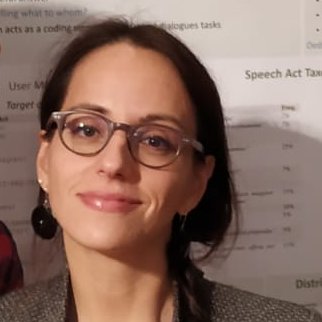
Nicole Novielli, Ph.D., is Associate Professor at the University of Bari “A. Moro” , Italy, where she conducts research on affective computing applied to software engineering and human-computer interaction. She leads the Collaborative Development Group and coordinates national projects investigating emotions in software teams, AI quality and IoT ecosystems. Education: Ph.D. in Computer Science, University of Bari, 2010 – thesis on “Lexical Semantics of Dialogue Acts” M.Sc. in Computer Science (Knowledge & Software Engineering), University of Bari, 2006 – summa cum laude B.Sc. in Computer Science, University of Bari, 2004 – summa cum laude Visiting researcher at USC-ICT, University of Aberdeen, FBK-irst (Trento) Research interests revolve around recognizing and exploiting affective and cognitive states in computer-mediated cooperative work. She studies sentiment and emotion mining in developers’ textual communication, multimodal emotion recognition via low-cost biometric sensors, and natural-language dialogue simulation for intelligent interfaces. Her work couples software engineering with natural language processing , social media analytics and human-computer interaction . Recent articles (2021-2025) reveal a clear trend: integrating deep learning and large language models into software engineering tasks—automated issue labelling, sentiment classification, technical-debt detection—while validating these techniques through rigorous empirical studies and biometric experiments . A parallel stream explores developer experience , measuring how emotions and cognitive load influence productivity, code quality and collaboration. Scientific awards include the 2020 Apex Award for Publication Excellence , multiple Distinguished Reviewer Awards at flagship venues (ESEC/FSE, ICSME, MSR), the Best Paper Award SANER 2019 and the Best Student Paper Award ACII 2009 . She currently teaches “Sentiment Analysis” in the Data-Science MSc and “Computer Networks” in the ITPS programme. She has advised numerous B.Sc., M.Sc. and PhD projects and is PI or Co-PI of four ongoing grants: EmoQuest (SIR), EMPATHY (PRIN), FAIR-Spoke 6 (PnRR), and QualAI (PRIN 2022). Dr. Novielli serves on the editorial boards of Empirical Software Engineering and Journal of Systems and Software , has guest-edited special issues on affect awareness in SE, and has chaired tracks at ICSE, SANER, MSR, ICSME and SSBSE. She co-leads the Collaborative Development Group and actively releases datasets and open-source tools for the community.
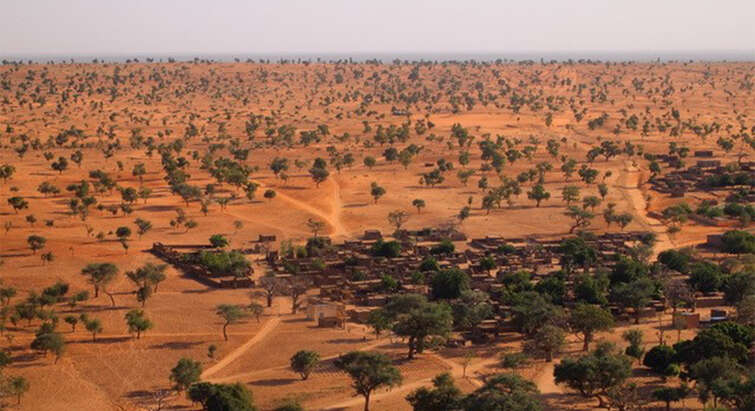
Ankit Kariryaa is a Tenure Track Assistant Professor at the Department of Computer Science and Department of Geosciences and Natural Resource Management , University of Copenhagen. His work bridges Machine Learning and Environmental Informatics , focusing on remote sensing, geospatial analysis, and ecological modeling. University of Copenhagen, Denmark Machine Learning Section, Department of Computer Science Geography, Land, Environment and Society, Department of Geosciences Kariryaa specializes in applying deep learning and computer vision to environmental challenges. His research includes: Automated tree detection and biomass estimation via satellite imagery Multi-modal geospatial representation learning Monitoring farmland tree decline and carbon sequestration potential Agroforestry system mapping using AI Developing AI tools for climate policy and sustainability Recent work trends show a focus on quantum-inspired machine learning , environmental monitoring , and cross-cultural AI applications . His 15 most recent publications span topics in remote sensing , ecological modeling , and AI ethics , with methods ranging from neural networks to tensor-based learning. He collaborates across disciplines, notably with researchers in ecology , climate science , and quantum computing . His outreach includes seminars on AI in agroforestry and ecosystem management , while his team contributes to global tree resource databases like TreeSense.
Michael Benard is a Professor and Department Chair of Biology at Case Western Reserve University. He focuses on understanding how environmental changes affect organisms, particularly amphibians, which are critical indicators of ecological health. Ph.D., Population Biology, University of California, Davis (2005) B.S., Biology, Cornell University (1999) His research integrates natural and human-caused environmental disturbances, such as habitat destruction and climate change, to develop conservation strategies for threatened species and management plans for invasive ones. Key areas include: Amphibian ecology and global decline drivers Phenological shifts under climate change Impact of artificial light pollution on development Photoperiod effects in freshwater communities Recent publications highlight his work on amphibian breeding behavior , climate change impacts , and ecological interactions in disturbed environments.
Professor Peter Smith is a Chair in Plant & Soil Science at the University of Aberdeen within the School of Biological Sciences . He obtained his PhD in 1991 and has held academic positions since 2001, including Senior Lecturer (2001), Reader (2003), and Professor of Soils & Global Change (2005). His work focuses on modelling greenhouse gas mitigation , bioenergy systems , and global food security . Fellowships: Royal Society (FRS), Royal Society of Edinburgh (FRSE), European Academy of Sciences (FEurASc), Indian National Science Academy (FNA) Leadership: Co-leader of the Environmental Modelling Group , Science Director at Scotland's Climate Change Centre of Expertise His research spans soil carbon dynamics , greenhouse gas removal technologies , and climate-agriculture interactions , with over 900 publications. Articles highlight work on bioenergy crops , soil monitoring frameworks , and global food system resilience . Funding includes major grants from NERC , EU , and UK government for projects like GHG Europe, DEVIL, and VERIFY. He serves as Editor for Global Change Biology and Global Change Biology Bioenergy .
Professor Joy Singarayer is a leading academic in the Department of Meteorology at the University of Reading, specializing in paleoclimatology. She holds the position of Joint Head of Department (Facilities and Finance) and is actively involved in research on climate-human interactions and past environmental changes. Her work bridges climate science, archaeology, and ecology, with a focus on understanding how past climate fluctuations inform future environmental resilience. Her research interests include the impact of climate change on agriculture and water resources, human-land-climate interactions across prehistoric to modern eras, and paleoclimate reconstructions using Quaternary records. Notable projects include CROPP (Peruvian climate resilience), PRIDE (Caspian Sea biodiversity), and Amazonian paleoecology studies. Professor Singarayer has supervised numerous PhD students exploring topics like agent-based modeling of pre-Columbian cultures, Caspian Sea hydrology, and Amazonian drought responses. Her interdisciplinary approach integrates climate modeling, fieldwork, and data analysis to address global environmental challenges. She is affiliated with the University of Reading's Meteorology Department and collaborates internationally on projects like the PotASH initiative studying southern hemisphere paleolakes. Her contributions span academic leadership, policy-relevant research, and fostering inclusive academic environments through her role on the SMPCS WIDE committee.
Prof. Michael Sander is a Lecturer at ETH Zurich's Department of Environmental Systems Science, specializing in environmental organic chemistry and polymer biodegradation. His research focuses on understanding the environmental fate of synthetic polymers, soil organic matter dynamics, and microplastic contamination. He teaches courses such as 'Introduction to Environmental Organic Chemistry' and contributes to interdisciplinary studies on sustainable materials and climate change impacts. Key research areas include polymer degradation mechanisms, redox properties of peat, and the design of biodegradable agricultural materials. His work integrates analytical chemistry, biogeochemistry, and environmental engineering to address global challenges like plastic pollution and soil health. He has published extensively on topics such as microplastic analysis in soils, biodegradation pathways of polyesters, and the redox cycling of peat organic matter. Collaborative projects involve developing sustainable polymer alternatives and assessing their environmental compatibility. Sander's research emphasizes practical solutions for reducing plastic waste and enhancing soil resilience.
Anand Mohan RAMCHAND is an Associate Professor (Educator Track) and Assistant Dean (Industry Relations) at the School of Computing (SOC), National University of Singapore (NUS). He also holds a Senior Lecturer position. With a Ph.D., M.Sc., and B.Sc. (Honours) in Information Systems/Computer Science from NUS, his research focuses on digital transformation, business model innovation, and IT-driven social change. He has received over 10 teaching awards and maintained the NUS Teaching Excellence Honour Roll from 2011-2016. Ph.D. (Information Systems, NUS, 2012) M.Sc. (Information Systems, NUS, 2004) B.Sc. (Computer Science & IS, NUS, 2001) His research explores digital enablement of organizations and social change through case studies in healthcare, libraries, and enterprise systems. Recent work examines clinical management systems, knowledge management communities, and ubiquitous computing impacts. His publications span healthcare informatics, organizational learning, and mobile technology trends in Asia. Awards highlight his teaching excellence across NUS faculty and university levels. He coordinates Advanced Topic Academic Program (ATAP)/Student Innovation Project (SIP) initiatives. His professional roles bridge academia-industry collaboration through SOC's strategic initiatives.