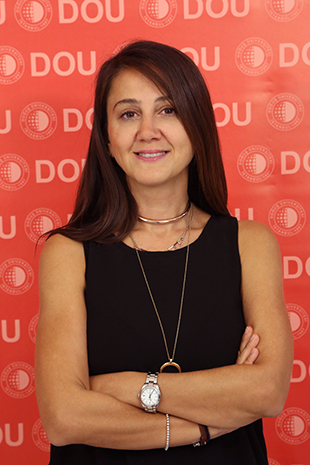
Prof. Dr. Tunç ÇATAL is a Professor of Molecular Biology and Genetics at Üsküdar Üniversitesi. He holds a PhD from İstanbul Technical University (2008) and conducted postdoctoral research at Oregon State University and the National University of Ireland Galway. His expertise spans microbial biotechnology, molecular biology, and hydrogen production. Education: BSc in Biology, İstanbul University (2001) MSc in Biology, İstanbul University (2004) PhD in Molecular Biology-Genetics and Biotechnology, İstanbul Technical University (2008) Administrative Roles: Head of Molecular Biology and Genetics Department (English Program) Director of PROMER Research Center Bologna Coordinator and Erasmus Coordinator His research focuses on microbial electrochemical systems, bioremediation, and bioenergy. Notable contributions include optimizing hydrogen production using microbial electrolysis cells and studying the effects of pharmaceuticals on microbial fuel cell efficiency. He has supervised 3 graduate theses and holds TÜBİTAK awards for impactful publications. His work integrates environmental science and molecular biology, with applications in sustainable energy (e.g., hydrogen production) and wastewater treatment. Recent studies explore novel curcumin compounds for toxicity mitigation and marine mucilage-based bioelectrochemical systems.
Prof. Fatih Terzi is a faculty member in the Department of Urban and Regional Planning at Istanbul Technical University's Faculty of Architecture. His research focuses on sustainable urban development, resilience, ecology, GIS applications, and smart cities. He has held visiting researcher positions at Clemson University (USA), University College London, and Technical University Berlin. He has led projects supported by EU, TÜBİTAK, and others, addressing ecological planning, risk reduction, and urban regeneration. His work bridges academic research with practical urban planning, including projects with municipalities and the Ministry of Environment. He has received multiple awards for research and design, including the Best Paper Award (2025) and TÜBİTAK recognitions. Education: PhD in Urban and Regional Planning from Istanbul Technical University (2010), MSc in Urban Planning (2004), BSc in Urban and Regional Planning from Yıldız Technical University (2000). Research interests include spatial strategic planning, ecological cities, and climate-sensitive urban design. He uses urban modeling and GIS to address sustainability challenges. His recent projects include Istanbul's flood risk analysis, green space strategies, and sustainable city planning in Kayseri and Malatya. Notable awards include the 2024 TÜBİTAK award for urban resilience projects and the 2023 Istanbul Technical University Academic Performance Award. He has also been recognized for design competitions, including the İzmir Ecological Living Area Project (2021) and the 2017 Balkan Architectural Biennale Urbanism Grand Prix. Prof. Terzi holds administrative roles at Istanbul Technical University, including Merkez Danışma Kurulu Üyeliği (2023–present). He oversees academic projects on urban resilience, smart cities, and ecological planning, contributing to both national and international initiatives.
Dr. Emre Alp is an Associate Professor at the Environmental Engineering Department of Middle East Technical University (METU) , where he has served since 2014. Previously, he held roles as Assistant Professor (2011-2014), Instructor (2008-2011), and Part-time Instructor (2008). His research spans Watershed Management , Water-Energy-Food Nexus , and Environmental Economics , with a focus on Diffuse Pollution and Water Quality Modeling using GIS and Remote Sensing . Education : Ph.D. in Civil and Environmental Engineering (2006), M.S. in Environmental Engineering (1999), and B.S. in Environmental Engineering (1997) from METU and Marquette University. Research : His work integrates Environmental Risk Assessment with optimization models like SWAT for nutrient load analysis, economic valuation of ecosystems, and urban waterway pollution control. Key projects include Sustainable Stormwater Management on METU campus and Water-Energy Nexus studies in Turkey. Publications : Over 14 refereed journal articles since 2007, focusing on Urban Hydrology , Environmental Economics , and Watershed Modeling . Awards : Post-Doctoral Scholarship (Marquette University, 2006-2008) and Research/Teaching Assistantships (Marquette, 2000-2006). Students : Supervised 2 Ph.D. and 7 M.S. theses on topics like climate change impacts, water allocation, and pollution control.
Tuğba Dalyan is an Associate Professor in the Department of Computer Engineering at Istanbul Bilgi University, Faculty of Engineering and Natural Sciences. She holds a Ph.D. in Computer Engineering from Yıldız Technical University (2014), an MSc from Kocaeli University (2007), and dual BSc degrees in Mathematics and Computer Science and Business Administration (Minor) from Istanbul Bilgi University (2003). She has been a faculty member since 2016 and previously served as a Teaching Staff member and Research Assistant at the same institution. Her research focuses on Natural Language Processing , Machine Learning , Deep Learning , Text Mining , Data Science , and Big Data Analytics . Her work spans computational linguistics, sentiment analysis, author profiling, machine translation, and smart systems. She has led and contributed to numerous research projects, particularly in AI-driven urban solutions and health technologies. The most recent publications show a strong trend in Turkish NLP, zero-shot classification, multimodal AI (image captioning), emotional robotics, and decision support systems using fuzzy logic. Her work combines theoretical rigor with practical applications in smart cities, education, and healthcare. Best Paper Award , CICLing 2012 TÜBİTAK 2209-A student project awards (2022–2024) Horizon2020 Eşik Üstü Ödülü , MIMOSCSA 2024 TÜBİTAK 2242 competition: 2nd and 3rd place (2016, 2018) She has advised numerous student research projects, many of which have received national recognition. She has directed multiple TÜBİTAK and institutional research grants, including projects on smart homes, blockchain crowdfunding, mental health, and AI for social polarization. Her leadership roles include Head of Department, Vice Dean, and Director of Graduate Programs. Tuğba Dalyan leads research in AI and NLP with a strong emphasis on Turkish language technologies. She is involved in interdisciplinary teams working on emotional robots, smart city platforms, and citizen science ecosystems. Her lab activities focus on neural networks, text analysis, and intelligent systems development.
Prof. Selim YAZICI is a Professor at the Department of Business Administration, Faculty of Political Sciences, Istanbul University. He has been actively involved in academic and managerial roles since 1993, including multiple terms as Head of Department and Deputy Head of Department , and serves on ethics committees and academic boards. Education: PhD (1999) and Master's (1994) in Business Administration from Istanbul University; BSc (1992) in Mechanical Engineering from Yildiz Technical University. Research Interests span Entrepreneurship , FinTech , Business Ethics , Organizational Behavior , Project Management , and Healthcare Management , with a focus on cultural and cognitive factors influencing organizational resilience and technological adoption. Recent Publications highlight trends in FinTech ecosystems , organizational governance , and design thinking applications for business models. His studies often integrate cross-sectoral analysis, especially in healthcare and financial services. Thesis Advisory includes mentoring 18 doctoral and 21 non-thesis Master's students on topics ranging from project culture to entrepreneurial potential . He has contributed to Technopark research projects and scientific consultancies for institutions like TARSİM . International Collaborations include Erasmus lecturing at Universität Hamburg (2007) and conference presentations in Turkey, Sweden, and the USA.
Tayfun Günel is a Professor in the Department of Electronics and Communication Engineering at Istanbul Technical University (ITU) , Faculty of Electrical and Electronics Engineering. He holds a PhD (1993), MSc (1988), and BSc (1986), all from ITU. His research spans microwave circuits, radar systems, antennas, and optimization using genetic algorithms and soft computing. His research interests include Microwave Circuits , Radar and Antennas , Optimization , and Genetic Algorithms . His work focuses on impedance matching, microstrip antennas, noise modeling, and metamaterial-based microwave components. He has taught courses such as Electromagnetic Fields, Radar Systems, and Satellite Communication Systems. The recent publications reflect a strong trend in microwave circuit design , antenna miniaturization , and the application of evolutionary algorithms (genetic algorithms, PSO) and machine learning (neural networks, SVR) in electromagnetic design and optimization. There is a consistent focus on practical microwave components like transmission lines, patches, and amplifiers, often using nanomaterials (e.g., carbon nanotubes) and metamaterials . His work bridges theoretical modeling with computational optimization for real-world RF and radar applications. Email: gunelmur@itu.edu.tr Professor Günel has supervised 2 completed PhD theses, 2 ongoing PhD theses, 23 completed master's theses, and 1 ongoing master's thesis, demonstrating a significant contribution to student mentoring. There are no specific grants or funding sources mentioned in the provided text. He is affiliated with research in microwave systems and antenna design , likely operating within the broader research ecosystem of the Electronics and Communication Engineering Department at ITU, which includes labs such as the Microwave Systems and Antennas Laboratory and the Radar and Microwave Technologies Research Laboratory.
Emel YILDIZ is an Assistant Professor in the Department of Business Administration at Trakya University's Faculty of Economics and Administrative Sciences . Since 2014, she has served as Deputy Head of Department and Cooperatives USA Presidency, focusing on economic development and policy analysis. Bachelor's, Master's, and PhD in Economics from Marmara and Trakya Universities Role: Academic leadership in Cooperative Economics and Development Economics Research spans macroeconomic policy, social capital, education economics, and sustainable development Her research integrates macroeconomic frameworks with socioeconomic outcomes. Key themes include: Econometric analysis of monetary and fiscal policies Education's role in human capital formation Cooperative models for sustainable energy Technology's impact on employment Publishing trends show emphasis on Turkey-Azerbaijan trade dynamics, G20 competitiveness, and vocational education integration into the information economy. Supervised theses address SMEs' strategic planning, fast food localization, and Turkey's cooperative energy policies.
Asst. Prof. Hilal Öztürk Baydere serves in the Department of Western Languages and Literatures at Karadeniz Technical University's Faculty of Arts and Humanities since 2021, advancing to Assistant Professor in 2024 after beginning her academic career at the university's School of Foreign Languages in 2013. Her institutional trajectory reflects deep integration within Turkey's translation studies community. Her academic foundation includes: Doctorate in Translation Studies (2016-2022) from Istanbul University's Institute of Social Sciences Postgraduate degree in English Translation and Interpretation (2011-2015) from Hacettepe University Undergraduate degree in English Language and Literature (2007-2011) from Hacettepe University Her research centers on Translation Studies with acute focus on machine translation's disruption of literary translation practices. She investigates translator competence evolution in AI-driven environments, creativity preservation in machine-assisted workflows, and historical/cultural dimensions of translation. Her work bridges theoretical linguistics with practical technological applications, particularly examining lexical diversity and stylistic integrity in neural machine translation outputs. Publication analysis reveals three dominant research vectors: (1) Machine translation evaluation frameworks for literary texts (25% of output), (2) Historical/cultural memory representation through translation (33%), and (3) Translator identity and competence in digital ecosystems (42%). Recent work increasingly incorporates large language models while maintaining strong philological grounding in English-Turkish translation contexts. She actively supervises student research on AI translation applications including subtitle translation effectiveness and e-commerce review sentiment analysis. Her TUBITAK-funded doctoral scholarship (2017-2022) and current membership in the European 'Language in the Human-Machine Era' research consortium demonstrate significant grant acquisition and international collaboration. Conference participation spans 8+ annual international symposia since 2017, primarily KTUDELL and NALANS events. Her ongoing projects with the European Cooperation in Science and Technology group indicate future research directions exploring human-AI symbiosis in translation pedagogy and professional practice, particularly regarding creativity metrics and cultural adaptation in neural machine translation systems.
Prof. Ayşegül Aksoy is a faculty member in the Department of Environmental Engineering at Middle East Technical University (METU) since 2002. She holds a Ph.D. in Civil Engineering from the University of Virginia (2000) and has held visiting roles at Stanford University (2015-2016) and the University of California Davis (2001). Her academic leadership includes Vice Chair roles in METU's Environmental Engineering Department (2012-2015 and 2006-2009), and she co-developed UN courses on Black Sea environmental management. Her research focuses on environmental systems engineering, integrated waste management, water quality modeling, and remote sensing applications. Notable projects include developing autonomous systems for lake turnover monitoring, optimizing landfill leachate management, and evaluating solar sludge drying alternatives. She has directed over 20 graduate theses and contributed to research funded by TÜBİTAK, Newton Fund, and EU programs. Key awards include the AQUA 360 Best Paper Award (2021) and TÜBİTAK Fellowships. Her work spans 120+ peer-reviewed publications, with recent focus areas including anaerobic digestion optimization, GIS-based waste routing, and pollutant fate modeling in heterogeneous aquifers. She advises on national environmental policies and manages projects like the 'Turnover Response System Development' (2020-2023) and 'Chlorophyll-a Modeling in Lake Eymir' (2009-2010).
Barış Çallı is a Professor at the Department of Environmental Technology, Faculty of Engineering, Marmara University (Turkey). He earned his Ph.D. in Environmental Technology from Boğaziçi University (2003) and received the Marie Curie Intra European Fellowship (2006) for his work on fermentative hydrogen production in Belgium. Since 2008, he has served as a full-time professor, leading 20 research projects focused on environmental bioprocesses, anaerobic digestion, biogas technology, resource recovery, and solid waste management. Ph.D. in Environmental Technology, Boğaziçi University (2003) Marie Curie Intra European Fellowship (2006) His research integrates bioprocess engineering with sustainable waste management, emphasizing biogas production, membrane technologies, and circular economy principles. Recent publications (2025-2021) address energy-neutral wastewater treatment, heavy metal recovery from sludge, and VFA-driven fermentation. Key subfields include anaerobic digestion , bioleaching , membrane reactor design , and agricultural waste valorization . Marie Curie Intra European Fellowship (2006) With 116 WoS publications and an H-index of 33 (Scholar), he has supervised 17 thesis advisories and contributed to 20 projects. His work aligns with UN Sustainable Development Goals (6, 7, 11, 12).
Prof. Erdem Günay is a full Professor in the Department of Energy Systems Engineering at Istanbul Bilgi University, where he has been serving since 2013, rising through the academic ranks. He holds a Ph.D. in Chemical Engineering from Bogazici University, where he also completed his B.S. and M.S. degrees, and conducted postdoctoral research. His academic journey reflects a deep commitment to energy systems and sustainable technologies. B.S. in Chemical Engineering, Bogazici University, 2002 M.S. in Chemical Engineering, Bogazici University, 2005 Ph.D. in Chemical Engineering, Bogazici University, 2012 Postdoctoral Research Associate, Catalyst Design and Reaction Engineering Laboratory, Bogazici University, 2013 Prof. Günay’s research centers on the integration of machine learning and artificial intelligence with energy systems engineering. His work spans renewable energy (solar, wind, bioenergy), hydrogen production, CO₂ utilization, fuel cells, and energy demand forecasting. He employs advanced data mining, neural networks, and explainable AI to model, simulate, and optimize complex energy processes, contributing significantly to sustainable energy solutions. His interdisciplinary approach bridges chemical engineering, environmental science, and computational modeling. His recent publications demonstrate a strong trend in applying machine learning to sustainable bioenergy, catalysis, and environmental management. From optimizing biochar production to forecasting global temperature anomalies and enhancing microbial fuel cells, his research leverages AI to address pressing energy and environmental challenges. The articles reflect a consistent focus on sustainability, efficiency, and innovation in energy technologies, with a growing emphasis on explainability and real-world applicability of AI models. Prof. Günay has not been mentioned to have received any specific scientific awards, but his extensive publication record in high-impact journals indicates strong recognition in his field. He has advised several Master’s students, including Muaaz Jnani, Duru Akalın, and co-advised Ahmet Coşgun and Meltem Baysal. He actively supervises senior design projects in areas such as biogas production, biodiesel from shea butter, pyrolysis, and solar desalination, fostering hands-on learning and innovation among students. While no external grants are explicitly mentioned, his research output suggests active involvement in funded projects. His teaching portfolio includes core courses such as Thermodynamics, Fluid Mechanics, Fuels and Combustion, and Energy Systems Modeling and Simulation. Although specific lab or research team names are not provided, his frequent collaborations with researchers like Ramazan Yıldırım, N. Alper Tapan, and Ahmet Coşgun suggest active participation in a research group focused on AI-driven energy and catalysis research at Istanbul Bilgi University.
Göksmen Durmuş is an Assistant Professor at Gaziantep University within the Faculty of Economics and Administrative Sciences and Department of Business Administration . Holding a PhD from University of Leicester (2021) , an MSc from University of Pennsylvania (2012) , and a BSc from Selçuk University (2006) , he specializes in Management and Organization , Organizational Behavior , and Entrepreneurship . He teaches courses ranging from Qualitative Research Methods to Healthcare Management at both graduate and undergraduate levels. Education PhD: University of Leicester (2014-2021) MSc: University of Pennsylvania (2010-2012) BSc: Selçuk University (2000-2006) His research explores the intersections of Islamic Banking , Corporate Social Responsibility , and Organizational Resilience . Recent work includes bibliometric analyses of business history and studies on gratitude in Islamic financial institutions. He has published in journals like Social Responsibility Journal and Journal of Erciyes Communication , with a focus on Scopus and TR DİZİN indexed publications. Key scientific awards include the 2013 Academic Fellowship at University of London and the 2008 Public Postgraduate Education Scholarship from the Ministry of National Education. His work spans 14 international seminars at institutions like MIT and UPenn, with editorial contributions to books on Leadership Dynamics and Entrepreneurship .
Prof. Dr. Murat Gül is a faculty member at the Faculty of Engineering , Department of Civil Engineering , Muğla Sıtkı Koçman University. His research focuses on geology, environmental science, coastal erosion, sedimentology, geotourism, and remote sensing. Education: He holds a bachelor's degree in Geological Engineering from Hacettepe University (1995), a master's in Geological Engineering from Mersin University (2001), and a Ph.D. in Geological Engineering from Çukurova University (2004). Research Interests: Prof. Gül investigates coastal sediment dynamics, geotourism potential, deep-sea sedimentation patterns, climate change impacts on coastal zones, and geotechnical properties of rock formations. His work often integrates field studies, geochemical analysis, and remote sensing tools. Scientific Trends: Recent publications highlight his expertise in microplastic pollution in coastal sediments, grus deposit formation mechanisms, eco-toxicological risk assessments, and natural hazard evaluations using InSAR techniques. Collaborative studies span Turkey, Nigeria, and Pakistan. Scientific Awards: No awards explicitly listed. Advising: Supervised 14 students on topics including microplastics, calciturbidites, mass wasting, and coastal geology. Grants: Participated in TÜBİTAK and international projects on environmental geology and remote sensing.
Dr. Ayşe İLGÜN KAMANLI is a Lecturer at the Faculty of Economics and Administrative Sciences of Doğuş University, Turkey, with academic roles since 2016. She holds a PhD in Management and Organization from Marmara University and has an extensive record in business administration. Education : BSc in Business Administration (Doğuş University), MSc in Business Administration (Doğuş University), PhD in Management and Organization (Marmara University) Her research focuses on organizational commitment , family business institutionalization , leadership styles , and corporate social responsibility . She has supervised 14+ theses on topics ranging from employee motivation to family business sustainability. The trends in her publications emphasize: Organizational performance in SMEs Workplace stress and retention CSR in education and healthcare sectors Political marketing discourse Transactional leadership impacts Institutional theory applications She received the Journal Best Paper Certificate in 2016. Her work spans both national and international publications, including a 2024 book chapter on green transformation in business.
Enver Erdinç DİNÇSOY is an Associate Professor at Trakya University's Faculty of Applied Sciences. He holds a Doctoral Degree from Okayama University (2010) and a Master's Degree from the same institution (2004). His research focuses on regional development, spatial planning, and agricultural economics with specialization in Turkey and Japan. Education: PhD in Regional Development (Okayama University, 2010), MSc in Economics (Okayama University, 2004) Research interests include regional GDP disparities, sustainable development, agricultural land use, tourism inventory analysis, and econometric modeling of macroeconomic factors. He has published extensively on topics such as Japan-Turkey comparative studies, Thrace regional development, and agricultural production trends in Okayama Prefecture. His work analyzes spatial dimensions of economic growth, tourism impacts, and policy effectiveness in regional development projects. Recent publications (2018-2020) focus on inflation-economy relationships, Kosovo trade dynamics, and commercial banking strategies. Grants and advising details are not explicitly stated in provided texts. He has contributed to multiple international conferences and authored/co-authored books on regional development and banking sector analysis.