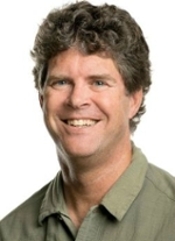
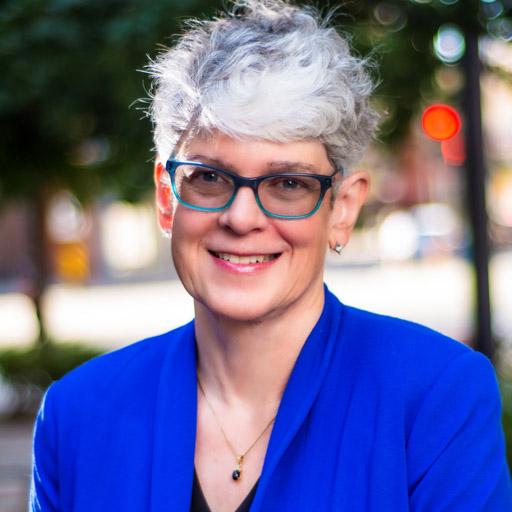
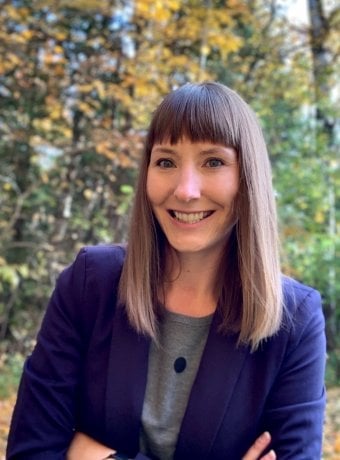
Mark Lewis is the Kennedy Chair in Mathematical Biology at the University of Victoria, holding joint appointments in the Departments of Mathematics and Statistics and Biology. His research focuses on spatial ecology and mathematical modeling, addressing ecological challenges such as animal movement, invasive species, and disease dynamics. Lewis earned his D.Phil. in Mathematical Biology from the University of Oxford and has been elected a Fellow of the Royal Society UK. His work integrates mathematical analysis, field studies, and interdisciplinary approaches to solve ecological problems. Current projects include modeling polar bear populations, cyanobacteria dynamics, and the impact of climate change on wildlife. Lewis supervises students across both UVic and his former University of Alberta lab. Education: D.Phil. in Mathematics (Mathematical Biology), University of Oxford Awards: Royal Society Fellowship, CRM-Fields-PIMS Prize, and Okubo Prize Key Research Areas: Animal movement modeling, aquatic ecology, wildlife disease, and invasive species management Publications highlight his contributions to understanding disease spread, parasite dynamics, and ecological responses to environmental changes. Lewis collaborates widely, applying mathematical tools to real-world conservation and health challenges.
Karoline Faust is an Associate Professor at KU Leuven, affiliated with the Laboratory of Molecular Bacteriology (Rega Institute) and the Faculty of Medicine . She contributes to the iSi Health and Leuven One Health institutes, and serves on senior academic councils. Her research spans microbial systems biology, focusing on community dynamics and network analysis. Education: PhD in bioinformatics (2010, KU Leuven) Affiliations: KU Leuven, ISME Journal editorial board, Belgian Society for Microbiology Her research investigates microbial community dynamics , systems biology approaches to microbiomes, and bioinformatics tool development . She specializes in modeling human gut microbiota , synthetic microbial communities , and environmental microbiomes (e.g., microplastic impacts on Daphnia microbiomes). Her work integrates metabolic modeling , network analysis , and experimental systems to understand microbial interactions. Recent publications highlight her contributions to microbial network inference , 16S rRNA sequencing protocols , microfluidics , and ecological modeling of microbiomes. She develops tools like manta , miaSim , and CoNet to analyze community structures. Teaching: Karoline co-teaches courses in microbiology, bioinformatics, and network analysis at KU Leuven, and has contributed to international workshops on microbial network inference. Scientific Engagement: She serves as Senior Editor at ISME Journal and Secretary of the Belgian Society for Microbiology .
Joel S. Hayworth is an Associate Professor in the Department of Civil Engineering at Auburn University's College of Engineering. His research focuses on environmental and ecosystem restoration, particularly in estuarine, terrestrial, and freshwater systems. He leads the Estuarine Environments Research Program (EERP), which investigates the fate of endocrine-disrupting chemicals (EDCs), PFAS, and oil spill residues in coastal environments. Dr. Hayworth's educational background includes a PhD in Civil Engineering (Hydrology/Hydraulics) from Auburn University, an MS in Hydrology from the University of Nevada, Las Vegas via the Desert Research Institute, and a BS in Geophysics from the University of California, Santa Barbara. He previously worked at the Tennessee Valley Authority Engineering Laboratory and the U.S. Air Force Research Laboratory, and founded Hayworth Engineering Science in 1999 before returning to academia in 2010. His research interests span environmental engineering, hydrology, hydraulics, estuarine science, pollutant fate and transport, and chemical fingerprinting. He has developed advanced analytical methods for detecting EDCs and PFAS in water, sediment, and biota. His work integrates field studies, laboratory experiments, and environmental modeling to understand complex hydrologic, geologic, chemical, and biological processes in human-impacted ecosystems. The 15 most recent articles highlight a strong trend in environmental contaminant analysis, particularly focusing on PFAS, oil spill residues, and endocrine disruptors. His research combines analytical chemistry with environmental modeling and field monitoring, often in collaboration with interdisciplinary teams. Key themes include the development of UHPLC-MS/MS and GC-MS/MS methods, fate and transport modeling of pollutants, and ecological risk assessment in estuarine systems. Dr. Hayworth's scientific contributions are supported by funding from agencies such as the Gulf Coast Ecosystem Restoration Council (RESTORE Council). His work has led to significant publications in journals like Science of the Total Environment , Marine Pollution Bulletin , and Water . He actively mentors students and collaborates with researchers like T.P. Clement, G.F. John, and V. Mulabagal. His projects, such as the restoration assessment of Cotton Bayou and Terry Cove, demonstrate applied science for environmental problem-solving. He has developed state-of-the-art analytical laboratories and partnered with coastal communities for long-term monitoring. His laboratory, the Estuarine Environments Research Program (EERP), conducts multi-year studies on endocrine disruptors in estuaries, develops innovative sampling and analysis methods, and trains the next generation of environmental engineers and scientists. The team works across disciplines to address complex environmental challenges in the Gulf Coast region.
Dr James Herbert-Read is an Associate Professor and Whitten Lecturer in Marine Biology at the Department of Zoology, University of Cambridge. He serves as Deputy Head of Department (Postgraduate Education) and leads the Marine Behavioural Ecology Group. His research focuses on understanding how animals, particularly marine organisms, collect and process information from their environments to make behavioral decisions, with emphasis on social interactions, adaptation mechanisms, and ecological constraints. His group employs theoretical frameworks, controlled experiments, and quantitative field studies to investigate behavioral diversity in marine species. Key themes include collective behavior, predator-prey dynamics, camouflage strategies, and the impacts of environmental stressors on animal decision-making. Recent publications highlight work on lionfish vocalization mechanisms, cuttlefish camouflage, citizen science applications in marine research, and behavioral responses to visual and acoustic noise. Scientific awards and affiliations include: Whitten Lecturer in Marine Biology Associate Professor, University of Cambridge He has supervised research projects on topics such as: Social attraction in invasive fish species Evolution of coordinated movement Neurophysiological basis for leadership in shoals Maternal effects on offspring exploration
Henry Liang, Ph.D., is a Professor in the Department of Cell Physiology and Molecular Biophysics at Texas Tech University Health Sciences Center (TTUHSC), with adjunct appointments in Chemical Engineering and Chemistry at Texas Tech University. His lab focuses on bridging biology with synthetic systems through membrane biophysics and bioengineering. Research Interests: Dr. Liang's work spans membrane protein reconstitution, nanodisc technology, antimicrobial nanoparticles, blood-brain barrier targeting, and immunotherapy platforms. Key areas include: Design of synthetic proteomembranes for protein function studies Development of environmentally responsive nanoantibiotics Nanoparticle-based theranostic systems for cancer Light-driven energy transduction in biohybrid materials Publication Trends: His 15 most recent articles (2011-2023) demonstrate consistent focus on nanotechnology solutions for biomedical challenges, with evolving emphasis on antimicrobial nanostructures (35%), membrane protein platforms (30%), cancer nanomedicine (20%), and sustainable nanomaterials (15%). Methodological strengths include polymer synthesis, X-ray scattering, and biomimetic system design. Training: The Liang Lab actively recruits graduate students and postdoctoral researchers for projects in membrane biophysics and bioengineering. Current research infrastructure includes capabilities for synchrotron small-angle X-ray scattering, molecular dynamics simulations, and nanomaterial characterization.
Dr. Rachel Scholes is an Assistant Professor in the Department of Civil Engineering at the University of British Columbia. Her research focuses on protecting human and environmental health through the study of contaminants in urban water systems, with an emphasis on optimizing contaminant removal in engineered and nature-based treatment systems. She holds a B.S. in Chemical Engineering from Northwestern University and M.S. and Ph.D. in Environmental Engineering from the University of California, Berkeley. Her research interests include environmental chemistry, trace contaminants, water reuse, nature-based treatment systems, and stormwater treatment. She teaches courses such as ENVE 301 (Environmental Engineering Intermediate Design Project) and CIVL 562 (Environmental Data Collection and Analysis). Her lab, Scholes Lab, actively investigates contaminant dynamics in constructed wetlands, bioretention systems, and subsurface treatment environments. Key research contributions include enhancing contaminant removal via Fe (III)-EDTA-amended wetlands, studying 6PPD-quinone dynamics in salmon streams, and optimizing pharmaceutical attenuation in benthic wetland biomats. Her work bridges fundamental environmental chemistry with applied engineering solutions for sustainable water management. Dr. Scholes' lab collaborates on projects funded by grants focused on urban water systems, green infrastructure, and contaminant fate. She advises students through the Scholes Lab (www.scholeslab.org), which emphasizes interdisciplinary approaches to environmental challenges.
Professor Sabine Dittmann is a leading expert in coastal ecosystem ecology and marine sciences at Flinders University, Australia. As a Professor of Marine Biology in the College of Science and Engineering, her work bridges research and environmental management, focusing on hypersaline estuaries, blue carbon restoration, and invasive species control. She holds a Habilitation in Ecology from the University of Bremen (2001), PhD from the University of Göttingen (1987), and MSc from the same institution (1984). Her research interests include coastal ecosystem health, mangrove and saltmarsh restoration, and decision support frameworks for marine conservation. She has advised government agencies on marine parks, Commonwealth Marine Reserves, and the Coorong ecosystem. Key roles include national president of the Australian Marine Sciences Association (2012–2014), current president of the Royal Society of South Australia, and member of the Australian Antarctic Science Council since 2019. Her recent work emphasizes the global challenges of hypersaline wetland restoration, invasive species impact, and blue carbon methodologies. Over 112 publications span estuarine dynamics, benthic macrofauna, and policy-relevant ecosystem assessments. Projects like the Coorong benthic surveys highlight her commitment to translating science into conservation action.
Eric Roberts is a Professor of Geology and Geological Engineering and Director of the Potential Gas Agency at the Colorado School of Mines. His research focuses on basin analysis, energy exploration, and sedimentary geology with specializations in Mesozoic-Cenozoic basins of Gondwana and North America. He leads projects in U-Pb geochronology, critical minerals exploration, and paleoenvironmental reconstruction through vertebrate paleontology and stratigraphy studies. Roberts' work integrates advanced geochronological techniques with field-based analyses to address questions in paleobiology, resource exploration, and earth system dynamics. Key research themes include: Geochronology of sedimentary and volcanic deposits Paleoclimate reconstruction using paleosols Stratigraphic frameworks for dinosaur fossil records Resource potential of helium/hydrogen reserves Antarctic and African vertebrate paleontology His exploration of hominin burial practices in the Rising Star Cave System has provided critical insights into early human behavior. Roberts' interdisciplinary approach bridges geological, biological, and environmental sciences to advance understanding of Earth's history and resource management strategies.
Professor Bradley D Eyre is a leading academic at Southern Cross University, serving as a Professor in the Faculty of Science and Engineering and as the Foundation Director of the Centre for Coastal Biogeochemistry (CCB). His work spans the land-ocean continuum, with a focus on carbon and nitrogen biogeochemistry in coastal and estuarine systems under global change pressures. Education: BAppSc(Hons), University of Adelaide PhD, Queensland University of Technology His research centers on ecosystem-scale biogeochemical processes, particularly the impacts of climate change, ocean acidification, and eutrophication on greenhouse gas emissions and carbonate dynamics. He employs multi-scale approaches, from field measurements to global modeling. His recent work highlights how methane and nitrous oxide fluxes alter the climate benefit of blue carbon ecosystems and how ocean acidification drives net dissolution of coral reef sediments. An analysis of his recent publications reveals a strong focus on quantifying greenhouse gas fluxes in aquatic systems, with an emphasis on upscaling methods, geomorphic controls, and climate feedbacks. His work frequently appears in high-impact journals such as Nature , Science , and Nature Climate Change , reflecting broad disciplinary influence in environmental science, biogeochemistry, and climate research. Scientific Awards and Recognitions: Fellow, Association for the Sciences of Limnology and Oceanography (ASLO), since 2018 Member, ARC College of Experts, since 2022 Deputy Chair, 2024 MPCE DECRA Panel Professor Eyre has supervised 32 PhD students to completion and currently mentors 13 more, in addition to 22 early- and mid-career researchers. His research has attracted over $20 million in funding, including 32 ARC grants (>$10 million), 11 ARC Linkage projects (> $7.5 million), and over $3 million in contract research. His collaborations span federal and state agencies, local governments, private sector partners, and multiple universities across Australia and internationally, demonstrating extensive impact on policy and practice. He leads the Centre for Coastal Biogeochemistry, which played a key role in securing SCU’s ERA Rank 5 (well above world standard) in Geochemistry. His team conducts interdisciplinary research on coastal carbon cycling, sediment dynamics, and climate change impacts, contributing significantly to national and global environmental assessments.
Dr. Laura Mae Jacqueline Herzog is a postdoctoral researcher at the University of Osnabrück, affiliated with the Institute of Geography and the Research Center Institute of Environmental Systems Research. She serves as representative of mid-level faculty staff in the faculty council of Department 1 Cultural and Social Sciences for the term 2024-2026 and is a member of the working group Resource Management. Dr. Herzog received her PhD from the University of Bern, where she worked as a research assistant at the Chair of Policy Analysis and Environmental Governance. Prior to that, she completed her diploma in political science at the Otto-Suhr-Institut (OSI), Free University of Berlin, focusing on common-pool resource problems and environmental conflicts. Her research focuses on transformation pathways towards sustainable interactions between humans and nature in social-ecological systems, with particular emphasis on aquatic ecosystems. She works predominantly inter- and transdisciplinarily, examining sustainable land, water and open space management, participatory processes and co-creation, transformation processes and capacities, and environmental governance. Her methodological approaches include participatory modeling, interviews & surveys, comparative case study analysis, causal loop diagrams, and Social Network Analysis. Dr. Herzog's publications reveal a consistent focus on water resource management, social-ecological systems, and governance of common-pool resources. Her work spans from micro-pollutant regulation in the Rhine River to transformation processes in peatland use and digitalization in water management. She has developed expertise in analyzing cooperation networks, stakeholder engagement, and the emergence of collaborative governance structures in environmental management contexts. Member of the 3rd cohort of the PostDoc Academy for Transformational Leadership of the Robert Bosch Foundation (2020-2022) Founding member of the Working Group on Governance of Social-Ecological Systems of the Earth System Governance network Dr. Herzog actively engages with stakeholders and the public through her work on the Future Water Laboratory, MOOSland project, and LimnoScenES project. She has served on scientific advisory boards for research projects including BaltAqua and "Participatory visioning for collective action in natural resource management." Her commitment to climate action is evident through her involvement with Scientists4Future in Osnabrück. As part of her research on peatlands, Dr. Herzog works with regional stakeholders to investigate transformation processes toward rewetted peatlands and facilitates knowledge transfer of project findings into teaching materials and exhibition modules. She also conducts research on digital applications for sustainable water use within the Future Water Laboratory.
Steven Loheide is a Professor in the Department of Civil & Environmental Engineering at the University of Wisconsin-Madison. His work bridges hydrogeology, ecohydrology, and environmental engineering with a focus on groundwater-dependent ecosystems. PhD (2006), Stanford University MS (2001), Indiana University BS (1999), University of Northern Iowa Loheide's research examines hydroecology , vegetative water use , and stream-aquifer interactions , particularly in the context of climate change , urban greening , and managed aquifer recharge . His recent publications highlight interdisciplinary approaches combining remote sensing , hydrologic modeling , and ecosystem services analysis . Key trends in his 15 most recent publications (2023-2025) span: groundwater-forest interactions during drought, urban ecohydrology impacts on energy balance, MAR design for multi-benefit ecosystems, and tree sway monitoring as ecohydrologic stress indicators. 2022 - Distinguished Professorship of Water Resources Engineering 2021 - Harvey Spangler Award for Innovative Teaching 2018 - Vilas Faculty Mid-Career Investigator Award 2014 - Fulbright Scholar (Argentina) 2010 - NSF CAREER Award Loheide teaches courses in groundwater hydraulics , ecohydrology , and hydroscience , advising graduate students through master's research , pre-dissertation , and thesis projects.
Catherine Mulligan is a Distinguished Research Professor in the Department of Building, Civil, and Environmental Engineering at Concordia University, where she also serves as Director of the Concordia Institute for Water, Energy and Sustainable Systems. She was previously the Concordia Research Chair in Geoenvironmental Sustainability (Tier I) until 2021, having held this prestigious research chair since 2002 (initially as Tier II). Dr. Mulligan earned her B.Eng. and M.Eng. degrees in chemical engineering from McGill University, followed by a Ph.D. specializing in geoenvironmental engineering, also from McGill University. After 16 years working at McGill University and in industry (including positions at the Biotechnology Research Institute of the National Research Council and SNC Research Corp.), she joined Concordia University in 1999 as an Assistant Professor, was promoted to Associate Professor in 2002, and to full Professor in 2008. Her research spans multiple critical areas of environmental engineering with a focus on contamination remediation. She specializes in surfactant-enhanced washing and flushing of contaminated soils and sediments, treatment of metal-contaminated media, bioremediation techniques, and various wastewater treatment methods. Her work includes biosurfactant applications, in-situ sediment remediation, anaerobic treatment processes, membrane technologies for water treatment, and energy generation through pressure-reduced osmosis. She has developed sustainability indicators and focuses on practical applications of environmental engineering solutions. Analysis of her recent publications (2023-2025) reveals a continued leadership in environmental engineering with particular emphasis on nanotechnology applications for oil spill cleanup in sensitive coastal regions, advanced membrane technologies for water treatment and energy generation, microbially induced calcite precipitation for mining waste remediation, sustainable resource recovery approaches from waste batteries, and innovative techniques for eutrophic lake restoration. Her research demonstrates a consistent focus on practical, sustainable solutions to environmental contamination problems across diverse settings. Dr. Mulligan's scientific contributions have been recognized with numerous prestigious awards including Fellowship in the Royal Society of Canada, Canadian Academy of Engineering, Engineering Institute of Canada, and the Canadian Society for Civil Engineering. She has received the RSC Miroslaw Romanowski Medal, the Geoenvironmental Award, the A.G. Stermac Award of the CGS, and the John B. Sterling Medal of the EIC. Her Concordia-specific honors include the Provost Circle of Distinction, Concordia Sustainability Champion, and the Petro Canada Young Innovator Award (awarded twice). With over 40 years of research experience across government, industrial, and academic environments, Dr. Mulligan has supervised to completion more than 75 graduate students in Civil Engineering (MASc and PhD programs). Her research has attracted significant funding, including a $1,643,700 NSERC CREATE grant for the Institute in Water, Energy and Sustainability, which represents the first Concordia project to receive funding through this program. She has authored more than 140 refereed papers, holds three patents, and has made substantial editorial contributions as Section Editor for the Journal of Environmental Engineering, Chief Editor for Waste (MDPI), and serves on multiple other editorial boards. As Director of the Concordia Institute for Water, Energy and Sustainable Systems, Dr. Mulligan leads an interdisciplinary team focused on training students in sustainable development practices and advancing research into innovative solutions for water, energy, and resource conservation challenges. The institute represents a significant hub for environmental research and education at Concordia University.
Trista Vick-Majors is an Assistant Professor in the Department of Biological Sciences within the College of Sciences and Arts at Michigan Technological University. Her research bridges microbial ecology and biogeochemistry in aquatic ecosystems, with specialized focus on polar environments and ice-covered systems. Her educational background includes a PhD and MSc in Ecology and Environmental Sciences from Montana State University, and a BA in Biology from Colorado College. This foundation supports her investigation of microbial community interactions with elemental cycles in extreme environments. Research interests center on microbial ecology in cryosphere systems , examining how physical and chemical factors influence microbial metabolism in both seasonal ice environments and permanent Antarctic ice covers. Her work addresses critical questions about energetic constraints on microbial life during ecosystem transitions and seasonal changes, with implications for global biogeochemical cycles. Publication trends reveal consistent contributions to Antarctic subglacial lake research since 2016, with recent work focusing on Mercer Subglacial Lake sediment analysis, biogeochemical connectivity beneath ice sheets, and microbial responses to environmental change. Her research spans glaciology, limnology, and microbial ecology with strong interdisciplinary collaboration. Current research is supported through major Antarctic science initiatives including the Subglacial Antarctic Lakes Scientific Access project and Winter Network Project, providing field opportunities in extreme environments and access to specialized drilling and sampling technologies for subglacial exploration. Her laboratory work emphasizes environmentally clean access to pristine subglacial environments, with research groups focused on microbial community analysis in ice-covered aquatic systems and biogeochemical processes in polar sediments.
Mohan Qin is an Assistant Professor in the Department of Civil and Environmental Engineering at the University of Wisconsin–Madison. Her research focuses on developing novel approaches for resource recovery from waste streams and the concentration and detection of microplastics in the Great Lakes. Dr. Qin received her educational degrees as follows: Ph.D. in Civil Engineering from Virginia Tech (2017) M.S. in Environmental Engineering from Peking University (2013) B.S. in Environmental Engineering from Shandong University (2010) Her primary research areas include: Bioelectrochemical systems for resource recovery from wastewater Environmental biotechnology for sustainable wastewater treatment Electrochemical processes for desalination and water treatment Membrane-based technology for selective ion removal Her work particularly emphasizes ammonia recovery from manure and wastewater, and the detection of microplastics in freshwater systems, contributing to sustainable water management and resource conservation. Analysis of Dr. Qin's recent publications (2022-2025) reveals a strong focus on ammonia recovery using membrane and electrochemical systems, with increasing attention to microplastics detection in lake water. Her work spans from fundamental transport mechanisms to practical applications in dairy manure treatment and Great Lakes monitoring, often integrating novel sensor technologies and renewable energy sources. Dr. Qin has received numerous awards, including: 2024 IWA Membrane Technology Specialist Group (MTSG) Rising Star Award 2024 University of Wisconsin-Madison Hilldale Undergraduate/Faculty Research Fellowship 2023 UW-Madison Media Fellow and Sustainability Fellow 2022 UW-Madison Madison Teaching and Learning Excellence (MTLE) Fellow Multiple awards during her graduate studies at Virginia Tech Dr. Qin actively mentors students through thesis and independent study courses (CIV ENGR 890, 990, 699) and has been awarded the Hilldale Fellowship for undergraduate research collaboration. Her research is supported by several fellowships including the UW-Madison Sustainability Fellow and Media Fellow, which likely fund her innovative work in resource recovery and microplastics detection. She leads a research group at UW-Madison focused on environmental biotechnology and electrochemical systems, collaborating with institutions like Yale University (where she completed her postdoc) and contributing to journals as an associate editor for Desalination and Water Treatment and on the early career editorial board of ACS ES&T Engineering.
Roberto Pastres is an Associate Professor at the Department of Environmental Sciences, Informatics and Statistics, Ca' Foscari University of Venice. He specializes in ecology, with a focus on coastal ecosystems, aquaculture sustainability, and environmental modeling. His research integrates interdisciplinary approaches to address challenges in marine resource management, including aquaculture impacts, water quality, and climate change adaptation. Teaching: He teaches Environmental Modelling (Master's level) and Ecology courses in Environmental Engineering and Cultural Heritage programs. Recent teaching roles include: Environmental Modelling (6 cfu) for M.Sc. in Environmental Sciences Ecology of Cultural Heritage (6 cfu) for M.Sc. in Conservation Science Research Interests: Pastres' work spans ecological modeling, sustainable aquaculture practices, and ecosystem services valuation. Key projects include: Leading the GAIN H2020 project for green aquaculture intensification Contributing to EU-funded initiatives like BeBlue (aquaponics) and FORCE (Egyptian fisheries) Modeling coastal zone management strategies for the Venice Lagoon Grants & Projects: He coordinates or participates in multiple EU and national grants, including: H2020 GAIN (2018-2022): €6M for sustainable aquaculture innovation Interreg BeBlue (2023-2025): Promoting sustainable aquaponics Life12 NAT/IT/000331: Restoring Venice Lagoon seagrass beds Labs/Teams: Active in the Research Institute for Green and Blue Growth and the Interconnected Nord-Est Innovation Ecosystem. Collaborates with international teams on digital twin systems for aquaculture and precision farming tools.